×

Namibia🇳🇦 | best attractionsYour Guide to the 11 Best attractions in Namibia

Namibia’s best attractions unfold across vast, contrasting landscapes where the desert’s sharp light meets the cool Atlantic mist. Understanding these regional and seasonal shifts is crucial for backpackers aiming to navigate the country independently. The arid Namib Desert offers raw, sunbaked beauty best explored in cooler months, while the lush Caprivi Strip bursts with wildlife during the rainy season, demanding different gear and timing. Choosing the right destination here shapes your entire trip—from the vibe of remote campsites and the budget impact of guided safaris to safety considerations on gravel roads and the depth of cultural encounters with local communities. Mastering these nuances transforms a visit into a seamless, immersive adventure.

By Johan Kruseman 🇳🇱 | Updated June 11, 2026
Explore the best festivals in Namibia

Why go?Understanding Their Importance

Namibia’s attractions stand apart because they unfold in a landscape where vastness is the defining feature. The country’s geography stretches from arid deserts to rugged coastlines, creating a canvas where nature operates on a grand scale. This means travelers face a trade-off: reaching these sites often requires long drives over gravel roads, but the payoff is a profound sense of isolation and untouched wilderness that few other countries can offer. The light here is sharp and clear, casting long shadows across red dunes and cracked earth, making every moment visually striking but also exposing the harshness of the environment.

The climate intensifies this dynamic. Namibia’s dry conditions preserve landscapes and wildlife in ways wetter regions cannot, but they also demand careful planning. … read more 👉
Namibia’s attractions stand apart because they unfold in a landscape where vastness is the defining feature. The country’s geography stretches from arid deserts to rugged coastlines, creating a canvas where nature operates on a grand scale. This means travelers face a trade-off: reaching these sites often requires long drives over gravel roads, but the payoff is a profound sense of isolation and untouched wilderness that few other countries can offer. The light here is sharp and clear, casting long shadows across red dunes and cracked earth, making every moment visually striking but also exposing the harshness of the environment.

The climate intensifies this dynamic. Namibia’s dry conditions preserve landscapes and wildlife in ways wetter regions cannot, but they also demand careful planning. Water scarcity and extreme temperatures limit when and how long you can explore certain areas comfortably. Infrastructure is sparse outside major towns, so accessibility is often a challenge. This scarcity, however, is part of the country’s appeal—travelers who embrace it find a rhythm that slows down the usual tourist rush and invites deeper engagement with the land and its people.

Culturally and historically, Namibia’s attractions are layered with stories of resilience and adaptation. The blend of indigenous traditions and colonial history shapes the character of the places you visit, but understanding this context requires time and openness. The country’s scale and infrastructure mean that quick, surface-level visits rarely do justice to its complexity. Instead, the best experiences come from balancing travel time with immersive exploration, accepting that Namibia rewards those willing to trade convenience for authenticity.
How the List Was Created
The list of best attractions in Namibia is created based on cultural significance or entertainment value. If you feel a attraction is missing in this list, please let us know.

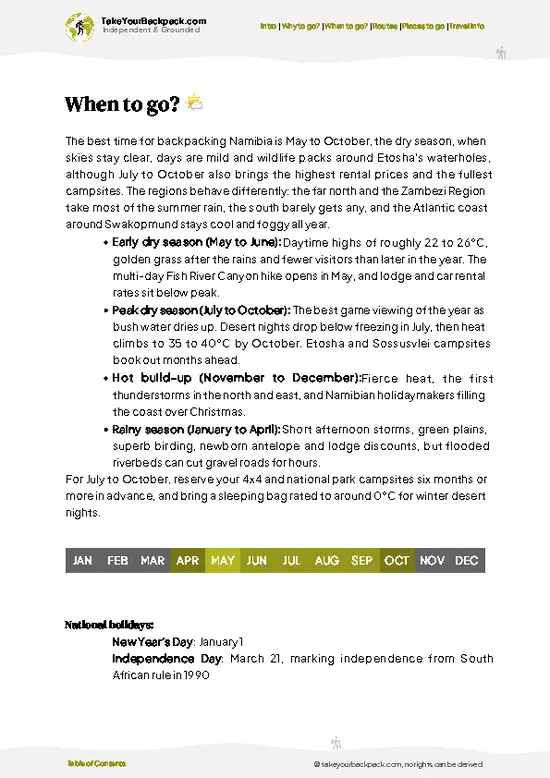
When to go?Best Time to Visit Namibia for attractions

Seasonal Rhythms Shape Your Experience

Namibia’s climate is a study in contrasts, and understanding its seasonal pulse is key to unlocking the best moments at its attractions. The dry season, stretching roughly from late fall through winter, offers crisp, clear skies and cooler temperatures. This is when wildlife congregates around shrinking waterholes, making game viewing sharper and more predictable. The air feels dry and light, carrying the scent of dusty earth and sparse vegetation, which sharpens visibility but also means the landscape can appear more austere.

Conversely, the wet season brings a burst of life and color. From late spring into summer, afternoon thunderstorms sweep across the land, turning the dusty plains into a patchwork of green. This period is warmer and more humid, … read more 👉

Seasonal Rhythms Shape Your Experience

Namibia’s climate is a study in contrasts, and understanding its seasonal pulse is key to unlocking the best moments at its attractions. The dry season, stretching roughly from late fall through winter, offers crisp, clear skies and cooler temperatures. This is when wildlife congregates around shrinking waterholes, making game viewing sharper and more predictable. The air feels dry and light, carrying the scent of dusty earth and sparse vegetation, which sharpens visibility but also means the landscape can appear more austere.

Conversely, the wet season brings a burst of life and color. From late spring into summer, afternoon thunderstorms sweep across the land, turning the dusty plains into a patchwork of green. This period is warmer and more humid, with the scent of wet soil and blossoming flora filling the air. While some roads become challenging, and wildlife disperses across wider areas, the payoff is a vibrant, rejuvenated environment and the chance to witness newborn animals and migratory birds.

The shoulder seasons straddle these extremes, offering a balance of fewer crowds and moderate weather. However, travelers should weigh the trade-offs: some attractions may be less accessible due to lingering rains or early dry spells, and costs can fluctuate as demand shifts. Planning with these rhythms in mind transforms Namibia from a checklist of sights into a living, breathing landscape where timing deepens every encounter.

attraction hoppingTips for Visiting Multiple Destinations

Mapping Namibia’s Attractions into a Cohesive Journey

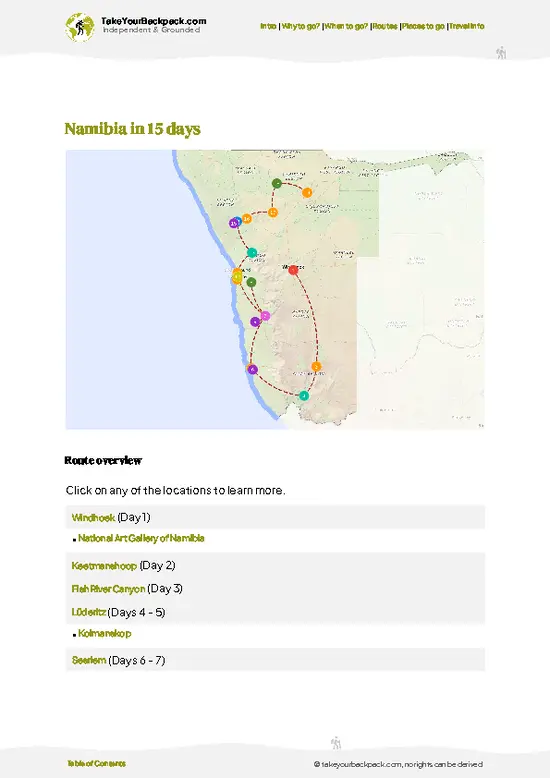
Namibia’s vastness demands a routing strategy that respects both distance and diversity. The key is to cluster attractions by region—northern wildlife reserves, central desert landscapes, and coastal highlights—then link these clusters in a logical flow, usually starting from Windhoek and moving outward in a loop or a linear path. This approach minimizes backtracking, which can turn hours of driving into wasted time and energy.

Balancing Time and Experience

Expect to spend at least two full days in major wildlife areas to catch the rhythm of animal activity and avoid the rush of a drive-through safari. Desert regions, with their shifting dunes and stark horizons, reward slower exploration—plan for a minimum of one to two days to absorb … read more 👉

Mapping Namibia’s Attractions into a Cohesive Journey

Namibia’s vastness demands a routing strategy that respects both distance and diversity. The key is to cluster attractions by region—northern wildlife reserves, central desert landscapes, and coastal highlights—then link these clusters in a logical flow, usually starting from Windhoek and moving outward in a loop or a linear path. This approach minimizes backtracking, which can turn hours of driving into wasted time and energy.

Balancing Time and Experience

Expect to spend at least two full days in major wildlife areas to catch the rhythm of animal activity and avoid the rush of a drive-through safari. Desert regions, with their shifting dunes and stark horizons, reward slower exploration—plan for a minimum of one to two days to absorb the light and silence. Coastal stops, often shorter, can be squeezed into half-day visits but benefit from an overnight stay to enjoy the cool sea breeze and early morning light.

Common Pitfalls and Practical Trade-offs

Trying to cram too many stops into a short window leads to superficial visits and exhaustion. Namibia’s roads, often gravel and remote, slow travel more than maps suggest. Prioritizing comfort with well-placed lodges or campsites can transform long drives into restful transitions rather than endurance tests. Budget travelers might sacrifice some lodge luxury for proximity to attractions, while those seeking depth should accept slower pacing to savor the atmosphere. Flexibility is crucial—weather, road conditions, and wildlife movement all influence timing, so build buffer days rather than rigid schedules.

Strategic Planning for a Seamless Flow

Think of Namibia as a series of sensory chapters: the dusty reds of the desert, the green pulse of the savannah, the salty tang of the coast. Align your route to move through these chapters naturally, allowing each to unfold without rushing. This mindset turns logistical challenges into part of the adventure, making the journey itself a meaningful prelude to each destination’s payoff.

The ListHighly Recommended attractions of Namibia

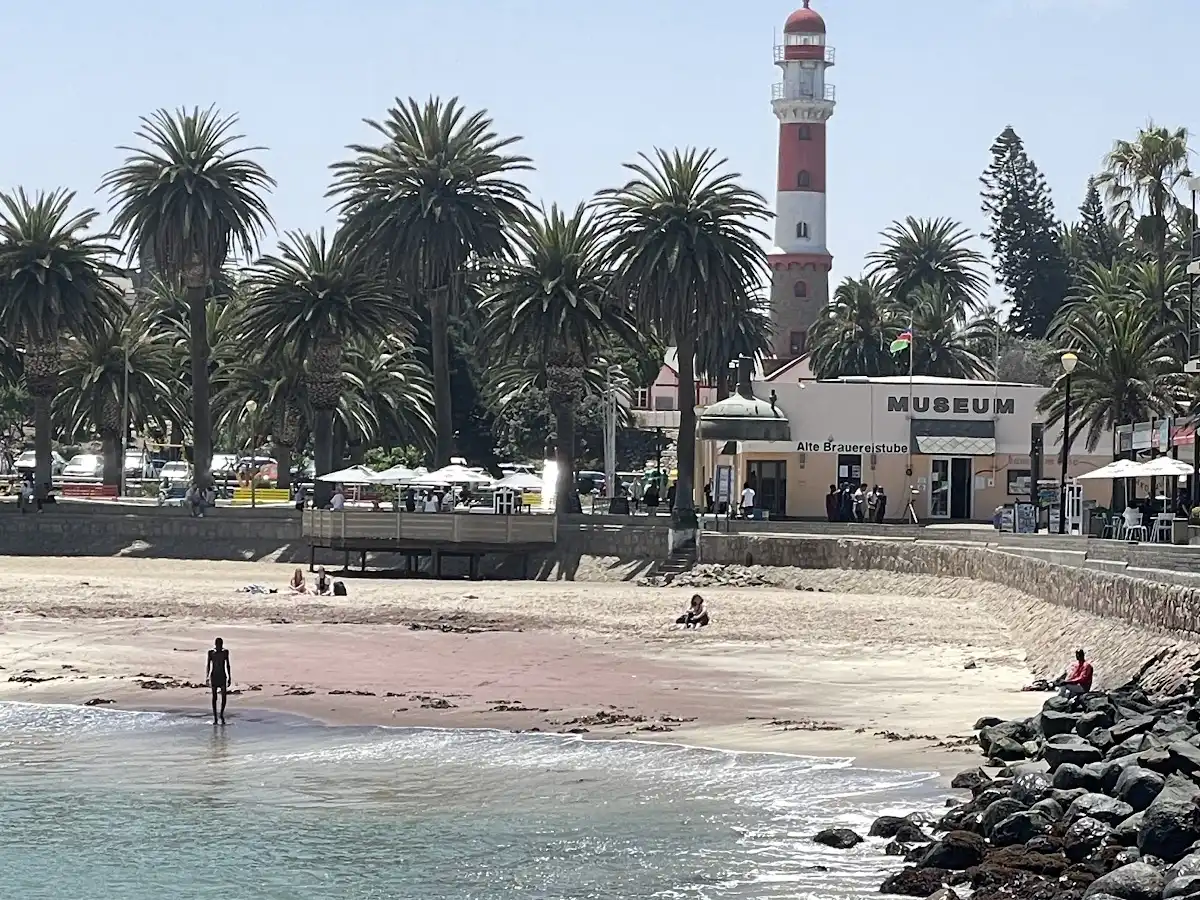
1 Swakopmund Museum

coastal ecology, local history, mineral specimens

Discover Swakopmund’s natural environment and settlement story through exhibits on marine life, geology, and early explorers.

2 Christuskirche

sandstone spire, stained glass, German colonial architecture

Admire intricate stonework and colored windows in a landmark church that reflects Windhoek’s early 20th-century European influences.

3 Independence Memorial Museum

modernist tower, panoramic city views, liberation history

Trace Namibia’s path to sovereignty through exhibits and artifacts, then take in sweeping vistas from the museum’s upper floors.

4 Living Museum of the Damara

traditional huts, fire-making, indigenous crafts

Experience daily life and skills of the Damara people through demonstrations of ancient techniques and hands-on cultural activities.

5 Living Museum of the Ju/’Hoansi-San

bush survival, tracking, San language

Join Ju/’Hoansi-San guides to learn about foraging, animal tracking, and the unique click-based language of this desert community.

6 Swakopmund Jetty & Old Mole Seafront

Atlantic pier, tidal promenade, sea breeze

Stroll along the jetty for ocean views and fresh air, then explore the historic seafront shaped by tides and maritime trade.

7 National Museum of Namibia

natural history, ethnographic displays, colonial relics

Survey Namibia’s geological origins, cultural diversity, and colonial past through curated objects and informative displays.

8 Nakambale Museum & Mission Station

Oshiwambo homestead, Finnish mission, missionary graveyard

Walk through preserved mission buildings and reconstructed homesteads to understand the intersection of local and European histories.

10 TransNamib Railway Museum

vintage locomotives, railway memorabilia, colonial station

Step into a preserved station to see artifacts and models that chart the development of Namibia’s rail network and transport heritage.

11 Warehouse Theatre

live music, urban arts, industrial venue

Attend performances in a repurposed warehouse that serves as a hub for contemporary music, spoken word, and visual arts.

Loading the map 🌍

Expert viewExpert Commentary on attractions

Expert Commentary


When you set out to explore Namibia’s best attractions, the first thing to grasp is that this country demands a measured approach. It’s not about cramming in every highlight but choosing a handful that resonate deeply with your interests and travel style. I recommend aiming for three to five major attractions during your trip. This range strikes a balance between immersion and exhaustion, letting you savor the atmosphere without feeling rushed or overwhelmed by the vast distances and rugged terrain.

Namibia’s scale is deceptive. Distances between attractions can stretch for hours on gravel roads that test both vehicle and patience. This means your travel days will often be long, with the landscape shifting from arid desert to thorny savannah, each with its own light and … read more 👉

Expert Commentary


When you set out to explore Namibia’s best attractions, the first thing to grasp is that this country demands a measured approach. It’s not about cramming in every highlight but choosing a handful that resonate deeply with your interests and travel style. I recommend aiming for three to five major attractions during your trip. This range strikes a balance between immersion and exhaustion, letting you savor the atmosphere without feeling rushed or overwhelmed by the vast distances and rugged terrain.

Namibia’s scale is deceptive. Distances between attractions can stretch for hours on gravel roads that test both vehicle and patience. This means your travel days will often be long, with the landscape shifting from arid desert to thorny savannah, each with its own light and scent. The dry air carries a sharpness that wakes you up early, but it also means you need to plan for hydration and sun protection meticulously. Budgeting your time realistically means accepting that some days will be mostly spent driving, and that’s part of the rhythm here. The payoff is arriving at places where the silence is so profound it feels like a physical presence.

Budget-wise, Namibia sits in a middle ground. It’s not a cheap destination, especially once you factor in car hire, fuel, and park fees, but it’s also not a place where you need to splurge on luxury to get the full experience. Lodging ranges from basic campsites to well-appointed lodges, and your choice here will shape your daily pace and comfort level. Opting for campsites or self-catering options can stretch your budget and deepen your connection to the environment, but it requires a willingness to embrace simplicity and self-sufficiency. On the other hand, lodges offer a buffer against the elements and a chance to recharge, which can be crucial after long days on rough roads.

Planning your itinerary means thinking about the regional variation in climate and culture. Namibia’s north and south offer contrasting experiences, not just in landscape but in the communities you’ll encounter. The north tends to be greener and more populated, with a stronger presence of local cultures and traditional lifestyles. The south is more stark and remote, where the desert dominates and wildlife sightings can feel like a rare gift. Understanding this helps you prioritize what you want from your trip—whether it’s cultural encounters, wildlife, or the raw power of the desert.

Safety is a practical concern that shapes how you move through Namibia. The country is generally stable and safe for travelers, but the isolation of many attractions means you must be self-reliant. Cell service is patchy or non-existent in remote areas, so carrying a reliable map, extra fuel, and emergency supplies isn’t optional—it’s essential. Driving at dawn or dusk requires extra caution due to wildlife crossing roads, and the heat during midday can be punishing, so plan your activities accordingly. Respect for local customs and communities is also key; Namibia’s diverse ethnic groups have distinct traditions and histories, and approaching these with curiosity and humility enriches your experience.

One of the most rewarding aspects of Namibia’s attractions is how the natural light and landscape textures change throughout the day. Early mornings bring a cool, golden glow that softens the harsh desert edges, while late afternoons cast long shadows that reveal the contours of dunes and rocky outcrops. This shifting light is a reminder that timing your visits can elevate the experience from a simple sightseeing stop to a moment of quiet awe. It’s worth sacrificing a strict itinerary to linger in these moments.

In essence, the best way to approach Namibia’s attractions is with a mindset that values depth over quantity. Choose fewer sites, give yourself time to absorb the environment, and prepare for the practical challenges that come with traveling in a vast, sparsely populated country. This approach transforms what might seem like logistical hurdles into part of the adventure itself, making the eventual rewards—whether a silent desert dawn or a rare wildlife encounter—feel truly earned.

✈️ The backpacker research shortcutNamibia Travel Guide

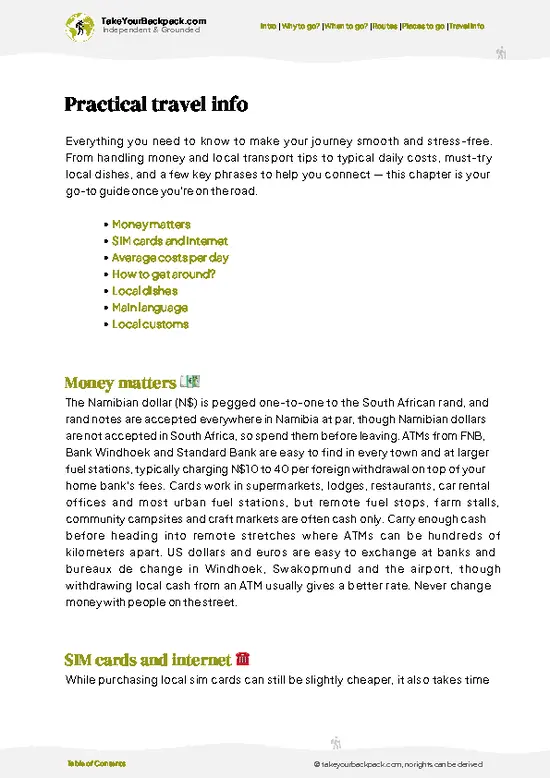
An offline-friendly backpacking guide with optimized travel routes, ranked highlights, transport advice, and the best areas to stay.
example page 0 from our offline Travel Guide for Namibia
example page 1 from our offline Travel Guide for Namibia
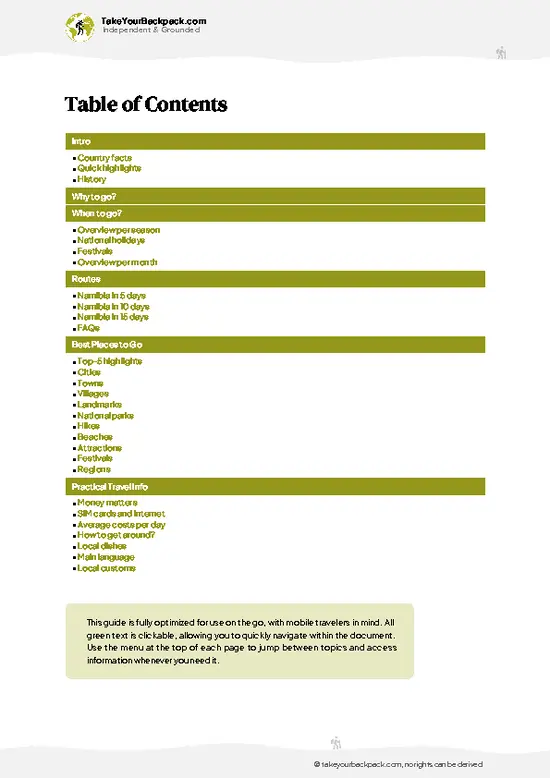
example page 2 from our offline Travel Guide for Namibia
example page 3 from our offline Travel Guide for Namibia
example page 4 from our offline Travel Guide for Namibia
example page 5 from our offline Travel Guide for Namibia
example page 6 from our offline Travel Guide for Namibia
example page 7 from our offline Travel Guide for Namibia
The digital guide (318 pages) contains:
79 highlights, ranked by travel appeal
Optimized 5, 10 & 15-day travel routes
Cities, national parks, landmarks, beaches
How to get around
Offline-friendly for travel without Wi-Fi
👉 Click to see all 30+ guide features

📅 Plan smarter in minutes, not weeks
Month by month travel advice
Festivals & national holidays
Budget expectations

🗺️ Go to the right places, skip the overrated ones
Honest pros & cons of destinations
Top hikes, parks & viewpoints
Lesser-known places most travelers miss
Clear “worth it vs skip it” guidance

🛏️ Travel smoothly without rookie mistakes
Best areas to stay
Transport systems explained simply
Common scams & safety advice
SIM cards, money & practical tips

🌍 Understand the country, not just visit it
Culture & traditions
52 Essential phrases & customs
Festivals worth planning around
Traveler-friendly historical context
Insights that make places more meaningful

📱 Built for real travel conditions
Fully downloadable PDF
Works completely offline
Optimized for phone use
Useful in remote areas & buses
Everything in one place
Save weeks of stressful planning
Get instant access to your full guide. 30‑day money-back guarantee.


By proceeding you agree to our terms.
Sent to your inbox immediately after payment • 100% Secure Checkout
Best Backpacking Travel Advisor 2025 tourism awardBest Backpacking
Travel Advisor
2025
What others say about Take Your Backpack Guides:
⭐⭐⭐⭐⭐
Fantastic, amazing amount of information!
⭐⭐⭐⭐⭐
My goodness this is amazing, it's what I've been looking for hats off too you!
⭐⭐⭐⭐⭐
I think this is absolutely BRILLIANT
⭐⭐⭐⭐
Very complete and informative. It's still missing places, but I gotta to commend you
⭐⭐⭐⭐⭐
This is truly amazing, thank you, can't wait to explore it with my kids!
⭐⭐⭐⭐⭐
Awesome resource, thank you!
⭐⭐⭐⭐⭐
This is amazing! Can't wait to explore the ones I haven't seen
⭐⭐⭐⭐
I love this! Well done, great idea.
⭐⭐⭐⭐⭐
Thanks for taking the time to make this gem!
⭐⭐⭐⭐⭐
This might be the best website I've ever seen.
⭐⭐⭐⭐⭐
Congratulations, and thank you so much for your work; it's incredibly valuable.
⭐⭐⭐⭐
In all seriousness I think you did a great job pointing out the important spots
⭐⭐⭐⭐⭐
10/10 very good
⭐⭐⭐⭐⭐
As someone who's only just starting to visit regularly this is awesome, thank you.
⭐⭐⭐⭐
Thank you very much! I'm going to visit my dad, it's going to be very useful!
⭐⭐⭐⭐⭐
This is really cool! We'll be travelling for the first time and this definitely come in handy.
⭐⭐⭐⭐⭐
You are now our minister of culture, congratulations 👨‍💼
⭐⭐⭐⭐⭐
Just wanted to tell you that this is a pearl! Going to follow your recommendations.
⭐⭐⭐⭐⭐
This is so cool. I'll definitely be using the resource for my travels soon.
⭐⭐⭐⭐⭐
This is very impressive! Good work.
⭐⭐⭐⭐⭐
This is an amazing and informative site. Very well done!

🛏️ Where to stay?Where to Base Yourself

Yes — Namibia has hostels and budget accommodation concentrated in Windhoek (city centre and safer suburbs for arrivals and supplies), Swakopmund (coastal town with the most hostel choices), the Sesriem/Sossusvlei area and Etosha gateway towns (Namutoni/Okaukuejo/Outjo).

Windhoek offers cheapest supplies, reliable transport links and some nightlife but watch petty crime and pick central or well-lit suburbs; Swakopmund has the highest hostel density, beach access and adventure options but is pricier and often cold/foggy; Sesriem is the practical low-cost base for Sossusvlei but facilities are basic and campsites fill fast; Etosha gateways put you closest to the park for early drives but budget … read more 👉
Yes — Namibia has hostels and budget accommodation concentrated in Windhoek (city centre and safer suburbs for arrivals and supplies), Swakopmund (coastal town with the most hostel choices), the Sesriem/Sossusvlei area and Etosha gateway towns (Namutoni/Okaukuejo/Outjo).

Windhoek offers cheapest supplies, reliable transport links and some nightlife but watch petty crime and pick central or well-lit suburbs; Swakopmund has the highest hostel density, beach access and adventure options but is pricier and often cold/foggy; Sesriem is the practical low-cost base for Sossusvlei but facilities are basic and campsites fill fast; Etosha gateways put you closest to the park for early drives but budget beds are fewer, services are spread out and long dirt roads add travel time.

If you enjoy meeting fellow travelers, consider choosing hostels with high ratings for atmosphere. On the other hand, if you prefer having your own space, a hotel might be a better option.

NamibiaExpand Your Journey

👋 Meet the founderWho’s Behind Take Your Backpack?

Johan, backpacker and founder of TakeYourBackpackHi, I’m Johan (Netherlands 🇳🇱), the creator of TakeYourBackpack. Over the past decade, I’ve backpacked through 80+ countries across six continents, gaining extensive experience with independent travel, long-term trips, and overland routes.

This site is built on a combination of firsthand travel experience and carefully curated insights from other backpackers. Many guides are based on places I’ve personally visited, while others bring together tips, observations, and practical advice shared by trusted travelers I’ve met along the way.

The goal is to provide realistic, experience-driven guidance — not generic itineraries — so you can explore destinations with better context, clearer expectations, and more confidence.

Get full Namibia guide •
Instant download • 79 highlights • Full Offline guide