×

Namibia🇳🇦 | attractionsLiving Museum of the Damaratraditional huts, fire-making, indigenous crafts | things to do and best time to go

Explore Swakopmund Jetty & Old Mole SeafrontExplore Living Museum of the Ju/’Hoansi-San

Backpacking in Living Museum of the Damara
🌟 Highlightattraction ranked #4
By Johan Kruseman 🇳🇱 | Updated August 2, 2026

If you’re the type who likes to roll up late and still get a real experience, here’s the secret: the Living Museum of the Damara doesn’t punish you for missing the sunrise. Unlike Namibia’s headline acts—Etosha’s wildlife gridlock or Sossusvlei’s dawn stampede—this place lets you drop in mid-morning and still get the full, immersive show. You’ll find it just outside Twyfelfontein, in Damaraland’s sun-baked heart, where the landscape looks like it’s been left in the oven a little too long.

Here’s the straight talk: the Living Museum isn’t a theme park, and it’s not trying to be. It’s a living, breathing Damara community sharing their traditions—fire-making, herbal medicine, music, and the kind of storytelling that doesn’t care if your phone has signal. Yes, it’s set up for visitors, and yes, you’ll pay for the privilege (expect a price that feels steep if you’re counting every Namibian dollar). But you’re not elbowing through crowds or fighting for a photo. The vibe is raw, direct, and refreshingly unscripted. Compared to Namibia’s blockbuster sights, this is where you actually meet the people behind the postcards. If you want a hit of real culture—without the filter—this is where Namibia gets personal.

Discover everything you want to know in the 📖 Namibia Travel Guide.


Get your Namibia guide
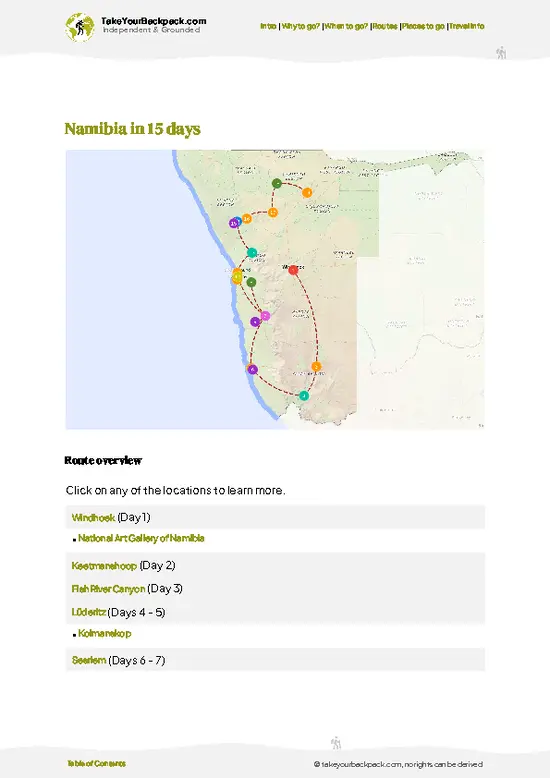
75 ranked highlights, routes & tips, works offline (305 pages)
Loading the map 🌍
CLICK TO FILTER
cities
towns
villages
landmarks
national parks
hikes
beaches
attractions
festivals
regions
SHOW COUNTRY’S BESTSHOW ALL

✨ Why go?
Ranked #4 attraction in Namibia
Why visitors keep coming back

The Living Museum of the Damara in Namibia isn’t just another stop on the tourist checklist—it’s a raw, unfiltered dive into a culture that’s often sidelined in mainstream travel. Yes, it draws crowds, especially during peak seasons, and the entrance fee isn’t pocket change for a backpacker. But here’s the kicker: this place delivers a payoff that’s hard to match. You’re not just watching a show; you’re stepping into the daily life of the Damara people, whose history is etched in survival and adaptation in one of Africa’s toughest environments. The museum’s authenticity hits you in the gut—traditional dances, ancient crafts, and storytelling that doesn’t sugarcoat the past or present. It’s a cultural immersion that demands your attention and rewards it with a deeper understanding of Namibia … read more 👉
The Living Museum of the Damara in Namibia isn’t just another stop on the tourist checklist—it’s a raw, unfiltered dive into a culture that’s often sidelined in mainstream travel. Yes, it draws crowds, especially during peak seasons, and the entrance fee isn’t pocket change for a backpacker. But here’s the kicker: this place delivers a payoff that’s hard to match. You’re not just watching a show; you’re stepping into the daily life of the Damara people, whose history is etched in survival and adaptation in one of Africa’s toughest environments. The museum’s authenticity hits you in the gut—traditional dances, ancient crafts, and storytelling that doesn’t sugarcoat the past or present. It’s a cultural immersion that demands your attention and rewards it with a deeper understanding of Namibia beyond the usual safari clichés. For backpackers threading through Namibia, this museum is a milestone—a moment to pause and recalibrate your journey with real human stories, not just landscapes. The effort to get here, both in time and money, is balanced by the richness of experience, making it a rare stop where education and adrenaline meet. If you want Namibia’s soul, this is where you find it.
Want to include Living Museum of the Damara in your Namibia route?
Create a personalized Namibia itinerary that includes Living Museum of the Damara and the places that fit your trip — based on your travel style, budget, and available time. Get your route in seconds.

Generate my trip

💡 HighlightsTop highlights of Living Museum of the Damara

Traditional Fire-Making Demonstration
Forget the Instagram shot of someone striking a match in the desert. Here, you watch Damara guides coax fire from sticks and friction, the way their ancestors did for centuries. No lighter fluid, no shortcuts. The process is slow, deliberate, and—if you’re honest with yourself—kind of mesmerizing. The real magic isn’t just the flames, but the quiet pride in the guide’s eyes when the first curl of smoke appears. You’ll never look at your Bic the same way again.


Damara Language and Clicks
You’ve probably heard about the famous “click” languages of southern Africa, but hearing Damara spoken up close is a different animal. Guides don’t just recite a few words—they’ll break down the mechanics, show you how to shape your tongue, and challenge you to try it … read more 👉
Traditional Fire-Making Demonstration
Forget the Instagram shot of someone striking a match in the desert. Here, you watch Damara guides coax fire from sticks and friction, the way their ancestors did for centuries. No lighter fluid, no shortcuts. The process is slow, deliberate, and—if you’re honest with yourself—kind of mesmerizing. The real magic isn’t just the flames, but the quiet pride in the guide’s eyes when the first curl of smoke appears. You’ll never look at your Bic the same way again.


Damara Language and Clicks
You’ve probably heard about the famous “click” languages of southern Africa, but hearing Damara spoken up close is a different animal. Guides don’t just recite a few words—they’ll break down the mechanics, show you how to shape your tongue, and challenge you to try it yourself. Spoiler: you’ll probably fail, but you’ll laugh, and you’ll walk away with a new respect for the complexity of human language. This isn’t a rehearsed performance; it’s a living lesson in culture and communication.


Traditional Craftsmanship: Jewelry and Tools
This isn’t a souvenir stall. Damara artisans sit in the shade, carving ostrich eggshell beads or shaping tools from bone and stone. You see the process from raw material to finished product, and you can ask questions as they work. The entertainment isn’t just in the skill, but in the stories—how each object fits into daily life, what it means, and why certain patterns matter. If you want to buy something, you’re buying hours of labor and generations of knowledge, not a mass-produced trinket.


Medicinal Plant Walk
The Damara don’t just point at bushes and rattle off names. They’ll crush leaves, let you smell the sap, and explain which plants treat headaches, stomach aches, or snake bites. You’ll realize quickly that “wilderness survival” isn’t about bravado—it’s about knowing your landscape intimately. This is the kind of knowledge that Instagram never captures: the difference between a plant that heals and one that kills, passed down by word of mouth.


Traditional Song and Dance
This isn’t a Vegas revue. The Damara dance barefoot in the dust, singing in harmonies that rise and fall with the rhythm of handclaps and rattles. The songs aren’t just for show—they’re about rain, animals, and ancestors. You’ll feel the ground shake a little when everyone joins in. It’s participatory, not passive; you’re invited to join, and you’ll probably feel awkward at first. But that’s the point: you’re not just watching culture, you’re stepping into it.


Daily Life Reenactments
Here’s where the “living” part of the museum comes alive. You’ll see how Damara families cooked, built homes, and navigated the harsh Namibian landscape long before tourism was a thing. There’s no sugarcoating: life was tough, and the guides don’t pretend otherwise. But there’s humor, too—stories about clever tricks for catching small game, or how to keep kids entertained with nothing but a stick and imagination. It’s a crash course in resilience, minus the romantic filter.
Spotted a mistake or missing something? Contact us.

🌤️ When to go?Choosing the right time of year


  • Weather: The best time to visit the Living Museum of the Damara is during Namibia’s dry season, from May to October. Expect clear skies and almost no rain, which means less mud and more comfortable trekking around the open-air exhibits. Avoid the rainy season (November to April) when heavy downpours can make the experience soggy and less enjoyable.

  • Temperature: Days are pleasantly warm, ranging from 20°C to 28°C (68°F to 82°F) in the dry months, but nights can get chilly, dropping to around 5°C (41°F). If you’re not a fan of cold mornings, steer clear of June and July when temperatures dip the most.

  • Daylight Hours: From May to August, daylight is shorter, roughly 10 to 11 hours, so plan your visit earlier in the day to soak in the full experience without rushing. September and October
read more 👉

  • Weather: The best time to visit the Living Museum of the Damara is during Namibia’s dry season, from May to October. Expect clear skies and almost no rain, which means less mud and more comfortable trekking around the open-air exhibits. Avoid the rainy season (November to April) when heavy downpours can make the experience soggy and less enjoyable.

  • Temperature: Days are pleasantly warm, ranging from 20°C to 28°C (68°F to 82°F) in the dry months, but nights can get chilly, dropping to around 5°C (41°F). If you’re not a fan of cold mornings, steer clear of June and July when temperatures dip the most.

  • Daylight Hours: From May to August, daylight is shorter, roughly 10 to 11 hours, so plan your visit earlier in the day to soak in the full experience without rushing. September and October stretch daylight closer to 12 hours, giving you more time to explore.

  • Crowds: The dry season attracts more tourists, especially July and August, so expect a busier scene. If you want fewer people and a more intimate vibe, aim for May or September when the crowds thin out but the weather stays solid.

  • Seasonal Activities: Cultural demonstrations and traditional ceremonies are more frequent during the dry months, offering richer insights into Damara life. The rainy season sees fewer events, as locals focus on farming and less on tourism.

  • Price Fluctuations: Prices for tours and accommodations tend to peak in July and August. Booking in May or September can save you a bit without sacrificing the quality of your visit.


Pro-tip: Visit in early May or late September for the sweet spot of good weather, manageable crowds, and better prices—this is when the Living Museum feels most genuine, not just a tourist stop.


source: climatestotravel.comJANJanuary: below average for travelingFEBFebruary: below average for travelingMARMarch: below average for travelingAPRApril: fair for travelingMAYMay: excellent for travelingJUNJune: highly recommended for travelingJULJuly: good for travelingAUGAugust: good for travelingSEPSeptember: excellent for travelingOCTOctober: highly recommended for travelingNOVNovember: below average for travelingDECDecember: below average for traveling
when-to-go

✈️ The backpacker research shortcutNamibia Travel Guide

An offline-friendly backpacking guide with optimized travel routes, ranked highlights, transport advice, and the best areas to stay.
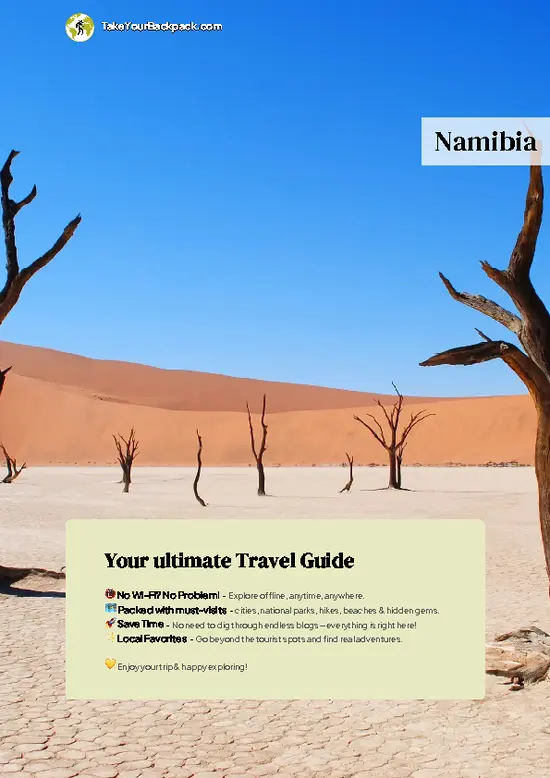
example page 0 from our offline Travel Guide for Namibia
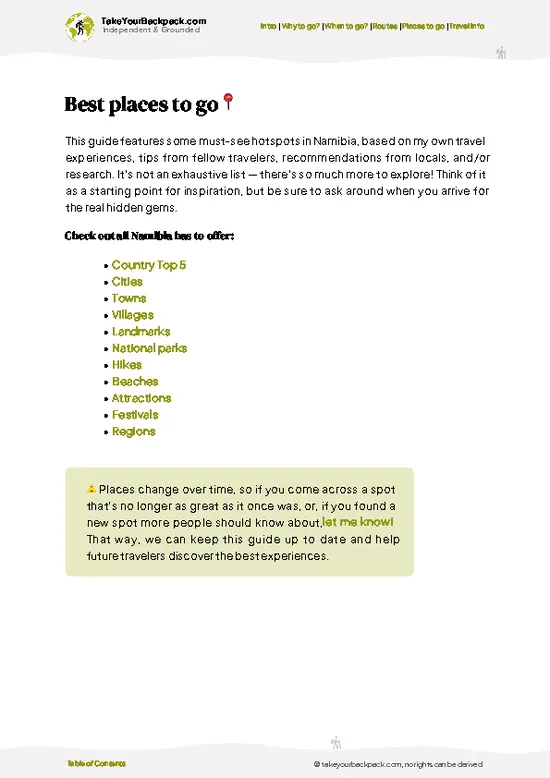
example page 1 from our offline Travel Guide for Namibia
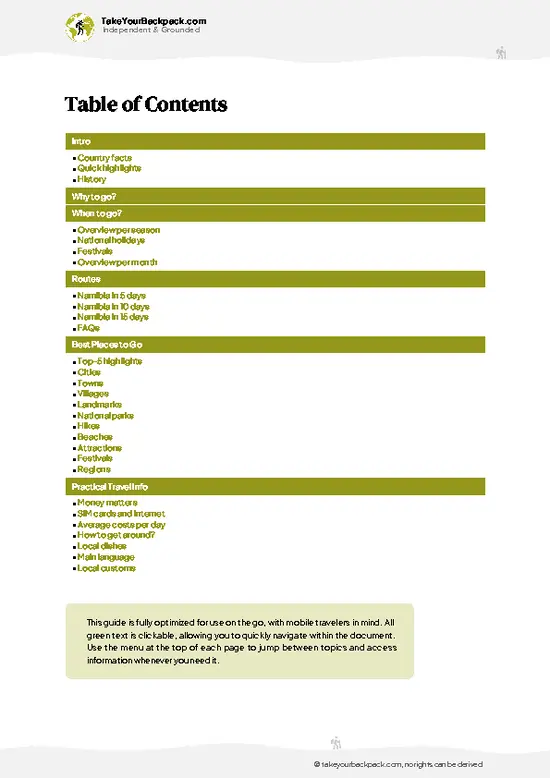
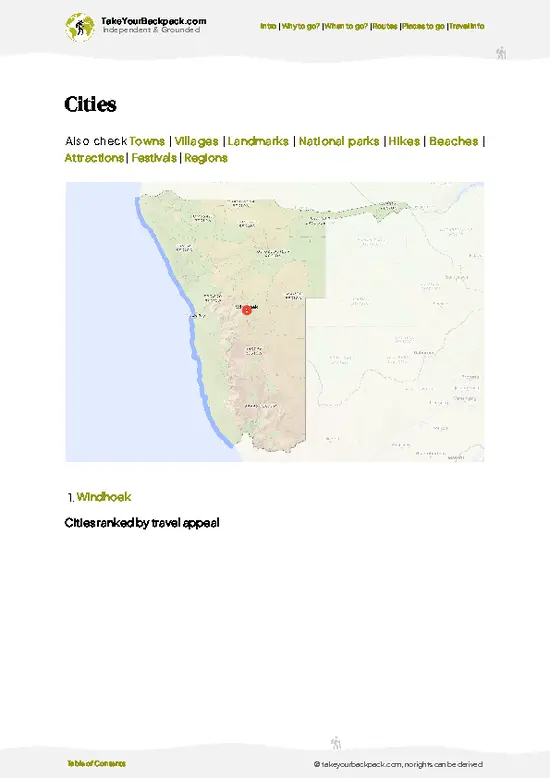
example page 2 from our offline Travel Guide for Namibia
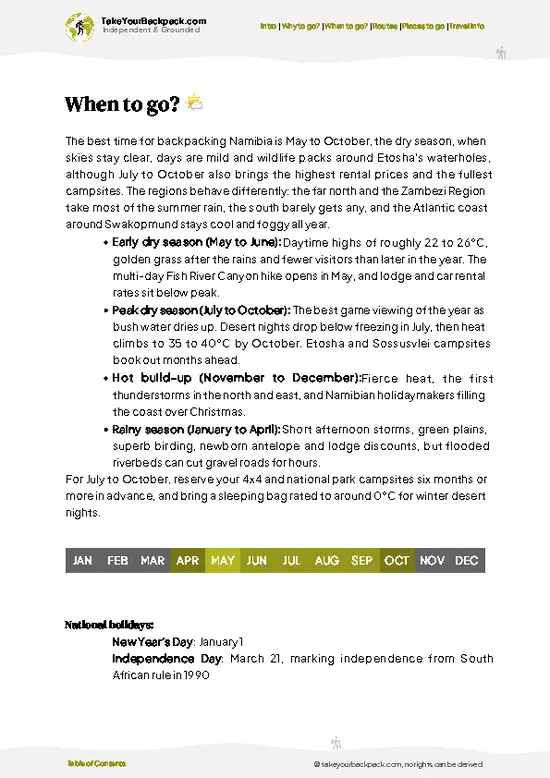
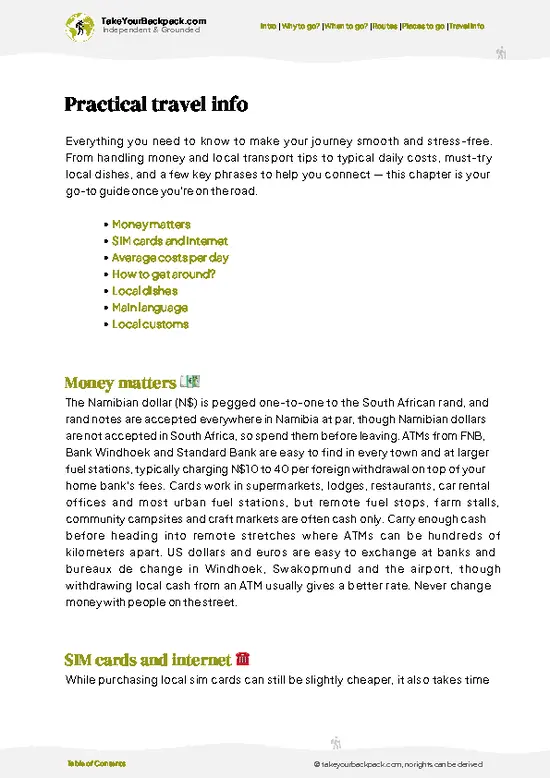
example page 3 from our offline Travel Guide for Namibia
example page 4 from our offline Travel Guide for Namibia
example page 5 from our offline Travel Guide for Namibia
example page 6 from our offline Travel Guide for Namibia
example page 7 from our offline Travel Guide for Namibia
The digital guide (305 pages) contains:
75 highlights, ranked by travel appeal
Optimized 5, 10 & 15-day travel routes
Cities, national parks, landmarks, beaches
How to get around
Offline-friendly for travel without Wi-Fi
👉 Click to see all 30+ guide features

📅 Plan smarter in minutes, not weeks
Month by month travel advice
Festivals & national holidays
Budget expectations

🗺️ Go to the right places, skip the overrated ones
Honest pros & cons of destinations
Top hikes, parks & viewpoints
Lesser-known places most travelers miss
Clear “worth it vs skip it” guidance

🛏️ Travel smoothly without rookie mistakes
Best areas to stay
Transport systems explained simply
Common scams & safety advice
SIM cards, money & practical tips

🌍 Understand the country, not just visit it
Culture & traditions
52 Essential phrases & customs
Festivals worth planning around
Traveler-friendly historical context
Insights that make places more meaningful

📱 Built for real travel conditions
Fully downloadable PDF
Works completely offline
Optimized for phone use
Useful in remote areas & buses
Everything in one place
Save weeks of stressful planning
Get instant access to your full guide. 30‑day money-back guarantee.


By proceeding you agree to our terms.
Sent to your inbox immediately after payment • 100% Secure Checkout
Best Backpacking Travel Advisor 2025 tourism awardBest Backpacking
Travel Advisor
2025
What others say about Take Your Backpack Guides:
⭐⭐⭐⭐⭐
Fantastic, amazing amount of information!
⭐⭐⭐⭐⭐
My goodness this is amazing, it's what I've been looking for hats off too you!
⭐⭐⭐⭐⭐
I think this is absolutely BRILLIANT
⭐⭐⭐⭐
Very complete and informative. It's still missing places, but I gotta to commend you
⭐⭐⭐⭐⭐
This is truly amazing, thank you, can't wait to explore it with my kids!
⭐⭐⭐⭐⭐
Awesome resource, thank you!
⭐⭐⭐⭐⭐
This is amazing! Can't wait to explore the ones I haven't seen
⭐⭐⭐⭐
I love this! Well done, great idea.
⭐⭐⭐⭐⭐
Thanks for taking the time to make this gem!
⭐⭐⭐⭐⭐
This might be the best website I've ever seen.
⭐⭐⭐⭐⭐
Congratulations, and thank you so much for your work; it's incredibly valuable.
⭐⭐⭐⭐
In all seriousness I think you did a great job pointing out the important spots
⭐⭐⭐⭐⭐
10/10 very good
⭐⭐⭐⭐⭐
As someone who's only just starting to visit regularly this is awesome, thank you.
⭐⭐⭐⭐
Thank you very much! I'm going to visit my dad, it's going to be very useful!
⭐⭐⭐⭐⭐
This is really cool! We'll be travelling for the first time and this definitely come in handy.
⭐⭐⭐⭐⭐
You are now our minister of culture, congratulations 👨‍💼
⭐⭐⭐⭐⭐
Just wanted to tell you that this is a pearl! Going to follow your recommendations.
⭐⭐⭐⭐⭐
This is so cool. I'll definitely be using the resource for my travels soon.
⭐⭐⭐⭐⭐
This is very impressive! Good work.
⭐⭐⭐⭐⭐
This is an amazing and informative site. Very well done!

🛏️ Where to stay?Choosing the right base

The Living Museum of the Damara is a magnet for travelers craving a raw slice of Namibian culture, but don’t expect a quiet, tucked-away retreat. It’s close to the town of Khorixas, which is your real base camp for this experience. Khorixas isn’t a bustling metropolis—it’s a small town with a rugged charm that’s perfect for backpackers who want to dive into local life without the tourist gloss.

Staying in Khorixas means you’re in a safe zone with enough social spots to meet fellow travelers and locals alike. The vibe here is low-key but genuine, with guesthouses and budget lodges that attract … read more 👉
The Living Museum of the Damara is a magnet for travelers craving a raw slice of Namibian culture, but don’t expect a quiet, tucked-away retreat. It’s close to the town of Khorixas, which is your real base camp for this experience. Khorixas isn’t a bustling metropolis—it’s a small town with a rugged charm that’s perfect for backpackers who want to dive into local life without the tourist gloss.

Staying in Khorixas means you’re in a safe zone with enough social spots to meet fellow travelers and locals alike. The vibe here is low-key but genuine, with guesthouses and budget lodges that attract solo adventurers and small groups who value authenticity over luxury. You won’t find flashy nightlife, but you will find campfires, shared meals, and conversations that go beyond surface-level travel talk.

If you’re after the ‘Instagram version’—think polished tours and crowds—this isn’t it. But if you want to feel the pulse of the Damara culture, hear the stories directly from the people, and explore the surrounding landscapes on your own terms, Khorixas is your launchpad. It’s where safety meets social ease, and where budget travelers can stretch their legs and their minds without the usual tourist traps. This is the kind of place that stays with you long after you leave.

👛 Costs (as of 2 August 2026)Money, prices, and spending tips

"}
⚠️ Prices can change and everyone travels differently, so take this as a rough guide. Hope it helps you plan your adventure!

Other Namibian attractions near Living Museum of the Damara

Explore more nearby:


💡 Not sure where to go next?
Create a personalized itinerary for Namibia including Living Museum of the Damara and the places that fit your trip.

Generate my itinerary

👉 Discover all attractions

Or checkout all Namibia has to offer (think cities, towns, villages, national parks, hikes, beaches, festivals)
Country photo of Namibia

We 💚 feedbackIs it worth it?

The Living Museum of the Damara isn’t a polished theme park—it’s raw, real, and sometimes a bit chaotic with groups coming through. Don’t expect a quiet, curated experience; it’s more like stepping into a lively family gathering where you’re invited to watch and learn. The real magic is in the stories shared by the Damara guides, who bring their culture to life with humor and pride. If you’re after something glossy, skip it. But if you want to connect with a culture that’s stubbornly alive and kicking, this place delivers.

✍️ Help improve this page!
The information on this page is based on in-depth research, insights shared by experienced travelers, and feedback from the local travel community in Namibia. While every effort is made to keep the information accurate and current, conditions can change — so if you spot anything incorrect or outdated, please get in touch.


🙋‍♂️ Give feedback

👋 Meet the founderWho’s Behind Take Your Backpack?

Johan, backpacker and founder of TakeYourBackpackHi, I’m Johan (Netherlands 🇳🇱), the creator of TakeYourBackpack. Over the past decade, I’ve backpacked through 80+ countries across six continents, gaining extensive experience with independent travel, long-term trips, and overland routes.

This site is built on a combination of firsthand travel experience and carefully curated insights from other backpackers. Many guides are based on places I’ve personally visited, while others bring together tips, observations, and practical advice shared by trusted travelers I’ve met along the way.

The goal is to provide realistic, experience-driven guidance — not generic itineraries — so you can explore destinations with better context, clearer expectations, and more confidence.

Get full Namibia guide •
Instant download • 75 highlights • Full Offline guide