×

Namibia🇳🇦 | townsOtjiwarongoCheetah research, crocodile farm, bronze mascot | things to do and best time to go

Explore OkahandjaExplore Oshakati

Backpacking in Otjiwarongo
🌟 Highlighttown ranked #6
By Johan Kruseman 🇳🇱 | Updated October 22, 2026

Otjiwarongo is best known as the gateway to Namibia’s cheetah country, and the town’s own mascot is a bronze cheetah statue near the main road through town. It sits in the north of Namibia, on the B1 highway and the railway line, roughly midway between Windhoek and Etosha. The streets are wide, flat and dusty, smelling of diesel, braai smoke and warm tarmac, and the midday sun is flat and hard. Town itself is quiet. A few hostels, guesthouses and cafés give you slow evenings, and you meet other travelers mostly at breakfast tables and on shared farm tours. Buses and shuttles stop here because it is a fuel and supply town, so getting in is easy. Shops close early on Saturday afternoon and stay shut on Sunday, so stock up on food and cash before the weekend.

Discover everything you want to know in the 📖 Namibia Travel Guide.


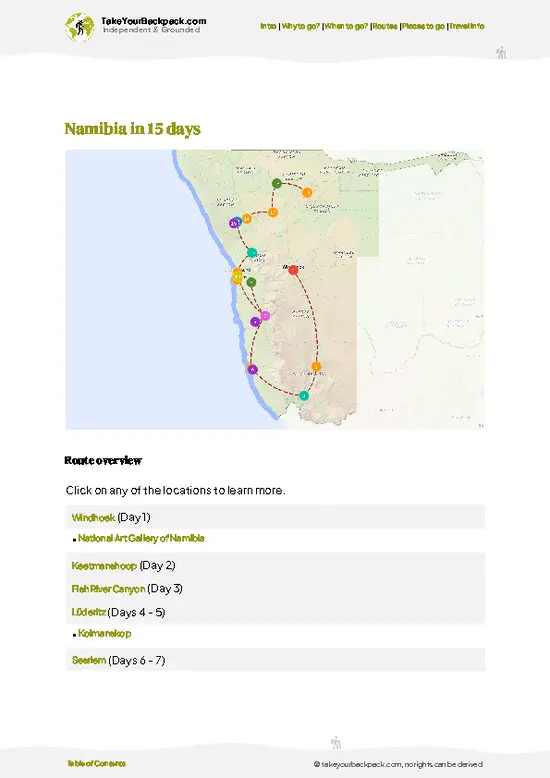
example page 0 from our offline Travel Guide for Namibia
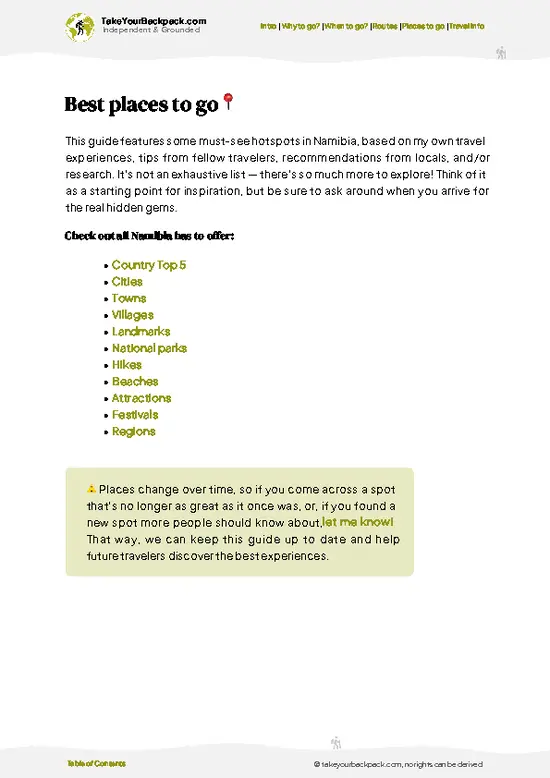
example page 1 from our offline Travel Guide for Namibia
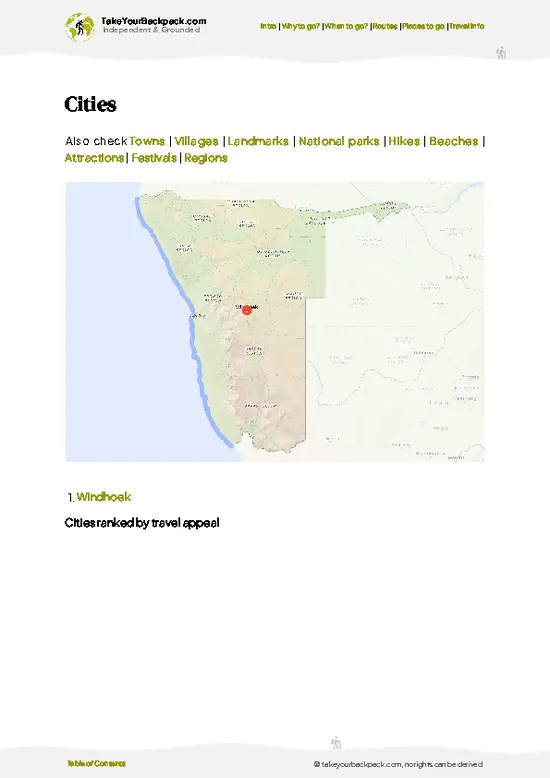
example page 2 from our offline Travel Guide for Namibia
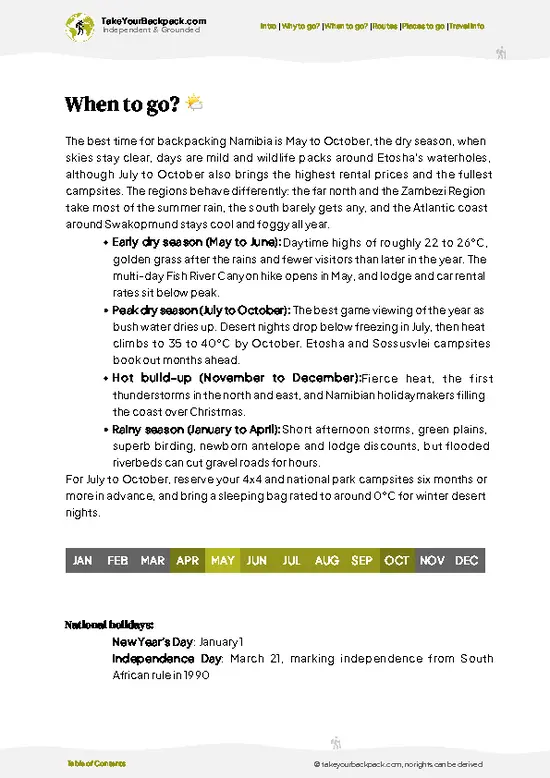
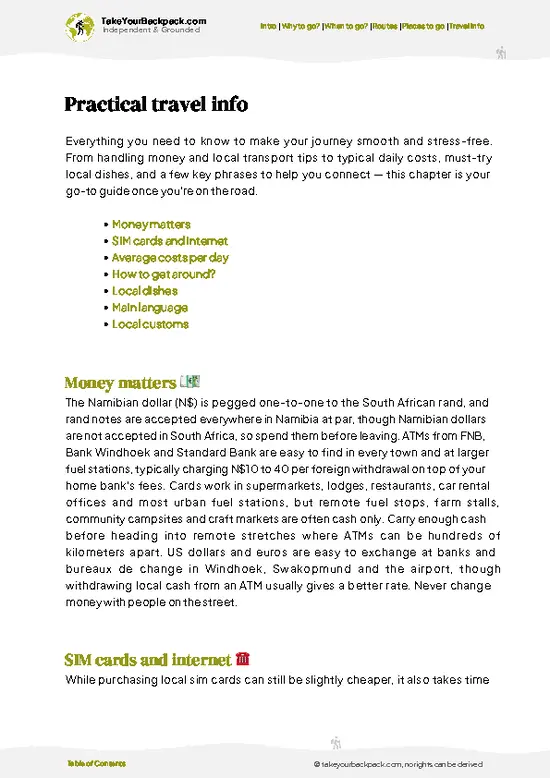
example page 3 from our offline Travel Guide for Namibia
example page 4 from our offline Travel Guide for Namibia
example page 5 from our offline Travel Guide for Namibia
example page 6 from our offline Travel Guide for Namibia
example page 7 from our offline Travel Guide for Namibia
Loading the map 🌍
CLICK TO FILTER
cities
towns
villages
landmarks
national parks
hikes
beaches
attractions
festivals
regions
SHOW COUNTRY’S BESTSHOW ALL

✨ Why go?
Ranked #6 town in Namibia
What makes it a must-see town

Otjiwarongo earns its place on a northern Namibia route because the best things sit just outside town. The Cheetah Conservation Fund is the headline, and its research center lets you see why farmers and big cats clash and what is being done about it. Add the Waterberg Plateau to the east and you have two solid days of wildlife, sandstone cliffs and walking trails without crowds. In town, small guesthouses and a couple of cafés make it an easy reset: laundry, groceries, ATM, a proper meal. Most people stay one or two nights, usually on the way to or from Etosha, and the Crocodile Ranch adds a short, odd diversion. It suits self-drivers, hikers, wildlife nerds and anyone who likes a calm base. If you want nightlife or a lively old center, keep moving north.

💡 HighlightsThe experiences that define the visit

  1. Cheetah Conservation Fund: The town’s best-known draw, a research center where you can watch cheetahs being fed and see the genetics lab and the museum. Go in the cooler morning when the animals are active. Entry runs about US$10 to 15 for the center, with guided tours costing more, and visits take 2 to 3 hours.
  2. Otjiwarongo Crocodile Ranch: A working farm with hundreds of Nile crocodiles in pens, and a small café on site. The feeding sessions in the afternoon are the moment to be there. Expect around US$5 to 8 and about 1 hour.
  3. Cheetah statue and Main Street: The bronze cheetah on the roadside is the town’s emblem and a quick photo stop. Walk the main strip afterwards past supermarkets, bakeries and curio stalls. It is free and takes 30 minutes.
  4. Otjiwarongo Railway Station: A small colonial-era
… read more 👉
  1. Cheetah Conservation Fund: The town’s best-known draw, a research center where you can watch cheetahs being fed and see the genetics lab and the museum. Go in the cooler morning when the animals are active. Entry runs about US$10 to 15 for the center, with guided tours costing more, and visits take 2 to 3 hours.
  2. Otjiwarongo Crocodile Ranch: A working farm with hundreds of Nile crocodiles in pens, and a small café on site. The feeding sessions in the afternoon are the moment to be there. Expect around US$5 to 8 and about 1 hour.
  3. Cheetah statue and Main Street: The bronze cheetah on the roadside is the town’s emblem and a quick photo stop. Walk the main strip afterwards past supermarkets, bakeries and curio stalls. It is free and takes 30 minutes.
  4. Otjiwarongo Railway Station: A small colonial-era station on the line to the north, with the old German-style building still standing. Visit in good daylight for photos and a glimpse of the freight trains that run through. It costs nothing and takes 15 to 20 minutes.
  5. Augeigas Locomotive Memorial: Old steam locomotive displays near the rail yard recall the narrow-gauge era that built the northern network. It is a short, free wander of 20 minutes, best in warm afternoon light.
At the end of the list, the bigger draws outside town are Waterberg Plateau Park, Okonjima’s AfriCat Foundation and the road north to Etosha National Park, all easy to reach by car for a day out from Otjiwarongo.
Do the Cheetah Conservation Fund first, since morning feeding is when the cats are most visible and the heat has not yet built.
Spotted a mistake or missing something? Contact us.

🏘️ NeighborhoodsWhere things are and how it's laid out

Otjiwarongo is small and flat, and its areas are separated by a few kilometers at most, so the layout is easy to read once you know the grid.
  • Central Business District (Hage Geingob and Long Street area): Wide, dusty-edged streets, supermarkets, banks with ATMs, bakeries that smell of fresh bread by mid-morning, and fuel stations. Shops close early on Saturday afternoon and mostly shut on Sunday, so stock up on cash and food before then. Fully walkable, though the midday sun is fierce and shade is thin.
  • Crocodile Ranch and Okonjima road side: Out toward the edge of town sit the crocodile ranch and the road north-east to the Africat reserve. Expect gravel crunching underfoot, acacia scrub and the occasional cattle truck. Too spread out to walk comfortably, so take a taxi for the short ride.
  • Paddock
… read more 👉
Otjiwarongo is small and flat, and its areas are separated by a few kilometers at most, so the layout is easy to read once you know the grid.
  • Central Business District (Hage Geingob and Long Street area): Wide, dusty-edged streets, supermarkets, banks with ATMs, bakeries that smell of fresh bread by mid-morning, and fuel stations. Shops close early on Saturday afternoon and mostly shut on Sunday, so stock up on cash and food before then. Fully walkable, though the midday sun is fierce and shade is thin.
  • Crocodile Ranch and Okonjima road side: Out toward the edge of town sit the crocodile ranch and the road north-east to the Africat reserve. Expect gravel crunching underfoot, acacia scrub and the occasional cattle truck. Too spread out to walk comfortably, so take a taxi for the short ride.
  • Paddock and the town park area: A calmer residential zone with the Paula Hill-style green belt of the municipal park, where you hear weaverbirds and sprinklers. It is a pleasant place for an evening stroll while it is still light, since street lighting is patchy afterward.
  • Orwetoveni: A residential township on the edge of town, with small shebeens, braai smoke in the evening and loud music on weekends. It is lively, but go with a local host or guide rather than wandering in unannounced, because there are no tourist services and little transport back after dark.

⌛️ 1 dayA smart one-day plan

This is a cheetah-and-farmland day, built around one big outing and an easy town loop.
7:30 AM: Breakfast on Main Street
Start with coffee and a pastry at a bakery café, then pick up water and snacks at a supermarket for the day.
9:00 AM: Cheetah Conservation Fund
Drive or take a pre-arranged shuttle to the center. Join the tour, see the cats being fed and spend time in the small museum. It is the reason to come, so give it the full morning.
12:30 PM: Lunch at the center café
Eat on site under shade, then head back toward town.
2:00 PM: Crocodile Ranch
Watch the afternoon feeding, when the pens go from still to a thrashing scramble. It is short, loud and strangely absorbing.
3:30 PM: Railway station and locomotive display
Walk the quiet streets near the tracks, where few visitors go. The old station … read more 👉
This is a cheetah-and-farmland day, built around one big outing and an easy town loop.
7:30 AM: Breakfast on Main Street
Start with coffee and a pastry at a bakery café, then pick up water and snacks at a supermarket for the day.
9:00 AM: Cheetah Conservation Fund
Drive or take a pre-arranged shuttle to the center. Join the tour, see the cats being fed and spend time in the small museum. It is the reason to come, so give it the full morning.
12:30 PM: Lunch at the center café
Eat on site under shade, then head back toward town.
2:00 PM: Crocodile Ranch
Watch the afternoon feeding, when the pens go from still to a thrashing scramble. It is short, loud and strangely absorbing.
3:30 PM: Railway station and locomotive display
Walk the quiet streets near the tracks, where few visitors go. The old station building, rusting engines and freight wagons show the town’s real origin, and you will likely have the place to yourself.
5:00 PM: Cheetah statue
Take the classic photo as the light softens, then browse the curio stalls nearby.
6:30 PM: Dinner
Finish with grilled meat at a local restaurant, which is the usual way to end a day here.

🌤️ When to go?Best time to visit Otjiwarongo

May to September is the easiest window for backpacking around Otjiwarongo, with dry days and cold nights.
  • Dry winter (May to September): Days reach 22 to 27°C (72 to 81°F), but nights in July can fall to 3 to 6°C (37 to 43°F). Roads stay firm, game gathers at waterholes and the sun is up for roughly 11 hours. Lodge prices are highest and weekends fill.
  • Hot build-up (October to November): Highs of 32 to 36°C (90 to 97°F), dust and little rain. Wildlife viewing is excellent, rooms are cheaper and the afternoons are punishing.
  • Rainy season (December to April): Warm at 28 to 33°C (82 to 91°F), with thunderstorms mostly in the afternoon, especially January to March. The bush turns green, birding peaks, and some gravel roads turn slick. Rates drop.
Book Africat-area lodging at least a few weeks ahead for July and August.

source: climatestotravel.comJANJanuary: fair for travelingFEBFebruary: fair for travelingMARMarch: fair for travelingAPRApril: good for travelingMAYMay: highly recommended for travelingJUNJune: highly recommended for travelingJULJuly: good for travelingAUGAugust: good for travelingSEPSeptember: excellent for travelingOCTOctober: excellent for travelingNOVNovember: fair for travelingDECDecember: fair for traveling
when-to-go

✈️ The backpacker research shortcutNamibia Travel Guide

An offline-friendly backpacking guide with optimized travel routes, ranked highlights, transport advice, and the best areas to stay.
example page 0 from our offline Travel Guide for Namibia
example page 1 from our offline Travel Guide for Namibia
example page 2 from our offline Travel Guide for Namibia
example page 3 from our offline Travel Guide for Namibia
example page 4 from our offline Travel Guide for Namibia
example page 5 from our offline Travel Guide for Namibia
example page 6 from our offline Travel Guide for Namibia
example page 7 from our offline Travel Guide for Namibia
The digital guide (294 pages) contains:
✅ 71 highlights, ranked by travel appeal
✅ Optimized 5, 10 & 15-day travel routes
✅ Cities, national parks, landmarks, beaches
✅ How to get around
✅ Offline-friendly for travel without Wi-Fi
👉 Click to see all 30+ guide features

📅 Plan smarter in minutes, not weeks
✅ Month by month travel advice
✅ Festivals & national holidays
✅ Budget expectations

🗺️ Go to the right places, skip the overrated ones
✅ Honest pros & cons of destinations
✅ Top hikes, parks & viewpoints
✅ Lesser-known places most travelers miss
✅ Clear “worth it vs skip it” guidance

🛏️ Travel smoothly without rookie mistakes
✅ Best areas to stay
✅ Transport systems explained simply
✅ Common scams & safety advice
✅ SIM cards, money & practical tips

🌍 Understand the country, not just visit it
✅ Culture & traditions
✅ 52 Essential phrases & customs
✅ Festivals worth planning around
✅ Traveler-friendly historical context
✅ Insights that make places more meaningful

📱 Built for real travel conditions
✅ Fully downloadable PDF
✅ Works completely offline
✅ Optimized for phone use
✅ Useful in remote areas & buses
✅ Everything in one place
Stop searching, start planning
Get instant access to your full guide. 30‑day money-back guarantee.
+ Add another guide for just

By proceeding you agree to our terms.
Sent to your inbox immediately after payment • 100% Secure Checkout
Best Backpacking Travel Advisor 2025 tourism awardBest Backpacking
Travel Advisor
2025
What others say about Take Your Backpack Guides:
⭐⭐⭐⭐⭐
Fantastic, amazing amount of information!
⭐⭐⭐⭐⭐
My goodness this is amazing, it's what I've been looking for hats off too you!
⭐⭐⭐⭐⭐
I think this is absolutely BRILLIANT
⭐⭐⭐⭐
Very complete and informative. It's still missing places, but I gotta to commend you
⭐⭐⭐⭐⭐
This is truly amazing, thank you, can't wait to explore it with my kids!
⭐⭐⭐⭐⭐
Awesome resource, thank you!
⭐⭐⭐⭐⭐
This is amazing! Can't wait to explore the ones I haven't seen
⭐⭐⭐⭐
I love this! Well done, great idea.
⭐⭐⭐⭐⭐
Thanks for taking the time to make this gem!
⭐⭐⭐⭐⭐
This might be the best website I've ever seen.
⭐⭐⭐⭐⭐
Congratulations, and thank you so much for your work; it's incredibly valuable.
⭐⭐⭐⭐
In all seriousness I think you did a great job pointing out the important spots
⭐⭐⭐⭐⭐
10/10 very good
⭐⭐⭐⭐⭐
As someone who's only just starting to visit regularly this is awesome, thank you.
⭐⭐⭐⭐
Thank you very much! I'm going to visit my dad, it's going to be very useful!
⭐⭐⭐⭐⭐
This is really cool! We'll be travelling for the first time and this definitely come in handy.
⭐⭐⭐⭐⭐
You are now our minister of culture, congratulations 👨‍💼
⭐⭐⭐⭐⭐
Just wanted to tell you that this is a pearl! Going to follow your recommendations.
⭐⭐⭐⭐⭐
This is so cool. I'll definitely be using the resource for my travels soon.
⭐⭐⭐⭐⭐
This is very impressive! Good work.
⭐⭐⭐⭐⭐
This is an amazing and informative site. Very well done!

🛏️ Where to stay?Choosing the right base

The center of Otjiwarongo, within walking distance of the main road, is the best place for a budget bed. It has the town’s cheapest guesthouses and a couple of backpacker-style options, plus supermarkets, ATMs and the minibus pick-up points a few minutes away on foot. Dorm beds are limited, so most backpackers end up in private rooms or campsites at roughly US$15 to 40, and booking ahead matters in July and August.
Streets here are fairly quiet at night, with the main noise coming from passing trucks on the highway and some early-morning traffic. Lighting is decent on the main roads, but walk back … read more 👉
The center of Otjiwarongo, within walking distance of the main road, is the best place for a budget bed. It has the town’s cheapest guesthouses and a couple of backpacker-style options, plus supermarkets, ATMs and the minibus pick-up points a few minutes away on foot. Dorm beds are limited, so most backpackers end up in private rooms or campsites at roughly US$15 to 40, and booking ahead matters in July and August.
Streets here are fairly quiet at night, with the main noise coming from passing trucks on the highway and some early-morning traffic. Lighting is decent on the main roads, but walk back before it is fully dark and use a taxi after dinner.
The second option is the outskirts, along the road toward the crocodile ranch and the nearby lodges. Campsites and self-catering units here are peaceful, with big night skies and bird calls at dawn, and they cost about US$10 to 20 for a pitch. You will need a car or a taxi, and transport links into town are thin, so stock up on food beforehand.

🚌 Getting aroundGetting around like a local

Walking covers the center of Otjiwarongo, and a short taxi hop handles everything else, because the town is flat and spread along one main road with the highway and railway running through it.
Public transport is thin. There is no city bus network, so distances beyond the center rely on taxis, lifts and intercity services.
  • Walking: The shops, banks, bakeries and bus stops sit within about 1.5 km (1 mile) of each other. Midday heat is hard and pavements end quickly, so go in the morning and carry water.
  • Local taxis: Shared or private sedans cruise the main road and wait outside supermarkets. Fares inside town run about US$1.50 to 3 per trip; rides to the crocodile ranch or lodges on the outskirts cost US$5 to 12. Agree the price before you get in, as meters are rare, and save the driver’s number
… read more 👉
Walking covers the center of Otjiwarongo, and a short taxi hop handles everything else, because the town is flat and spread along one main road with the highway and railway running through it.
Public transport is thin. There is no city bus network, so distances beyond the center rely on taxis, lifts and intercity services.
  • Walking: The shops, banks, bakeries and bus stops sit within about 1.5 km (1 mile) of each other. Midday heat is hard and pavements end quickly, so go in the morning and carry water.
  • Local taxis: Shared or private sedans cruise the main road and wait outside supermarkets. Fares inside town run about US$1.50 to 3 per trip; rides to the crocodile ranch or lodges on the outskirts cost US$5 to 12. Agree the price before you get in, as meters are rare, and save the driver’s number for the ride back.
  • Intercity minibuses and buses: Minibuses fill at the service station area and leave when full, so arrive early. Windhoek takes about 3.5 to 4 hours for roughly US$10 to 15, and Tsumeb or Grootfontein around 2 to 3 hours for US$8 to 12. Expect cramped seats and loud radios. Services thin out after the afternoon.
  • Hitchhiking and lifts: On the B1, locals and farmers often pick up travelers heading north or south, and most expect a small contribution for fuel. Stand near the fuel stations where trucks stop, and avoid traveling after dark.
  • Car rental: Many travelers self-drive, since sights such as Waterberg Plateau and Okonjima are not on any bus line. Compact rentals start around US$35 to 55 a day, and fuel stations are plentiful on the B1 but sparse on gravel. Watch for kudu and warthogs at dusk, which is the main road hazard.

👛 Costs (as of 22 October 2026)Travel costs and budget guide for Otjiwarongo

Otjiwarongo costs most backpackers about US$62 a day, with a car and park fees pushing it higher.
CategoryBudget RangeLocal Reality
Dorm accommodationUS$12 to 22 (high season), US$10 to 18 (low season)Dorm beds are scarce, so many travelers pay for a basic room or campsite instead.
MealsUS$15 to 25Bakery pies, supermarket groceries and grilled meat from small restaurants; a sit-down dinner is around US$8 to 12.
Local transportUS$5 to 12Short taxi rides cost US$1.50 to 3, longer trips to the outskirts cost more.
Basic activities/entry feesUS$10 to 20Crocodile ranch and Waterberg entries are modest, while Okonjima activities are much higher.
Miscellaneous expensesUS$3 to 8Water, SIM data and snacks, paid in Namibian dollars.
Total Daily BudgetUS$62Based on high-season accommodation.
Buy groceries at … read more 👉
Otjiwarongo costs most backpackers about US$62 a day, with a car and park fees pushing it higher.
CategoryBudget RangeLocal Reality
Dorm accommodationUS$12 to 22 (high season), US$10 to 18 (low season)Dorm beds are scarce, so many travelers pay for a basic room or campsite instead.
MealsUS$15 to 25Bakery pies, supermarket groceries and grilled meat from small restaurants; a sit-down dinner is around US$8 to 12.
Local transportUS$5 to 12Short taxi rides cost US$1.50 to 3, longer trips to the outskirts cost more.
Basic activities/entry feesUS$10 to 20Crocodile ranch and Waterberg entries are modest, while Okonjima activities are much higher.
Miscellaneous expensesUS$3 to 8Water, SIM data and snacks, paid in Namibian dollars.
Total Daily BudgetUS$62Based on high-season accommodation.
Buy groceries at the supermarkets in town and cook at a campsite or guesthouse kitchen, which easily saves US$10 a day over eating out.
⚠️ Prices can change and everyone travels differently, so take this as a rough guide. Hope it helps you plan your adventure!

🚌 Day tripsExploring the surroundings

Otjiwarongo works well as a day-trip base because the B1 highway and several good gravel roads lead to major wildlife sites within about 1.5 hours, though most need a car or a booked transfer.
Okonjima and the Africat Foundation:
This private reserve, about 45 minutes south on the B1, is the best place nearby to see leopard and cheetah that are tracked on foot or from vehicles. Day visitors pay roughly US$60 to 110 for an activity, and taxi transfers add US$40 to 60 return. Go in the dry months, and book the activity ahead, since walk-ins are often turned away.
👉 Explore Okonjima Nature Reserve
Waterberg Plateau Park:
A sandstone escarpment rising abruptly out of the flat bushland, about 1.5 hours east by road. A guided or self-guided hike up through red rock and fig trees gives long views over … read more 👉
Otjiwarongo works well as a day-trip base because the B1 highway and several good gravel roads lead to major wildlife sites within about 1.5 hours, though most need a car or a booked transfer.
Okonjima and the Africat Foundation:
This private reserve, about 45 minutes south on the B1, is the best place nearby to see leopard and cheetah that are tracked on foot or from vehicles. Day visitors pay roughly US$60 to 110 for an activity, and taxi transfers add US$40 to 60 return. Go in the dry months, and book the activity ahead, since walk-ins are often turned away.
👉 Explore Okonjima Nature Reserve
Waterberg Plateau Park:
A sandstone escarpment rising abruptly out of the flat bushland, about 1.5 hours east by road. A guided or self-guided hike up through red rock and fig trees gives long views over the plains and a chance to spot rock hyrax and klipspringer. Entry is about US$10 to 15 plus a vehicle fee, and fuel for a rental runs US$20. Start early, because afternoon heat on the trail is serious.

Cheetah Conservation Fund:
About 45 minutes east, the research center runs tours that explain how farmers and cheetahs coexist and let you watch the animals being fed. Entry costs roughly US$20 to 30 and a taxi is around US$30 to 50 return. Many first-timers arrive late, and the best time is the morning session.

Mount Etjo and Waterberg birding drives:
Gravel back roads past farms and dry riverbeds around Otjiwarongo reward self-drivers with birds, kudu and distant ridgelines, best in the green season.

🛡️ SafetyScams, Hazards, and Annoyances

Otjiwarongo is one of the calmer towns on the northern Namibian circuit, and most travelers pass through without a single problem. Petty theft is the realistic risk, so keep phones and cameras out of sight when walking near the main road and the Spar and Pick n Pay parking lots, and never leave bags visible in a parked car. At night, stick to the central streets and take a taxi rather than walking the dark residential stretches toward the edge of town, particularly if you are alone. Solo women generally report little hassle beyond curious greetings, and a polite, firm no ends most conversations. Occasional requests for money or a lift near petrol stations are an annoyance, not a threat. Carry only the cash you need for the day, lock your dorm locker, and keep the keys to your hired car on … read more 👉
Otjiwarongo is one of the calmer towns on the northern Namibian circuit, and most travelers pass through without a single problem. Petty theft is the realistic risk, so keep phones and cameras out of sight when walking near the main road and the Spar and Pick n Pay parking lots, and never leave bags visible in a parked car. At night, stick to the central streets and take a taxi rather than walking the dark residential stretches toward the edge of town, particularly if you are alone. Solo women generally report little hassle beyond curious greetings, and a polite, firm no ends most conversations. Occasional requests for money or a lift near petrol stations are an annoyance, not a threat. Carry only the cash you need for the day, lock your dorm locker, and keep the keys to your hired car on you at all times. Tap water in town is treated and drinkable.

FAQTraveler FAQ

Otjiwarongo is worth a stop of one or two nights mainly as a gateway to wildlife and landscapes rather than for the town itself. The crocodile ranch is a quick visit, while Okonjima (about 45 minutes south) and Waterberg Plateau (about 1.5 hours east) are the real draws. Budget roughly US$60 to 110 for an Okonjima activity.
Two nights is enough for Otjiwarongo and its surroundings, with one full day at Waterberg Plateau or Okonjima and another for the Cheetah Conservation Fund or a slower town visit. Add a third night if you want to hike Waterberg and see Okonjima separately. Most travelers on a road trip through the north use it as a short stop.
Otjiwarongo can be done from Windhoek only as a very long day, since the drive is about 3.5 to 4 hours each way along the B1. Minibuses cost roughly US$10 to 15 one way, but they leave once full and thin out in the afternoon. It is much better to stay at least one night, particularly if you want to visit Okonjima or Waterberg.
⚠️ Things can change over time, so always validate details locally before you go.

Other Namibian towns near Otjiwarongo

Explore more nearby:

  • Outjo—German bakery, colonial fort museum, Etosha approach| 64 km away
  • Omaruru—Shaded river bed, galleries, desert wine| 129 km away
  • Okahandja—Woodcarvers’ market, Herero graves, biltong stalls| 170 km away

💡 Not sure where to go next?
Create a personalized itinerary for Namibia including Otjiwarongo and the places that fit your trip.

Generate my itinerary

👉 Discover all towns

Or checkout all Namibia has to offer (think cities, towns, villages, national parks, hikes, beaches, festivals)
Country photo of Namibia

We 💚 feedbackWhat to keep in mind

Otjiwarongo’s easily overlooked detail is the railway quarter, where the old station and rusting locomotives sit a few minutes from the main road. Walk there in the late afternoon, when it is empty and quiet. I would also book a bed ahead in peak months, because the few good guesthouses fill quickly with Etosha-bound travelers.

✍️ Help improve this page!
The information on this page is based on in-depth research, insights shared by experienced travelers, and feedback from the local travel community in Namibia. While every effort is made to keep the information accurate and current, conditions can change — so if you spot anything incorrect or outdated, please get in touch.


🙋‍♂️ Give feedback

👋 Meet the founderWho’s Behind Take Your Backpack?

Johan, backpacker and founder of TakeYourBackpackHi, I’m Johan (Netherlands 🇳🇱), the creator of TakeYourBackpack. Over the past 3 decades, I’ve backpacked through 90+ countries across six continents, gaining extensive experience with independent travel, long-term trips, and overland routes.

This site is built on a combination of firsthand travel experience and carefully curated insights from other backpackers. Many guides are based on places I’ve personally visited, while others bring together tips, observations, and practical advice shared by trusted travelers I’ve met along the way.

The goal is to provide realistic, experience-driven guidance — not generic itineraries — so you can explore destinations with better context, clearer expectations, and more confidence.