×

Namibia🇳🇦 | townsOmaruruartist community, riverbank setting, local wineries, historic tower | things to do and best time to go

Explore UsakosExplore Aranos

Backpacking in Omaruru
🌟 Highlighttown ranked #8
By Johan Kruseman 🇳🇱 | Updated June 14, 2026

Most travelers only realize after leaving: Omaruru is where Namibia finally slows down enough for you to catch your breath—and actually taste the air, dust and all. Set in the Erongo Region, about three hours northwest of Windhoek, Omaruru is a small town that feels more like a pause button than a destination. For backpackers, it’s a practical midpoint between the capital and the wilds of Damaraland or the Skeleton Coast, but it’s not just a pit stop. The old German brewery, sleepy art galleries, and the scent of woodsmoke at dusk give the place a lived-in, local rhythm. You can walk almost everywhere, and the handful of hostels and cafés make it easy to swap stories, though don’t expect a party scene—this is a town for slow evenings, not wild nights. Costs are lower than Swakopmund, and it’s safer than most bigger towns, but you’ll need patience for spotty transport links and the kind of quiet that makes you notice your own footsteps. Compared to the tourist bustle of Swakopmund or the raw edge of Outjo, Omaruru is more relaxed, more genuine, and best for travelers who want to feel Namibia’s pace, not just race through it.

Discover everything you want to know in the 📖 Namibia Travel Guide.


Get your Namibia guide
79 ranked highlights, routes & tips, works offline (318 pages)
Loading the map 🌍
CLICK TO FILTER
cities
towns
villages
landmarks
national parks
hikes
beaches
attractions
festivals
regions
SHOW COUNTRY’S BESTSHOW ALL

✨ Why go?
Ranked #8 town in Namibia
Why visitors keep coming back

Backpackers flock to Omaruru for its convenience as a base for nearby hikes and cultural sites. The walkable streets invite exploration, while small-scale hostels and guesthouses offer a cozy atmosphere that feels like home. You can savor local dishes at family-run eateries, where the scent of spices fills the air. Travelers often stay a few days, soaking in the friendly social vibe that encourages connections among solo adventurers and small groups. It’s a place for slow travelers who appreciate the journey as much as the destination, making it a worthwhile stop rather than just a quick pit stop.
Want to include Omaruru in your Namibia route?
Create a personalized Namibia itinerary that includes Omaruru and the places that fit your trip — based on your travel style, budget, and available time. Get your route in seconds.

Generate my trip

💡 HighlightsEssential experiences to have while visiting Omaruru

  • Omaruru Museum — Small, well-curated town museum that lays out Omaruru’s layered history: local Herero and Nama culture, the mission and colonial periods, and archival photos and artifacts that make the town’s story easy to grasp in under an hour.
  • Rhenish Mission / Historic Church — The old mission church is an architectural and historical anchor for the town; visit for its period architecture, the surrounding mission grounds and cemetery, and a tangible sense of Omaruru’s 19th-20th century history.
  • Omaruru Art Route and artist studios — Omaruru has a surprisingly strong artist community; local galleries and working studios along the informal art route showcase paintings, sculpture, metalwork and ceramics and give a real feel for the town’s creative pulse.
  • Omaruru River spring and town
read more 👉
  • Omaruru Museum — Small, well-curated town museum that lays out Omaruru’s layered history: local Herero and Nama culture, the mission and colonial periods, and archival photos and artifacts that make the town’s story easy to grasp in under an hour.
  • Rhenish Mission / Historic Church — The old mission church is an architectural and historical anchor for the town; visit for its period architecture, the surrounding mission grounds and cemetery, and a tangible sense of Omaruru’s 19th-20th century history.
  • Omaruru Art Route and artist studios — Omaruru has a surprisingly strong artist community; local galleries and working studios along the informal art route showcase paintings, sculpture, metalwork and ceramics and give a real feel for the town’s creative pulse.
  • Omaruru River spring and town fig tree — The shallow Omaruru river and the old fig tree at the town center are where the settlement grew; the riverbed, seasonal birdlife and shaded public spots are worth a slow walk to see how locals use the space.
A few excellent day-trip highlights near Omaruru are the Erongo Mountains (rock formations, hiking and rock art), the dramatic granite towers of Spitzkoppe, and the Brandberg/White Lady area around Uis.
Spotted a mistake or missing something? Contact us.

🏘️ NeighborhoodsWhere things are and how it's laid out

Omaruru is a charming stopover in Namibia, blending history with a laid-back vibe. Here’s how to navigate its neighborhoods:

Town Center: This is the heartbeat of Omaruru. You’ll find local markets and cafes buzzing with life. It’s walkable, making it easy to explore on foot. Perfect for short stays, but the nightlife is mellow—ideal for those seeking a quiet evening.

Omaruru River Area: A bit more tranquil, this area offers scenic views and a relaxed atmosphere. It’s great for longer stays if you want to soak in nature. The river’s presence adds a refreshing scent to the air, and you can easily access hiking trails.

Old Railway Station: A historical spot with character. It’s less touristy, giving you a taste of local life. Transport links are decent, but it’s best for those who enjoy a … read more 👉
Omaruru is a charming stopover in Namibia, blending history with a laid-back vibe. Here’s how to navigate its neighborhoods:

Town Center: This is the heartbeat of Omaruru. You’ll find local markets and cafes buzzing with life. It’s walkable, making it easy to explore on foot. Perfect for short stays, but the nightlife is mellow—ideal for those seeking a quiet evening.

Omaruru River Area: A bit more tranquil, this area offers scenic views and a relaxed atmosphere. It’s great for longer stays if you want to soak in nature. The river’s presence adds a refreshing scent to the air, and you can easily access hiking trails.

Old Railway Station: A historical spot with character. It’s less touristy, giving you a taste of local life. Transport links are decent, but it’s best for those who enjoy a slower pace and don’t mind a bit of distance from the main attractions.

⌛️ 1 daySeeing the highlights in 24 hours

Omaruru, Namibia, is a charming town that offers a blend of rich history and vibrant local culture, often overlooked by the typical tourist trail. Start your morning at the local market, where the air is filled with the scent of fresh produce and handmade crafts. Grab a traditional breakfast of pap and stew from a vendor, and soak in the lively chatter around you.

In the afternoon, head to the Erongo Mountain Range for a short hike. The rugged terrain rewards you with stunning views and the chance to spot unique wildlife. Don’t miss the rock engravings at the nearby Twyfelfontein, a UNESCO World Heritage site that tells stories of ancient inhabitants.

As evening falls, stroll through the quaint streets of the old town. Stop by the Omaruru Brewery for a taste of locally crafted beer. The … read more 👉
Omaruru, Namibia, is a charming town that offers a blend of rich history and vibrant local culture, often overlooked by the typical tourist trail. Start your morning at the local market, where the air is filled with the scent of fresh produce and handmade crafts. Grab a traditional breakfast of pap and stew from a vendor, and soak in the lively chatter around you.

In the afternoon, head to the Erongo Mountain Range for a short hike. The rugged terrain rewards you with stunning views and the chance to spot unique wildlife. Don’t miss the rock engravings at the nearby Twyfelfontein, a UNESCO World Heritage site that tells stories of ancient inhabitants.

As evening falls, stroll through the quaint streets of the old town. Stop by the Omaruru Brewery for a taste of locally crafted beer. The atmosphere is relaxed, with locals sharing stories and laughter. This day in Omaruru isn’t just about sights; it’s about connecting with the heart of Namibia.
Turn your Omaruru visit into an Namibia adventure
Build a complete Namibia route with Omaruru, hidden gems, must-see destinations, and realistic travel times included.

Generate my trip

🌤️ When to go?Seasonal considerations and timing


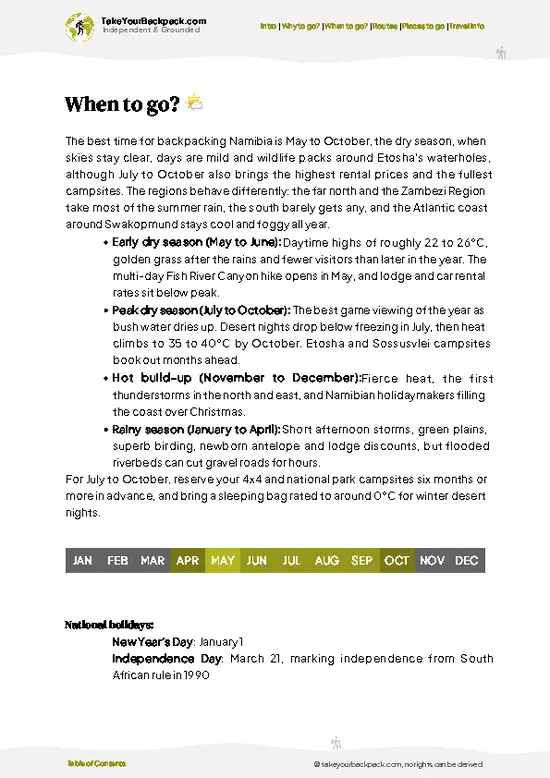
  • Weather: Omaruru’s dry season from May to October offers crisp, clear skies and minimal rain, perfect for dusty trails and starry nights. The wet season (November to April) brings sporadic showers that can turn dirt roads into mud traps, slowing your pace and testing your gear.

  • Temperature: Daytime highs hover around 25-30°C (77-86°F) in the dry months, cooling sharply at night to 5-10°C (41-50°F). The wet season heats up to 30-35°C (86-95°F), with sticky humidity that can sap your energy.

  • Daylight Hours: From May to August, expect about 10-11 hours of daylight, enough for long hikes without rushing. The longer days of September and October stretch to 12 hours, giving you more time to explore before sunset.

  • Crowds: Omaruru stays low-key year-round, but the dry season draws more travelers
read more 👉

  • Weather: Omaruru’s dry season from May to October offers crisp, clear skies and minimal rain, perfect for dusty trails and starry nights. The wet season (November to April) brings sporadic showers that can turn dirt roads into mud traps, slowing your pace and testing your gear.

  • Temperature: Daytime highs hover around 25-30°C (77-86°F) in the dry months, cooling sharply at night to 5-10°C (41-50°F). The wet season heats up to 30-35°C (86-95°F), with sticky humidity that can sap your energy.

  • Daylight Hours: From May to August, expect about 10-11 hours of daylight, enough for long hikes without rushing. The longer days of September and October stretch to 12 hours, giving you more time to explore before sunset.

  • Crowds: Omaruru stays low-key year-round, but the dry season draws more travelers seeking reliable conditions. You’ll find quieter trails and better deals in the shoulder months of April and November.

  • Seasonal Activities: The dry season is prime for wildlife spotting and visiting local craft markets, where the air smells of wood smoke and fresh paint. The wet season’s burst of greenery transforms the landscape, rewarding those willing to brave the mud with vivid wildflowers and birdlife.

  • Price Fluctuations: Accommodation and tours peak in the dry months, especially July and August, nudging prices up. Booking in shoulder seasons can save you a tidy sum without sacrificing much on experience.


Pro-tip: Aim for late April or early November—when the dust has settled but the landscape still holds a whisper of green—and you’ll catch Omaruru’s soul without the crowds or the mud.


source: climatestotravel.comJANJanuary: fair for travelingFEBFebruary: fair for travelingMARMarch: fair for travelingAPRApril: highly recommended for travelingMAYMay: excellent for travelingJUNJune: excellent for travelingJULJuly: excellent for travelingAUGAugust: excellent for travelingSEPSeptember: excellent for travelingOCTOctober: excellent for travelingNOVNovember: highly recommended for travelingDECDecember: fair for traveling
when-to-go

✈️ The backpacker research shortcutNamibia Travel Guide

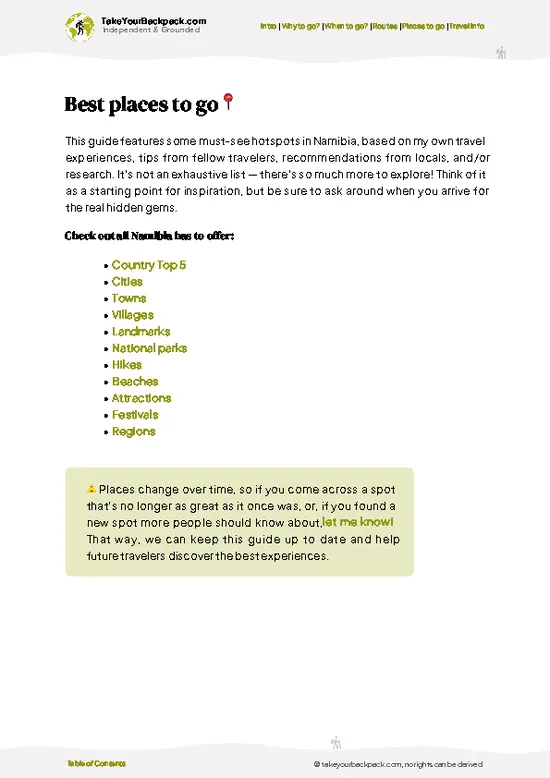
An offline-friendly backpacking guide with optimized travel routes, ranked highlights, transport advice, and the best areas to stay.
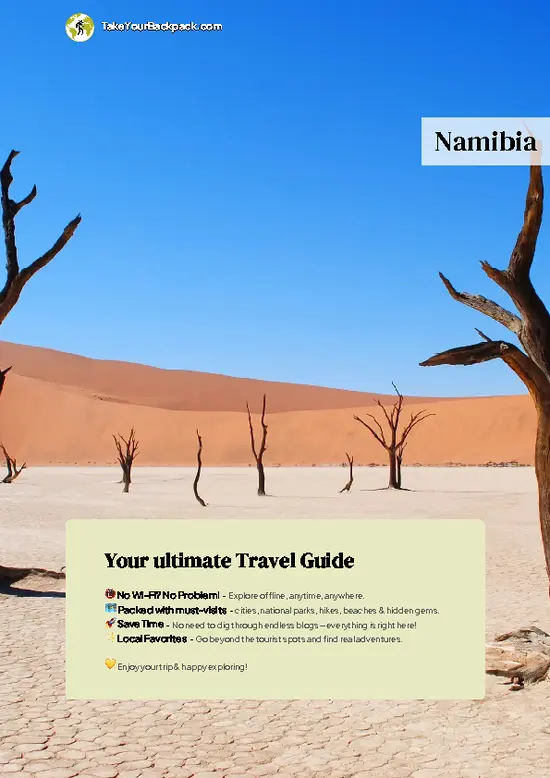
example page 0 from our offline Travel Guide for Namibia
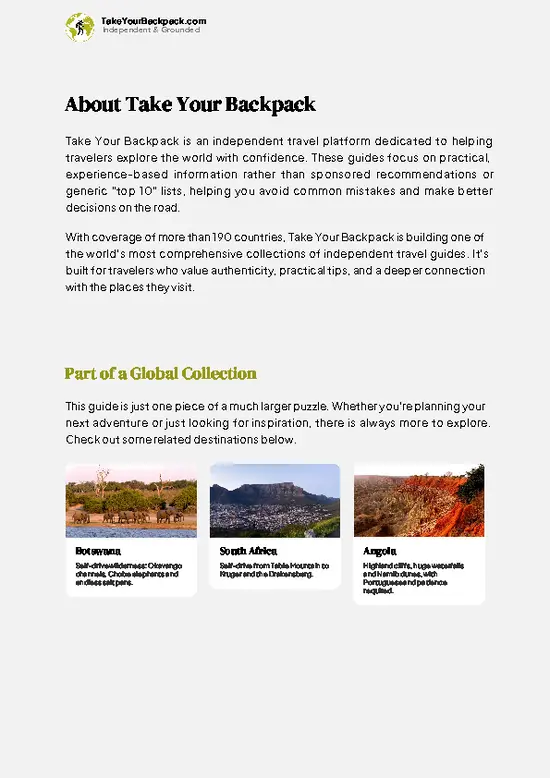
example page 1 from our offline Travel Guide for Namibia
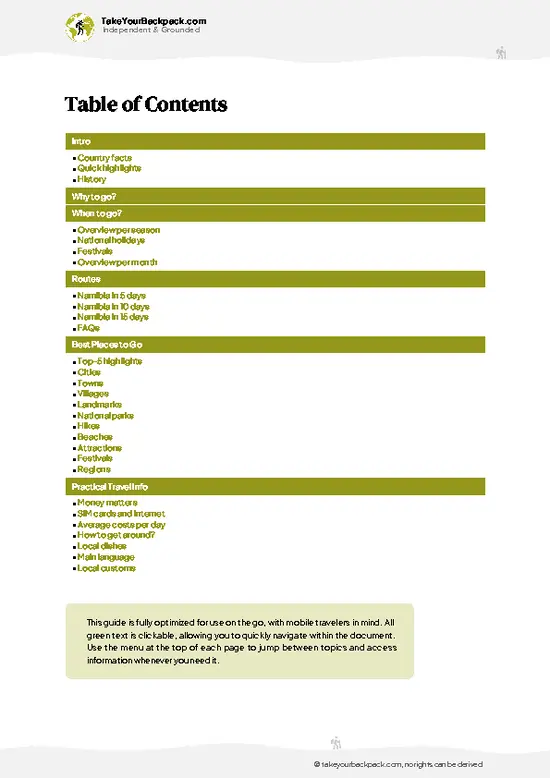
example page 2 from our offline Travel Guide for Namibia
example page 3 from our offline Travel Guide for Namibia
example page 4 from our offline Travel Guide for Namibia
example page 5 from our offline Travel Guide for Namibia
example page 6 from our offline Travel Guide for Namibia
example page 7 from our offline Travel Guide for Namibia
The digital guide (318 pages) contains:
79 highlights, ranked by travel appeal
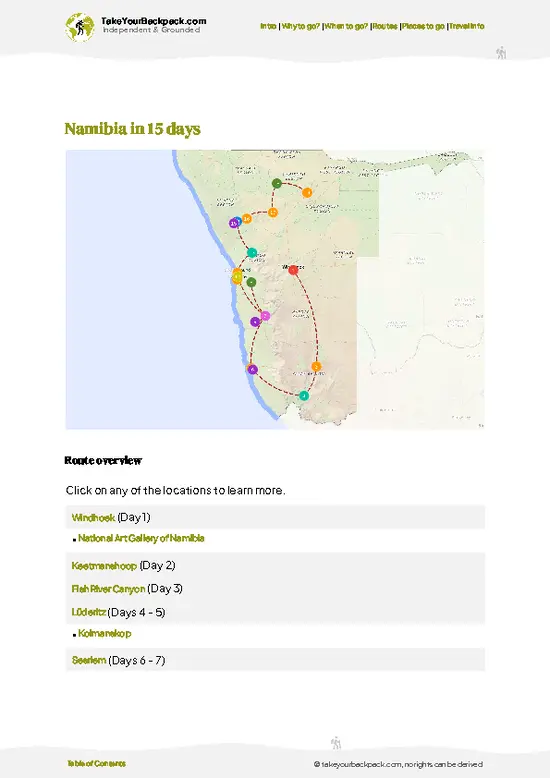
Optimized 5, 10 & 15-day travel routes
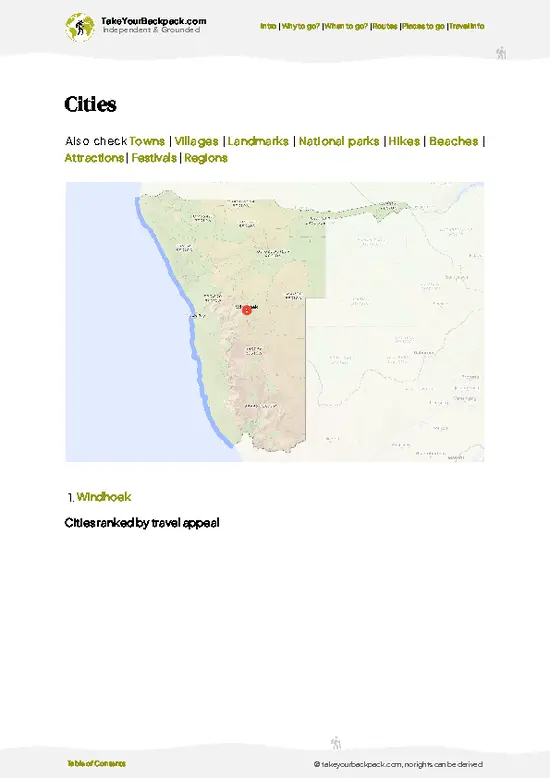
Cities, national parks, landmarks, beaches
How to get around
Offline-friendly for travel without Wi-Fi
👉 Click to see all 30+ guide features

📅 Plan smarter in minutes, not weeks
Month by month travel advice
Festivals & national holidays
Budget expectations

🗺️ Go to the right places, skip the overrated ones
Honest pros & cons of destinations
Top hikes, parks & viewpoints
Lesser-known places most travelers miss
Clear “worth it vs skip it” guidance

🛏️ Travel smoothly without rookie mistakes
Best areas to stay
Transport systems explained simply
Common scams & safety advice
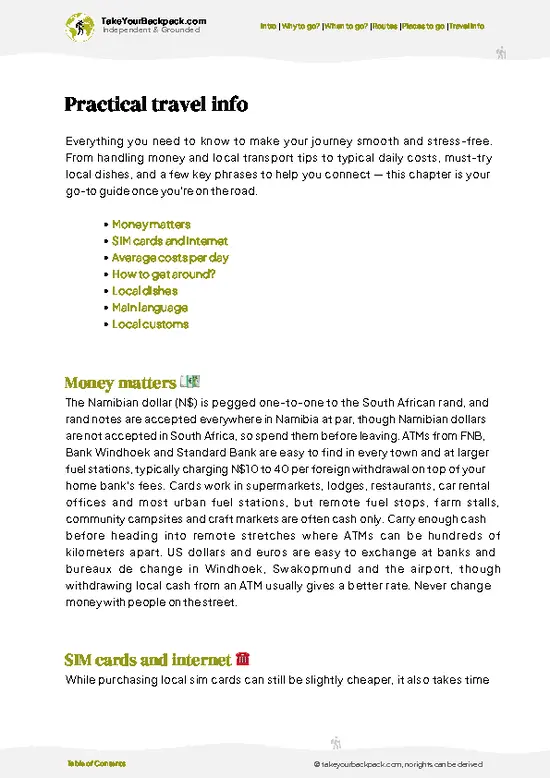
SIM cards, money & practical tips

🌍 Understand the country, not just visit it
Culture & traditions
52 Essential phrases & customs
Festivals worth planning around
Traveler-friendly historical context
Insights that make places more meaningful

📱 Built for real travel conditions
Fully downloadable PDF
Works completely offline
Optimized for phone use
Useful in remote areas & buses
Everything in one place
Save weeks of stressful planning
Get instant access to your full guide. 30‑day money-back guarantee.


By proceeding you agree to our terms.
Sent to your inbox immediately after payment • 100% Secure Checkout
Best Backpacking Travel Advisor 2025 tourism awardBest Backpacking
Travel Advisor
2025
What others say about Take Your Backpack Guides:
⭐⭐⭐⭐⭐
Fantastic, amazing amount of information!
⭐⭐⭐⭐⭐
My goodness this is amazing, it's what I've been looking for hats off too you!
⭐⭐⭐⭐⭐
I think this is absolutely BRILLIANT
⭐⭐⭐⭐
Very complete and informative. It's still missing places, but I gotta to commend you
⭐⭐⭐⭐⭐
This is truly amazing, thank you, can't wait to explore it with my kids!
⭐⭐⭐⭐⭐
Awesome resource, thank you!
⭐⭐⭐⭐⭐
This is amazing! Can't wait to explore the ones I haven't seen
⭐⭐⭐⭐
I love this! Well done, great idea.
⭐⭐⭐⭐⭐
Thanks for taking the time to make this gem!
⭐⭐⭐⭐⭐
This might be the best website I've ever seen.
⭐⭐⭐⭐⭐
Congratulations, and thank you so much for your work; it's incredibly valuable.
⭐⭐⭐⭐
In all seriousness I think you did a great job pointing out the important spots
⭐⭐⭐⭐⭐
10/10 very good
⭐⭐⭐⭐⭐
As someone who's only just starting to visit regularly this is awesome, thank you.
⭐⭐⭐⭐
Thank you very much! I'm going to visit my dad, it's going to be very useful!
⭐⭐⭐⭐⭐
This is really cool! We'll be travelling for the first time and this definitely come in handy.
⭐⭐⭐⭐⭐
You are now our minister of culture, congratulations 👨‍💼
⭐⭐⭐⭐⭐
Just wanted to tell you that this is a pearl! Going to follow your recommendations.
⭐⭐⭐⭐⭐
This is so cool. I'll definitely be using the resource for my travels soon.
⭐⭐⭐⭐⭐
This is very impressive! Good work.
⭐⭐⭐⭐⭐
This is an amazing and informative site. Very well done!

🛏️ Where to stay?How to pick the right area

Omaruru’s heart for backpackers beats strongest in the central district around the main street, where the town’s pulse is easiest to catch. This area is compact, safe, and naturally social—perfect for solo travelers who want to plug into local rhythms without the hassle of long commutes or sketchy corners. The light here in the late afternoon softens the red earth and dust, casting a warm glow that invites you to linger at small cafés or chat with fellow travelers over a cold drink.

Hostel options cluster near this hub, offering communal spaces that make meeting others effortless. Unlike the … read more 👉
Omaruru’s heart for backpackers beats strongest in the central district around the main street, where the town’s pulse is easiest to catch. This area is compact, safe, and naturally social—perfect for solo travelers who want to plug into local rhythms without the hassle of long commutes or sketchy corners. The light here in the late afternoon softens the red earth and dust, casting a warm glow that invites you to linger at small cafés or chat with fellow travelers over a cold drink.

Hostel options cluster near this hub, offering communal spaces that make meeting others effortless. Unlike the quieter residential outskirts, this zone hums with a low-key energy that balances calm with connection. You’ll find it easier to navigate Omaruru’s modest size from here, with shops, markets, and eateries all within walking distance. The vibe is unpretentious and welcoming—no frills, just genuine encounters and a chance to soak in the town’s slow, steady charm without feeling isolated or overwhelmed.

🚌 Getting aroundHow to get around Omaruru

Omaruru moves at its own pace—neither frantic nor sluggish, but a steady rhythm that feels like the town breathes with the desert wind. The sun slants low in the late afternoon, casting long shadows across the dusty streets where locals and travelers mingle without a strict timetable. Here, you won’t find a clock dictating your steps; instead, you’ll navigate by the flow of people, the occasional honk of a shared taxi, and the scent of fresh bread from the bakery that signals the start of the day. The town’s transit system is a blend of informal charm and practical necessity, where knowing when and how to move means blending patience with a touch of savvy.


  • Walking: The heart of Omaruru is compact enough to explore on foot, with most guesthouses, markets, and eateries within a 20-minute
read more 👉
Omaruru moves at its own pace—neither frantic nor sluggish, but a steady rhythm that feels like the town breathes with the desert wind. The sun slants low in the late afternoon, casting long shadows across the dusty streets where locals and travelers mingle without a strict timetable. Here, you won’t find a clock dictating your steps; instead, you’ll navigate by the flow of people, the occasional honk of a shared taxi, and the scent of fresh bread from the bakery that signals the start of the day. The town’s transit system is a blend of informal charm and practical necessity, where knowing when and how to move means blending patience with a touch of savvy.


  • Walking: The heart of Omaruru is compact enough to explore on foot, with most guesthouses, markets, and eateries within a 20-minute stroll. Walking lets you soak in the warm, sun-baked textures of the town’s adobe walls and catch the faint aroma of roasting coffee beans drifting from corner cafés. It’s free, flexible, and the best way to catch the town’s subtle rhythms.


  • Shared Taxis (Minibuses): These are the backbone of local transit, running from early morning around 6:30 AM until about 7 PM. Fares hover around N$10–15 (Namibian dollars), making them the cheapest option for hopping between Omaruru and nearby settlements. They don’t run on a strict schedule—expect to wait until full, but once moving, they’re a quick, bumpy ride through the red dust roads.


  • Local Buses: For longer hauls, like trips to Windhoek or Swakopmund, local buses depart from the main station usually mid-morning and mid-afternoon. Tickets cost roughly N$150–200, with travel times stretching from 3 to 5 hours depending on stops. These buses are basic but reliable, offering a window into Namibia’s vast landscapes as you roll past acacia trees and endless horizons.


  • Car Rentals: If you want freedom beyond the town’s edges, renting a car is your best bet. Rates start around N$600 per day, and the roads vary from smooth tar to rugged gravel, so a 4x4 is often worth the splurge. This option lets you chase the golden light of sunset over the Erongo Mountains or detour to hidden waterholes without waiting on anyone else’s timetable.

👛 Costs (as of 17 January 2025)What things cost and how to budget

Backpacking in Omaruru, Namibia, offers a raw, grounded experience where every dollar stretches into something tangible—whether it’s a night under a simple roof or a plate of local flavors. Here’s what you can expect to spend daily as an independent traveler.
  • Dorm Accommodation: Dorm beds in Omaruru’s guesthouses or small hostels typically run between €10 and €15 per night. These places are basic but clean, often with shared bathrooms and a chance to meet other travelers. Private rooms push the price higher, but dorms keep your budget lean.
  • Meals: Eating local is both a cultural and budget win. Expect to pay around €5 to €8 for a hearty meal at a local eatery—think grilled meats, maize porridge, and fresh vegetables. Street food or small market stalls can drop that to €3 to €5, but the quality
read more 👉
Backpacking in Omaruru, Namibia, offers a raw, grounded experience where every dollar stretches into something tangible—whether it’s a night under a simple roof or a plate of local flavors. Here’s what you can expect to spend daily as an independent traveler.
  • Dorm Accommodation: Dorm beds in Omaruru’s guesthouses or small hostels typically run between €10 and €15 per night. These places are basic but clean, often with shared bathrooms and a chance to meet other travelers. Private rooms push the price higher, but dorms keep your budget lean.
  • Meals: Eating local is both a cultural and budget win. Expect to pay around €5 to €8 for a hearty meal at a local eatery—think grilled meats, maize porridge, and fresh vegetables. Street food or small market stalls can drop that to €3 to €5, but the quality and hygiene vary.
  • Local Transport: Omaruru is small, so walking covers most ground. For longer trips or to reach nearby attractions, minibus taxis or shared rides cost about €1 to €3 per trip. Renting a bicycle is another option, roughly €5 to €7 per day, giving you freedom without the hassle of public transport schedules.
  • Basic Activities/Entry Fees: Entry to local cultural sites or small museums usually costs between €2 and €5. Guided tours or special activities, like visiting nearby craft markets or nature reserves, might run €10 to €15, but these are optional and often worth the insight they provide.
  • Miscellaneous Expenses: This includes bottled water, snacks, occasional internet access, or small souvenirs. Budget around €2 to €5 daily here, as prices can spike in tourist spots but stay reasonable in local shops.

Altogether, a realistic daily budget for backpacking in Omaruru falls between €20 and €35. This range covers the essentials without skimping on comfort or experience, letting you soak in the town’s unique atmosphere without the stress of overspending.
⚠️ Prices can change and everyone travels differently, so take this as a rough guide. Hope it helps you plan your adventure!

🚌 Day tripsWhere to go beyond the main area

Omaruru is a backpacker’s dream base, offering easy access to stunning landscapes and rich culture. Here are some day trips that make the most of your time in this Namibian town.

Waterberg Plateau
Just a two-hour drive from Omaruru, the Waterberg Plateau is a dramatic sandstone formation that feels like stepping into another world. The hike to the top rewards you with sweeping views of the surrounding plains, where the air is crisp and the scent of wild sage fills your lungs. Expect to spend about N$50 for park entry, and pack a lunch to enjoy at the summit. Mistakes happen when folks underestimate the sun; bring plenty of water and sunscreen.
👉 Explore Waterberg Plateau

Spitzkoppe
A 90-minute drive leads you to the iconic Spitzkoppe, often called the ”Matterhorn of Namibia.” The towering … read more 👉
Omaruru is a backpacker’s dream base, offering easy access to stunning landscapes and rich culture. Here are some day trips that make the most of your time in this Namibian town.

Waterberg Plateau
Just a two-hour drive from Omaruru, the Waterberg Plateau is a dramatic sandstone formation that feels like stepping into another world. The hike to the top rewards you with sweeping views of the surrounding plains, where the air is crisp and the scent of wild sage fills your lungs. Expect to spend about N$50 for park entry, and pack a lunch to enjoy at the summit. Mistakes happen when folks underestimate the sun; bring plenty of water and sunscreen.
👉 Explore Waterberg Plateau

Spitzkoppe
A 90-minute drive leads you to the iconic Spitzkoppe, often called the ”Matterhorn of Namibia.” The towering granite peaks are a playground for climbers and photographers alike. Spend the day exploring ancient rock art and marveling at the surreal landscapes. Entry is around N$30, and the best time to visit is early morning or late afternoon for that golden light. Many first-timers miss the best spots; don’t just stick to the main trail—wander off and discover hidden treasures.
👉 Explore Spitzkoppe

Erongo Mountains
The Erongo Mountains are a mere hour away and offer a mix of hiking and wildlife spotting. The trails wind through unique rock formations and lush vegetation, where you might catch a glimpse of oryx or springbok. Costs are minimal, with some trails free to access. The cooler months from May to September are ideal, as summer can be sweltering. A common error is not checking trail conditions; some paths can be tricky after rains.
Want to know what more Namibia offers?
The Namibia Travel Guide describes 79 highlights, from cities to national parks, from beaches to hikes

Get the Travel Guide -

🛡️ SafetyTraveler Safety Guide

Omaruru is generally safe, but a few practical tips can enhance your experience. Stay aware in crowded markets; pickpockets can be a nuisance, especially near stalls selling crafts. If you’re solo, avoid wandering too far after dark—stick to well-lit areas and main streets.

While scams are rare, be cautious of overly friendly locals offering unsolicited help; they might expect a tip. Carry yourself confidently, and engage with locals on your terms. This approach not only keeps you safe but also enriches your journey.

Other Namibian towns near Omaruru

Explore more nearby:

  • Usakos—railway heritage, Erongo Mountains, roadside stop, semi-desert| 75 km away
  • Okahandja—woodcraft markets, Herero graves, weekend trading, river crossing| 116 km away
  • Otjiwarongo—cheetah conservation, railway town, commercial center, savanna surrounds| 129 km away

💡 Not sure where to go next?
Create a personalized itinerary for Namibia including Omaruru and the places that fit your trip.

Generate my itinerary

👉 Discover all towns

Or checkout all Namibia has to offer (think cities, towns, villages, national parks, hikes, beaches, festivals)
Country photo of Namibia

We 💚 feedbackWhat to keep in mind

Omaruru has a laid-back charm that sneaks up on you. The best surprise? The local art scene—colorful, raw, and full of heart. Just be ready for the heat; it can be relentless. Embrace the slow pace, and you’ll find magic in the details.

✍️ Help improve this page!
The information on this page is based on in-depth research, insights shared by experienced travelers, and feedback from the local travel community in Namibia. While every effort is made to keep the information accurate and current, conditions can change — so if you spot anything incorrect or outdated, please get in touch.


🙋‍♂️ Give feedback

👋 Meet the founderWho’s Behind Take Your Backpack?

Johan, backpacker and founder of TakeYourBackpackHi, I’m Johan (Netherlands 🇳🇱), the creator of TakeYourBackpack. Over the past decade, I’ve backpacked through 80+ countries across six continents, gaining extensive experience with independent travel, long-term trips, and overland routes.

This site is built on a combination of firsthand travel experience and carefully curated insights from other backpackers. Many guides are based on places I’ve personally visited, while others bring together tips, observations, and practical advice shared by trusted travelers I’ve met along the way.

The goal is to provide realistic, experience-driven guidance — not generic itineraries — so you can explore destinations with better context, clearer expectations, and more confidence.

Get full Namibia guide •
Instant download • 79 highlights • Full Offline guide