×

Namibia🇳🇦 | national parksWaterberg Plateau National ParkSandstone escarpment, Cape vulture cliffs, guided plateau walks, rhino drives | things to do and best time to go

Explore Skeleton Coast National ParkExplore Khaudum National Park

Backpacking in Waterberg Plateau
🌟 Highlightnational park ranked #5
By Johan Kruseman 🇳🇱 | Updated October 22, 2026

Waterberg is a flat-topped sandstone plateau rather than a mountain range, and you can't drive onto it, so every visitor looks up at red cliffs from a rest camp at the base. The park sits in north-central Namibia, southeast of Otjiwarongo. It is steep and dry, with a 50 km long escarpment that glows rust-orange in the evening and smells of warm rock and wild sage. Self-guided hiking is limited because the plateau top is a conservation area for rare antelope, so access runs through guided walks and one marked trail. That rule protects roan and sable herds, so book the guided options early. Crowds stay thin, apart from school holidays. Mornings bring hornbill calls and baboon barks. For a first day, walk the short Mountain View trail to a viewpoint, then watch the cliffs change color from the camp.

Discover everything you want to know in the 📖 Namibia Travel Guide.


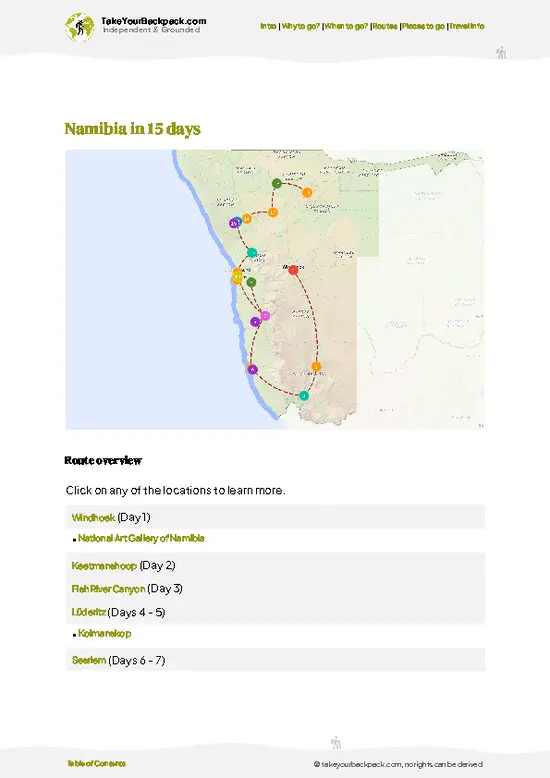
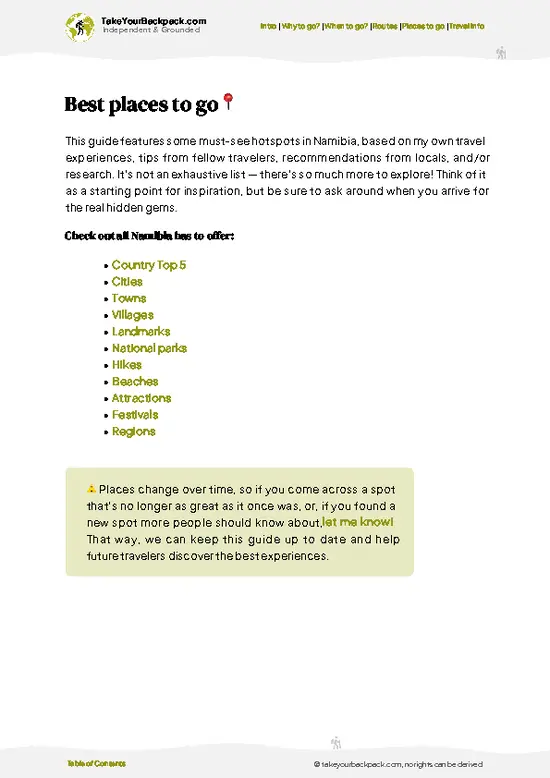
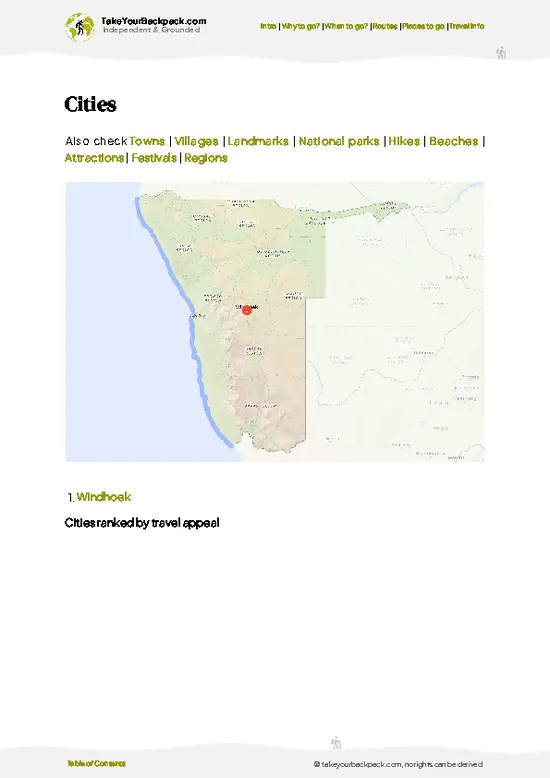
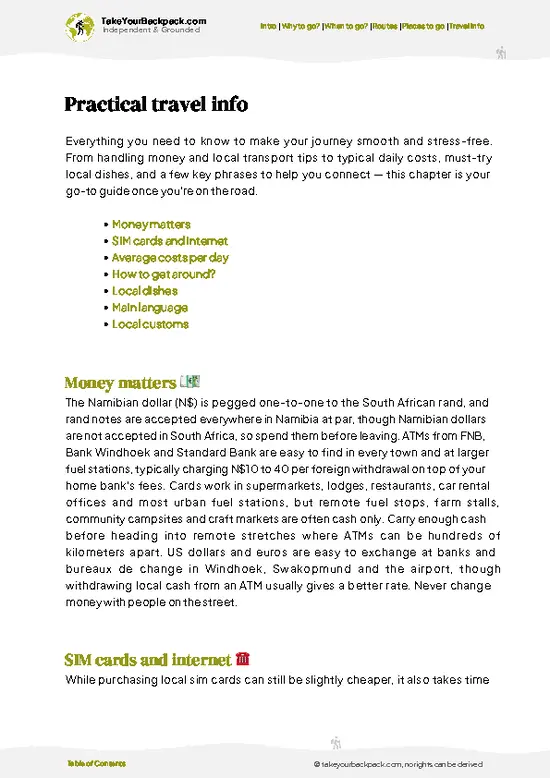
example page 0 from our offline Travel Guide for Namibia
example page 1 from our offline Travel Guide for Namibia
example page 2 from our offline Travel Guide for Namibia
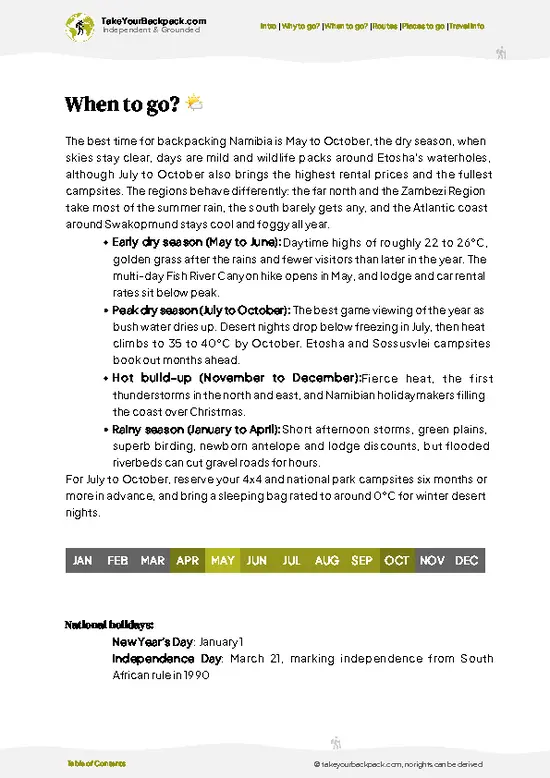
example page 3 from our offline Travel Guide for Namibia
example page 4 from our offline Travel Guide for Namibia
example page 5 from our offline Travel Guide for Namibia
example page 6 from our offline Travel Guide for Namibia
example page 7 from our offline Travel Guide for Namibia
Loading the map 🌍
CLICK TO FILTER
cities
towns
villages
landmarks
national parks
hikes
beaches
attractions
festivals
regions
SHOW COUNTRY’S BESTSHOW ALL

✨ Why go?
Ranked #5 national park in Namibia
Why visitors keep coming back

Waterberg Plateau National Park suits backpackers who like a destination with a clear shape: one big wall of rock, a handful of trails and almost no logistics once you arrive. The reason to come is the plateau's role as a breeding refuge for endangered species, including white rhino, roan and sable antelope, and a population of Cape vultures that nest on the cliff faces. You see the cliffs from the base, and the guided plateau top walks are the only way to see the roan and sable country itself. Camping in the shade of fig and acacia trees means a tent pitch gives you the same cliff views as a chalet. Self-guided travelers do fine on the short marked trails, while the guided hikes add a ranger's eye for tracks, dung middens and birds that you would otherwise walk past. The Unsere Namibia Trail … read more 👉
Waterberg Plateau National Park suits backpackers who like a destination with a clear shape: one big wall of rock, a handful of trails and almost no logistics once you arrive. The reason to come is the plateau's role as a breeding refuge for endangered species, including white rhino, roan and sable antelope, and a population of Cape vultures that nest on the cliff faces. You see the cliffs from the base, and the guided plateau top walks are the only way to see the roan and sable country itself. Camping in the shade of fig and acacia trees means a tent pitch gives you the same cliff views as a chalet. Self-guided travelers do fine on the short marked trails, while the guided hikes add a ranger's eye for tracks, dung middens and birds that you would otherwise walk past. The Unsere Namibia Trail circuit gives you a longer walk through the base without any guide at all.

💡 HighlightsTop highlights of Waterberg Plateau

  1. Waterberg Plateau escarpment: The red sandstone cliff wall rises about 150 m above the surrounding bushveld and is the park's signature sight, especially when evening light hits the rock.
  2. Mountain View Trail: A short climb from the rest camp to a viewpoint that looks across the plains and gives a feel for the plateau's scale.
  3. Cape vulture colony: The cliffs hold a nesting colony of these large scavengers, and you can watch them ride thermals along the rock face.
  4. Guided plateau top walks: Rangers take small groups onto the plateau to look for roan, sable and other wildlife in a restricted wilderness area.
  5. Wildlife drives: Guided drives are the practical way to see white and black rhino, giraffe, buffalo and plains game across the base and plateau.
  6. Sandstone formations at Bernabe de la Bat area:
… read more 👉
  1. Waterberg Plateau escarpment: The red sandstone cliff wall rises about 150 m above the surrounding bushveld and is the park's signature sight, especially when evening light hits the rock.
  2. Mountain View Trail: A short climb from the rest camp to a viewpoint that looks across the plains and gives a feel for the plateau's scale.
  3. Cape vulture colony: The cliffs hold a nesting colony of these large scavengers, and you can watch them ride thermals along the rock face.
  4. Guided plateau top walks: Rangers take small groups onto the plateau to look for roan, sable and other wildlife in a restricted wilderness area.
  5. Wildlife drives: Guided drives are the practical way to see white and black rhino, giraffe, buffalo and plains game across the base and plateau.
  6. Sandstone formations at Bernabe de la Bat area: Weathered boulders and shaded gorges near the camp offer a cooler, quieter walk with good birding.
  7. Historic Waterberg battle site: The nearby historic cemetery and ruins are linked to the 1904 Battle of Waterberg between German forces and the Herero people, and they give the area a sobering human story.
For a first visit, the Mountain View Trail is the best choice because it is quick and shows the whole plateau at once.
Spotted a mistake or missing something? Contact us.

🌤️ When to go?When to go for the best experience

  • Cool dry season (May to August): Days reach 24-28°C (75-82°F), but nights on the plateau can drop to 5-8°C (41-46°F), sometimes lower. Daylight runs roughly 11 hours. Trails are comfortable, and this is when camps fill, especially during South African school holidays.
  • Hot dry season (September to November): Highs of 32-38°C (90-100°F) make midday walking miserable. Waterholes draw rhinos and antelope, so wildlife viewing is strong, and daylight stretches to about 13 hours.
  • Rainy season (December to March): Afternoon thunderstorms, highs of 28-33°C (82-91°F) and lush bush. Insects increase, some tracks turn slick, and rates and demand drop.
  • April: Rains fade, the green lingers, temperatures ease to the high 20s°C (low 80s°F), and crowds stay thin.
Book the guided Unguided Wilderness Trail or camp … read more 👉
  • Cool dry season (May to August): Days reach 24-28°C (75-82°F), but nights on the plateau can drop to 5-8°C (41-46°F), sometimes lower. Daylight runs roughly 11 hours. Trails are comfortable, and this is when camps fill, especially during South African school holidays.
  • Hot dry season (September to November): Highs of 32-38°C (90-100°F) make midday walking miserable. Waterholes draw rhinos and antelope, so wildlife viewing is strong, and daylight stretches to about 13 hours.
  • Rainy season (December to March): Afternoon thunderstorms, highs of 28-33°C (82-91°F) and lush bush. Insects increase, some tracks turn slick, and rates and demand drop.
  • April: Rains fade, the green lingers, temperatures ease to the high 20s°C (low 80s°F), and crowds stay thin.
Book the guided Unguided Wilderness Trail or camp pitch months ahead for June to August, or choose late April and May for cool air with space.


source: climatestotravel.comJANJanuary: fair for travelingFEBFebruary: fair for travelingMARMarch: fair for travelingAPRApril: good for travelingMAYMay: highly recommended for travelingJUNJune: excellent for travelingJULJuly: excellent for travelingAUGAugust: excellent for travelingSEPSeptember: highly recommended for travelingOCTOctober: highly recommended for travelingNOVNovember: fair for travelingDECDecember: fair for traveling
namibia-national-park-waterberg-plateau-national-park v1
© Google |

✈️ The backpacker research shortcutNamibia Travel Guide

An offline-friendly backpacking guide with optimized travel routes, ranked highlights, transport advice, and the best areas to stay.
example page 0 from our offline Travel Guide for Namibia
example page 1 from our offline Travel Guide for Namibia
example page 2 from our offline Travel Guide for Namibia
example page 3 from our offline Travel Guide for Namibia
example page 4 from our offline Travel Guide for Namibia
example page 5 from our offline Travel Guide for Namibia
example page 6 from our offline Travel Guide for Namibia
example page 7 from our offline Travel Guide for Namibia
The digital guide (294 pages) contains:
✅ 71 highlights, ranked by travel appeal
✅ Optimized 5, 10 & 15-day travel routes
✅ Cities, national parks, landmarks, beaches
✅ How to get around
✅ Offline-friendly for travel without Wi-Fi
👉 Click to see all 30+ guide features

📅 Plan smarter in minutes, not weeks
✅ Month by month travel advice
✅ Festivals & national holidays
✅ Budget expectations

🗺️ Go to the right places, skip the overrated ones
✅ Honest pros & cons of destinations
✅ Top hikes, parks & viewpoints
✅ Lesser-known places most travelers miss
✅ Clear “worth it vs skip it” guidance

🛏️ Travel smoothly without rookie mistakes
✅ Best areas to stay
✅ Transport systems explained simply
✅ Common scams & safety advice
✅ SIM cards, money & practical tips

🌍 Understand the country, not just visit it
✅ Culture & traditions
✅ 52 Essential phrases & customs
✅ Festivals worth planning around
✅ Traveler-friendly historical context
✅ Insights that make places more meaningful

📱 Built for real travel conditions
✅ Fully downloadable PDF
✅ Works completely offline
✅ Optimized for phone use
✅ Useful in remote areas & buses
✅ Everything in one place
Stop searching, start planning
Get instant access to your full guide. 30‑day money-back guarantee.
+ Add another guide for just

By proceeding you agree to our terms.
Sent to your inbox immediately after payment • 100% Secure Checkout
Best Backpacking Travel Advisor 2025 tourism awardBest Backpacking
Travel Advisor
2025
What others say about Take Your Backpack Guides:
⭐⭐⭐⭐⭐
Fantastic, amazing amount of information!
⭐⭐⭐⭐⭐
My goodness this is amazing, it's what I've been looking for hats off too you!
⭐⭐⭐⭐⭐
I think this is absolutely BRILLIANT
⭐⭐⭐⭐
Very complete and informative. It's still missing places, but I gotta to commend you
⭐⭐⭐⭐⭐
This is truly amazing, thank you, can't wait to explore it with my kids!
⭐⭐⭐⭐⭐
Awesome resource, thank you!
⭐⭐⭐⭐⭐
This is amazing! Can't wait to explore the ones I haven't seen
⭐⭐⭐⭐
I love this! Well done, great idea.
⭐⭐⭐⭐⭐
Thanks for taking the time to make this gem!
⭐⭐⭐⭐⭐
This might be the best website I've ever seen.
⭐⭐⭐⭐⭐
Congratulations, and thank you so much for your work; it's incredibly valuable.
⭐⭐⭐⭐
In all seriousness I think you did a great job pointing out the important spots
⭐⭐⭐⭐⭐
10/10 very good
⭐⭐⭐⭐⭐
As someone who's only just starting to visit regularly this is awesome, thank you.
⭐⭐⭐⭐
Thank you very much! I'm going to visit my dad, it's going to be very useful!
⭐⭐⭐⭐⭐
This is really cool! We'll be travelling for the first time and this definitely come in handy.
⭐⭐⭐⭐⭐
You are now our minister of culture, congratulations 👨‍💼
⭐⭐⭐⭐⭐
Just wanted to tell you that this is a pearl! Going to follow your recommendations.
⭐⭐⭐⭐⭐
This is so cool. I'll definitely be using the resource for my travels soon.
⭐⭐⭐⭐⭐
This is very impressive! Good work.
⭐⭐⭐⭐⭐
This is an amazing and informative site. Very well done!

🛏️ Where to stay?Best areas to stay in Namibia

The best place to stay is inside Waterberg Plateau National Park at Waterberg Camp, run by the Namibia Wildlife Resorts, which sits at the base of the red sandstone escarpment. It offers campsites at roughly US$15 to 25 per site, simple bungalows and family chalets from about US$70 to 150, and a restaurant, a small shop and a pool that you will welcome after a hot hike. The trails to the plateau top start right from camp, so you can walk out your door at dawn. Book ahead, since pitches and rooms sell out in the cool months.

Outside the park, several private lodges and guest farms line the road … read more 👉
The best place to stay is inside Waterberg Plateau National Park at Waterberg Camp, run by the Namibia Wildlife Resorts, which sits at the base of the red sandstone escarpment. It offers campsites at roughly US$15 to 25 per site, simple bungalows and family chalets from about US$70 to 150, and a restaurant, a small shop and a pool that you will welcome after a hot hike. The trails to the plateau top start right from camp, so you can walk out your door at dawn. Book ahead, since pitches and rooms sell out in the cool months.

Outside the park, several private lodges and guest farms line the road to the gate, with camping at around US$10 to 20 per person and rooms from US$60 to 150. Many offer game drives and the plateau views without the park’s booking pressure. For supplies, banks and fuel, use Otjiwarongo, about 90 kilometers away, which has guesthouses, a few backpacker-friendly beds from US$20 to 40, and supermarkets. Grootfontein is another option if you are heading to the Etosha or Kavango side.

👛 Costs (as of 22 October 2026)Money, prices, and spending tips

A realistic daily budget for Waterberg Plateau National Park is about US$50 to 95 per person if you camp and self-cater. Costs rise quickly with lodging and guided activities, and you pay in Namibian dollars or South African rand, with cards accepted at the main camp.
CategoryBudget RangeLocal Reality
Entrance feeUS$5 to 10Daily conservation fee per person, plus a small per-vehicle charge. Lower for Namibian and regional residents.
Accommodation (high season)US$15 to 25Campsite at Waterberg Camp. Bungalows start near US$70, and low-season rates are somewhat cheaper.
Local transportUS$10 to 20No public transport reaches the gate. Costs cover shared fuel for a rental car or a transfer from Otjiwarongo.
Food and suppliesUS$10 to 20Stock up in Otjiwarongo and cook at camp. Restaurant mains run about
… read more 👉
A realistic daily budget for Waterberg Plateau National Park is about US$50 to 95 per person if you camp and self-cater. Costs rise quickly with lodging and guided activities, and you pay in Namibian dollars or South African rand, with cards accepted at the main camp.
CategoryBudget RangeLocal Reality
Entrance feeUS$5 to 10Daily conservation fee per person, plus a small per-vehicle charge. Lower for Namibian and regional residents.
Accommodation (high season)US$15 to 25Campsite at Waterberg Camp. Bungalows start near US$70, and low-season rates are somewhat cheaper.
Local transportUS$10 to 20No public transport reaches the gate. Costs cover shared fuel for a rental car or a transfer from Otjiwarongo.
Food and suppliesUS$10 to 20Stock up in Otjiwarongo and cook at camp. Restaurant mains run about US$8 to 15.
ActivitiesUS$10 to 20Guided game drives or ranger walks are priced separately, and the self-guided day trails are free beyond entry.
Total Daily BudgetUS$50 to 95About US$70 for a typical camper with one activity.
⚠️ Prices can change and everyone travels differently, so take this as a rough guide. Hope it helps you plan your adventure!

🥾 TrailsPlan your hike in Waterberg Plateau: routes, terrain, and sights

Waterberg Plateau National Park offers a mix of short self-guided walks at the base and guided hikes on top of the plateau, with terrain that is mostly sand, loose sandstone and rocky steps. Heat is the main difficulty, since there is little shade on exposed sections.
  • Mountain View Trail: A short, moderate climb of about 1 to 2 hours return from the rest camp, steep on loose rock, ending at a viewpoint over the plains.
  • Waterberg Wilderness Trail: A guided multi-day walk of about 42 km over four days, with limited group sizes and overnight stops in basic shelters. Difficulty is moderate to hard and
… read more 👉
Waterberg Plateau National Park offers a mix of short self-guided walks at the base and guided hikes on top of the plateau, with terrain that is mostly sand, loose sandstone and rocky steps. Heat is the main difficulty, since there is little shade on exposed sections.
  • Mountain View Trail: A short, moderate climb of about 1 to 2 hours return from the rest camp, steep on loose rock, ending at a viewpoint over the plains.
  • Waterberg Wilderness Trail: A guided multi-day walk of about 42 km over four days, with limited group sizes and overnight stops in basic shelters. Difficulty is moderate to hard and it runs in the dry months only.
  • Unsere Namibia Trail: A longer base circuit through acacia and bush of several hours, easy to moderate, good for birding.
  • Guided plateau hikes: Rangers lead half-day walks to the top for views and wildlife tracking, and the terrain is rocky with a steady climb.
Wildlife includes rhino, giraffe, leopard, baboons and many bird species, and Cape vultures wheel along the cliffs. Reaching the park without a car is difficult because the rest camp lies off the main highway, so most visitors drive or arrange a transfer from Otjiwarongo. Crowds are light outside school holidays. An entrance fee applies, along with extra charges for guided activities, and reservations are handled through the national parks booking system.
⚠️ Hiking info can sometimes be outdated or inaccurate. Before you hit the trail, check the latest conditions with locals. If you do spot anything that's off, I'd love to hear from you, so I can update it for fellow travelers.

🛡️ SafetySafety Tips and Common Scams in Waterberg Plateau

Waterberg Plateau National Park is straightforward and well managed, and most problems come from heat and thin preparation rather than animals. Summer midday temperatures can exceed 35°C (95°F), so start hikes at first light, carry at least 3 liters of water per person, and wear a hat and sturdy shoes, since the sandstone is loose and the paths steep and rocky on the climb to the plateau. Markers are clear on the main day trails. The multi-day guided wilderness trail keeps you with a ranger. Rhinos, buffalo and leopards live on the plateau, so follow rangers’ instructions, keep your distance and never walk at dusk. Baboons will raid unattended food, and snakes and scorpions favor warm rocks, so watch where you place hands and feet. Storms in the rainy season can swell dry riverbeds quickly. … read more 👉
Waterberg Plateau National Park is straightforward and well managed, and most problems come from heat and thin preparation rather than animals. Summer midday temperatures can exceed 35°C (95°F), so start hikes at first light, carry at least 3 liters of water per person, and wear a hat and sturdy shoes, since the sandstone is loose and the paths steep and rocky on the climb to the plateau. Markers are clear on the main day trails. The multi-day guided wilderness trail keeps you with a ranger. Rhinos, buffalo and leopards live on the plateau, so follow rangers’ instructions, keep your distance and never walk at dusk. Baboons will raid unattended food, and snakes and scorpions favor warm rocks, so watch where you place hands and feet. Storms in the rainy season can swell dry riverbeds quickly. Download maps ahead because phone signal is patchy.

FAQFrequently asked questions about Waterberg Plateau

Two nights is the right amount for Waterberg Plateau National Park. That gives you one full day for the climb to the plateau rim and the viewpoints, plus a second morning for a game drive or the Mountain View trail. If you join the guided multi-day wilderness trail, plan on four days, and you can add a night at Otjiwarongo, about 90 kilometers away.
Waterberg Plateau National Park is hard to reach without a car, because no scheduled buses run to the gate. The usual route is a bus or shared minibus to Otjiwarongo, then a private transfer or taxi for the roughly 90 kilometers, about 1.5 hours, usually costing US$60 to 100 one way. Hitching is possible but slow, and renting a small car in Windhoek, about 300 kilometers south, is simpler.
Yes, Waterberg Plateau National Park charges a daily entrance fee, roughly US$5 to 10 per adult, plus a small vehicle fee, with lower rates for Namibians and SADC residents. Camping and chalets are booked separately through Namibia Wildlife Resorts, with pitches from about US$15. The guided wilderness trail requires advance booking and has small group limits, and self-guided day walks need no extra permit.
⚠️ Things can change over time, so always validate details locally before you go.

Other Namibian national parks near Waterberg Plateau

Explore more nearby:


💡 Not sure where to go next?
Create a personalized itinerary for Namibia including Waterberg Plateau and the places that fit your trip.

Generate my itinerary

👉 Discover all national parks

Or checkout all Namibia has to offer (think cities, towns, villages, national parks, hikes, beaches, festivals)
Country photo of Namibia

We 💚 feedbackFinal thoughts on exploring Waterberg Plateau

Waterberg Plateau National Park trips go wrong when people treat the plateau as a quick drive-through and leave themselves one afternoon. The sandstone cliffs glow orange late in the day, and the rest camp sits at their base, so sleep there. I would book the guided walk up top in advance, since the unguided plateau is restricted, and carry more water than seems sensible.

✍️ Help improve this page!
The information on this page is based on in-depth research, insights shared by experienced travelers, and feedback from the local travel community in Namibia. While every effort is made to keep the information accurate and current, conditions can change — so if you spot anything incorrect or outdated, please get in touch.


🙋‍♂️ Give feedback

👋 Meet the founderWho’s Behind Take Your Backpack?

Johan, backpacker and founder of TakeYourBackpackHi, I’m Johan (Netherlands 🇳🇱), the creator of TakeYourBackpack. Over the past 3 decades, I’ve backpacked through 90+ countries across six continents, gaining extensive experience with independent travel, long-term trips, and overland routes.

This site is built on a combination of firsthand travel experience and carefully curated insights from other backpackers. Many guides are based on places I’ve personally visited, while others bring together tips, observations, and practical advice shared by trusted travelers I’ve met along the way.

The goal is to provide realistic, experience-driven guidance — not generic itineraries — so you can explore destinations with better context, clearer expectations, and more confidence.