×

Namibia🇳🇦 | national parksSkeleton Coast National Parkshipwrecks, foggy coastline, seal colonies, desert meets ocean | things to do and best time to go

Explore Okonjima Nature ReserveExplore Waterberg Plateau National Park

Backpacking in Skeleton Coast
🏆 Top picknational park ranked #3
By Johan Kruseman 🇳🇱 | Updated May 16, 2026

Most travelers only realize after arrival that Skeleton Coast National Park’s remoteness is its best filter: the effort to get here means you’ll have the place mostly to yourself, and that’s a rare luxury in Namibia. The park stretches along the northwest coast, where the Atlantic collides with the Namib Desert in a foggy, shipwreck-strewn no-man’s-land. For backpackers, Skeleton Coast is both a reward and a test. Hiking is possible but not marked or maintained—this is not a place for casual strolls, but for those who thrive on raw, open space and the thrill of seeing desert-adapted elephants or brown hyenas. The scenery is stark, almost lunar, and the wind never really stops. Access is tightly controlled, with high entrance fees and limited permits, and camping is basic at best—don’t expect frills or budget hostels. Compared to Etosha or Namib-Naukluft, Skeleton Coast is lonelier, harsher, and far less forgiving, but that’s exactly its appeal.

Discover everything you want to know in the 📖 Namibia Travel Guide.


Get your Namibia guide
79 ranked highlights, routes & tips, works offline (319 pages)
Loading the map 🌍
CLICK TO FILTER
cities
towns
villages
landmarks
national parks
hikes
beaches
attractions
festivals
regions
SHOW COUNTRY’S BESTSHOW ALL

✨ Why go?
Ranked #3 national park in Namibia
What makes it a must-see national park

Backpackers flock to Skeleton Coast National Park for its raw beauty and sense of adventure. This park offers a unique chance for independent exploration. You can roam the vast, desolate landscapes at your own pace, soaking in the eerie shipwrecks and dramatic dunes without the constraints of a guided tour.

Budget-conscious travelers will appreciate the camping options and nearby hostels. These accommodations allow you to stretch your funds while still enjoying the park’s rugged charm. Just be prepared for the elements; the weather can shift quickly, so pack accordingly.

The trail variety is another draw. From coastal paths to inland routes, there’s something for everyone, whether you’re a seasoned hiker or a casual wanderer. Many trails are well-marked, making them suitable for self-guided read more 👉
Backpackers flock to Skeleton Coast National Park for its raw beauty and sense of adventure. This park offers a unique chance for independent exploration. You can roam the vast, desolate landscapes at your own pace, soaking in the eerie shipwrecks and dramatic dunes without the constraints of a guided tour.

Budget-conscious travelers will appreciate the camping options and nearby hostels. These accommodations allow you to stretch your funds while still enjoying the park’s rugged charm. Just be prepared for the elements; the weather can shift quickly, so pack accordingly.

The trail variety is another draw. From coastal paths to inland routes, there’s something for everyone, whether you’re a seasoned hiker or a casual wanderer. Many trails are well-marked, making them suitable for self-guided travelers. This flexibility means you can tailor your experience to match your energy levels and interests.

However, be mindful of the hidden costs. Fuel and food can add up quickly in remote areas. Planning ahead will help you preserve your budget for the moments that truly matter.
Want to include Skeleton Coast National Park in your Namibia route?
Create a personalized Namibia itinerary that includes Skeleton Coast National Park and the places that fit your trip — based on your travel style, budget, and available time. Get your route in seconds.

Generate my trip

💡 HighlightsWhat this place is best known for

  • Shipwreck-strewn coastline — The first thing that grabs you: rusting hulks half-buried in sand, eerie and photogenic along the beach. It’s a raw reminder of how unforgiving the Atlantic meets the Namib, perfect for dramatic photos and moody walks along the shore.
  • Cape Cross seal colony — One of the largest Cape fur seal haul-outs in the world, packed with noisy, stinky, fascinating animals. Close-up viewing of thousands of seals is unforgettable; the chaos of pups, bulls and squabbling territory fights is nature theatre at ground level.
  • Dunes meeting the ocean — The Namib Desert’s massive dunes plunge straight into the sea here, creating surreal contrasts of red sand, pale beach and cold Atlantic fog. It’s a unique landscape you can walk on, scramble up for views, and watch the fog roll
read more 👉
  • Shipwreck-strewn coastline — The first thing that grabs you: rusting hulks half-buried in sand, eerie and photogenic along the beach. It’s a raw reminder of how unforgiving the Atlantic meets the Namib, perfect for dramatic photos and moody walks along the shore.
  • Cape Cross seal colony — One of the largest Cape fur seal haul-outs in the world, packed with noisy, stinky, fascinating animals. Close-up viewing of thousands of seals is unforgettable; the chaos of pups, bulls and squabbling territory fights is nature theatre at ground level.
  • Dunes meeting the ocean — The Namib Desert’s massive dunes plunge straight into the sea here, creating surreal contrasts of red sand, pale beach and cold Atlantic fog. It’s a unique landscape you can walk on, scramble up for views, and watch the fog roll in like a living thing.
  • Hoanib and Hoarusib river valleys — These dry riverbeds are lifelines in the desert where ephemeral water supports surprisingly rich wildlife: desert-adapted elephants, black rhino, lions and giraffe show up following the scatter of shrubs and seasonal pools. Game-viewing here feels like a discovery — you’re often looking for tracks before you spot the animals.
  • Welwitschia fields — Ancient, gnarly plants that look like something out of a sci-fi movie; some are hundreds to over a thousand years old. They thrive on fog moisture and are a must-see for anyone who likes weird, resilient desert life.
  • Cape Fria and remote northern beaches — Extremely remote, almost untouched beaches with surprising birdlife, shells and a real sense of isolation. Getting there usually means a fly-in or long 4x4 slog and permits, but the payoff is pristine coastline with very few people.
  • Fog-shrouded photography and light — Not a single spot, but a feature of the whole park: the cold Benguela fog transforms colors, softens light and turns ordinary scenes eerie and cinematic. If you’re into landscape photography or just atmospheric hikes, the fog is your friend (and your greatest photographic asset).
Spotted a mistake or missing something? Contact us.

Things to do near Skeleton Coast National Park

Ratings based on Tripadvisor reviews. When you book through this link, you support our work at no extra cost to you.

🌤️ When to go?Choosing the right time of year


  • Weather: The Skeleton Coast is arid and foggy year-round, but the dry season from May to September offers clearer skies and less humidity. Avoid the rainy season (November to March) when sporadic showers can turn dusty trails into slippery mud.

  • Temperature: Daytime highs hover between 20-25°C (68-77°F) during the dry months, which is comfortable for hiking. Nights can drop sharply to 5-10°C (41-50°F), so pack layers. Summer months push temperatures above 30°C (86°F), making daytime trekking tougher.

  • Daylight Hours: Daylight is fairly consistent year-round, around 11-13 hours. Longer days in summer mean more hiking time but also hotter conditions. Winter days are shorter but cooler, ideal for early starts and avoiding midday heat.

  • Crowds: The park sees few visitors overall, but the
read more 👉

  • Weather: The Skeleton Coast is arid and foggy year-round, but the dry season from May to September offers clearer skies and less humidity. Avoid the rainy season (November to March) when sporadic showers can turn dusty trails into slippery mud.

  • Temperature: Daytime highs hover between 20-25°C (68-77°F) during the dry months, which is comfortable for hiking. Nights can drop sharply to 5-10°C (41-50°F), so pack layers. Summer months push temperatures above 30°C (86°F), making daytime trekking tougher.

  • Daylight Hours: Daylight is fairly consistent year-round, around 11-13 hours. Longer days in summer mean more hiking time but also hotter conditions. Winter days are shorter but cooler, ideal for early starts and avoiding midday heat.

  • Crowds: The park sees few visitors overall, but the dry season attracts more serious adventurers. Expect solitude but plan ahead for limited accommodation and permits, especially in peak months.

  • Seasonal Activities: Wildlife spotting peaks in the dry season when animals gather near scarce water sources. Foggy mornings are common and add atmosphere but can limit visibility for photography.

  • Price Fluctuations: Costs for permits and guided tours rise slightly during the dry season due to demand. Booking well in advance can lock in better rates and secure spots in the limited campsites.


Pro-tip: Aim for late May to early July—cooler days, manageable crowds, and the best chance to experience the park’s eerie fog without the discomfort of extreme heat or rain.


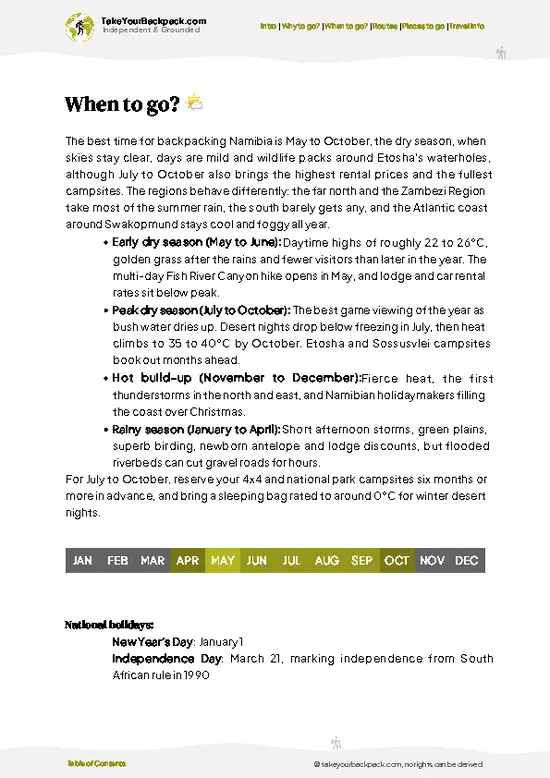
source: climatestotravel.comJANJanuary: fair for travelingFEBFebruary: fair for travelingMARMarch: fair for travelingAPRApril: good for travelingMAYMay: excellent for travelingJUNJune: excellent for travelingJULJuly: excellent for travelingAUGAugust: highly recommended for travelingSEPSeptember: highly recommended for travelingOCTOctober: good for travelingNOVNovember: fair for travelingDECDecember: fair for traveling
when-to-go

✈️ The backpacker research shortcutNamibia Travel Guide

An offline-friendly backpacking guide with optimized travel routes, ranked highlights, transport advice, and the best areas to stay.
example page 0 from our offline Travel Guide for Namibiaexample page 1 from our offline Travel Guide for Namibiaexample page 2 from our offline Travel Guide for Namibiaexample page 3 from our offline Travel Guide for Namibiaexample page 4 from our offline Travel Guide for Namibiaexample page 5 from our offline Travel Guide for Namibiaexample page 6 from our offline Travel Guide for Namibiaexample page 7 from our offline Travel Guide for Namibia
The digital guide (319 pages) contains:
79 highlights, ranked by travel appeal
Optimized 5, 10 & 15-day travel routes
Cities, national parks, landmarks, beaches
How to get around
Offline-friendly for travel without Wi-Fi
👉 Click to see all 30+ guide features

📅 Plan smarter in minutes, not weeks
Month by month travel advice
Festivals & national holidays
Budget expectations

🗺️ Go to the right places, skip the overrated ones
Honest pros & cons of destinations
Top hikes, parks & viewpoints
Lesser-known places most travelers miss
Clear “worth it vs skip it” guidance

🛏️ Travel smoothly without rookie mistakes
Best areas to stay
Transport systems explained simply
Common scams & safety advice
SIM cards, money & practical tips

🌍 Understand the country, not just visit it
Culture & traditions
52 Essential phrases & customs
Festivals worth planning around
Traveler-friendly historical context
Insights that make places more meaningful

📱 Built for real travel conditions
Fully downloadable PDF
Works completely offline
Optimized for phone use
Useful in remote areas & buses
Everything in one place
Save weeks of stressful planning
Get instant access to your full guide. 30‑day money-back guarantee.


By proceeding you agree to our terms.
Sent to your inbox immediately after payment • 100% Secure Checkout
Best Backpacking Travel Advisor 2025 tourism awardBest Backpacking
Travel Advisor
2025
What others say about Take Your Backpack Guides:
⭐⭐⭐⭐⭐
Fantastic, amazing amount of information!
⭐⭐⭐⭐⭐
My goodness this is amazing, it's what I've been looking for hats off too you!
⭐⭐⭐⭐⭐
I think this is absolutely BRILLIANT
⭐⭐⭐⭐
Very complete and informative. It's still missing places, but I gotta to commend you
⭐⭐⭐⭐⭐
This is truly amazing, thank you, can't wait to explore it with my kids!
⭐⭐⭐⭐⭐
Awesome resource, thank you!
⭐⭐⭐⭐⭐
This is amazing! Can't wait to explore the ones I haven't seen
⭐⭐⭐⭐
I love this! Well done, great idea.
⭐⭐⭐⭐⭐
Thanks for taking the time to make this gem!
⭐⭐⭐⭐⭐
This might be the best website I've ever seen.
⭐⭐⭐⭐⭐
Congratulations, and thank you so much for your work; it's incredibly valuable.
⭐⭐⭐⭐
In all seriousness I think you did a great job pointing out the important spots
⭐⭐⭐⭐⭐
10/10 very good
⭐⭐⭐⭐⭐
As someone who's only just starting to visit regularly this is awesome, thank you.
⭐⭐⭐⭐
Thank you very much! I'm going to visit my dad, it's going to be very useful!
⭐⭐⭐⭐⭐
This is really cool! We'll be travelling for the first time and this definitely come in handy.
⭐⭐⭐⭐⭐
You are now our minister of culture, congratulations 👨‍💼
⭐⭐⭐⭐⭐
Just wanted to tell you that this is a pearl! Going to follow your recommendations.
⭐⭐⭐⭐⭐
This is so cool. I'll definitely be using the resource for my travels soon.
⭐⭐⭐⭐⭐
This is very impressive! Good work.
⭐⭐⭐⭐⭐
This is an amazing and informative site. Very well done!

🛏️ Where to stay?Where staying makes the most sense

Skeleton Coast National Park is a wild, rugged stretch of Namibia, and finding the right place to stay can make or break your experience. Inside the park, options are limited but memorable. The Skeleton Coast Camp offers a unique blend of comfort and adventure, with luxury tents that don’t compromise on the wild atmosphere. Expect to pay a premium, but the access to remote landscapes and guided excursions makes it worthwhile.

If you’re looking for something more budget-friendly, consider staying in nearby towns like Swakopmund or Henties Bay. Swakopmund has a range of hostels and guesthouses, … read more 👉
Skeleton Coast National Park is a wild, rugged stretch of Namibia, and finding the right place to stay can make or break your experience. Inside the park, options are limited but memorable. The Skeleton Coast Camp offers a unique blend of comfort and adventure, with luxury tents that don’t compromise on the wild atmosphere. Expect to pay a premium, but the access to remote landscapes and guided excursions makes it worthwhile.

If you’re looking for something more budget-friendly, consider staying in nearby towns like Swakopmund or Henties Bay. Swakopmund has a range of hostels and guesthouses, like the Backpackers Swakopmund, which is a solid choice for meeting fellow travelers. It’s about a 4-5 hour drive from the park, so plan your trips accordingly.

Henties Bay is quieter and offers a few guesthouses, but it’s less vibrant than Swakopmund.

Keep in mind that fuel and food can be pricey in this remote area, so stock up in larger towns before heading into the park. This way, you’ll preserve your energy and budget for the breathtaking moments that truly define the Skeleton Coast.

👛 Costs (as of 27 December 2024)Travel costs and budget guide for Skeleton Coast

Visiting Skeleton Coast National Park in Namibia can be a rewarding experience, but it’s essential to be aware of the costs involved to avoid surprises.

Entry fees for the park are around $10 to $15 per person. This fee grants you access to the park’s unique landscapes and wildlife. However, if you plan to camp, expect to pay an additional fee, typically between $20 and $30 per night for a campsite.

Fuel costs can add up quickly. Gas stations are sparse, so fill up before heading into the park. Prices can range from $1.20 to $1.50 per liter, depending on your location.

If you’re considering guided tours, those can vary significantly. A half-day tour might cost around $50 to $100 per person, while full-day excursions can range from $150 to $300. These tours often include transportation … read more 👉
Visiting Skeleton Coast National Park in Namibia can be a rewarding experience, but it’s essential to be aware of the costs involved to avoid surprises.

Entry fees for the park are around $10 to $15 per person. This fee grants you access to the park’s unique landscapes and wildlife. However, if you plan to camp, expect to pay an additional fee, typically between $20 and $30 per night for a campsite.

Fuel costs can add up quickly. Gas stations are sparse, so fill up before heading into the park. Prices can range from $1.20 to $1.50 per liter, depending on your location.

If you’re considering guided tours, those can vary significantly. A half-day tour might cost around $50 to $100 per person, while full-day excursions can range from $150 to $300. These tours often include transportation and a guide, which can enhance your experience.

Accommodations near the park vary widely. Budget options like hostels or basic lodges can start at $30 per night, while mid-range hotels might charge $100 to $200. Luxury lodges can exceed $300, offering more amenities and closer proximity to the park.

Plan for food costs as well. Meals in local restaurants can range from $10 to $30, depending on the type of dining experience you choose. Self-catering can save you money, especially if you’re camping.

Keep these costs in mind to manage your budget effectively. Being prepared will help you focus on the stunning landscapes and unique wildlife without the stress of unexpected expenses.
⚠️ Prices can change and everyone travels differently, so take this as a rough guide. Hope it helps you plan your adventure!

🥾 TrailsExploring Skeleton Coast: trails, terrain, and views

The Skeleton Coast National Park in Namibia is a wild, rugged beauty that offers some unique hiking experiences. Picture vast, desolate landscapes where the Atlantic crashes against the shore, and shipwrecks tell tales of the past. The terrain varies from sandy dunes to rocky outcrops, providing a mix of challenges that cater to different hiking styles. Wildlife here is pretty intriguing too—keep an eye out for seals, desert-adapted elephants, and even the elusive brown hyena.

One of the standout hikes is the Skeleton Coast Trail, which is a multi-day trek that really gets you into the heart … read more 👉
The Skeleton Coast National Park in Namibia is a wild, rugged beauty that offers some unique hiking experiences. Picture vast, desolate landscapes where the Atlantic crashes against the shore, and shipwrecks tell tales of the past. The terrain varies from sandy dunes to rocky outcrops, providing a mix of challenges that cater to different hiking styles. Wildlife here is pretty intriguing too—keep an eye out for seals, desert-adapted elephants, and even the elusive brown hyena.

One of the standout hikes is the Skeleton Coast Trail, which is a multi-day trek that really gets you into the heart of this remote area.
  • Length: 4-5 days
  • Estimated Duration: 55 km total
  • Difficulty Level: Moderate to Challenging
  • Key Features: Stunning coastal views, shipwrecks, diverse wildlife, and unique desert landscapes
  • Terrain: A mix of sandy paths, rocky sections, and occasional riverbeds

Reaching the park can be a bit of an adventure itself. While public transport options are limited, you can catch a bus to nearby towns like Swakopmund or Henties Bay, and then arrange for a local tour or shuttle service to take you into the park. It’s not the most crowded spot, which is refreshing, but it does attract some adventurous souls, especially during peak season. As for the entrance fee, be prepared to pay a small amount—usually around a few dollars—so keep that in mind when budgeting for your trip.
⚠️ Hiking info can sometimes be outdated or inaccurate. Before you hit the trail, check the latest conditions with locals. If you do spot anything that's off, I'd love to hear from you, so I can update it for fellow travelers.

🛡️ SafetyScams, Hazards, and Annoyances

Skeleton Coast National Park offers a unique landscape, but it’s essential to be prepared for its realities. Weather can shift quickly; the coastal fog may roll in unexpectedly, reducing visibility. Dress in layers to adapt to temperature changes, especially if you’re hiking early or late in the day.

The terrain varies from sandy stretches to rocky outcrops. Navigation can be tricky; trails aren’t always well-marked. A reliable map or GPS device is crucial. Watch your footing, especially on uneven ground, and be mindful of your pace to avoid fatigue.

Wildlife encounters are possible, but they’re generally non-threatening. Keep a respectful distance from animals, and never feed them; it disrupts their natural behavior.

First-timers often underestimate the importance of hydration. Carry … read more 👉
Skeleton Coast National Park offers a unique landscape, but it’s essential to be prepared for its realities. Weather can shift quickly; the coastal fog may roll in unexpectedly, reducing visibility. Dress in layers to adapt to temperature changes, especially if you’re hiking early or late in the day.

The terrain varies from sandy stretches to rocky outcrops. Navigation can be tricky; trails aren’t always well-marked. A reliable map or GPS device is crucial. Watch your footing, especially on uneven ground, and be mindful of your pace to avoid fatigue.

Wildlife encounters are possible, but they’re generally non-threatening. Keep a respectful distance from animals, and never feed them; it disrupts their natural behavior.

First-timers often underestimate the importance of hydration. Carry enough water, as sources are scarce. Plan your hikes during cooler parts of the day to conserve energy. With these practical tips, you can focus on enjoying the park’s raw beauty without unnecessary stress.

Other Namibian national parks near Skeleton Coast

Explore more nearby:

  • Dorob National Park—coastal desert, lichen fields, Atlantic shoreline, adventure sports| 204 km away
  • Etosha National Park—salt pan, waterhole game viewing, open savanna, black rhino| 346 km away
  • Okonjima Nature Reserve—AfriCat Foundation, leopard tracking, acacia woodland, conservation projects| 365 km away

💡 Not sure where to go next?
Create a personalized itinerary for Namibia including Skeleton Coast and the places that fit your trip.

Generate my itinerary

👉 Discover all national parks

Or checkout all Namibia has to offer (think cities, towns, villages, national parks, hikes, beaches, festivals)
Country photo of Namibia

We 💚 feedbackParting advice and final tips

The Skeleton Coast is raw and hauntingly beautiful. Expect isolation; it’s part of the charm. The best surprise? The wildlife—seals and desert-adapted elephants are more common than you’d think. But be prepared: the weather can shift quickly, so pack layers. Fuel up in nearby towns; options are limited inside the park. Embrace the quiet. This place isn’t just a destination; it’s an experience that demands your attention. Don’t rush through it; let it sink in.

✍️ Help improve this page!
The information on this page is based on in-depth research, insights shared by experienced travelers, and feedback from the local travel community in Namibia. While every effort is made to keep the information accurate and current, conditions can change — so if you spot anything incorrect or outdated, please get in touch.


🙋‍♂️ Give feedback

👋 Meet the founderWho’s Behind Take Your Backpack?

Johan, backpacker and founder of TakeYourBackpackHi, I’m Johan (Netherlands 🇳🇱), the creator of TakeYourBackpack. Over the past decade, I’ve backpacked through 80+ countries across six continents, gaining extensive experience with independent travel, long-term trips, and overland routes.

This site is built on a combination of firsthand travel experience and carefully curated insights from other backpackers. Many guides are based on places I’ve personally visited, while others bring together tips, observations, and practical advice shared by trusted travelers I’ve met along the way.

The goal is to provide realistic, experience-driven guidance — not generic itineraries — so you can explore destinations with better context, clearer expectations, and more confidence.

Get full Namibia guide •
Instant download • 79 highlights • Full Offline guide