×

Nauru🇳🇷 | villagesDenigomodumarket stalls, residential blocks, local schools | things to do and best time to go

Explore EwaExplore Command Ridge WWII Relics

Backpacking in Denigomodu
🌟 Highlightvillage ranked #2
By Johan Kruseman 🇳🇱 | Updated September 4, 2026

Years ago, Denigomodu felt like a fenced-off company camp: phosphate workers, prefab housing, a rough bar or two, and not much reason for a traveler to linger. Today it’s still no postcard town, but the edges have softened; kids play in the dusty streets at sunset, the sea breeze cuts through the heat, and you feel more like a guest in a lived-in neighborhood than an intruder in an industrial zone. On Nauru’s western side, Denigomodu is essentially the island’s practical hub, with the Menen Hotel area and a clutch of shops making it the closest thing to a base for backpackers. You walk most of it in minutes, then use the island ring road to spin off to beaches, WWII relics, or the mined-out interior. It’s quieter and more functional than Anibare’s beach strip, less scenic but more useful: ATMs, basic eateries, a couple of social spots where expat workers and the odd traveler cross paths. Nights are low-key, and you won’t find a hostel scene, but costs are predictable and safety is mostly about watching traffic and the sun, not crime. As a stop-orbit rather than a destination, Denigomodu works: sleep, resupply, then chase the island’s wilder corners.

Discover everything you want to know in the 📖 Nauru Travel Guide.


Get your Nauru guide
17 ranked highlights, routes & tips, works offline (87 pages)
Loading the map 🌍
CLICK TO FILTER
villages
landmarks
national parks
hikes
beaches
attractions
festivals
SHOW COUNTRY’S BESTSHOW ALL

✨ Why go?
Ranked #2 village in Nauru
Why Denigomodu should be on your travel list

Denigomodu is a backpacker’s hub in Nauru, perfectly positioned for those looking to explore the island’s unique offerings. It’s not just a stopover; it’s a launchpad for nearby hikes and beaches that showcase Nauru’s rugged beauty. The local guesthouses and hostels provide a cozy, intimate atmosphere where you can swap stories with fellow travelers over a shared meal.

The streets are walkable, making it easy to navigate between cultural sites and food stalls that serve up authentic Nauruan dishes. You’ll catch the scent of grilled fish mingling with the salty sea air, a reminder that you’re in a place where simplicity reigns.

Most backpackers tend to stay for a few days, soaking in the laid-back vibe and the sense of community. It’s ideal for slow travelers and solo adventurers who appreciate … read more 👉
Denigomodu is a backpacker’s hub in Nauru, perfectly positioned for those looking to explore the island’s unique offerings. It’s not just a stopover; it’s a launchpad for nearby hikes and beaches that showcase Nauru’s rugged beauty. The local guesthouses and hostels provide a cozy, intimate atmosphere where you can swap stories with fellow travelers over a shared meal.

The streets are walkable, making it easy to navigate between cultural sites and food stalls that serve up authentic Nauruan dishes. You’ll catch the scent of grilled fish mingling with the salty sea air, a reminder that you’re in a place where simplicity reigns.

Most backpackers tend to stay for a few days, soaking in the laid-back vibe and the sense of community. It’s ideal for slow travelers and solo adventurers who appreciate a quieter pace, but small groups will also find it welcoming. If you’re seeking a vibrant nightlife, this isn’t your spot; instead, expect a friendly, social atmosphere that encourages connection over cocktails.
Want to include Denigomodu in your Nauru route?
Create a personalized Nauru itinerary that includes Denigomodu and the places that fit your trip — based on your travel style, budget, and available time. Get your route in seconds.

Generate my trip

💡 HighlightsPlaces and moments you shouldn't skip

  • Denigomodu coastline and public beach spots — A stretch of west-coast shoreline with shallow reefs and local fishing spots; great for a quiet stroll, watching traditional fishing activity, and informal snorkeling when conditions are calm.
  • Village center and community lanes — The compact heart of Denigomodu where everyday Nauruan life unfolds: small shops, street-side food sellers, and village meeting places that give a real feel for local routines and hospitality.
  • Local churches and community halls — Active, visitable places that anchor village social life; services and events are the best way to experience Nauruan community rhythms, music, and hospitality in Denigomodu.
  • Denigomodu school grounds and sports field — A lively spot in the afternoons and weekends where locals gather for soccer,
read more 👉
  • Denigomodu coastline and public beach spots — A stretch of west-coast shoreline with shallow reefs and local fishing spots; great for a quiet stroll, watching traditional fishing activity, and informal snorkeling when conditions are calm.
  • Village center and community lanes — The compact heart of Denigomodu where everyday Nauruan life unfolds: small shops, street-side food sellers, and village meeting places that give a real feel for local routines and hospitality.
  • Local churches and community halls — Active, visitable places that anchor village social life; services and events are the best way to experience Nauruan community rhythms, music, and hospitality in Denigomodu.
  • Denigomodu school grounds and sports field — A lively spot in the afternoons and weekends where locals gather for soccer, rugby and community events — excellent for watching grassroots sport and meeting families.
A few real, visitable highlights a short trip from Denigomodu are Anibare Bay (famous beach on the east coast), Buada Lagoon (inland freshwater lagoon), and Command Ridge with its WWII relics and high-point views.
Spotted a mistake or missing something? Contact us.

⌛️ 1 dayWhat you can realistically do in a day

Denigomodu, the bustling heart of Nauru, offers a unique blend of local culture and history. This town is where you can feel the pulse of everyday life, from the vibrant markets to the serene beaches. It’s not just a stopover; it’s a chance to dive into the island’s soul.

Start your morning at the local market, where the air is thick with the scent of fresh fruits and the sound of friendly chatter. Grab a coconut to sip on as you wander through stalls brimming with local produce. The colors are vivid, and the energy is contagious. This is where you’ll catch a glimpse of daily life, far from the typical tourist path.

After soaking in the market vibes, head to the nearby Anibare Bay. The soft, white sand and gentle waves invite you to relax. Take a moment to breathe in the salty air and feel … read more 👉
Denigomodu, the bustling heart of Nauru, offers a unique blend of local culture and history. This town is where you can feel the pulse of everyday life, from the vibrant markets to the serene beaches. It’s not just a stopover; it’s a chance to dive into the island’s soul.

Start your morning at the local market, where the air is thick with the scent of fresh fruits and the sound of friendly chatter. Grab a coconut to sip on as you wander through stalls brimming with local produce. The colors are vivid, and the energy is contagious. This is where you’ll catch a glimpse of daily life, far from the typical tourist path.

After soaking in the market vibes, head to the nearby Anibare Bay. The soft, white sand and gentle waves invite you to relax. Take a moment to breathe in the salty air and feel the sun warming your skin. If you’re feeling adventurous, rent a kayak and paddle out to explore the coastline. The water is crystal clear, revealing vibrant coral reefs just below the surface.

As the afternoon rolls in, make your way to the historic Nauru Phosphate Corporation. While it’s not on every tourist’s radar, this site tells the story of Nauru’s past. The remnants of the phosphate mining era are a stark contrast to the lush surroundings, offering a thought-provoking glimpse into the island’s history.

As evening approaches, return to Denigomodu for dinner at a local eatery. Try the grilled fish, seasoned with island spices, while enjoying the sunset painting the sky in hues of orange and pink. The atmosphere is relaxed, and the laughter of locals fills the air, making it the perfect end to your day.

In Denigomodu, every moment is a chance to connect with the island’s essence, making your visit not just a trip, but a meaningful experience.
Turn your Denigomodu visit into an Nauru adventure
Build a complete Nauru route with Denigomodu, hidden gems, must-see destinations, and realistic travel times included.

Generate my trip

🌤️ When to go?Seasonal considerations and timing


  • Topic: Weather and Temperature: Denigomodu bakes in a tropical climate year-round, with temperatures hovering between 27°C and 31°C (81°F to 88°F). The dry season, from May to October, offers more comfortable humidity and less rain, making it easier to explore without the constant threat of sudden downpours.

  • Topic: Daylight Hours: Near the equator, daylight stays steady—about 12 hours daily. This consistency means you won’t have to rush your hikes or beach time due to shifting daylight, but early mornings and late afternoons are your best bets to avoid the midday heat.

  • Topic: Crowds: Nauru is off the beaten path, so crowds are minimal year-round. However, local holidays and fishing seasons can bring a slight uptick in activity, especially around coastal areas.

  • Topic: Seasonal Activities:
read more 👉

  • Topic: Weather and Temperature: Denigomodu bakes in a tropical climate year-round, with temperatures hovering between 27°C and 31°C (81°F to 88°F). The dry season, from May to October, offers more comfortable humidity and less rain, making it easier to explore without the constant threat of sudden downpours.

  • Topic: Daylight Hours: Near the equator, daylight stays steady—about 12 hours daily. This consistency means you won’t have to rush your hikes or beach time due to shifting daylight, but early mornings and late afternoons are your best bets to avoid the midday heat.

  • Topic: Crowds: Nauru is off the beaten path, so crowds are minimal year-round. However, local holidays and fishing seasons can bring a slight uptick in activity, especially around coastal areas.

  • Topic: Seasonal Activities: The dry season aligns with local fishing festivals and outdoor events, giving you a chance to dive into authentic cultural experiences without weather interruptions.

  • Topic: Price Fluctuations: Prices for accommodation and transport remain fairly stable, but booking during the dry season can secure better availability and occasional deals, as fewer tourists mean less competition for spots.


Pro-tip: Aim for the dry months—May through October—for a smoother, sweat-free adventure that lets you soak in Denigomodu’s rugged charm without weather or crowd headaches.


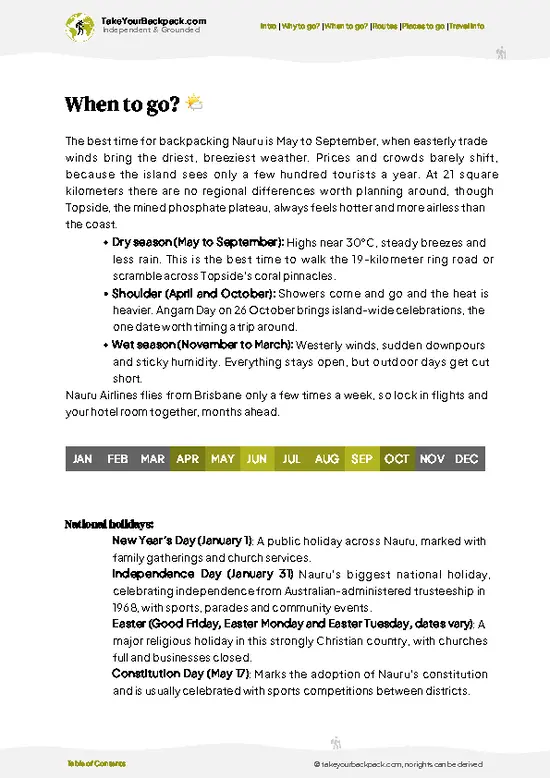
source: climatestotravel.comJANJanuary: fair for travelingFEBFebruary: fair for travelingMARMarch: fair for travelingAPRApril: good for travelingMAYMay: excellent for travelingJUNJune: excellent for travelingJULJuly: excellent for travelingAUGAugust: excellent for travelingSEPSeptember: excellent for travelingOCTOctober: excellent for travelingNOVNovember: good for travelingDECDecember: fair for traveling
when-to-go

✈️ The backpacker research shortcutNauru Travel Guide

An offline-friendly backpacking guide with optimized travel routes, ranked highlights, transport advice, and the best areas to stay.
example page 0 from our offline Travel Guide for Nauru
example page 1 from our offline Travel Guide for Nauru
example page 2 from our offline Travel Guide for Nauru
example page 3 from our offline Travel Guide for Nauru
example page 4 from our offline Travel Guide for Nauru
example page 5 from our offline Travel Guide for Nauru
example page 6 from our offline Travel Guide for Nauru
example page 7 from our offline Travel Guide for Nauru
The digital guide (87 pages) contains:
17 highlights, ranked by travel appeal
Optimized 2, 3 & 5-day travel routes
Cities, national parks, landmarks, beaches
How to get around
Offline-friendly for travel without Wi-Fi
👉 Click to see all 30+ guide features

📅 Plan smarter in minutes, not weeks
Month by month travel advice
Festivals & national holidays
Budget expectations

🗺️ Go to the right places, skip the overrated ones
Honest pros & cons of destinations
Top hikes, parks & viewpoints
Lesser-known places most travelers miss
Clear “worth it vs skip it” guidance

🛏️ Travel smoothly without rookie mistakes
Best areas to stay
Transport systems explained simply
Common scams & safety advice
SIM cards, money & practical tips

🌍 Understand the country, not just visit it
Culture & traditions
52 Essential phrases & customs
Festivals worth planning around
Traveler-friendly historical context
Insights that make places more meaningful

📱 Built for real travel conditions
Fully downloadable PDF
Works completely offline
Optimized for phone use
Useful in remote areas & buses
Everything in one place
Save weeks of stressful planning
Get instant access to your full guide. 30‑day money-back guarantee.
+ Add another guide for just US$7.80

By proceeding you agree to our terms.
Sent to your inbox immediately after payment • 100% Secure Checkout
Best Backpacking Travel Advisor 2025 tourism awardBest Backpacking
Travel Advisor
2025
What others say about Take Your Backpack Guides:
⭐⭐⭐⭐⭐
Fantastic, amazing amount of information!
⭐⭐⭐⭐⭐
My goodness this is amazing, it's what I've been looking for hats off too you!
⭐⭐⭐⭐⭐
I think this is absolutely BRILLIANT
⭐⭐⭐⭐
Very complete and informative. It's still missing places, but I gotta to commend you
⭐⭐⭐⭐⭐
This is truly amazing, thank you, can't wait to explore it with my kids!
⭐⭐⭐⭐⭐
Awesome resource, thank you!
⭐⭐⭐⭐⭐
This is amazing! Can't wait to explore the ones I haven't seen
⭐⭐⭐⭐
I love this! Well done, great idea.
⭐⭐⭐⭐⭐
Thanks for taking the time to make this gem!
⭐⭐⭐⭐⭐
This might be the best website I've ever seen.
⭐⭐⭐⭐⭐
Congratulations, and thank you so much for your work; it's incredibly valuable.
⭐⭐⭐⭐
In all seriousness I think you did a great job pointing out the important spots
⭐⭐⭐⭐⭐
10/10 very good
⭐⭐⭐⭐⭐
As someone who's only just starting to visit regularly this is awesome, thank you.
⭐⭐⭐⭐
Thank you very much! I'm going to visit my dad, it's going to be very useful!
⭐⭐⭐⭐⭐
This is really cool! We'll be travelling for the first time and this definitely come in handy.
⭐⭐⭐⭐⭐
You are now our minister of culture, congratulations 👨‍💼
⭐⭐⭐⭐⭐
Just wanted to tell you that this is a pearl! Going to follow your recommendations.
⭐⭐⭐⭐⭐
This is so cool. I'll definitely be using the resource for my travels soon.
⭐⭐⭐⭐⭐
This is very impressive! Good work.
⭐⭐⭐⭐⭐
This is an amazing and informative site. Very well done!

🛏️ Where to stay?How to pick the right area

Denigomodu is compact, but where you drop your pack shapes your whole experience. The best spot for backpackers is the area around the town center, where the pulse of local life hums steadily. This neighborhood is safe, with a laid-back vibe that feels like a small community rather than a tourist zone. You’ll find a handful of budget accommodations here, mostly simple guesthouses and hostels that cater to solo travelers and those who want to connect without the fuss of high-end resorts.

Why this area? It’s where you can walk out your door and immediately catch the scent of salty ocean air mixed … read more 👉
Denigomodu is compact, but where you drop your pack shapes your whole experience. The best spot for backpackers is the area around the town center, where the pulse of local life hums steadily. This neighborhood is safe, with a laid-back vibe that feels like a small community rather than a tourist zone. You’ll find a handful of budget accommodations here, mostly simple guesthouses and hostels that cater to solo travelers and those who want to connect without the fuss of high-end resorts.

Why this area? It’s where you can walk out your door and immediately catch the scent of salty ocean air mixed with the faint, earthy aroma of tropical foliage. The streets are quiet but alive enough to meet locals or fellow backpackers at small cafes or market stalls. Compared to the more industrial or residential edges of Denigomodu, this central zone offers a smoother rhythm—less isolated, more social, and easier to navigate on foot.

Staying here means you’re close to the few eateries and shops that stock essentials, so you’re not scrambling for supplies. It’s a practical choice that rewards you with a genuine slice of Nauruan daily life, making your stay feel earned rather than handed to you on a silver platter.

🚌 Getting aroundGetting around like a local

Denigomodu moves at its own rhythm—less a clockwork town and more a place where the sun’s angle and the ocean breeze set the pace. The streets don’t hum with the urgency of a metropolis, but they’re alive with the slow shuffle of locals and the occasional burst of motorbike engines. You won’t find rigid schedules here; instead, you’ll feel the pulse of a community that flows with intuition and familiarity. The scent of salt and tropical foliage hangs in the air, mixing with the occasional waft of roadside cooking. This isn’t a place to rush. It’s a place to settle into the rhythm, where transit options reflect that laid-back vibe but still get you where you need to go without fuss or excess cost.

Walking is your best friend in Denigomodu. The town’s compact layout means most spots are within … read more 👉
Denigomodu moves at its own rhythm—less a clockwork town and more a place where the sun’s angle and the ocean breeze set the pace. The streets don’t hum with the urgency of a metropolis, but they’re alive with the slow shuffle of locals and the occasional burst of motorbike engines. You won’t find rigid schedules here; instead, you’ll feel the pulse of a community that flows with intuition and familiarity. The scent of salt and tropical foliage hangs in the air, mixing with the occasional waft of roadside cooking. This isn’t a place to rush. It’s a place to settle into the rhythm, where transit options reflect that laid-back vibe but still get you where you need to go without fuss or excess cost.

Walking is your best friend in Denigomodu. The town’s compact layout means most spots are within a 20- to 30-minute stroll. The sidewalks are uneven in places, so sturdy shoes are a must. Walking lets you soak in the local sounds—the chatter of vendors, the distant crash of waves, and the occasional bark of a dog. It’s free, flexible, and the best way to catch those small details that make the town feel alive.

Local Buses run sporadically, usually starting around 6:30 a.m. and winding down by 6 p.m. They’re cheap—think a few dollars for a ride across town—but don’t expect strict adherence to timetables. Buses often leave when full, so patience is key. The ride is slow, with frequent stops, but it’s a window into daily life, packed with locals chatting or dozing off to the hum of the engine.

Shared Taxis operate on flexible routes, often filling up before heading out. They’re faster than buses and run until about 9 p.m., but prices vary depending on distance and negotiation skills. These taxis are a step up in comfort—usually small vans or cars—but expect a lively atmosphere as drivers and passengers haggle and joke. It’s a practical choice if you want to cover more ground without the rigidity of a schedule.

Motorbike Rentals offer the ultimate freedom. For a modest daily fee, you can zip through the town and surrounding areas at your own pace. The roads are narrow and sometimes bumpy, so a helmet is non-negotiable. Riding lets you chase the light as it shifts through palm fronds and catch the scent of the ocean on the breeze. It’s a bit of a thrill and a shortcut to hidden spots that buses and taxis can’t reach.

Bicycle Rentals are another budget-friendly option, perfect for those who want to blend exercise with exploration. The terrain is mostly flat, but the tropical heat means you’ll want to start early or late in the day. Bikes give you a quiet, intimate way to move through the town, letting you pause whenever a scene or smell catches your attention without worrying about parking or fuel.

In Denigomodu, transit isn’t just about getting from A to B—it’s part of the experience. Each option offers a different way to tune into the town’s pace, helping you move with the flow rather than against it. Choose your ride, and you’re already halfway to feeling like a local.

👛 Costs (as of 4 September 2026)Typical daily expenses

Backpacking in Denigomodu, Nauru, means navigating a place where options are limited but the experience is raw and authentic, and that reality shapes your daily costs sharply.
  • Dorm Accommodation: Nauru doesn’t have a traditional hostel scene. Budget travelers usually find guesthouses or small lodges charging around $30 to $50 USD per night. These places are basic—expect simple rooms with minimal amenities, but clean and functional.
  • Meals: Food options are sparse and mostly local eateries or small shops. A typical meal runs about $5 to $10 USD. If you stick to local dishes like fish or rice-based meals, you’ll stay closer to the lower end. Imported or Western-style food pushes the price up.
  • Local Transport: Public transport is almost non-existent. Most travelers rely on taxis or renting
read more 👉
Backpacking in Denigomodu, Nauru, means navigating a place where options are limited but the experience is raw and authentic, and that reality shapes your daily costs sharply.
  • Dorm Accommodation: Nauru doesn’t have a traditional hostel scene. Budget travelers usually find guesthouses or small lodges charging around $30 to $50 USD per night. These places are basic—expect simple rooms with minimal amenities, but clean and functional.
  • Meals: Food options are sparse and mostly local eateries or small shops. A typical meal runs about $5 to $10 USD. If you stick to local dishes like fish or rice-based meals, you’ll stay closer to the lower end. Imported or Western-style food pushes the price up.
  • Local Transport: Public transport is almost non-existent. Most travelers rely on taxis or renting a bike. Taxi rides within Denigomodu or nearby areas cost around $5 to $10 USD per trip. Renting a bike can be about $10 to $15 USD per day, giving you more freedom and saving on multiple taxi fares.
  • Basic Activities/Entry Fees: Nauru’s attractions are mostly natural—beaches, snorkeling spots, and WWII relics. Entry fees are minimal or non-existent, but guided tours or snorkeling gear rentals can cost $10 to $20 USD. Budget for occasional small fees if you want a local guide or equipment.
  • Miscellaneous Expenses: This covers essentials like bottled water, snacks, or phone credit. Expect to spend around $5 to $10 USD daily here, especially since options are limited and imported goods are pricier.

All told, a realistic daily budget for backpacking in Denigomodu hovers between $55 and $95 USD. It’s not dirt cheap, but the costs reflect the island’s isolation and limited infrastructure. Planning ahead and embracing simplicity unlocks the best experience without surprises.
⚠️ Prices can change and everyone travels differently, so take this as a rough guide. Hope it helps you plan your adventure!

🚌 Day tripsShort trips worth adding

Denigomodu, Nauru, is a backpacker’s dream base for day trips, offering a blend of rich history and stunning landscapes. The island’s compact size makes it easy to explore, and the local vibe is welcoming. Here are some worthwhile day trips that will elevate your experience.

Anibare Bay
Just a short ride from Denigomodu, Anibare Bay is a slice of paradise. The turquoise waters are perfect for a refreshing swim, and the soft sand invites you to kick back and soak up the sun. Bring a picnic; the local food stalls offer fresh fish and tropical fruits. Aim for the early morning or late afternoon to catch the golden light reflecting off the water. Expect to spend around $10 for transport and snacks. A common mistake? Forgetting sunscreen—this sun can be relentless.


Buada Lagoon
This serene … read more 👉
Denigomodu, Nauru, is a backpacker’s dream base for day trips, offering a blend of rich history and stunning landscapes. The island’s compact size makes it easy to explore, and the local vibe is welcoming. Here are some worthwhile day trips that will elevate your experience.

Anibare Bay
Just a short ride from Denigomodu, Anibare Bay is a slice of paradise. The turquoise waters are perfect for a refreshing swim, and the soft sand invites you to kick back and soak up the sun. Bring a picnic; the local food stalls offer fresh fish and tropical fruits. Aim for the early morning or late afternoon to catch the golden light reflecting off the water. Expect to spend around $10 for transport and snacks. A common mistake? Forgetting sunscreen—this sun can be relentless.


Buada Lagoon
This serene lagoon is a hidden treasure, surrounded by lush greenery and dotted with coconut palms. It’s a great spot for birdwatching, so bring your binoculars. The journey takes about 15 minutes by bike, and you can rent one for around $5. Pack some water and snacks, as there are no facilities nearby. The best time to visit is early morning when the mist hangs over the water, creating a magical atmosphere. Many first-timers miss the small path leading to the lagoon, so keep your eyes peeled!


Command Ridge
For a taste of history and breathtaking views, head to Command Ridge. This site offers a glimpse into Nauru’s past, with remnants of World War II bunkers. The hike is short but steep, taking about 30 minutes to reach the top. The panoramic views of the island are worth every drop of sweat. Bring a camera and some water; you’ll want to capture the moment. The best time to go is late afternoon for cooler temperatures and stunning sunset vistas. Many backpackers underestimate the hike’s intensity, so pace yourself.
👉 Explore Command Ridge

Yaren District
Explore the capital of Nauru, Yaren District, where you can immerse yourself in local culture. Visit the small markets for fresh produce and handmade crafts. It’s about a 10-minute drive from Denigomodu, costing around $5. The best time to visit is during the morning when the market is bustling. A common mistake is to overlook the local cuisine—try the fish curry for an authentic taste of Nauru.
Want to know what more Nauru offers?
The Nauru Travel Guide describes 17 highlights, from cities to national parks, from beaches to hikes

Get the Travel Guide -

🛡️ SafetySafety Tips and Common Scams in Denigomodu

Denigomodu, Nauru, is generally safe, but a few practical tips can enhance your experience. The town is small, and most locals are friendly, but it’s wise to stay aware, especially in quieter areas. Stick to well-lit streets at night; the atmosphere can shift after dark, and fewer people are around.

Solo travelers should embrace the laid-back vibe but keep your belongings close. A simple crossbody bag can deter any opportunistic snatch-and-grabs. While scams are rare, be cautious of overly eager locals offering guided tours or services that seem too good to be true. If someone approaches you with a deal, take a moment to assess the situation—trust your instincts.

Everyday annoyances might include the occasional stray dog or the slow pace of service in local eateries. Patience is key; it’s … read more 👉
Denigomodu, Nauru, is generally safe, but a few practical tips can enhance your experience. The town is small, and most locals are friendly, but it’s wise to stay aware, especially in quieter areas. Stick to well-lit streets at night; the atmosphere can shift after dark, and fewer people are around.

Solo travelers should embrace the laid-back vibe but keep your belongings close. A simple crossbody bag can deter any opportunistic snatch-and-grabs. While scams are rare, be cautious of overly eager locals offering guided tours or services that seem too good to be true. If someone approaches you with a deal, take a moment to assess the situation—trust your instincts.

Everyday annoyances might include the occasional stray dog or the slow pace of service in local eateries. Patience is key; it’s part of the charm. Embrace the rhythm of Denigomodu, and you’ll find the beauty in its simplicity.

FAQCommon questions from travelers

Denigomodu is accessible by road from Nauru International Airport, located about 3 kilometers away. The village is connected by the main ring road circling the island, making it easy to reach by taxi or rental bike. Travel time from the airport is typically under 10 minutes.
Denigomodu is worth the trip for its local atmosphere and proximity to key sites like the Buada Lagoon and Anibare Bay. It offers a glimpse into daily life on Nauru, with small shops and community centers. However, attractions are limited, so it suits travelers interested in cultural immersion rather than sightseeing.
Yes, Denigomodu can be visited as a day trip due to its small size and close proximity to other parts of Nauru. Most visitors spend a few hours exploring the village and nearby natural sites before returning to their accommodation. The entire trip can be comfortably done within a single day.
⚠️ Things can change over time, so always validate details locally before you go.

Other Nauruan villages near Denigomodu

Explore more nearby:

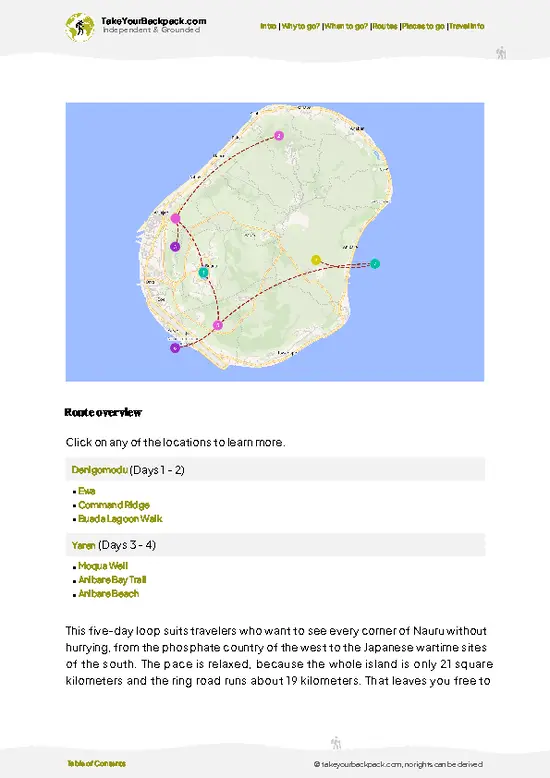
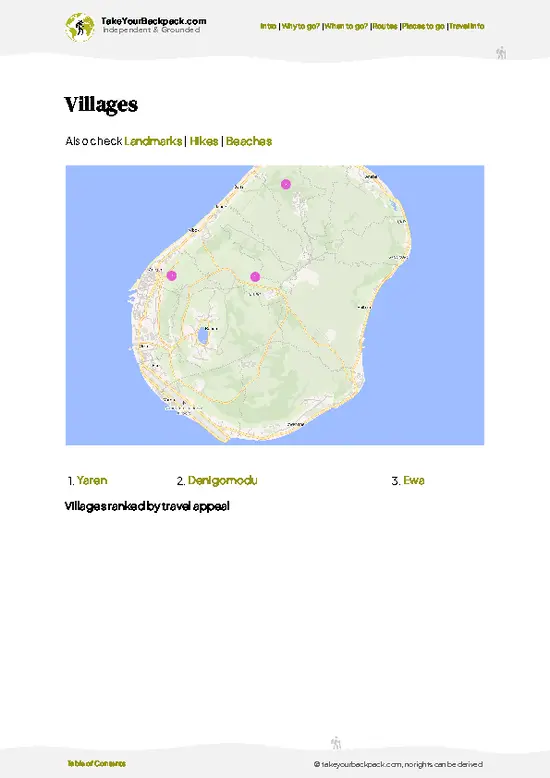
  • Yaren—airport, parliament house, civic center| 2 km away
  • Ewa—coastal cliffs, phosphate relics, ocean breezes| 3 km away

💡 Not sure where to go next?
Create a personalized itinerary for Nauru including Denigomodu and the places that fit your trip.

Generate my itinerary

👉 Discover all villages

Or checkout all Nauru has to offer (think cities, towns, villages, national parks, hikes, beaches, festivals)
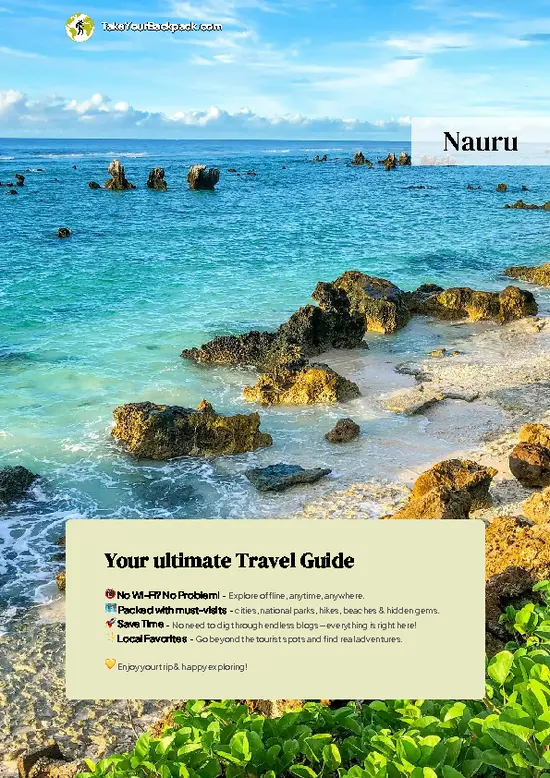
Country photo of Nauru

We 💚 feedbackParting advice and final tips

Denigomodu has a laid-back vibe that feels like a secret shared among friends. The best surprise? The local food—fresh fish grilled to perfection, paired with a tangy coconut salad that dances on your palate. But a heads-up: the roads can be rough, so don’t rush. Take your time to soak in the lush greenery and the ocean breeze. It’s all part of the experience. Embrace the slow pace; it’s where the real magic happens.

✍️ Help improve this page!
The information on this page is based on in-depth research, insights shared by experienced travelers, and feedback from the local travel community in Nauru. While every effort is made to keep the information accurate and current, conditions can change — so if you spot anything incorrect or outdated, please get in touch.


🙋‍♂️ Give feedback

👋 Meet the founderWho’s Behind Take Your Backpack?

Johan, backpacker and founder of TakeYourBackpackHi, I’m Johan (Netherlands 🇳🇱), the creator of TakeYourBackpack. Over the past decade, I’ve backpacked through 80+ countries across six continents, gaining extensive experience with independent travel, long-term trips, and overland routes.

This site is built on a combination of firsthand travel experience and carefully curated insights from other backpackers. Many guides are based on places I’ve personally visited, while others bring together tips, observations, and practical advice shared by trusted travelers I’ve met along the way.

The goal is to provide realistic, experience-driven guidance — not generic itineraries — so you can explore destinations with better context, clearer expectations, and more confidence.

Get full Nauru guide •
Instant download • 17 highlights • Full Offline guide