
×

Nauru🇳🇷 | villagesYarenairport, parliament house, civic center | things to do and best time to go

Explore Moqua WellExplore Ewa

Backpacking in Yaren
🏆 Top pickvillage ranked #1
By Johan Kruseman 🇳🇱 | Updated September 4, 2026

The air is thick with salt and jet fuel as you step out of the tiny plane, heat wrapping around you like a wet blanket while palm fronds clack in the wind across the road. That’s Yaren: not a postcard town, but the strip of life wrapped around Nauru’s only airport on the island’s southern edge. For backpackers, it’s less “capital city” and more functional hub. You sleep here, you sort permits, you find a guesthouse, then you fan out around the island. The pros: everything essential is walkable or a short lift away, the coastal road is right there for sunrise walks, and locals are used to visitors passing through, so it feels straightforward and low-drama. The cons: almost no classic backpacker scene, limited nightlife, and higher prices than you’d expect for such a small place. Compared with more residential districts, Yaren feels practical rather than pretty, but that practicality is exactly what makes the rest of Nauru easier to explore.

Discover everything you want to know in the 📖 Nauru Travel Guide.


Get your Nauru guide
17 ranked highlights, routes & tips, works offline (87 pages)
Loading the map 🌍
CLICK TO FILTER
villages
landmarks
national parks
hikes
beaches
attractions
festivals
SHOW COUNTRY’S BESTSHOW ALL

✨ Why go?
Ranked #1 village in Nauru
Why visitors keep coming back

Backpackers flock to Yaren not just for its charm but for its strategic position on Nauru. This town serves as a gateway to nearby hikes and beaches that offer a taste of the island’s rugged beauty. The local guesthouses and small-scale hostels create an inviting atmosphere, perfect for solo travelers or small groups looking to connect. You can stroll through walkable streets, where the scent of grilled fish wafts from roadside stalls, tempting you to dive into the local cuisine.

While many travelers might only stay a night or two, those who linger find a slower pace that allows for deeper exploration. The friendly locals and fellow backpackers foster a sense of community, making it easy to share stories and tips. Whether you’re a hiker eager to tackle the island’s trails or a slow travelerread more 👉
Backpackers flock to Yaren not just for its charm but for its strategic position on Nauru. This town serves as a gateway to nearby hikes and beaches that offer a taste of the island’s rugged beauty. The local guesthouses and small-scale hostels create an inviting atmosphere, perfect for solo travelers or small groups looking to connect. You can stroll through walkable streets, where the scent of grilled fish wafts from roadside stalls, tempting you to dive into the local cuisine.

While many travelers might only stay a night or two, those who linger find a slower pace that allows for deeper exploration. The friendly locals and fellow backpackers foster a sense of community, making it easy to share stories and tips. Whether you’re a hiker eager to tackle the island’s trails or a slow traveler wanting to soak in the culture, Yaren has a way of making you feel at home. Just don’t expect a bustling nightlife; this is more about quiet reflection and natural beauty than urban distractions. If you’re looking for a genuine experience, Yaren is a worthwhile stop on your journey.
Want to include Yaren in your Nauru route?
Create a personalized Nauru itinerary that includes Yaren and the places that fit your trip — based on your travel style, budget, and available time. Get your route in seconds.

Generate my trip

💡 HighlightsTop highlights of Yaren

Quick question before I put the list together: do you want strictly places inside the official Yaren district boundaries (so I’ll exclude well-known nearby spots like Anibare Bay or Buada Lagoon), and is it okay if I include functional public sites (Parliament House, the airport terminal, churches, community grounds, markets) that are visitable but not typical “tourist attractions”?
Spotted a mistake or missing something? Contact us.

⌛️ 1 dayWhat you can realistically do in a day

Yaren, the capital of Nauru, is a small town that pulses with the essence of island life. It’s not just a stopover; it’s a place where the ocean whispers secrets and the air is thick with the scent of frangipani. The charm lies in its simplicity and the warmth of its people.

Start your day early at the local market. The sun rises gently, casting a golden hue over the stalls filled with fresh produce and handmade crafts. Engage with the vendors; their smiles are as bright as the fruits they sell. Grab a coconut to sip on as you wander through the vibrant colors and lively chatter. This is where you’ll feel the heart of Yaren.

After the market, head to the nearby Anibare Bay. The soft sand and clear waters invite you for a swim or a leisurely stroll along the shore. The waves here are gentle, … read more 👉
Yaren, the capital of Nauru, is a small town that pulses with the essence of island life. It’s not just a stopover; it’s a place where the ocean whispers secrets and the air is thick with the scent of frangipani. The charm lies in its simplicity and the warmth of its people.

Start your day early at the local market. The sun rises gently, casting a golden hue over the stalls filled with fresh produce and handmade crafts. Engage with the vendors; their smiles are as bright as the fruits they sell. Grab a coconut to sip on as you wander through the vibrant colors and lively chatter. This is where you’ll feel the heart of Yaren.

After the market, head to the nearby Anibare Bay. The soft sand and clear waters invite you for a swim or a leisurely stroll along the shore. The waves here are gentle, perfect for a refreshing dip. If you’re feeling adventurous, rent a kayak and paddle out to explore the coastline. The view from the water offers a unique perspective of the lush cliffs and the vibrant coral below.

As the afternoon rolls in, make your way to the Nauru Museum. This spot is often overlooked by tourists, but it’s a treasure trove of local history and culture. The exhibits tell stories of the island’s past, from its phosphate mining days to its rich traditions. Take your time here; the air is filled with the scent of old wood and the quiet hum of history.

As evening approaches, find a local eatery for dinner. Try the grilled fish, fresh from the ocean, paired with a side of taro. The flavors are simple yet profound, a reflection of the island itself.

Finish your day at the Yaren Lighthouse. The sunset casts a breathtaking palette of colors across the sky, and the sound of the waves crashing against the rocks creates a soothing soundtrack. This moment, with the horizon stretching endlessly before you, encapsulates the beauty of Yaren—a day well spent, filled with genuine experiences.
Turn your Yaren visit into an Nauru adventure
Build a complete Nauru route with Yaren, hidden gems, must-see destinations, and realistic travel times included.

Generate my trip

🌤️ When to go?Weather, crowds, and seasonal trade-offs


  • Topic: Weather – Yaren’s tropical climate means it’s hot and humid year-round, but from May to October, the southeast trade winds bring a drier, more comfortable atmosphere. Expect less sticky sweat and fewer sudden downpours, making your days outside far more pleasant.

  • Topic: Temperature – Temperatures hover between 27°C and 31°C (81°F to 88°F) most of the year. The cooler months (June to August) dip slightly to a more bearable 26°C (79°F) at night, which is a relief after the sun sets and the island’s humidity lingers.

  • Topic: Daylight Hours – Near the equator, daylight is steady, roughly 12 hours year-round. This means you can plan your hikes and beach time without worrying about early sunsets cutting your adventures short.

  • Topic: Crowds – Nauru is off the beaten path, so crowds
read more 👉

  • Topic: Weather – Yaren’s tropical climate means it’s hot and humid year-round, but from May to October, the southeast trade winds bring a drier, more comfortable atmosphere. Expect less sticky sweat and fewer sudden downpours, making your days outside far more pleasant.

  • Topic: Temperature – Temperatures hover between 27°C and 31°C (81°F to 88°F) most of the year. The cooler months (June to August) dip slightly to a more bearable 26°C (79°F) at night, which is a relief after the sun sets and the island’s humidity lingers.

  • Topic: Daylight Hours – Near the equator, daylight is steady, roughly 12 hours year-round. This means you can plan your hikes and beach time without worrying about early sunsets cutting your adventures short.

  • Topic: Crowds – Nauru is off the beaten path, so crowds are minimal anytime. However, visiting during the drier months means you’ll find more locals outdoors, giving you a chance to soak in authentic island life rather than tourist-driven scenes.

  • Topic: Seasonal Activities – The dry season aligns with local festivals and fishing seasons, offering a peek into cultural rituals and fresh seafood feasts. The wet season, by contrast, can limit outdoor activities but reveals lush greenery and fewer visitors.

  • Topic: Price Fluctuations – Prices for accommodation and flights remain relatively stable due to low tourist volume. Booking during the drier months might cost a bit more, but the trade-off is better weather and a richer experience.


Pro-tip: Aim for June to September to catch the island at its most inviting—less sweat, more sun, and a genuine slice of Nauruan life without the hassle of weather interruptions.


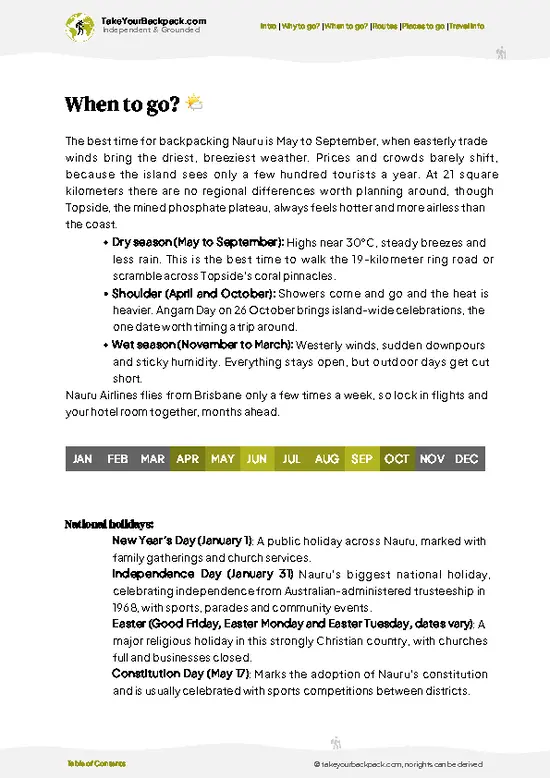
source: climatestotravel.comJANJanuary: fair for travelingFEBFebruary: fair for travelingMARMarch: fair for travelingAPRApril: good for travelingMAYMay: highly recommended for travelingJUNJune: excellent for travelingJULJuly: excellent for travelingAUGAugust: excellent for travelingSEPSeptember: excellent for travelingOCTOctober: highly recommended for travelingNOVNovember: good for travelingDECDecember: fair for traveling
when-to-go

✈️ The backpacker research shortcutNauru Travel Guide

An offline-friendly backpacking guide with optimized travel routes, ranked highlights, transport advice, and the best areas to stay.
example page 0 from our offline Travel Guide for Nauru
example page 1 from our offline Travel Guide for Nauru
example page 2 from our offline Travel Guide for Nauru
example page 3 from our offline Travel Guide for Nauru
example page 4 from our offline Travel Guide for Nauru
example page 5 from our offline Travel Guide for Nauru
example page 6 from our offline Travel Guide for Nauru
example page 7 from our offline Travel Guide for Nauru
The digital guide (87 pages) contains:
17 highlights, ranked by travel appeal
Optimized 2, 3 & 5-day travel routes
Cities, national parks, landmarks, beaches
How to get around
Offline-friendly for travel without Wi-Fi
👉 Click to see all 30+ guide features

📅 Plan smarter in minutes, not weeks
Month by month travel advice
Festivals & national holidays
Budget expectations

🗺️ Go to the right places, skip the overrated ones
Honest pros & cons of destinations
Top hikes, parks & viewpoints
Lesser-known places most travelers miss
Clear “worth it vs skip it” guidance

🛏️ Travel smoothly without rookie mistakes
Best areas to stay
Transport systems explained simply
Common scams & safety advice
SIM cards, money & practical tips

🌍 Understand the country, not just visit it
Culture & traditions
52 Essential phrases & customs
Festivals worth planning around
Traveler-friendly historical context
Insights that make places more meaningful

📱 Built for real travel conditions
Fully downloadable PDF
Works completely offline
Optimized for phone use
Useful in remote areas & buses
Everything in one place
Save weeks of stressful planning
Get instant access to your full guide. 30‑day money-back guarantee.
+ Add another guide for just US$7.80

By proceeding you agree to our terms.
Sent to your inbox immediately after payment • 100% Secure Checkout
Best Backpacking Travel Advisor 2025 tourism awardBest Backpacking
Travel Advisor
2025
What others say about Take Your Backpack Guides:
⭐⭐⭐⭐⭐
Fantastic, amazing amount of information!
⭐⭐⭐⭐⭐
My goodness this is amazing, it's what I've been looking for hats off too you!
⭐⭐⭐⭐⭐
I think this is absolutely BRILLIANT
⭐⭐⭐⭐
Very complete and informative. It's still missing places, but I gotta to commend you
⭐⭐⭐⭐⭐
This is truly amazing, thank you, can't wait to explore it with my kids!
⭐⭐⭐⭐⭐
Awesome resource, thank you!
⭐⭐⭐⭐⭐
This is amazing! Can't wait to explore the ones I haven't seen
⭐⭐⭐⭐
I love this! Well done, great idea.
⭐⭐⭐⭐⭐
Thanks for taking the time to make this gem!
⭐⭐⭐⭐⭐
This might be the best website I've ever seen.
⭐⭐⭐⭐⭐
Congratulations, and thank you so much for your work; it's incredibly valuable.
⭐⭐⭐⭐
In all seriousness I think you did a great job pointing out the important spots
⭐⭐⭐⭐⭐
10/10 very good
⭐⭐⭐⭐⭐
As someone who's only just starting to visit regularly this is awesome, thank you.
⭐⭐⭐⭐
Thank you very much! I'm going to visit my dad, it's going to be very useful!
⭐⭐⭐⭐⭐
This is really cool! We'll be travelling for the first time and this definitely come in handy.
⭐⭐⭐⭐⭐
You are now our minister of culture, congratulations 👨‍💼
⭐⭐⭐⭐⭐
Just wanted to tell you that this is a pearl! Going to follow your recommendations.
⭐⭐⭐⭐⭐
This is so cool. I'll definitely be using the resource for my travels soon.
⭐⭐⭐⭐⭐
This is very impressive! Good work.
⭐⭐⭐⭐⭐
This is an amazing and informative site. Very well done!

🛏️ Where to stay?Best areas to stay in Nauru

Yaren, Nauru’s de facto capital, is compact but layered with subtle rhythms that matter when you’re backpacking on a shoestring. The best place to drop your pack is near the town center, where the pulse of daily life hums steadily. This area isn’t sprawling, but it’s where you’ll find the most social energy—locals chatting over roadside stalls, kids kicking a ball near the community center, and the occasional breeze carrying the salty hint of the nearby ocean.

Why here? Because it’s safe and walkable, which is a rare luxury on an island where public transport is minimal and distances can feel … read more 👉
Yaren, Nauru’s de facto capital, is compact but layered with subtle rhythms that matter when you’re backpacking on a shoestring. The best place to drop your pack is near the town center, where the pulse of daily life hums steadily. This area isn’t sprawling, but it’s where you’ll find the most social energy—locals chatting over roadside stalls, kids kicking a ball near the community center, and the occasional breeze carrying the salty hint of the nearby ocean.

Why here? Because it’s safe and walkable, which is a rare luxury on an island where public transport is minimal and distances can feel longer under the tropical sun. Staying close to the center means you’re never far from basic amenities—small shops, eateries serving up fresh fish and coconut, and the informal meeting spots where solo travelers naturally converge.

Hostels are scarce but tend to cluster around this hub, making it easier to connect with other backpackers without the hassle of long commutes or isolated stays. Compared to the quieter residential fringes or the industrial edges, this neighborhood offers a genuine slice of Nauruan life, with enough bustle to keep you engaged but not overwhelmed. The light here shifts gently through the day, casting long shadows on coral walls and inviting you to linger over a cold drink as the sun dips low. It’s the kind of place where the island’s story unfolds naturally, and you get to be part of it.

🚌 Getting aroundHow to get around Yaren

Yaren, the de facto capital of Nauru, moves at a pace that feels like the tide itself—steady, unhurried, and dictated more by the sun’s arc than by clocks or timetables. Here, the rhythm isn’t about rushing from point A to B but about syncing with the island’s natural flow. The air carries the faint saltiness of the ocean, mingled with the earthy scent of coral and tropical foliage. Streets are quiet, often shaded by coconut palms, and the occasional hum of a motorbike or a car punctuates the calm. This isn’t a place where you’ll find a frenetic transit system or a rigid schedule; instead, you navigate by intuition, local cues, and a bit of patience. Understanding this flow is your key to moving smoothly—embracing the relaxed vibe while knowing the best ways to get around without wasting time … read more 👉
Yaren, the de facto capital of Nauru, moves at a pace that feels like the tide itself—steady, unhurried, and dictated more by the sun’s arc than by clocks or timetables. Here, the rhythm isn’t about rushing from point A to B but about syncing with the island’s natural flow. The air carries the faint saltiness of the ocean, mingled with the earthy scent of coral and tropical foliage. Streets are quiet, often shaded by coconut palms, and the occasional hum of a motorbike or a car punctuates the calm. This isn’t a place where you’ll find a frenetic transit system or a rigid schedule; instead, you navigate by intuition, local cues, and a bit of patience. Understanding this flow is your key to moving smoothly—embracing the relaxed vibe while knowing the best ways to get around without wasting time or money.


  • Walking: The most authentic and budget-friendly way to explore Yaren. The town is compact, with most key spots within a 20-30 minute stroll. Walking lets you soak in the salty breeze, hear the distant crash of waves, and catch glimpses of daily island life. No cost, no schedule—just your pace and the sun overhead.


  • Shared Taxis: These informal rides operate on a flexible schedule, often waiting until they have enough passengers before departing. Expect to pay a few Australian dollars per trip. They’re slower than private taxis but cheaper and a great way to meet locals. Flag one down on main roads; they usually run from early morning until early evening.


  • Private Taxis: If you’re in a hurry or carrying gear, private taxis offer direct, door-to-door service. Prices are negotiable but generally higher than shared taxis—think around AUD 10-20 for short trips. They’re available throughout the day but can be scarce after dark, so plan accordingly.


  • Rental Scooters: For the adventurous, renting a scooter is a fast, flexible way to cover more ground. Rentals cost about AUD 20-30 per day, and you’ll want to check the condition carefully—roads can be rough, and helmets are a must. Early morning rides offer cooler air and softer light, perfect for island views.


  • Bicycles: Another budget option, bicycles let you move faster than walking but still stay connected to the environment. Rentals are inexpensive, often under AUD 10 per day. The terrain is mostly flat, but watch for occasional potholes and loose gravel. Early mornings or late afternoons are best to avoid the midday heat.

👛 Costs (as of 4 September 2026)Travel costs and budget guide for Yaren

Backpacking in Yaren, Nauru, is a unique experience where costs reflect the island’s remote location and limited infrastructure. Expect prices to be higher than typical Southeast Asian or Pacific destinations, but manageable with some planning.
  • Dorm Accommodation: Options are extremely limited in Yaren. Most travelers stay in guesthouses or small hotels rather than traditional hostels. Prices for a basic dorm-style or shared room start around $30 to $50 USD per night. The scarcity of budget beds means booking ahead is crucial.
  • Meals: Food costs are moderate but lean toward the higher side due to import reliance. A simple local meal—think grilled fish or rice with vegetables—runs about $5 to $10 USD. Western-style meals or dining at hotel restaurants can push $15 to $25 USD. Cooking your
read more 👉
Backpacking in Yaren, Nauru, is a unique experience where costs reflect the island’s remote location and limited infrastructure. Expect prices to be higher than typical Southeast Asian or Pacific destinations, but manageable with some planning.
  • Dorm Accommodation: Options are extremely limited in Yaren. Most travelers stay in guesthouses or small hotels rather than traditional hostels. Prices for a basic dorm-style or shared room start around $30 to $50 USD per night. The scarcity of budget beds means booking ahead is crucial.
  • Meals: Food costs are moderate but lean toward the higher side due to import reliance. A simple local meal—think grilled fish or rice with vegetables—runs about $5 to $10 USD. Western-style meals or dining at hotel restaurants can push $15 to $25 USD. Cooking your own food is rare but can save money if you find a place with kitchen access.
  • Local Transport: Public transport is almost non-existent. Most movement happens on foot or by arranging rides with locals or taxis. Taxi rides within Yaren typically cost $5 to $10 USD for short distances. Renting a bicycle is a practical and cheaper alternative, around $10 to $15 USD per day.
  • Basic Activities/Entry Fees: Nauru’s attractions are mostly natural and free—beaches, snorkeling spots, and walking trails. Some guided tours or cultural experiences may charge $20 to $40 USD. Entry fees to any official sites or museums are minimal or nonexistent.
  • Miscellaneous Expenses: Internet access is patchy and expensive, with prepaid SIM cards costing around $20 USD for limited data. Bottled water and snacks can add $3 to $7 USD daily. Budget a small buffer for unexpected costs like laundry or tips.

Overall, expect to spend roughly $60 to $100 USD per day backpacking in Yaren. The higher end reflects the island’s isolation and limited budget options, but the payoff is a rare, off-the-beaten-path experience where every dollar feels like an investment in something genuinely different.
⚠️ Prices can change and everyone travels differently, so take this as a rough guide. Hope it helps you plan your adventure!

🚌 Day tripsWhere to go beyond the main area

Yaren, Nauru, is a backpacker’s dream base for day trips, offering a blend of adventure and cultural immersion. The island’s compact size means you can easily explore its unique landscapes and rich history without the hassle of long travel times.

Anibare Bay
Just a short drive from Yaren, Anibare Bay is a slice of paradise. The turquoise waters are perfect for swimming, and the soft sand invites you to kick back and soak up the sun. Bring a picnic; the local vibe is relaxed, and you’ll want to linger. The best time to visit is during the dry season, from May to October, when the weather is pleasantly warm. A common mistake is underestimating the sun—pack sunscreen and a hat to avoid a painful burn. Expect to spend around $10 for transport and snacks.


Buada Lagoon
This lush lagoon … read more 👉
Yaren, Nauru, is a backpacker’s dream base for day trips, offering a blend of adventure and cultural immersion. The island’s compact size means you can easily explore its unique landscapes and rich history without the hassle of long travel times.

Anibare Bay
Just a short drive from Yaren, Anibare Bay is a slice of paradise. The turquoise waters are perfect for swimming, and the soft sand invites you to kick back and soak up the sun. Bring a picnic; the local vibe is relaxed, and you’ll want to linger. The best time to visit is during the dry season, from May to October, when the weather is pleasantly warm. A common mistake is underestimating the sun—pack sunscreen and a hat to avoid a painful burn. Expect to spend around $10 for transport and snacks.


Buada Lagoon
This lush lagoon is a hidden treasure, surrounded by palm trees and vibrant flora. It’s a great spot for a leisurely walk or a quiet moment of reflection. The journey takes about 15 minutes by bike or taxi, and the entry is free. The best time to visit is early morning when the light dances on the water, creating a magical atmosphere. Many first-timers miss the chance to bring a camera—trust me, the reflections are Instagram gold. Budget around $5 for transport.


Command Ridge
For a taste of history and a panoramic view, head to Command Ridge. This site offers a glimpse into Nauru’s past, with remnants of World War II bunkers. The hike is short but steep, taking about 30 minutes to reach the top. The view is worth every drop of sweat, especially at sunset when the sky ignites with color. A common pitfall is not bringing enough water; the climb can be deceivingly taxing. Expect to spend around $15 for transport and refreshments.
👉 Explore Command Ridge

Yaren Beach
Just a stone’s throw from your base, Yaren Beach is perfect for a quick dip or a sunset stroll. The beach is less crowded, giving you a chance to unwind and enjoy the sound of the waves. It’s accessible year-round, but evenings are particularly magical. Many travelers overlook the local food stalls nearby; grab a bite to eat and savor the flavors of Nauru. You can easily enjoy this trip for under $10.
Want to know what more Nauru offers?
The Nauru Travel Guide describes 17 highlights, from cities to national parks, from beaches to hikes

Get the Travel Guide -

🛡️ SafetyStaying Safe: What Travelers Should Know

Yaren, Nauru, is generally safe, but a few practical tips can enhance your experience. The town has a laid-back vibe, but it’s wise to stay aware, especially in quieter areas. Stick to well-lit streets at night, as some spots can feel isolated. If you’re solo, consider joining a local tour or connecting with fellow travelers; it adds a layer of comfort and camaraderie.

While scams aren’t rampant, be cautious of overly friendly locals offering unsolicited help. Politely decline if someone tries to guide you to a shop or service that feels off. Everyday annoyances might include limited ATMs and sporadic internet access, so plan ahead. Carry cash and download maps offline to avoid frustration.

Overall, embrace the slow pace and engage with the locals. A friendly smile and open demeanor go a … read more 👉
Yaren, Nauru, is generally safe, but a few practical tips can enhance your experience. The town has a laid-back vibe, but it’s wise to stay aware, especially in quieter areas. Stick to well-lit streets at night, as some spots can feel isolated. If you’re solo, consider joining a local tour or connecting with fellow travelers; it adds a layer of comfort and camaraderie.

While scams aren’t rampant, be cautious of overly friendly locals offering unsolicited help. Politely decline if someone tries to guide you to a shop or service that feels off. Everyday annoyances might include limited ATMs and sporadic internet access, so plan ahead. Carry cash and download maps offline to avoid frustration.

Overall, embrace the slow pace and engage with the locals. A friendly smile and open demeanor go a long way. The beauty of Yaren lies in its simplicity, and being mindful will help you soak in its unique charm without a hitch.

FAQFrequently asked questions about Yaren

You get to Yaren by flying into Nauru International Airport, which is located within the district of Yaren itself. Flights are limited, typically serviced by airlines from Australia or Fiji, with about one or two flights per week. Once on the island, Yaren is easily accessible by foot or local transport due to its small size.
Yes, Yaren is worth the trip if you are interested in experiencing one of the world's smallest capitals and learning about Nauruan culture. It offers unique attractions like the Parliament House, local markets, and coastal views. However, it is a very small village, so expectations should be modest compared to larger cities.
Yes, Yaren can be visited as a day trip since Nauru is only 21 square kilometers in total and Yaren is centrally located. Most visitors spend a day exploring the village and nearby coastal areas. Accommodation options are limited, so many travelers plan short stays or day visits.
⚠️ Things can change over time, so always validate details locally before you go.

Other Nauruan villages near Yaren

Explore more nearby:

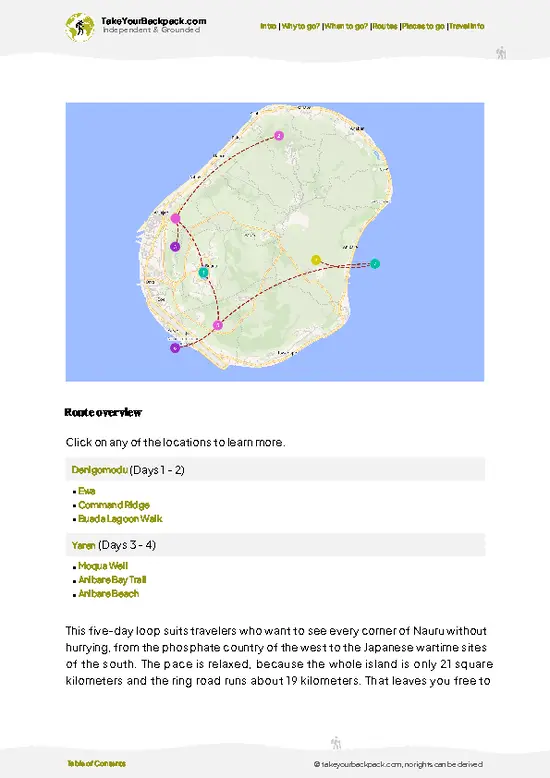
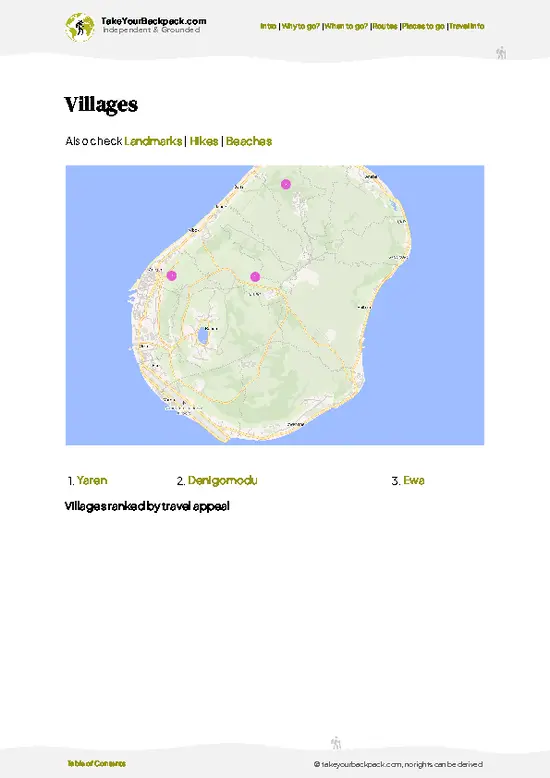
  • Denigomodu—market stalls, residential blocks, local schools| 2 km away
  • Ewa—coastal cliffs, phosphate relics, ocean breezes| 2 km away

💡 Not sure where to go next?
Create a personalized itinerary for Nauru including Yaren and the places that fit your trip.

Generate my itinerary

👉 Discover all villages

Or checkout all Nauru has to offer (think cities, towns, villages, national parks, hikes, beaches, festivals)
Country photo of Nauru

We 💚 feedbackIs it worth it?

Yaren has a laid-back vibe that feels like a warm embrace. The air is thick with the scent of salt and tropical blooms, and the locals are genuinely friendly. Don’t miss the stunning sunsets at the beach; they’ll make you forget any travel woes. Just a heads-up: the roads can be tricky, so take it slow. Embrace the simplicity here; it’s a refreshing break from the chaos of the world. You’ll leave with a piece of Nauru in your heart.

✍️ Help improve this page!
The information on this page is based on in-depth research, insights shared by experienced travelers, and feedback from the local travel community in Nauru. While every effort is made to keep the information accurate and current, conditions can change — so if you spot anything incorrect or outdated, please get in touch.


🙋‍♂️ Give feedback

👋 Meet the founderWho’s Behind Take Your Backpack?

Johan, backpacker and founder of TakeYourBackpackHi, I’m Johan (Netherlands 🇳🇱), the creator of TakeYourBackpack. Over the past decade, I’ve backpacked through 80+ countries across six continents, gaining extensive experience with independent travel, long-term trips, and overland routes.

This site is built on a combination of firsthand travel experience and carefully curated insights from other backpackers. Many guides are based on places I’ve personally visited, while others bring together tips, observations, and practical advice shared by trusted travelers I’ve met along the way.

The goal is to provide realistic, experience-driven guidance — not generic itineraries — so you can explore destinations with better context, clearer expectations, and more confidence.

Get full Nauru guide •
Instant download • 17 highlights • Full Offline guide