×

Nauru🇳🇷 | landmarksNauru’s Natural Swimming Pooltidal rock pool, sheltered saltwater, coral surroundings | things to do and best time to go

Explore Nauru’s LighthouseExplore Moqua Well

Backpacking in Nauru’s Natural Swimming Pool
🌟 Highlightunique site ranked #2
By Johan Kruseman 🇳🇱 | Updated September 4, 2026

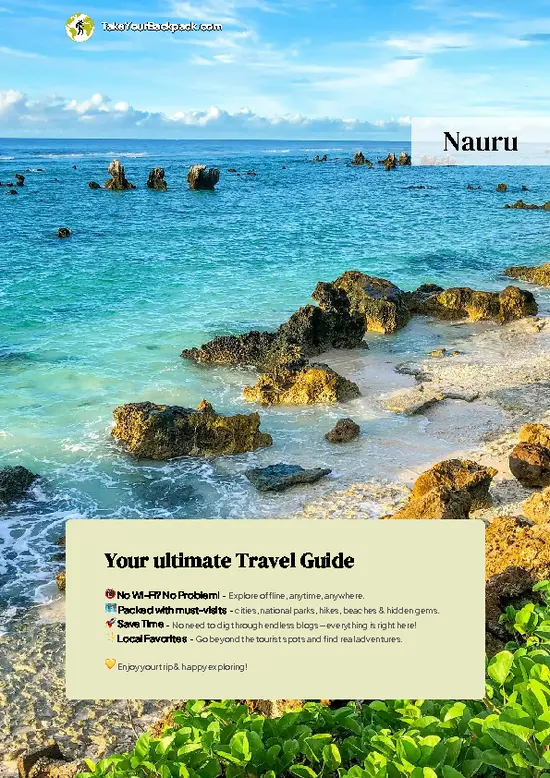
You know what most people realize only after they land on Nauru? The Natural Swimming Pool is basically your built‑in rest day: it’s easy to reach, calm, and you don’t need a guide or tour to enjoy it properly. The pool sits on the rocky coast in Anibare District on the island’s eastern side, tucked between jagged coral pinnacles and the open Pacific, so you can walk or drive there on the simple ring road and be in the water minutes later.

For backpackers, this isn’t some overhyped, ticketed “attraction”; it’s a low-key, saltwater basin where locals actually come to cool off. The wow-factor is subtle: clear turquoise water, black rock, pounding surf just beyond the protective rim. Crowds are almost nonexistent, but shade and facilities are minimal, and the sharp coral means you need reef shoes and common sense. It’s cheap, photogenic in a raw way, and more about slow, quiet immersion than bragging rights.

Discover everything you want to know in the 📖 Nauru Travel Guide.


Get your Nauru guide
17 ranked highlights, routes & tips, works offline (87 pages)
Loading the map 🌍
CLICK TO FILTER
villages
landmarks
national parks
hikes
beaches
attractions
festivals
SHOW COUNTRY’S BESTSHOW ALL

✨ Why go?
Ranked #2 unique site in Nauru
Reasons people choose to visit here

Nauru’s Natural Swimming Pool isn’t just another pretty spot for your Instagram feed; it’s a slice of raw beauty that demands your attention. Yes, it can get crowded, especially when cruise ships roll in, but don’t let that deter you. The effort-to-reward ratio here is off the charts. You’ll need to navigate some rocky paths, but once you arrive, the crystal-clear waters and vibrant marine life will make you forget the trek.

What sets this place apart is its uniqueness. Unlike the polished tourist traps, this pool feels untouched, a true oasis where you can swim in peace. Plus, it’s low-cost—just pack your gear and go. No entrance fees, no gimmicks.

Incorporate it into a broader route around Nauru, hitting other sites like the Japanese Shipwreck or Anibare Bay. This makes your journey feel … read more 👉
Nauru’s Natural Swimming Pool isn’t just another pretty spot for your Instagram feed; it’s a slice of raw beauty that demands your attention. Yes, it can get crowded, especially when cruise ships roll in, but don’t let that deter you. The effort-to-reward ratio here is off the charts. You’ll need to navigate some rocky paths, but once you arrive, the crystal-clear waters and vibrant marine life will make you forget the trek.

What sets this place apart is its uniqueness. Unlike the polished tourist traps, this pool feels untouched, a true oasis where you can swim in peace. Plus, it’s low-cost—just pack your gear and go. No entrance fees, no gimmicks.

Incorporate it into a broader route around Nauru, hitting other sites like the Japanese Shipwreck or Anibare Bay. This makes your journey feel cohesive rather than piecemeal. The authentic experience of swimming in a natural pool, surrounded by rugged cliffs, is something you won’t find in many places. It’s not just a stop; it’s a moment that connects you to the island’s soul.
Want to include Nauru’s Natural Swimming Pool in your Nauru route?
Create a personalized Nauru itinerary that includes Nauru’s Natural Swimming Pool and the places that fit your trip — based on your travel style, budget, and available time. Get your route in seconds.

Generate my trip

💡 HighlightsPlaces and moments you shouldn't skip

  1. The Calm Inner Pool — A shallow, sheltered rock pool carved by waves that offers warm, clear water ideal for a relaxed swim; at low tide it’s like a giant natural bathtub with no waves, but bring reef shoes because the bottom can be sharp.
  2. Snorkeling the Outer Edge — Swim out to the fringe where the pool meets the reef and you’ll find small corals, colourful reef fish and occasional rays; best at mid to high tide, and keep an eye on currents when you move beyond the break.
  3. Tidal Rock Sculptures — Jagged coral and limestone sculpted by decades of waves make striking shapes and little caverns perfect for photos; the textures and patterns are surprisingly dramatic for such a tiny island.
  4. Sunrise/Sunset Reflections — The pool often mirrors the sky, so early mornings and late afternoons reward
read more 👉
  1. The Calm Inner Pool — A shallow, sheltered rock pool carved by waves that offers warm, clear water ideal for a relaxed swim; at low tide it’s like a giant natural bathtub with no waves, but bring reef shoes because the bottom can be sharp.
  2. Snorkeling the Outer Edge — Swim out to the fringe where the pool meets the reef and you’ll find small corals, colourful reef fish and occasional rays; best at mid to high tide, and keep an eye on currents when you move beyond the break.
  3. Tidal Rock Sculptures — Jagged coral and limestone sculpted by decades of waves make striking shapes and little caverns perfect for photos; the textures and patterns are surprisingly dramatic for such a tiny island.
  4. Sunrise/Sunset Reflections — The pool often mirrors the sky, so early mornings and late afternoons reward you with vivid colours and calm reflections—great for quiet moments or low-effort photography.
  5. Local Fishing and Community Life — Watch (or politely ask to join) local fishers using simple gear near the pool; it’s a small community spot where you can learn about local practices and the importance of the sea here.
  6. Shoreline Wildlife and Plants — Expect seabirds, small crabs, and hardy coastal plants skirting the pool—the micro-ecosystem is compact but alive, so take a slow walk around and you’ll notice more than you think.
Spotted a mistake or missing something? Contact us.

🌤️ When to go?Choosing the right time of year


  • Weather: Nauru’s Natural Swimming Pool is best visited during the dry season from May to October. Expect minimal rain and clearer skies, perfect for swimming and snorkeling. The wet season (November to April) brings heavy showers and rough seas, which can make the pool less accessible and less enjoyable.

  • Temperature: Temperatures hover between 27°C and 31°C (81°F to 88°F) year-round, but the dry season feels more comfortable with lower humidity. The wet season’s heat combined with humidity can be oppressive, making outdoor activities less pleasant.

  • Daylight Hours: Daylight is fairly consistent, roughly 12 hours year-round, but the dry season offers more reliable sunshine, so you won’t be racing the clock to enjoy the pool.

  • Crowds: Nauru is off the beaten path, so crowds are never
read more 👉

  • Weather: Nauru’s Natural Swimming Pool is best visited during the dry season from May to October. Expect minimal rain and clearer skies, perfect for swimming and snorkeling. The wet season (November to April) brings heavy showers and rough seas, which can make the pool less accessible and less enjoyable.

  • Temperature: Temperatures hover between 27°C and 31°C (81°F to 88°F) year-round, but the dry season feels more comfortable with lower humidity. The wet season’s heat combined with humidity can be oppressive, making outdoor activities less pleasant.

  • Daylight Hours: Daylight is fairly consistent, roughly 12 hours year-round, but the dry season offers more reliable sunshine, so you won’t be racing the clock to enjoy the pool.

  • Crowds: Nauru is off the beaten path, so crowds are never overwhelming. However, local holidays and weekends see a slight uptick in visitors, mostly locals rather than tourists, which adds to the authentic vibe rather than detracts.

  • Seasonal Activities: The dry season aligns with local festivals and fishing events, giving you a chance to experience Nauruan culture alongside your swim. The wet season limits outdoor events and can disrupt travel plans.

  • Price Fluctuations: Prices for accommodation and transport remain relatively stable year-round due to low tourist volume. However, booking during the dry season is wise to avoid last-minute price hikes and limited availability.


Pro-tip: Aim for the shoulder months of May or October—fewer locals crowd the pool, the weather is solid, and you’ll catch the best balance of culture and calm waters.


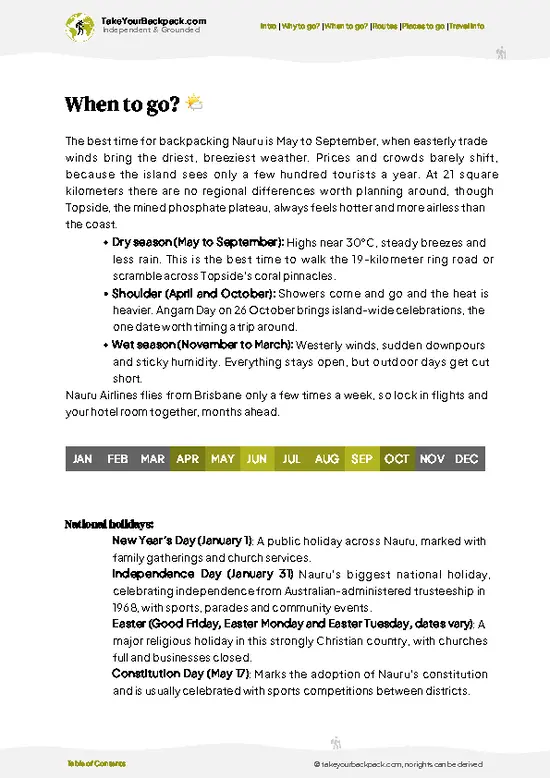
source: climatestotravel.comJANJanuary: fair for travelingFEBFebruary: fair for travelingMARMarch: fair for travelingAPRApril: fair for travelingMAYMay: excellent for travelingJUNJune: excellent for travelingJULJuly: excellent for travelingAUGAugust: excellent for travelingSEPSeptember: excellent for travelingOCTOctober: excellent for travelingNOVNovember: fair for travelingDECDecember: fair for traveling
when-to-go

✈️ The backpacker research shortcutNauru Travel Guide

An offline-friendly backpacking guide with optimized travel routes, ranked highlights, transport advice, and the best areas to stay.
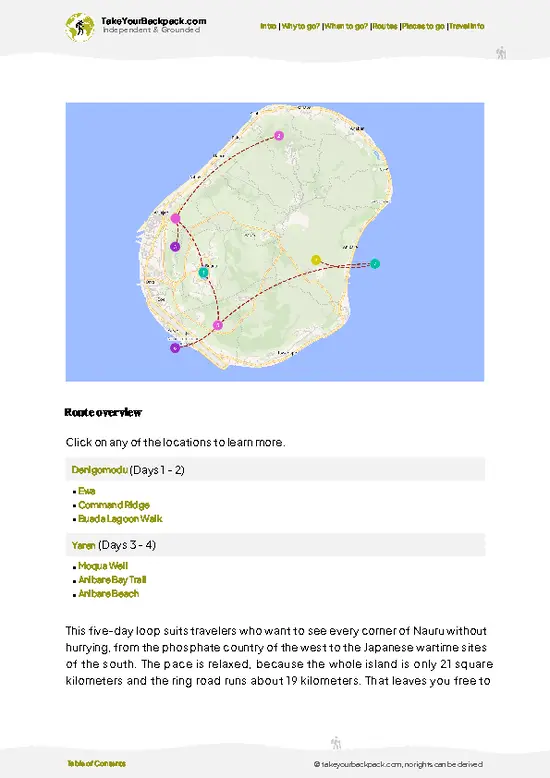
example page 0 from our offline Travel Guide for Nauru
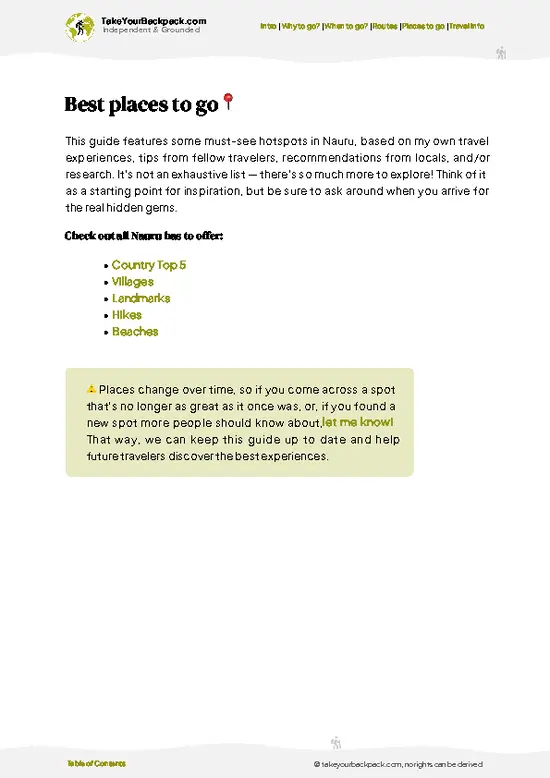
example page 1 from our offline Travel Guide for Nauru
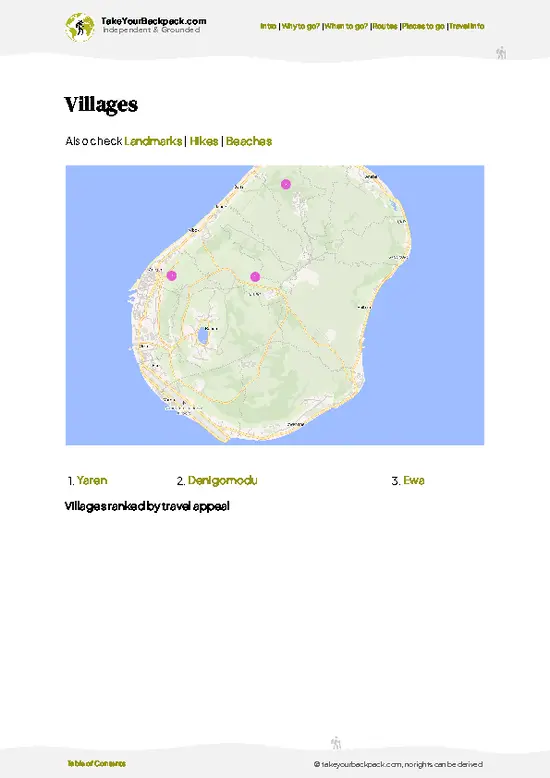
example page 2 from our offline Travel Guide for Nauru
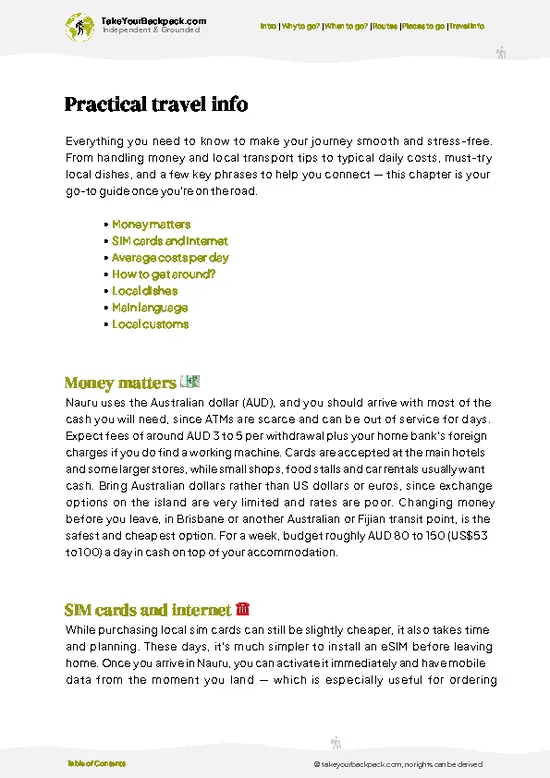
example page 3 from our offline Travel Guide for Nauru
example page 4 from our offline Travel Guide for Nauru
example page 5 from our offline Travel Guide for Nauru
example page 6 from our offline Travel Guide for Nauru
example page 7 from our offline Travel Guide for Nauru
The digital guide (87 pages) contains:
17 highlights, ranked by travel appeal
Optimized 2, 3 & 5-day travel routes
Cities, national parks, landmarks, beaches
How to get around
Offline-friendly for travel without Wi-Fi
👉 Click to see all 30+ guide features

📅 Plan smarter in minutes, not weeks
Month by month travel advice
Festivals & national holidays
Budget expectations

🗺️ Go to the right places, skip the overrated ones
Honest pros & cons of destinations
Top hikes, parks & viewpoints
Lesser-known places most travelers miss
Clear “worth it vs skip it” guidance

🛏️ Travel smoothly without rookie mistakes
Best areas to stay
Transport systems explained simply
Common scams & safety advice
SIM cards, money & practical tips

🌍 Understand the country, not just visit it
Culture & traditions
52 Essential phrases & customs
Festivals worth planning around
Traveler-friendly historical context
Insights that make places more meaningful

📱 Built for real travel conditions
Fully downloadable PDF
Works completely offline
Optimized for phone use
Useful in remote areas & buses
Everything in one place
Save weeks of stressful planning
Get instant access to your full guide. 30‑day money-back guarantee.
+ Add another guide for just US$7.80

By proceeding you agree to our terms.
Sent to your inbox immediately after payment • 100% Secure Checkout
Best Backpacking Travel Advisor 2025 tourism awardBest Backpacking
Travel Advisor
2025
What others say about Take Your Backpack Guides:
⭐⭐⭐⭐⭐
Fantastic, amazing amount of information!
⭐⭐⭐⭐⭐
My goodness this is amazing, it's what I've been looking for hats off too you!
⭐⭐⭐⭐⭐
I think this is absolutely BRILLIANT
⭐⭐⭐⭐
Very complete and informative. It's still missing places, but I gotta to commend you
⭐⭐⭐⭐⭐
This is truly amazing, thank you, can't wait to explore it with my kids!
⭐⭐⭐⭐⭐
Awesome resource, thank you!
⭐⭐⭐⭐⭐
This is amazing! Can't wait to explore the ones I haven't seen
⭐⭐⭐⭐
I love this! Well done, great idea.
⭐⭐⭐⭐⭐
Thanks for taking the time to make this gem!
⭐⭐⭐⭐⭐
This might be the best website I've ever seen.
⭐⭐⭐⭐⭐
Congratulations, and thank you so much for your work; it's incredibly valuable.
⭐⭐⭐⭐
In all seriousness I think you did a great job pointing out the important spots
⭐⭐⭐⭐⭐
10/10 very good
⭐⭐⭐⭐⭐
As someone who's only just starting to visit regularly this is awesome, thank you.
⭐⭐⭐⭐
Thank you very much! I'm going to visit my dad, it's going to be very useful!
⭐⭐⭐⭐⭐
This is really cool! We'll be travelling for the first time and this definitely come in handy.
⭐⭐⭐⭐⭐
You are now our minister of culture, congratulations 👨‍💼
⭐⭐⭐⭐⭐
Just wanted to tell you that this is a pearl! Going to follow your recommendations.
⭐⭐⭐⭐⭐
This is so cool. I'll definitely be using the resource for my travels soon.
⭐⭐⭐⭐⭐
This is very impressive! Good work.
⭐⭐⭐⭐⭐
This is an amazing and informative site. Very well done!

🛏️ Where to stay?Best areas to stay in Nauru

Staying near Nauru’s Natural Swimming Pool is all about finding that sweet spot where safety meets social vibes. The area around the pool is relatively remote, so your best bet is to set up camp in the nearby districts of Yaren or Aiwo.

Yaren is the capital, and while it’s not bustling like a city, it has a few local eateries and a laid-back atmosphere. You’ll find fellow backpackers here, making it easier to connect and share stories. Plus, it’s a short ride to the swimming pool, so you can maximize your time splashing around instead of commuting.

Aiwo is another solid choice. It’s quieter … read more 👉
Staying near Nauru’s Natural Swimming Pool is all about finding that sweet spot where safety meets social vibes. The area around the pool is relatively remote, so your best bet is to set up camp in the nearby districts of Yaren or Aiwo.

Yaren is the capital, and while it’s not bustling like a city, it has a few local eateries and a laid-back atmosphere. You’ll find fellow backpackers here, making it easier to connect and share stories. Plus, it’s a short ride to the swimming pool, so you can maximize your time splashing around instead of commuting.

Aiwo is another solid choice. It’s quieter but offers a more local experience. You might stumble upon community events or markets that give you a taste of Nauru’s culture. The locals are friendly, and you’ll feel safe wandering around, especially during the day.

Both areas have budget-friendly options, but don’t expect luxury. Think basic accommodations with a communal feel. You’ll want to embrace the simplicity and focus on the experience. The real magic lies in the conversations you’ll have and the connections you’ll make. So, pack your sense of adventure and get ready for some genuine moments.

👛 Costs (as of 4 September 2026)Money, prices, and spending tips

Visiting Nauru’s Natural Swimming Pool is a unique experience, but it comes with its own set of costs that you should be aware of.
  • Transportation: Getting to Nauru can be pricey. Flights from Australia or nearby Pacific islands typically range from €400 to €800 ($450 to $900). Once on the island, local transport options like taxis or rental bikes are limited. Expect to pay around €10 to €30 ($11 to $34) for a taxi ride to the pool, depending on your starting point.
  • Entry Fees: There’s no formal entry fee for the Natural Swimming Pool itself, but some guided tours may charge around €20 to €50 ($22 to $56) for a more informative experience. These tours often include transportation and a local guide who can share insights about the area.
  • Food and Drink: Dining options on Nauru are limited, but you
read more 👉
Visiting Nauru’s Natural Swimming Pool is a unique experience, but it comes with its own set of costs that you should be aware of.
  • Transportation: Getting to Nauru can be pricey. Flights from Australia or nearby Pacific islands typically range from €400 to €800 ($450 to $900). Once on the island, local transport options like taxis or rental bikes are limited. Expect to pay around €10 to €30 ($11 to $34) for a taxi ride to the pool, depending on your starting point.
  • Entry Fees: There’s no formal entry fee for the Natural Swimming Pool itself, but some guided tours may charge around €20 to €50 ($22 to $56) for a more informative experience. These tours often include transportation and a local guide who can share insights about the area.
  • Food and Drink: Dining options on Nauru are limited, but you can find local eateries. Budget around €10 to €25 ($11 to $28) for a meal. If you’re planning to bring snacks or drinks to the pool, expect to spend about €5 to €15 ($6 to $17) at local shops.
  • Accommodation: Options range from basic guesthouses to more comfortable hotels. Prices typically start at €50 ($56) per night for budget accommodations and can go up to €150 ($168) for mid-range hotels. Booking in advance is advisable, especially during peak travel seasons.
  • Activities: Besides swimming, you might want to explore other parts of the island. Guided tours can cost anywhere from €30 to €100 ($34 to $112), depending on the length and inclusions. Snorkeling gear rentals are usually around €10 ($11) per day.

Understanding these costs will help you plan a trip that’s both enjoyable and financially manageable. The real magic of Nauru lies in its untouched beauty, so make sure you’re prepared to soak it all in without breaking the bank.
⚠️ Prices can change and everyone travels differently, so take this as a rough guide. Hope it helps you plan your adventure!

FAQTraveler FAQ

Nauru’s Natural Swimming Pool is a unique coastal lagoon formed by coral reefs that create a calm, clear water area ideal for swimming. It is located on the island’s rugged east coast and is known for its natural beauty and marine life. The pool is a rare natural feature on this small Pacific island.
Visiting Nauru’s Natural Swimming Pool typically requires half a day, allowing time for travel, swimming, and exploration. Most visitors spend around 3 to 4 hours to fully enjoy the site and nearby coastal views. It is best to plan your visit during daylight hours for safety and visibility.
To get to Nauru’s Natural Swimming Pool, you need to travel by car or motorbike from the island’s main town, Yaren, covering approximately 10 kilometers east. The route involves driving on rough, unpaved roads, so a sturdy vehicle is recommended. There are no public transport options, so arranging private transport or a guided tour is necessary.
⚠️ Things can change over time, so always validate details locally before you go.

Other Nauruan landmarks near Nauru’s Natural Swimming Pool

Explore more nearby:

  • Nauru’s Lighthouse—hilltop beacon, panoramic ocean views, rusted structure| 2 km away
  • Moqua Well—underground freshwater, limestone cave, central plateau| 2 km away

💡 Not sure where to go next?
Create a personalized itinerary for Nauru including Nauru’s Natural Swimming Pool and the places that fit your trip.

Generate my itinerary

👉 Discover all landmarks

Or checkout all Nauru has to offer (think cities, towns, villages, national parks, hikes, beaches, festivals)
Country photo of Nauru

We 💚 feedbackKey takeaways before you go

Nauru’s Natural Swimming Pool is a slice of paradise, but don’t expect solitude. Crowds can be a buzzkill, especially during peak times. The real magic? The vibrant coral and the way the sunlight dances on the water. You’ll be surprised by how alive it feels. Just a heads-up: bring your own snacks and drinks; options are limited. Dive in, soak up the atmosphere, and let the waves wash away your worries. It’s worth the journey, even with the hustle.

✍️ Help improve this page!
The information on this page is based on in-depth research, insights shared by experienced travelers, and feedback from the local travel community in Nauru. While every effort is made to keep the information accurate and current, conditions can change — so if you spot anything incorrect or outdated, please get in touch.


🙋‍♂️ Give feedback

👋 Meet the founderWho’s Behind Take Your Backpack?

Johan, backpacker and founder of TakeYourBackpackHi, I’m Johan (Netherlands 🇳🇱), the creator of TakeYourBackpack. Over the past decade, I’ve backpacked through 80+ countries across six continents, gaining extensive experience with independent travel, long-term trips, and overland routes.

This site is built on a combination of firsthand travel experience and carefully curated insights from other backpackers. Many guides are based on places I’ve personally visited, while others bring together tips, observations, and practical advice shared by trusted travelers I’ve met along the way.

The goal is to provide realistic, experience-driven guidance — not generic itineraries — so you can explore destinations with better context, clearer expectations, and more confidence.

Get full Nauru guide •
Instant download • 17 highlights • Full Offline guide