×
Everest Base Camp Trek

Nepal🇳🇵 | hikesEverest Base Camp TrekKhumbu glacier, Sherpa villages, iconic mountain views | things to do and best time to go

Explore Annapurna CircuitExplore Ghorepani Poon Hill

Backpacking in Everest Base Camp Trek
🏆 Top pickhike ranked #1
By Johan Kruseman 🇳🇱 | Updated June 2, 2026

Most people don’t tell you this: the Everest Base Camp Trek is less about gasping for air at 5,000+ meters and more about dodging yak trains, dust, and surprisingly pricey dal bhat while your lungs slowly catch up. The trail runs through Nepal’s Khumbu region in Sagarmatha National Park, starting from the airstrip village of Lukla after a short flight from Kathmandu. It’s a 12–14 day out‑and‑back grind: long stone staircases, suspension bridges that bounce under your boots, and a slow, relentless climb that punishes anyone who rushes acclimatization. The payoff is huge—Ama Dablam glowing at sunrise, the icefall looming above Base Camp, and that first hot tea in Namche after a brutal day. It’s busier, more commercial, and logistically easier than nearby treks like Gokyo or Three Passes, but also less flexible and more crowded; you trade solitude for the classic “I’m really in Everest country” hit.

Discover everything you want to know in the 📖 Nepal Travel Guide.
Best time to go: February - May, September - November
Duration: 12 to 14 days
Distance: 130 kilometers
Total ascent: 3,500 meters


Get your Nepal guide
107 ranked highlights, routes & tips, works offline (402 pages)
Loading the map 🌍
CLICK TO FILTER
cities
towns
villages
landmarks
national parks
hikes
attractions
festivals
regions
SHOW COUNTRY’S BESTSHOW ALL

✨ Why go?
Ranked #1 hike in Nepal
Why visitors keep coming back

The Everest Base Camp Trek is a magnet for backpackers, and for good reason. First off, the scenery-to-effort ratio is off the charts. You’re not just hiking; you’re walking through a living postcard. Towering peaks, glacial rivers, and vibrant Sherpa villages unfold before you, making every step feel like a reward.

Getting there is a breeze. Public transport access from Kathmandu is straightforward and affordable. A quick flight to Lukla kicks off your adventure, and from there, the trail is well-marked and bustling with fellow trekkers.

What’s even better? The trek offers flexible distances. You can tailor your daily mileage based on your energy and enthusiasm, allowing you to soak in the views or push through to the next village.

Plus, it fits seamlessly into a longer backpacking … read more 👉
The Everest Base Camp Trek is a magnet for backpackers, and for good reason. First off, the scenery-to-effort ratio is off the charts. You’re not just hiking; you’re walking through a living postcard. Towering peaks, glacial rivers, and vibrant Sherpa villages unfold before you, making every step feel like a reward.

Getting there is a breeze. Public transport access from Kathmandu is straightforward and affordable. A quick flight to Lukla kicks off your adventure, and from there, the trail is well-marked and bustling with fellow trekkers.

What’s even better? The trek offers flexible distances. You can tailor your daily mileage based on your energy and enthusiasm, allowing you to soak in the views or push through to the next village.

Plus, it fits seamlessly into a longer backpacking route through Nepal. You can easily combine it with other treks or cultural experiences, making it a perfect centerpiece for your journey.

The burn in your legs is real, but so is the moment you stand at Base Camp, soaking in the majesty of Everest. That’s the kind of payoff that keeps backpackers coming back for more.
Want to include Everest Base Camp Trek in your Nepal route?
Create a personalized Nepal itinerary that includes Everest Base Camp Trek and the places that fit your trip — based on your travel style, budget, and available time. Get your route in seconds.

Generate my trip

💡 HighlightsTop highlights of Everest Base Camp Trek

  • Namche Bazaar — The nerve center of the Khumbu: buzzing Sherpa markets, bakeries that actually taste good, and the Himalayan Rescue/Climbing shops. It’s where you feel the local culture, sort out permits, and get your first true panorama of Everest and Ama Dablam while acclimatizing — not something most hikes force you to do at 3,440 m.
  • Tengboche Monastery — A centuries-old gompa perched on a ridge with prayer flags and monks chanting against a backdrop of Everest, Lhotse and Ama Dablam. The spiritual vibe and sheer symmetry of the mountains here make it more moving than a typical “viewpoint stop.” Sunrise or a festival day is especially special.
  • Khumbu Glacier and the Khumbu Icefall (approach to Base Camp) — A raw, otherworldly landscape of crevasses, seracs and moraine. You’re walking
read more 👉
  • Namche Bazaar — The nerve center of the Khumbu: buzzing Sherpa markets, bakeries that actually taste good, and the Himalayan Rescue/Climbing shops. It’s where you feel the local culture, sort out permits, and get your first true panorama of Everest and Ama Dablam while acclimatizing — not something most hikes force you to do at 3,440 m.
  • Tengboche Monastery — A centuries-old gompa perched on a ridge with prayer flags and monks chanting against a backdrop of Everest, Lhotse and Ama Dablam. The spiritual vibe and sheer symmetry of the mountains here make it more moving than a typical “viewpoint stop.” Sunrise or a festival day is especially special.
  • Khumbu Glacier and the Khumbu Icefall (approach to Base Camp) — A raw, otherworldly landscape of crevasses, seracs and moraine. You’re walking along the actual route the world’s top high-altitude climbers use, and the scale of the ice and rock is something most lower-altitude treks never show you.
  • Everest Base Camp — The emotional goal: a jumble of expedition tents, prayer flags and the close-in view of the Khumbu Icefall. It’s not a summit, but standing where climbing teams stage their final push gives a real sense of how big the whole endeavour is — and it’s a rare place where walking is literally walking into history.
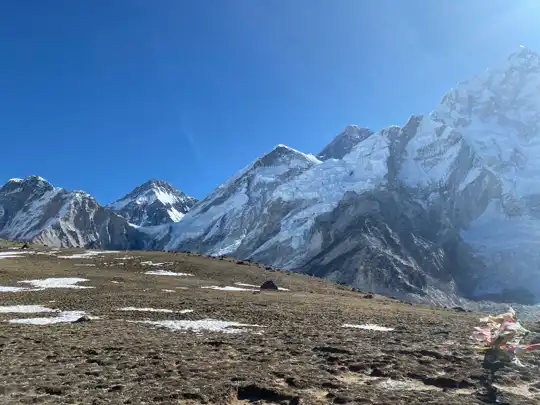
  • Kala Patthar — The single best viewpoint for panoramic, head-on photos of Everest (sunrise is magic). Lesser trails may have peaks and lakes, but few offer a compact, high-altitude lookout that frames Everest, Nuptse and Pumori together so perfectly. Personal favorite — the sunrise light on Everest from here beats almost everything else on the trek.
Spotted a mistake or missing something? Contact us.

Things to do around Everest Base Camp Trek

Ratings based on Tripadvisor reviews. When you book through this link, you support our work at no extra cost to you.

🌤️ When to go?Weather, crowds, and seasonal trade-offs


  • Topic: Weather – The trek demands timing around Nepal’s monsoon. Late spring (March to May) and autumn (late September to November) offer clear skies and stable weather. Monsoon months (June to August) bring relentless rain, slippery trails, and leech attacks—best avoided unless you crave a muddy slog.

  • Topic: Temperature – Daytime temps in spring and autumn hover between 10°C to 20°C (50°F to 68°F) at lower altitudes, but nights plunge below freezing as you approach base camp, often dipping to -10°C (14°F). Winter months are brutally cold, with highs barely scraping above freezing and nights plunging to -20°C (-4°F).

  • Topic: Daylight Hours – Spring and autumn provide roughly 10 to 12 hours of daylight, enough to pace your trek without rushing. Winter days shrink, forcing earlier starts
read more 👉

  • Topic: Weather – The trek demands timing around Nepal’s monsoon. Late spring (March to May) and autumn (late September to November) offer clear skies and stable weather. Monsoon months (June to August) bring relentless rain, slippery trails, and leech attacks—best avoided unless you crave a muddy slog.

  • Topic: Temperature – Daytime temps in spring and autumn hover between 10°C to 20°C (50°F to 68°F) at lower altitudes, but nights plunge below freezing as you approach base camp, often dipping to -10°C (14°F). Winter months are brutally cold, with highs barely scraping above freezing and nights plunging to -20°C (-4°F).

  • Topic: Daylight Hours – Spring and autumn provide roughly 10 to 12 hours of daylight, enough to pace your trek without rushing. Winter days shrink, forcing earlier starts and shorter hiking windows, which can strain your schedule.

  • Topic: Crowds – Autumn is peak season, packed with trekkers chasing perfect views and festival vibes. Spring sees fewer crowds but still steady traffic. Winter and monsoon months quiet down the trail, offering solitude at the cost of harsher conditions.

  • Topic: Seasonal Activities – Autumn aligns with the colorful Dashain and Tihar festivals, adding cultural spice to your trek. Spring bursts with rhododendron blooms, painting the hillsides in fiery red and pink, a natural spectacle worth timing your hike for.

  • Topic: Price Fluctuations – Peak seasons drive up costs for permits, accommodation, and guides. Booking in shoulder seasons like early spring or late autumn can snag better deals without sacrificing too much on weather or views.


Pro-tip: Aim for late September to early November—clear skies, manageable crowds, and festival energy combine for a trek that rewards every step with breathtaking panoramas and vibrant local culture.


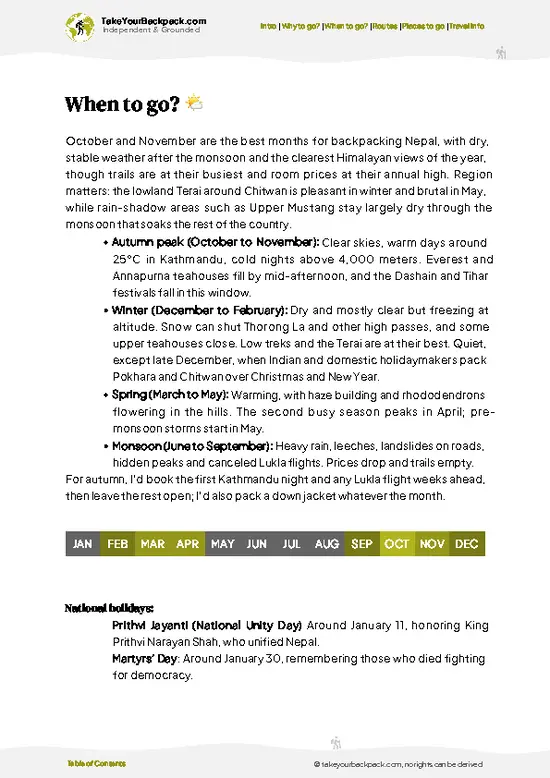
source: climatestotravel.comJANJanuary: fair for travelingFEBFebruary: good for travelingMARMarch: highly recommended for travelingAPRApril: excellent for travelingMAYMay: highly recommended for travelingJUNJune: below average for travelingJULJuly: below average for travelingAUGAugust: below average for travelingSEPSeptember: highly recommended for travelingOCTOctober: excellent for travelingNOVNovember: highly recommended for travelingDECDecember: fair for traveling
Nepal - the Everest Base Camp Trek

✈️ The backpacker research shortcutNepal Travel Guide

An offline-friendly backpacking guide with optimized travel routes, ranked highlights, transport advice, and the best areas to stay.
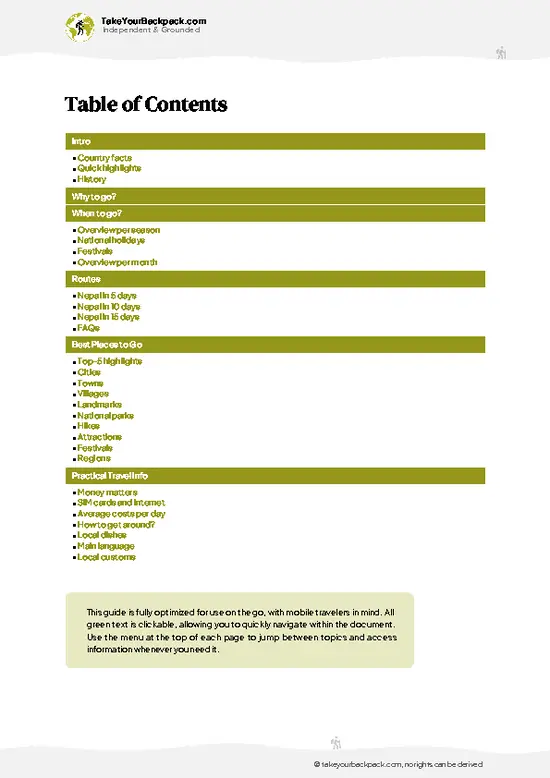
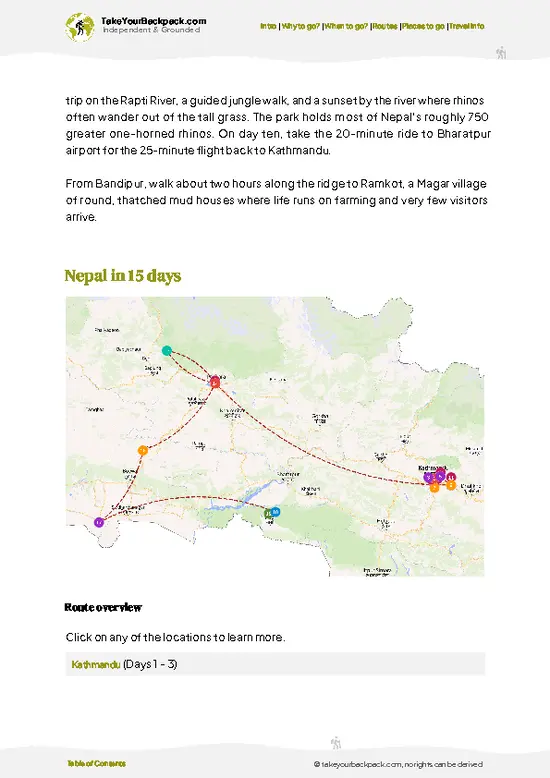
example page 0 from our offline Travel Guide for Nepal
example page 1 from our offline Travel Guide for Nepal
example page 2 from our offline Travel Guide for Nepal
example page 3 from our offline Travel Guide for Nepal
example page 4 from our offline Travel Guide for Nepal
example page 5 from our offline Travel Guide for Nepal
example page 6 from our offline Travel Guide for Nepal
example page 7 from our offline Travel Guide for Nepal
The digital guide (402 pages) contains:
107 highlights, ranked by travel appeal
Optimized 5, 10 & 15-day travel routes
Cities, national parks, landmarks, beaches
How to get around
Offline-friendly for travel without Wi-Fi
👉 Click to see all 30+ guide features

📅 Plan smarter in minutes, not weeks
Month by month travel advice
Festivals & national holidays
Budget expectations

🗺️ Go to the right places, skip the overrated ones
Honest pros & cons of destinations
Top hikes, parks & viewpoints
Lesser-known places most travelers miss
Clear “worth it vs skip it” guidance

🛏️ Travel smoothly without rookie mistakes
Best areas to stay
Transport systems explained simply
Common scams & safety advice
SIM cards, money & practical tips

🌍 Understand the country, not just visit it
Culture & traditions
52 Essential phrases & customs
Festivals worth planning around
Traveler-friendly historical context
Insights that make places more meaningful

📱 Built for real travel conditions
Fully downloadable PDF
Works completely offline
Optimized for phone use
Useful in remote areas & buses
Everything in one place
Save weeks of stressful planning
Get instant access to your full guide. 30‑day money-back guarantee.


By proceeding you agree to our terms.
Sent to your inbox immediately after payment • 100% Secure Checkout
Best Backpacking Travel Advisor 2025 tourism awardBest Backpacking
Travel Advisor
2025
What others say about Take Your Backpack Guides:
⭐⭐⭐⭐⭐
Fantastic, amazing amount of information!
⭐⭐⭐⭐⭐
My goodness this is amazing, it's what I've been looking for hats off too you!
⭐⭐⭐⭐⭐
I think this is absolutely BRILLIANT
⭐⭐⭐⭐
Very complete and informative. It's still missing places, but I gotta to commend you
⭐⭐⭐⭐⭐
This is truly amazing, thank you, can't wait to explore it with my kids!
⭐⭐⭐⭐⭐
Awesome resource, thank you!
⭐⭐⭐⭐⭐
This is amazing! Can't wait to explore the ones I haven't seen
⭐⭐⭐⭐
I love this! Well done, great idea.
⭐⭐⭐⭐⭐
Thanks for taking the time to make this gem!
⭐⭐⭐⭐⭐
This might be the best website I've ever seen.
⭐⭐⭐⭐⭐
Congratulations, and thank you so much for your work; it's incredibly valuable.
⭐⭐⭐⭐
In all seriousness I think you did a great job pointing out the important spots
⭐⭐⭐⭐⭐
10/10 very good
⭐⭐⭐⭐⭐
As someone who's only just starting to visit regularly this is awesome, thank you.
⭐⭐⭐⭐
Thank you very much! I'm going to visit my dad, it's going to be very useful!
⭐⭐⭐⭐⭐
This is really cool! We'll be travelling for the first time and this definitely come in handy.
⭐⭐⭐⭐⭐
You are now our minister of culture, congratulations 👨‍💼
⭐⭐⭐⭐⭐
Just wanted to tell you that this is a pearl! Going to follow your recommendations.
⭐⭐⭐⭐⭐
This is so cool. I'll definitely be using the resource for my travels soon.
⭐⭐⭐⭐⭐
This is very impressive! Good work.
⭐⭐⭐⭐⭐
This is an amazing and informative site. Very well done!

🛏️ Where to stay?Where staying makes the most sense

If you enjoy meeting fellow travelers, consider choosing hostels with high ratings for atmosphere. On the other hand, if you prefer having your own space, a hotel might be a better option.

🥾 Hike detailsHike details: route, duration, and difficulty of Everest Base Camp Trek

Total Distance: The Everest Base Camp Trek covers roughly 130 kilometers (about 80 miles) round trip, depending on your exact route and any side treks you might take.

Estimated Duration: Most trekkers take around 12 to 16 days to complete the trek, allowing for acclimatization and some rest days. It’s crucial to listen to your body and not rush it.

Difficulty Level: This trek is considered moderate to challenging. You’ll be navigating steep ascents, high altitudes, and variable weather conditions, so a decent level of fitness is essential.

Starting Point: The trek begins in Lukla, which you … read more 👉
Total Distance: The Everest Base Camp Trek covers roughly 130 kilometers (about 80 miles) round trip, depending on your exact route and any side treks you might take.

Estimated Duration: Most trekkers take around 12 to 16 days to complete the trek, allowing for acclimatization and some rest days. It’s crucial to listen to your body and not rush it.

Difficulty Level: This trek is considered moderate to challenging. You’ll be navigating steep ascents, high altitudes, and variable weather conditions, so a decent level of fitness is essential.

Starting Point: The trek begins in Lukla, which you can reach by flying from Kathmandu. Flights are frequent, but be prepared for possible delays. From the airport, it’s a short walk to the trailhead.

Major Landmarks Along the Route:
  • Namche Bazaar: The bustling gateway to the Khumbu region, great for acclimatization and stocking up on supplies.
  • Tengboche Monastery: A stunning monastery with breathtaking views of Everest and a great spot for cultural immersion.
  • Pangboche: Home to the oldest monastery in the region and a fantastic viewpoint for Everest.
  • Gorak Shep: The last stop before Base Camp, also known for the hike to Kala Patthar for sunrise views.

Type of Terrain and Scenery: Expect a mix of rocky trails, steep ascents, and some flat sections. The scenery is nothing short of jaw-dropping, with towering peaks, lush valleys, and glacial rivers. The higher you go, the more dramatic the landscape becomes.

Typical Vegetation and Wildlife: In the lower elevations, you’ll see rhododendron forests and pine trees. As you climb higher, the vegetation thins out, giving way to alpine shrubs and grasses. Wildlife is more elusive but keep an eye out for Himalayan tahr, pheasants, and if you’re lucky, the occasional snow leopard.

This trek is a bucket-list adventure, but it’s essential to plan carefully, stay hydrated, and take your time to soak in the incredible surroundings.
⚠️ Hiking info can sometimes be outdated or inaccurate. Before you hit the trail, check the latest conditions with locals. If you do spot anything that's off, I'd love to hear from you, so I can update it for fellow travelers.

🛡️ SafetyStaying Safe: What Travelers Should Know

The Everest Base Camp Trek is a thrilling challenge, but it’s not without its realities. Weather can shift in an instant. One moment, you’re basking in sunshine; the next, clouds roll in, bringing rain or snow. Layer your clothing and be ready to adapt.

The terrain is a mix of rocky paths and steep ascents. Footing can be tricky, especially on the descent. Take your time; rushing leads to slips. Navigation is straightforward, but keep an eye on trail markers. River crossings are manageable, but watch for slippery rocks.

Altitude is a real factor. Acclimatization is key—don’t rush your ascent. Listen to your body; headaches or fatigue are signals to slow down.

Wildlife encounters are rare but possible. If you spot a yak, give it space. They’re part of the landscape, not a photo op.

Prepare … read more 👉
The Everest Base Camp Trek is a thrilling challenge, but it’s not without its realities. Weather can shift in an instant. One moment, you’re basking in sunshine; the next, clouds roll in, bringing rain or snow. Layer your clothing and be ready to adapt.

The terrain is a mix of rocky paths and steep ascents. Footing can be tricky, especially on the descent. Take your time; rushing leads to slips. Navigation is straightforward, but keep an eye on trail markers. River crossings are manageable, but watch for slippery rocks.

Altitude is a real factor. Acclimatization is key—don’t rush your ascent. Listen to your body; headaches or fatigue are signals to slow down.

Wildlife encounters are rare but possible. If you spot a yak, give it space. They’re part of the landscape, not a photo op.

Prepare well, pace yourself, and embrace the journey. The reward? The breathtaking view at Base Camp and the cold beer waiting at the end.

Other Nepali hikes near Everest Base Camp Trek

Explore more nearby:

  • Langtang Valley—glacial valley, yak pastures, Tamang culture| 123 km away
  • Helambu Trek—Sherpa settlements, terraced hillsides, short access from Kathmandu| 130 km away
  • Tamang Heritage Trail—Tamang villages, hot springs, cultural homestays| 153 km away

💡 Not sure where to go next?
Create a personalized itinerary for Nepal including Everest Base Camp Trek and the places that fit your trip.

Generate my itinerary

👉 Discover all hikes

Or checkout all Nepal has to offer (think cities, towns, villages, national parks, hikes, beaches, festivals)
Country photo of Nepal

We 💚 feedbackWhat to keep in mind

The Everest Base Camp Trek is a raw, exhilarating plunge into the heart of the Himalayas. Standing at the foot of the world’s highest peak, you’ll feel the weight of the mountains and the thrill of your own grit. But be ready for the altitude; it’s no joke. The thin air can knock you flat, so pace yourself. The reward? That first glimpse of Everest, and the cold beer waiting at the end. Worth every step.

✈️ When did I visit Nepal?
Being a mountain lover, Nepal is one of my favorites. I visited it in November 2006, hiking the full Annapurna circuit as my highlight.

✍️ Help improve this page!
The information on this page is based on my own backpacking experience in Nepal, supplemented with up-to-date research and feedback from other travelers. Travel details can change, so if you notice anything outdated or incomplete, feel free to let me know.


🙋‍♂️ Give feedback

👋 Meet the founderWho’s Behind Take Your Backpack?

Johan, backpacker and founder of TakeYourBackpackHi, I’m Johan (Netherlands 🇳🇱), the creator of TakeYourBackpack. Over the past decade, I’ve backpacked through 80+ countries across six continents, gaining extensive experience with independent travel, long-term trips, and overland routes.

This site is built on a combination of firsthand travel experience and carefully curated insights from other backpackers. Many guides are based on places I’ve personally visited, while others bring together tips, observations, and practical advice shared by trusted travelers I’ve met along the way.

The goal is to provide realistic, experience-driven guidance — not generic itineraries — so you can explore destinations with better context, clearer expectations, and more confidence.

Get full Nepal guide •
Instant download • 107 highlights • Full Offline guide