×
Annapurna Circuit

Nepal🇳🇵 | hikesAnnapurna CircuitThorong La Pass, river valleys, diverse landscapes | things to do and best time to go

Explore Chhath PujaExplore Everest Base Camp Trek

Backpacking in Annapurna Circuit
🏆 Top pickhike ranked #2
By Johan Kruseman 🇳🇱 | Updated June 7, 2026

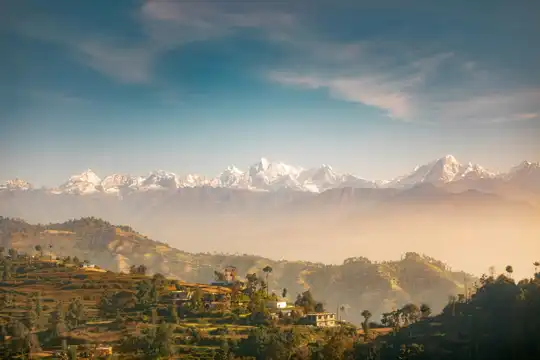
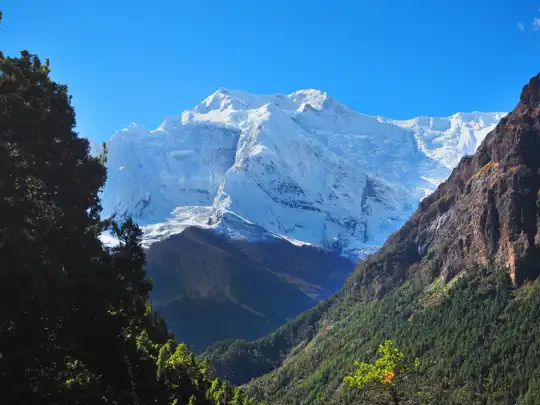
Your first real fork in the road on the Annapurna Circuit comes before you even lace your boots: do you walk the full classic loop with the road sections, or trim it down and skip ahead by jeep and bus. That choice decides whether you get a purist’s sufferfest or a tighter, punchier trek. The Circuit wraps around the Annapurna massif in central Nepal, north of Pokhara, threading from low, humid valleys up over the 5,416 m Thorong La and down into the dry, Tibetan-feeling Kali Gandaki. It’s long, usually 12–18 days, and the altitude and length grind you down, but the scenery keeps mutating—rice terraces, pine forest, ice walls, desert cliffs—so your brain never gets bored even when your knees do. Public buses and jeeps from Kathmandu or Pokhara make the start surprisingly reachable, and compared with nearby treks like Annapurna Base Camp or Poon Hill, the Circuit feels bigger, harsher, and far more like a real journey than a single viewpoint mission.

Discover everything you want to know in the 📖 Nepal Travel Guide.
Best time to go: February - May, September - November
Duration: 12 to 21 days
Distance: 160 to 230 kilometers
Total ascent: 5,400 meters


Get your Nepal guide
107 ranked highlights, routes & tips, works offline (402 pages)
Loading the map 🌍
CLICK TO FILTER
cities
towns
villages
landmarks
national parks
hikes
attractions
festivals
regions
SHOW COUNTRY’S BESTSHOW ALL

✨ Why go?
Ranked #2 hike in Nepal
What sets this place apart

The Annapurna Circuit is a rite of passage for backpackers, and for good reason. The scenery-to-effort ratio is off the charts. You’ll traverse lush valleys, ancient villages, and towering peaks, all while feeling the burn in your legs. Each step is a dance between challenge and reward.

Access is a breeze. Public transport whisks you to the trailhead, making it easy to dive into the adventure without a hitch. The low cost of food and lodging means you can splurge on that post-hike cold beer without guilt.

What’s more, the flexible distances allow you to tailor your trek. Whether you want to push hard or take it easy, the trail accommodates your pace. You can tackle the full circuit or dip in and out, making it a perfect fit for a longer backpacking route through Nepal.

Every twist and … read more 👉
The Annapurna Circuit is a rite of passage for backpackers, and for good reason. The scenery-to-effort ratio is off the charts. You’ll traverse lush valleys, ancient villages, and towering peaks, all while feeling the burn in your legs. Each step is a dance between challenge and reward.

Access is a breeze. Public transport whisks you to the trailhead, making it easy to dive into the adventure without a hitch. The low cost of food and lodging means you can splurge on that post-hike cold beer without guilt.

What’s more, the flexible distances allow you to tailor your trek. Whether you want to push hard or take it easy, the trail accommodates your pace. You can tackle the full circuit or dip in and out, making it a perfect fit for a longer backpacking route through Nepal.

Every twist and turn reveals a new vista, and the camaraderie with fellow trekkers adds to the experience. The Annapurna Circuit isn’t just a hike; it’s a journey that ignites your spirit and leaves you craving more.
Want to include Annapurna Circuit in your Nepal route?
Create a personalized Nepal itinerary that includes Annapurna Circuit and the places that fit your trip — based on your travel style, budget, and available time. Get your route in seconds.

Generate my trip

💡 HighlightsMust-see experiences and standout moments

  1. Thorong La Pass — The high point of the circuit (around 5,416 m), where the panorama suddenly opens and you stand above most of the range. It’s the classic “I actually did it” moment: sharp ridgelines, prayer flags snapping in thin air, and that electric sunrise-on-snow feeling you don’t get on lower trails.
  2. Tilicho Lake — A side-trip but worth the extra days: one of the world’s highest alpine lakes, bright turquoise against scree and peaks. The approach wanders past moraine, glaciers and a very different, lunar landscape than the rest of the circuit — quiet, surreal, and prime for photos without a crowd.
  3. Muktinath Temple — A pilgrimage site important to both Hindus and Buddhists, with 108 water spouts and a serene gompa. The mix of Tibetan-style shrines, yak caravans and dusty mountain
read more 👉
  1. Thorong La Pass — The high point of the circuit (around 5,416 m), where the panorama suddenly opens and you stand above most of the range. It’s the classic “I actually did it” moment: sharp ridgelines, prayer flags snapping in thin air, and that electric sunrise-on-snow feeling you don’t get on lower trails.
  2. Tilicho Lake — A side-trip but worth the extra days: one of the world’s highest alpine lakes, bright turquoise against scree and peaks. The approach wanders past moraine, glaciers and a very different, lunar landscape than the rest of the circuit — quiet, surreal, and prime for photos without a crowd.
  3. Muktinath Temple — A pilgrimage site important to both Hindus and Buddhists, with 108 water spouts and a serene gompa. The mix of Tibetan-style shrines, yak caravans and dusty mountain air gives a cultural contrast you won’t find on more wilderness-focused treks.
  4. Kali Gandaki Gorge & Mustang-style villages (Marpha/Jomsom) — Walk along the world’s deepest gorge with cliffs that feel otherworldly and a rain-shadow, Tibetan plateau vibe. Old stone villages, apple orchards (Marpha’s apple brandy is a local claim to fame) and mani walls make this stretch geologically and culturally distinct.
  5. Manang Valley & Gangapurna Glacier — High alpine meadows, yak pastures and close glacier views of Gangapurna and Tilicho’s cirques. Manang is the classic acclimatization stop: stone teahouses, sturdy locals, and easy day-hikes that show off high-mountain life without the crowds of the pass.

Personal favorite: Tilicho Lake — quiet, surreal and a proper mountain wildness fix.

Spotted a mistake or missing something? Contact us.

Things to do near Annapurna Circuit

Ratings based on Tripadvisor reviews. When you book through this link, you support our work at no extra cost to you.

🌤️ When to go?Weather, crowds, and seasonal trade-offs


  • Weather: The Annapurna Circuit demands timing around its monsoon and dry seasons. Late September to November delivers crisp, clear skies after the monsoon’s wash, while March to May offers blooming rhododendrons and stable weather. Avoid June to August—monsoon rains turn trails into mudslides and rivers into barriers.

  • Temperature: Expect daytime highs from 15°C to 25°C (59°F to 77°F) in the lower valleys during peak seasons, but nights plunge below freezing above 4,000 meters (13,000 feet). Early spring and late autumn bring sharp cold snaps, especially at higher elevations.

  • Daylight Hours: Around 10 to 12 hours of daylight in peak trekking months, enough to push hard on the trail but short enough to demand early starts. Winter months shrink daylight, forcing tighter daily schedules.

  • Crowds:
read more 👉

  • Weather: The Annapurna Circuit demands timing around its monsoon and dry seasons. Late September to November delivers crisp, clear skies after the monsoon’s wash, while March to May offers blooming rhododendrons and stable weather. Avoid June to August—monsoon rains turn trails into mudslides and rivers into barriers.

  • Temperature: Expect daytime highs from 15°C to 25°C (59°F to 77°F) in the lower valleys during peak seasons, but nights plunge below freezing above 4,000 meters (13,000 feet). Early spring and late autumn bring sharp cold snaps, especially at higher elevations.

  • Daylight Hours: Around 10 to 12 hours of daylight in peak trekking months, enough to push hard on the trail but short enough to demand early starts. Winter months shrink daylight, forcing tighter daily schedules.

  • Crowds: Post-monsoon autumn floods the trail with trekkers chasing perfect views, while spring draws flower lovers and climbers prepping for Everest. Winter and monsoon months see near solitude but harsher conditions.

  • Seasonal Activities: Autumn aligns with local festivals like Dashain, adding cultural spice to the trek. Spring bursts with flora and fauna, while winter offers a quiet, stark landscape for those ready to brave the cold.

  • Price Fluctuations: Peak seasons hike up lodge prices and permit fees slightly due to demand. Off-season months drop costs but hike risk and discomfort.


Pro-tip: Aim for late September to early November—trail conditions, weather, and cultural buzz hit a sweet spot that makes every step worth the sweat.


source: climatestotravel.comJANJanuary: fair for travelingFEBFebruary: good for travelingMARMarch: highly recommended for travelingAPRApril: excellent for travelingMAYMay: highly recommended for travelingJUNJune: below average for travelingJULJuly: below average for travelingAUGAugust: below average for travelingSEPSeptember: highly recommended for travelingOCTOctober: excellent for travelingNOVNovember: excellent for travelingDECDecember: fair for traveling
Nepal - the Annapurna Circuit

✈️ The backpacker research shortcutNepal Travel Guide

An offline-friendly backpacking guide with optimized travel routes, ranked highlights, transport advice, and the best areas to stay.
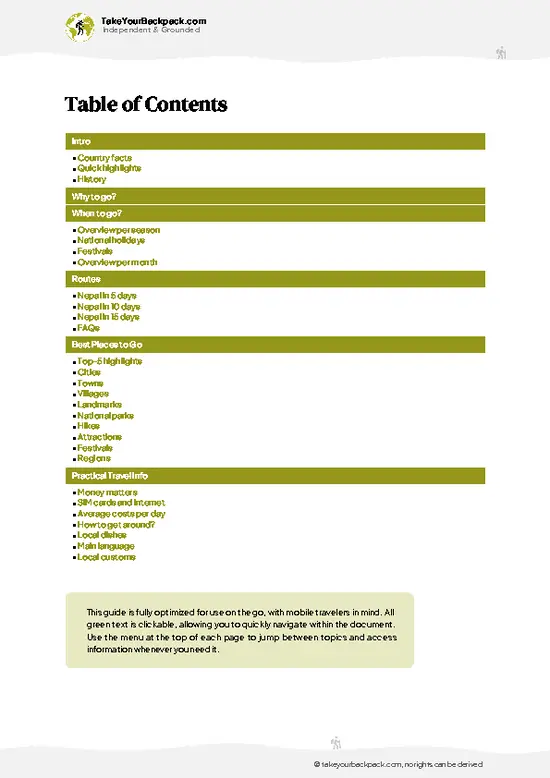
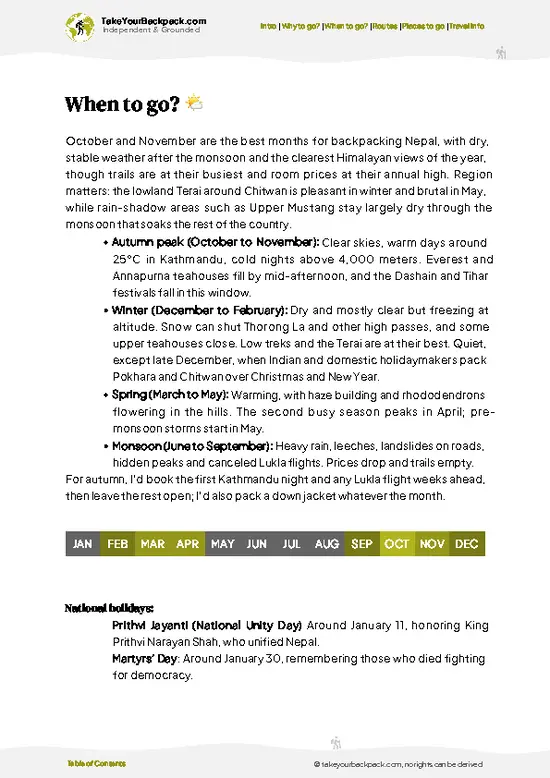
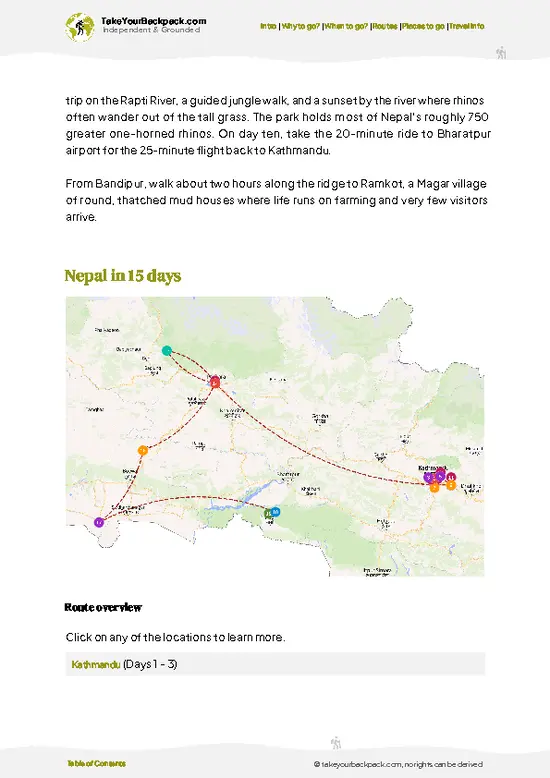
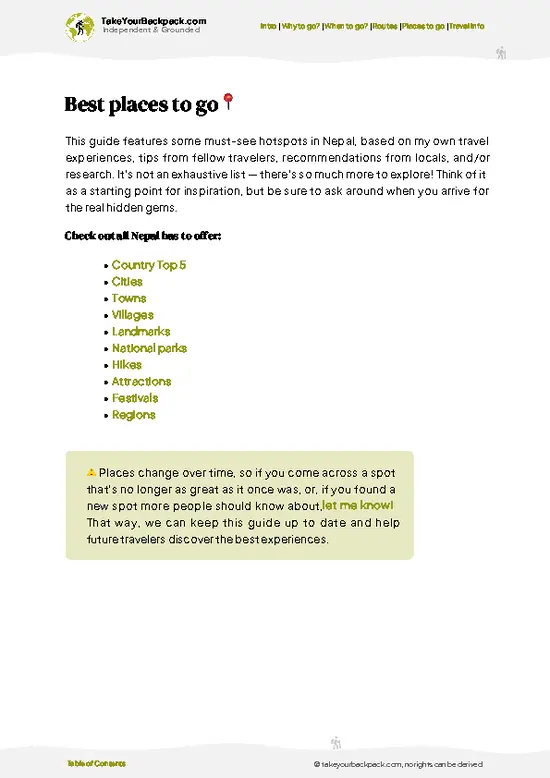
example page 0 from our offline Travel Guide for Nepal
example page 1 from our offline Travel Guide for Nepal
example page 2 from our offline Travel Guide for Nepal
example page 3 from our offline Travel Guide for Nepal
example page 4 from our offline Travel Guide for Nepal
example page 5 from our offline Travel Guide for Nepal
example page 6 from our offline Travel Guide for Nepal
example page 7 from our offline Travel Guide for Nepal
The digital guide (402 pages) contains:
107 highlights, ranked by travel appeal
Optimized 5, 10 & 15-day travel routes
Cities, national parks, landmarks, beaches
How to get around
Offline-friendly for travel without Wi-Fi
👉 Click to see all 30+ guide features

📅 Plan smarter in minutes, not weeks
Month by month travel advice
Festivals & national holidays
Budget expectations

🗺️ Go to the right places, skip the overrated ones
Honest pros & cons of destinations
Top hikes, parks & viewpoints
Lesser-known places most travelers miss
Clear “worth it vs skip it” guidance

🛏️ Travel smoothly without rookie mistakes
Best areas to stay
Transport systems explained simply
Common scams & safety advice
SIM cards, money & practical tips

🌍 Understand the country, not just visit it
Culture & traditions
52 Essential phrases & customs
Festivals worth planning around
Traveler-friendly historical context
Insights that make places more meaningful

📱 Built for real travel conditions
Fully downloadable PDF
Works completely offline
Optimized for phone use
Useful in remote areas & buses
Everything in one place
Save weeks of stressful planning
Get instant access to your full guide. 30‑day money-back guarantee.


By proceeding you agree to our terms.
Sent to your inbox immediately after payment • 100% Secure Checkout
Best Backpacking Travel Advisor 2025 tourism awardBest Backpacking
Travel Advisor
2025
What others say about Take Your Backpack Guides:
⭐⭐⭐⭐⭐
Fantastic, amazing amount of information!
⭐⭐⭐⭐⭐
My goodness this is amazing, it's what I've been looking for hats off too you!
⭐⭐⭐⭐⭐
I think this is absolutely BRILLIANT
⭐⭐⭐⭐
Very complete and informative. It's still missing places, but I gotta to commend you
⭐⭐⭐⭐⭐
This is truly amazing, thank you, can't wait to explore it with my kids!
⭐⭐⭐⭐⭐
Awesome resource, thank you!
⭐⭐⭐⭐⭐
This is amazing! Can't wait to explore the ones I haven't seen
⭐⭐⭐⭐
I love this! Well done, great idea.
⭐⭐⭐⭐⭐
Thanks for taking the time to make this gem!
⭐⭐⭐⭐⭐
This might be the best website I've ever seen.
⭐⭐⭐⭐⭐
Congratulations, and thank you so much for your work; it's incredibly valuable.
⭐⭐⭐⭐
In all seriousness I think you did a great job pointing out the important spots
⭐⭐⭐⭐⭐
10/10 very good
⭐⭐⭐⭐⭐
As someone who's only just starting to visit regularly this is awesome, thank you.
⭐⭐⭐⭐
Thank you very much! I'm going to visit my dad, it's going to be very useful!
⭐⭐⭐⭐⭐
This is really cool! We'll be travelling for the first time and this definitely come in handy.
⭐⭐⭐⭐⭐
You are now our minister of culture, congratulations 👨‍💼
⭐⭐⭐⭐⭐
Just wanted to tell you that this is a pearl! Going to follow your recommendations.
⭐⭐⭐⭐⭐
This is so cool. I'll definitely be using the resource for my travels soon.
⭐⭐⭐⭐⭐
This is very impressive! Good work.
⭐⭐⭐⭐⭐
This is an amazing and informative site. Very well done!

🛏️ Where to stay?Best areas and accommodation options

If you enjoy meeting fellow travelers, consider choosing hostels with high ratings for atmosphere. On the other hand, if you prefer having your own space, a hotel might be a better option.

🥾 Hike detailsTrail overview: what to expect on the hike

Total Distance: Approximately 230 kilometers (143 miles) round trip, depending on the specific route taken and any side treks.

Estimated Duration: Typically takes about 12 to 21 days to complete, depending on your pace and how many rest days you take to acclimatize.

Difficulty Level: Moderate to challenging. The altitude can be a significant factor, especially as you approach Thorong La Pass, which sits at 5,416 meters (17,769 feet).

Starting Point: The trek usually begins in Besisahar.
  • Getting There: You can take a local bus or a jeep from Kathmandu to Besisahar, which takes around 6 to 8
read more 👉
Total Distance: Approximately 230 kilometers (143 miles) round trip, depending on the specific route taken and any side treks.

Estimated Duration: Typically takes about 12 to 21 days to complete, depending on your pace and how many rest days you take to acclimatize.

Difficulty Level: Moderate to challenging. The altitude can be a significant factor, especially as you approach Thorong La Pass, which sits at 5,416 meters (17,769 feet).

Starting Point: The trek usually begins in Besisahar.
  • Getting There: You can take a local bus or a jeep from Kathmandu to Besisahar, which takes around 6 to 8 hours. Buses leave from the Gongabu Bus Park, and it’s best to go early in the morning to secure a seat.

Major Landmarks Along the Route:
  • Manang: A beautiful village known for its stunning views and as a great acclimatization stop.
  • Thorong La Pass: The highest point of the trek, offering breathtaking panoramic views.
  • Jomsom: A charming town known for its apple orchards and as a hub for further treks.
  • Pokhara: While not on the circuit itself, many trekkers return to Pokhara for relaxation after completing the trek.

Type of Terrain and Scenery: Expect a mix of rugged trails, rocky paths, and some steep ascents and descents.
  • Scenery: You’ll be treated to stunning views of the Annapurna range, lush valleys, and high-altitude deserts.
  • Terrain: The trail varies from well-trodden paths to more challenging rocky sections, especially near the pass.

Typical Vegetation and Wildlife:
  • Vegetation: The lower sections are lush with rhododendron forests, while higher altitudes feature alpine meadows and sparse vegetation.
  • Wildlife: Keep an eye out for blue sheep, Himalayan tahr, and various bird species, especially in the lower regions.
⚠️ Hiking info can sometimes be outdated or inaccurate. Before you hit the trail, check the latest conditions with locals. If you do spot anything that's off, I'd love to hear from you, so I can update it for fellow travelers.

🛡️ SafetyScams, Hazards, and Annoyances

The Annapurna Circuit is a thrilling blend of challenge and reward. Weather can shift on a dime, so pack layers. Mornings might greet you with frost, while afternoons blaze under the sun. Altitude is a factor; acclimatize properly to avoid headaches and fatigue.

The terrain varies from well-trodden paths to steep, rocky sections. Watch your footing, especially on descents. River crossings can be tricky, but most are manageable with care. Keep your pace steady; it’s not a race.

Wildlife encounters are rare but possible. If you spot a monkey or a goat, admire from a distance. They’re part of the landscape, not your hiking buddies.

First-timers often underestimate the need for good gear. Sturdy boots and trekking poles can save your knees on those steep descents. Hydration is key; drink … read more 👉
The Annapurna Circuit is a thrilling blend of challenge and reward. Weather can shift on a dime, so pack layers. Mornings might greet you with frost, while afternoons blaze under the sun. Altitude is a factor; acclimatize properly to avoid headaches and fatigue.

The terrain varies from well-trodden paths to steep, rocky sections. Watch your footing, especially on descents. River crossings can be tricky, but most are manageable with care. Keep your pace steady; it’s not a race.

Wildlife encounters are rare but possible. If you spot a monkey or a goat, admire from a distance. They’re part of the landscape, not your hiking buddies.

First-timers often underestimate the need for good gear. Sturdy boots and trekking poles can save your knees on those steep descents. Hydration is key; drink plenty of water, especially at higher elevations. Embrace the grind, and you’ll be rewarded with breathtaking views and the satisfaction of conquering this iconic trek.

Other Nepali hikes near Annapurna Circuit

Explore more nearby:


💡 Not sure where to go next?
Create a personalized itinerary for Nepal including Annapurna Circuit and the places that fit your trip.

Generate my itinerary

👉 Discover all hikes

Or checkout all Nepal has to offer (think cities, towns, villages, national parks, hikes, beaches, festivals)
Country photo of Nepal

We 💚 feedbackIs it worth it?

The Annapurna Circuit is a wild ride through some of the most breathtaking landscapes you’ll ever see. The thrill of standing at Thorong La Pass, feeling the altitude burn in your lungs, is worth every step. But be ready for the reality check: the teahouses can be hit or miss, and the altitude sickness is no joke. Embrace the challenge, and you’ll find the rewards are as high as the peaks.

✈️ When did I visit Nepal?
Being a mountain lover, Nepal is one of my favorites. I visited it in November 2006, hiking the full Annapurna circuit as my highlight.

✍️ Help improve this page!
The information on this page is based on my own backpacking experience in Nepal, supplemented with up-to-date research and feedback from other travelers. Travel details can change, so if you notice anything outdated or incomplete, feel free to let me know.


🙋‍♂️ Give feedback

👋 Meet the founderWho’s Behind Take Your Backpack?

Johan, backpacker and founder of TakeYourBackpackHi, I’m Johan (Netherlands 🇳🇱), the creator of TakeYourBackpack. Over the past decade, I’ve backpacked through 80+ countries across six continents, gaining extensive experience with independent travel, long-term trips, and overland routes.

This site is built on a combination of firsthand travel experience and carefully curated insights from other backpackers. Many guides are based on places I’ve personally visited, while others bring together tips, observations, and practical advice shared by trusted travelers I’ve met along the way.

The goal is to provide realistic, experience-driven guidance — not generic itineraries — so you can explore destinations with better context, clearer expectations, and more confidence.

Get full Nepal guide •
Instant download • 107 highlights • Full Offline guide