×

Nepal🇳🇵 | best hikesThe Must-See 12 hikes in Nepal

Nepal packs eight of the world’s fourteen 8,000-meter peaks into a country you can cross in a day’s flight, and the hiking splits sharply by region. The Khumbu and Annapurna corridors deliver teahouse-to-teahouse walking with easy permits and plenty of company. Langtang sits a day’s ride from Kathmandu and runs quieter. Far west and far north, restricted areas like Upper Dolpo and Kanchenjunga demand guides, special permits and bigger budgets, but trade crowds for empty valleys. Independent backpackers can string together lodge-based walks cheaply, while short valley rim hikes around Kathmandu and Pokhara fit a spare weekend. Pick your altitude, your crowd level and your wallet, then lace up.

By Johan Kruseman 🇳🇱 | Updated October 20, 2026
Explore the best attractions in Nepal

Why go?What Makes Them Special

Nepal hikes the way almost nowhere else can, because trails here are also roads. For centuries, villagers, traders and pilgrims have walked these routes between hill towns and across Himalayan passes, so stone staircases, suspension bridges and tea stops sit exactly where a walker needs them. That network grew into the teahouse system: family-run lodges every few hours, serving dal bhat and offering a bed, so you carry a light pack instead of a tent and a stove.

Geography does the rest. The land climbs from subtropical lowlands near 100 meters to 8,848 meters at Everest, so a single walk can pass through rhododendron forest, yak pastures and glacial moraine. Culture layers on top: Sherpa, Tamang, Gurung and Thakali communities shape the villages, monasteries and festivals you pass.

Know … read more 👉
Nepal hikes the way almost nowhere else can, because trails here are also roads. For centuries, villagers, traders and pilgrims have walked these routes between hill towns and across Himalayan passes, so stone staircases, suspension bridges and tea stops sit exactly where a walker needs them. That network grew into the teahouse system: family-run lodges every few hours, serving dal bhat and offering a bed, so you carry a light pack instead of a tent and a stove.

Geography does the rest. The land climbs from subtropical lowlands near 100 meters to 8,848 meters at Everest, so a single walk can pass through rhododendron forest, yak pastures and glacial moraine. Culture layers on top: Sherpa, Tamang, Gurung and Thakali communities shape the villages, monasteries and festivals you pass.

Know before you choose: altitude is the real challenge, and many popular routes climb above 4,000 meters, where acute mountain sickness is a genuine risk. Most areas need permits bought in Kathmandu or Pokhara, and some require a licensed guide. Mountain flights get delayed by weather, and landslides can cut roads during the monsoon. Plan buffer days, pack for cold nights even in warm months, and the country rewards you handsomely.
How the List Was Created
The list of best hikes in Nepal is created based on scenery, challenge, trail quality, landmarks, and overall enjoyment. If you feel a hike is missing in this list, please let us know.

When to go?Seasonal Guide to Visiting

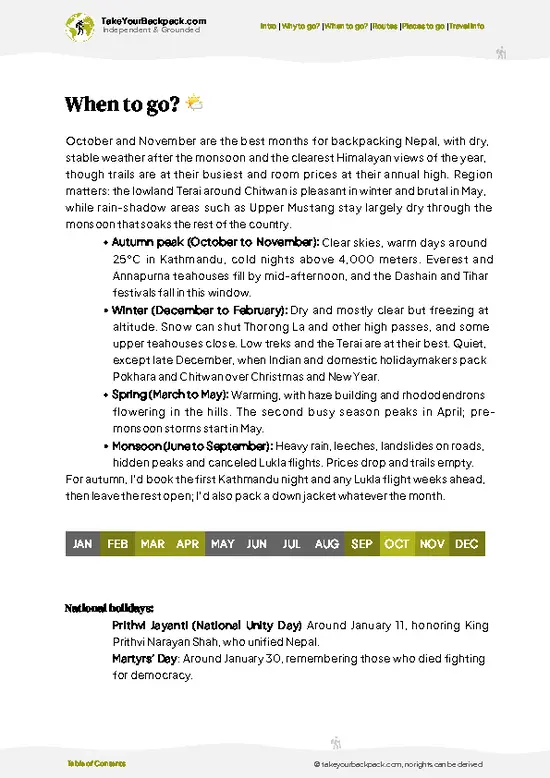
Best months for Nepal hikes: October and November are the best months, followed closely by March to May, because skies are clearest and trails are driest after the monsoon or before it returns. Autumn brings crisp, stable weather: daytime highs of 15 to 20°C at around 3,000 meters, with night lows dropping to -10°C or below near 5,000 meters. It is also peak season, so lodges on the Everest and Annapurna routes fill up and rooms in Kathmandu and Lukla flights book early.
Spring and shoulder seasons: March to May is warmer and hazier, with rhododendrons blooming on mid-elevation slopes in April. Afternoon clouds build at higher altitudes, and views can soften by May. December to February is cold but clear; high passes can close under snow, though lower trails and lodges have few other hikers … read more 👉
Best months for Nepal hikes: October and November are the best months, followed closely by March to May, because skies are clearest and trails are driest after the monsoon or before it returns. Autumn brings crisp, stable weather: daytime highs of 15 to 20°C at around 3,000 meters, with night lows dropping to -10°C or below near 5,000 meters. It is also peak season, so lodges on the Everest and Annapurna routes fill up and rooms in Kathmandu and Lukla flights book early.
Spring and shoulder seasons: March to May is warmer and hazier, with rhododendrons blooming on mid-elevation slopes in April. Afternoon clouds build at higher altitudes, and views can soften by May. December to February is cold but clear; high passes can close under snow, though lower trails and lodges have few other hikers and sometimes lower prices. Expect nights well below freezing above 3,500 meters.
Monsoon and regional exceptions: June to September brings heavy rain, leeches in lower forests, landslides and cloud-hidden peaks, with 1,500 to 3,000 mm falling across much of the country in these months. The exception is the rain-shadow north: Upper Mustang, Upper Dolpo and Nar Phu stay dry and are best walked in summer. Shoulder-season and winter travel often brings lodge discounts and easier bookings.

hike hoppingHow to Combine hikes Into One Trip

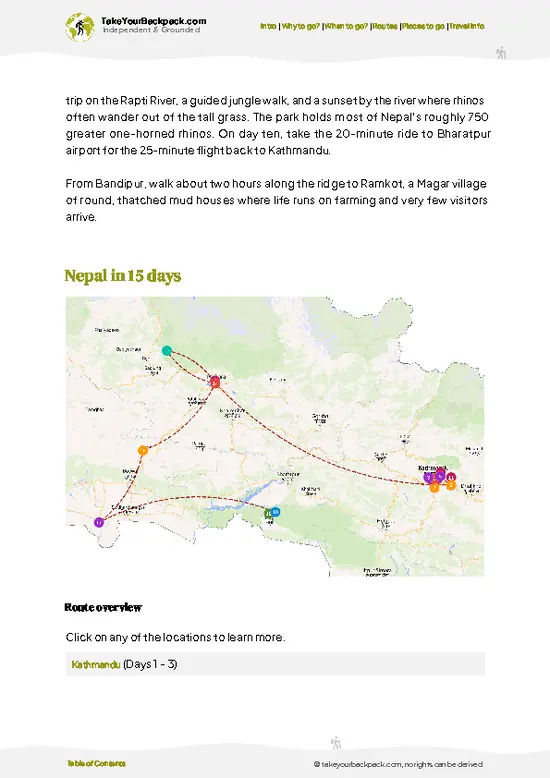
How long a combined trip takes: A trip linking several hikes in Nepal needs 18 to 30 days, including buffer time for weather and rest. Cluster by geography: the Annapurna and Pokhara area sits in the central west, while Langtang is north of Kathmandu and Khumbu is to the northeast. A sensible direction is to start with the lower-altitude hike, then move to the highest one last, so your body gains acclimatization progressively.
Time per stop and getting between regions: Plan 7 to 14 days for a major trek and 2 to 4 days for a shorter walk. Kathmandu to Pokhara takes about 6 to 8 hours by tourist bus or 25 to 30 minutes by flight. Kathmandu to Syabrubesi (Langtang) takes around 7 to 9 hours by road, and Kathmandu to Lukla flights run about 35 to 45 minutes, often from Ramechhap in the busy seasons, … read more 👉
How long a combined trip takes: A trip linking several hikes in Nepal needs 18 to 30 days, including buffer time for weather and rest. Cluster by geography: the Annapurna and Pokhara area sits in the central west, while Langtang is north of Kathmandu and Khumbu is to the northeast. A sensible direction is to start with the lower-altitude hike, then move to the highest one last, so your body gains acclimatization progressively.
Time per stop and getting between regions: Plan 7 to 14 days for a major trek and 2 to 4 days for a shorter walk. Kathmandu to Pokhara takes about 6 to 8 hours by tourist bus or 25 to 30 minutes by flight. Kathmandu to Syabrubesi (Langtang) takes around 7 to 9 hours by road, and Kathmandu to Lukla flights run about 35 to 45 minutes, often from Ramechhap in the busy seasons, which adds a 4 to 5 hour drive before dawn.
Planning mistakes to dodge: The most common error is stacking treks back to back with no rest. Schedule two or three recovery days in Kathmandu or Pokhara between hikes. Another is relying on a single flight: weather often grounds Lukla for a day or two, so leave 2 to 3 spare days before an international departure. And travelers cram too many regions into too few days, spending the trip on buses. Choose two regions and walk them well.

The ListThe Best hikes of Nepal

1 Everest Base Camp Trek

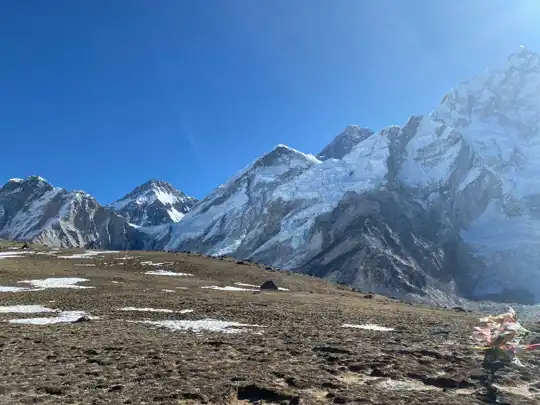
Khumbu glacier, Sherpa villages, iconic mountain views

Reach the foot of Everest by following a classic route through high-altitude villages, glacial valleys, and the heart of Sherpa country.

Nepal - the Everest Base Camp Trek

2 Annapurna Circuit

Thorong La Pass, river valleys, diverse landscapes

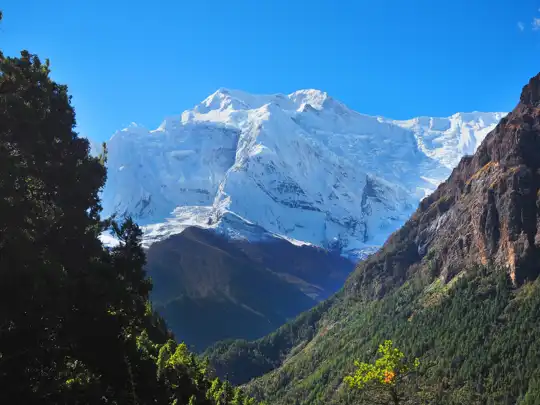
Traverse deep gorges, arid plateaus, and high passes, encountering a mix of cultures and scenery that shifts with every stage of the journey.

Nepal - the Annapurna Circuit

3 Manaslu Circuit

Larkya La Pass, restricted area, Tibetan influence

Circle a remote massif on a route requiring permits, encountering Tibetan Buddhist villages and a dramatic high pass crossing.

4 Langtang Valley

glacial valley, yak pastures, Tamang culture

Follow a river valley into alpine meadows and traditional villages, where mountain life centers on herding and resilient local customs.

5 Upper Mustang Trek

arid canyons, walled towns, Tibetan Buddhist heritage

Venture into a rain-shadowed region of stark cliffs and ancient settlements, where centuries-old traditions persist in the high desert.

6 Ghorepani Poon Hill

hilltop lodges, rhododendron forests, Annapurna panorama

Walk through blooming forests to welcoming lodges perched on ridges, with sweeping views of snow-capped peaks at every turn.

7 Mardi Himal Trek

forest ridges, panoramic Annapurna views, high camp

Ascend through rhododendron forests to open ridges, where the Annapurna range dominates the skyline and quiet lodges offer mountain solitude.

nepal-hike-mardi-himal-trek
© Google |

8 Great Himalaya Trail

long-distance traverse, remote passes, varied ecosystems

Undertake a demanding journey linking Nepal’s farthest corners, crossing isolated valleys and high passes through ever-changing terrain.

Nepal - the Great Himalaya Trail

9 Khopra Danda Trek

alpine meadows, Khayer Lake, offbeat ridge trail

Follow a less-traveled path to high ridges and a sacred lake, with broad vistas and fewer crowds than neighboring routes.

10 Tamang Heritage Trail

Tamang villages, hot springs, cultural homestays

Immerse in Tamang traditions, staying in village homes and relaxing in natural hot springs after days spent walking through forested hills.

11 Tsum Valley Trek

remote villages, Buddhist monasteries, Himalayan foothills

Experience a secluded valley where Tibetan culture shapes daily life, with ancient monasteries and mountain views rarely seen by most trekkers.

12 Helambu Trek

Sherpa settlements, terraced hillsides, short access from Kathmandu

Walk through gentle hills and traditional villages, encountering Sherpa culture and terraced fields within easy reach of the capital.

Loading the map 🌍

Expert viewExpert Commentary on hikes

How many hikes to take on: Two main hikes is the number I advise, plus one or two short day walks. Nepal’s big routes take 7 to 14 days each, and the body needs time to adapt to altitude, so a third multi-day trek tends to turn into a rushed, tired slog. Two lets you soak up the tea-stop rhythm: morning climbs, a long lunch of dal bhat, an afternoon with a view of ridgelines turning orange.
Choosing the kind that fits you: First-timers and social travelers do best on teahouse treks in Annapurna or Langtang, where lodges are frequent and you meet walkers from everywhere around the dinner stove. Those wanting big-mountain drama should go to Khumbu, accepting crowds and higher prices. Solitude seekers should pick remote regions like Manaslu, Kanchenjunga or Dolpo, which require guides, permits … read more 👉
How many hikes to take on: Two main hikes is the number I advise, plus one or two short day walks. Nepal’s big routes take 7 to 14 days each, and the body needs time to adapt to altitude, so a third multi-day trek tends to turn into a rushed, tired slog. Two lets you soak up the tea-stop rhythm: morning climbs, a long lunch of dal bhat, an afternoon with a view of ridgelines turning orange.
Choosing the kind that fits you: First-timers and social travelers do best on teahouse treks in Annapurna or Langtang, where lodges are frequent and you meet walkers from everywhere around the dinner stove. Those wanting big-mountain drama should go to Khumbu, accepting crowds and higher prices. Solitude seekers should pick remote regions like Manaslu, Kanchenjunga or Dolpo, which require guides, permits and more money, but give you empty trails and villages where your arrival is an event. Short on time or cash? Valley-rim walks near Kathmandu and Pokhara cost almost nothing and still deliver Himalayan skylines.
What it costs: On teahouse routes expect US$25 to 45 a day for food, bed and snacks, rising with altitude as everything is carried up by porters or mules; a dal bhat with refills runs US$4 to 8 in higher villages. Park and local permits are roughly US$20 to 50 per area, and the TIMS-style card system has been replaced by local permits in many places, so confirm at the Kathmandu office. Restricted areas cost US$100 or more per week in permits. A guide runs about US$25 to 40 a day and a porter US$20 to 30. Domestic flights to mountain airstrips cost about US$180 to 220 each way for Lukla; buses to trailheads are US$5 to 15. A 10 to 14 day teahouse trek therefore totals roughly US$400 to 900 before flights.
Safety and local etiquette: Altitude sickness kills more trekkers than falls. Ascend slowly, sleep no more than 300 to 500 meters higher each night above 3,000 meters, drink 3 to 4 liters of water daily, and descend at the first sign of worsening headache or confusion. Carry travel insurance that covers helicopter evacuation up to 6,000 meters. Trails can be icy at dawn and slick in rain, so poles help on long descents.
On culture, walk clockwise around prayer wheels, mani walls and stupas, keep to the left of them, and ask before photographing people. Dress modestly in villages, and avoid pointing your feet at altars or touching heads. Buy tea and snacks from the lodge where you sleep: that is how the system pays your hosts, and the shared stove is where the best trail conversations start.

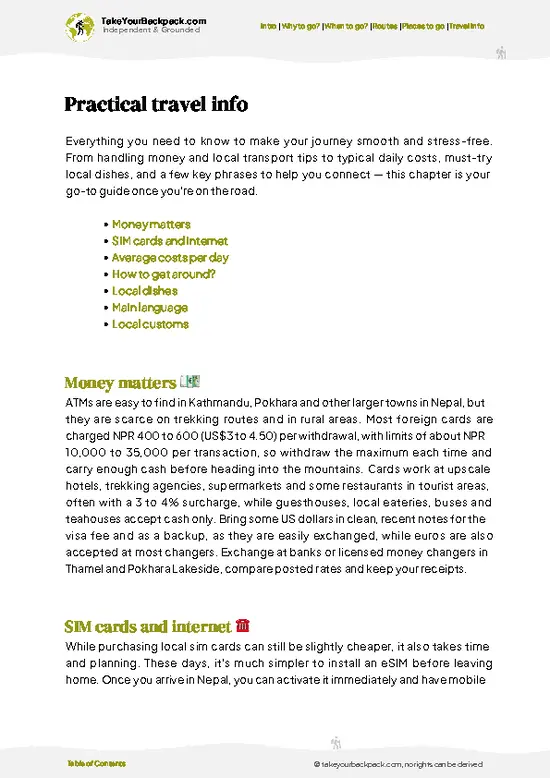
✈️ The backpacker research shortcutNepal Travel Guide

An offline-friendly backpacking guide with optimized travel routes, ranked highlights, transport advice, and the best areas to stay.
example page 0 from our offline Travel Guide for Nepal
example page 1 from our offline Travel Guide for Nepal
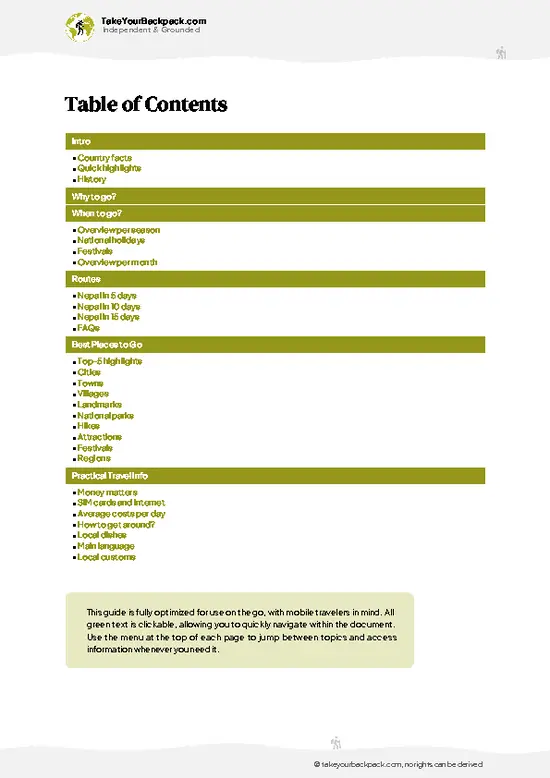
example page 2 from our offline Travel Guide for Nepal
example page 3 from our offline Travel Guide for Nepal
example page 4 from our offline Travel Guide for Nepal
example page 5 from our offline Travel Guide for Nepal
example page 6 from our offline Travel Guide for Nepal
example page 7 from our offline Travel Guide for Nepal
The digital guide (337 pages) contains:
✅ 90 highlights, ranked by travel appeal
✅ Optimized 5, 10 & 15-day travel routes
✅ Cities, national parks, landmarks, beaches
✅ How to get around
✅ Offline-friendly for travel without Wi-Fi
👉 Click to see all 30+ guide features

📅 Plan smarter in minutes, not weeks
✅ Month by month travel advice
✅ Festivals & national holidays
✅ Budget expectations

🗺️ Go to the right places, skip the overrated ones
✅ Honest pros & cons of destinations
✅ Top hikes, parks & viewpoints
✅ Lesser-known places most travelers miss
✅ Clear “worth it vs skip it” guidance

🛏️ Travel smoothly without rookie mistakes
✅ Best areas to stay
✅ Transport systems explained simply
✅ Common scams & safety advice
✅ SIM cards, money & practical tips

🌍 Understand the country, not just visit it
✅ Culture & traditions
✅ 52 Essential phrases & customs
✅ Festivals worth planning around
✅ Traveler-friendly historical context
✅ Insights that make places more meaningful

📱 Built for real travel conditions
✅ Fully downloadable PDF
✅ Works completely offline
✅ Optimized for phone use
✅ Useful in remote areas & buses
✅ Everything in one place
Stop searching, start planning
Get instant access to your full guide. 30‑day money-back guarantee.
+ Add another guide for just

By proceeding you agree to our terms.
Sent to your inbox immediately after payment • 100% Secure Checkout
Best Backpacking Travel Advisor 2025 tourism awardBest Backpacking
Travel Advisor
2025
What others say about Take Your Backpack Guides:
⭐⭐⭐⭐⭐
Fantastic, amazing amount of information!
⭐⭐⭐⭐⭐
My goodness this is amazing, it's what I've been looking for hats off too you!
⭐⭐⭐⭐⭐
I think this is absolutely BRILLIANT
⭐⭐⭐⭐
Very complete and informative. It's still missing places, but I gotta to commend you
⭐⭐⭐⭐⭐
This is truly amazing, thank you, can't wait to explore it with my kids!
⭐⭐⭐⭐⭐
Awesome resource, thank you!
⭐⭐⭐⭐⭐
This is amazing! Can't wait to explore the ones I haven't seen
⭐⭐⭐⭐
I love this! Well done, great idea.
⭐⭐⭐⭐⭐
Thanks for taking the time to make this gem!
⭐⭐⭐⭐⭐
This might be the best website I've ever seen.
⭐⭐⭐⭐⭐
Congratulations, and thank you so much for your work; it's incredibly valuable.
⭐⭐⭐⭐
In all seriousness I think you did a great job pointing out the important spots
⭐⭐⭐⭐⭐
10/10 very good
⭐⭐⭐⭐⭐
As someone who's only just starting to visit regularly this is awesome, thank you.
⭐⭐⭐⭐
Thank you very much! I'm going to visit my dad, it's going to be very useful!
⭐⭐⭐⭐⭐
This is really cool! We'll be travelling for the first time and this definitely come in handy.
⭐⭐⭐⭐⭐
You are now our minister of culture, congratulations 👨‍💼
⭐⭐⭐⭐⭐
Just wanted to tell you that this is a pearl! Going to follow your recommendations.
⭐⭐⭐⭐⭐
This is so cool. I'll definitely be using the resource for my travels soon.
⭐⭐⭐⭐⭐
This is very impressive! Good work.
⭐⭐⭐⭐⭐
This is an amazing and informative site. Very well done!

🛏️ Where to stay?Best Stay Options in Nepal

Nepal has plenty of hostels and budget guesthouses, with dorm beds typically NPR 700 to 1,300 (about US$5 to 10) and basic private rooms from around NPR 1,300 to 2,700 (US$10 to 20). In Kathmandu, Thamel has by far the most choice, the bars and the trekking shops, but it is loud and traffic-choked until late, while Patan (around Jhamsikhel and the old Durbar Square lanes) and Boudha are calmer and safe but need a taxi to reach Thamel’s nightlife. In Pokhara, Lakeside packs in cheap rooms, cafés and live-music bars within walking distance of the water, and the quieter northern end around Khahare is better if you want sleep and lake views over late-night noise.

If you enjoy meeting fellow travelers, … read more 👉
Nepal has plenty of hostels and budget guesthouses, with dorm beds typically NPR 700 to 1,300 (about US$5 to 10) and basic private rooms from around NPR 1,300 to 2,700 (US$10 to 20). In Kathmandu, Thamel has by far the most choice, the bars and the trekking shops, but it is loud and traffic-choked until late, while Patan (around Jhamsikhel and the old Durbar Square lanes) and Boudha are calmer and safe but need a taxi to reach Thamel’s nightlife. In Pokhara, Lakeside packs in cheap rooms, cafés and live-music bars within walking distance of the water, and the quieter northern end around Khahare is better if you want sleep and lake views over late-night noise.

If you enjoy meeting fellow travelers, consider choosing hostels with high ratings for atmosphere. On the other hand, if you prefer having your own space, a hotel might be a better option.

NepalWhere to Go Next

👋 Meet the founderWho’s Behind Take Your Backpack?

Johan, backpacker and founder of TakeYourBackpackHi, I’m Johan (Netherlands 🇳🇱), the creator of TakeYourBackpack. Over the past 3 decades, I’ve backpacked through 90+ countries across six continents, gaining extensive experience with independent travel, long-term trips, and overland routes.

This site is built on a combination of firsthand travel experience and carefully curated insights from other backpackers. Many guides are based on places I’ve personally visited, while others bring together tips, observations, and practical advice shared by trusted travelers I’ve met along the way.

The goal is to provide realistic, experience-driven guidance — not generic itineraries — so you can explore destinations with better context, clearer expectations, and more confidence.