×
Chitwan National Park

Nepal🇳🇵 | national parksChitwan National Parkgrassland safaris, one-horned rhino, Tharu villages | things to do and best time to go

Explore Bardiya National ParkExplore Langtang National Park

Backpacking in Chitwan
UNESCO World Heritage site
🏆 Top picknational park ranked #2
By Johan Kruseman 🇳🇱 | Updated June 3, 2026

A lot of people arrive in Chitwan expecting a cheap, Nepal-style version of an African safari. It isn’t that. It’s a lowland jungle and river ecosystem in south-central Nepal, near Bharatpur, close to the Indian border, and it runs on its own slower rhythm. For backpackers, Chitwan National Park is a trade: you give up big mountain views and proper hiking trails in exchange for dense sal forest, muggy heat, and a real chance of seeing rhinos, crocs, and serious birdlife. Walking safaris and canoe trips are the main draw; “hikes” are guided and flat, not independent treks. It’s easy to reach by bus from Kathmandu or Pokhara, and park fees plus mandatory guides add up faster than you expect, though Sauraha has plenty of cheap lodges. It’s busier and more commercial than Bardia, less wild than it once was, but still far more interesting than many travelers’ rushed one-night stop suggests.

Discover everything you want to know in the 📖 Nepal Travel Guide.


Get your Nepal guide
107 ranked highlights, routes & tips, works offline (402 pages)
Loading the map 🌍
CLICK TO FILTER
cities
towns
villages
landmarks
national parks
hikes
attractions
festivals
regions
SHOW COUNTRY’S BESTSHOW ALL

✨ Why go?
Ranked #2 national park in Nepal
Why Chitwan should be on your travel list

Chitwan National Park draws backpackers for several compelling reasons. First, independent exploration is a major draw. The park’s well-marked trails allow you to roam freely, spotting wildlife like rhinos and elephants without the constraints of a guided tour. This freedom enhances the adventure, letting you connect with nature on your terms.

Budget-conscious travelers appreciate the affordable camping and hostel options nearby. You can pitch a tent or find a cozy dorm, keeping costs low while immersing yourself in the local culture. This setup fosters a sense of community among fellow travelers, making it easy to share tips and stories.

The variety of trails caters to all skill levels, from leisurely walks to more challenging treks. You can choose your own pace, ensuring that you don’t … read more 👉
Chitwan National Park draws backpackers for several compelling reasons. First, independent exploration is a major draw. The park’s well-marked trails allow you to roam freely, spotting wildlife like rhinos and elephants without the constraints of a guided tour. This freedom enhances the adventure, letting you connect with nature on your terms.

Budget-conscious travelers appreciate the affordable camping and hostel options nearby. You can pitch a tent or find a cozy dorm, keeping costs low while immersing yourself in the local culture. This setup fosters a sense of community among fellow travelers, making it easy to share tips and stories.

The variety of trails caters to all skill levels, from leisurely walks to more challenging treks. You can choose your own pace, ensuring that you don’t exhaust yourself before the best moments.

Chitwan is particularly suited for self-guided travelers. While tours are available, the park’s layout and accessibility make it easy to navigate independently. Just be sure to carry enough water and snacks, as amenities can be sparse once you’re on the trails. This balance of independence and affordability makes Chitwan a top choice for backpackers.
Want to include Chitwan National Park in your Nepal route?
Create a personalized Nepal itinerary that includes Chitwan National Park and the places that fit your trip — based on your travel style, budget, and available time. Get your route in seconds.

Generate my trip

💡 HighlightsEssential experiences to have while exploring Chitwan

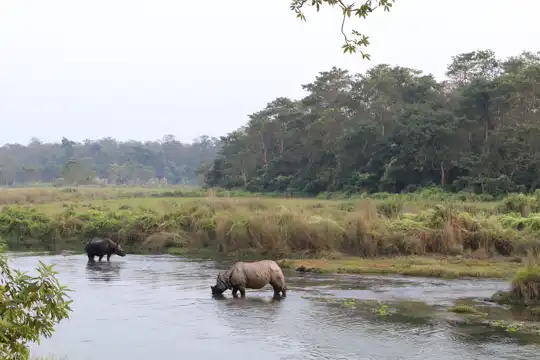
  • Great One-Horned Rhinoceros & Floodplain Grasslands — Chitwan’s signature: big, prehistoric-looking rhinos grazing in open elephant grass and riverine meadows. They’re comparatively easy to spot on morning jeep safaris and make for excellent photos and close wildlife encounters without jungle trekking.
  • Royal Bengal Tiger (jeep & walking safaris) — The park is one of Nepal’s best places to try for a tiger sighting. It’s never guaranteed, which is part of the thrill; guided jeep or foot sorties into prime habitat offer the best chance and some unforgettable tracking experiences when you do get a glimpse or fresh pug marks.
  • Rapti River Canoe Trip — Quiet, low-impact paddles at dawn or dusk that snake past crocodiles, gharials on sandbanks and hundreds of waterbirds. The light and silence
read more 👉
  • Great One-Horned Rhinoceros & Floodplain Grasslands — Chitwan’s signature: big, prehistoric-looking rhinos grazing in open elephant grass and riverine meadows. They’re comparatively easy to spot on morning jeep safaris and make for excellent photos and close wildlife encounters without jungle trekking.
  • Royal Bengal Tiger (jeep & walking safaris) — The park is one of Nepal’s best places to try for a tiger sighting. It’s never guaranteed, which is part of the thrill; guided jeep or foot sorties into prime habitat offer the best chance and some unforgettable tracking experiences when you do get a glimpse or fresh pug marks.
  • Rapti River Canoe Trip — Quiet, low-impact paddles at dawn or dusk that snake past crocodiles, gharials on sandbanks and hundreds of waterbirds. The light and silence here are special — my personal favorite for spotting wildlife and soaking up the park’s atmosphere without noise or dust.
  • Beeshazar Tal (Beeshazari Lake) — A mosaic of marshes and lotus beds near the park that’s a birdwatcher’s dream: migratory waterfowl, herons and kingfishers congregate here. Good for shorter, easy boat trips and peaceful wildlife viewing away from the main trails.
  • Elephant Breeding Center (Sauraha) — A chance to see rescued and semi-tame elephants up close and learn about local conservation efforts. It’s informative, but note that elephant rides are controversial — opt to observe and support ethical programs instead.
  • Tharu Cultural Villages & Homestays — Visit traditional Tharu settlements for stick dances, local food and timber/mud house tours. Staying with a family or visiting in the evening gives cultural context to the landscape and directly supports local communities.
  • Walking Trails & Buffer Zone Hikes — Short guided jungle walks in the buffer areas are great for small mammals, deer, hornbills and learning about medicinal plants. They’re intimate, cheaper than many vehicle safaris, and often more rewarding for spotting subtle wildlife behavior.
Spotted a mistake or missing something? Contact us.

Things to do around Chitwan National Park

Ratings based on Tripadvisor reviews. When you book through this link, you support our work at no extra cost to you.

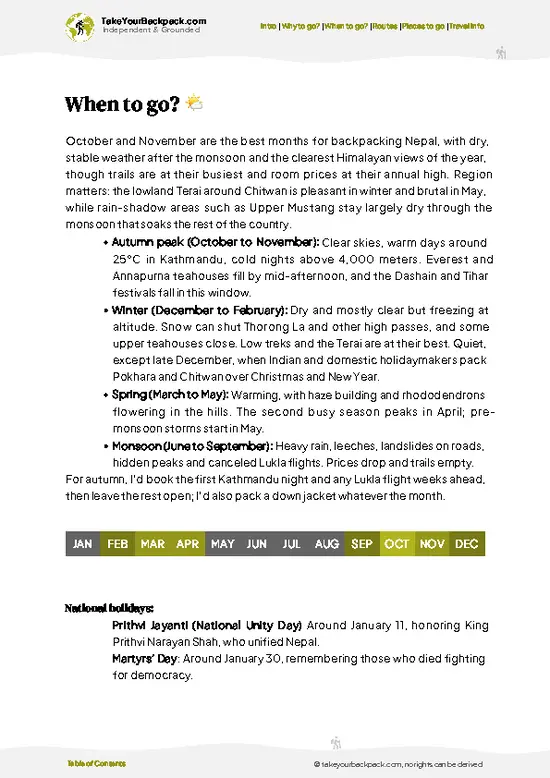
🌤️ When to go?Weather, crowds, and seasonal trade-offs


  • Weather: The best window is from October to March when the monsoon has cleared, leaving dry, pleasant conditions. Avoid June to September; heavy rains flood trails and limit wildlife sightings.

  • Temperature: Daytime highs in peak season hover around 20-25°C (68-77°F), perfect for trekking and safaris without overheating. Nights can dip to 10°C (50°F), so pack layers.

  • Daylight Hours: Expect roughly 10-11 hours of daylight during the dry season, enough time for morning and afternoon jungle excursions without rushing.

  • Crowds: Peak tourist months (October-November and February-March) bring more visitors, especially around major holidays. For quieter trails, aim for late November or early March.

  • Seasonal Activities: Dry months favor wildlife spotting, including rhinos and tigers, as animals
read more 👉

  • Weather: The best window is from October to March when the monsoon has cleared, leaving dry, pleasant conditions. Avoid June to September; heavy rains flood trails and limit wildlife sightings.

  • Temperature: Daytime highs in peak season hover around 20-25°C (68-77°F), perfect for trekking and safaris without overheating. Nights can dip to 10°C (50°F), so pack layers.

  • Daylight Hours: Expect roughly 10-11 hours of daylight during the dry season, enough time for morning and afternoon jungle excursions without rushing.

  • Crowds: Peak tourist months (October-November and February-March) bring more visitors, especially around major holidays. For quieter trails, aim for late November or early March.

  • Seasonal Activities: Dry months favor wildlife spotting, including rhinos and tigers, as animals gather near water sources. Birdwatching peaks in winter with migratory species arriving.

  • Price Fluctuations: Expect higher rates for lodges and tours during peak season. Booking off-peak can save money but comes with trade-offs in weather and wildlife visibility.


Pro-tip: Arrive just after the monsoon ends to catch lush greenery and active wildlife without the crowds or inflated prices.


source: climatestotravel.comJANJanuary: excellent for travelingFEBFebruary: excellent for travelingMARMarch: highly recommended for travelingAPRApril: good for travelingMAYMay: fair for travelingJUNJune: below average for travelingJULJuly: below average for travelingAUGAugust: below average for travelingSEPSeptember: fair for travelingOCTOctober: excellent for travelingNOVNovember: excellent for travelingDECDecember: excellent for traveling
Nepal - Chitwan National Park

✈️ The backpacker research shortcutNepal Travel Guide

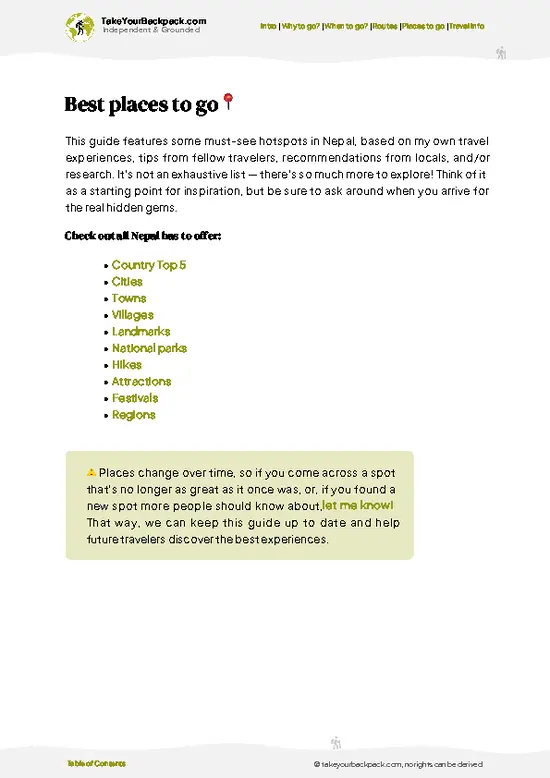
An offline-friendly backpacking guide with optimized travel routes, ranked highlights, transport advice, and the best areas to stay.
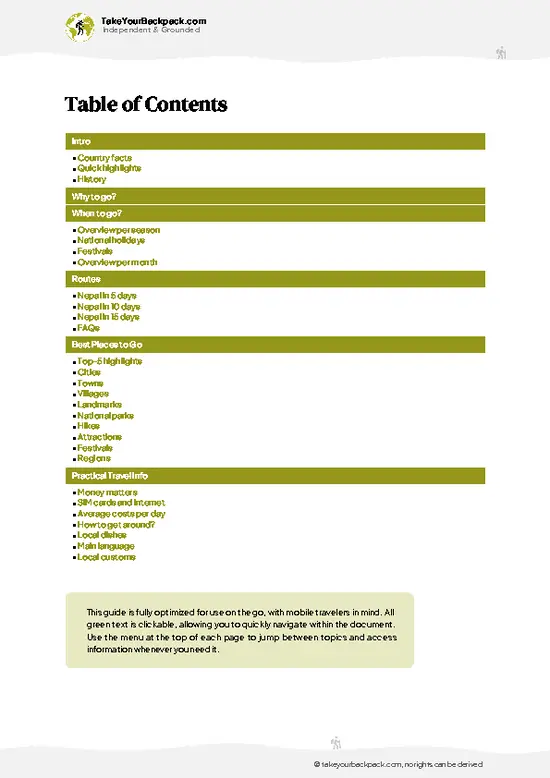
example page 0 from our offline Travel Guide for Nepal
example page 1 from our offline Travel Guide for Nepal
example page 2 from our offline Travel Guide for Nepal
example page 3 from our offline Travel Guide for Nepal
example page 4 from our offline Travel Guide for Nepal
example page 5 from our offline Travel Guide for Nepal
example page 6 from our offline Travel Guide for Nepal
example page 7 from our offline Travel Guide for Nepal
The digital guide (402 pages) contains:
107 highlights, ranked by travel appeal
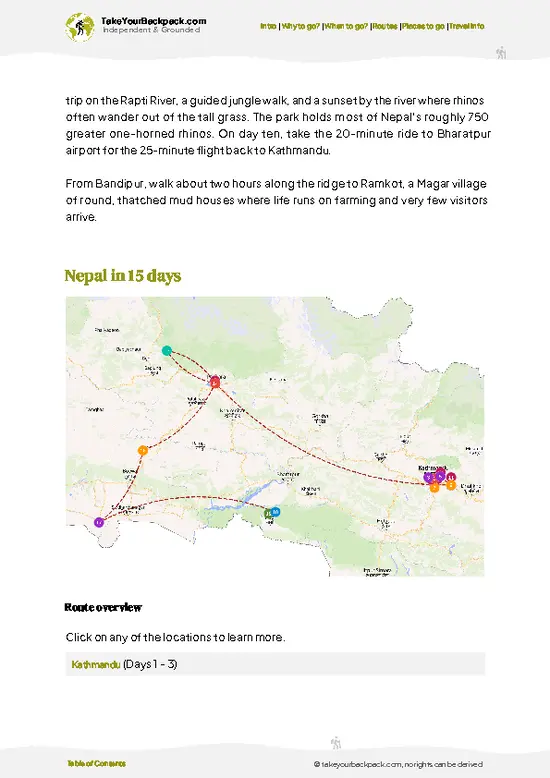
Optimized 5, 10 & 15-day travel routes
Cities, national parks, landmarks, beaches
How to get around
Offline-friendly for travel without Wi-Fi
👉 Click to see all 30+ guide features

📅 Plan smarter in minutes, not weeks
Month by month travel advice
Festivals & national holidays
Budget expectations

🗺️ Go to the right places, skip the overrated ones
Honest pros & cons of destinations
Top hikes, parks & viewpoints
Lesser-known places most travelers miss
Clear “worth it vs skip it” guidance

🛏️ Travel smoothly without rookie mistakes
Best areas to stay
Transport systems explained simply
Common scams & safety advice
SIM cards, money & practical tips

🌍 Understand the country, not just visit it
Culture & traditions
52 Essential phrases & customs
Festivals worth planning around
Traveler-friendly historical context
Insights that make places more meaningful

📱 Built for real travel conditions
Fully downloadable PDF
Works completely offline
Optimized for phone use
Useful in remote areas & buses
Everything in one place
Save weeks of stressful planning
Get instant access to your full guide. 30‑day money-back guarantee.


By proceeding you agree to our terms.
Sent to your inbox immediately after payment • 100% Secure Checkout
Best Backpacking Travel Advisor 2025 tourism awardBest Backpacking
Travel Advisor
2025
What others say about Take Your Backpack Guides:
⭐⭐⭐⭐⭐
Fantastic, amazing amount of information!
⭐⭐⭐⭐⭐
My goodness this is amazing, it's what I've been looking for hats off too you!
⭐⭐⭐⭐⭐
I think this is absolutely BRILLIANT
⭐⭐⭐⭐
Very complete and informative. It's still missing places, but I gotta to commend you
⭐⭐⭐⭐⭐
This is truly amazing, thank you, can't wait to explore it with my kids!
⭐⭐⭐⭐⭐
Awesome resource, thank you!
⭐⭐⭐⭐⭐
This is amazing! Can't wait to explore the ones I haven't seen
⭐⭐⭐⭐
I love this! Well done, great idea.
⭐⭐⭐⭐⭐
Thanks for taking the time to make this gem!
⭐⭐⭐⭐⭐
This might be the best website I've ever seen.
⭐⭐⭐⭐⭐
Congratulations, and thank you so much for your work; it's incredibly valuable.
⭐⭐⭐⭐
In all seriousness I think you did a great job pointing out the important spots
⭐⭐⭐⭐⭐
10/10 very good
⭐⭐⭐⭐⭐
As someone who's only just starting to visit regularly this is awesome, thank you.
⭐⭐⭐⭐
Thank you very much! I'm going to visit my dad, it's going to be very useful!
⭐⭐⭐⭐⭐
This is really cool! We'll be travelling for the first time and this definitely come in handy.
⭐⭐⭐⭐⭐
You are now our minister of culture, congratulations 👨‍💼
⭐⭐⭐⭐⭐
Just wanted to tell you that this is a pearl! Going to follow your recommendations.
⭐⭐⭐⭐⭐
This is so cool. I'll definitely be using the resource for my travels soon.
⭐⭐⭐⭐⭐
This is very impressive! Good work.
⭐⭐⭐⭐⭐
This is an amazing and informative site. Very well done!

🛏️ Where to stay?Best areas to stay in Nepal

Chitwan National Park offers a range of accommodations, but the best options for backpackers balance comfort, cost, and proximity to the park’s attractions.

Inside the park, options are limited. The park’s lodges, like the Chitwan Jungle Lodge, provide a unique experience but can be pricey. They often include meals and guided tours, which can save you money in the long run. However, if you’re on a tighter budget, consider staying in nearby Sauraha. This town is the main hub for visitors and has a variety of guesthouses and budget lodges, such as Hotel River Side and Sauraha Resort, which offer … read more 👉
Chitwan National Park offers a range of accommodations, but the best options for backpackers balance comfort, cost, and proximity to the park’s attractions.

Inside the park, options are limited. The park’s lodges, like the Chitwan Jungle Lodge, provide a unique experience but can be pricey. They often include meals and guided tours, which can save you money in the long run. However, if you’re on a tighter budget, consider staying in nearby Sauraha. This town is the main hub for visitors and has a variety of guesthouses and budget lodges, such as Hotel River Side and Sauraha Resort, which offer basic amenities and easy access to the park entrance.

Sauraha is where you’ll find the best mix of affordability and local culture. You can easily book jungle safaris and canoe trips from here without the inflated prices of in-park lodges.

Be cautious of hidden costs. Some lodges may charge extra for activities that seem included. Always clarify what’s covered in your booking.

Staying in Sauraha not only saves you money but also gives you a chance to interact with locals and experience the vibrant atmosphere of the town. This way, you preserve your energy and budget for the real adventures that await in Chitwan.

👛 Costs (as of 7 February 2026)How expensive it really is

Visiting Chitwan National Park in Nepal can be a rewarding experience, but it’s essential to be aware of the costs involved to avoid surprises.

Entry fees for foreign tourists are around $15 to $25 per day, depending on the season. This fee grants you access to the park and its wildlife. If you plan to stay longer, consider purchasing a multi-day pass, which can save you some cash.

Accommodation options vary widely. Budget lodges start at about $10 to $20 per night. Mid-range hotels typically range from $30 to $70. For a more luxurious experience, expect to pay $100 or more per night. Always check what’s included—some places offer meals and guided tours, while others charge extra.

Guided tours are a must for a deeper experience. Prices for these can range from $20 to $100, depending on … read more 👉
Visiting Chitwan National Park in Nepal can be a rewarding experience, but it’s essential to be aware of the costs involved to avoid surprises.

Entry fees for foreign tourists are around $15 to $25 per day, depending on the season. This fee grants you access to the park and its wildlife. If you plan to stay longer, consider purchasing a multi-day pass, which can save you some cash.

Accommodation options vary widely. Budget lodges start at about $10 to $20 per night. Mid-range hotels typically range from $30 to $70. For a more luxurious experience, expect to pay $100 or more per night. Always check what’s included—some places offer meals and guided tours, while others charge extra.

Guided tours are a must for a deeper experience. Prices for these can range from $20 to $100, depending on the length and type of tour. Canoeing, jungle safaris, and elephant rides are popular activities, each with their own fees. A canoe trip might cost around $10, while a full-day jeep safari can go up to $50.

Food is generally affordable. Local meals can be found for $2 to $5, while dining in more upscale restaurants might set you back $10 to $20.

Transportation to and from the park can add to your budget. Buses from Kathmandu to Chitwan cost about $10 to $15, while private taxis or tourist vehicles can be significantly more.

Plan your budget carefully. Factor in all these costs to ensure you have enough for the experiences that matter most. Avoid the temptation to skimp on guided tours; they often provide the best insights and enhance your visit.


source: tourism.gov.np
⚠️ Prices can change and everyone travels differently, so take this as a rough guide. Hope it helps you plan your adventure!

🥾 TrailsScenic routes and wildlife spotting in Chitwan

Chitwan National Park offers a unique blend of lush jungles and diverse wildlife, making it a fantastic spot for those looking to explore Nepal beyond the mountains. The terrain is generally flat, with a mix of grasslands, dense forests, and riverbanks. You might spot rhinos, elephants, and even the elusive Bengal tiger if you’re lucky. The wildlife here is a big draw, so keep your eyes peeled and your camera ready.

One of the more popular options is the Jungle Walk, which provides a chance to really soak in the surroundings. Here are the details:
  • Length: 3-5 km
  • Estimated Duration: 2-3 hours
  • Difficulty
read more 👉
Chitwan National Park offers a unique blend of lush jungles and diverse wildlife, making it a fantastic spot for those looking to explore Nepal beyond the mountains. The terrain is generally flat, with a mix of grasslands, dense forests, and riverbanks. You might spot rhinos, elephants, and even the elusive Bengal tiger if you’re lucky. The wildlife here is a big draw, so keep your eyes peeled and your camera ready.

One of the more popular options is the Jungle Walk, which provides a chance to really soak in the surroundings. Here are the details:
  • Length: 3-5 km
  • Estimated Duration: 2-3 hours
  • Difficulty Level: Easy
  • Key Features: Wildlife sightings, dense forest, river views
  • Terrain: Flat, with some uneven paths

Another option is the Tharu Village Tour, where you can experience local culture along with your hike:
  • Length: 4-6 km
  • Estimated Duration: 2-4 hours
  • Difficulty Level: Easy
  • Key Features: Cultural insights, local crafts, traditional farming
  • Terrain: Mostly flat, some dirt paths

Getting to Chitwan is pretty straightforward. You can catch a bus from Kathmandu or Pokhara, which takes about 5-7 hours. Just be prepared for some bumpy roads. The park can get busy, especially during peak tourist seasons, so if you prefer a quieter experience, aim for the shoulder seasons. As for the entrance fee, it’s relatively modest, but it’s good to check the latest rates before you go. Overall, Chitwan is a gem for budget travelers looking to dive into nature without breaking the bank.
⚠️ Hiking info can sometimes be outdated or inaccurate. Before you hit the trail, check the latest conditions with locals. If you do spot anything that's off, I'd love to hear from you, so I can update it for fellow travelers.

🛡️ SafetyTraveler Safety Guide

Chitwan National Park offers a straightforward experience for backpackers, but a few practical considerations can enhance your adventure. Weather can shift quickly, especially during the monsoon season. Be prepared for sudden rain, and pack a reliable waterproof jacket.

The terrain is generally flat, making navigation easier, but watch for muddy patches after rain. Good footwear is essential; sturdy hiking boots will keep you stable and comfortable.

Wildlife encounters are a highlight here. If you spot a rhino or a tiger, maintain a respectful distance. Stay calm and don’t approach. Your guide will provide specific instructions, so listen closely.

One common oversight is underestimating the importance of hydration. Carry enough water, especially in the warmer months, as dehydration can … read more 👉
Chitwan National Park offers a straightforward experience for backpackers, but a few practical considerations can enhance your adventure. Weather can shift quickly, especially during the monsoon season. Be prepared for sudden rain, and pack a reliable waterproof jacket.

The terrain is generally flat, making navigation easier, but watch for muddy patches after rain. Good footwear is essential; sturdy hiking boots will keep you stable and comfortable.

Wildlife encounters are a highlight here. If you spot a rhino or a tiger, maintain a respectful distance. Stay calm and don’t approach. Your guide will provide specific instructions, so listen closely.

One common oversight is underestimating the importance of hydration. Carry enough water, especially in the warmer months, as dehydration can sneak up on you.

Timing your hikes for early morning or late afternoon can help you avoid the heat and increase your chances of wildlife sightings. With these tips, you’ll navigate Chitwan with confidence, preserving your energy for the moments that truly matter.

Other Nepali national parks near Chitwan

Explore more nearby:


💡 Not sure where to go next?
Create a personalized itinerary for Nepal including Chitwan and the places that fit your trip.

Generate my itinerary

👉 Discover all national parks

Or checkout all Nepal has to offer (think cities, towns, villages, national parks, hikes, beaches, festivals)
Country photo of Nepal

We 💚 feedbackIs it worth it?

Chitwan National Park is a treasure for wildlife lovers. Imagine spotting a one-horned rhinoceros or a Bengal tiger in their natural habitat—it’s exhilarating. But be prepared: the heat can be relentless, especially in the summer. Hydration is crucial, and don’t underestimate the power of sunscreen. Embrace the sweat; it’s part of the experience. Just remember, the real magic lies in the moments spent observing nature, not just checking off a list.

✈️ When did I visit Nepal?
Being a mountain lover, Nepal is one of my favorites. I visited it in November 2006, hiking the full Annapurna circuit as my highlight.

✍️ Help improve this page!
The information on this page is based on my own backpacking experience in Nepal, supplemented with up-to-date research and feedback from other travelers. Travel details can change, so if you notice anything outdated or incomplete, feel free to let me know.


🙋‍♂️ Give feedback

👋 Meet the founderWho’s Behind Take Your Backpack?

Johan, backpacker and founder of TakeYourBackpackHi, I’m Johan (Netherlands 🇳🇱), the creator of TakeYourBackpack. Over the past decade, I’ve backpacked through 80+ countries across six continents, gaining extensive experience with independent travel, long-term trips, and overland routes.

This site is built on a combination of firsthand travel experience and carefully curated insights from other backpackers. Many guides are based on places I’ve personally visited, while others bring together tips, observations, and practical advice shared by trusted travelers I’ve met along the way.

The goal is to provide realistic, experience-driven guidance — not generic itineraries — so you can explore destinations with better context, clearer expectations, and more confidence.

Get full Nepal guide •
Instant download • 107 highlights • Full Offline guide