×

Nepal🇳🇵 | best national parksThe Must-See 10 national parks in Nepal

Nepal’s national parks are a tapestry of diverse landscapes, from the towering peaks of the Himalayas to lush subtropical forests. Each park offers unique wildlife encounters and adventure opportunities, shaping your experience as a backpacker. The choice of park significantly impacts your travel style, whether you seek the solitude of remote trails or the vibrant culture of nearby villages. Seasonal variations dictate accessibility and wildlife visibility, while budget considerations can influence your route. Selecting the right park not only affects the vibe and safety of your journey but also enhances your cultural immersion, making each trek a distinct chapter in your Nepalese adventure.

By Johan Kruseman 🇳🇱 | Updated June 8, 2026
Explore the best hikes in Nepal

Why go?What Makes Them Special

National parks in Nepal are a unique tapestry of biodiversity and rugged landscapes, shaped by the towering Himalayas and rich cultural heritage. The geographic diversity ranges from lush subtropical forests to alpine meadows, creating habitats for rare species like the Bengal tiger and one-horned rhinoceros. This variety makes Nepal a prime destination for wildlife enthusiasts and trekkers alike.

However, accessibility can be a double-edged sword. While some parks are relatively easy to reach, others demand significant time and effort to explore fully. This trade-off often means that the more remote parks offer a deeper, more immersive experience, but at the cost of longer travel times and more strenuous treks. The infrastructure varies widely; some areas boast well-maintained trails and … read more 👉
National parks in Nepal are a unique tapestry of biodiversity and rugged landscapes, shaped by the towering Himalayas and rich cultural heritage. The geographic diversity ranges from lush subtropical forests to alpine meadows, creating habitats for rare species like the Bengal tiger and one-horned rhinoceros. This variety makes Nepal a prime destination for wildlife enthusiasts and trekkers alike.

However, accessibility can be a double-edged sword. While some parks are relatively easy to reach, others demand significant time and effort to explore fully. This trade-off often means that the more remote parks offer a deeper, more immersive experience, but at the cost of longer travel times and more strenuous treks. The infrastructure varies widely; some areas boast well-maintained trails and facilities, while others require navigating rugged paths with limited amenities.

The climatic conditions also play a crucial role. The best times to visit are often short windows, influenced by monsoon rains and winter snows, which can limit access and affect wildlife visibility. Understanding these factors is essential for planning a trip that balances adventure with comfort. In essence, Nepal’s national parks are not just places to visit; they are challenges to embrace, rewarding those who venture into their depths with breathtaking views and unforgettable encounters.
Our Approach to Ranking
The list of best national parks in Nepal is created based on landscapes, wildlife, adventure opportunities, facilities, and overall experience. If you feel a national park is missing in this list, please let us know.

When to go?Seasonal Guide to Visiting

Seasonality in Nepal’s National Parks

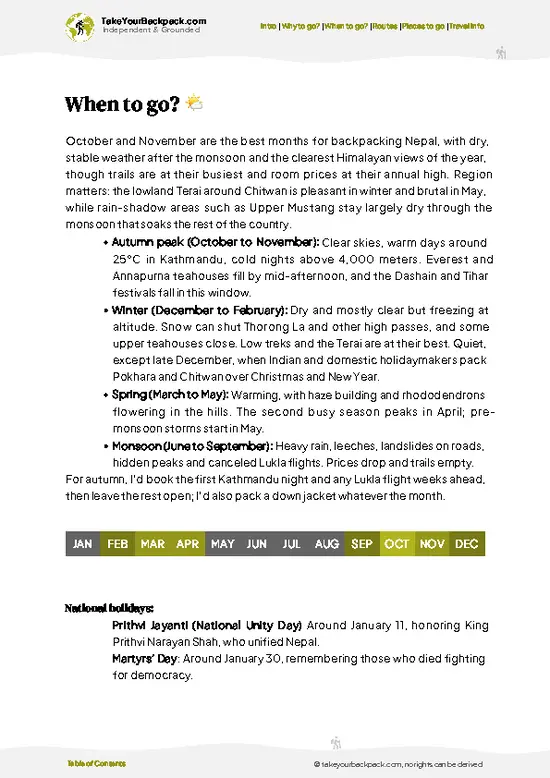
Nepal’s national parks pulse with life, but timing is crucial. The dry season, from late autumn to early spring, offers clear skies and optimal wildlife visibility. Temperatures can dip, especially at higher elevations, but the crisp air invigorates the senses. This period is prime for spotting elusive species, as animals venture out in search of food and water.

Monsoon season, from late spring to early autumn, transforms the landscape. Rainfall can be heavy, making trails muddy and challenging. Wildlife becomes harder to spot as animals seek shelter. However, the lush greenery that emerges can be breathtaking. The trade-off here is between vibrant scenery and potential trail conditions that may hinder exploration.

Shoulder seasons—just before and … read more 👉
Seasonality in Nepal’s National Parks

Nepal’s national parks pulse with life, but timing is crucial. The dry season, from late autumn to early spring, offers clear skies and optimal wildlife visibility. Temperatures can dip, especially at higher elevations, but the crisp air invigorates the senses. This period is prime for spotting elusive species, as animals venture out in search of food and water.

Monsoon season, from late spring to early autumn, transforms the landscape. Rainfall can be heavy, making trails muddy and challenging. Wildlife becomes harder to spot as animals seek shelter. However, the lush greenery that emerges can be breathtaking. The trade-off here is between vibrant scenery and potential trail conditions that may hinder exploration.

Shoulder seasons—just before and after the monsoon—present a mixed bag. Crowds thin out, and costs often drop, but weather can be unpredictable. Trails may still be wet, yet the chance to experience parks with fewer visitors can be rewarding.

Peak periods, particularly around major festivals, can lead to crowded trails. While the atmosphere buzzes with energy, the solitude of nature may be compromised. Balancing scenery, wildlife visibility, and crowd levels is essential for planning an effective trip to Nepal’s national parks.

national park hoppingHow to Combine national parks Into One Trip

General Routing Logic

Start by clustering parks regionally. The Annapurna Conservation Area and Chitwan National Park are prime candidates for a combined trip. Begin in Pokhara, where the trails beckon. From there, head to Chitwan for a contrasting experience of jungle safaris. This route allows for a natural flow, minimizing backtracking.

Typical Time Needed

Allocate at least three days in each park. This pacing allows for exploration without feeling rushed. In Annapurna, tackle a few shorter treks or day hikes to soak in the views. In Chitwan, spend time on guided safaris and cultural experiences.

Common Planning Mistakes

Avoid cramming too many parks into a tight schedule. Each park offers unique experiences that deserve time. Rushing through them leads to missed opportunities. Also, … read more 👉

General Routing Logic

Start by clustering parks regionally. The Annapurna Conservation Area and Chitwan National Park are prime candidates for a combined trip. Begin in Pokhara, where the trails beckon. From there, head to Chitwan for a contrasting experience of jungle safaris. This route allows for a natural flow, minimizing backtracking.

Typical Time Needed

Allocate at least three days in each park. This pacing allows for exploration without feeling rushed. In Annapurna, tackle a few shorter treks or day hikes to soak in the views. In Chitwan, spend time on guided safaris and cultural experiences.

Common Planning Mistakes

Avoid cramming too many parks into a tight schedule. Each park offers unique experiences that deserve time. Rushing through them leads to missed opportunities. Also, don’t underestimate travel times between parks; road conditions can be unpredictable.

Trade-offs and Constraints

Consider the balance between speed and depth. A quick visit may save time but sacrifices the richness of experience. Budget constraints may push for shared accommodations, while comfort can enhance enjoyment. Ultimately, the effort invested in planning pays off with richer rewards, whether it’s a breathtaking view or a moment of tranquility in nature.

The ListThe Best national parks of Nepal

1 Sagarmatha National Park

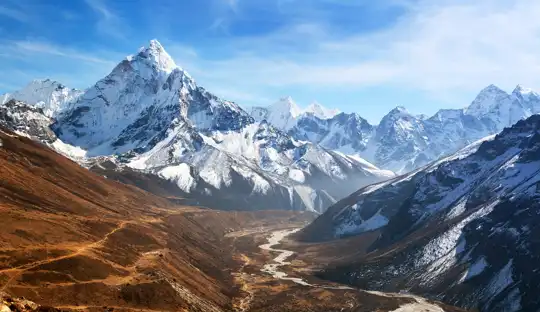
Everest views, Sherpa monasteries, glacial moraines

Follow ancient footpaths through high valleys, passing prayer flags and stone villages as you approach the world’s tallest summit.

Nepal - Sagarmatha National Park

2 Chitwan National Park

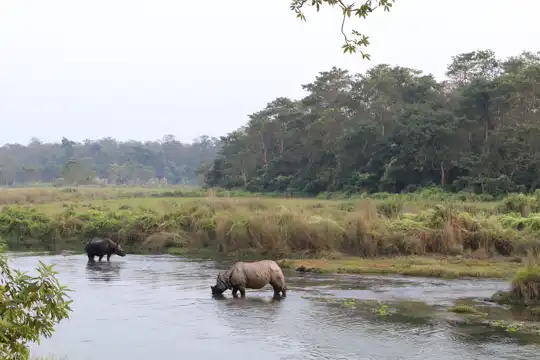
grassland safaris, one-horned rhino, Tharu villages

Ride through tall elephant grass and forest, encountering rhinos and crocodiles, then visit indigenous communities along the park’s edge.

Nepal - Chitwan National Park

3 Langtang National Park

glacial valleys, Tamang villages, red panda habitat

Ascend through alpine forests and yak pastures, meeting local families and watching for rare wildlife in the shadow of snow-capped peaks.

4 Rara National Park

alpine lake, pine forests, isolated villages

Walk quiet trails to a blue mountain lake, surrounded by forests and far from roads, where daily life moves at a different pace.

nepal-national-park-rara-national-park
© Google |

5 Shey Phoksundo National Park

turquoise lake, Dolpo culture, barren cliffs

Trek past ancient villages and stark canyons to reach a high-altitude lake, where Tibetan traditions and dramatic landscapes converge.

6 Bardiya National Park

dense jungle, river safaris, rhino territory

Venture into thick forests and along winding rivers, searching for rhinos, tigers, and crocodiles in Nepal’s largest lowland wilderness.

7 Makalu Barun National Park

deep river gorges, cloud forests, high-altitude passes

Climb from subtropical valleys to icy ridges, passing waterfalls and remote settlements on the way to the world’s fifth-highest mountain.

8 Shivapuri Nagarjun National Park

hill forests, monastery trails, Kathmandu valley views

Hike through dense woodlands and Buddhist sites, then look out over the city below as the Himalayas rise beyond the urban edge.

9 Koshi Tappu Wildlife Reserve

floodplain islands, wild water buffalo, migratory birds

Drift along braided river channels and spot rare water buffalo, while hundreds of bird species fill the air during seasonal migrations.

10 Shuklaphanta National Park

open grasslands, swamp deer, border wetlands

Scan wide plains for herds of antelope and birds, then follow tracks through marshes near the Indian border where wildlife gathers.

11 Khaptad National Park

rolling meadows, medicinal herbs, remote plateaus

Wander across open grasslands and forested ridges, discovering wildflowers and spiritual sites in a rarely visited far-western region.

12 Parsa National Park

sal forests, wild elephants, Terai plains

Travel through subtropical woodlands and open grass, where herds of elephants and rare birds move quietly through the southern lowlands.

13 Banke National Park

river corridors, tiger habitat, buffer zone villages

Move between riverine forests and grasslands, watching for elusive wildlife and learning how local communities coexist with predators.

Think you know Nepal?

Prove you’re a true local — uncover 3 lesser-known national parks in Nepal that locals tend to keep to themselves.
Loading the map 🌍

Expert viewExpert Commentary on national parks

Terrain

Nepal’s national parks are a patchwork of rugged mountains, dense forests, and sweeping valleys. Each park has its own character, shaped by altitude and climate. In the Terai region, you’ll find flat, fertile land teeming with wildlife. Here, the air is thick with the scent of wet earth after a rain, and the sounds of chirping birds fill the air. Contrast that with the high-altitude parks, where the air thins and the terrain becomes a challenge. The trails can be steep and rocky, demanding stamina and grit.

If you’re planning to hike, be prepared for varying conditions. Some trails are well-marked and accessible, while others require navigation skills and a good sense of direction. The trade-off? The more remote the trail, the more rewarding the solitude and the breathtaking views. … read more 👉

Terrain

Nepal’s national parks are a patchwork of rugged mountains, dense forests, and sweeping valleys. Each park has its own character, shaped by altitude and climate. In the Terai region, you’ll find flat, fertile land teeming with wildlife. Here, the air is thick with the scent of wet earth after a rain, and the sounds of chirping birds fill the air. Contrast that with the high-altitude parks, where the air thins and the terrain becomes a challenge. The trails can be steep and rocky, demanding stamina and grit.

If you’re planning to hike, be prepared for varying conditions. Some trails are well-marked and accessible, while others require navigation skills and a good sense of direction. The trade-off? The more remote the trail, the more rewarding the solitude and the breathtaking views. You might find yourself standing on a ridge, gazing at snow-capped peaks, feeling like you’re on top of the world.

Park Infrastructure

Infrastructure varies widely across the parks. Some have well-maintained visitor centers, established campsites, and even lodges that offer a touch of comfort after a long day on the trail. Others? Not so much. You might find yourself camping in the wild, with only the stars for company. This can be exhilarating, but it also means you need to be self-sufficient. Bring your own gear and be ready for anything.

When planning your visit, consider how much time you want to spend in each park. You can easily spend a week in one park, soaking in the local culture and wildlife, or you can hop between parks, which can be a logistical challenge. The roads can be rough, and travel times can stretch longer than expected. If you’re short on time, prioritize parks that offer a mix of activities and accessibility.

Wildlife Activity

Wildlife is a major draw in Nepal’s national parks. In the Terai, you might spot rhinos grazing in the grasslands or catch a glimpse of a Bengal tiger slinking through the underbrush. In the higher elevations, look for elusive snow leopards and red pandas. The best time for wildlife viewing often coincides with the dry season, but that also means more tourists.

If you’re keen on spotting wildlife, consider the early morning or late afternoon for your hikes. Animals are more active during these times, and you’ll have a better chance of seeing them. However, be mindful of your impact on their habitat. Stick to marked trails and keep noise to a minimum.

Time and Budget Considerations

Visiting multiple parks can be tempting, but it’s essential to balance your itinerary with realistic time frames. Aim for two to three parks if you want a well-rounded experience without feeling rushed. Each park offers unique landscapes and wildlife, but travel between them can eat up valuable time.

Budget-wise, expect a range of costs depending on your choices. Lodging can vary from basic guesthouses to more upscale lodges. Factor in permits, transportation, and food. If you’re on a tighter budget, consider self-catering or local eateries for meals.

Safety and Cultural Considerations

Safety is paramount. While the parks are generally safe, be aware of your surroundings, especially in remote areas. Carry a first-aid kit and know basic wilderness survival skills. Respect local customs and traditions. Engaging with local communities can enrich your experience, but always approach with sensitivity.

In summary, Nepal’s national parks offer a thrilling mix of adventure and natural beauty. The key is to plan wisely, balancing your desire to explore with the realities of travel in this stunning, yet challenging, landscape.

✈️ The backpacker research shortcutNepal Travel Guide

An offline-friendly backpacking guide with optimized travel routes, ranked highlights, transport advice, and the best areas to stay.
example page 0 from our offline Travel Guide for Nepal
example page 1 from our offline Travel Guide for Nepal
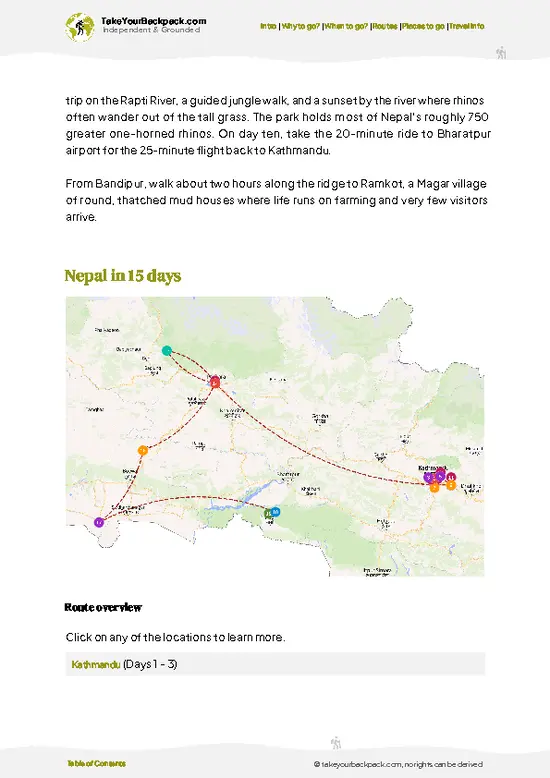
example page 2 from our offline Travel Guide for Nepal
example page 3 from our offline Travel Guide for Nepal
example page 4 from our offline Travel Guide for Nepal
example page 5 from our offline Travel Guide for Nepal
example page 6 from our offline Travel Guide for Nepal
example page 7 from our offline Travel Guide for Nepal
The digital guide (404 pages) contains:
107 highlights, ranked by travel appeal
Optimized 5, 10 & 15-day travel routes
Cities, national parks, landmarks, beaches
How to get around
Offline-friendly for travel without Wi-Fi
👉 Click to see all 30+ guide features

📅 Plan smarter in minutes, not weeks
Month by month travel advice
Festivals & national holidays
Budget expectations

🗺️ Go to the right places, skip the overrated ones
Honest pros & cons of destinations
Top hikes, parks & viewpoints
Lesser-known places most travelers miss
Clear “worth it vs skip it” guidance

🛏️ Travel smoothly without rookie mistakes
Best areas to stay
Transport systems explained simply
Common scams & safety advice
SIM cards, money & practical tips

🌍 Understand the country, not just visit it
Culture & traditions
52 Essential phrases & customs
Festivals worth planning around
Traveler-friendly historical context
Insights that make places more meaningful

📱 Built for real travel conditions
Fully downloadable PDF
Works completely offline
Optimized for phone use
Useful in remote areas & buses
Everything in one place
Save weeks of stressful planning
Get instant access to your full guide. 30‑day money-back guarantee.


By proceeding you agree to our terms.
Sent to your inbox immediately after payment • 100% Secure Checkout
Best Backpacking Travel Advisor 2025 tourism awardBest Backpacking
Travel Advisor
2025
What others say about Take Your Backpack Guides:
⭐⭐⭐⭐⭐
Fantastic, amazing amount of information!
⭐⭐⭐⭐⭐
My goodness this is amazing, it's what I've been looking for hats off too you!
⭐⭐⭐⭐⭐
I think this is absolutely BRILLIANT
⭐⭐⭐⭐
Very complete and informative. It's still missing places, but I gotta to commend you
⭐⭐⭐⭐⭐
This is truly amazing, thank you, can't wait to explore it with my kids!
⭐⭐⭐⭐⭐
Awesome resource, thank you!
⭐⭐⭐⭐⭐
This is amazing! Can't wait to explore the ones I haven't seen
⭐⭐⭐⭐
I love this! Well done, great idea.
⭐⭐⭐⭐⭐
Thanks for taking the time to make this gem!
⭐⭐⭐⭐⭐
This might be the best website I've ever seen.
⭐⭐⭐⭐⭐
Congratulations, and thank you so much for your work; it's incredibly valuable.
⭐⭐⭐⭐
In all seriousness I think you did a great job pointing out the important spots
⭐⭐⭐⭐⭐
10/10 very good
⭐⭐⭐⭐⭐
As someone who's only just starting to visit regularly this is awesome, thank you.
⭐⭐⭐⭐
Thank you very much! I'm going to visit my dad, it's going to be very useful!
⭐⭐⭐⭐⭐
This is really cool! We'll be travelling for the first time and this definitely come in handy.
⭐⭐⭐⭐⭐
You are now our minister of culture, congratulations 👨‍💼
⭐⭐⭐⭐⭐
Just wanted to tell you that this is a pearl! Going to follow your recommendations.
⭐⭐⭐⭐⭐
This is so cool. I'll definitely be using the resource for my travels soon.
⭐⭐⭐⭐⭐
This is very impressive! Good work.
⭐⭐⭐⭐⭐
This is an amazing and informative site. Very well done!

🛏️ Where to stay?Where to Base Yourself

Yes—Nepal has many hostels and budget guesthouses concentrated in Kathmandu’s Thamel, Pokhara’s Lakeside, and around heritage/pilgrimage hubs like Boudha and Patan, plus basic teahouse lodging on trekking routes (very basic facilities, limited hot water and electricity).
Thamel offers the widest selection, immediate access to transport, shops and nightlife but is crowded, noisy and has higher petty-theft risk, so choose quieter side streets, higher-floor rooms and secure valuables.
Lakeside puts you on the lake with easy boat access and trekking buses and a more relaxed nightlife but attracts tourist prices and strip noise; Boudha and Patan are quieter and culturally rich yet have fewer … read more 👉
Yes—Nepal has many hostels and budget guesthouses concentrated in Kathmandu’s Thamel, Pokhara’s Lakeside, and around heritage/pilgrimage hubs like Boudha and Patan, plus basic teahouse lodging on trekking routes (very basic facilities, limited hot water and electricity).
Thamel offers the widest selection, immediate access to transport, shops and nightlife but is crowded, noisy and has higher petty-theft risk, so choose quieter side streets, higher-floor rooms and secure valuables.
Lakeside puts you on the lake with easy boat access and trekking buses and a more relaxed nightlife but attracts tourist prices and strip noise; Boudha and Patan are quieter and culturally rich yet have fewer hostel options and longer transfers to trekking starts.

If you enjoy meeting fellow travelers, consider choosing hostels with high ratings for atmosphere. On the other hand, if you prefer having your own space, a hotel might be a better option.

NepalExpand Your Journey

👋 Meet the founderWho’s Behind Take Your Backpack?

Johan, backpacker and founder of TakeYourBackpackHi, I’m Johan (Netherlands 🇳🇱), the creator of TakeYourBackpack. Over the past decade, I’ve backpacked through 80+ countries across six continents, gaining extensive experience with independent travel, long-term trips, and overland routes.

This site is built on a combination of firsthand travel experience and carefully curated insights from other backpackers. Many guides are based on places I’ve personally visited, while others bring together tips, observations, and practical advice shared by trusted travelers I’ve met along the way.

The goal is to provide realistic, experience-driven guidance — not generic itineraries — so you can explore destinations with better context, clearer expectations, and more confidence.

Get full Nepal guide •
Instant download • 107 highlights • Full Offline guide