×

Nepal🇳🇵 | citiesGhorahiDang valley, mid-hill crossroads, local bazaars | things to do and best time to go

Explore DhangadhiExplore Butwal

Backpacking in Ghorahi
By Johan Kruseman 🇳🇱 | Updated June 14, 2026

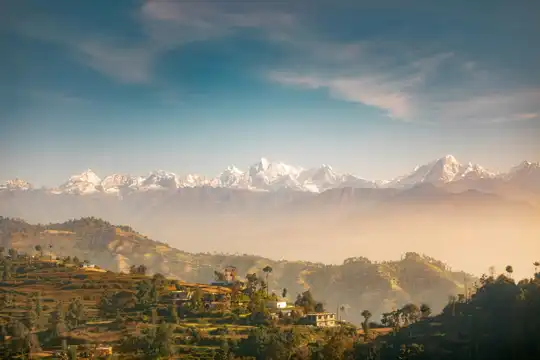
Most people skip Ghorahi assuming “just another dusty transit town,” but it’s one of the cheapest places in Nepal where you can eat well, sleep decently, and still be a short hop from real hills and Tharu villages. Ghorahi sits in the Dang Valley of mid‑western Nepal, between the Terai and the first serious ridges. It’s low on sights (a few temples, a mellow bazaar, some lakeside picnic spots) and nightlife is basically tea shops and beer halls, but that’s the trade: almost no tourists, very low prices, and a raw, everyday Nepali vibe. Buses are slow but frequent, English is patchy, and you’ll meet more curious locals than fellow backpackers. Compared with Pokhara or Tansen it’s less pretty and less organized, but also less hassly and, in its own way, more honest.

Discover everything you want to know in the 📖 Nepal Travel Guide.


Get your Nepal guide
107 ranked highlights, routes & tips, works offline (404 pages)
Loading the map 🌍
CLICK TO FILTER
cities
towns
villages
landmarks
national parks
hikes
attractions
festivals
regions
SHOW COUNTRY’S BESTSHOW ALL

✨ Why go?
Ranked #99 city in Nepal
What sets this place apart

Ghorahi is a strategic stop for backpackers weaving through Nepal. It offers a solid mix of affordable hostels and local food that won’t break the bank. The city’s walkability makes it easy to explore, while its vibrant nightlife provides a taste of local culture. Ghorahi serves as a basecamp for day trips to nearby highlights, giving you access to stunning landscapes without the hassle of constant travel. Plus, it’s well-connected for easy onward travel to other destinations. If you’re looking for a place that balances comfort and adventure, Ghorahi fits the bill—perfect for a short stop or a longer stay.
Want to include Ghorahi in your Nepal route?
Create a personalized Nepal itinerary that includes Ghorahi and the places that fit your trip — based on your travel style, budget, and available time. Get your route in seconds.

Generate my trip

💡 HighlightsThe experiences that define the visit

  • Deukhuri Valley viewpoint (near Ghorahi): The sweeping plain that Ghorahi sits in is best appreciated from the city’s surrounding hill edges — easy-to-reach viewpoints give wide views of the valley, sunrise/sunset light, and the patchwork of farms and settlements that define the region.
  • Ghorahi Main Bazaar: The commercial heart of the city — active markets, sari and handicraft stalls, meat and vegetable vendors, and street-food vendors. Visiting the bazaar is the fastest, most direct way to feel daily life and sample local snacks and produce.
  • Tharu cultural neighborhoods and community centers: Ghorahi is a place where Tharu culture is visible in daily life — traditional houses, community halls, seasonal festivals, and local eateries serving Tharu cuisine. Cultural programs and informal
read more 👉
  • Deukhuri Valley viewpoint (near Ghorahi): The sweeping plain that Ghorahi sits in is best appreciated from the city’s surrounding hill edges — easy-to-reach viewpoints give wide views of the valley, sunrise/sunset light, and the patchwork of farms and settlements that define the region.
  • Ghorahi Main Bazaar: The commercial heart of the city — active markets, sari and handicraft stalls, meat and vegetable vendors, and street-food vendors. Visiting the bazaar is the fastest, most direct way to feel daily life and sample local snacks and produce.
  • Tharu cultural neighborhoods and community centers: Ghorahi is a place where Tharu culture is visible in daily life — traditional houses, community halls, seasonal festivals, and local eateries serving Tharu cuisine. Cultural programs and informal visits give an authentic sense of the area’s indigenous heritage.
  • Babai Riverfront and riverside areas: The Babai River and its banks near the city offer easy walks, birdwatching, local fishing spots, and quiet picnic stretches. The river landscape is a peaceful counterpoint to the market bustle and is physically visitable from town.
  • Local temples and community shrines in Ghorahi: Small but lively Hindu temples and shrines scattered across the city host daily puja, festivals, and local gatherings — visiting one of these community temples gives direct access to local religious life and seasonal celebrations.
Nearby visitable highlights for day trips include Swargadwari (a hilltop pilgrimage site), the town and temples of Tulsipur, and the Bhalubang river junction; Swargadwari is my personal favorite.
Spotted a mistake or missing something? Contact us.

Things to do near Ghorahi

Ratings based on Tripadvisor reviews. When you book through this link, you support our work at no extra cost to you.

🏘️ NeighborhoodsUnderstanding the local layout

Ghorahi is a vibrant hub in Nepal, offering a mix of local culture and accessibility for backpackers. Here’s how its neighborhoods stack up:

Chhath Gadi: This area buzzes with local life. Affordable guesthouses line the streets, making it ideal for budget travelers. Walkable and lively, it’s perfect for short stays. Nightlife is low-key, with local eateries and tea shops.

Shivnath: A quieter neighborhood, Shivnath is great for those seeking a peaceful retreat. It’s slightly pricier but offers comfortable accommodations. Walkability is decent, and you can easily access transport for day trips. Best for longer stays where you can soak in the local vibe.

Ghorahi Bazaar: The heart of the city, this bustling market area is a must-visit. It’s a bit chaotic, but the energy is infectious. Affordable … read more 👉
Ghorahi is a vibrant hub in Nepal, offering a mix of local culture and accessibility for backpackers. Here’s how its neighborhoods stack up:

Chhath Gadi: This area buzzes with local life. Affordable guesthouses line the streets, making it ideal for budget travelers. Walkable and lively, it’s perfect for short stays. Nightlife is low-key, with local eateries and tea shops.

Shivnath: A quieter neighborhood, Shivnath is great for those seeking a peaceful retreat. It’s slightly pricier but offers comfortable accommodations. Walkability is decent, and you can easily access transport for day trips. Best for longer stays where you can soak in the local vibe.

Ghorahi Bazaar: The heart of the city, this bustling market area is a must-visit. It’s a bit chaotic, but the energy is infectious. Affordable food stalls and shops abound. Ideal for short visits, but be prepared for noise and crowds.

⌛️ 1 day1-day itinerary for Ghorahi

Ghorahi, a vibrant hub in Nepal’s Dang Valley, offers a unique blend of culture and nature. It’s not on every traveler’s radar, but that’s what makes it special. Start your morning at the bustling local market in the heart of the city. The aroma of spices and fresh produce fills the air. Grab a steaming cup of chai and some sel roti, a traditional rice-based snack.

After fueling up, head to the nearby Rani Mahal, a stunning palace that tells tales of the region’s royal past. Spend a couple of hours wandering the grounds, soaking in the architecture and the serene riverside views.

In the afternoon, make your way to the less-trodden path of the nearby Bardia National Park. It’s a short drive, but the chance to spot wildlife like elephants and deer is worth it.

As evening approaches, return … read more 👉
Ghorahi, a vibrant hub in Nepal’s Dang Valley, offers a unique blend of culture and nature. It’s not on every traveler’s radar, but that’s what makes it special. Start your morning at the bustling local market in the heart of the city. The aroma of spices and fresh produce fills the air. Grab a steaming cup of chai and some sel roti, a traditional rice-based snack.

After fueling up, head to the nearby Rani Mahal, a stunning palace that tells tales of the region’s royal past. Spend a couple of hours wandering the grounds, soaking in the architecture and the serene riverside views.

In the afternoon, make your way to the less-trodden path of the nearby Bardia National Park. It’s a short drive, but the chance to spot wildlife like elephants and deer is worth it.

As evening approaches, return to Ghorahi and explore the local eateries. Try the dal bhat, a staple that’s both comforting and filling. End your day with a stroll through the lively streets, where the laughter of locals and the glow of street vendors create a warm atmosphere. Ghorahi may not be a typical tourist stop, but it’s a day that will linger in your memory.
Turn your Ghorahi visit into an Nepal adventure
Build a complete Nepal route with Ghorahi, hidden gems, must-see destinations, and realistic travel times included.

Generate my trip

🌤️ When to go?Seasonal considerations and timing


  • Weather: The best window is late September to early November. Post-monsoon, the skies clear, leaving crisp air and minimal rain. Avoid the heavy monsoon months (June to August) when trails get slippery and visibility drops.

  • Temperature: Daytime highs hover around 20-25°C (68-77°F) in autumn, perfect for trekking without overheating. Winters dip to 5°C (41°F) at night, so pack layers if you go off-season.

  • Daylight Hours: Autumn offers roughly 11-12 hours of daylight, enough to cover long treks without rushing but not so much that you burn out.

  • Crowds: Peak trekking season means more fellow hikers but also better-maintained trails and open guesthouses. Off-season is quieter but expect some closures and less infrastructure.

  • Seasonal Activities: Autumn hosts local festivals and harvest
read more 👉

  • Weather: The best window is late September to early November. Post-monsoon, the skies clear, leaving crisp air and minimal rain. Avoid the heavy monsoon months (June to August) when trails get slippery and visibility drops.

  • Temperature: Daytime highs hover around 20-25°C (68-77°F) in autumn, perfect for trekking without overheating. Winters dip to 5°C (41°F) at night, so pack layers if you go off-season.

  • Daylight Hours: Autumn offers roughly 11-12 hours of daylight, enough to cover long treks without rushing but not so much that you burn out.

  • Crowds: Peak trekking season means more fellow hikers but also better-maintained trails and open guesthouses. Off-season is quieter but expect some closures and less infrastructure.

  • Seasonal Activities: Autumn hosts local festivals and harvest celebrations, adding cultural depth to your trek. Spring (March-May) blooms with rhododendrons but can be warmer and dustier.

  • Price Fluctuations: Expect higher prices during peak season due to demand for lodging and guides. Off-season offers bargains but at the cost of fewer services.


Pro-tip: Aim for early autumn to balance clear weather, manageable crowds, and vibrant local life—this combo turns logistics into your advantage, not a headache.


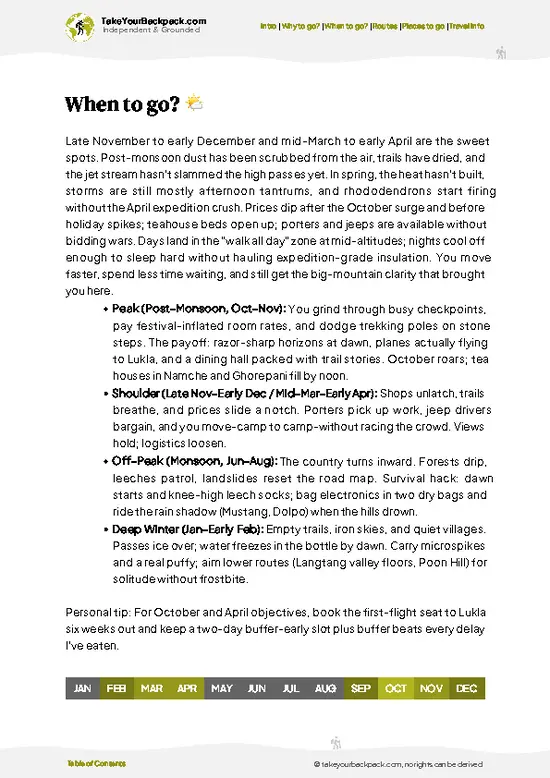
source: climatestotravel.comJANJanuary: good for travelingFEBFebruary: good for travelingMARMarch: highly recommended for travelingAPRApril: highly recommended for travelingMAYMay: good for travelingJUNJune: below average for travelingJULJuly: below average for travelingAUGAugust: below average for travelingSEPSeptember: highly recommended for travelingOCTOctober: excellent for travelingNOVNovember: excellent for travelingDECDecember: good for traveling
when-to-go

✈️ The backpacker research shortcutNepal Travel Guide

An offline-friendly backpacking guide with optimized travel routes, ranked highlights, transport advice, and the best areas to stay.
example page 0 from our offline Travel Guide for Nepal
example page 1 from our offline Travel Guide for Nepal
example page 2 from our offline Travel Guide for Nepal
example page 3 from our offline Travel Guide for Nepal
example page 4 from our offline Travel Guide for Nepal
example page 5 from our offline Travel Guide for Nepal
example page 6 from our offline Travel Guide for Nepal
example page 7 from our offline Travel Guide for Nepal
The digital guide (404 pages) contains:
107 highlights, ranked by travel appeal
Optimized 5, 10 & 15-day travel routes
Cities, national parks, landmarks, beaches
How to get around
Offline-friendly for travel without Wi-Fi
👉 Click to see all 30+ guide features

📅 Plan smarter in minutes, not weeks
Month by month travel advice
Festivals & national holidays
Budget expectations

🗺️ Go to the right places, skip the overrated ones
Honest pros & cons of destinations
Top hikes, parks & viewpoints
Lesser-known places most travelers miss
Clear “worth it vs skip it” guidance

🛏️ Travel smoothly without rookie mistakes
Best areas to stay
Transport systems explained simply
Common scams & safety advice
SIM cards, money & practical tips

🌍 Understand the country, not just visit it
Culture & traditions
52 Essential phrases & customs
Festivals worth planning around
Traveler-friendly historical context
Insights that make places more meaningful

📱 Built for real travel conditions
Fully downloadable PDF
Works completely offline
Optimized for phone use
Useful in remote areas & buses
Everything in one place
Save weeks of stressful planning
Get instant access to your full guide. 30‑day money-back guarantee.


By proceeding you agree to our terms.
Sent to your inbox immediately after payment • 100% Secure Checkout
Best Backpacking Travel Advisor 2025 tourism awardBest Backpacking
Travel Advisor
2025
What others say about Take Your Backpack Guides:
⭐⭐⭐⭐⭐
Fantastic, amazing amount of information!
⭐⭐⭐⭐⭐
My goodness this is amazing, it's what I've been looking for hats off too you!
⭐⭐⭐⭐⭐
I think this is absolutely BRILLIANT
⭐⭐⭐⭐
Very complete and informative. It's still missing places, but I gotta to commend you
⭐⭐⭐⭐⭐
This is truly amazing, thank you, can't wait to explore it with my kids!
⭐⭐⭐⭐⭐
Awesome resource, thank you!
⭐⭐⭐⭐⭐
This is amazing! Can't wait to explore the ones I haven't seen
⭐⭐⭐⭐
I love this! Well done, great idea.
⭐⭐⭐⭐⭐
Thanks for taking the time to make this gem!
⭐⭐⭐⭐⭐
This might be the best website I've ever seen.
⭐⭐⭐⭐⭐
Congratulations, and thank you so much for your work; it's incredibly valuable.
⭐⭐⭐⭐
In all seriousness I think you did a great job pointing out the important spots
⭐⭐⭐⭐⭐
10/10 very good
⭐⭐⭐⭐⭐
As someone who's only just starting to visit regularly this is awesome, thank you.
⭐⭐⭐⭐
Thank you very much! I'm going to visit my dad, it's going to be very useful!
⭐⭐⭐⭐⭐
This is really cool! We'll be travelling for the first time and this definitely come in handy.
⭐⭐⭐⭐⭐
You are now our minister of culture, congratulations 👨‍💼
⭐⭐⭐⭐⭐
Just wanted to tell you that this is a pearl! Going to follow your recommendations.
⭐⭐⭐⭐⭐
This is so cool. I'll definitely be using the resource for my travels soon.
⭐⭐⭐⭐⭐
This is very impressive! Good work.
⭐⭐⭐⭐⭐
This is an amazing and informative site. Very well done!

🛏️ Where to stay?Best areas and accommodation options

In Ghorahi, the sweet spot for backpackers is the city center around the main market area. This zone balances safety with social buzz, making it easy to meet fellow travelers without sacrificing peace of mind. Hostels and guesthouses cluster here, offering budget-friendly beds and a chance to swap stories over chai. Compared to the quieter outskirts, this area pulses with local life—street vendors, small eateries, and easy access to transport hubs. It’s not luxury, but the comfort level is solid for the price, and the vibe leans toward communal rather than isolated. For solo backpackers, this is where convenience and connection intersect.

🚌 Getting aroundGetting around like a local

Ghorahi moves at its own rhythm—neither a frantic rush nor a laid-back drift. The city’s pulse is a mix of predictable beats and spontaneous bursts, where schedules exist but bend easily to local habits. You’ll find that timing here is a flexible dance, not a strict march. Understanding this flow is your first win: it lets you navigate transit with a savvy eye, knowing when to hold tight to a timetable and when to embrace the unexpected.


  • Local Buses: Running roughly from 6 AM to 8 PM, these are the backbone of budget travel—cheap (under 50 NPR), slow, and often packed, but they hit all major neighborhoods. Comfort is basic; expect standing room and frequent stops.

  • Tempo Autos: These three-wheeled rides dart through traffic with surprising speed, operating from dawn till late evening.
read more 👉
Ghorahi moves at its own rhythm—neither a frantic rush nor a laid-back drift. The city’s pulse is a mix of predictable beats and spontaneous bursts, where schedules exist but bend easily to local habits. You’ll find that timing here is a flexible dance, not a strict march. Understanding this flow is your first win: it lets you navigate transit with a savvy eye, knowing when to hold tight to a timetable and when to embrace the unexpected.


  • Local Buses: Running roughly from 6 AM to 8 PM, these are the backbone of budget travel—cheap (under 50 NPR), slow, and often packed, but they hit all major neighborhoods. Comfort is basic; expect standing room and frequent stops.

  • Tempo Autos: These three-wheeled rides dart through traffic with surprising speed, operating from dawn till late evening. Fares hover around 100-150 NPR for short hops. They offer a balance of speed and cost but can get cramped during rush hours.

  • Walking: Ghorahi’s compact center rewards those who lace up their boots. Walking costs nothing, offers full control over your pace, and reveals the city’s texture in a way no vehicle can. Just watch for uneven sidewalks and stray dogs.

  • Shared Taxis: These run on flexible schedules, departing when full, mostly between 7 AM and 7 PM. They’re pricier (200-300 NPR) but faster and more comfortable than buses, ideal for longer distances or when time is tight.

👛 Costs (as of 21 February 2026)Typical daily expenses

Backpacking in Ghorahi, Nepal, offers a clear-cut trade-off between cost and comfort, with prices that let you stretch your budget without sacrificing the essentials.
  • Dorm Accommodation (High Season): Expect to pay around $5 to $8 per night. These dorms are basic but clean, often with shared bathrooms and limited amenities. High season means a bit more demand, so prices nudge up slightly.
  • Dorm Accommodation (Off-Season): Prices drop to about $3 to $5 per night. Fewer travelers mean you can negotiate or find quieter spots, though some guesthouses might close or reduce services.
  • Meals: Local eateries serve filling meals for $1.50 to $3 each. Dal bhat, the staple, is both cheap and energy-packed. Western-style or more upscale options push the cost closer to $5 to $7 per meal.
  • Local Transport:
read more 👉
Backpacking in Ghorahi, Nepal, offers a clear-cut trade-off between cost and comfort, with prices that let you stretch your budget without sacrificing the essentials.
  • Dorm Accommodation (High Season): Expect to pay around $5 to $8 per night. These dorms are basic but clean, often with shared bathrooms and limited amenities. High season means a bit more demand, so prices nudge up slightly.
  • Dorm Accommodation (Off-Season): Prices drop to about $3 to $5 per night. Fewer travelers mean you can negotiate or find quieter spots, though some guesthouses might close or reduce services.
  • Meals: Local eateries serve filling meals for $1.50 to $3 each. Dal bhat, the staple, is both cheap and energy-packed. Western-style or more upscale options push the cost closer to $5 to $7 per meal.
  • Local Transport: Rickshaws and shared jeeps cost roughly $0.30 to $1 per short trip within the city. It’s a practical way to get around without breaking the bank, though walking is often faster and more scenic.
  • City Transport Pass: Not commonly available or necessary in Ghorahi. Most travelers rely on pay-per-ride options or walking.
  • Basic Activities/Entry Fees: Minimal to none. Exploring local markets, temples, and natural spots usually doesn’t require an entry fee. If you visit a specific attraction, budget $1 to $3.
  • Miscellaneous Expenses: Budget $1 to $3 for bottled water, snacks, or small essentials. Internet cafes or SIM cards are affordable, around $1 to $2 for basic daily use.

All told, a daily budget in Ghorahi ranges from about $10 on the tightest shoestring to $20 if you lean toward a bit more comfort or convenience. This city rewards travelers who keep it simple and savor local rhythms rather than chasing luxury.


source: welcomenepal.com
⚠️ Prices can change and everyone travels differently, so take this as a rough guide. Hope it helps you plan your adventure!

🚌 Day tripsWhere to go beyond the main area

Ghorahi, Nepal, serves as a fantastic launchpad for day trips that blend adventure with cultural immersion. Here are some standout options.

**Chhath Festival in the Terai**
If your timing aligns with the Chhath Festival, this vibrant celebration is a must-see. Locals gather by rivers to worship the sun, creating a lively atmosphere filled with music, food, and colorful rituals. The festival usually occurs in October or November, so plan accordingly. Expect a travel time of about 30 minutes, and budget around $5 for transport and snacks. Just remember, the crowds can be overwhelming, so arrive early to snag a good spot.


**Suklaphanta Wildlife Reserve**
A two-hour bus ride takes you to Suklaphanta, where you can spot rhinos, deer, and a variety of birds. The entrance fee is around $10, … read more 👉
Ghorahi, Nepal, serves as a fantastic launchpad for day trips that blend adventure with cultural immersion. Here are some standout options.

**Chhath Festival in the Terai**
If your timing aligns with the Chhath Festival, this vibrant celebration is a must-see. Locals gather by rivers to worship the sun, creating a lively atmosphere filled with music, food, and colorful rituals. The festival usually occurs in October or November, so plan accordingly. Expect a travel time of about 30 minutes, and budget around $5 for transport and snacks. Just remember, the crowds can be overwhelming, so arrive early to snag a good spot.


**Suklaphanta Wildlife Reserve**
A two-hour bus ride takes you to Suklaphanta, where you can spot rhinos, deer, and a variety of birds. The entrance fee is around $10, and a guided tour can be arranged for an additional $15. The best time to visit is during the cooler months from November to February when wildlife is more active. A common mistake is underestimating the reserve’s size; wear sturdy shoes and bring plenty of water.


**Rupandehi’s Lumbini**
Just over an hour away, Lumbini is the birthplace of Buddha and a UNESCO World Heritage site. The serene gardens and ancient temples are worth the $5 entry fee. Visit in the early morning to avoid the heat and crowds. Many first-timers rush through; take your time to soak in the spiritual ambiance.
👉 Explore Lumbini

**Bardia National Park**
For a more rugged experience, head to Bardia National Park, about a three-hour drive from Ghorahi. Known for its less touristy vibe, you can spot tigers and elephants. A day trip can cost around $20, including transport and park fees. The best months are from October to March. Don’t forget to check the weather; heavy rains can make trails muddy and less accessible.
Want to know what more Nepal offers?
The Nepal Travel Guide describes 107 highlights, from cities to national parks, from beaches to hikes

Get the Travel Guide -

🍲 FoodLocal Cuisine & Drinks

In Ghorahi, **local cuisine** is a vibrant tapestry of flavors. Dive into **dal bhat**, a hearty lentil soup served with rice and pickles, or savor **momo**, those delightful dumplings filled with spiced meat or veggies. Street vendors are your best friends here; their sizzling pans and aromatic spices create an irresistible allure.

The **drinking culture** is equally engaging. Try **chia**, a spiced tea that warms the soul, or sip on local **arak**, a potent rice liquor.

When dining, embrace the communal spirit. Sharing food is customary, so don’t hesitate to pass your plate. Remember, eating with your right hand is the norm, adding a personal touch to your experience. Enjoy the hustle and bustle; it’s all part of the flavor!

🛡️ SafetyTraveler Safety Guide

Ghorahi is generally safe, but awareness is key. Stick to well-lit areas at night, especially if you’re solo. The main market can get crowded, so keep your belongings close; pickpockets occasionally lurk in busy spots.

Watch for common scams, like overly friendly locals offering unsolicited help that leads to inflated prices. Trust your instincts—if something feels off, it probably is. Carry yourself confidently, and don’t hesitate to say no. By staying alert and grounded, you’ll navigate Ghorahi smoothly and enjoy its authentic vibe.

Other Nepali cities near Ghorahi

Explore more nearby:

  • Butwal—hill gateway, transport junction, river confluence| 104 km away
  • Bardia—Grassland reserves, Tharu villages, riverine jungle| 107 km away
  • Syangja—River valleys, hillside settlements, local weaving| 130 km away

💡 Not sure where to go next?
Create a personalized itinerary for Nepal including Ghorahi and the places that fit your trip.

Generate my itinerary

👉 Discover all cities

Or checkout all Nepal has to offer (think cities, towns, villages, national parks, hikes, beaches, festivals)
Country photo of Nepal

We 💚 feedbackWhat to keep in mind

Ghorahi offers a genuine slice of Nepali life, where you can connect with locals over fresh chai and vibrant markets. But be ready for limited tourist infrastructure; amenities can feel basic. Embrace the simplicity, and you’ll find the real heart of Nepal waiting for you.

✈️ When did I visit Nepal?
Being a mountain lover, Nepal is one of my favorites. I visited it in November 2006, hiking the full Annapurna circuit as my highlight.

✍️ Help improve this page!
The information on this page is based on my own backpacking experience in Nepal, supplemented with up-to-date research and feedback from other travelers. Travel details can change, so if you notice anything outdated or incomplete, feel free to let me know.


🙋‍♂️ Give feedback

👋 Meet the founderWho’s Behind Take Your Backpack?

Johan, backpacker and founder of TakeYourBackpackHi, I’m Johan (Netherlands 🇳🇱), the creator of TakeYourBackpack. Over the past decade, I’ve backpacked through 80+ countries across six continents, gaining extensive experience with independent travel, long-term trips, and overland routes.

This site is built on a combination of firsthand travel experience and carefully curated insights from other backpackers. Many guides are based on places I’ve personally visited, while others bring together tips, observations, and practical advice shared by trusted travelers I’ve met along the way.

The goal is to provide realistic, experience-driven guidance — not generic itineraries — so you can explore destinations with better context, clearer expectations, and more confidence.

Get full Nepal guide •
Instant download • 107 highlights • Full Offline guide