×

Nepal🇳🇵 | landmarksLumbinibirthplace of Buddha, monastic zones, sacred garden | things to do and best time to go

Explore GosaikundaExplore Mount Everest

Backpacking in Lumbini
🏆 Top pickunique site ranked #2
By Johan Kruseman 🇳🇱 | Updated October 15, 2026

Most people don’t realize this, but Lumbini is one of the quietest “world-famous” pilgrimage sites you’ll ever visit - you can actually walk alone on dirt paths where Buddhism technically began. It sits in Nepal’s flat southern Terai, near the Indian border, a long way (in every sense) from the Himalayan postcard. As a backpacker destination, Lumbini is low on instant wow-factor and high on slow-burn meaning. The Maya Devi Temple is historically huge but visually modest; the real punch comes from standing where the Buddha was born while monks chant a few meters away. It’s cheap once you arrive, but getting there can be a sweaty, bumpy bus slog, and the spread-out monastic zone means a lot of hot walking or bicycle rentals. Crowds are mostly pilgrims, not selfie hunters, so photos are calm, reflective, almost austere. The vibe: contemplative, dusty, and quietly heavy with history.

Discover everything you want to know in the 📖 Nepal Travel Guide.


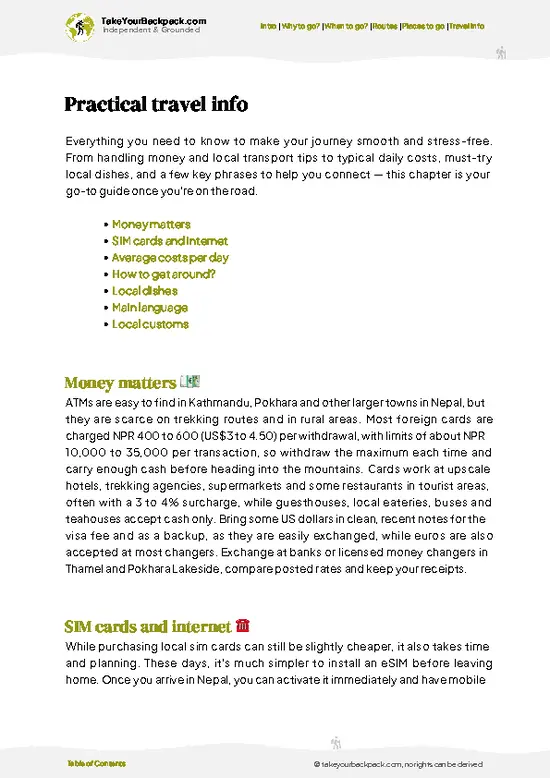
example page 0 from our offline Travel Guide for Nepal
example page 1 from our offline Travel Guide for Nepal
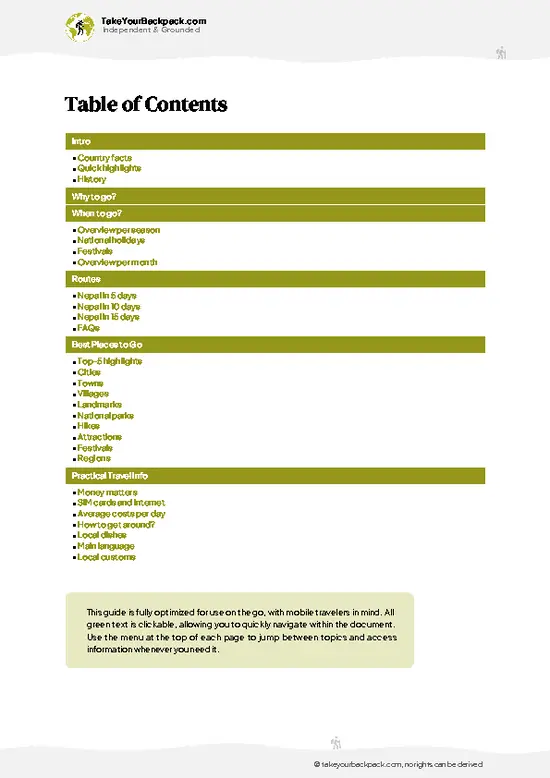
example page 2 from our offline Travel Guide for Nepal
example page 3 from our offline Travel Guide for Nepal
example page 4 from our offline Travel Guide for Nepal
example page 5 from our offline Travel Guide for Nepal
example page 6 from our offline Travel Guide for Nepal
example page 7 from our offline Travel Guide for Nepal
Loading the map 🌍
CLICK TO FILTER
cities
towns
villages
landmarks
national parks
hikes
attractions
festivals
regions
SHOW COUNTRY’S BESTSHOW ALL

✨ Why go?
Ranked #2 unique site in Nepal
The unique appeal for travelers

Lumbini isn’t just another stop on your Nepal itinerary; it’s the birthplace of Buddha and a profound pilgrimage site that deserves your attention. Sure, it can get crowded, especially during festivals, but that’s part of the experience. You’ll feel the energy of seekers from all over the world, each on their own journey.

The cost? Minimal. Entry fees are low, and you can find budget accommodations nearby. This isn’t a place where you’ll break the bank. The real magic lies in the simplicity of the surroundings. Walk through the sacred garden, visit the Maya Devi Temple, and soak in the serenity. It’s a stark contrast to the chaos of Kathmandu, offering a moment of reflection.

Lumbini fits perfectly into a broader route through Nepal. After trekking the Annapurna Circuit or exploring Pokhara, … read more 👉
Lumbini isn’t just another stop on your Nepal itinerary; it’s the birthplace of Buddha and a profound pilgrimage site that deserves your attention. Sure, it can get crowded, especially during festivals, but that’s part of the experience. You’ll feel the energy of seekers from all over the world, each on their own journey.

The cost? Minimal. Entry fees are low, and you can find budget accommodations nearby. This isn’t a place where you’ll break the bank. The real magic lies in the simplicity of the surroundings. Walk through the sacred garden, visit the Maya Devi Temple, and soak in the serenity. It’s a stark contrast to the chaos of Kathmandu, offering a moment of reflection.

Lumbini fits perfectly into a broader route through Nepal. After trekking the Annapurna Circuit or exploring Pokhara, this site adds a layer of depth to your travels. It’s not just about the sights; it’s about the spiritual connection and the stories that linger long after you leave. Make time for Lumbini; it’s worth every step.

💡 HighlightsPlaces and moments you shouldn't skip

  • Maya Devi Temple & Sacred Garden (personal favorite) — The exact spot traditionally identified as the Buddha’s birthplace; the simple stone marker, modern shrine and tree-lined garden make for a quietly powerful place to sit and think. Go at sunrise when the light and the few early pilgrims make it feel intimate rather than touristy.
  • Puskarini (Sacred Pond) — The small pond where Maya Devi is said to have bathed before giving birth. It’s photogenic, peaceful and full of ritual meaning; local devotees still perform offerings at the edge, and the reflection of the temple in calm water is worth the early wake-up.
  • Ashoka Pillar & Archaeological Zone — A 3rd-century BCE marker from Emperor Ashoka and the exposed foundations of ancient monasteries and stupas. If you like history, these digs
… read more 👉
  • Maya Devi Temple & Sacred Garden (personal favorite) — The exact spot traditionally identified as the Buddha’s birthplace; the simple stone marker, modern shrine and tree-lined garden make for a quietly powerful place to sit and think. Go at sunrise when the light and the few early pilgrims make it feel intimate rather than touristy.
  • Puskarini (Sacred Pond) — The small pond where Maya Devi is said to have bathed before giving birth. It’s photogenic, peaceful and full of ritual meaning; local devotees still perform offerings at the edge, and the reflection of the temple in calm water is worth the early wake-up.
  • Ashoka Pillar & Archaeological Zone — A 3rd-century BCE marker from Emperor Ashoka and the exposed foundations of ancient monasteries and stupas. If you like history, these digs show why Lumbini has been a pilgrimage site for millennia — real tangible layers of the past.
  • Monastic Zone (international monasteries) — A surreal stroll through architects’ ideas of sacred space: Thai, Chinese, Japanese, Tibetan and Burmese monasteries each with their own style, gardens and chanting. It’s a beautiful example of contemporary Buddhist culture expressed in building form.
  • Lumbini Museum & Visitor Centre — Compact, well-laid-out displays that explain the archaeology, inscriptions and pilgrimage history. Cheap, informative and great for grounding your visit before wandering the grounds.
  • World Peace Pagoda (Shanti Stupa) and walking trails — Built by Japanese Buddhists, the white stupa and its hilltop setting offer a calm vantage point and nice walking trails. Good for sunset, and for a different, more reflective view of the whole complex.
  • Bicycle loop & nearby village life — Rent a cheap bike and ride the flat paths between shrines, monasteries and the nearby Terai villages. Stops for chai, street snacks and chatting with locals make Lumbini feel less like a museum and more like a living place.
Spotted a mistake or missing something? Contact us.

Things to do around Lumbini

Ratings based on Tripadvisor reviews. When you book through this link, you support our work at no extra cost to you.

🌤️ When to go?Seasonal considerations and timing

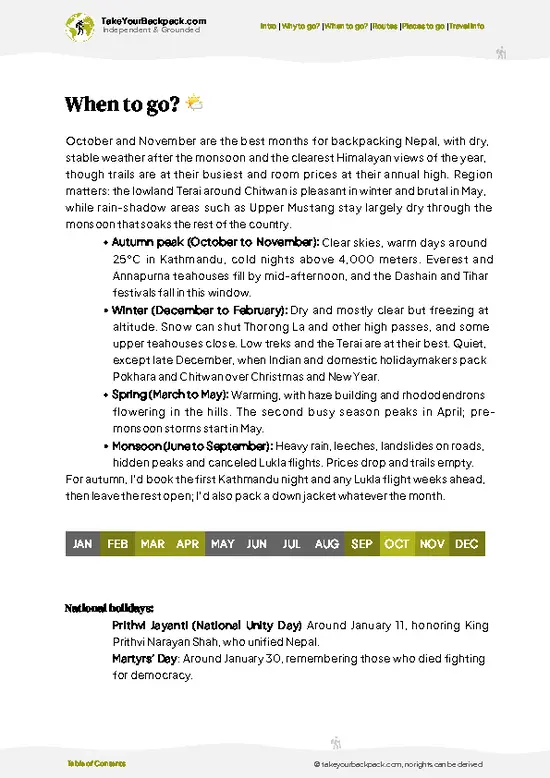
  • Weather: The best time to visit Lumbini is during the dry seasons—late October to early March. Expect crisp, clear days with minimal rain, perfect for wandering the sacred gardens without soggy shoes. Avoid the monsoon months (June to September), when heavy rains turn paths muddy and the air thick with humidity.
  • Temperature: In peak season, daytime temps hover around 15-25°C (59-77°F), comfortable for long walks. Nights can dip to 5°C (41°F), so pack a warm layer. Summer months push temps up to 30°C (86°F) or more, which can feel oppressive under the sun.
  • Daylight Hours: From October to March, you get about 10-11 hours of daylight—enough to explore thoroughly without rushing. The shorter days in winter mean starting early to catch all the key sites before dusk.
  • Crowds: Lumbini isn’t exactly
… read more 👉
  • Weather: The best time to visit Lumbini is during the dry seasons—late October to early March. Expect crisp, clear days with minimal rain, perfect for wandering the sacred gardens without soggy shoes. Avoid the monsoon months (June to September), when heavy rains turn paths muddy and the air thick with humidity.
  • Temperature: In peak season, daytime temps hover around 15-25°C (59-77°F), comfortable for long walks. Nights can dip to 5°C (41°F), so pack a warm layer. Summer months push temps up to 30°C (86°F) or more, which can feel oppressive under the sun.
  • Daylight Hours: From October to March, you get about 10-11 hours of daylight—enough to explore thoroughly without rushing. The shorter days in winter mean starting early to catch all the key sites before dusk.
  • Crowds: Lumbini isn’t exactly a tourist crush, but the main pilgrimage season (October-November) sees a spike in visitors, especially around Buddha Jayanti in May. If you want quiet reflection, aim for the shoulder months like February or March.
  • Seasonal Activities: Buddha Jayanti (April/May) is the spiritual high point, with colorful ceremonies and local festivities. It’s a cultural deep dive but expect crowds and higher prices. Off-season offers a more meditative vibe with fewer distractions.
  • Price Fluctuations: Accommodation and transport costs rise during peak pilgrimage times and festivals. Booking ahead is smart if you’re visiting in April-May or October-November. Off-season travel means better deals but be ready for cooler nights and occasional rain.
Pro-tip: Visit just after the monsoon, in late September or early October, to catch Lumbini lush and green, with manageable crowds and pleasant weather—this sweet spot often gets overlooked but delivers the full experience without the hassle.


source: climatestotravel.comJANJanuary: excellent for travelingFEBFebruary: excellent for travelingMARMarch: highly recommended for travelingAPRApril: good for travelingMAYMay: good for travelingJUNJune: below average for travelingJULJuly: below average for travelingAUGAugust: below average for travelingSEPSeptember: fair for travelingOCTOctober: excellent for travelingNOVNovember: highly recommended for travelingDECDecember: excellent for traveling
nepal-unique-site-lumbini
© Google |

✈️ The backpacker research shortcutNepal Travel Guide

An offline-friendly backpacking guide with optimized travel routes, ranked highlights, transport advice, and the best areas to stay.
example page 0 from our offline Travel Guide for Nepal
example page 1 from our offline Travel Guide for Nepal
example page 2 from our offline Travel Guide for Nepal
example page 3 from our offline Travel Guide for Nepal
example page 4 from our offline Travel Guide for Nepal
example page 5 from our offline Travel Guide for Nepal
example page 6 from our offline Travel Guide for Nepal
example page 7 from our offline Travel Guide for Nepal
The digital guide (337 pages) contains:
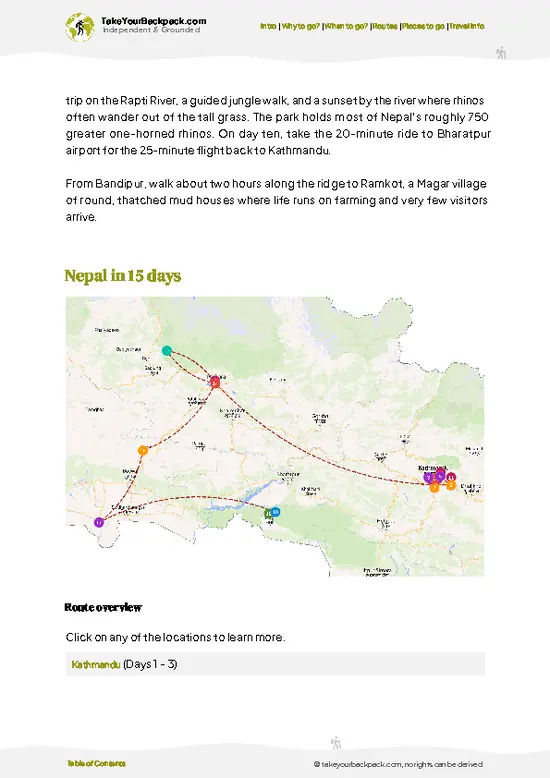
✅ 90 highlights, ranked by travel appeal
✅ Optimized 5, 10 & 15-day travel routes
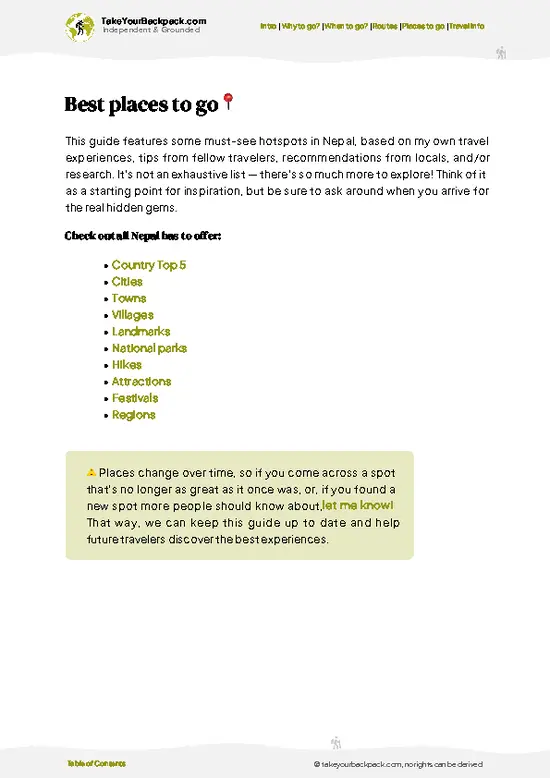
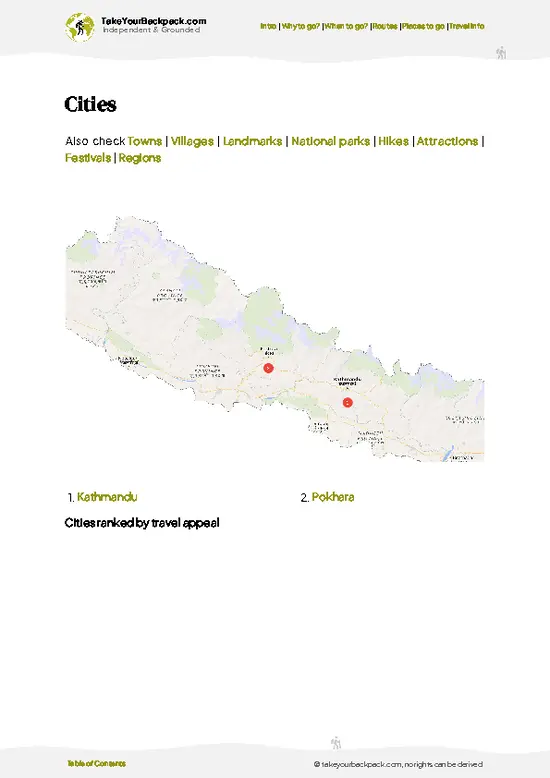
✅ Cities, national parks, landmarks, beaches
✅ How to get around
✅ Offline-friendly for travel without Wi-Fi
👉 Click to see all 30+ guide features

📅 Plan smarter in minutes, not weeks
✅ Month by month travel advice
✅ Festivals & national holidays
✅ Budget expectations

🗺️ Go to the right places, skip the overrated ones
✅ Honest pros & cons of destinations
✅ Top hikes, parks & viewpoints
✅ Lesser-known places most travelers miss
✅ Clear “worth it vs skip it” guidance

🛏️ Travel smoothly without rookie mistakes
✅ Best areas to stay
✅ Transport systems explained simply
✅ Common scams & safety advice
✅ SIM cards, money & practical tips

🌍 Understand the country, not just visit it
✅ Culture & traditions
✅ 52 Essential phrases & customs
✅ Festivals worth planning around
✅ Traveler-friendly historical context
✅ Insights that make places more meaningful

📱 Built for real travel conditions
✅ Fully downloadable PDF
✅ Works completely offline
✅ Optimized for phone use
✅ Useful in remote areas & buses
✅ Everything in one place
Stop searching, start planning
Get instant access to your full guide. 30‑day money-back guarantee.
+ Add another guide for just

By proceeding you agree to our terms.
Sent to your inbox immediately after payment • 100% Secure Checkout
Best Backpacking Travel Advisor 2025 tourism awardBest Backpacking
Travel Advisor
2025
What others say about Take Your Backpack Guides:
⭐⭐⭐⭐⭐
Fantastic, amazing amount of information!
⭐⭐⭐⭐⭐
My goodness this is amazing, it's what I've been looking for hats off too you!
⭐⭐⭐⭐⭐
I think this is absolutely BRILLIANT
⭐⭐⭐⭐
Very complete and informative. It's still missing places, but I gotta to commend you
⭐⭐⭐⭐⭐
This is truly amazing, thank you, can't wait to explore it with my kids!
⭐⭐⭐⭐⭐
Awesome resource, thank you!
⭐⭐⭐⭐⭐
This is amazing! Can't wait to explore the ones I haven't seen
⭐⭐⭐⭐
I love this! Well done, great idea.
⭐⭐⭐⭐⭐
Thanks for taking the time to make this gem!
⭐⭐⭐⭐⭐
This might be the best website I've ever seen.
⭐⭐⭐⭐⭐
Congratulations, and thank you so much for your work; it's incredibly valuable.
⭐⭐⭐⭐
In all seriousness I think you did a great job pointing out the important spots
⭐⭐⭐⭐⭐
10/10 very good
⭐⭐⭐⭐⭐
As someone who's only just starting to visit regularly this is awesome, thank you.
⭐⭐⭐⭐
Thank you very much! I'm going to visit my dad, it's going to be very useful!
⭐⭐⭐⭐⭐
This is really cool! We'll be travelling for the first time and this definitely come in handy.
⭐⭐⭐⭐⭐
You are now our minister of culture, congratulations 👨‍💼
⭐⭐⭐⭐⭐
Just wanted to tell you that this is a pearl! Going to follow your recommendations.
⭐⭐⭐⭐⭐
This is so cool. I'll definitely be using the resource for my travels soon.
⭐⭐⭐⭐⭐
This is very impressive! Good work.
⭐⭐⭐⭐⭐
This is an amazing and informative site. Very well done!

🛏️ Where to stay?Choosing the right base

Lumbini, the birthplace of Buddha, is a pilgrimage site that attracts both spiritual seekers and curious travelers. But let’s cut through the Instagram hype: it can get crowded, especially during peak seasons. The key is to find your spot away from the tourist throngs while still soaking in the essence of this sacred place.

Stay near the Lumbini Garden area. It’s the heart of the action, with easy access to the Maya Devi Temple and the surrounding monasteries. Here, you’ll find a mix of budget guesthouses and homestays that offer a genuine local vibe. The atmosphere is relaxed, and you’ll likely … read more 👉
Lumbini, the birthplace of Buddha, is a pilgrimage site that attracts both spiritual seekers and curious travelers. But let’s cut through the Instagram hype: it can get crowded, especially during peak seasons. The key is to find your spot away from the tourist throngs while still soaking in the essence of this sacred place.

Stay near the Lumbini Garden area. It’s the heart of the action, with easy access to the Maya Devi Temple and the surrounding monasteries. Here, you’ll find a mix of budget guesthouses and homestays that offer a genuine local vibe. The atmosphere is relaxed, and you’ll likely meet fellow backpackers eager to share stories over a cup of chai.

Another option is the nearby Tilaurakot area. It’s a bit quieter and offers a more authentic experience of rural Nepal. You can wander through local markets, interact with villagers, and even explore ancient ruins.

Safety is generally good, but always trust your instincts. Engage with locals; they’re often the best guides to the hidden corners of Lumbini. Embrace the simplicity, and you’ll discover the real magic that makes this place worth the journey.

👛 Costs (as of 15 October 2026)Money, prices, and spending tips

Visiting Lumbini, the birthplace of Buddha, is a journey that can be both enriching and surprisingly affordable, but let’s cut through the fluff and get to the real costs.
  • Entry Fees: Expect to pay around $5 to $10 USD for entry to the main sacred garden and the Maya Devi Temple. This fee grants you access to the heart of Lumbini, where the historical significance is palpable. Keep in mind that some specific sites within the complex may charge additional fees.
  • Accommodation: Budget options start at about $10 to $20 USD per night for basic guesthouses. Mid-range hotels can range from $30 to $60 USD, offering more comfort and amenities. Luxury stays can go upwards of $100 USD, but honestly, you’re here for the experience, not the hotel room.
  • Food: Local eateries serve delicious meals for as little
… read more 👉
Visiting Lumbini, the birthplace of Buddha, is a journey that can be both enriching and surprisingly affordable, but let’s cut through the fluff and get to the real costs.
  • Entry Fees: Expect to pay around $5 to $10 USD for entry to the main sacred garden and the Maya Devi Temple. This fee grants you access to the heart of Lumbini, where the historical significance is palpable. Keep in mind that some specific sites within the complex may charge additional fees.
  • Accommodation: Budget options start at about $10 to $20 USD per night for basic guesthouses. Mid-range hotels can range from $30 to $60 USD, offering more comfort and amenities. Luxury stays can go upwards of $100 USD, but honestly, you’re here for the experience, not the hotel room.
  • Food: Local eateries serve delicious meals for as little as $2 to $5 USD. If you’re craving something more upscale, expect to pay around $10 to $15 USD for a meal at a nicer restaurant. Street food is also a great option, often costing less than a dollar for a quick bite.
  • Transportation: Getting around Lumbini is straightforward. Rickshaws and local taxis charge around $2 to $5 USD for short trips. If you’re feeling adventurous, renting a bicycle can cost about $2 USD per day, giving you the freedom to explore at your own pace.
  • Guided Tours: If you want deeper insights, consider a guided tour. Prices typically range from $20 to $50 USD, depending on the length and inclusions. This can be worth it for the context and stories that bring the site to life.

Lumbini is not just a destination; it’s a pilgrimage. The costs are manageable, but the experiences are priceless.


source: welcomenepal.com
⚠️ Prices can change and everyone travels differently, so take this as a rough guide. Hope it helps you plan your adventure!

FAQFrequently asked questions about Lumbini

Lumbini is the birthplace of Siddhartha Gautama, known as Buddha, and a UNESCO World Heritage Site in Nepal. It features ancient ruins, monasteries, and the sacred Mayadevi Temple. It attracts pilgrims and tourists interested in Buddhism and history.
You need about one full day to visit Lumbini thoroughly. This allows time to explore the sacred garden, monasteries, and the museum without rushing. Some travelers may spend two days if they want a more relaxed visit or to attend meditation sessions.
You can get to Lumbini by flying into Gautam Buddha Airport near Bhairahawa, which is about 22 kilometers from Lumbini. Alternatively, buses and taxis are available from Kathmandu and Pokhara, with the bus journey taking around 8-10 hours from Kathmandu.
⚠️ Things can change over time, so always validate details locally before you go.

Other Nepali landmarks near Lumbini

Explore more nearby:

  • Panchase—forest ridges, rhododendron blooms, panoramic lookout| 99 km away
  • Swayambhunath Temple—hilltop stupa, resident monkeys, panoramic city views| 200 km away
  • Pashupathinath Temple—Hindu cremation ghats, golden pagoda, sacred Bagmati river| 206 km away

💡 Not sure where to go next?
Create a personalized itinerary for Nepal including Lumbini and the places that fit your trip.

Generate my itinerary

👉 Discover all landmarks

Or checkout all Nepal has to offer (think cities, towns, villages, national parks, hikes, beaches, festivals)
Country photo of Nepal

We 💚 feedbackIs it worth it?

Lumbini is a pilgrimage site that pulses with history. Standing in the exact spot where Buddha was born, you can almost feel the weight of centuries. But here’s the kicker: it’s often swarming with tourists, especially during peak seasons. Prepare for crowds that can dilute the serenity. Still, if you can find a quiet moment by the Maya Devi Temple, the experience is transformative. It’s a journey worth the hustle.

✈️ When did I visit Nepal?
Being a mountain lover, Nepal is one of my favorites. I visited it in November 2006, hiking the full Annapurna circuit as my highlight.

✍️ Help improve this page!
The information on this page is based on my own backpacking experience in Nepal, supplemented with up-to-date research and feedback from other travelers. Travel details can change, so if you notice anything outdated or incomplete, feel free to let me know.


🙋‍♂️ Give feedback

👋 Meet the founderWho’s Behind Take Your Backpack?

Johan, backpacker and founder of TakeYourBackpackHi, I’m Johan (Netherlands 🇳🇱), the creator of TakeYourBackpack. Over the past 3 decades, I’ve backpacked through 90+ countries across six continents, gaining extensive experience with independent travel, long-term trips, and overland routes.

This site is built on a combination of firsthand travel experience and carefully curated insights from other backpackers. Many guides are based on places I’ve personally visited, while others bring together tips, observations, and practical advice shared by trusted travelers I’ve met along the way.

The goal is to provide realistic, experience-driven guidance — not generic itineraries — so you can explore destinations with better context, clearer expectations, and more confidence.