×

Nepal🇳🇵 | citiesItahariroad interchange, new town, commercial center | things to do and best time to go

Explore DamakExplore Buddha Jayanti

Backpacking in Itahari
👌 Worth visitingcity ranked #13
By Johan Kruseman 🇳🇱 | Updated June 14, 2026

Ten years ago Itahari was a dusty crossroads where you grabbed a bus, a plate of chow mein, and moved on; now it’s a full-blown transport hub with malls, traffic jams, and just enough polish to feel like a small city trying on big-city shoes. It sits in the eastern Terai, where the Mahendra and Koshi highways intersect, so you pass through even if you don’t plan to. For backpackers, Itahari is cheap, busy, and practical rather than pretty: solid street food, chaotic markets, a few lakes and parks for evening walks, but no must-see temples or museums. It’s safer and more relaxed than Biratnagar, less charming than Dharan, and you’ll meet more Nepali students than foreign travelers, which can be great if you like curious conversations and zero hostel-party scene.

Discover everything you want to know in the 📖 Nepal Travel Guide.


Get your Nepal guide
107 ranked highlights, routes & tips, works offline (404 pages)
Loading the map 🌍
CLICK TO FILTER
cities
towns
villages
landmarks
national parks
hikes
attractions
festivals
regions
SHOW COUNTRY’S BESTSHOW ALL

✨ Why go?
Ranked #13 city in Nepal
What sets this place apart

Itahari is a strategic stop for backpackers weaving through Nepal. Its walkability makes it easy to explore local markets and street food stalls, where you can savor authentic flavors without breaking the bank. The hostels here are budget-friendly and foster a social vibe, perfect for meeting fellow travelers. While it may not have the flashiest attractions, it serves as a solid basecamp for day trips to nearby highlights. The nightlife is laid-back yet lively, offering a taste of local culture. Plus, with easy onward travel options, you can seamlessly continue your journey. If you’re looking for a place to recharge and plan your next adventure, Itahari fits the bill.
Want to include Itahari in your Nepal route?
Create a personalized Nepal itinerary that includes Itahari and the places that fit your trip — based on your travel style, budget, and available time. Get your route in seconds.

Generate my trip

💡 HighlightsDon't-miss highlights and experiences

  • Itahari Clock Tower (Itahari Chowk) — The city’s most recognisable meeting point: a clock-tower roundabout that marks the commercial heart of Itahari and is great for people-watching, street photography, and orienting yourself around town.
  • Itahari Bus Park / Intercity Transport Hub — The busy bus terminal where long-distance buses and local minivans converge; visiting gives a real-feel for travel culture in eastern Nepal and it’s the practical jump-off for exploring the region.
  • Main Bazaar / Itahari Market Area — A dense stretch of shops and street stalls selling fresh produce, spices, textiles and local snacks; the market is where daily life happens and where you can sample authentic Terai food and bargain with shopkeepers.
Nearby day-trip highlights include Dharan, Koshi Tappu Wildlife … read more 👉
  • Itahari Clock Tower (Itahari Chowk) — The city’s most recognisable meeting point: a clock-tower roundabout that marks the commercial heart of Itahari and is great for people-watching, street photography, and orienting yourself around town.
  • Itahari Bus Park / Intercity Transport Hub — The busy bus terminal where long-distance buses and local minivans converge; visiting gives a real-feel for travel culture in eastern Nepal and it’s the practical jump-off for exploring the region.
  • Main Bazaar / Itahari Market Area — A dense stretch of shops and street stalls selling fresh produce, spices, textiles and local snacks; the market is where daily life happens and where you can sample authentic Terai food and bargain with shopkeepers.
Nearby day-trip highlights include Dharan, Koshi Tappu Wildlife Reserve, and the Baraha Kshetra river confluence — Koshi Tappu is my personal favorite.
Spotted a mistake or missing something? Contact us.

Things to do near Itahari

Ratings based on Tripadvisor reviews. When you book through this link, you support our work at no extra cost to you.

🏘️ NeighborhoodsKey areas and districts to know

Itahari, a bustling hub in Nepal, offers a mix of experiences for backpackers. Here’s how the neighborhoods stack up:

Itahari Bazaar: This is the heart of the city. Expect a lively atmosphere with street vendors and local eateries. It’s budget-friendly and walkable, making it ideal for short stays. Nightlife is low-key, but you’ll find some local bars if you seek them out.

Biratnagar Road: A bit quieter, this area is perfect for those wanting a more relaxed vibe. It’s still accessible, with good transport links. Prices are slightly higher here, but the trade-off is comfort. Great for longer stays where you can settle in.

Shreepur: This neighborhood offers a blend of local life and tranquility. It’s less touristy, so you’ll get an authentic experience. Walkability is decent, and it’s a good … read more 👉
Itahari, a bustling hub in Nepal, offers a mix of experiences for backpackers. Here’s how the neighborhoods stack up:

Itahari Bazaar: This is the heart of the city. Expect a lively atmosphere with street vendors and local eateries. It’s budget-friendly and walkable, making it ideal for short stays. Nightlife is low-key, but you’ll find some local bars if you seek them out.

Biratnagar Road: A bit quieter, this area is perfect for those wanting a more relaxed vibe. It’s still accessible, with good transport links. Prices are slightly higher here, but the trade-off is comfort. Great for longer stays where you can settle in.

Shreepur: This neighborhood offers a blend of local life and tranquility. It’s less touristy, so you’ll get an authentic experience. Walkability is decent, and it’s a good spot for budget travelers looking to escape the hustle. Ideal for longer stays to soak in the culture.

Each area has its own flavor, so choose based on what you value most.

⌛️ 1 dayHow to make the most of one day

Itahari, a bustling hub in eastern Nepal, offers a unique blend of local culture and vibrant street life. It’s not on every tourist’s radar, but that’s what makes it special. You’ll find a city alive with energy, where the rhythm of daily life unfolds in colorful markets and friendly interactions.

Start your morning at the local market in the heart of Itahari. The aroma of fresh spices and sizzling street food fills the air. Grab a steaming cup of chai and some sel roti, a traditional rice-based snack. This is where you’ll see locals in their element, bargaining and chatting.

In the afternoon, head to the nearby Koshi Tappu Wildlife Reserve. It’s a short drive away, but the tranquility of the wetlands is worth it. You might spot rare birds or even a glimpse of the elusive wild buffalo. … read more 👉
Itahari, a bustling hub in eastern Nepal, offers a unique blend of local culture and vibrant street life. It’s not on every tourist’s radar, but that’s what makes it special. You’ll find a city alive with energy, where the rhythm of daily life unfolds in colorful markets and friendly interactions.

Start your morning at the local market in the heart of Itahari. The aroma of fresh spices and sizzling street food fills the air. Grab a steaming cup of chai and some sel roti, a traditional rice-based snack. This is where you’ll see locals in their element, bargaining and chatting.

In the afternoon, head to the nearby Koshi Tappu Wildlife Reserve. It’s a short drive away, but the tranquility of the wetlands is worth it. You might spot rare birds or even a glimpse of the elusive wild buffalo. It’s a refreshing escape from the city buzz.

As evening falls, return to Itahari and explore the less-traveled neighborhood of Bhadrapur. Here, you’ll find cozy eateries serving authentic Nepali dishes. Try the dal bhat, a staple that’s hearty and satisfying.

End your day with a stroll along the banks of the Koshi River, where the sunset paints the sky in hues of orange and pink. Itahari may not be a tourist hotspot, but its charm lies in these authentic experiences that connect you to the heart of Nepal.
Turn your Itahari visit into an Nepal adventure
Build a complete Nepal route with Itahari, hidden gems, must-see destinations, and realistic travel times included.

Generate my trip

🌤️ When to go?Choosing the right time of year


  • Weather: The best window is October to December. Post-monsoon, the air clears, and rain drops to a minimum. Avoid the heavy monsoon months of June to September when trails get muddy and unpredictable.

  • Temperature: In peak season, daytime highs hover around 20-25°C (68-77°F), perfect for trekking without overheating. Nights dip to 10-15°C (50-59°F), so pack layers but skip the heavy winter gear.

  • Daylight Hours: Around 11-12 hours of daylight in autumn and early winter. Enough time to cover ground without rushing, but not so long that you burn out.

  • Crowds: October-November draws the most trekkers, especially around festival times. December sees fewer visitors, offering more solitude but cooler weather.

  • Seasonal Activities: Dashain and Tihar festivals in October-November add cultural
read more 👉

  • Weather: The best window is October to December. Post-monsoon, the air clears, and rain drops to a minimum. Avoid the heavy monsoon months of June to September when trails get muddy and unpredictable.

  • Temperature: In peak season, daytime highs hover around 20-25°C (68-77°F), perfect for trekking without overheating. Nights dip to 10-15°C (50-59°F), so pack layers but skip the heavy winter gear.

  • Daylight Hours: Around 11-12 hours of daylight in autumn and early winter. Enough time to cover ground without rushing, but not so long that you burn out.

  • Crowds: October-November draws the most trekkers, especially around festival times. December sees fewer visitors, offering more solitude but cooler weather.

  • Seasonal Activities: Dashain and Tihar festivals in October-November add cultural depth but also spike local prices and crowd density.

  • Price Fluctuations: Peak season means higher accommodation and transport costs. Off-season offers bargains but at the expense of weather reliability and fewer services.


Pro-tip: Aim for late November—weather is stable, crowds thin, and prices start to dip. You get the best balance of comfort, cost, and cultural immersion.


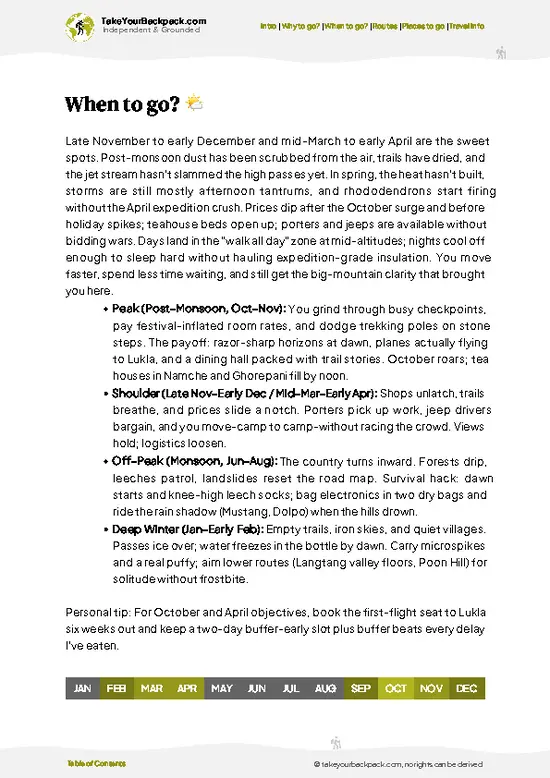
source: climatestotravel.comJANJanuary: good for travelingFEBFebruary: good for travelingMARMarch: good for travelingAPRApril: good for travelingMAYMay: fair for travelingJUNJune: below average for travelingJULJuly: below average for travelingAUGAugust: below average for travelingSEPSeptember: fair for travelingOCTOctober: excellent for travelingNOVNovember: excellent for travelingDECDecember: highly recommended for traveling
when-to-go

✈️ The backpacker research shortcutNepal Travel Guide

An offline-friendly backpacking guide with optimized travel routes, ranked highlights, transport advice, and the best areas to stay.
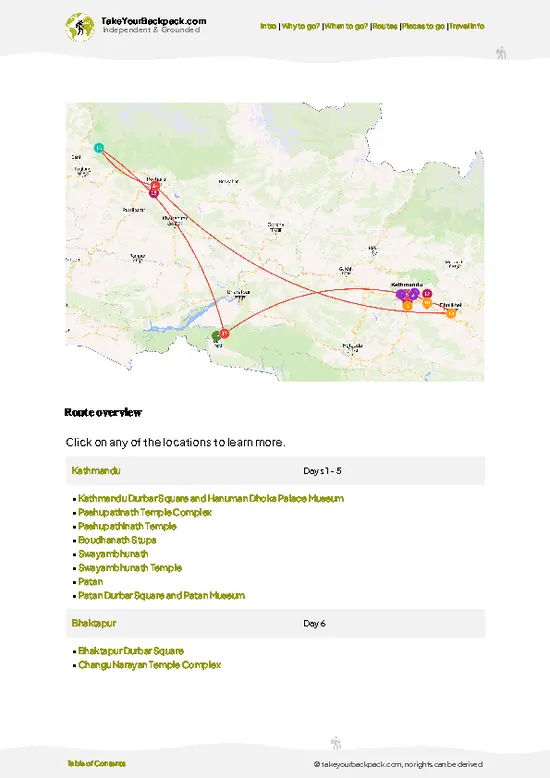
example page 0 from our offline Travel Guide for Nepal
example page 1 from our offline Travel Guide for Nepal
example page 2 from our offline Travel Guide for Nepal
example page 3 from our offline Travel Guide for Nepal
example page 4 from our offline Travel Guide for Nepal
example page 5 from our offline Travel Guide for Nepal
example page 6 from our offline Travel Guide for Nepal
example page 7 from our offline Travel Guide for Nepal
The digital guide (404 pages) contains:
107 highlights, ranked by travel appeal
Optimized 5, 10 & 15-day travel routes
Cities, national parks, landmarks, beaches
How to get around
Offline-friendly for travel without Wi-Fi
👉 Click to see all 30+ guide features

📅 Plan smarter in minutes, not weeks
Month by month travel advice
Festivals & national holidays
Budget expectations

🗺️ Go to the right places, skip the overrated ones
Honest pros & cons of destinations
Top hikes, parks & viewpoints
Lesser-known places most travelers miss
Clear “worth it vs skip it” guidance

🛏️ Travel smoothly without rookie mistakes
Best areas to stay
Transport systems explained simply
Common scams & safety advice
SIM cards, money & practical tips

🌍 Understand the country, not just visit it
Culture & traditions
52 Essential phrases & customs
Festivals worth planning around
Traveler-friendly historical context
Insights that make places more meaningful

📱 Built for real travel conditions
Fully downloadable PDF
Works completely offline
Optimized for phone use
Useful in remote areas & buses
Everything in one place
Save weeks of stressful planning
Get instant access to your full guide. 30‑day money-back guarantee.


By proceeding you agree to our terms.
Sent to your inbox immediately after payment • 100% Secure Checkout
Best Backpacking Travel Advisor 2025 tourism awardBest Backpacking
Travel Advisor
2025
What others say about Take Your Backpack Guides:
⭐⭐⭐⭐⭐
Fantastic, amazing amount of information!
⭐⭐⭐⭐⭐
My goodness this is amazing, it's what I've been looking for hats off too you!
⭐⭐⭐⭐⭐
I think this is absolutely BRILLIANT
⭐⭐⭐⭐
Very complete and informative. It's still missing places, but I gotta to commend you
⭐⭐⭐⭐⭐
This is truly amazing, thank you, can't wait to explore it with my kids!
⭐⭐⭐⭐⭐
Awesome resource, thank you!
⭐⭐⭐⭐⭐
This is amazing! Can't wait to explore the ones I haven't seen
⭐⭐⭐⭐
I love this! Well done, great idea.
⭐⭐⭐⭐⭐
Thanks for taking the time to make this gem!
⭐⭐⭐⭐⭐
This might be the best website I've ever seen.
⭐⭐⭐⭐⭐
Congratulations, and thank you so much for your work; it's incredibly valuable.
⭐⭐⭐⭐
In all seriousness I think you did a great job pointing out the important spots
⭐⭐⭐⭐⭐
10/10 very good
⭐⭐⭐⭐⭐
As someone who's only just starting to visit regularly this is awesome, thank you.
⭐⭐⭐⭐
Thank you very much! I'm going to visit my dad, it's going to be very useful!
⭐⭐⭐⭐⭐
This is really cool! We'll be travelling for the first time and this definitely come in handy.
⭐⭐⭐⭐⭐
You are now our minister of culture, congratulations 👨‍💼
⭐⭐⭐⭐⭐
Just wanted to tell you that this is a pearl! Going to follow your recommendations.
⭐⭐⭐⭐⭐
This is so cool. I'll definitely be using the resource for my travels soon.
⭐⭐⭐⭐⭐
This is very impressive! Good work.
⭐⭐⭐⭐⭐
This is an amazing and informative site. Very well done!

🛏️ Where to stay?Choosing the right base

In Itahari, the sweet spot for backpackers is the area around the main bus park and the adjoining Bazaar Road. This neighborhood is a practical choice because it balances safety, social buzz, and budget-friendly options without sacrificing convenience. You’re close to transport hubs, which means easy access to onward travel, and the streets hum with local life—street food stalls, small cafes, and shops where you can mingle with both locals and fellow travelers. Hostels here tend to cluster, offering dorm beds and shared spaces that naturally foster connections. Compared to quieter residential … read more 👉
In Itahari, the sweet spot for backpackers is the area around the main bus park and the adjoining Bazaar Road. This neighborhood is a practical choice because it balances safety, social buzz, and budget-friendly options without sacrificing convenience. You’re close to transport hubs, which means easy access to onward travel, and the streets hum with local life—street food stalls, small cafes, and shops where you can mingle with both locals and fellow travelers. Hostels here tend to cluster, offering dorm beds and shared spaces that naturally foster connections. Compared to quieter residential zones or the more commercial outskirts, this area feels alive without being overwhelming. It’s not about luxury but about smart comfort: a place where you can recharge, meet people, and keep your wallet intact. If you want to maximize your time and social energy, this neighborhood is your tactical base in Itahari.

🚌 Getting aroundMoving around without the hassle

Itahari moves at a pace that’s neither frantic nor lazy—it’s a city where time bends to the rhythm of necessity and local hustle. You won’t find a clock dictating every step, but you’ll feel the pulse of people balancing work, market runs, and social stops with an intuitive flow. Here, schedules exist, but they’re flexible, shaped by the ebb and flow of daily life rather than rigid timetables. For a traveler, this means your transit choices are a dance between saving minutes, saving rupees, and saving your sanity.


  • Walking: The ultimate zero-cost option. Itahari’s compact center makes walking practical and often faster than waiting for a vehicle during peak hours. You control your pace and route, soaking in street-level details that buses and taxis miss.

  • Local Buses: Running roughly from
read more 👉
Itahari moves at a pace that’s neither frantic nor lazy—it’s a city where time bends to the rhythm of necessity and local hustle. You won’t find a clock dictating every step, but you’ll feel the pulse of people balancing work, market runs, and social stops with an intuitive flow. Here, schedules exist, but they’re flexible, shaped by the ebb and flow of daily life rather than rigid timetables. For a traveler, this means your transit choices are a dance between saving minutes, saving rupees, and saving your sanity.


  • Walking: The ultimate zero-cost option. Itahari’s compact center makes walking practical and often faster than waiting for a vehicle during peak hours. You control your pace and route, soaking in street-level details that buses and taxis miss.

  • Local Buses: Running roughly from 6 AM to 8 PM, these are the backbone of budget transit. Tickets cost around NPR 20-30 per ride. They’re slow and crowded but unbeatable for stretching your rupee. Comfort is minimal—expect standing room and frequent stops.

  • Tempo Autos (Three-Wheelers): These dart through traffic with agility, offering a middle ground between speed and cost. Fares start at NPR 50 for short hops, rising with distance. They run all day but negotiate prices upfront to avoid surprises. Comfort is basic but better than buses.

  • Shared Taxis: Faster and more comfortable than buses, shared taxis operate on main routes and fill up before departure. Expect to pay NPR 100-150 depending on distance. They run from early morning until late evening, balancing speed with a moderate price tag.

  • Private Taxis: The most comfortable and fastest option, but also the priciest. Ideal for tight schedules or hauling heavy gear. Prices start around NPR 800 for intra-city trips. Available 24/7, offering door-to-door convenience at a premium.

👛 Costs (as of 21 February 2026)Money, prices, and spending tips

Backpacking in Itahari, Nepal, offers a straightforward cost structure that rewards those who understand the trade-offs between time, money, and comfort. Here’s the breakdown of what you’re really paying for each day.
  • Dorm Accommodation (High Season): Expect to pay around $6 to $10 per night. High season means more tourists, so prices tick up slightly, but you still get basic, clean dorm rooms with essential amenities.
  • Dorm Accommodation (Off-Season): Prices drop to about $4 to $7. Fewer travelers mean better bargaining power, and some places might throw in extras like free Wi-Fi or breakfast to keep you around.
  • Meals: Local eateries serve filling meals for $1.50 to $3 each. Sticking to dal bhat or momos keeps costs low and flavors authentic. Western-style cafes or restaurants will push
read more 👉
Backpacking in Itahari, Nepal, offers a straightforward cost structure that rewards those who understand the trade-offs between time, money, and comfort. Here’s the breakdown of what you’re really paying for each day.
  • Dorm Accommodation (High Season): Expect to pay around $6 to $10 per night. High season means more tourists, so prices tick up slightly, but you still get basic, clean dorm rooms with essential amenities.
  • Dorm Accommodation (Off-Season): Prices drop to about $4 to $7. Fewer travelers mean better bargaining power, and some places might throw in extras like free Wi-Fi or breakfast to keep you around.
  • Meals: Local eateries serve filling meals for $1.50 to $3 each. Sticking to dal bhat or momos keeps costs low and flavors authentic. Western-style cafes or restaurants will push you closer to $5 to $7 per meal.
  • Local Transport: Rickshaws and local buses run between $0.20 and $0.50 per short trip. Itahari’s compact size means you rarely need more than a couple of rides a day unless you’re venturing out.
  • City Transport Pass: Not commonly used here; most travelers rely on individual rides. If available, a weekly pass might cost around $2 to $3, but it’s rarely necessary given the city’s scale.
  • Basic Activities/Entry Fees: Most local attractions and temples have minimal or no entry fees, usually under $1. Guided tours or special cultural experiences might push this up to $5 to $10, but these are optional.
  • Miscellaneous Expenses: Think bottled water, snacks, occasional SIM cards, or laundry. Budget around $1 to $3 daily. Itahari’s markets offer good deals if you’re willing to haggle.

In total, you’re looking at roughly $10 to $20 per day if you keep things lean but comfortable. The real trade-off here is between spending a few extra dollars for a bit more comfort or saving by embracing the local rhythm fully. Itahari’s charm lies in its simplicity, so the money saved on logistics can be reinvested in experiences or a longer stay.


source: welcomenepal.com
⚠️ Prices can change and everyone travels differently, so take this as a rough guide. Hope it helps you plan your adventure!

🚌 Day tripsExploring the surroundings

Itahari, Nepal, is a fantastic launchpad for day trips that blend adventure with cultural immersion. Here are some standout options that pack a punch without draining your resources.

Bhedetar
Just a 30-minute drive from Itahari, Bhedetar offers stunning views of the Himalayas. The ride is a breeze, and once you’re there, you can stroll through the charming hilltop village or hike to the nearby viewpoint. Don’t miss the local eateries serving up delicious momos. Budget around $5 for transport and snacks. The best time to visit is during the spring or fall when the skies are clear. A common mistake? Forgetting to bring a light jacket; it can get chilly up there.


Kakarbhitta
About an hour away, Kakarbhitta is the gateway to the eastern border with India. It’s a bustling town where you … read more 👉
Itahari, Nepal, is a fantastic launchpad for day trips that blend adventure with cultural immersion. Here are some standout options that pack a punch without draining your resources.

Bhedetar
Just a 30-minute drive from Itahari, Bhedetar offers stunning views of the Himalayas. The ride is a breeze, and once you’re there, you can stroll through the charming hilltop village or hike to the nearby viewpoint. Don’t miss the local eateries serving up delicious momos. Budget around $5 for transport and snacks. The best time to visit is during the spring or fall when the skies are clear. A common mistake? Forgetting to bring a light jacket; it can get chilly up there.


Kakarbhitta
About an hour away, Kakarbhitta is the gateway to the eastern border with India. It’s a bustling town where you can experience local markets and street food. Try the samosas and chatpate for a true taste of Nepal. Expect to spend around $6 for transport and food. The vibrant atmosphere is best enjoyed in the cooler months, from October to March. First-timers often overlook the cultural richness here, thinking it’s just a border town.
👉 Explore Kakarbhitta

Hile
Roughly 90 minutes from Itahari, Hile is a serene spot perfect for a day of hiking. The trails are well-marked, leading you through lush forests and terraced fields. Pack a picnic to enjoy at one of the scenic overlooks. Total costs can be around $8 for transport and snacks. Spring is ideal for wildflowers, while autumn offers stunning foliage. Many newcomers underestimate the trail difficulty; be prepared for some steep sections.
Want to know what more Nepal offers?
The Nepal Travel Guide describes 107 highlights, from cities to national parks, from beaches to hikes

Get the Travel Guide -

🍲 FoodLocal Cuisine & Drinks

In **Itahari**, the food scene is a vibrant tapestry of flavors. Dive into **dal bhat**, a hearty lentil soup served with rice, often accompanied by spicy pickles and seasonal vegetables. Don’t miss **momo**, those delightful dumplings filled with meat or veggies, best enjoyed with a tangy dipping sauce.

Street food stalls are your best bet for authentic bites. The **local markets** buzz with vendors selling everything from **samosas** to sweet **jalebi**. Grab a seat at a casual eatery, where the aroma of spices fills the air, and locals gather to share stories over meals.

When it comes to drinks, try **chai**—the sweet, milky tea is a daily ritual. Remember, sharing food is a sign of friendship here, so don’t hesitate to join in the communal vibe.

🛡️ SafetyScams, Hazards, and Annoyances

Itahari is generally safe for backpackers, but a few situational awareness tips can enhance your experience. Stick to well-lit areas at night, especially if you’re solo; the streets can feel quiet, and a little caution goes a long way.

Watch for common scams, like overly friendly locals offering unsolicited help that leads to inflated prices. Always negotiate before accepting services, whether it’s a ride or a meal.

Keep your belongings close in crowded markets, where pickpockets might lurk. Trust your instincts; if something feels off, it probably is. Stay alert, and you’ll navigate Itahari like a pro.

Other Nepali cities near Itahari

Explore more nearby:

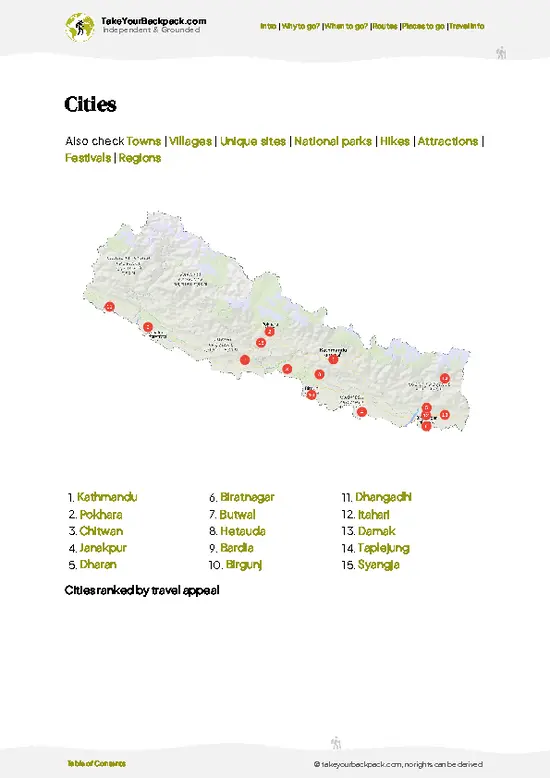
  • Dharan—hill base, British Gurkha legacy, tea estates| 16 km away
  • Biratnagar—border city, textile factories, flat plains| 23 km away
  • Damak—refugee settlements, eastern plains, multicultural neighborhoods| 39 km away

💡 Not sure where to go next?
Create a personalized itinerary for Nepal including Itahari and the places that fit your trip.

Generate my itinerary

👉 Discover all cities

Or checkout all Nepal has to offer (think cities, towns, villages, national parks, hikes, beaches, festivals)
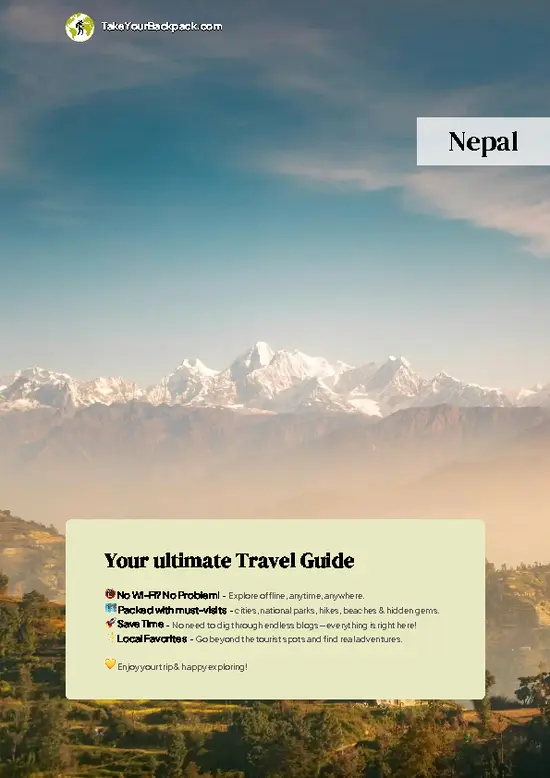
Country photo of Nepal

We 💚 feedbackParting advice and final tips

Itahari is a crossroads of cultures, where you can savor authentic local cuisine and witness daily life unfold in vibrant markets. But be prepared: the infrastructure isn’t always polished. Expect some bumps along the way. Embrace the chaos, and you’ll find the real charm in this bustling hub.

✈️ When did I visit Nepal?
Being a mountain lover, Nepal is one of my favorites. I visited it in November 2006, hiking the full Annapurna circuit as my highlight.

✍️ Help improve this page!
The information on this page is based on my own backpacking experience in Nepal, supplemented with up-to-date research and feedback from other travelers. Travel details can change, so if you notice anything outdated or incomplete, feel free to let me know.


🙋‍♂️ Give feedback

👋 Meet the founderWho’s Behind Take Your Backpack?

Johan, backpacker and founder of TakeYourBackpackHi, I’m Johan (Netherlands 🇳🇱), the creator of TakeYourBackpack. Over the past decade, I’ve backpacked through 80+ countries across six continents, gaining extensive experience with independent travel, long-term trips, and overland routes.

This site is built on a combination of firsthand travel experience and carefully curated insights from other backpackers. Many guides are based on places I’ve personally visited, while others bring together tips, observations, and practical advice shared by trusted travelers I’ve met along the way.

The goal is to provide realistic, experience-driven guidance — not generic itineraries — so you can explore destinations with better context, clearer expectations, and more confidence.

Get full Nepal guide •
Instant download • 107 highlights • Full Offline guide