
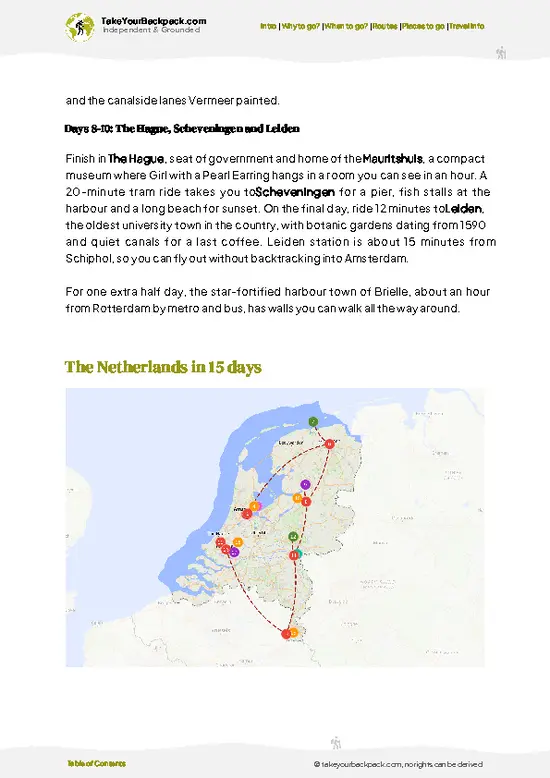
- Guided fort tour: Volunteers lead you through casemates and corridors and explain how the garrison lived and how the flooding strategy worked.
- Waterline Museum exhibits: Displays show how land was deliberately inundated to a shallow depth, too deep to march through and too shallow for boats.
- Bunkers (groepsschuilplaatsen): These concrete shelters, built in the 1930s and 1940s, show the changing shape of Dutch defense.
- Moats and earthen ramparts: Walking the grounds shows how the fort was hidden in the landscape by design.
- Roman remains: The site sits on the former Roman fortress of Fectio, with markers explaining the Rhine frontier.
- Cycling the Waterline path: The route links neighboring forts by bike through flat farmland and polder.
- Children’s trails and workshops: Activities run on selected days
- Guided fort tour: Volunteers lead you through casemates and corridors and explain how the garrison lived and how the flooding strategy worked.
- Waterline Museum exhibits: Displays show how land was deliberately inundated to a shallow depth, too deep to march through and too shallow for boats.
- Bunkers (groepsschuilplaatsen): These concrete shelters, built in the 1930s and 1940s, show the changing shape of Dutch defense.
- Moats and earthen ramparts: Walking the grounds shows how the fort was hidden in the landscape by design.
- Roman remains: The site sits on the former Roman fortress of Fectio, with markers explaining the Rhine frontier.
- Cycling the Waterline path: The route links neighboring forts by bike through flat farmland and polder.
- Children’s trails and workshops: Activities run on selected days and make the history hands-on.
Spotted a mistake or missing something? Contact us.

Utrecht 2-Hour Walking Tour | Discover The City With A Local

Utrecht Walking Food Tour with 7 Gourmet Dishes & Local Guide

Utrecht Open Boat Canal Cruise with Drink Option

Utrecht Doloris Anoma Maze Ticket

Discover Utrecht with a self-guided Outside Escape city game tour

10 Tastes of Utrecht: Food Tour with Full Lunch and 2 Drinks

Utrecht Monster Mystery: Exploration Game and Tour

Utrecht Bike & Bite: The Ultimate Local Food Tour with Guide

Utrecht Guided Highlights Walking Tour


 Best Backpacking
 Hi, I’m Johan (Netherlands 🇳🇱), the creator of TakeYourBackpack. Over the past 3 decades, I’ve backpacked through 90+ countries across six continents, gaining extensive experience with independent travel, long-term trips, and overland routes.