×

The Netherlands🇳🇱 | national parksHoge Veluwe National ParkKröller-Müller Museum, white bikes, drifting sands, mouflon | things to do and best time to go

Explore BrunssummerheideExplore Drents-Friese Wold

Backpacking in Hoge Veluwe
🏆 Top picknational park ranked #1
By Johan Kruseman 🇳🇱 | Updated October 15, 2026

Whether to buy the combined park and museum ticket or the park alone comes down to how many hours you will actually spend indoors with Van Gogh, because the museum surcharge is the biggest avoidable cost here. Hoge Veluwe National Park sits in central Gelderland, between Arnhem, Apeldoorn and Ede, inside the wider Veluwe forest belt. Its roughly 5,400 hectares of heath, drifting sand and pine give easy, flat riding and walking, with red deer, wild boar and mouflon. Hills are modest, so serious hikers find more climbing in nearby Veluwezoom, while dunes are better at Loonse en Drunense Duinen. Crowds peak on dry summer weekends, and bikes run out by late morning. Entrances close earlier in winter, so arriving late wastes the ticket. At Otterlo a bus driver told me, “Take your bike from the visitor center, the entrance racks are empty by eleven.” He was right, and I saved a long walk.

Discover everything you want to know in the 📖 The Netherlands Travel Guide.


example page 0 from our offline Travel Guide for Netherlands
example page 1 from our offline Travel Guide for Netherlands
example page 2 from our offline Travel Guide for Netherlands
example page 3 from our offline Travel Guide for Netherlands
example page 4 from our offline Travel Guide for Netherlands
example page 5 from our offline Travel Guide for Netherlands
example page 6 from our offline Travel Guide for Netherlands
example page 7 from our offline Travel Guide for Netherlands
Loading the map 🌍
CLICK TO FILTER
cities
towns
villages
landmarks
national parks
hikes
beaches
attractions
festivals
regions
SHOW COUNTRY’S BESTSHOW ALL

✨ Why go?
Ranked #1 national park in The Netherlands
What makes it a must-see national park

Backpackers choose Hoge Veluwe National Park because it is the easiest big wilderness in the Netherlands to explore alone. The park lends out about 1,800 free white bicycles at the entrances and the visitor center, so you can cross heath, forest and sand dunes without a rental fee or a guide. Routes are signposted and flat, which suits tired legs after a long train day.

The second pull is the art. The Kröller-Müller Museum holds one of the largest Van Gogh collections in the world, and it sits in the middle of a forest instead of a city. You can do a museum morning and a deer-spotting dusk in one trip, something no other Dutch park offers.

Self-guided travel works well here because the paths are clear and the distances short. Tours add little except for dusk wildlife outings, when a guide … read more 👉
Backpackers choose Hoge Veluwe National Park because it is the easiest big wilderness in the Netherlands to explore alone. The park lends out about 1,800 free white bicycles at the entrances and the visitor center, so you can cross heath, forest and sand dunes without a rental fee or a guide. Routes are signposted and flat, which suits tired legs after a long train day.

The second pull is the art. The Kröller-Müller Museum holds one of the largest Van Gogh collections in the world, and it sits in the middle of a forest instead of a city. You can do a museum morning and a deer-spotting dusk in one trip, something no other Dutch park offers.

Self-guided travel works well here because the paths are clear and the distances short. Tours add little except for dusk wildlife outings, when a guide helps you find animals. Otherwise a bike, a map and a packed lunch are enough.

💡 HighlightsWhat this place is best known for

  1. Kröller-Müller Museum: Home to around 90 paintings by Van Gogh, plus works by Seurat, Mondrian and Picasso. Allow at least two hours, and note that a museum ticket is extra on top of park entry.
  2. Sculpture Garden: About 25 hectares of woodland and lawns beside the museum, with works by Rodin, Dubuffet and Henry Moore among others. It is the most relaxed place in the park to wander.
  3. Jachthuis Sint Hubertus: A hunting lodge designed by architect H.P. Berlage for the Kröller-Müller family, built in the early twentieth century. Its tower and water features are best seen from outside and by guided visit in season.
  4. Museonder: An underground museum near the visitor center that explains soil, roots, insects and the life beneath the heath. It is useful in rain and good value for a short stop.
  5. The white
… read more 👉
  1. Kröller-Müller Museum: Home to around 90 paintings by Van Gogh, plus works by Seurat, Mondrian and Picasso. Allow at least two hours, and note that a museum ticket is extra on top of park entry.
  2. Sculpture Garden: About 25 hectares of woodland and lawns beside the museum, with works by Rodin, Dubuffet and Henry Moore among others. It is the most relaxed place in the park to wander.
  3. Jachthuis Sint Hubertus: A hunting lodge designed by architect H.P. Berlage for the Kröller-Müller family, built in the early twentieth century. Its tower and water features are best seen from outside and by guided visit in season.
  4. Museonder: An underground museum near the visitor center that explains soil, roots, insects and the life beneath the heath. It is useful in rain and good value for a short stop.
  5. The white bikes: Free to use, sturdy, and found at the entrances and visitor center. They are the best way to link the museum, lodge and drifting sands in one day.
  6. Drifting sands: Open expanses of shifting sand inside the park, a rare sight in the Netherlands. Walk out from the paths at sunrise or late afternoon for long shadows and few people.
  7. Heathland in bloom: In late summer the heather turns the open areas purple, with the strongest color usually in August and early September. Cycle through the central heath at midday for the widest views.
  8. Red deer and mouflon: Look for red deer at dawn and dusk on quiet forest edges, and for the rut in autumn when stags roar. Wild boar and mouflon are also present, so keep your distance and stay on paths.
Together these take a full day, and about a day and a half if you linger in the museum and watch wildlife at dusk.
Spotted a mistake or missing something? Contact us.

Things to do near Hoge Veluwe National Park

Ratings based on Tripadvisor reviews. When you book through this link, you support our work at no extra cost to you.

🌤️ When to go?Weather, crowds, and seasonal trade-offs

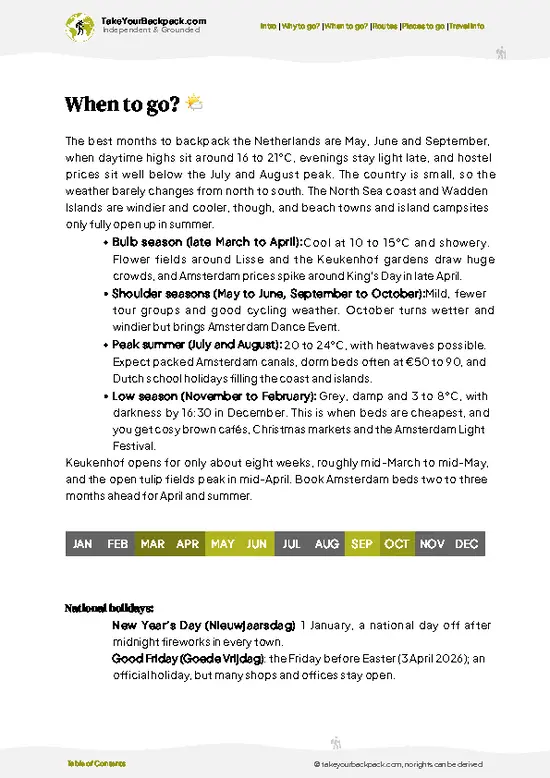
The best time for Hoge Veluwe National Park is late April to June, and again September to mid-October, when days are mild and the heather and woods are at their best.
  • Spring (April to May): Highs of 12 to 18°C (54 to 64°F), long light evenings (sunset around 8:45 pm by May) and blooming woodland. Easter and Ascension weekends bring day-trippers.
  • Summer (June to August): Highs of 20 to 24°C (68 to 75°F), sunrise before 5:30 am and light until after 10 pm in midsummer. Heat is moderate, but school holidays (July and August) fill the free white bikes and the Kröller-Müller Museum. Showers pass quickly.
  • Late Summer (late August to early September): Heather blooms purple on the heathland, usually mid-August to mid-September. This is peak photography time.
  • Autumn (October to November): Highs of 8 to
… read more 👉
The best time for Hoge Veluwe National Park is late April to June, and again September to mid-October, when days are mild and the heather and woods are at their best.
  • Spring (April to May): Highs of 12 to 18°C (54 to 64°F), long light evenings (sunset around 8:45 pm by May) and blooming woodland. Easter and Ascension weekends bring day-trippers.
  • Summer (June to August): Highs of 20 to 24°C (68 to 75°F), sunrise before 5:30 am and light until after 10 pm in midsummer. Heat is moderate, but school holidays (July and August) fill the free white bikes and the Kröller-Müller Museum. Showers pass quickly.
  • Late Summer (late August to early September): Heather blooms purple on the heathland, usually mid-August to mid-September. This is peak photography time.
  • Autumn (October to November): Highs of 8 to 14°C (46 to 57°F), red deer rut with roaring stags from late September to October, golden beech and oak. Days shorten to about 9 hours by November.
  • Winter (December to February): Highs of 3 to 6°C (37 to 43°F), only about 8 hours of daylight, frost and quiet trails. Accommodation is cheapest.
Arrive at opening time on weekends in summer to get a bike and parking without queuing.


source: climatestotravel.comJANJanuary: fair for travelingFEBFebruary: fair for travelingMARMarch: good for travelingAPRApril: good for travelingMAYMay: excellent for travelingJUNJune: excellent for travelingJULJuly: highly recommended for travelingAUGAugust: highly recommended for travelingSEPSeptember: excellent for travelingOCTOctober: good for travelingNOVNovember: fair for travelingDECDecember: fair for traveling
netherlands-national-park-hoge-veluwe-national-park
© Google | Joanna Hanni

✈️ The backpacker research shortcutThe Netherlands Travel Guide

An offline-friendly backpacking guide with optimized travel routes, ranked highlights, transport advice, and the best areas to stay.
example page 0 from our offline Travel Guide for Netherlands
example page 1 from our offline Travel Guide for Netherlands
example page 2 from our offline Travel Guide for Netherlands
example page 3 from our offline Travel Guide for Netherlands
example page 4 from our offline Travel Guide for Netherlands
example page 5 from our offline Travel Guide for Netherlands
example page 6 from our offline Travel Guide for Netherlands
example page 7 from our offline Travel Guide for Netherlands
The digital guide (373 pages) contains:
✅ 127 highlights, ranked by travel appeal
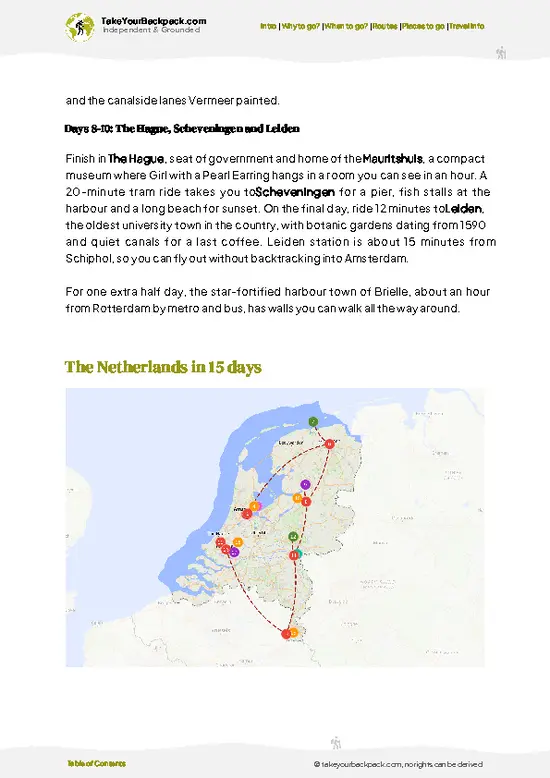
✅ Optimized 5, 10 & 15-day travel routes
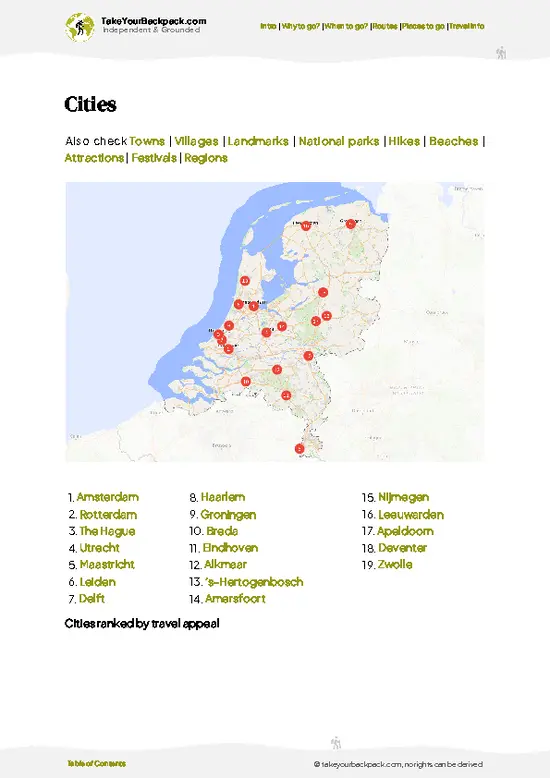
✅ Cities, national parks, landmarks, beaches
✅ How to get around
✅ Offline-friendly for travel without Wi-Fi
👉 Click to see all 30+ guide features

📅 Plan smarter in minutes, not weeks
✅ Month by month travel advice
✅ Festivals & national holidays
✅ Budget expectations

🗺️ Go to the right places, skip the overrated ones
✅ Honest pros & cons of destinations
✅ Top hikes, parks & viewpoints
✅ Lesser-known places most travelers miss
✅ Clear “worth it vs skip it” guidance

🛏️ Travel smoothly without rookie mistakes
✅ Best areas to stay
✅ Transport systems explained simply
✅ Common scams & safety advice
✅ SIM cards, money & practical tips

🌍 Understand the country, not just visit it
✅ Culture & traditions
✅ 52 Essential phrases & customs
✅ Festivals worth planning around
✅ Traveler-friendly historical context
✅ Insights that make places more meaningful

📱 Built for real travel conditions
✅ Fully downloadable PDF
✅ Works completely offline
✅ Optimized for phone use
✅ Useful in remote areas & buses
✅ Everything in one place
Stop searching, start planning
Get instant access to your full guide. 30‑day money-back guarantee.
+ Add another guide for just

By proceeding you agree to our terms.
Sent to your inbox immediately after payment • 100% Secure Checkout
Best Backpacking Travel Advisor 2025 tourism awardBest Backpacking
Travel Advisor
2025
What others say about Take Your Backpack Guides:
⭐⭐⭐⭐⭐
Fantastic, amazing amount of information!
⭐⭐⭐⭐⭐
My goodness this is amazing, it's what I've been looking for hats off too you!
⭐⭐⭐⭐⭐
I think this is absolutely BRILLIANT
⭐⭐⭐⭐
Very complete and informative. It's still missing places, but I gotta to commend you
⭐⭐⭐⭐⭐
This is truly amazing, thank you, can't wait to explore it with my kids!
⭐⭐⭐⭐⭐
Awesome resource, thank you!
⭐⭐⭐⭐⭐
This is amazing! Can't wait to explore the ones I haven't seen
⭐⭐⭐⭐
I love this! Well done, great idea.
⭐⭐⭐⭐⭐
Thanks for taking the time to make this gem!
⭐⭐⭐⭐⭐
This might be the best website I've ever seen.
⭐⭐⭐⭐⭐
Congratulations, and thank you so much for your work; it's incredibly valuable.
⭐⭐⭐⭐
In all seriousness I think you did a great job pointing out the important spots
⭐⭐⭐⭐⭐
10/10 very good
⭐⭐⭐⭐⭐
As someone who's only just starting to visit regularly this is awesome, thank you.
⭐⭐⭐⭐
Thank you very much! I'm going to visit my dad, it's going to be very useful!
⭐⭐⭐⭐⭐
This is really cool! We'll be travelling for the first time and this definitely come in handy.
⭐⭐⭐⭐⭐
You are now our minister of culture, congratulations 👨‍💼
⭐⭐⭐⭐⭐
Just wanted to tell you that this is a pearl! Going to follow your recommendations.
⭐⭐⭐⭐⭐
This is so cool. I'll definitely be using the resource for my travels soon.
⭐⭐⭐⭐⭐
This is very impressive! Good work.
⭐⭐⭐⭐⭐
This is an amazing and informative site. Very well done!

🛏️ Where to stay?Best areas and accommodation options

The easiest base is Arnhem, a 20 to 30 minute drive or bus ride from the park, though staying in the villages around it is more pleasant.
Inside the park there is no hostel or hotel. The only beds are in the cabins and a small campground (Jachthuis area is not lodging), so most backpackers sleep outside the gates. Camping inside the park is not permitted outside designated facilities, and wild camping is illegal across the Netherlands.
Otterlo, beside the Otterlo entrance and the Kröller-Müller Museum, has small guesthouses, B&Bs and a few hotels, and you can walk to the gate. It suits travelers … read more 👉
The easiest base is Arnhem, a 20 to 30 minute drive or bus ride from the park, though staying in the villages around it is more pleasant.
Inside the park there is no hostel or hotel. The only beds are in the cabins and a small campground (Jachthuis area is not lodging), so most backpackers sleep outside the gates. Camping inside the park is not permitted outside designated facilities, and wild camping is illegal across the Netherlands.
Otterlo, beside the Otterlo entrance and the Kröller-Müller Museum, has small guesthouses, B&Bs and a few hotels, and you can walk to the gate. It suits travelers who want early entry to the museum.
Hoenderloo, near the Hoenderloo entrance, has holiday parks and campgrounds with tent pitches and simple cabins, plus a cafe and shop. It is the most budget-friendly option close to the park.
Arnhem has the widest choice, including hostels and budget hotels, plus restaurants and rail links. Bus 105 and nearby services run from Arnhem station toward Otterlo and Hoenderloo, with a connecting walk or bike ride into the park.
Ede and Apeldoorn also work, both on the rail network with a wide range of hotels. Apeldoorn is the better pick if you also want Het Loo Palace.
Book ahead for July, August and long weekends, when campgrounds and small guesthouses fill weeks in advance.

👛 Costs (as of 15 October 2026)Travel costs and budget guide for Hoge Veluwe

A day in Hoge Veluwe National Park costs roughly USD 50 to 110 including the entrance fee, food and a bed outside the park.
CategoryBudget RangeLocal Reality
Park entranceUSD 11 to 14Adult day ticket sold at the gate. Children cost less. Parking is a further charge per vehicle, so arriving by bike or bus is cheaper.
Museum entryUSD 0 to 25The Kröller-Müller Museum is a separate ticket and includes a sculpture garden. Skip it to save money.
Bike useUSD 0The famous white bikes are free for visitors on a first come, first served basis. Private bike rental outside the park costs USD 15 to 25 a day.
AccommodationUSD 25 to 95Campgrounds around Hoenderloo cost USD 25 to 45 per pitch, hostel beds in Arnhem USD 35 to 60, and B&Bs or hotels USD 80 to 150 in a double room.
Local transportUSD 5 to 15Buses from
… read more 👉
A day in Hoge Veluwe National Park costs roughly USD 50 to 110 including the entrance fee, food and a bed outside the park.
CategoryBudget RangeLocal Reality
Park entranceUSD 11 to 14Adult day ticket sold at the gate. Children cost less. Parking is a further charge per vehicle, so arriving by bike or bus is cheaper.
Museum entryUSD 0 to 25The Kröller-Müller Museum is a separate ticket and includes a sculpture garden. Skip it to save money.
Bike useUSD 0The famous white bikes are free for visitors on a first come, first served basis. Private bike rental outside the park costs USD 15 to 25 a day.
AccommodationUSD 25 to 95Campgrounds around Hoenderloo cost USD 25 to 45 per pitch, hostel beds in Arnhem USD 35 to 60, and B&Bs or hotels USD 80 to 150 in a double room.
Local transportUSD 5 to 15Buses from Arnhem station to Otterlo or Hoenderloo cost a few dollars each way using an OV-chipkaart or contactless payment.
Food and suppliesUSD 15 to 35Groceries and a picnic are the cheapest option. Park cafes charge USD 8 to 15 for sandwiches and soup, and restaurants in nearby towns cost USD 18 to 30 for a main.
⚠️ Prices can change and everyone travels differently, so take this as a rough guide. Hope it helps you plan your adventure!

🥾 TrailsExploring Hoge Veluwe: trails, terrain, and views

Hiking in Hoge Veluwe National Park is gentle and open. The terrain is mostly flat sand, packed forest tracks and heath, with only low dunes and small rises, so almost anyone can manage a full day on foot. Marked walking routes of various lengths start from the visitor center and the entrances, usually from a few kilometers up to around 10 km, each color-coded on the free park map. Easy walks suit families and first-timers, while the longer ones across open heath and sand feel more remote, and shade is limited there. A good day pairs a morning walk with an afternoon bike ride to link the museum, … read more 👉
Hiking in Hoge Veluwe National Park is gentle and open. The terrain is mostly flat sand, packed forest tracks and heath, with only low dunes and small rises, so almost anyone can manage a full day on foot. Marked walking routes of various lengths start from the visitor center and the entrances, usually from a few kilometers up to around 10 km, each color-coded on the free park map. Easy walks suit families and first-timers, while the longer ones across open heath and sand feel more remote, and shade is limited there. A good day pairs a morning walk with an afternoon bike ride to link the museum, the hunting lodge and the drifting sands.

The best wildlife time is dawn or dusk. Red deer drift out of the forest into clearings, wild boar root along the verges, and mouflon graze on open ground. Autumn brings the deer rut, when stags roar at night, and August to September brings purple heather. Stay on the paths, keep dogs on a leash where required, and never feed animals.

Getting there without a car is straightforward. Regional buses run from Arnhem and Ede-Wageningen stations to Otterlo and to the Schaarsbergen area. Check the current timetable on 9292.nl, as evening and Sunday frequency can be low. The park has three entrances, at Otterlo, Schaarsbergen and Hoenderloo, and the Otterlo one is closest to the visitor center and museum. Parking is possible near entrances, but the bus plus free bikes is the cheaper plan.

Expect an entrance fee, charged per person, roughly €12 to 13 for adults, with a combined ticket including the Kröller-Müller Museum costing about €22 to 27. Check the current price before you go. Children pay less, and those under 6 are usually free. Opening hours shift with the season, and gates generally close earlier in winter. Summer weekends and school holidays are the busiest, so arrive when the gates open, collect a bike early and ride the farthest sights first. Weekdays and early mornings are much quieter.
⚠️ Hiking info can sometimes be outdated or inaccurate. Before you hit the trail, check the latest conditions with locals. If you do spot anything that's off, I'd love to hear from you, so I can update it for fellow travelers.

🛡️ SafetyTraveler Safety Guide

Hoge Veluwe National Park is one of the easiest parks in Europe to walk and cycle, with flat to gently rolling paths, signed routes and no serious hazards.
Weather is the main variable. Summer showers arrive quickly and winter days bring wind and cold over the open heath, so carry a light rain layer and warm clothing. The sand drifts and heathland have little shade, so bring water and sun protection in July and August, as refill points are limited away from the visitor center.
Navigation is simple, yet the park is large (about 5,400 hectares), so first-timers often underestimate distances. Pick up a map at the entrance, and plan an 8 to 15 km loop rather than trying everything.
Wildlife is limited to red deer, roe deer, wild boar and mouflon. Keep at least 50 meters from rutting stags in autumn, … read more 👉
Hoge Veluwe National Park is one of the easiest parks in Europe to walk and cycle, with flat to gently rolling paths, signed routes and no serious hazards.
Weather is the main variable. Summer showers arrive quickly and winter days bring wind and cold over the open heath, so carry a light rain layer and warm clothing. The sand drifts and heathland have little shade, so bring water and sun protection in July and August, as refill points are limited away from the visitor center.
Navigation is simple, yet the park is large (about 5,400 hectares), so first-timers often underestimate distances. Pick up a map at the entrance, and plan an 8 to 15 km loop rather than trying everything.
Wildlife is limited to red deer, roe deer, wild boar and mouflon. Keep at least 50 meters from rutting stags in autumn, never feed animals and stay on marked paths. Ticks are common in grass and heather from spring to autumn, so wear long trousers and check your skin after walks.
Roads inside the park are shared with cars, so ride in single file and keep to the cycle lanes.

FAQTraveler FAQ

One full day covers the highlights, and a day and a half is better if you want both the Kröller-Müller Museum and a dusk wildlife ride. The museum alone takes about two hours, and cycling to the drifting sands and Jachthuis Sint Hubertus adds three to four more. Arrive at opening time in summer so you secure a free white bike before the racks empty.
Yes, you can reach Hoge Veluwe National Park by public transport from Arnhem or Ede-Wageningen stations, using regional buses to Otterlo or the Schaarsbergen area, and the journey from either takes roughly 30 to 45 minutes. Inside the park the free white bikes replace a car entirely, with cycle paths linking the visitor center, museum and lodge. Check current bus times on 9292.nl, as evenings and Sundays are less frequent.
Yes, entry is charged per person, roughly €12 to 13 for adults, with a combined ticket including the Kröller-Müller Museum costing about €22 to 27. No separate hiking permit is needed, and the free white bikes are included in the park fee. Children pay less and the youngest usually enter free, but check current prices before you travel.
⚠️ Things can change over time, so always validate details locally before you go.

Other Dutch national parks near Hoge Veluwe

Explore more nearby:


💡 Not sure where to go next?
Create a personalized itinerary for The Netherlands including Hoge Veluwe and the places that fit your trip.

Generate my itinerary

👉 Discover all national parks

Or checkout all The Netherlands has to offer (think cities, towns, villages, national parks, hikes, beaches, festivals)
Country photo of The Netherlands

We 💚 feedbackFinal thoughts on exploring Hoge Veluwe

What surprised me most was how fast the crowds vanished. Near the museum it felt busy, yet ten minutes of pedaling toward the drifting sands left me alone with a few deer and a lot of wind. The limit is that it is flat, tame and fenced, so serious hikers will want more. For a day of art and easy riding, it works.

✈️ When did I visit The Netherlands?
Netherlands is my home base, so whenever I don’t travel, you can find me in this tiny spot on the globe. When friends from abroad visit me, it’s the time to actually explore my own country as a traveler.

✍️ Help improve this page!
The information on this page is based on my own backpacking experience in The Netherlands, supplemented with up-to-date research and feedback from other travelers. Travel details can change, so if you notice anything outdated or incomplete, feel free to let me know.


🙋‍♂️ Give feedback

👋 Meet the founderWho’s Behind Take Your Backpack?

Johan, backpacker and founder of TakeYourBackpackHi, I’m Johan (Netherlands 🇳🇱), the creator of TakeYourBackpack. Over the past 3 decades, I’ve backpacked through 90+ countries across six continents, gaining extensive experience with independent travel, long-term trips, and overland routes.

This site is built on a combination of firsthand travel experience and carefully curated insights from other backpackers. Many guides are based on places I’ve personally visited, while others bring together tips, observations, and practical advice shared by trusted travelers I’ve met along the way.

The goal is to provide realistic, experience-driven guidance — not generic itineraries — so you can explore destinations with better context, clearer expectations, and more confidence.