×

The Netherlands🇳🇱 | national parksSallandse Heuvelrug National ParkPurple heather, black grouse habitat, juniper, Nijverdal center | things to do and best time to go

Explore Maasduinen National ParkExplore Zuid-Kennemerland National Park

Backpacking in Sallandse Heuvelrug
👍 Recommendednational park ranked #10
By Johan Kruseman 🇳🇱 | Updated October 15, 2026

I pulled my bike up at the edge of the Lage Vuursche heath... no, at the Holterberg car park, bought a coffee-stained trail map from the visitor point, and walked into purple heather humming with bees. Sallandse Heuvelrug sits in the province of Overijssel, between Holten and Nijverdal, with Rijssen to the north. Its patterns are simple: sandy ridges, heath and pine, one main road corridor, trains at both ends. Good sides are quiet dawn paths, black grouse, Highland cattle and clear waymarking. Weak sides are modest hills (about 75 m at the top), crowds on August weekends, and ticks. Compared with the Veluwe it is smaller and calmer, though less wild. Mistakes to avoid: arriving after 11 on bloom weekends, when car parks fill, and skipping a downloaded map.

Discover everything you want to know in the 📖 The Netherlands Travel Guide.


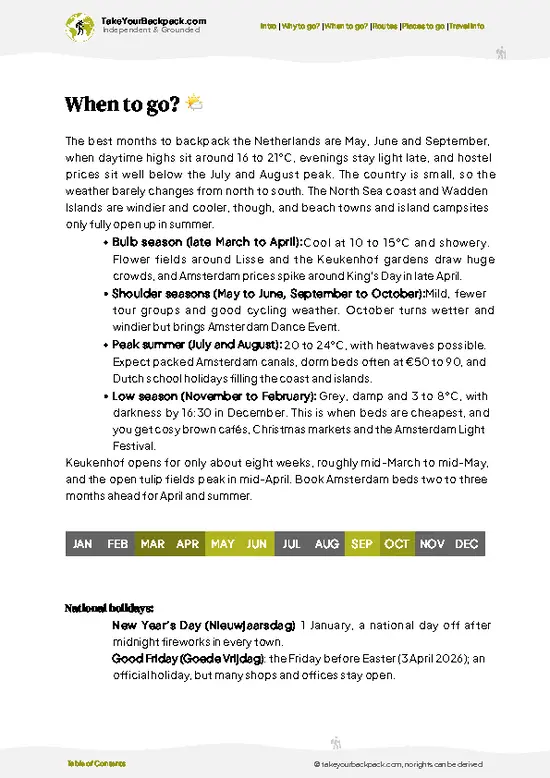
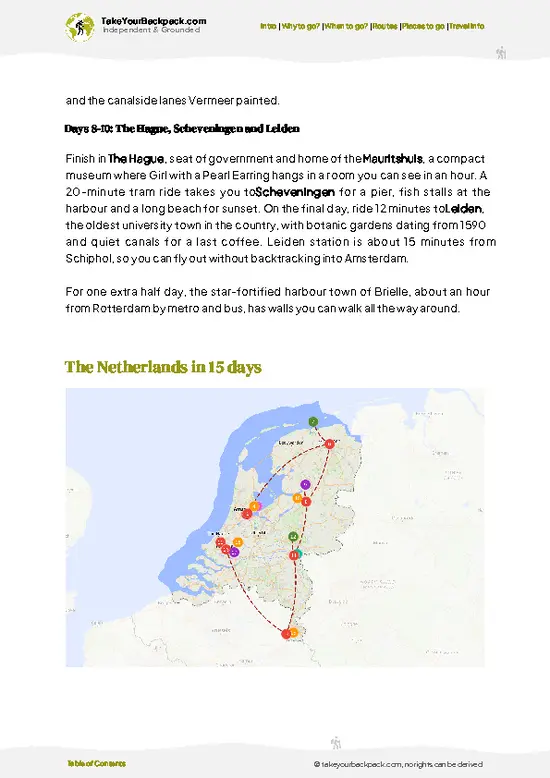
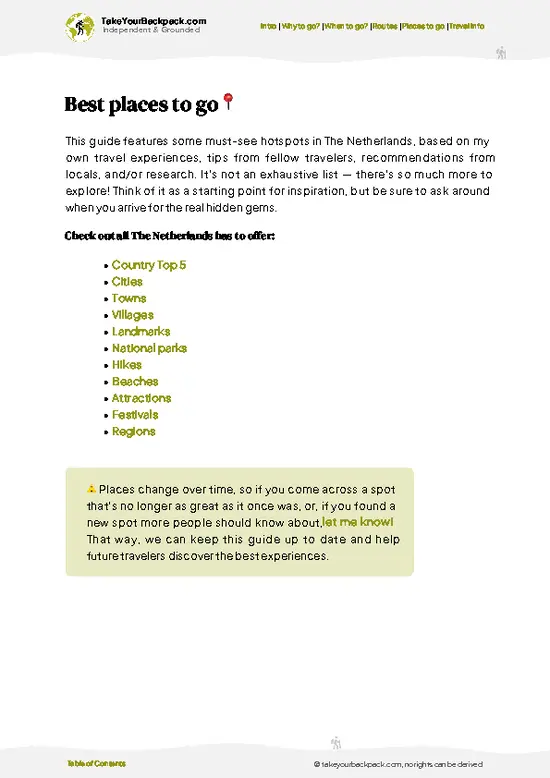
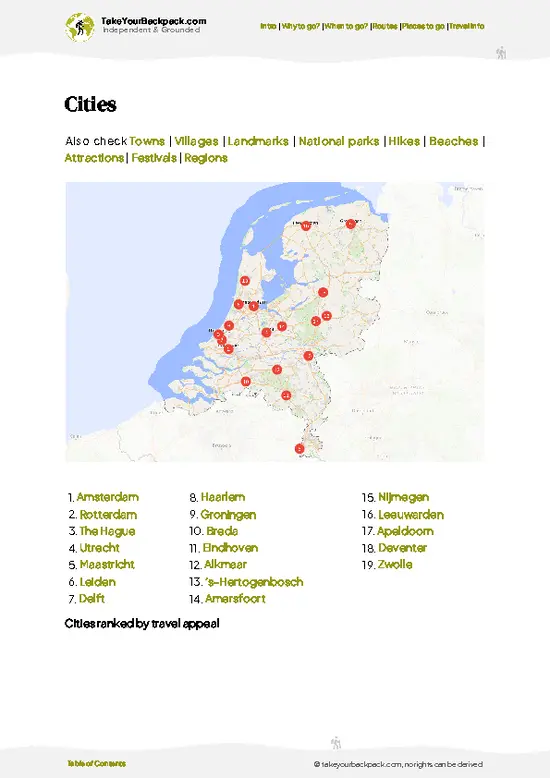
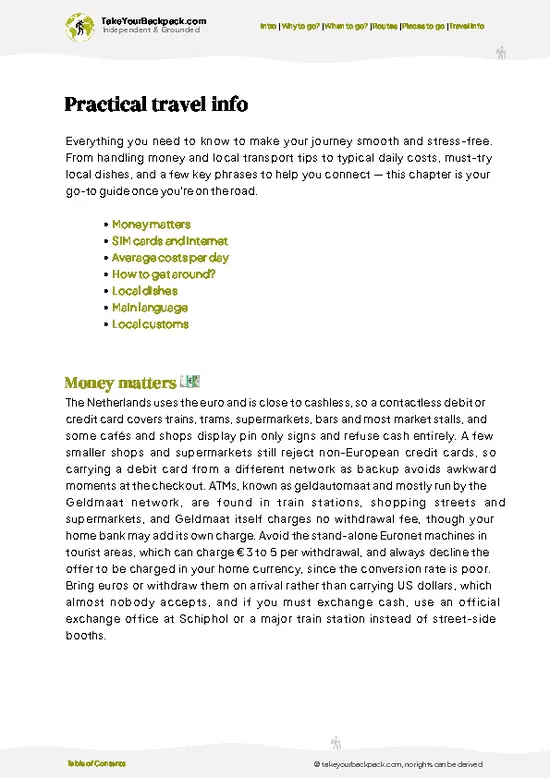
example page 0 from our offline Travel Guide for Netherlands
example page 1 from our offline Travel Guide for Netherlands
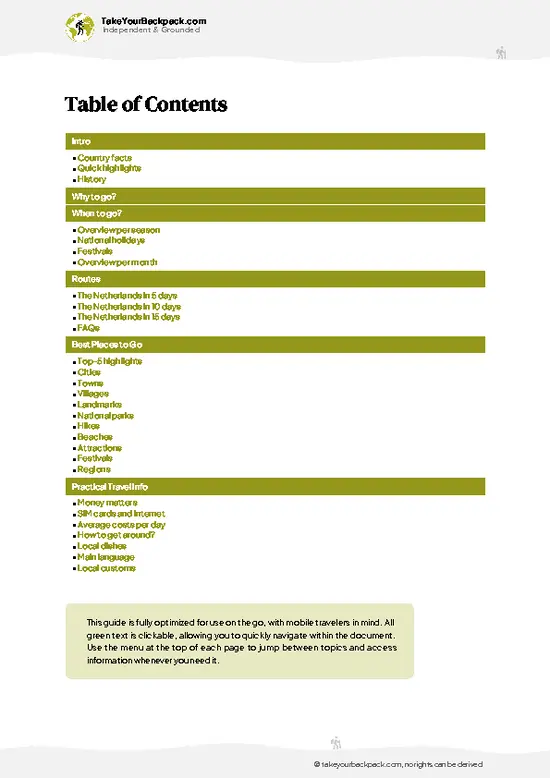
example page 2 from our offline Travel Guide for Netherlands
example page 3 from our offline Travel Guide for Netherlands
example page 4 from our offline Travel Guide for Netherlands
example page 5 from our offline Travel Guide for Netherlands
example page 6 from our offline Travel Guide for Netherlands
example page 7 from our offline Travel Guide for Netherlands
Loading the map 🌍
CLICK TO FILTER
cities
towns
villages
landmarks
national parks
hikes
beaches
attractions
festivals
regions
SHOW COUNTRY’S BESTSHOW ALL

✨ Why go?
Ranked #10 national park in The Netherlands
What sets this place apart

Backpackers choose this park because it rewards walking without a plan. The network of marked loops lets you stitch together a day from Nijverdal or Holten stations, so you never need a tour or a car. The Holterberg ridge gives the best views, and the black grouse, one of the last wild populations in the Netherlands, adds a reason to rise early. Heather blooms purple around August, when the whole landscape changes color. Camping and cheap rooms sit within a few kilometers, so you can base a two-day loop without paying city prices. If you like quiet forest tracks, you will manage easily on your own. Guided walks exist, but signposted routes, free-roaming cattle and sheep, and open heath make independent exploring simple and satisfying.

💡 HighlightsWhat this place is best known for

  1. Lattrop Heath and the Holterberg approach: The park’s core is a mosaic of dry heath, juniper and pine on an ice-age push moraine. The ridge is low, but the open views across the Sallandse plain are the clearest in the region.
  2. Purple heather bloom: Usually peaks from mid-August to early September, turning the central heath into one continuous purple field. Go on a weekday morning for empty paths.
  3. Black grouse (korhoen) habitat: The park holds one of the few remaining Dutch populations of this bird. Males display on open heath at dawn in spring, and the birds are shy, so watch from the paths and stay away from the closed zones.
  4. Sallandse Heuvelrug visitor center area at Nijverdal: A practical starting point for route maps, exhibits and trailheads, with the Natuurmonumenten and Staatsbosbeheer paths
… read more 👉
  1. Lattrop Heath and the Holterberg approach: The park’s core is a mosaic of dry heath, juniper and pine on an ice-age push moraine. The ridge is low, but the open views across the Sallandse plain are the clearest in the region.
  2. Purple heather bloom: Usually peaks from mid-August to early September, turning the central heath into one continuous purple field. Go on a weekday morning for empty paths.
  3. Black grouse (korhoen) habitat: The park holds one of the few remaining Dutch populations of this bird. Males display on open heath at dawn in spring, and the birds are shy, so watch from the paths and stay away from the closed zones.
  4. Sallandse Heuvelrug visitor center area at Nijverdal: A practical starting point for route maps, exhibits and trailheads, with the Natuurmonumenten and Staatsbosbeheer paths close by. Pick up a map before you walk.
  5. Haarler Rotte and Haarle side: A quieter southern section with forest tracks, sandy lanes and heath patches, where you are more likely to meet deer than other hikers.
  6. Wildlife on the heath: Red deer, roe deer, badgers and adders live here, along with nightjars in summer. Dusk is the best time, and sticking to the paths protects the nesting ground.
  7. Sand dunes and juniper stands: Inland drift sand and old juniper bushes give small patches of almost desert-like terrain. They are short, easy detours that break up the pine forest.
Skip the visitor center exhibits if time is short, and spend the hours on the heath instead.
Spotted a mistake or missing something? Contact us.

Things to do near Sallandse Heuvelrug National Park

Ratings based on Tripadvisor reviews. When you book through this link, you support our work at no extra cost to you.

🌤️ When to go?Choosing the right time of year

  • Late Summer (August to mid-September): The heather blooms purple across the open heath, usually from early August, and it is the park’s signature moment. Days run 18 to 23°C (64 to 73°F), with about 14 to 16 hours of daylight. Weekends are busy and accommodation costs peak.
  • Spring (April to June): Birdsong is loud, forests turn green and temperatures sit at 8 to 19°C (46 to 66°F). Daylight stretches to 16 hours by June. Crowds stay moderate outside holiday weekends.
  • Autumn (October to November): Beech and oak turn copper, and red deer rutting season brings dawn and dusk activity. Expect 5 to 13°C (41 to 55°F), frequent rain and only 8 to 10 hours of light by November.
  • Winter (December to February): Quiet and frosty, with highs of 2 to 6°C (36 to 43°F), about 8 hours of daylight and the lowest
… read more 👉
  • Late Summer (August to mid-September): The heather blooms purple across the open heath, usually from early August, and it is the park’s signature moment. Days run 18 to 23°C (64 to 73°F), with about 14 to 16 hours of daylight. Weekends are busy and accommodation costs peak.
  • Spring (April to June): Birdsong is loud, forests turn green and temperatures sit at 8 to 19°C (46 to 66°F). Daylight stretches to 16 hours by June. Crowds stay moderate outside holiday weekends.
  • Autumn (October to November): Beech and oak turn copper, and red deer rutting season brings dawn and dusk activity. Expect 5 to 13°C (41 to 55°F), frequent rain and only 8 to 10 hours of light by November.
  • Winter (December to February): Quiet and frosty, with highs of 2 to 6°C (36 to 43°F), about 8 hours of daylight and the lowest prices. Mist over the heath can be lovely.
Book weekend beds early for August, and aim for weekday mornings to have the heath nearly to yourself.


source: climatestotravel.comJANJanuary: fair for travelingFEBFebruary: fair for travelingMARMarch: good for travelingAPRApril: highly recommended for travelingMAYMay: excellent for travelingJUNJune: highly recommended for travelingJULJuly: good for travelingAUGAugust: good for travelingSEPSeptember: highly recommended for travelingOCTOctober: excellent for travelingNOVNovember: good for travelingDECDecember: fair for traveling
netherlands-national-park-sallandse-heuvelrug-national-park v1
© Google |

✈️ The backpacker research shortcutThe Netherlands Travel Guide

An offline-friendly backpacking guide with optimized travel routes, ranked highlights, transport advice, and the best areas to stay.
example page 0 from our offline Travel Guide for Netherlands
example page 1 from our offline Travel Guide for Netherlands
example page 2 from our offline Travel Guide for Netherlands
example page 3 from our offline Travel Guide for Netherlands
example page 4 from our offline Travel Guide for Netherlands
example page 5 from our offline Travel Guide for Netherlands
example page 6 from our offline Travel Guide for Netherlands
example page 7 from our offline Travel Guide for Netherlands
The digital guide (373 pages) contains:
✅ 127 highlights, ranked by travel appeal
✅ Optimized 5, 10 & 15-day travel routes
✅ Cities, national parks, landmarks, beaches
✅ How to get around
✅ Offline-friendly for travel without Wi-Fi
👉 Click to see all 30+ guide features

📅 Plan smarter in minutes, not weeks
✅ Month by month travel advice
✅ Festivals & national holidays
✅ Budget expectations

🗺️ Go to the right places, skip the overrated ones
✅ Honest pros & cons of destinations
✅ Top hikes, parks & viewpoints
✅ Lesser-known places most travelers miss
✅ Clear “worth it vs skip it” guidance

🛏️ Travel smoothly without rookie mistakes
✅ Best areas to stay
✅ Transport systems explained simply
✅ Common scams & safety advice
✅ SIM cards, money & practical tips

🌍 Understand the country, not just visit it
✅ Culture & traditions
✅ 52 Essential phrases & customs
✅ Festivals worth planning around
✅ Traveler-friendly historical context
✅ Insights that make places more meaningful

📱 Built for real travel conditions
✅ Fully downloadable PDF
✅ Works completely offline
✅ Optimized for phone use
✅ Useful in remote areas & buses
✅ Everything in one place
Stop searching, start planning
Get instant access to your full guide. 30‑day money-back guarantee.
+ Add another guide for just

By proceeding you agree to our terms.
Sent to your inbox immediately after payment • 100% Secure Checkout
Best Backpacking Travel Advisor 2025 tourism awardBest Backpacking
Travel Advisor
2025
What others say about Take Your Backpack Guides:
⭐⭐⭐⭐⭐
Fantastic, amazing amount of information!
⭐⭐⭐⭐⭐
My goodness this is amazing, it's what I've been looking for hats off too you!
⭐⭐⭐⭐⭐
I think this is absolutely BRILLIANT
⭐⭐⭐⭐
Very complete and informative. It's still missing places, but I gotta to commend you
⭐⭐⭐⭐⭐
This is truly amazing, thank you, can't wait to explore it with my kids!
⭐⭐⭐⭐⭐
Awesome resource, thank you!
⭐⭐⭐⭐⭐
This is amazing! Can't wait to explore the ones I haven't seen
⭐⭐⭐⭐
I love this! Well done, great idea.
⭐⭐⭐⭐⭐
Thanks for taking the time to make this gem!
⭐⭐⭐⭐⭐
This might be the best website I've ever seen.
⭐⭐⭐⭐⭐
Congratulations, and thank you so much for your work; it's incredibly valuable.
⭐⭐⭐⭐
In all seriousness I think you did a great job pointing out the important spots
⭐⭐⭐⭐⭐
10/10 very good
⭐⭐⭐⭐⭐
As someone who's only just starting to visit regularly this is awesome, thank you.
⭐⭐⭐⭐
Thank you very much! I'm going to visit my dad, it's going to be very useful!
⭐⭐⭐⭐⭐
This is really cool! We'll be travelling for the first time and this definitely come in handy.
⭐⭐⭐⭐⭐
You are now our minister of culture, congratulations 👨‍💼
⭐⭐⭐⭐⭐
Just wanted to tell you that this is a pearl! Going to follow your recommendations.
⭐⭐⭐⭐⭐
This is so cool. I'll definitely be using the resource for my travels soon.
⭐⭐⭐⭐⭐
This is very impressive! Good work.
⭐⭐⭐⭐⭐
This is an amazing and informative site. Very well done!

🛏️ Where to stay?Choosing the right base

The best base for backpackers is the village of Nijverdal, on the park’s northern edge, with Holten and Rijssen close by. Inside the park itself there are no hotels, and wild camping is not allowed, so you sleep in the surrounding villages or on official campsites.
Holten has the most choice, including forest campsites and holiday parks within walking or cycling distance of trails. Nijverdal has a train station, supermarkets and several B&Bs, which makes it the easiest option without a car. Rijssen offers more affordable rooms and a lively town center.
For a bigger-city base, Deventer, Zwolle and … read more 👉
The best base for backpackers is the village of Nijverdal, on the park’s northern edge, with Holten and Rijssen close by. Inside the park itself there are no hotels, and wild camping is not allowed, so you sleep in the surrounding villages or on official campsites.
Holten has the most choice, including forest campsites and holiday parks within walking or cycling distance of trails. Nijverdal has a train station, supermarkets and several B&Bs, which makes it the easiest option without a car. Rijssen offers more affordable rooms and a lively town center.
For a bigger-city base, Deventer, Zwolle and Almelo are all reachable by train, and Deventer in particular has hostel-style options and a pleasant old center. From these towns, you reach the park by local bus or a rented bicycle, and cycling is the natural way to link the heath, forests and villages.
In summer, small campsites and B&Bs fill up on weekends, so book ahead. Midweek stays are cheaper and easier to find.

👛 Costs (as of 15 October 2026)Money, prices, and spending tips

A day in Sallandse Heuvelrug costs roughly €45 to 95 per person, with accommodation making up most of the spending. Entry to the park is free, and paths are open all day.
CategoryBudget RangeLocal Reality
Entrance fees€0Free access to trails and heath, though some visitor center exhibits and guided tours charge a few euros.
Accommodation€20 to 70Campsite pitches run about €20 to 35, while B&Bs and simple hotels in Holten or Nijverdal cost €70 to 120 a room.
Local transport€5 to 15Bike rental is about €12 to 18 a day, and local trains and buses to Nijverdal or Holten cost a few euros per trip.
Food and supplies€15 to 35Supermarket meals cost €6 to 10, café lunches €10 to 16 and a pancake house dinner about €15 to 22.
Activities€0 to 15Walking and cycling are free, while guided walks or the Holterberg viewpoint area cost little.
⚠️ Prices can change and everyone travels differently, so take this as a rough guide. Hope it helps you plan your adventure!

🥾 TrailsTrail guide for Sallandse Heuvelrug national park

The terrain is gently rolling: sandy ridges, heather, pine and birch forest, with the highest points around 75 meters. Paths are mostly sand and gravel, easy for most walkers, though soft sand slows you down. Wildlife includes black grouse, deer, Highland cattle and sheep, and ticks are common, so wear long trousers in summer.
Holterberg Loop
  • Length: roughly 8 to 10 km
  • Duration: about 2 to 3 hours
  • Difficulty: easy
  • Key features: forested ridge, heath views, grazing herds
  • Terrain: sand and forest paths with modest climbs
Nijverdalse Berg Walk
  • Length: roughly 6 to 8 km
  • Duration: about 2 hours
  • Difficulty: easy
  • Key
… read more 👉
The terrain is gently rolling: sandy ridges, heather, pine and birch forest, with the highest points around 75 meters. Paths are mostly sand and gravel, easy for most walkers, though soft sand slows you down. Wildlife includes black grouse, deer, Highland cattle and sheep, and ticks are common, so wear long trousers in summer.
Holterberg Loop
  • Length: roughly 8 to 10 km
  • Duration: about 2 to 3 hours
  • Difficulty: easy
  • Key features: forested ridge, heath views, grazing herds
  • Terrain: sand and forest paths with modest climbs
Nijverdalse Berg Walk
  • Length: roughly 6 to 8 km
  • Duration: about 2 hours
  • Difficulty: easy
  • Key features: open heath, sunset views, walking from the station
  • Terrain: sandy trails and gentle slopes
Trains reach Nijverdal and Holten on the Zwolle to Almelo line, and the park is a short walk or bike ride from either station. Bike rental is available in the area. Expect crowds on sunny weekends and during the August heather bloom, when parking fills before late morning. Entry to the park is free, though parking areas and some facilities may charge.
⚠️ Hiking info can sometimes be outdated or inaccurate. Before you hit the trail, check the latest conditions with locals. If you do spot anything that's off, I'd love to hear from you, so I can update it for fellow travelers.

🛡️ SafetyStaying Safe: What Travelers Should Know

The park is straightforward, well signposted and low-risk, so ordinary hiking sense is enough. Trails are mostly flat or gently rolling sand, with the Holterberg and Haarler hills being the steepest bits you will meet. Paths are marked with numbered posts, and a phone map or the park’s route leaflet covers navigation. Weather turns quickly, so carry a light rain layer, and wear sturdy shoes because sandy tracks get soft and muddy after rain. Ticks are the most common nuisance in grassy and heather areas from spring to autumn, so wear long trousers and check your skin afterward. Adders live on the heath and bite only if stepped on or handled, so stay on paths. Keep dogs on a leash to protect ground-nesting birds and grazing Highland cattle and sheep. Give grazers space, and carry water since … read more 👉
The park is straightforward, well signposted and low-risk, so ordinary hiking sense is enough. Trails are mostly flat or gently rolling sand, with the Holterberg and Haarler hills being the steepest bits you will meet. Paths are marked with numbered posts, and a phone map or the park’s route leaflet covers navigation. Weather turns quickly, so carry a light rain layer, and wear sturdy shoes because sandy tracks get soft and muddy after rain. Ticks are the most common nuisance in grassy and heather areas from spring to autumn, so wear long trousers and check your skin afterward. Adders live on the heath and bite only if stepped on or handled, so stay on paths. Keep dogs on a leash to protect ground-nesting birds and grazing Highland cattle and sheep. Give grazers space, and carry water since there are few shops inside the park. Emergency number: 112.

FAQFrequently asked questions about Sallandse Heuvelrug

One full day covers the main Holterberg and Nijverdalse Berg loops, while two days lets you add quieter heath near Haarle. Most loops run 6 to 10 km and take 2 to 3 hours. If you want dawn wildlife and a slower pace, a night nearby makes sense.
Yes, the park works well without a car. Trains on the Zwolle to Almelo line stop at Nijverdal and Holten, both a short walk or bike ride from the trails. Rental bikes in the area make longer loops easy, and the trail network is signposted.
Entry to the park is free and no permit is needed for day walking. Parking at trailheads may cost a few euros, and wild camping is not allowed, so use a designated campsite nearby. Dogs must be kept on a leash.
⚠️ Things can change over time, so always validate details locally before you go.

Other Dutch national parks near Sallandse Heuvelrug

Explore more nearby:


💡 Not sure where to go next?
Create a personalized itinerary for The Netherlands including Sallandse Heuvelrug and the places that fit your trip.

Generate my itinerary

👉 Discover all national parks

Or checkout all The Netherlands has to offer (think cities, towns, villages, national parks, hikes, beaches, festivals)
Country photo of The Netherlands

We 💚 feedbackParting advice and final tips

This park suits walkers and cyclists who like quiet heath over drama. If you want big climbs or long wilderness treks, you will be underwhelmed. Come for a relaxed two-day stay by train, early mornings, and August heather, and you will leave happy.

✈️ When did I visit The Netherlands?
Netherlands is my home base, so whenever I don’t travel, you can find me in this tiny spot on the globe. When friends from abroad visit me, it’s the time to actually explore my own country as a traveler.

✍️ Help improve this page!
The information on this page is based on my own backpacking experience in The Netherlands, supplemented with up-to-date research and feedback from other travelers. Travel details can change, so if you notice anything outdated or incomplete, feel free to let me know.


🙋‍♂️ Give feedback

👋 Meet the founderWho’s Behind Take Your Backpack?

Johan, backpacker and founder of TakeYourBackpackHi, I’m Johan (Netherlands 🇳🇱), the creator of TakeYourBackpack. Over the past 3 decades, I’ve backpacked through 90+ countries across six continents, gaining extensive experience with independent travel, long-term trips, and overland routes.

This site is built on a combination of firsthand travel experience and carefully curated insights from other backpackers. Many guides are based on places I’ve personally visited, while others bring together tips, observations, and practical advice shared by trusted travelers I’ve met along the way.

The goal is to provide realistic, experience-driven guidance — not generic itineraries — so you can explore destinations with better context, clearer expectations, and more confidence.