×

The Netherlands🇳🇱 | national parksWeerribben-Wieden National ParkReed channels, Giethoorn, knooppunten cycling, bird hides | things to do and best time to go

Explore Lauwersmeer National ParkExplore Utrechtse Heuvelrug National Park

Backpacking in Weerribben-Wieden
🏆 Top picknational park ranked #3
By Johan Kruseman 🇳🇱 | Updated October 15, 2026

The decision that shapes your visit is whether to explore by water or by bike, and the answer depends on how much of the park you want to reach in a day. Weerribben-Wieden sits in northwest Overijssel, between Giethoorn, Steenwijk and Vollenhove, and its peat-cut wetland is far flatter and wetter than the Veluwe or the dunes of Zuid-Kennemerland. Canoes get you into reed channels that no path touches. Bikes cover far more ground but keep you on the edges. The trade-offs are plain: wildlife is excellent (otters, black terns, marsh harriers, purple heron), crowds thin out fast away from Giethoorn, but real hiking is limited and public transport stops short of the core. Miss the last bus and you pay for a taxi. I rode the bus from Steenwijk, and a farmer waved me off at a stop where the driver clearly expected nobody to alight, so check the stop name before pulling the cord.

Discover everything you want to know in the 📖 The Netherlands Travel Guide.


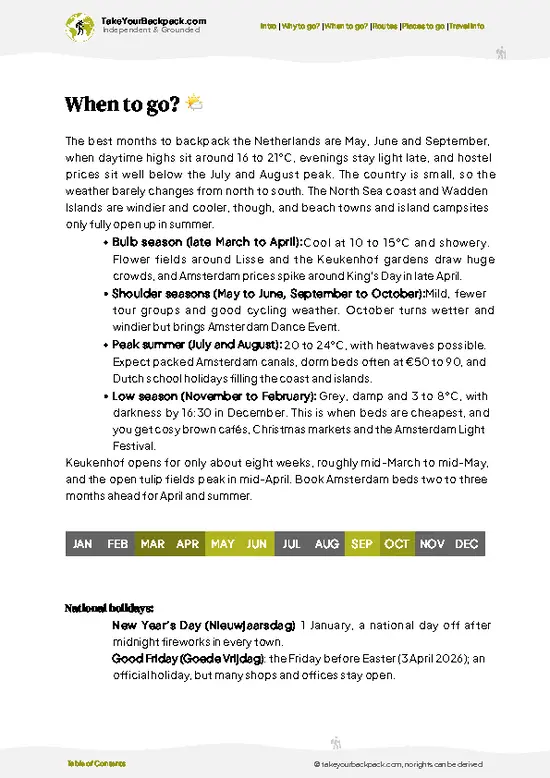
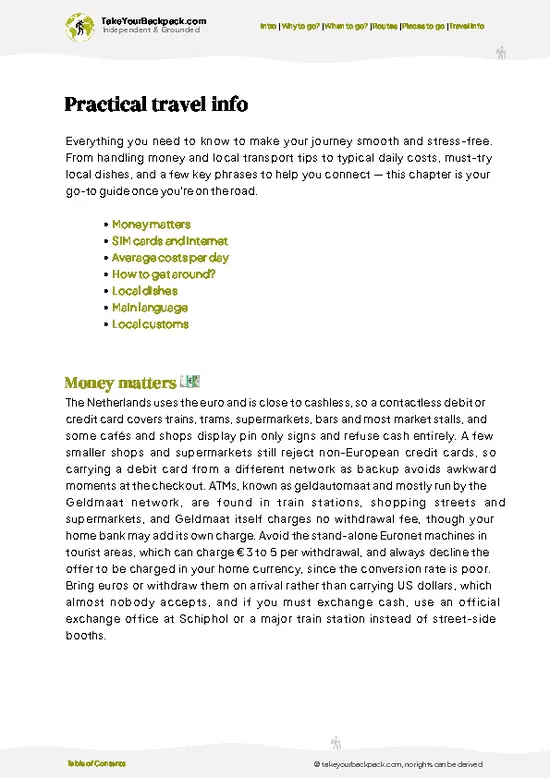
example page 0 from our offline Travel Guide for Netherlands
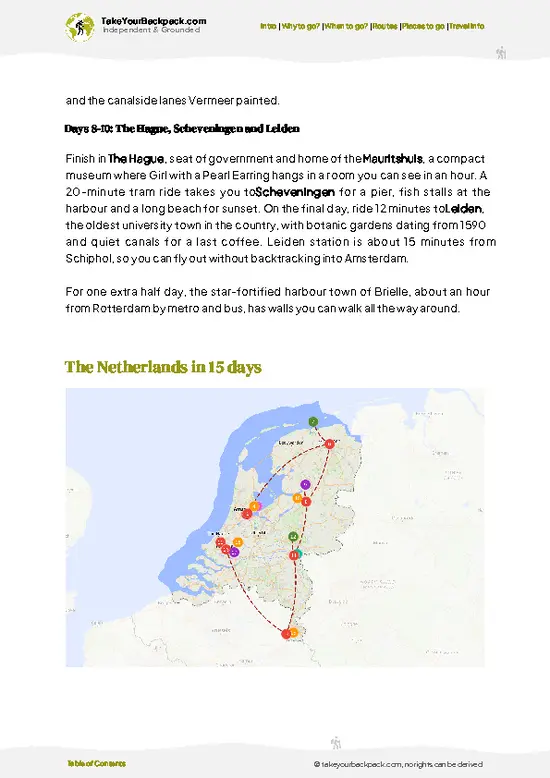
example page 1 from our offline Travel Guide for Netherlands
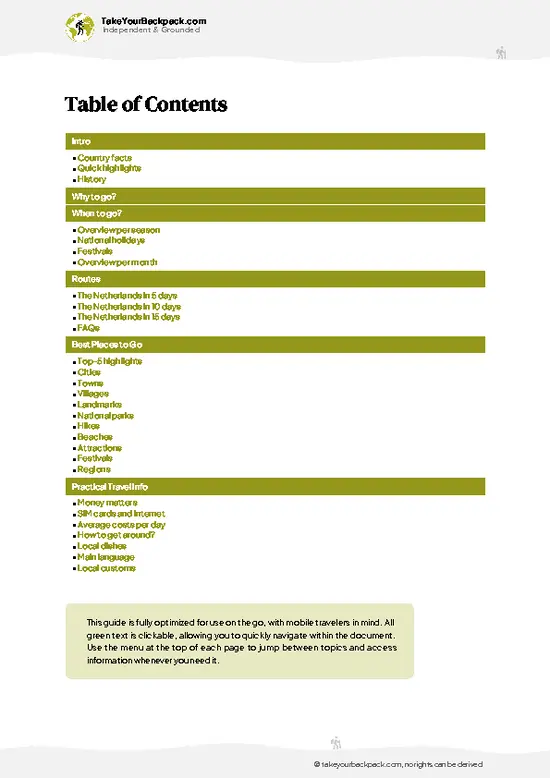
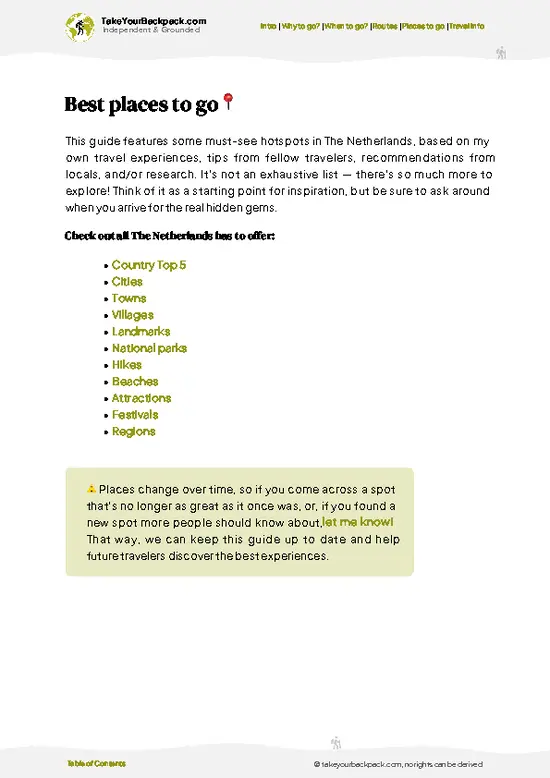
example page 2 from our offline Travel Guide for Netherlands
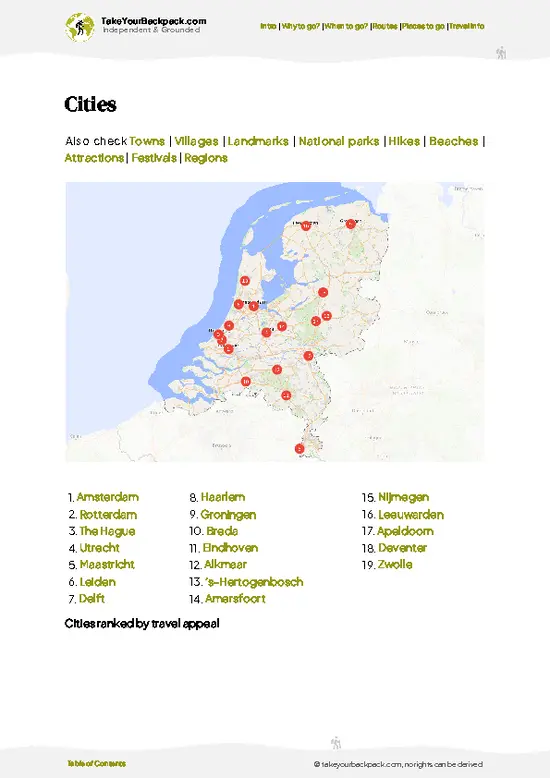
example page 3 from our offline Travel Guide for Netherlands
example page 4 from our offline Travel Guide for Netherlands
example page 5 from our offline Travel Guide for Netherlands
example page 6 from our offline Travel Guide for Netherlands
example page 7 from our offline Travel Guide for Netherlands
Loading the map 🌍
CLICK TO FILTER
cities
towns
villages
landmarks
national parks
hikes
beaches
attractions
festivals
regions
SHOW COUNTRY’S BESTSHOW ALL

✨ Why go?
Ranked #3 national park in The Netherlands
Why Weerribben-Wieden should be on your travel list

Backpackers pick this park because it rewards self-guided travel better than any tour could. Rental canoes and bikes let you set your own pace, and the network of marked fietsknooppunten (numbered cycle junctions) makes route planning simple with a free map or phone app. You can link villages like Kalenberg, Ossenzijl and Muggenbeet in a loop of 30 to 50 kilometers, stopping wherever a bird hide or a bakery appears.

The second draw is the water itself. The Weerribben are long, narrow ponds left by centuries of peat digging, and paddling them at dawn means mist, silence and a decent chance of spotting otters or kingfishers. Few Dutch parks put you this close to wildlife without a long walk.

Camping is cheap by Dutch standards, with farm and small-site pitches around the park, and the Wieden … read more 👉
Backpackers pick this park because it rewards self-guided travel better than any tour could. Rental canoes and bikes let you set your own pace, and the network of marked fietsknooppunten (numbered cycle junctions) makes route planning simple with a free map or phone app. You can link villages like Kalenberg, Ossenzijl and Muggenbeet in a loop of 30 to 50 kilometers, stopping wherever a bird hide or a bakery appears.

The second draw is the water itself. The Weerribben are long, narrow ponds left by centuries of peat digging, and paddling them at dawn means mist, silence and a decent chance of spotting otters or kingfishers. Few Dutch parks put you this close to wildlife without a long walk.

Camping is cheap by Dutch standards, with farm and small-site pitches around the park, and the Wieden side offers a wilder contrast of open reed land. Together they give you two landscapes in one compact area.

💡 HighlightsPlaces and moments you shouldn't skip

  1. Canoeing the Weerribben channels: The signature activity. Rental canoes from places like Kalenberg and Ossenzijl take you through narrow reed-lined waterways where otters, herons and dragonflies are common, and motorboats are mostly absent.
  2. De Wieden by boat or bike: The larger, more open western half, with wide reed lands and lakes. It feels quieter and wilder, and it is a stronghold for birds such as the bittern and marsh harrier.
  3. Kalenberg and the Ossenzijl area: Villages that work as the park’s natural hubs, with rental shops, cafes and access to canoe routes. Ossenzijl is a good starting point for exploring the Weerribben on foot or by bike.
  4. Reed-cutting heritage at the Museum Schokland-style visitor sites: Look for the park visitor center in Ossenzijl, where exhibits explain how peat
… read more 👉
  1. Canoeing the Weerribben channels: The signature activity. Rental canoes from places like Kalenberg and Ossenzijl take you through narrow reed-lined waterways where otters, herons and dragonflies are common, and motorboats are mostly absent.
  2. De Wieden by boat or bike: The larger, more open western half, with wide reed lands and lakes. It feels quieter and wilder, and it is a stronghold for birds such as the bittern and marsh harrier.
  3. Kalenberg and the Ossenzijl area: Villages that work as the park’s natural hubs, with rental shops, cafes and access to canoe routes. Ossenzijl is a good starting point for exploring the Weerribben on foot or by bike.
  4. Reed-cutting heritage at the Museum Schokland-style visitor sites: Look for the park visitor center in Ossenzijl, where exhibits explain how peat digging and reed harvesting shaped the landscape.
  5. Bird watching from hides and towers: Several observation points around the park give views over reed beds. Spring and early summer are best for purple heron, black tern and great reed warbler.
  6. Giethoorn: The famous car-free village with canals and thatched farmhouses sits on the park’s edge. It is crowded midday, so go early or late and treat it as a short stop.
  7. Cycling the knooppunten network: Flat, well-signed routes on quiet roads and dikes link villages and viewpoints, making long loops easy even for casual cyclists.
Allow two full days to cover the canoe route, a cycling loop and a short stop in Giethoorn.
Spotted a mistake or missing something? Contact us.

Things to do near Weerribben-Wieden National Park

Ratings based on Tripadvisor reviews. When you book through this link, you support our work at no extra cost to you.

🌤️ When to go?Seasonal considerations and timing

Late May to early September is the best window for Weerribben-Wieden, with long days and open rental boats.
  • Spring (April to May): Highs of 12 to 18°C (54 to 64°F). Marsh marigolds bloom, birds are nesting, and daylight stretches to about 15 hours by May. Crowds stay thin and prices are at their lowest.
  • Summer (June to August): Highs of 20 to 25°C (68 to 77°F), with up to 16 hours of light. Canoe and whisper-boat rentals run daily, the water lily and dragonfly season peaks, and Dutch school holidays push up campsite and B&B rates, especially on weekends.
  • Autumn (September to October): 10 to 18°C (50 to 64°F), misty mornings, and fewer visitors. Daylight shrinks to about 11 hours by late October. Many rental outlets close in October.
  • Winter (November to March): 0 to 6°C (32 to 43°F), short days
… read more 👉
Late May to early September is the best window for Weerribben-Wieden, with long days and open rental boats.
  • Spring (April to May): Highs of 12 to 18°C (54 to 64°F). Marsh marigolds bloom, birds are nesting, and daylight stretches to about 15 hours by May. Crowds stay thin and prices are at their lowest.
  • Summer (June to August): Highs of 20 to 25°C (68 to 77°F), with up to 16 hours of light. Canoe and whisper-boat rentals run daily, the water lily and dragonfly season peaks, and Dutch school holidays push up campsite and B&B rates, especially on weekends.
  • Autumn (September to October): 10 to 18°C (50 to 64°F), misty mornings, and fewer visitors. Daylight shrinks to about 11 hours by late October. Many rental outlets close in October.
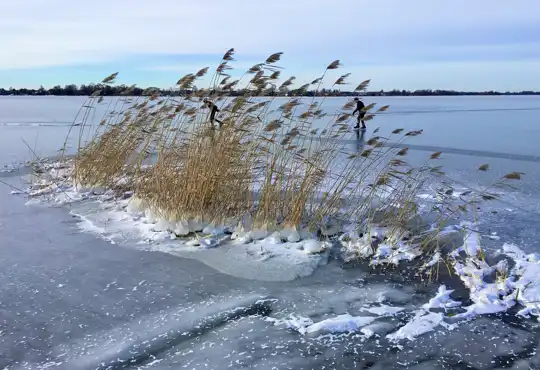
  • Winter (November to March): 0 to 6°C (32 to 43°F), short days of 8 to 10 hours, and damp wind. Most services shut, though a hard freeze can turn the canals into skating routes. Lodging is cheapest.
Book weekend boats and camping a few weeks ahead for July and August, or come midweek in June.


source: climatestotravel.comJANJanuary: fair for travelingFEBFebruary: fair for travelingMARMarch: good for travelingAPRApril: highly recommended for travelingMAYMay: excellent for travelingJUNJune: highly recommended for travelingJULJuly: highly recommended for travelingAUGAugust: highly recommended for travelingSEPSeptember: excellent for travelingOCTOctober: highly recommended for travelingNOVNovember: good for travelingDECDecember: fair for traveling
when-to-go

✈️ The backpacker research shortcutThe Netherlands Travel Guide

An offline-friendly backpacking guide with optimized travel routes, ranked highlights, transport advice, and the best areas to stay.
example page 0 from our offline Travel Guide for Netherlands
example page 1 from our offline Travel Guide for Netherlands
example page 2 from our offline Travel Guide for Netherlands
example page 3 from our offline Travel Guide for Netherlands
example page 4 from our offline Travel Guide for Netherlands
example page 5 from our offline Travel Guide for Netherlands
example page 6 from our offline Travel Guide for Netherlands
example page 7 from our offline Travel Guide for Netherlands
The digital guide (373 pages) contains:
✅ 127 highlights, ranked by travel appeal
✅ Optimized 5, 10 & 15-day travel routes
✅ Cities, national parks, landmarks, beaches
✅ How to get around
✅ Offline-friendly for travel without Wi-Fi
👉 Click to see all 30+ guide features

📅 Plan smarter in minutes, not weeks
✅ Month by month travel advice
✅ Festivals & national holidays
✅ Budget expectations

🗺️ Go to the right places, skip the overrated ones
✅ Honest pros & cons of destinations
✅ Top hikes, parks & viewpoints
✅ Lesser-known places most travelers miss
✅ Clear “worth it vs skip it” guidance

🛏️ Travel smoothly without rookie mistakes
✅ Best areas to stay
✅ Transport systems explained simply
✅ Common scams & safety advice
✅ SIM cards, money & practical tips

🌍 Understand the country, not just visit it
✅ Culture & traditions
✅ 52 Essential phrases & customs
✅ Festivals worth planning around
✅ Traveler-friendly historical context
✅ Insights that make places more meaningful

📱 Built for real travel conditions
✅ Fully downloadable PDF
✅ Works completely offline
✅ Optimized for phone use
✅ Useful in remote areas & buses
✅ Everything in one place
Stop searching, start planning
Get instant access to your full guide. 30‑day money-back guarantee.
+ Add another guide for just

By proceeding you agree to our terms.
Sent to your inbox immediately after payment • 100% Secure Checkout
Best Backpacking Travel Advisor 2025 tourism awardBest Backpacking
Travel Advisor
2025
What others say about Take Your Backpack Guides:
⭐⭐⭐⭐⭐
Fantastic, amazing amount of information!
⭐⭐⭐⭐⭐
My goodness this is amazing, it's what I've been looking for hats off too you!
⭐⭐⭐⭐⭐
I think this is absolutely BRILLIANT
⭐⭐⭐⭐
Very complete and informative. It's still missing places, but I gotta to commend you
⭐⭐⭐⭐⭐
This is truly amazing, thank you, can't wait to explore it with my kids!
⭐⭐⭐⭐⭐
Awesome resource, thank you!
⭐⭐⭐⭐⭐
This is amazing! Can't wait to explore the ones I haven't seen
⭐⭐⭐⭐
I love this! Well done, great idea.
⭐⭐⭐⭐⭐
Thanks for taking the time to make this gem!
⭐⭐⭐⭐⭐
This might be the best website I've ever seen.
⭐⭐⭐⭐⭐
Congratulations, and thank you so much for your work; it's incredibly valuable.
⭐⭐⭐⭐
In all seriousness I think you did a great job pointing out the important spots
⭐⭐⭐⭐⭐
10/10 very good
⭐⭐⭐⭐⭐
As someone who's only just starting to visit regularly this is awesome, thank you.
⭐⭐⭐⭐
Thank you very much! I'm going to visit my dad, it's going to be very useful!
⭐⭐⭐⭐⭐
This is really cool! We'll be travelling for the first time and this definitely come in handy.
⭐⭐⭐⭐⭐
You are now our minister of culture, congratulations 👨‍💼
⭐⭐⭐⭐⭐
Just wanted to tell you that this is a pearl! Going to follow your recommendations.
⭐⭐⭐⭐⭐
This is so cool. I'll definitely be using the resource for my travels soon.
⭐⭐⭐⭐⭐
This is very impressive! Good work.
⭐⭐⭐⭐⭐
This is an amazing and informative site. Very well done!

🛏️ Where to stay?Choosing the right base

The best base for backpackers is Giethoorn or Ossenzijl, with campsites and small B&Bs at the park’s edge, since there are almost no places to sleep inside the protected core.
Ossenzijl sits in the Weerribben and is the practical pick for hikers and paddlers. It has campsites, a visitor center nearby, and canoe rentals within walking distance. Kalenberg and Nederland-side villages like Muggenbeet also offer quiet campsites and small guesthouses.
Giethoorn, on the Wieden side, is famous for its canal houses and has the most variety, from hostels and camping to B&Bs. It fills with day-trippers from … read more 👉
The best base for backpackers is Giethoorn or Ossenzijl, with campsites and small B&Bs at the park’s edge, since there are almost no places to sleep inside the protected core.
Ossenzijl sits in the Weerribben and is the practical pick for hikers and paddlers. It has campsites, a visitor center nearby, and canoe rentals within walking distance. Kalenberg and Nederland-side villages like Muggenbeet also offer quiet campsites and small guesthouses.
Giethoorn, on the Wieden side, is famous for its canal houses and has the most variety, from hostels and camping to B&Bs. It fills with day-trippers from late morning, so sleeping there lets you enjoy the evenings and early mornings when the tour groups are gone.
Steenwijk is the cheapest and most practical town base. It has a train station, supermarkets, and bus connections (including to Giethoorn and Ossenzijl) so you can go without a car. Vollenhove and Blokzijl are smaller harbor towns with a few B&Bs and camping, and they suit cyclists well.
Minicampings on farms (often called “boerencamping”) are a good budget choice and let you pitch a tent in a meadow. Wild camping is not allowed in the park, so book ahead in summer.

👛 Costs (as of 15 October 2026)How expensive it really is

A day in Weerribben-Wieden typically costs about €45 to €95 per person, depending on whether you camp or book a B&B.
CategoryBudget RangeLocal Reality
Entrance fees€0The park itself is free to enter. Some visitor centers, museums, and guided tours charge €5 to €15.
Accommodation€15 to €90Campsites cost €15 to €30 for a tent pitch. Hostels and simple B&Bs run €60 to €90 for a double, and prices rise in July and August.
Local transport€3 to €20Regional buses from Steenwijk cost a few euros per trip. Bike rental is €10 to €20 a day.
Boat and canoe rental€15 to €60Canoes are around €30 to €50 a day for two people. Whisper boats and electric boats cost more, around €60 to €100 for a few hours. Guided boat tours run €10 to €20.
Food and supplies€15 to €40Groceries from Steenwijk or village supermarkets
… read more 👉
A day in Weerribben-Wieden typically costs about €45 to €95 per person, depending on whether you camp or book a B&B.
CategoryBudget RangeLocal Reality
Entrance fees€0The park itself is free to enter. Some visitor centers, museums, and guided tours charge €5 to €15.
Accommodation€15 to €90Campsites cost €15 to €30 for a tent pitch. Hostels and simple B&Bs run €60 to €90 for a double, and prices rise in July and August.
Local transport€3 to €20Regional buses from Steenwijk cost a few euros per trip. Bike rental is €10 to €20 a day.
Boat and canoe rental€15 to €60Canoes are around €30 to €50 a day for two people. Whisper boats and electric boats cost more, around €60 to €100 for a few hours. Guided boat tours run €10 to €20.
Food and supplies€15 to €40Groceries from Steenwijk or village supermarkets keep costs low. A café lunch costs €10 to €18, and a restaurant dinner costs €20 to €35.
Self-catering and camping keep the daily total near the low end. Most small campsites and rental outlets accept cards, but carry a little cash for farm campsites and honesty-box stalls.
⚠️ Prices can change and everyone travels differently, so take this as a rough guide. Hope it helps you plan your adventure!

🥾 TrailsPlan your hike in Weerribben-Wieden: routes, terrain, and sights

Walking here is limited compared with cycling and paddling. The terrain is flat, wet and soft, with boardwalks and short nature paths rather than long trails, so difficulty is low and the main challenge is mud after rain. Wildlife is the highlight: otters (shy, best at dawn), bitterns, marsh harriers, kingfishers and in summer a wealth of dragonflies. The scenery is reed beds, willow carr, open lakes and old peat ponds.

Dedicated trails are few and I only list ones with clear information:
Kalenbergergracht area walks
  • Length: roughly 2 to 5 kilometers depending on the loop
  • Duration: about 1 to 2
… read more 👉
Walking here is limited compared with cycling and paddling. The terrain is flat, wet and soft, with boardwalks and short nature paths rather than long trails, so difficulty is low and the main challenge is mud after rain. Wildlife is the highlight: otters (shy, best at dawn), bitterns, marsh harriers, kingfishers and in summer a wealth of dragonflies. The scenery is reed beds, willow carr, open lakes and old peat ponds.

Dedicated trails are few and I only list ones with clear information:
Kalenbergergracht area walks
  • Length: roughly 2 to 5 kilometers depending on the loop
  • Duration: about 1 to 2 hours
  • Difficulty: easy
  • Key features: reed edges, bird sounds, views over water
  • Terrain: flat paths and some boardwalk, can be muddy
For distance, cycling is the better tool. A 30 to 50 kilometer loop through Ossenzijl, Kalenberg and Muggenbeet is easy on flat terrain.

Getting there: buses run from Steenwijk station to villages such as Ossenzijl and Giethoorn, but services are infrequent, especially evenings and Sundays, so check times before you go. Many travelers combine train to Steenwijk with a rental bike. Crowds concentrate in Giethoorn and at canoe rental points on summer weekends, while the interior stays quiet. Entry to the park itself is free, though canoe and bike rentals, parking and some boardwalk areas carry separate charges.
⚠️ Hiking info can sometimes be outdated or inaccurate. Before you hit the trail, check the latest conditions with locals. If you do spot anything that's off, I'd love to hear from you, so I can update it for fellow travelers.

🛡️ SafetyScams, Hazards, and Annoyances

Weerribben-Wieden is flat, well signed, and low risk, so the main issues are weather, water, and bugs.
Trails are boardwalks, dikes, and paths with no altitude to worry about, though some stretches turn muddy after rain. Wind on open water is the real hazard for paddlers. A calm morning can turn choppy by afternoon, so stay near the shore and check the forecast. Wear a life vest if you are not a confident swimmer, and stay clear of motorboats in the main channels. Navigation in the reed maze can be confusing, so carry the park’s waterways map or use an offline map and note your return route.
Ticks are common in grass and reeds, especially in spring and summer, so wear long trousers, check your skin afterward, and use repellent. Mosquitoes and horseflies are active in warm weather. Wildlife such … read more 👉
Weerribben-Wieden is flat, well signed, and low risk, so the main issues are weather, water, and bugs.
Trails are boardwalks, dikes, and paths with no altitude to worry about, though some stretches turn muddy after rain. Wind on open water is the real hazard for paddlers. A calm morning can turn choppy by afternoon, so stay near the shore and check the forecast. Wear a life vest if you are not a confident swimmer, and stay clear of motorboats in the main channels. Navigation in the reed maze can be confusing, so carry the park’s waterways map or use an offline map and note your return route.
Ticks are common in grass and reeds, especially in spring and summer, so wear long trousers, check your skin afterward, and use repellent. Mosquitoes and horseflies are active in warm weather. Wildlife such as otters, deer, and nesting birds is shy, so keep a distance, keep dogs leashed, and avoid disturbing the reeds in breeding season. Bring sun protection, water, and a rain jacket, since cover is limited.

FAQFrequently asked questions about Weerribben-Wieden

Two days is enough for most backpackers. Spend one day canoeing the Weerribben channels from Ossenzijl or Kalenberg (about 3 to 5 hours) and another cycling a 30 to 50 kilometer loop, with a short early stop in Giethoorn. A day trip from Steenwijk works if you only want one activity.
Yes, it is doable without a car, though you need a bike or canoe once you arrive. Trains run to Steenwijk, and local buses continue to Giethoorn and Ossenzijl, but they are infrequent in the evenings and on Sundays. Renting a bike in Steenwijk or the villages costs roughly 12 to 20 euros per day.
Entry to the park is free and no permit is needed for walking or cycling. You pay only for extras such as canoe rental (roughly 25 to 50 euros per half day for a two-person canoe), bike hire, parking and camping. Some small nature reserves within the area have restricted zones, so follow posted signs.
⚠️ Things can change over time, so always validate details locally before you go.

Other Dutch national parks near Weerribben-Wieden

Explore more nearby:


💡 Not sure where to go next?
Create a personalized itinerary for The Netherlands including Weerribben-Wieden and the places that fit your trip.

Generate my itinerary

👉 Discover all national parks

Or checkout all The Netherlands has to offer (think cities, towns, villages, national parks, hikes, beaches, festivals)
Country photo of The Netherlands

We 💚 feedbackKey takeaways before you go

The mistake to avoid is treating this as a hiking park and arriving on foot with no plan. Walking gets you short loops and little else. Rent a canoe for the channels and a bike for distance, go early, and check the last bus back to Steenwijk. Do that and it is a lovely, quiet slice of wild Netherlands.

✈️ When did I visit The Netherlands?
Netherlands is my home base, so whenever I don’t travel, you can find me in this tiny spot on the globe. When friends from abroad visit me, it’s the time to actually explore my own country as a traveler.

✍️ Help improve this page!
The information on this page is based on my own backpacking experience in The Netherlands, supplemented with up-to-date research and feedback from other travelers. Travel details can change, so if you notice anything outdated or incomplete, feel free to let me know.


🙋‍♂️ Give feedback

👋 Meet the founderWho’s Behind Take Your Backpack?

Johan, backpacker and founder of TakeYourBackpackHi, I’m Johan (Netherlands 🇳🇱), the creator of TakeYourBackpack. Over the past 3 decades, I’ve backpacked through 90+ countries across six continents, gaining extensive experience with independent travel, long-term trips, and overland routes.

This site is built on a combination of firsthand travel experience and carefully curated insights from other backpackers. Many guides are based on places I’ve personally visited, while others bring together tips, observations, and practical advice shared by trusted travelers I’ve met along the way.

The goal is to provide realistic, experience-driven guidance — not generic itineraries — so you can explore destinations with better context, clearer expectations, and more confidence.