
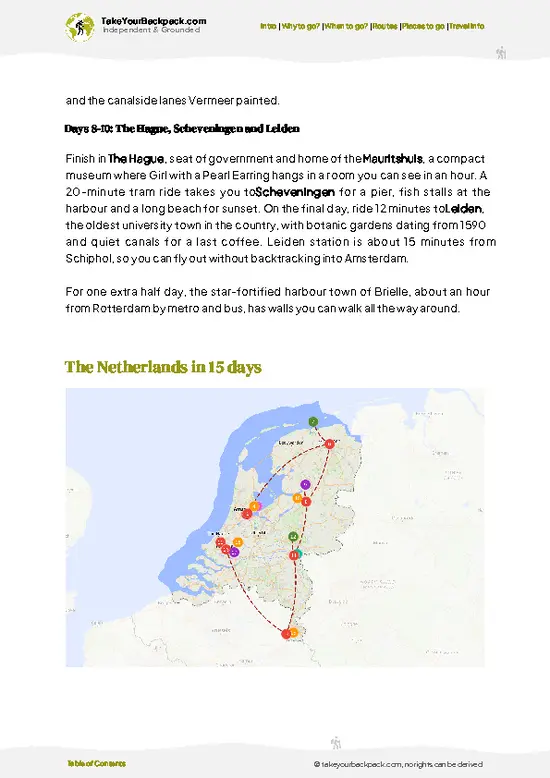
- De Kat dye mill: One of the few mills in the world still grinding natural pigments from chalk and plant materials, and you can see the heavy stones turning. Staff explain how these colors went into traditional Dutch paint.
- De Zoeker oil mill: A working mill where linseed and other seeds are pressed into oil by wooden stampers. It is loud, smells of crushed seed, and shows clearly how wind turned into a product.
- De Gekroonde Poelenburg sawmill: A sawmill that cuts logs into planks using wind power. It recalls the shipbuilding timber trade that made the Zaan region wealthy in the 1600s and 1700s.
- Zaans Museum: Housed in a modern building with a patterned facade of Zaan house fronts, it covers local industry, with exhibits on chocolate, mustard and the region’s early factory history. Good for context
- De Kat dye mill: One of the few mills in the world still grinding natural pigments from chalk and plant materials, and you can see the heavy stones turning. Staff explain how these colors went into traditional Dutch paint.
- De Zoeker oil mill: A working mill where linseed and other seeds are pressed into oil by wooden stampers. It is loud, smells of crushed seed, and shows clearly how wind turned into a product.
- De Gekroonde Poelenburg sawmill: A sawmill that cuts logs into planks using wind power. It recalls the shipbuilding timber trade that made the Zaan region wealthy in the 1600s and 1700s.
- Zaans Museum: Housed in a modern building with a patterned facade of Zaan house fronts, it covers local industry, with exhibits on chocolate, mustard and the region’s early factory history. Good for context if the weather turns wet.
- Albert Heijn Museum Shop: A reconstruction of the first Albert Heijn grocery, which began in nearby Oostzaan in 1887. Free to enter, and a quick stop for old packaging and a look at early retail.
- Catharina Hoeve cheese farm: Free cheese tasting and a demonstration of how Dutch cheese is made, plus a look at the barns. The cheese shop is also a fair place to buy a wedge for a train picnic.
- Clog workshop: A craftsman shapes wooden clogs, often on a machine that carves a pair in minutes. Watching it explains why clogs were practical work shoes on wet ground.
Spotted a mistake or missing something? Contact us.

Private Tulip Fields, Windmills and Cheese Tour from Amsterdam

Zaanse Schans Windmills, Countryside & Fishing Villages

Keukenhof (tulips), Zaanse Schans and Volendam Small Group Tour

Zaanse Schans Windmills Private Tour from Amsterdam Airport

Zaanse Schans Windmills, cheese and clogs and Volendam tour from Amsterdam

Half-Day Private Guided Sightseeing Tour of Zaanse Schans

E-fatbike rental Volendam - Countryside of Amsterdam

Private Zaanse Schans & Dutch Village Tour by Electric Car

Amsterdam: Best Private Tour Windmills, Castle and Volendam


 Best Backpacking

 Hi, I’m Johan (Netherlands 🇳🇱), the creator of TakeYourBackpack. Over the past 3 decades, I’ve backpacked through 90+ countries across six continents, gaining extensive experience with independent travel, long-term trips, and overland routes.