×

New Caledonia🇳🇨 | attractionsBabou Côté OcéanReef pass drift dives, limestone towers, Kanak river-mouth village, east coast | things to do and best time to go

Explore New Caledonia MuseumExplore Anse Vata

Backpacking in Babou Côté Océan
🏆 Top pickattraction ranked #1
By Johan Kruseman 🇳🇱 | Updated October 15, 2026

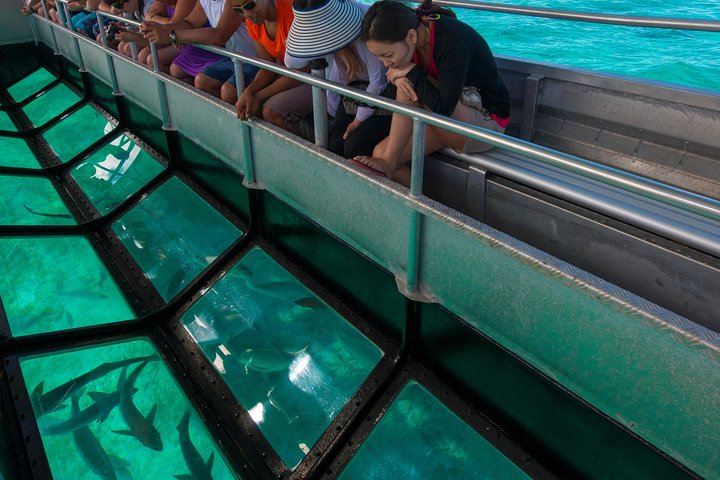
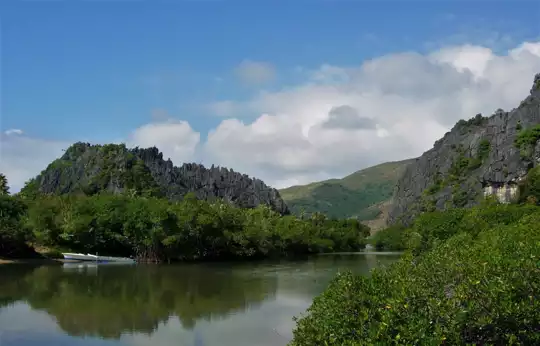
Diving here means dropping into the Hienghène lagoon and out through its reef passes on New Caledonia’s wild east coast, where limestone towers rise from the water and the reef wall drops into dark blue. The overlooked part is the setting. Hienghène is a Kanak village strung along a river-mouth bay, and the surface hours matter as much as the underwater ones. Babou Côté Océan is in Hienghène, in the north of New Caledonia’s Grande Terre, on the Pacific side. It is a long drive from Nouméa, and I think the effort is justified only if you give it at least two nights. Skip it as a rushed stopover. The east coast is wetter than the west, so expect humid air, salt on your skin, wet roads and green hillsides. The crowds are almost nonexistent, but services are thin. Plan a first day around a morning dive, a lunch of grilled fish in the village, and an afternoon watching the light change on the rock formations from the shore.

Discover everything you want to know in the 📖 New Caledonia Travel Guide.


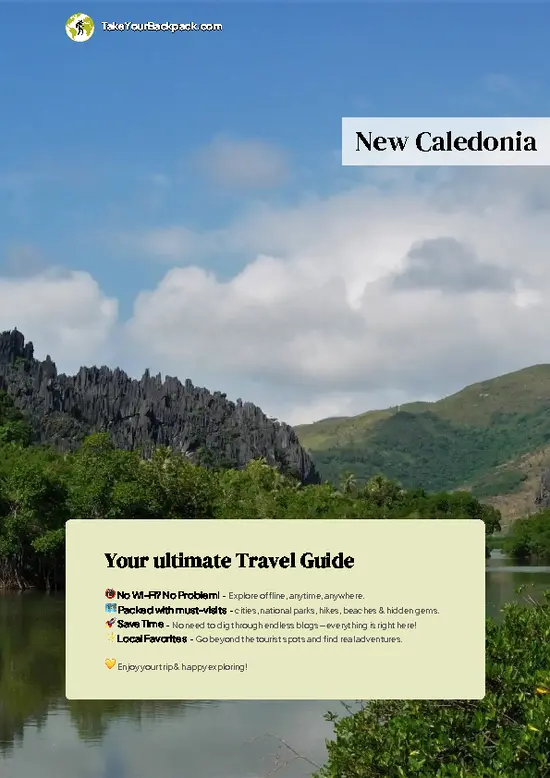
example page 0 from our offline Travel Guide for New Caledonia
example page 1 from our offline Travel Guide for New Caledonia
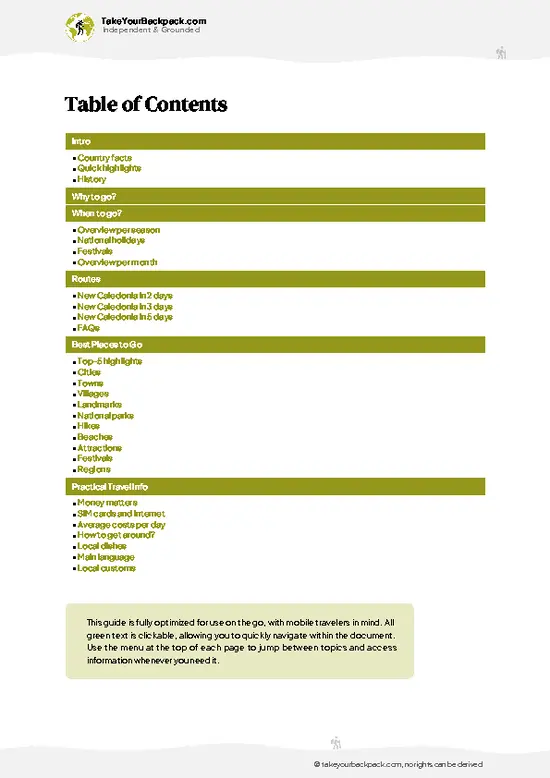
example page 2 from our offline Travel Guide for New Caledonia
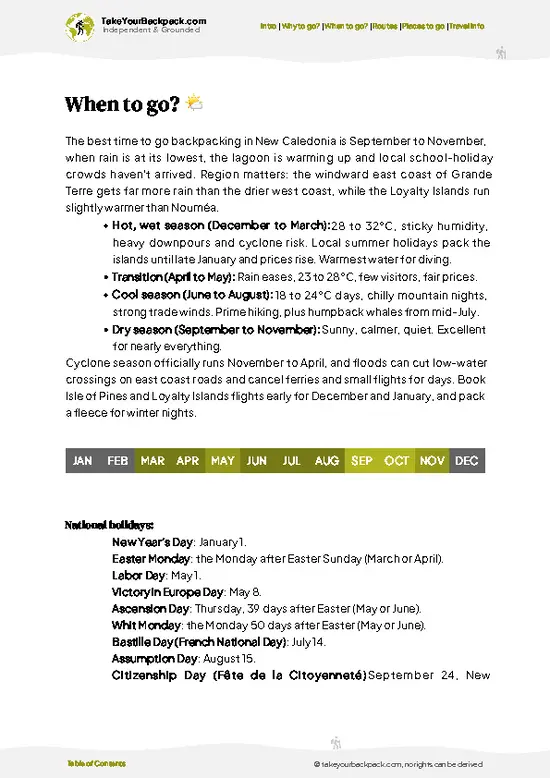
example page 3 from our offline Travel Guide for New Caledonia
example page 4 from our offline Travel Guide for New Caledonia
example page 5 from our offline Travel Guide for New Caledonia
example page 6 from our offline Travel Guide for New Caledonia
example page 7 from our offline Travel Guide for New Caledonia
Loading the map 🌍
CLICK TO FILTER
cities
towns
villages
landmarks
national parks
hikes
beaches
attractions
festivals
regions
SHOW COUNTRY’S BESTSHOW ALL

✨ Why go?
Ranked #1 attraction in New Caledonia
What makes it a must-see attraction

Go because the Hienghène lagoon is part of the lagoon system inscribed as a UNESCO World Heritage site in 2008, and this stretch of it is quiet. You share the water with few other boats. Reef passes bring clean oceanic water into the lagoon, so a dive can mix coral gardens with open-blue wall edges where bigger fish cruise. That variety, and the lack of a conveyor-belt dive-boat scene, is what experienced divers come for.

Beginners benefit too. A small operation on a sheltered lagoon makes a first ocean dive feel manageable and personal rather than processed.

The second reason is the surface scenery. The Poule Couveuse rock, a limestone stack in the bay shaped like a sitting hen, is among the most photographed sights on the island, and you see it from the water at a level most visitors never … read more 👉
Go because the Hienghène lagoon is part of the lagoon system inscribed as a UNESCO World Heritage site in 2008, and this stretch of it is quiet. You share the water with few other boats. Reef passes bring clean oceanic water into the lagoon, so a dive can mix coral gardens with open-blue wall edges where bigger fish cruise. That variety, and the lack of a conveyor-belt dive-boat scene, is what experienced divers come for.

Beginners benefit too. A small operation on a sheltered lagoon makes a first ocean dive feel manageable and personal rather than processed.

The second reason is the surface scenery. The Poule Couveuse rock, a limestone stack in the bay shaped like a sitting hen, is among the most photographed sights on the island, and you see it from the water at a level most visitors never get. Add the Kanak cultural ties of the area, including the home region of independence leader Jean-Marie Tjibaou, and Hienghène becomes more than a dive stop. On a route up the east coast it is the natural place to stay put for a few days.

💡 HighlightsTop highlights of Babou Côté Océan

  1. Dives on the Hienghène reef passes: the main event. Water moves through the gaps in the barrier reef, which draws reef fish, turtles and sharks to the edges, with coral slopes and walls to drift along.
  2. Poule Couveuse (the Brooding Hen): the limestone rock that gives Hienghène its postcard. Seen from a boat, its undercut base and bird-like profile look much more dramatic than from the road.
  3. Lindéralique cliffs: a chain of jagged black limestone cliffs, up to about 60 m high, running some 10 km south from Hienghène Bay. It is tied to Kanak legend and is best at low sun, when the stone turns amber.
  4. The Sphinx of Hienghène: a rock formation facing the Brooding Hen across the entrance to the bay, whose profile resembles the Egyptian monument. A short stop with a good view over the bay and lagoon.
  5. Goa
… read more 👉
  1. Dives on the Hienghène reef passes: the main event. Water moves through the gaps in the barrier reef, which draws reef fish, turtles and sharks to the edges, with coral slopes and walls to drift along.
  2. Poule Couveuse (the Brooding Hen): the limestone rock that gives Hienghène its postcard. Seen from a boat, its undercut base and bird-like profile look much more dramatic than from the road.
  3. Lindéralique cliffs: a chain of jagged black limestone cliffs, up to about 60 m high, running some 10 km south from Hienghène Bay. It is tied to Kanak legend and is best at low sun, when the stone turns amber.
  4. The Sphinx of Hienghène: a rock formation facing the Brooding Hen across the entrance to the bay, whose profile resembles the Egyptian monument. A short stop with a good view over the bay and lagoon.
  5. Goa Ma Bwarhat cultural center: a local space presenting Kanak heritage in the village where Tjibaou was born. A good place to understand the people whose land and sea you are diving in.
  6. Cascade de Tao: a waterfall reached by a short walk on the road north. Cold freshwater plunge pools make a good contrast to a salt-soaked day.
  7. Ouaïème river ferry: a small, free ferry across the Ouaïème river, the last of its kind in New Caledonia. Crossing it slowly gives a view of the mangroves and the river’s wide, green valley.
Most visitors drive straight past the ferry, yet it is the one spot where you actually slow down to the rhythm of the coast.
Spotted a mistake or missing something? Contact us.

Things to do near Babou Côté Océan

Ratings based on Tripadvisor reviews. When you book through this link, you support our work at no extra cost to you.

🌤️ When to go?Choosing the right time of year

  • September to November: Water sits around 23 to 25°C (73 to 77°F), air 22 to 28°C (72 to 82°F), rain is light and visibility on the barrier reef is usually at its sharpest. Days run about 11.5 to 13 hours. Prices stay steady and the gîtes are rarely full.
  • December to March: Hot and humid at 25 to 32°C (77 to 90°F), with water up to 28 or 29°C (82 to 84°F). Cyclones and heavy rain can close the east coast road and cancel boat outings, and freshwater runoff clouds the water near river mouths. Daylight reaches about 13.5 hours.
  • April to May: Warm water, air around 22 to 28°C (72 to 82°F) and fewer showers than summer. Quiet, and a wetsuit becomes more useful by late May.
  • June to August: Cooler at 18 to 24°C (64 to 75°F), water near 22 to 23°C (72 to 73°F), days of 10.5 to 11 hours. Humpback whales
… read more 👉
  • September to November: Water sits around 23 to 25°C (73 to 77°F), air 22 to 28°C (72 to 82°F), rain is light and visibility on the barrier reef is usually at its sharpest. Days run about 11.5 to 13 hours. Prices stay steady and the gîtes are rarely full.
  • December to March: Hot and humid at 25 to 32°C (77 to 90°F), with water up to 28 or 29°C (82 to 84°F). Cyclones and heavy rain can close the east coast road and cancel boat outings, and freshwater runoff clouds the water near river mouths. Daylight reaches about 13.5 hours.
  • April to May: Warm water, air around 22 to 28°C (72 to 82°F) and fewer showers than summer. Quiet, and a wetsuit becomes more useful by late May.
  • June to August: Cooler at 18 to 24°C (64 to 75°F), water near 22 to 23°C (72 to 73°F), days of 10.5 to 11 hours. Humpback whales pass offshore from about July to September, and school holidays bring more local visitors.
Book dives a few days ahead in July and August, and keep a spare day free in summer for weather.


source: climatestotravel.comJANJanuary: highly recommended for travelingFEBFebruary: highly recommended for travelingMARMarch: highly recommended for travelingAPRApril: excellent for travelingMAYMay: good for travelingJUNJune: fair for travelingJULJuly: fair for travelingAUGAugust: fair for travelingSEPSeptember: good for travelingOCTOctober: good for travelingNOVNovember: excellent for travelingDECDecember: highly recommended for traveling
new-caledonia-attraction-babou-cote-ocean
© Google |

✈️ The backpacker research shortcutNew Caledonia Travel Guide

An offline-friendly backpacking guide with optimized travel routes, ranked highlights, transport advice, and the best areas to stay.
example page 0 from our offline Travel Guide for New Caledonia
example page 1 from our offline Travel Guide for New Caledonia
example page 2 from our offline Travel Guide for New Caledonia
example page 3 from our offline Travel Guide for New Caledonia
example page 4 from our offline Travel Guide for New Caledonia
example page 5 from our offline Travel Guide for New Caledonia
example page 6 from our offline Travel Guide for New Caledonia
example page 7 from our offline Travel Guide for New Caledonia
The digital guide (158 pages) contains:
✅ 42 highlights, ranked by travel appeal
✅ Optimized 2, 3 & 5-day travel routes
✅ Cities, national parks, landmarks, beaches
✅ How to get around
✅ Offline-friendly for travel without Wi-Fi
👉 Click to see all 30+ guide features

📅 Plan smarter in minutes, not weeks
✅ Month by month travel advice
✅ Festivals & national holidays
✅ Budget expectations

🗺️ Go to the right places, skip the overrated ones
✅ Honest pros & cons of destinations
✅ Top hikes, parks & viewpoints
✅ Lesser-known places most travelers miss
✅ Clear “worth it vs skip it” guidance

🛏️ Travel smoothly without rookie mistakes
✅ Best areas to stay
✅ Transport systems explained simply
✅ Common scams & safety advice
✅ SIM cards, money & practical tips

🌍 Understand the country, not just visit it
✅ Culture & traditions
✅ 52 Essential phrases & customs
✅ Festivals worth planning around
✅ Traveler-friendly historical context
✅ Insights that make places more meaningful

📱 Built for real travel conditions
✅ Fully downloadable PDF
✅ Works completely offline
✅ Optimized for phone use
✅ Useful in remote areas & buses
✅ Everything in one place
Stop searching, start planning
Get instant access to your full guide. 30‑day money-back guarantee.
+ Add another guide for just

By proceeding you agree to our terms.
Sent to your inbox immediately after payment • 100% Secure Checkout
Best Backpacking Travel Advisor 2025 tourism awardBest Backpacking
Travel Advisor
2025
What others say about Take Your Backpack Guides:
⭐⭐⭐⭐⭐
Fantastic, amazing amount of information!
⭐⭐⭐⭐⭐
My goodness this is amazing, it's what I've been looking for hats off too you!
⭐⭐⭐⭐⭐
I think this is absolutely BRILLIANT
⭐⭐⭐⭐
Very complete and informative. It's still missing places, but I gotta to commend you
⭐⭐⭐⭐⭐
This is truly amazing, thank you, can't wait to explore it with my kids!
⭐⭐⭐⭐⭐
Awesome resource, thank you!
⭐⭐⭐⭐⭐
This is amazing! Can't wait to explore the ones I haven't seen
⭐⭐⭐⭐
I love this! Well done, great idea.
⭐⭐⭐⭐⭐
Thanks for taking the time to make this gem!
⭐⭐⭐⭐⭐
This might be the best website I've ever seen.
⭐⭐⭐⭐⭐
Congratulations, and thank you so much for your work; it's incredibly valuable.
⭐⭐⭐⭐
In all seriousness I think you did a great job pointing out the important spots
⭐⭐⭐⭐⭐
10/10 very good
⭐⭐⭐⭐⭐
As someone who's only just starting to visit regularly this is awesome, thank you.
⭐⭐⭐⭐
Thank you very much! I'm going to visit my dad, it's going to be very useful!
⭐⭐⭐⭐⭐
This is really cool! We'll be travelling for the first time and this definitely come in handy.
⭐⭐⭐⭐⭐
You are now our minister of culture, congratulations 👨‍💼
⭐⭐⭐⭐⭐
Just wanted to tell you that this is a pearl! Going to follow your recommendations.
⭐⭐⭐⭐⭐
This is so cool. I'll definitely be using the resource for my travels soon.
⭐⭐⭐⭐⭐
This is very impressive! Good work.
⭐⭐⭐⭐⭐
This is an amazing and informative site. Very well done!

🛏️ Where to stay?Choosing the right base

Hienghène village and the coast road around it are the practical places to sleep, because boats leave from this stretch and everything else is a long drive away.
Hienghène village is the most convenient base. It has a small supermarket, a bakery, a few snack bars and a handful of lodgings within a short walk or ride of the dive meeting point. You can sort out food without a car, which matters in a region with almost no public transport. Solo travelers meet other divers here at breakfast and on the waterfront.
Tribal gîtes along the coast north and south of the village are the better choice if you … read more 👉
Hienghène village and the coast road around it are the practical places to sleep, because boats leave from this stretch and everything else is a long drive away.
Hienghène village is the most convenient base. It has a small supermarket, a bakery, a few snack bars and a handful of lodgings within a short walk or ride of the dive meeting point. You can sort out food without a car, which matters in a region with almost no public transport. Solo travelers meet other divers here at breakfast and on the waterfront.
Tribal gîtes along the coast north and south of the village are the better choice if you want a social, local stay. Rooms or bungalows run by Kanak families are often shared, meals are cooked on site, and you eat alongside other guests. Expect basic comforts and sea views. Some are a 10 to 25 minute drive from the dive base, so confirm pickup first.
Camping spots by the beach suit tight budgets and people with their own gear. Facilities are simple, and rain on this windward coast can be sudden.
Koné, on the west coast roughly 1.5 hours inland by road, offers more shops, ATMs and cheaper fuel, but it is too far for a morning dive. Stay on the east coast, and keep cash handy because card terminals are patchy outside the village.

👛 Costs (as of 15 October 2026)How expensive it really is

Budget about €53 to 170 per person per day at Babou Côté Océan, with the low end for camping and self-catering and the high end for a beachfront bungalow and a guided outing. Travelers pay in Pacific francs, and prices here are converted to euros.
CategoryBudget RangeLocal Reality
Coastline access and viewpoints€0The shoreline and the nearby Hienghène rock formations can be seen without a ticket. Tribal land is common in the area, so ask before wandering off the road.
Accommodation (high season)€18 to 60Camping sits at the bottom of the range and a simple bungalow near the ocean at the top. Low season is roughly €15 to 50, and booking ahead matters in the school holidays.
Food and drink€15 to 30Groceries from the supermarket in Hienghène village keep costs down. A plate at a local snack counter
… read more 👉
Budget about €53 to 170 per person per day at Babou Côté Océan, with the low end for camping and self-catering and the high end for a beachfront bungalow and a guided outing. Travelers pay in Pacific francs, and prices here are converted to euros.
CategoryBudget RangeLocal Reality
Coastline access and viewpoints€0The shoreline and the nearby Hienghène rock formations can be seen without a ticket. Tribal land is common in the area, so ask before wandering off the road.
Accommodation (high season)€18 to 60Camping sits at the bottom of the range and a simple bungalow near the ocean at the top. Low season is roughly €15 to 50, and booking ahead matters in the school holidays.
Food and drink€15 to 30Groceries from the supermarket in Hienghène village keep costs down. A plate at a local snack counter runs about €8 to 14, and restaurant dinners cost more. Alcohol is pricey.
Transport€20 to 45Public buses along the east coast are infrequent, so most people rent a car, around €45 to 70 a day before splitting it between passengers. Fuel is pricier than in Europe.
Activities and guides€0 to 35Walks and swimming are free. A guided boat or cultural outing in the Hienghène area usually costs about €25 to 35 per person, and snorkel gear rental adds a few euros.
Total Daily Budget€53 to 170Based on one night in high season. Cash is useful in small villages, and card machines are not guaranteed on this stretch of coast.


source: newcaledonia.travel
⚠️ Prices can change and everyone travels differently, so take this as a rough guide. Hope it helps you plan your adventure!

FAQFrequently asked questions about Babou Côté Océan

Plan on 2 to 3 days if you want a few dives plus time on land. Most outings are half-day boat trips of 3 to 4 hours with one or two dives, so a single day covers the basics. Adding a second day lets you dive the outer barrier reef and see the limestone formations around Hienghène, such as the Sphinx and the Brooding Hen, from the coast road.
For certified divers, yes, at roughly 9,000 to 11,000 XPF (US$80 to 100) per boat dive. You pay for access to the Hienghène barrier reef, which is far less visited than the southern lagoon near Nouméa, and for small groups on the boat. If you only snorkel or are not certified, the cost is harder to justify, and the cheaper local lagoon snorkeling or coast walks make better use of your money.
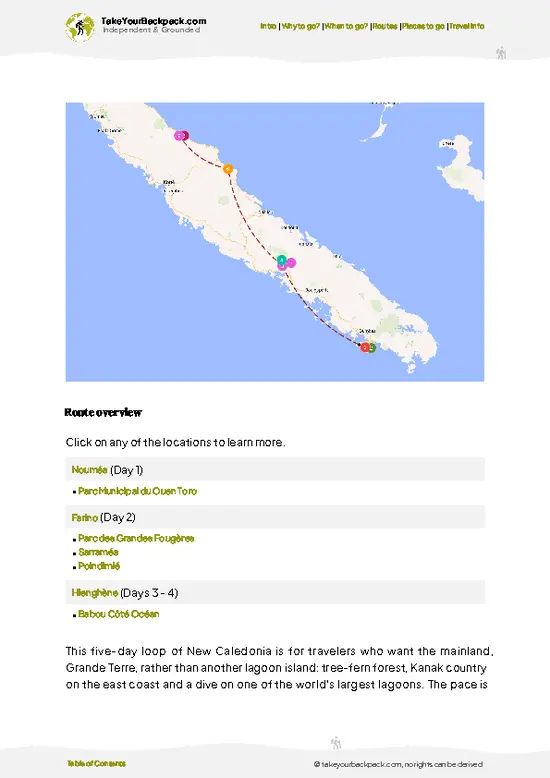
Hienghène sits on the northeast coast, about 4.5 to 5 hours by road from Nouméa, and a rental car is the easiest way to get there. The usual route runs north on RT1 to Koné, then crosses the island on the Koné-Tiwaka road, roughly 1.5 hours, and you finish with a short drive along the coast. Intercity buses serve Koné and parts of the east coast, but schedules are thin, so check them first. A rental car costs about 6,000 to 9,000 XPF (US$55 to 80) a day.
⚠️ Things can change over time, so always validate details locally before you go.

Other New Caledonian attractions near Babou Côté Océan

Explore more nearby:

  • New Caledonia Maritime Museum—La Pérouse wrecks, outrigger canoes, Nouville peninsula, convict ships| 231 km away
  • Nouméa Museum—colonial-era artifacts, city history, archival photographs, urban development| 232 km away
  • New Caledonia Museum—Carved roof finials, Kanak masks, shell money, Oceanian galleries| 232 km away

💡 Not sure where to go next?
Create a personalized itinerary for New Caledonia including Babou Côté Océan and the places that fit your trip.

Generate my itinerary

👉 Discover all attractions

Or checkout all New Caledonia has to offer (think cities, towns, villages, national parks, hikes, beaches, festivals)
Country photo of New Caledonia

We 💚 feedbackWhat to keep in mind

This place suits divers who would rather have a quiet reef and a rock-studded bay to themselves than a crowded resort boat, and curious travelers who like the idea of learning to dive somewhere calm. Bring a rain layer and cash for the village, since the east coast stays damp and services are few. If your schedule is tight, I would skip it, but with a few spare days I would stay.

✍️ Help improve this page!
The information on this page is based on in-depth research, insights shared by experienced travelers, and feedback from the local travel community in New Caledonia. While every effort is made to keep the information accurate and current, conditions can change — so if you spot anything incorrect or outdated, please get in touch.


🙋‍♂️ Give feedback

👋 Meet the founderWho’s Behind Take Your Backpack?

Johan, backpacker and founder of TakeYourBackpackHi, I’m Johan (Netherlands 🇳🇱), the creator of TakeYourBackpack. Over the past 3 decades, I’ve backpacked through 90+ countries across six continents, gaining extensive experience with independent travel, long-term trips, and overland routes.

This site is built on a combination of firsthand travel experience and carefully curated insights from other backpackers. Many guides are based on places I’ve personally visited, while others bring together tips, observations, and practical advice shared by trusted travelers I’ve met along the way.

The goal is to provide realistic, experience-driven guidance — not generic itineraries — so you can explore destinations with better context, clearer expectations, and more confidence.