×

New Caledonia🇳🇨 | regionsIsle of PinesPirogue lagoon, pine-lined beaches, Pic N’Ga, Vao village | things to do and best time to go

Explore Baie de PronyExplore Lifou Island

Backpacking in Isle of Pines
🌟 Highlightregion ranked #1
By Johan Kruseman 🇳🇱 | Updated October 15, 2026

Baie d’Upi is the reason most people come: a shallow, turquoise lagoon where Kanak pirogues sit beside dark, eroded coral rock and pines rise like green candles. What gets overlooked is the quiet. There are no big resorts and few cars, so mornings sound like wind in the needles, roosters and the slap of water on coral sand. The island lies south-east of Nouméa in New Caledonia, and you reach it by short flight or ferry. Both sell out in high season, so book them before you book beds, because an experienced traveler lets the transport decide the dates. Distances look tiny, yet the sun is fierce and shade is patchy, so walk early and swim at midday. Bikes and scooters beat the pricey tours. Kuto and Kanumera beaches are powdery and white, and the interior smells of resin and warm earth. Beach lovers and slow walkers will adore it. Anyone chasing nightlife or big budgets won’t.

Discover everything you want to know in the 📖 New Caledonia Travel Guide.


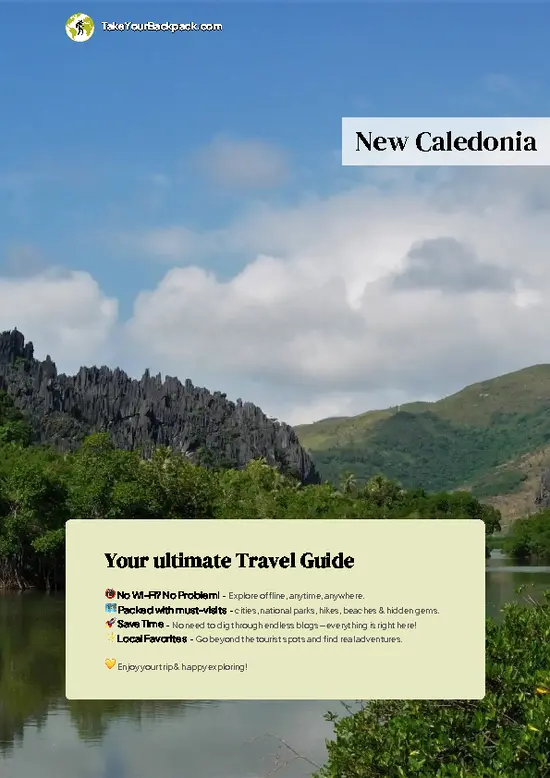
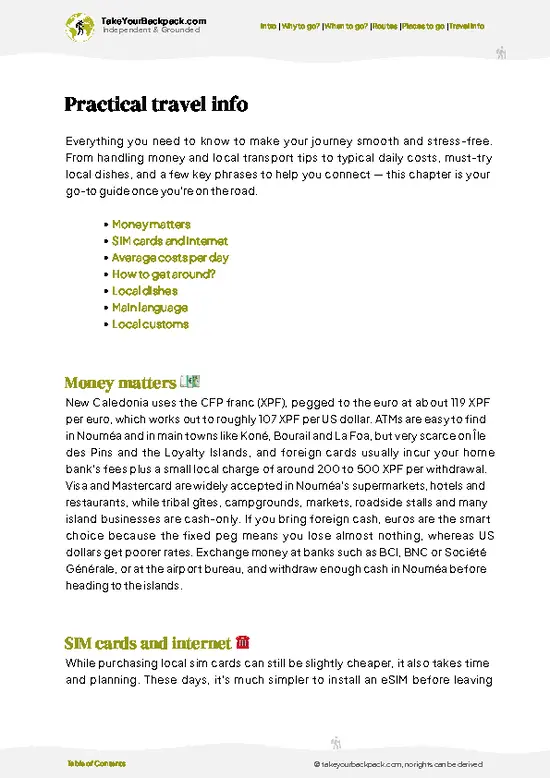
example page 0 from our offline Travel Guide for New Caledonia
example page 1 from our offline Travel Guide for New Caledonia
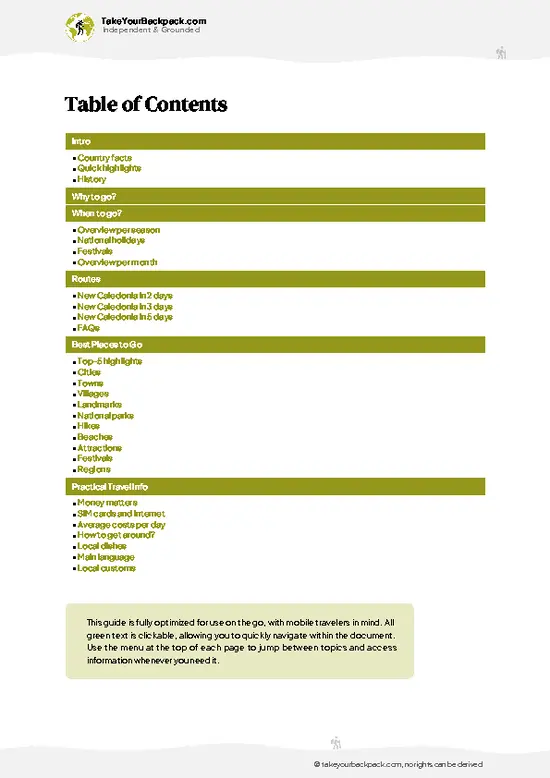
example page 2 from our offline Travel Guide for New Caledonia
example page 3 from our offline Travel Guide for New Caledonia
example page 4 from our offline Travel Guide for New Caledonia
example page 5 from our offline Travel Guide for New Caledonia
example page 6 from our offline Travel Guide for New Caledonia
example page 7 from our offline Travel Guide for New Caledonia
Loading the map 🌍
CLICK TO FILTER
cities
towns
villages
landmarks
national parks
hikes
beaches
attractions
festivals
regions
SHOW COUNTRY’S BESTSHOW ALL

✨ Why go?
Ranked #1 region in New Caledonia
What makes it a must-see region

Backpackers come to the Isle of Pines because one small island packs in several moods without a single long transfer. Kuto and Kanumera sit on opposite sides of a narrow neck, so you can swim on the calm side in the morning and the surf side by afternoon. A Baie d’Upi pirogue crossing and a walk up to the viewpoint over the bay cover the scenic highlight in one easy outing. Then there is the layer most visitors skip: the Kanak tribal villages and the tall carved totems along the roads, which tell you this is a living community rather than a resort stage set. Ruins from the French penal era at the old prison sites add a darker, thoughtful chapter. Getting around is simple, since one main loop road lets you ride a bicycle or scooter at your own speed, stopping whenever a cove or roadside stall … read more 👉
Backpackers come to the Isle of Pines because one small island packs in several moods without a single long transfer. Kuto and Kanumera sit on opposite sides of a narrow neck, so you can swim on the calm side in the morning and the surf side by afternoon. A Baie d’Upi pirogue crossing and a walk up to the viewpoint over the bay cover the scenic highlight in one easy outing. Then there is the layer most visitors skip: the Kanak tribal villages and the tall carved totems along the roads, which tell you this is a living community rather than a resort stage set. Ruins from the French penal era at the old prison sites add a darker, thoughtful chapter. Getting around is simple, since one main loop road lets you ride a bicycle or scooter at your own speed, stopping whenever a cove or roadside stall catches your eye. A three-night stay suits slow travel best, letting you split days between water, history and village visits.

💡 HighlightsDon't-miss highlights and experiences

  1. Baie d’Upi: the famous lagoon, dotted with pine-topped coral rock islets. Paddle or ride a pirogue at high tide for the best color.
  2. Kuto Bay and Kanumera Bay: two white-sand beaches back to back on a narrow isthmus. Kuto is shallow and calm, Kanumera is a gentler snorkeling stop.
  3. Pic N’Ga: a short climb to the island’s highest point, around 262 meters, with views over the lagoon and pines in every direction. Go early before the heat.
  4. Grotte de la Troisième: a cave with a freshwater pool, dived only by experienced cave divers; most visitors peer into it from the wide opening. Locals prize it as a quiet corner.
  5. Old penal colony ruins: crumbling stone cells and walls near Kuto left from the French deportation era. Free to wander and instructive.
  6. Vao village: the main settlement, with a stone church,
… read more 👉
  1. Baie d’Upi: the famous lagoon, dotted with pine-topped coral rock islets. Paddle or ride a pirogue at high tide for the best color.
  2. Kuto Bay and Kanumera Bay: two white-sand beaches back to back on a narrow isthmus. Kuto is shallow and calm, Kanumera is a gentler snorkeling stop.
  3. Pic N’Ga: a short climb to the island’s highest point, around 262 meters, with views over the lagoon and pines in every direction. Go early before the heat.
  4. Grotte de la Troisième: a cave with a freshwater pool, dived only by experienced cave divers; most visitors peer into it from the wide opening. Locals prize it as a quiet corner.
  5. Old penal colony ruins: crumbling stone cells and walls near Kuto left from the French deportation era. Free to wander and instructive.
  6. Vao village: the main settlement, with a stone church, a Sunday-morning atmosphere and small shops. Good for a bakery stop and a look at everyday life.
  7. Saint-Maurice Bay: the beach where the first missionaries landed, marked by a monument and a quiet shoreline few tourists reach.
  8. Ouatchia cave: a cave with fine stalagmites, best visited with a local guide.
  9. Oro Bay natural pool: a clear, shallow rock-bound pool reached by a short walk, ideal for floating and spotting small fish.
All of it fits into about two and a half days at an easy pace.
Spotted a mistake or missing something? Contact us.

⌛️ 5 daysWhat you can realistically do in a week

Day 1: Kuto Bay: Arrive by morning flight or ferry and drop your bag, since the island’s single loop road and small size mean flights and ferries set your rhythm, not buses. Rent a bike, ride to Kuto for a swim, then walk over the isthmus to Kanumera for sunset. Keep the afternoon free for the penal ruins, which sit close by.
Day 2: Baie d’Upi: Start early at Pic N’Ga before the sun gets harsh, then continue to Baie d’Upi. Time your pirogue ride to the tide, because the water is brightest when high. Eat lunch at a roadside stall and rest during the hottest hours.
Day 3: Vao: Spend the morning in Vao, visiting the church and chatting with locals at the bakery. In the afternoon, cycle to Saint-Maurice Bay for the quiet monument and a long walk on an empty beach. Moving this way keeps the loop … read more 👉
Day 1: Kuto Bay: Arrive by morning flight or ferry and drop your bag, since the island’s single loop road and small size mean flights and ferries set your rhythm, not buses. Rent a bike, ride to Kuto for a swim, then walk over the isthmus to Kanumera for sunset. Keep the afternoon free for the penal ruins, which sit close by.
Day 2: Baie d’Upi: Start early at Pic N’Ga before the sun gets harsh, then continue to Baie d’Upi. Time your pirogue ride to the tide, because the water is brightest when high. Eat lunch at a roadside stall and rest during the hottest hours.
Day 3: Vao: Spend the morning in Vao, visiting the church and chatting with locals at the bakery. In the afternoon, cycle to Saint-Maurice Bay for the quiet monument and a long walk on an empty beach. Moving this way keeps the loop road manageable without tiring your legs.
Day 4: Ouatchia cave (detour): Take a half-day detour to the Ouatchia cave, known for its stalagmites, and visit it with a local guide. Bring water and snacks.
Day 5: Grotte de la Troisième: Finish with a morning look into the cave pool, then return your bike and catch the afternoon departure. If one day justifies the trip, it is Day 2, when the pirogue glides across Baie d’Upi under clear light.

🌤️ When to go?Seasonal considerations and timing

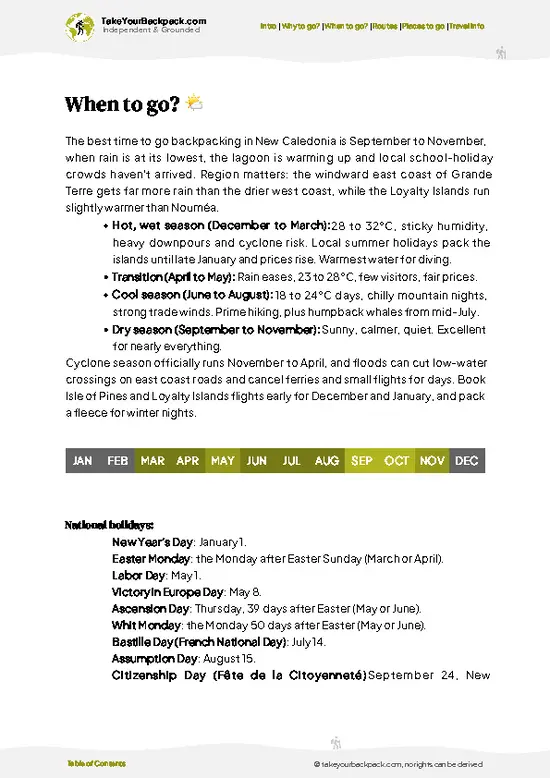
  • Cool Season (May to August): Days sit around 20 to 24°C (68 to 75°F), nights dip to 15 to 18°C (59 to 64°F), and the sea is about 22 to 24°C (72 to 75°F). Daylight runs roughly 10.5 to 11 hours. Humpback whales pass offshore from about July to September. French school holidays in July push up bungalow prices and fill the flights.
  • Dry Warm Months (September to November): Expect 22 to 27°C (72 to 81°F), light rain, and clear water for snorkeling in Oro and Kanumera. Crowds are thin and rooms are easier to book.
  • Hot Season (December to April): Highs reach 28 to 32°C (82 to 90°F) with heavy humidity, and daylight stretches to about 13.5 hours. January to March brings the heaviest rain and the cyclone risk, and ferries get canceled. Late December and January are the priciest weeks.
Book September … read more 👉
  • Cool Season (May to August): Days sit around 20 to 24°C (68 to 75°F), nights dip to 15 to 18°C (59 to 64°F), and the sea is about 22 to 24°C (72 to 75°F). Daylight runs roughly 10.5 to 11 hours. Humpback whales pass offshore from about July to September. French school holidays in July push up bungalow prices and fill the flights.
  • Dry Warm Months (September to November): Expect 22 to 27°C (72 to 81°F), light rain, and clear water for snorkeling in Oro and Kanumera. Crowds are thin and rooms are easier to book.
  • Hot Season (December to April): Highs reach 28 to 32°C (82 to 90°F) with heavy humidity, and daylight stretches to about 13.5 hours. January to March brings the heaviest rain and the cyclone risk, and ferries get canceled. Late December and January are the priciest weeks.
Book September or early November for warm water, quiet beaches, and standard prices.


source: climatestotravel.comJANJanuary: fair for travelingFEBFebruary: fair for travelingMARMarch: fair for travelingAPRApril: fair for travelingMAYMay: highly recommended for travelingJUNJune: excellent for travelingJULJuly: excellent for travelingAUGAugust: excellent for travelingSEPSeptember: highly recommended for travelingOCTOctober: highly recommended for travelingNOVNovember: fair for travelingDECDecember: fair for traveling
new-caledonia-region-isle-of-pines
© Google |

✈️ The backpacker research shortcutNew Caledonia Travel Guide

An offline-friendly backpacking guide with optimized travel routes, ranked highlights, transport advice, and the best areas to stay.
example page 0 from our offline Travel Guide for New Caledonia
example page 1 from our offline Travel Guide for New Caledonia
example page 2 from our offline Travel Guide for New Caledonia
example page 3 from our offline Travel Guide for New Caledonia
example page 4 from our offline Travel Guide for New Caledonia
example page 5 from our offline Travel Guide for New Caledonia
example page 6 from our offline Travel Guide for New Caledonia
example page 7 from our offline Travel Guide for New Caledonia
The digital guide (158 pages) contains:
✅ 42 highlights, ranked by travel appeal
✅ Optimized 2, 3 & 5-day travel routes
✅ Cities, national parks, landmarks, beaches
✅ How to get around
✅ Offline-friendly for travel without Wi-Fi
👉 Click to see all 30+ guide features

📅 Plan smarter in minutes, not weeks
✅ Month by month travel advice
✅ Festivals & national holidays
✅ Budget expectations

🗺️ Go to the right places, skip the overrated ones
✅ Honest pros & cons of destinations
✅ Top hikes, parks & viewpoints
✅ Lesser-known places most travelers miss
✅ Clear “worth it vs skip it” guidance

🛏️ Travel smoothly without rookie mistakes
✅ Best areas to stay
✅ Transport systems explained simply
✅ Common scams & safety advice
✅ SIM cards, money & practical tips

🌍 Understand the country, not just visit it
✅ Culture & traditions
✅ 52 Essential phrases & customs
✅ Festivals worth planning around
✅ Traveler-friendly historical context
✅ Insights that make places more meaningful

📱 Built for real travel conditions
✅ Fully downloadable PDF
✅ Works completely offline
✅ Optimized for phone use
✅ Useful in remote areas & buses
✅ Everything in one place
Stop searching, start planning
Get instant access to your full guide. 30‑day money-back guarantee.
+ Add another guide for just

By proceeding you agree to our terms.
Sent to your inbox immediately after payment • 100% Secure Checkout
Best Backpacking Travel Advisor 2025 tourism awardBest Backpacking
Travel Advisor
2025
What others say about Take Your Backpack Guides:
⭐⭐⭐⭐⭐
Fantastic, amazing amount of information!
⭐⭐⭐⭐⭐
My goodness this is amazing, it's what I've been looking for hats off too you!
⭐⭐⭐⭐⭐
I think this is absolutely BRILLIANT
⭐⭐⭐⭐
Very complete and informative. It's still missing places, but I gotta to commend you
⭐⭐⭐⭐⭐
This is truly amazing, thank you, can't wait to explore it with my kids!
⭐⭐⭐⭐⭐
Awesome resource, thank you!
⭐⭐⭐⭐⭐
This is amazing! Can't wait to explore the ones I haven't seen
⭐⭐⭐⭐
I love this! Well done, great idea.
⭐⭐⭐⭐⭐
Thanks for taking the time to make this gem!
⭐⭐⭐⭐⭐
This might be the best website I've ever seen.
⭐⭐⭐⭐⭐
Congratulations, and thank you so much for your work; it's incredibly valuable.
⭐⭐⭐⭐
In all seriousness I think you did a great job pointing out the important spots
⭐⭐⭐⭐⭐
10/10 very good
⭐⭐⭐⭐⭐
As someone who's only just starting to visit regularly this is awesome, thank you.
⭐⭐⭐⭐
Thank you very much! I'm going to visit my dad, it's going to be very useful!
⭐⭐⭐⭐⭐
This is really cool! We'll be travelling for the first time and this definitely come in handy.
⭐⭐⭐⭐⭐
You are now our minister of culture, congratulations 👨‍💼
⭐⭐⭐⭐⭐
Just wanted to tell you that this is a pearl! Going to follow your recommendations.
⭐⭐⭐⭐⭐
This is so cool. I'll definitely be using the resource for my travels soon.
⭐⭐⭐⭐⭐
This is very impressive! Good work.
⭐⭐⭐⭐⭐
This is an amazing and informative site. Very well done!

🛏️ Where to stay?Best areas and accommodation options

Kuto Bay is the easiest base for backpackers on the Isle of Pines, because its two curved beaches of pale sand sit within walking distance of most of the island’s lodging, small shops, and snack bars. Camping runs about 2,000 to 4,000 XPF (US$18 to 37) per person, and simple bungalows 8,000 to 15,000 XPF (US$75 to 140). Evenings here are social, with travelers trading snorkeling spots over local beer, and the water on the Kuto side is shallow, calm, and safe for swimming. Dorm-style beds are scarce on the island, so solo travelers often share a bungalow or tent site.

Kanumera Bay, a short walk … read more 👉
Kuto Bay is the easiest base for backpackers on the Isle of Pines, because its two curved beaches of pale sand sit within walking distance of most of the island’s lodging, small shops, and snack bars. Camping runs about 2,000 to 4,000 XPF (US$18 to 37) per person, and simple bungalows 8,000 to 15,000 XPF (US$75 to 140). Evenings here are social, with travelers trading snorkeling spots over local beer, and the water on the Kuto side is shallow, calm, and safe for swimming. Dorm-style beds are scarce on the island, so solo travelers often share a bungalow or tent site.

Kanumera Bay, a short walk to the east, is quieter and has a sheltered lagoon with sea turtles close to shore. A few small guesthouses and camp areas sit a walk from the sand. It suits those who want sunsets over pines and fewer neighbors, though you will cook or eat where you sleep.

Vao, the main village, has the church, a small market, the post office, and a couple of shops. Staying here puts you closer to daily island life, with Kanak families who run tribal lodgings called gîtes. Oro Bay has a few basic stays too, ideal if you want first light at the natural pool. Crime is very low across all of these areas.

🚌 Getting aroundGetting around like a local

From the ferry wharf on the Kuto peninsula, lodging transfers run to Kuto Bay and the village of Vao on a ribbon of road lined with tall Araucaria pines and the smell of warm resin. Flights land at a small airstrip, and your lodging usually sends a transfer. Ask for it when you book, because there is no taxi rank and no bus station here. The island is small, around 15 km across, and the rhythm is slow and dependable, but nothing is on a fixed public timetable.
  • Ferry from Nouméa: The catamaran takes about 2 to 2.5 hours and runs on several days a week, with return fares of roughly 12,000 to 18,000 XPF (US$110 to 165). The sea can be choppy and the cabin is cold with air-conditioning, so bring a layer. Book ahead for school-holiday weeks.
  • Flight from Nouméa: The short hop from Magenta airport
… read more 👉
From the ferry wharf on the Kuto peninsula, lodging transfers run to Kuto Bay and the village of Vao on a ribbon of road lined with tall Araucaria pines and the smell of warm resin. Flights land at a small airstrip, and your lodging usually sends a transfer. Ask for it when you book, because there is no taxi rank and no bus station here. The island is small, around 15 km across, and the rhythm is slow and dependable, but nothing is on a fixed public timetable.
  • Ferry from Nouméa: The catamaran takes about 2 to 2.5 hours and runs on several days a week, with return fares of roughly 12,000 to 18,000 XPF (US$110 to 165). The sea can be choppy and the cabin is cold with air-conditioning, so bring a layer. Book ahead for school-holiday weeks.
  • Flight from Nouméa: The short hop from Magenta airport takes about 20 minutes and costs roughly 15,000 to 25,000 XPF one way. Luggage limits are strict on the small plane. Experienced travelers book the ferry out and the plane back, or the reverse, to see the lagoon from above.
  • Bicycle: Rentals cost about 1,500 to 3,000 XPF a day (US$14 to 28). The roads are mostly flat and the breeze is salty, so it is the best way to reach Kanumera and Vao. Start early, because the midday sun on tarmac is hard to take.
  • Rental car or scooter: Cars run about 8,000 to 12,000 XPF a day (US$75 to 110). They are limited in number, which is why they sell out during holidays, so reserve when you book a bed. Dirt tracks to the northern bays turn to red mud after rain.
  • Pirogue: Sailing outriggers leave from Saint-Joseph Bay near Vao and cross Upi Bay. Local sailors know the tide and the shallow channels, which is why going with them beats trying to paddle it yourself.
Pick one base near Kuto and treat every other bay as a half-day loop by bike, since a rented car mostly sits parked beside the beach.

🍲 FoodEating & Drinking in Isle of Pines

Start with bougna, the Kanak feast of yam, taro, and sweet potato cooked with chicken or fish and coconut milk in an earth oven. The result is smoky, sweet, and soft, and it needs ordering a day ahead through your lodging. The island is also known for langouste, spiny lobster, grilled over charcoal and served with lime and a heap of rice for roughly 3,000 to 6,000 XPF (US$28 to 55). Look for fish in coconut milk too, with lime-sharp raw fish salad a close second. Coconut crab shows up occasionally, but it is regulated, so eat it only where it is legal.

Most backpackers eat at lodge restaurants, small snack bars near Kuto, and the little shops in Vao that sell baguettes, tinned fish, and fruit. Picnics on the beach with fresh bread and cheese from a shop are the cheapest option, usually under … read more 👉
Start with bougna, the Kanak feast of yam, taro, and sweet potato cooked with chicken or fish and coconut milk in an earth oven. The result is smoky, sweet, and soft, and it needs ordering a day ahead through your lodging. The island is also known for langouste, spiny lobster, grilled over charcoal and served with lime and a heap of rice for roughly 3,000 to 6,000 XPF (US$28 to 55). Look for fish in coconut milk too, with lime-sharp raw fish salad a close second. Coconut crab shows up occasionally, but it is regulated, so eat it only where it is legal.

Most backpackers eat at lodge restaurants, small snack bars near Kuto, and the little shops in Vao that sell baguettes, tinned fish, and fruit. Picnics on the beach with fresh bread and cheese from a shop are the cheapest option, usually under 1,500 XPF a head. Stock up in Nouméa if you plan to self-cater, since island shelves are thin and prices run higher.

Drinks are simple: fresh coconut water, strong coffee, and cold Number One lager, brewed in New Caledonia. Bring cash in XPF, because cards and cash points are rare. Dinner is early, usually by 7:30 p.m., and kitchens ask for your order ahead. Many shops close at midday and stay shut on Sunday afternoons.

FAQFrequently asked questions about Isle of Pines

Three days is enough to see the main sights, and four or five let you slow down. Day one covers Kuto and Kanumera Bays, day two the Upi Bay pirogue ride and the natural pool at Oro Bay, and day three the village of Vao and the island’s ancient pines. Add extra days for snorkeling, and plan around the ferry from Nouméa, which takes about 2 to 2.5 hours.
Rent a bicycle for about 1,500 to 3,000 XPF a day, which suits the flat roads between Kuto, Kanumera, and Vao, all within roughly 5 to 10 km of each other. Your lodging can arrange a transfer from the Kuto ferry wharf or the airstrip. Pirogue trips across Upi Bay leave from Saint-Joseph Bay, and rental cars (around 8,000 to 12,000 XPF a day) are available but limited.
The island is known for its tall Araucaria pines, white-sand bays, and the shallow natural pool at Oro Bay, reached on foot. Kuto and Kanumera are the best beaches for snorkeling, with sea turtles close to shore. Visitors also come for Kanak culture in Vao, bougna feasts, and humpback whales offshore from about July to September.
⚠️ Things can change over time, so always validate details locally before you go.

Other New Caledonian regions near Isle of Pines

Explore more nearby:

  • Baie de Prony—Red-earth tracks, mangrove kayaking, warm spring, convict ruins| 70 km away
  • Lifou Island—White limestone cliffs, cave pools, tribal stays, Drehu villages| 185 km away
  • Ouvéa—Mouli bridge, white sand, Trou Bleu, Wadrilla memorial| 239 km away

💡 Not sure where to go next?
Create a personalized itinerary for New Caledonia including Isle of Pines and the places that fit your trip.

Generate my itinerary

👉 Discover all regions

Or checkout all New Caledonia has to offer (think cities, towns, villages, national parks, hikes, beaches, festivals)
Country photo of New Caledonia

We 💚 feedbackParting advice and final tips

Most travelers book a single day trip and rush the loop, which wastes the island’s best hours. Stay at least two nights, because the magic arrives when the day-trippers leave and the pines go quiet. Bring cash, as card machines are scarce, and pack insect repellent for the evenings.

✍️ Help improve this page!
The information on this page is based on in-depth research, insights shared by experienced travelers, and feedback from the local travel community in New Caledonia. While every effort is made to keep the information accurate and current, conditions can change — so if you spot anything incorrect or outdated, please get in touch.


🙋‍♂️ Give feedback

👋 Meet the founderWho’s Behind Take Your Backpack?

Johan, backpacker and founder of TakeYourBackpackHi, I’m Johan (Netherlands 🇳🇱), the creator of TakeYourBackpack. Over the past 3 decades, I’ve backpacked through 90+ countries across six continents, gaining extensive experience with independent travel, long-term trips, and overland routes.

This site is built on a combination of firsthand travel experience and carefully curated insights from other backpackers. Many guides are based on places I’ve personally visited, while others bring together tips, observations, and practical advice shared by trusted travelers I’ve met along the way.

The goal is to provide realistic, experience-driven guidance — not generic itineraries — so you can explore destinations with better context, clearer expectations, and more confidence.