×

New Caledonia🇳🇨 | regionsOuvéaMouli bridge, white sand, Trou Bleu, Wadrilla memorial | things to do and best time to go

Explore Great South LagoonExplore Baie de Prony

Backpacking in Ouvéa
🏆 Top pickregion ranked #1
By Johan Kruseman 🇳🇱 | Updated October 15, 2026

The tide is draining out of the Mouli pass, the water running in bands of turquoise and pale jade, and a green turtle surfaces beside the bridge with a soft puff you can hear over the casuarina needles. Sand squeaks underfoot, white as flour. Ouvéa is a thin coral atoll in the Loyalty Islands, east of the main island in New Caledonia, with one long road, tribal villages and a lagoon on one side. The good: a 25 km beach, almost no one on it, and Kanak hospitality that makes slow days easy. The hard parts: you need wheels, shade is scarce at noon, and evenings are quiet. Hostels barely exist, so meeting other travelers happens at guesthouses, a few snack bars and on the shore. Flights make it easy to reach. Compared with Lifou, which has raised limestone cliffs and more traffic, Ouvéa is flatter, emptier and far more about the water.

Discover everything you want to know in the 📖 New Caledonia Travel Guide.


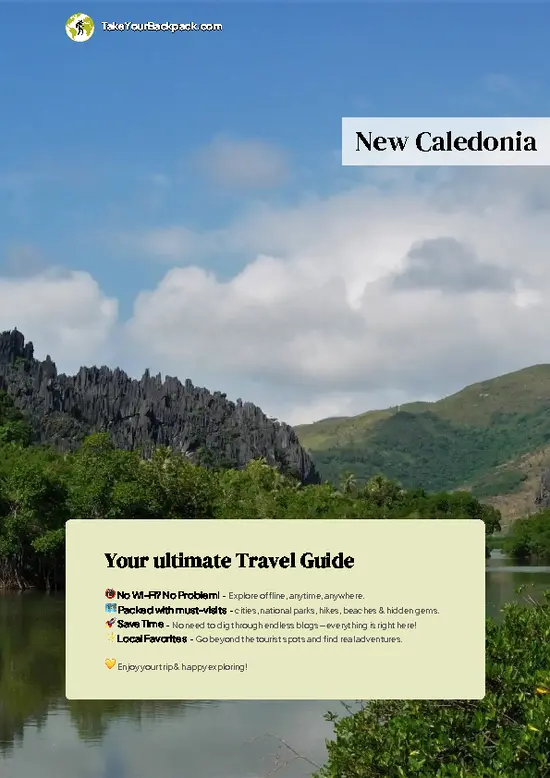
example page 0 from our offline Travel Guide for New Caledonia
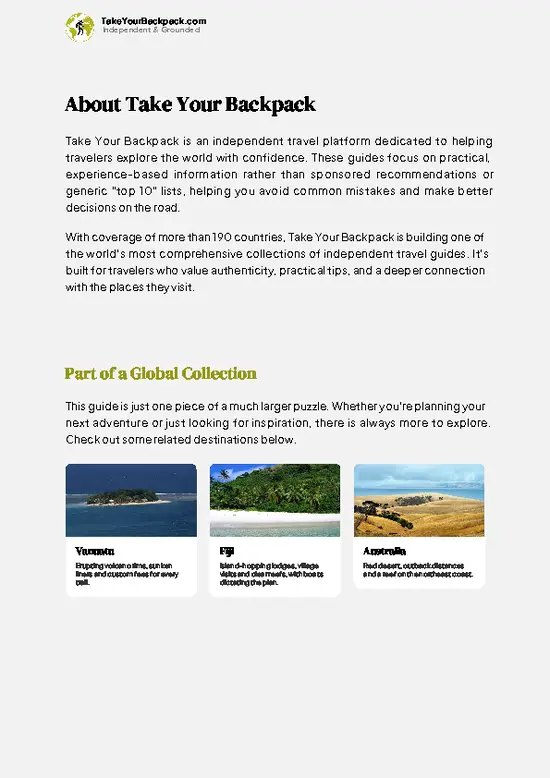
example page 1 from our offline Travel Guide for New Caledonia
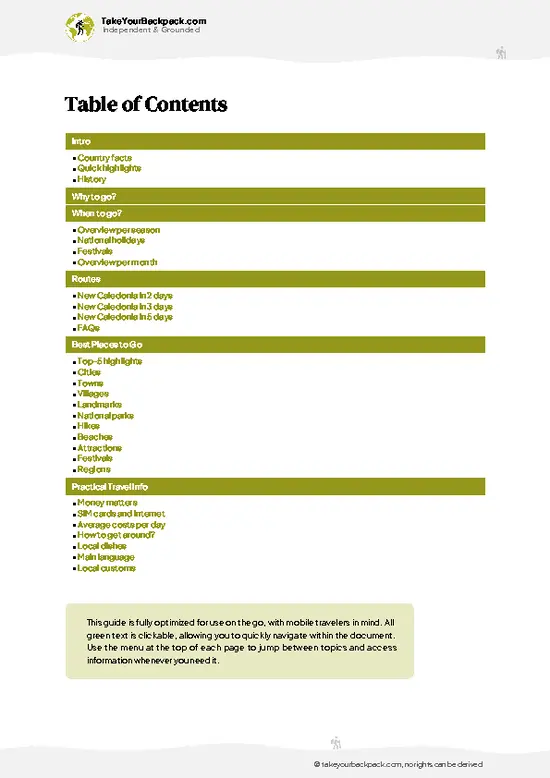
example page 2 from our offline Travel Guide for New Caledonia
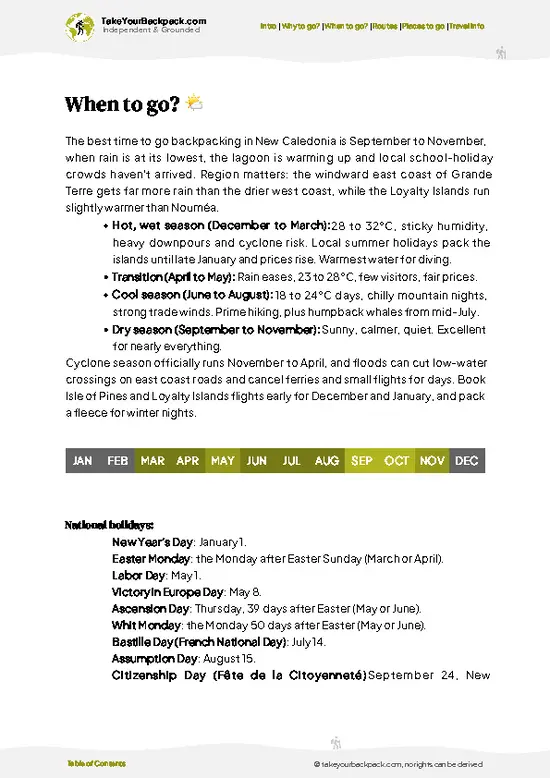
example page 3 from our offline Travel Guide for New Caledonia
example page 4 from our offline Travel Guide for New Caledonia
example page 5 from our offline Travel Guide for New Caledonia
example page 6 from our offline Travel Guide for New Caledonia
example page 7 from our offline Travel Guide for New Caledonia
Loading the map 🌍
CLICK TO FILTER
cities
towns
villages
landmarks
national parks
hikes
beaches
attractions
festivals
regions
SHOW COUNTRY’S BESTSHOW ALL

✨ Why go?
Ranked #1 region in New Caledonia
Why visitors keep coming back

Ouvéa suits people who want to do very little, well. The draw is the Mouli lagoon, where you can walk for hours along sand so pale it hurts your eyes without sunglasses, snorkel over turtles and rays, and see nobody else. It also carries real weight. The 1988 hostage crisis is still present in local memory, and a respectful visit to the memorial adds meaning that a resort island cannot offer. Most travelers linger three or four days, since the pace is the point. Stays are usually in family-run bungalows or guesthouses run by tribes, and the meals tend to be fresh fish, coconut crab on special occasions and yam or manioc wrapped and cooked in an earth oven as bougna. It is quiet, not a party place. Solo travelers will find it welcoming because hosts talk with guests, but you should come with … read more 👉
Ouvéa suits people who want to do very little, well. The draw is the Mouli lagoon, where you can walk for hours along sand so pale it hurts your eyes without sunglasses, snorkel over turtles and rays, and see nobody else. It also carries real weight. The 1988 hostage crisis is still present in local memory, and a respectful visit to the memorial adds meaning that a resort island cannot offer. Most travelers linger three or four days, since the pace is the point. Stays are usually in family-run bungalows or guesthouses run by tribes, and the meals tend to be fresh fish, coconut crab on special occasions and yam or manioc wrapped and cooked in an earth oven as bougna. It is quiet, not a party place. Solo travelers will find it welcoming because hosts talk with guests, but you should come with a book and patience. Hikers will find the walking short and flat. Skip it if you need nightlife, ATMs on every corner or a packed schedule.

💡 HighlightsMust-see experiences and standout moments

  1. Pont de Mouli (Mouli Bridge): The bridge over the Mouli pass is the postcard of Ouvéa. Turquoise water rushes under it with the tide, and green turtles, rays and small reef sharks drift below. Go at slack or rising tide in early morning for the best light and calm surface. Free, allow 30 to 60 minutes, longer if you jump in to snorkel.
  2. Plage de Mouli: A near-endless strip of white sand along the lagoon, backed by coconut palms and casuarinas. Walk the stretch near the pass at low tide when the sand is firm. Free, plan 2 to 3 hours. Bring water and a hat, because shade is patchy.
  3. Trou Bleu d’Anawa: A deep, clear natural pool in the coral rock, fringed by vegetation and fed by the sea underground. Water is cool and fish are visible from the edge. Mid-morning light gives the best color. A small
… read more 👉
  1. Pont de Mouli (Mouli Bridge): The bridge over the Mouli pass is the postcard of Ouvéa. Turquoise water rushes under it with the tide, and green turtles, rays and small reef sharks drift below. Go at slack or rising tide in early morning for the best light and calm surface. Free, allow 30 to 60 minutes, longer if you jump in to snorkel.
  2. Plage de Mouli: A near-endless strip of white sand along the lagoon, backed by coconut palms and casuarinas. Walk the stretch near the pass at low tide when the sand is firm. Free, plan 2 to 3 hours. Bring water and a hat, because shade is patchy.
  3. Trou Bleu d’Anawa: A deep, clear natural pool in the coral rock, fringed by vegetation and fed by the sea underground. Water is cool and fish are visible from the edge. Mid-morning light gives the best color. A small fee or customary gift to the local custodians is usual, around 500 to 1,000 XPF (US$5 to 9). Allow 1 hour.
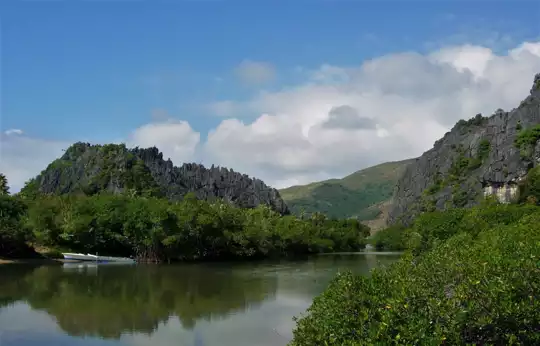
  4. Falaises de Lekiny: Limestone cliffs at the south end of the island, facing the Mouli bridge across the lagoon. Access is only with a guide from the Lékiny tribe; the visit takes about 2.5 hours, and at low tide you can walk the strip of sand at their foot.
  5. Mémorial de Wadrilla: A memorial to the nineteen Kanak men killed in the 1988 hostage crisis, with a set of carved pillars standing in a quiet clearing. It is the island’s most important place of remembrance, so go in a serious mood, dress modestly and ask locally before entering. Free, with a customary gift appreciated. Allow 30 to 45 minutes. Morning is calmer.
Beyond the main island, day trips work well to the Pléiades du Nord, the string of small lagoon islets, and to the Beautemps-Beaupré atoll at the northern tip, both reached by boat with local operators.
For a first visit, start with Pont de Mouli, because it gives you the lagoon, the turtles and the island’s character in a single stop.
Spotted a mistake or missing something? Contact us.

Things to do near Ouvéa

Ratings based on Tripadvisor reviews. When you book through this link, you support our work at no extra cost to you.

🏘️ NeighborhoodsUnderstanding the local layout

Ouvéa is a thin crescent of coral about 35 km long, so its areas are really stretches of one road, with the lagoon and its white sand on the west side.
  • Fayaoué: The island’s service center, with a few small shops, a bank, a pharmacy and the town hall. Stock up here on bread, tinned fish and sunscreen, then browse stalls selling yams, taro and papaya. Dust, scooters and roosters are your soundtrack. It’s flat and walkable in an hour, and you leave with a full pack and your bearings.
  • Mouli and the south: The reason most people come. The beach is a long, squeaky white ribbon backed by coconut palms, with the lagoon shifting from milky jade to deep turquoise. The Pont de Mouli, a bridge over a narrow pass, has strong current and clear water full of fish. Nights are silent apart from waves. Walking
… read more 👉
Ouvéa is a thin crescent of coral about 35 km long, so its areas are really stretches of one road, with the lagoon and its white sand on the west side.
  • Fayaoué: The island’s service center, with a few small shops, a bank, a pharmacy and the town hall. Stock up here on bread, tinned fish and sunscreen, then browse stalls selling yams, taro and papaya. Dust, scooters and roosters are your soundtrack. It’s flat and walkable in an hour, and you leave with a full pack and your bearings.
  • Mouli and the south: The reason most people come. The beach is a long, squeaky white ribbon backed by coconut palms, with the lagoon shifting from milky jade to deep turquoise. The Pont de Mouli, a bridge over a narrow pass, has strong current and clear water full of fish. Nights are silent apart from waves. Walking is lovely but hot, and distances are long, so a bike helps. You get the sunrise on empty sand.
  • The east coast strip: Tribal villages, churches and tall pines line the road, with low stone walls and woodsmoke at dusk. Nothing here is a sight in itself. Greet everyone you pass and you will be answered, often with an invitation to stop. You get a real picture of daily Kanak life.
  • The north toward Ouloup: Home to the airport and the departure points for lagoon boats heading to the Pléiades du Nord islets. The Trou Bleu d’Anawa, a deep sinkhole pool ringed by limestone and vines, is a cool, shaded swim after a hot ride. Services are thin, so carry water. You get the island’s wildest corner.

⌛️ 5 daysSeeing the highlights in 5 days

7:00 AM, Pont de Mouli: Start at the bridge while the light is soft and the tide is moving through the pass. Turtles surface for air, the water is clear, and you will usually have the spot to yourself. Snorkel from the sandy edge if conditions are calm, then drive on.
9:00 AM, Plage de Mouli: Walk the beach for an hour or two, keeping to firm sand near the waterline. The sand is bright and the lagoon shallow, so bring a hat and sunscreen. Then head back toward your guesthouse for a late breakfast.
11:00 AM, Trou Bleu d’Anawa: Drive to the blue hole while the sun is high and the water is bright. Swim carefully and respect the customary guardians of the site. Afterward, rest in the shade before the midday heat peaks.
1:00 PM, Lunch in Fayaoué: Eat in the main village at a snack bar or a guesthouse … read more 👉
7:00 AM, Pont de Mouli: Start at the bridge while the light is soft and the tide is moving through the pass. Turtles surface for air, the water is clear, and you will usually have the spot to yourself. Snorkel from the sandy edge if conditions are calm, then drive on.
9:00 AM, Plage de Mouli: Walk the beach for an hour or two, keeping to firm sand near the waterline. The sand is bright and the lagoon shallow, so bring a hat and sunscreen. Then head back toward your guesthouse for a late breakfast.
11:00 AM, Trou Bleu d’Anawa: Drive to the blue hole while the sun is high and the water is bright. Swim carefully and respect the customary guardians of the site. Afterward, rest in the shade before the midday heat peaks.
1:00 PM, Lunch in Fayaoué: Eat in the main village at a snack bar or a guesthouse that serves grilled fish, rice and manioc. Stock up on water and cash here, since services are thin elsewhere.
3:00 PM, Saint-Joseph church area: Skip the usual beach stop and visit a quiet village church and its grounds, where the island’s Catholic history is visible in the architecture. Ask permission before taking photos, and greet anyone you meet.
4:30 PM, Falaises de Lekiny: Look across to the cliffs from the Mouli bridge as the heat fades; a closer visit needs a guide from the Lékiny tribe, booked ahead.
6:00 PM, Sunset on the lagoon side: Return west and finish with sunset over the water, then dinner at your guesthouse. Evenings are quiet, so an early night is part of the plan.

🌤️ When to go?Choosing the right time of year

May to October is the comfortable window for Ouvéa, with trade winds, little humidity and the lagoon at its clearest.
  • Cool season (May to October): Highs of 24 to 27°C (75 to 81°F), nights around 18 to 20°C (64 to 68°F), and about 11 hours of daylight in June. Humpback whales pass offshore from roughly July to September. Flights and pensions fill during the July school holidays, so book weeks ahead.
  • Hot season (November to April): Highs of 29 to 32°C (84 to 90°F) with thick humidity and about 13 hours of light in December. Swimming is superb, but cyclone risk peaks from January to March and flights can be canceled at short notice. Prices ease, except around Christmas and New Year.
  • Shoulder months (April-May and October-November): Warm sea, fewer visitors and easier booking, with an occasional
… read more 👉
May to October is the comfortable window for Ouvéa, with trade winds, little humidity and the lagoon at its clearest.
  • Cool season (May to October): Highs of 24 to 27°C (75 to 81°F), nights around 18 to 20°C (64 to 68°F), and about 11 hours of daylight in June. Humpback whales pass offshore from roughly July to September. Flights and pensions fill during the July school holidays, so book weeks ahead.
  • Hot season (November to April): Highs of 29 to 32°C (84 to 90°F) with thick humidity and about 13 hours of light in December. Swimming is superb, but cyclone risk peaks from January to March and flights can be canceled at short notice. Prices ease, except around Christmas and New Year.
  • Shoulder months (April-May and October-November): Warm sea, fewer visitors and easier booking, with an occasional shower.
Book flights to Ouvéa before anything else, because the small planes sell out first.


source: climatestotravel.comJANJanuary: fair for travelingFEBFebruary: fair for travelingMARMarch: fair for travelingAPRApril: fair for travelingMAYMay: highly recommended for travelingJUNJune: highly recommended for travelingJULJuly: excellent for travelingAUGAugust: excellent for travelingSEPSeptember: highly recommended for travelingOCTOctober: highly recommended for travelingNOVNovember: fair for travelingDECDecember: fair for traveling
when-to-go

✈️ The backpacker research shortcutNew Caledonia Travel Guide

An offline-friendly backpacking guide with optimized travel routes, ranked highlights, transport advice, and the best areas to stay.
example page 0 from our offline Travel Guide for New Caledonia
example page 1 from our offline Travel Guide for New Caledonia
example page 2 from our offline Travel Guide for New Caledonia
example page 3 from our offline Travel Guide for New Caledonia
example page 4 from our offline Travel Guide for New Caledonia
example page 5 from our offline Travel Guide for New Caledonia
example page 6 from our offline Travel Guide for New Caledonia
example page 7 from our offline Travel Guide for New Caledonia
The digital guide (158 pages) contains:
✅ 42 highlights, ranked by travel appeal
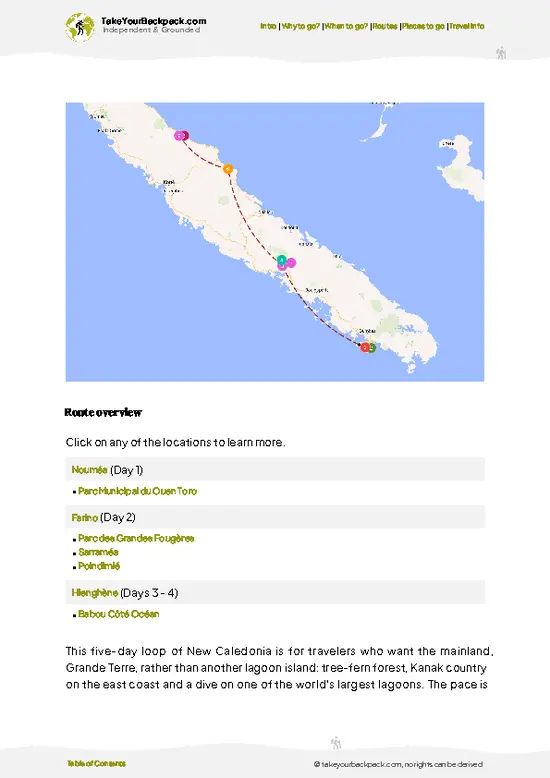
✅ Optimized 2, 3 & 5-day travel routes
✅ Cities, national parks, landmarks, beaches
✅ How to get around
✅ Offline-friendly for travel without Wi-Fi
👉 Click to see all 30+ guide features

📅 Plan smarter in minutes, not weeks
✅ Month by month travel advice
✅ Festivals & national holidays
✅ Budget expectations

🗺️ Go to the right places, skip the overrated ones
✅ Honest pros & cons of destinations
✅ Top hikes, parks & viewpoints
✅ Lesser-known places most travelers miss
✅ Clear “worth it vs skip it” guidance

🛏️ Travel smoothly without rookie mistakes
✅ Best areas to stay
✅ Transport systems explained simply
✅ Common scams & safety advice
✅ SIM cards, money & practical tips

🌍 Understand the country, not just visit it
✅ Culture & traditions
✅ 52 Essential phrases & customs
✅ Festivals worth planning around
✅ Traveler-friendly historical context
✅ Insights that make places more meaningful

📱 Built for real travel conditions
✅ Fully downloadable PDF
✅ Works completely offline
✅ Optimized for phone use
✅ Useful in remote areas & buses
✅ Everything in one place
Stop searching, start planning
Get instant access to your full guide. 30‑day money-back guarantee.
+ Add another guide for just

By proceeding you agree to our terms.
Sent to your inbox immediately after payment • 100% Secure Checkout
Best Backpacking Travel Advisor 2025 tourism awardBest Backpacking
Travel Advisor
2025
What others say about Take Your Backpack Guides:
⭐⭐⭐⭐⭐
Fantastic, amazing amount of information!
⭐⭐⭐⭐⭐
My goodness this is amazing, it's what I've been looking for hats off too you!
⭐⭐⭐⭐⭐
I think this is absolutely BRILLIANT
⭐⭐⭐⭐
Very complete and informative. It's still missing places, but I gotta to commend you
⭐⭐⭐⭐⭐
This is truly amazing, thank you, can't wait to explore it with my kids!
⭐⭐⭐⭐⭐
Awesome resource, thank you!
⭐⭐⭐⭐⭐
This is amazing! Can't wait to explore the ones I haven't seen
⭐⭐⭐⭐
I love this! Well done, great idea.
⭐⭐⭐⭐⭐
Thanks for taking the time to make this gem!
⭐⭐⭐⭐⭐
This might be the best website I've ever seen.
⭐⭐⭐⭐⭐
Congratulations, and thank you so much for your work; it's incredibly valuable.
⭐⭐⭐⭐
In all seriousness I think you did a great job pointing out the important spots
⭐⭐⭐⭐⭐
10/10 very good
⭐⭐⭐⭐⭐
As someone who's only just starting to visit regularly this is awesome, thank you.
⭐⭐⭐⭐
Thank you very much! I'm going to visit my dad, it's going to be very useful!
⭐⭐⭐⭐⭐
This is really cool! We'll be travelling for the first time and this definitely come in handy.
⭐⭐⭐⭐⭐
You are now our minister of culture, congratulations 👨‍💼
⭐⭐⭐⭐⭐
Just wanted to tell you that this is a pearl! Going to follow your recommendations.
⭐⭐⭐⭐⭐
This is so cool. I'll definitely be using the resource for my travels soon.
⭐⭐⭐⭐⭐
This is very impressive! Good work.
⭐⭐⭐⭐⭐
This is an amazing and informative site. Very well done!

🛏️ Where to stay?Best areas to stay in New Caledonia

The best budget base on Ouvéa is the area around Mouli and the southern beaches, with Fayaoué as the practical second choice. Ouvéa has almost no conventional dorms, so budget beds mean tribal bungalows, simple pensions and camping with a host’s permission, usually XPF 5,000 to 8,000 (US$45 to 72) per person. Many pensions run on half board, which helps because restaurants are few.
Mouli suits swimmers and sleepers. Nights are dark and quiet, with only waves and wind in the palms, and you step directly onto the beach. The trade-off is distance from shops, so bring supplies and arrange a bike or … read more 👉
The best budget base on Ouvéa is the area around Mouli and the southern beaches, with Fayaoué as the practical second choice. Ouvéa has almost no conventional dorms, so budget beds mean tribal bungalows, simple pensions and camping with a host’s permission, usually XPF 5,000 to 8,000 (US$45 to 72) per person. Many pensions run on half board, which helps because restaurants are few.
Mouli suits swimmers and sleepers. Nights are dark and quiet, with only waves and wind in the palms, and you step directly onto the beach. The trade-off is distance from shops, so bring supplies and arrange a bike or lift in advance. There is no public transport, and a pension host can often organize rides.
Fayaoué is where you stay if you want to be near the shop, the bank and the pharmacy, with more lodging options and easier access to a rental car or scooter. It is a little noisier, with dogs, roosters and passing scooters, but still safe and calm at night. You can walk to most services after dark with a flashlight, since street lighting is minimal.
Book ahead during the July and December school holidays, because the island has few beds and the flights fill early. Always confirm pickup from the airport when you book.

🚌 Getting aroundMoving around without the hassle

Ouvéa has no bus station, so arrival means a flight to the airstrip at Ouloup, where your pension usually meets you with a pickup truck for the ride along the coast road to Fayaoué and the beaches. Distances are long and the road is a single paved strip that runs the length of the island, lined with palms and roadside dogs. Traffic is almost nonexistent, but public transport is too, so plan your movement yourself.
  • Flight from Nouméa: Flights from Nouméa take about 40 minutes, usually for XPF 12,000 to 20,000 (US$110 to 180) each way depending on fare and season. You get a view of the lagoon’s turquoise ring on approach, so sit on the window side.
  • Pension pickup and transfers: Most lodgings meet flights and charge about XPF 1,000 to 3,000 (US$9 to 27) for a transfer, or fold it into the stay.
… read more 👉
Ouvéa has no bus station, so arrival means a flight to the airstrip at Ouloup, where your pension usually meets you with a pickup truck for the ride along the coast road to Fayaoué and the beaches. Distances are long and the road is a single paved strip that runs the length of the island, lined with palms and roadside dogs. Traffic is almost nonexistent, but public transport is too, so plan your movement yourself.
  • Flight from Nouméa: Flights from Nouméa take about 40 minutes, usually for XPF 12,000 to 20,000 (US$110 to 180) each way depending on fare and season. You get a view of the lagoon’s turquoise ring on approach, so sit on the window side.
  • Pension pickup and transfers: Most lodgings meet flights and charge about XPF 1,000 to 3,000 (US$9 to 27) for a transfer, or fold it into the stay. You get a first conversation and often a tour of the island on the way.
  • Bicycle: Rentals run about XPF 1,500 to 2,500 (US$14 to 23) a day and suit the flat road well. Start at dawn, since by 10 am the sun on the asphalt is brutal, and carry at least 2 liters of water. You get the smell of frangipani and woodsmoke and time to stop at every beach.
  • Rental car or scooter: Cars cost about XPF 7,000 to 11,000 (US$63 to 100) a day and scooters a bit less, with limited stock, so reserve early. Fuel is sold at a handful of stations only, usually closed Sunday. You get the freedom to reach Mouli, the north and the Trou Bleu on one day.
  • Walking and hitching: Locals pick up walkers, and hitching is normal and polite if you wave and smile. Walking within Fayaoué or along Mouli beach is easy, but crossing the island on foot takes hours in heat. You get chats with villagers and a ride in the back of a pickup, wind and all.

👛 Costs (as of 15 October 2026)Travel costs and budget guide for Ouvéa

Backpacking Ouvéa costs about €83 to 127 a day in high season, and almost all of that goes on a bed, food and getting around the island’s long, thin strip of land. Travelers pay in Pacific francs, but the figures here are in euros. Cards work only in a few places, so carry cash from Nouméa.
CategoryBudget RangeLocal Reality
Dorm accommodation€30 to 45Real dorms are rare. Expect a basic tribal bungalow or a simple guesthouse room, often with a meal plan offered. Low season runs a little cheaper, around €25 to 38.
Meals€20 to 30Fish, rice, root vegetables and coconut dishes at guesthouse tables or small snack counters. Shops in Wadrilla and Fayaoué sell baguettes, tins and fruit. Imported food is pricey.
Local transport€15 to 25Public buses barely exist. Hitchhiking is common, but a rental bike
… read more 👉
Backpacking Ouvéa costs about €83 to 127 a day in high season, and almost all of that goes on a bed, food and getting around the island’s long, thin strip of land. Travelers pay in Pacific francs, but the figures here are in euros. Cards work only in a few places, so carry cash from Nouméa.
CategoryBudget RangeLocal Reality
Dorm accommodation€30 to 45Real dorms are rare. Expect a basic tribal bungalow or a simple guesthouse room, often with a meal plan offered. Low season runs a little cheaper, around €25 to 38.
Meals€20 to 30Fish, rice, root vegetables and coconut dishes at guesthouse tables or small snack counters. Shops in Wadrilla and Fayaoué sell baguettes, tins and fruit. Imported food is pricey.
Local transport€15 to 25Public buses barely exist. Hitchhiking is common, but a rental bike or a shared ride for a day adds up. A car rental is roughly €50 to 70 a day, which is cheaper split among several people.
Basic activities/entry fees€10 to 15Many beaches and the Anawa blue hole are free or have small tribal access fees. A guided visit to the Lékiny cliffs, a pirogue trip or a snorkel outing costs extra.
Miscellaneous expenses€8 to 12Water, snacks, phone credit, small tips for guides and the occasional handmade souvenir.
Total Daily Budget€83 to 127About €105 on a typical high-season day, with a bed at the upper end of its range.
To save money, book a bungalow with half board and share a rental car or ride with other guests for the island’s long north to south road, rather than paying for each trip separately.
⚠️ Prices can change and everyone travels differently, so take this as a rough guide. Hope it helps you plan your adventure!

🚌 Day tripsEasy escapes and nearby places

Ouvéa itself is the base for day trips, since there are no overnight outings required and everything below fits a single day by bike, car or boat.Pléiades du Nord Islets: A boat trip across the lagoon to the uninhabited northern islets, with white sand, snorkeling over coral and a picnic cooked on the beach. Expect a day of about 6 to 7 hours, with prices around XPF 8,000 to 12,000 (US$72 to 108) including lunch. Go in the calmer months of May to October and bring reef-safe sunscreen, since there is no shade on the sandbars. First-timers often forget a hat and burn.
Trou Bleu d’Anawa: A natural limestone sinkhole connected to the sea, with clear blue-green water, small fish and a cool shaded swim. It is a bike ride of 1 to 2 hours from Fayaoué, and entry is a small contribution of a few hundred … read more 👉
Ouvéa itself is the base for day trips, since there are no overnight outings required and everything below fits a single day by bike, car or boat.Pléiades du Nord Islets: A boat trip across the lagoon to the uninhabited northern islets, with white sand, snorkeling over coral and a picnic cooked on the beach. Expect a day of about 6 to 7 hours, with prices around XPF 8,000 to 12,000 (US$72 to 108) including lunch. Go in the calmer months of May to October and bring reef-safe sunscreen, since there is no shade on the sandbars. First-timers often forget a hat and burn.
Trou Bleu d’Anawa: A natural limestone sinkhole connected to the sea, with clear blue-green water, small fish and a cool shaded swim. It is a bike ride of 1 to 2 hours from Fayaoué, and entry is a small contribution of a few hundred XPF (US$3 to 5) to the local clan. Go early, before tour groups arrive and the heat sets in. Many visitors skip it because of the heat on the road, but the dip is worth it.
Mouli Bridge and Beach: The Pont de Mouli crosses a narrow pass where lagoon water rushes through, and from the bridge you can spot turtles and rays. Combine it with a long walk on the beach, which is free. Stay at the bridge for sunrise or late afternoon, when light is soft, and take care swimming near the pass, where the current can be strong at tide change. A bike from Fayaoué makes it a half day.
Whale Watching (July to September): Humpbacks migrate through the waters around the Loyalty Islands in winter, and local boat operators run morning trips in the lagoon and just beyond the reef. Expect 3 to 4 hours and about XPF 7,000 to 10,000 (US$63 to 90). Book through your pension, because there is no walk-up office and sea conditions decide departures.

🍲 FoodLocal Cuisine & Drinks

Ouvéa eats from the lagoon and the coconut grove. The signature dish is bougna, a parcel of yam, sweet potato, banana and chicken or fish, wrapped in banana leaves with coconut milk and steamed for hours in an earth oven. Smoke, sweet coconut and soft tubers come together in one bite. It is a feast dish, so ask a tribe guesthouse a day ahead; a portion runs about €10 to 15. Lagoon coconut crab, lobster and grilled parrotfish turn up on set menus, and fresh raw fish in coconut milk with lime is the best light lunch you will find.

There are few restaurants. Most backpackers eat at tribal guesthouses (half board often costs €25 to 40 a person), at small roulottes and snack counters near Wadrilla and Fayaoué, and at the little épiceries where you stock up on baguettes, tinned tuna and fruit. … read more 👉
Ouvéa eats from the lagoon and the coconut grove. The signature dish is bougna, a parcel of yam, sweet potato, banana and chicken or fish, wrapped in banana leaves with coconut milk and steamed for hours in an earth oven. Smoke, sweet coconut and soft tubers come together in one bite. It is a feast dish, so ask a tribe guesthouse a day ahead; a portion runs about €10 to 15. Lagoon coconut crab, lobster and grilled parrotfish turn up on set menus, and fresh raw fish in coconut milk with lime is the best light lunch you will find.

There are few restaurants. Most backpackers eat at tribal guesthouses (half board often costs €25 to 40 a person), at small roulottes and snack counters near Wadrilla and Fayaoué, and at the little épiceries where you stock up on baguettes, tinned tuna and fruit. Morning bread sells out early, so go soon after dawn. Coconut water straight from the husk costs next to nothing, and local vanilla is a good thing to buy and carry home.

Meals follow the rhythm of village life. Bring a small gift such as coffee or sugar if you are invited to eat with a family, and wait to be served. Alcohol is hard to find on many tribal lands, so buy beer in Fayaoué before heading to a remote stay. Cash is the safest way to pay.

Order early and expect to wait. Dinner is a slow, shared, generous affair.

🛡️ SafetyScams, Hazards, and Annoyances

Ouvéa is very safe for backpackers, with little theft and no organized scams, and most problems come from the sun, the sea and etiquette. Land and beaches belong to clans, so ask your host before camping, fishing or entering a village, and dress modestly away from the beach. Greet people you meet. Sundays are quiet days devoted to church, so shops close and noise and drinking are frowned upon. Alcohol is limited, so bring any you want from Nouméa.
Solo travelers, including women, report feeling comfortable, and night walks are usually uneventful. Roads are unlit, so carry a headlamp and watch for dogs and the occasional unlit scooter. The main hazards are physical. Currents at the Mouli pass can be strong at tide change, so swim only in calm spots. Reef cuts get infected quickly in warm water, … read more 👉
Ouvéa is very safe for backpackers, with little theft and no organized scams, and most problems come from the sun, the sea and etiquette. Land and beaches belong to clans, so ask your host before camping, fishing or entering a village, and dress modestly away from the beach. Greet people you meet. Sundays are quiet days devoted to church, so shops close and noise and drinking are frowned upon. Alcohol is limited, so bring any you want from Nouméa.
Solo travelers, including women, report feeling comfortable, and night walks are usually uneventful. Roads are unlit, so carry a headlamp and watch for dogs and the occasional unlit scooter. The main hazards are physical. Currents at the Mouli pass can be strong at tide change, so swim only in calm spots. Reef cuts get infected quickly in warm water, so clean them well. Falling coconuts are a real risk under palms. Drink plenty of water and cover up from the midday sun. Medical care is limited to the clinic in Fayaoué, so carry basic supplies and travel insurance that covers evacuation.

FAQFrequently asked questions about Ouvéa

Ouvéa is worth the flight and not a stopover, because its 25 km white-sand beach, the Mouli pass and the Pléiades du Nord islets have no real equivalent on the main island. Flights from Nouméa take about 40 minutes and cost roughly XPF 12,000 to 20,000 each way. The pace is slow and the lodgings are tribal pensions, so it suits travelers who want beaches and local contact more than nightlife.
Three to four days is the practical minimum for Ouvéa, and five lets you add a boat day to the Pléiades du Nord and a rest day. Plan one day for Mouli beach and the bridge, one for the Trou Bleu d’Anawa and the north, and one for the islets by boat at about XPF 8,000 to 12,000. Flight schedules from Nouméa are limited, so check them before fixing dates.
A day trip from Nouméa to Ouvéa is technically possible by plane, but it isn’t worthwhile because the 40-minute flight each way leaves only a few hours on the ground. Flight times are limited and fares of XPF 12,000 to 20,000 each way make it costly for a short stay. Staying at least two nights lets you see Mouli, the Trou Bleu and a lagoon boat trip without rushing.
⚠️ Things can change over time, so always validate details locally before you go.

Other New Caledonian regions near Ouvéa

Explore more nearby:

  • Lifou Island—White limestone cliffs, cave pools, tribal stays, Drehu villages| 80 km away
  • Baie de Prony—Red-earth tracks, mangrove kayaking, warm spring, convict ruins| 193 km away
  • Isle of Pines—Pirogue lagoon, pine-lined beaches, Pic N’Ga, Vao village| 239 km away

💡 Not sure where to go next?
Create a personalized itinerary for New Caledonia including Ouvéa and the places that fit your trip.

Generate my itinerary

👉 Discover all regions

Or checkout all New Caledonia has to offer (think cities, towns, villages, national parks, hikes, beaches, festivals)
Country photo of New Caledonia

We 💚 feedbackIs it worth it?

Most travelers cram Ouvéa into one rushed day and treat it as a beach photo stop. Do the opposite. Book at least three nights, rent a car or scooter on arrival, and spend mornings by the water and afternoons driving the island. Carry cash, because card machines are scarce, and bring a small gift for customary greetings.

✍️ Help improve this page!
The information on this page is based on in-depth research, insights shared by experienced travelers, and feedback from the local travel community in New Caledonia. While every effort is made to keep the information accurate and current, conditions can change — so if you spot anything incorrect or outdated, please get in touch.


🙋‍♂️ Give feedback

👋 Meet the founderWho’s Behind Take Your Backpack?

Johan, backpacker and founder of TakeYourBackpackHi, I’m Johan (Netherlands 🇳🇱), the creator of TakeYourBackpack. Over the past 3 decades, I’ve backpacked through 90+ countries across six continents, gaining extensive experience with independent travel, long-term trips, and overland routes.

This site is built on a combination of firsthand travel experience and carefully curated insights from other backpackers. Many guides are based on places I’ve personally visited, while others bring together tips, observations, and practical advice shared by trusted travelers I’ve met along the way.

The goal is to provide realistic, experience-driven guidance — not generic itineraries — so you can explore destinations with better context, clearer expectations, and more confidence.