×

New Caledonia🇳🇨 | regionsLifou Islandlimestone cliffs, vanilla plantations, tribal lands, hidden caves | things to do and best time to go

Explore Isle of PinesExplore Koné

Backpacking in Lifou Island
🌟 Highlightregion ranked #2
By Johan Kruseman 🇳🇱 | Updated September 4, 2026

Everyone talks about Lifou for the cruise-ship stop and that one famous beach photo, but the real story is what happens after the ship leaves and the island exhales. Lifou sits in the Loyalty Islands, off the east coast of Grande Terre in New Caledonia, and for backpackers it’s a slow-burn destination: fewer hostels, more homestays, and a rhythm that runs on church bells and tides, not bar crawls. You get wild cliffs, caves, and lagoon-perfect bays, plus Kanak culture that still feels lived-in rather than performed. You also get higher prices than Southeast Asia, limited buses between villages like Wé and Luengoni, and nights that go quiet early. Compared with Nouméa, Lifou is cheaper on temptations, richer on raw nature, and thinner on infrastructure. It’s not over-touristy, just cruise-spiky: crowded for a few hours, then suddenly you’re the only outsider on the beach, wondering how this place isn’t more famous.

Discover everything you want to know in the 📖 New Caledonia Travel Guide.
Loading the map 🌍
CLICK TO FILTER
cities
towns
villages
landmarks
national parks
hikes
beaches
attractions
festivals
regions
SHOW COUNTRY’S BESTSHOW ALL

✨ Why go?
Ranked #2 region in New Caledonia
What makes this region worth visiting

Lifou Island is a backpacker’s playground, and here’s why you’ll want to linger. First off, the variety of landscapes is mind-blowing. You’ve got stunning beaches, lush forests, and dramatic cliffs all within a short hike. It’s like nature’s buffet, and you can sample a bit of everything without the hassle of constant relocation.

Transport is a breeze. You can rent a bike or hop on a local bus to explore at your own pace. This flexibility means you can dive into the island’s culture, from traditional Kanak villages to vibrant markets, without feeling rushed.

And let’s talk about slow travel. Lifou encourages you to soak it all in. Spend a day lounging on a secluded beach, then the next exploring coral reefs. You can mix nature and culture seamlessly, making each experience richer.

By … read more 👉
Lifou Island is a backpacker’s playground, and here’s why you’ll want to linger. First off, the variety of landscapes is mind-blowing. You’ve got stunning beaches, lush forests, and dramatic cliffs all within a short hike. It’s like nature’s buffet, and you can sample a bit of everything without the hassle of constant relocation.

Transport is a breeze. You can rent a bike or hop on a local bus to explore at your own pace. This flexibility means you can dive into the island’s culture, from traditional Kanak villages to vibrant markets, without feeling rushed.

And let’s talk about slow travel. Lifou encourages you to soak it all in. Spend a day lounging on a secluded beach, then the next exploring coral reefs. You can mix nature and culture seamlessly, making each experience richer.

By choosing Lifou, you’re not just ticking boxes; you’re crafting a journey that balances comfort and adventure. It’s the kind of place where you can truly connect with the land and its people, leaving you with stories that last long after the trip ends.
Want to include Lifou Island in your New Caledonia route?
Create a personalized New Caledonia itinerary that includes Lifou Island and the places that fit your trip — based on your travel style, budget, and available time. Get your route in seconds.

Generate my trip

💡 HighlightsDon't-miss highlights and experiences

  1. Jokin Cliffs & Natural Pools — The signature Lifou sight: sheer limestone cliffs dropping into turquoise ocean, with sculpted rock arches and tidal pools you can scramble down to and swim in. Dramatic, photogenic and unmistakably Lifou.
  2. Luengöni Beach (Luengoni) — A long crescent of powder-white sand, coconut palms and a shallow fringing reef. Great for lazy days, snorkelling over colorful bommies and watching local families picnic — the archetypal Loyalty Islands beach, but done exceptionally well here.
  3. Wé Market & Waterfront — The island’s main hub: morning fish and produce stands, simple eateries and a lively local market where you can buy woven pandanus, vanilla pods and catch impromptu Kanak drumming or song. The best place to feel how people actually live on Lifou.
  4. Easo Village
read more 👉
  1. Jokin Cliffs & Natural Pools — The signature Lifou sight: sheer limestone cliffs dropping into turquoise ocean, with sculpted rock arches and tidal pools you can scramble down to and swim in. Dramatic, photogenic and unmistakably Lifou.
  2. Luengöni Beach (Luengoni) — A long crescent of powder-white sand, coconut palms and a shallow fringing reef. Great for lazy days, snorkelling over colorful bommies and watching local families picnic — the archetypal Loyalty Islands beach, but done exceptionally well here.
  3. Wé Market & Waterfront — The island’s main hub: morning fish and produce stands, simple eateries and a lively local market where you can buy woven pandanus, vanilla pods and catch impromptu Kanak drumming or song. The best place to feel how people actually live on Lifou.
  4. Easo Village & Traditional Meeting Houses — Visit a customary village to see round meeting houses (naos), talk with local chiefs when permitted, and sometimes watch dance or ceremony. It’s the clearest way on Lifou to connect with Kanak culture outside a staged show.
  5. Interior Limestone Plateaus & Freshwater Wells — Walk inland from the coast onto the island’s karst plateau: rocky outcrops, surprising freshwater wells and pandanus groves. It’s a different, quieter side of Lifou that shows why the island feels so ancient and distinct.
  6. Traditional Weaving & Pandanus Workshops (hidden gem) — Small, locally run weaving sessions where women teach pandanus plaiting and make mats or hats. Hands-on, intimate and a proper local craft experience you won’t get in bigger tourist spots.
  7. Family Vanilla Farms (hidden gem) — Lifou has tiny, family vanilla plots where growers will show you the vines, explain curing and sell fresh pods. No big plantations — just honest, fragrant encounters that tell you about island livelihoods.
  8. Xodre / Lesser-Known Coastal Lookouts (hidden gem) — Scattered quiet headlands and village lookouts around the island (ask a local) give sweeping views with almost no other tourists. Perfect for golden hour photos and a moment of real solitude.
  9. Shallow Reef Snorkel Spots Around the Fringing Reef — Skip crowded charters and snorkel right off small beaches around the island to see vibrant bommies, surgeonfish and the occasional turtle. Visibility and reef variety here are distinct from New Caledonia’s main island.
  10. Local Village Fishing & Beachfront Cookups — Join (or politely watch) a community catch and the simple beachfront grilling that follows: fresh fish, cassava and coconut sauce. It’s food, rhythm and hospitality — an everyday Lifou experience that’s impossible to replicate elsewhere.
Spotted a mistake or missing something? Contact us.

⌛️ 5 daysHow to make the most of Lifou Island

Day 1: Lifou Island

Start your adventure by landing at Lifou Island’s small airport. The island’s transport system is simple but effective. You’ll find a few local taxis and rental bikes, which are your best bets for getting around. The pace here is laid-back, so don’t rush. Spend your first day acclimating. Head to the stunning Baie de Jinek for a swim. The water is crystal clear, and the coral reefs are teeming with life. This is your chance to ease into island time.

Day 2: Easo

On Day 2, make your way to Easo. It’s a short ride, but the scenery is worth every minute. The local buses run infrequently, so timing is key. Easo is known for its beautiful beaches and traditional Kanak culture. Visit the local market for fresh produce and handmade crafts. Engage with the locals; they’re friendly … read more 👉
Day 1: Lifou Island

Start your adventure by landing at Lifou Island’s small airport. The island’s transport system is simple but effective. You’ll find a few local taxis and rental bikes, which are your best bets for getting around. The pace here is laid-back, so don’t rush. Spend your first day acclimating. Head to the stunning Baie de Jinek for a swim. The water is crystal clear, and the coral reefs are teeming with life. This is your chance to ease into island time.

Day 2: Easo

On Day 2, make your way to Easo. It’s a short ride, but the scenery is worth every minute. The local buses run infrequently, so timing is key. Easo is known for its beautiful beaches and traditional Kanak culture. Visit the local market for fresh produce and handmade crafts. Engage with the locals; they’re friendly and eager to share their stories. This is where you’ll feel the island’s heartbeat.

Day 3: Wreck of the Tchou Tchou

Day 3 is all about exploration. Head to the Wreck of the Tchou Tchou, a fascinating spot that’s a bit off the beaten path. You’ll need to rent a bike or hitch a ride with a local. The wreck is a haunting reminder of the island’s history, and the surrounding area is perfect for a picnic. This detour adds depth to your understanding of Lifou’s past without straying too far from your route.

Day 4: Luecila

On Day 4, venture to Luecila. This area is less touristy, giving you a genuine feel for island life. The transport options are limited, so plan ahead. Spend the day hiking through lush trails and discovering hidden beaches. The tranquility here is unmatched, and you’ll find spots to relax away from the crowds.

Day 5: Must-Do Day

Your final day should be dedicated to the breathtaking cliffs of Lifou. This is the highlight of your trip. The views are spectacular, and the experience is unforgettable. Take a guided tour to learn about the geology and history of the area. This day encapsulates everything that makes Lifou special—natural beauty, rich culture, and a sense of adventure. Don’t miss it.
Turn your Lifou Island visit into an New Caledonia adventure
Build a complete New Caledonia route with Lifou Island, hidden gems, must-see destinations, and realistic travel times included.

Generate my trip

🌤️ When to go?Choosing the right time of year


  • Weather: The sweet spot is May to October, the dry season. Expect clear skies and low humidity, perfect for hiking and beach days. Avoid November to April when cyclones and heavy rains crash the party.

  • Temperature: During the dry season, temperatures hover around 22-27°C (72-81°F). Warm enough to ditch layers but cool enough to keep your energy up for exploring. The wet season cranks it up to 28-31°C (82-88°F), which can feel sticky and exhausting.

  • Daylight Hours: Lifou enjoys roughly 11 to 12 hours of daylight year-round. The dry season edges longer days, giving you more daylight to squeeze in snorkeling or village visits without rushing.

  • Crowds: The dry season draws the most visitors, especially July and August. But Lifou’s vibe stays chill—think small groups rather than packed
read more 👉

  • Weather: The sweet spot is May to October, the dry season. Expect clear skies and low humidity, perfect for hiking and beach days. Avoid November to April when cyclones and heavy rains crash the party.

  • Temperature: During the dry season, temperatures hover around 22-27°C (72-81°F). Warm enough to ditch layers but cool enough to keep your energy up for exploring. The wet season cranks it up to 28-31°C (82-88°F), which can feel sticky and exhausting.

  • Daylight Hours: Lifou enjoys roughly 11 to 12 hours of daylight year-round. The dry season edges longer days, giving you more daylight to squeeze in snorkeling or village visits without rushing.

  • Crowds: The dry season draws the most visitors, especially July and August. But Lifou’s vibe stays chill—think small groups rather than packed beaches. The wet season is ghost-town quiet, but you’ll trade that for weather headaches.

  • Seasonal Activities: Dry months unlock outdoor adventures like diving, kayaking, and cultural festivals. Wet months see fewer events and limited water activities due to rough seas.

  • Price Fluctuations: Expect peak-season prices from June to August. Booking early scores better deals. Off-season drops rates significantly but prepare for unpredictable weather and some closed services.


Pro-tip: Aim for late May or early October—weather’s still solid, crowds thin, and prices dip. You’ll feel like you’ve hacked the system.


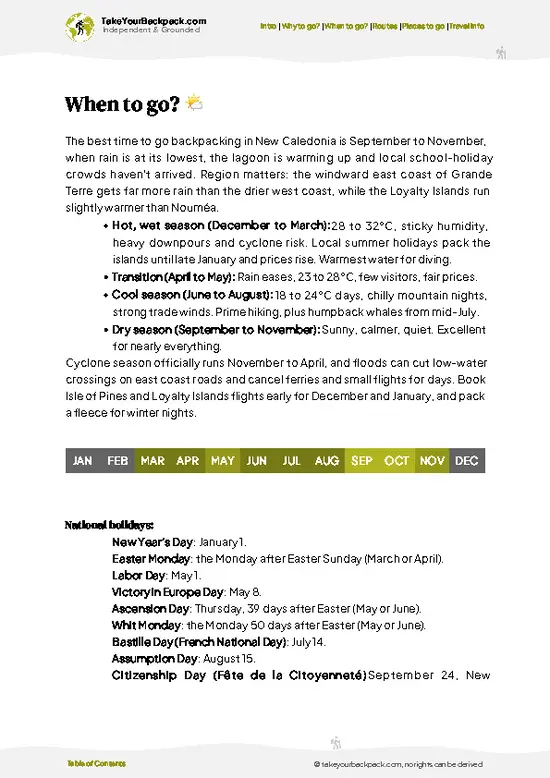
source: climatestotravel.comJANJanuary: below average for travelingFEBFebruary: below average for travelingMARMarch: below average for travelingAPRApril: fair for travelingMAYMay: highly recommended for travelingJUNJune: excellent for travelingJULJuly: excellent for travelingAUGAugust: excellent for travelingSEPSeptember: excellent for travelingOCTOctober: highly recommended for travelingNOVNovember: fair for travelingDECDecember: below average for traveling
new-caledonia-region-lifou-island
© Google |

✈️ The backpacker research shortcutNew Caledonia Travel Guide

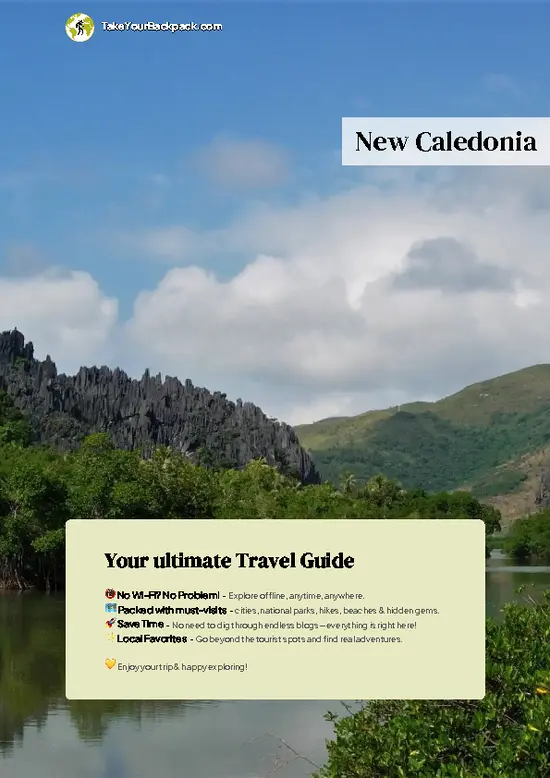
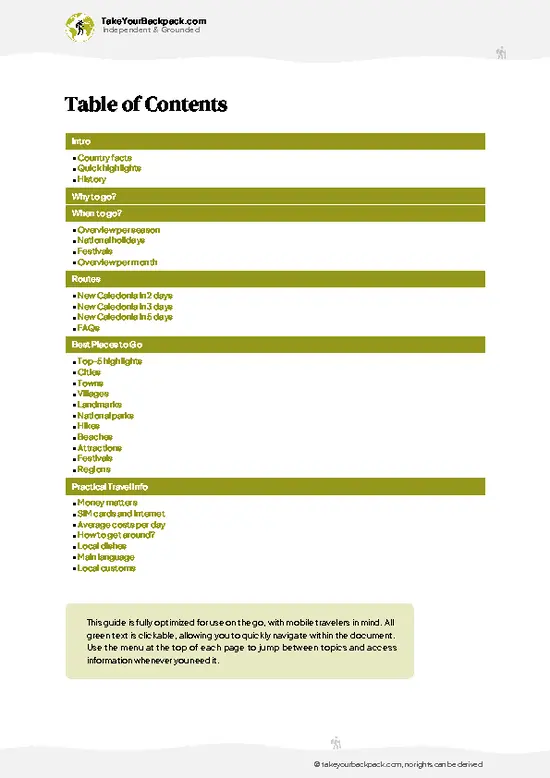
An offline-friendly backpacking guide with optimized travel routes, ranked highlights, transport advice, and the best areas to stay.
example page 0 from our offline Travel Guide for New Caledonia
example page 1 from our offline Travel Guide for New Caledonia
example page 2 from our offline Travel Guide for New Caledonia
example page 3 from our offline Travel Guide for New Caledonia
example page 4 from our offline Travel Guide for New Caledonia
example page 5 from our offline Travel Guide for New Caledonia
example page 6 from our offline Travel Guide for New Caledonia
example page 7 from our offline Travel Guide for New Caledonia
The digital guide (191 pages) contains:
46 highlights, ranked by travel appeal
Optimized 2, 3 & 5-day travel routes
Cities, national parks, landmarks, beaches
How to get around
Offline-friendly for travel without Wi-Fi
👉 Click to see all 30+ guide features

📅 Plan smarter in minutes, not weeks
Month by month travel advice
Festivals & national holidays
Budget expectations

🗺️ Go to the right places, skip the overrated ones
Honest pros & cons of destinations
Top hikes, parks & viewpoints
Lesser-known places most travelers miss
Clear “worth it vs skip it” guidance

🛏️ Travel smoothly without rookie mistakes
Best areas to stay
Transport systems explained simply
Common scams & safety advice
SIM cards, money & practical tips

🌍 Understand the country, not just visit it
Culture & traditions
52 Essential phrases & customs
Festivals worth planning around
Traveler-friendly historical context
Insights that make places more meaningful

📱 Built for real travel conditions
Fully downloadable PDF
Works completely offline
Optimized for phone use
Useful in remote areas & buses
Everything in one place
Save weeks of stressful planning
Get instant access to your full guide. 30‑day money-back guarantee.
+ Add another guide for just US$7.80

By proceeding you agree to our terms.
Sent to your inbox immediately after payment • 100% Secure Checkout
Best Backpacking Travel Advisor 2025 tourism awardBest Backpacking
Travel Advisor
2025
What others say about Take Your Backpack Guides:
⭐⭐⭐⭐⭐
Fantastic, amazing amount of information!
⭐⭐⭐⭐⭐
My goodness this is amazing, it's what I've been looking for hats off too you!
⭐⭐⭐⭐⭐
I think this is absolutely BRILLIANT
⭐⭐⭐⭐
Very complete and informative. It's still missing places, but I gotta to commend you
⭐⭐⭐⭐⭐
This is truly amazing, thank you, can't wait to explore it with my kids!
⭐⭐⭐⭐⭐
Awesome resource, thank you!
⭐⭐⭐⭐⭐
This is amazing! Can't wait to explore the ones I haven't seen
⭐⭐⭐⭐
I love this! Well done, great idea.
⭐⭐⭐⭐⭐
Thanks for taking the time to make this gem!
⭐⭐⭐⭐⭐
This might be the best website I've ever seen.
⭐⭐⭐⭐⭐
Congratulations, and thank you so much for your work; it's incredibly valuable.
⭐⭐⭐⭐
In all seriousness I think you did a great job pointing out the important spots
⭐⭐⭐⭐⭐
10/10 very good
⭐⭐⭐⭐⭐
As someone who's only just starting to visit regularly this is awesome, thank you.
⭐⭐⭐⭐
Thank you very much! I'm going to visit my dad, it's going to be very useful!
⭐⭐⭐⭐⭐
This is really cool! We'll be travelling for the first time and this definitely come in handy.
⭐⭐⭐⭐⭐
You are now our minister of culture, congratulations 👨‍💼
⭐⭐⭐⭐⭐
Just wanted to tell you that this is a pearl! Going to follow your recommendations.
⭐⭐⭐⭐⭐
This is so cool. I'll definitely be using the resource for my travels soon.
⭐⭐⭐⭐⭐
This is very impressive! Good work.
⭐⭐⭐⭐⭐
This is an amazing and informative site. Very well done!

🛏️ Where to stay?Best areas to stay in New Caledonia

Lifou Island is a slice of paradise that’s surprisingly accessible for backpackers. Start your adventure in Waihi, the island’s main village. It’s where the action is—think local markets, friendly faces, and a laid-back vibe. You’ll find a mix of travelers here, making it easy to strike up conversations and share stories over a cold drink.

Next, consider Jokin, a quieter spot that offers a more authentic experience. It’s perfect for those who want to escape the hustle. The beaches are pristine, and you can often find a secluded cove to call your own. Just be prepared to trade a bit of social … read more 👉
Lifou Island is a slice of paradise that’s surprisingly accessible for backpackers. Start your adventure in Waihi, the island’s main village. It’s where the action is—think local markets, friendly faces, and a laid-back vibe. You’ll find a mix of travelers here, making it easy to strike up conversations and share stories over a cold drink.

Next, consider Jokin, a quieter spot that offers a more authentic experience. It’s perfect for those who want to escape the hustle. The beaches are pristine, and you can often find a secluded cove to call your own. Just be prepared to trade a bit of social buzz for tranquility.

If you’re feeling adventurous, head to Mucaweng. This area is less frequented by tourists, but that’s where the magic happens. You’ll get a taste of local life, and the snorkeling spots are out of this world.

Timing is key. Visit during the dry season for the best weather and fewer crowds. Embrace the slower pace, and don’t rush. The connections you make here are what will stick with you long after you leave. Choose wisely, and you’ll walk away with experiences that are worth every penny.

🚌 Getting aroundHow to get from A to B

Lifou Island is a place where time seems to stretch and bend, like the gentle sway of palm trees in the breeze. Forget rigid schedules; here, the vibe is all about intuition and spontaneity. You might find yourself waiting for a ride while sipping coconut water, chatting with locals, or simply soaking in the sun. The island’s transport options reflect this laid-back spirit, offering a mix of convenience and charm. You’re not just getting from point A to B; you’re part of the island’s rhythm, where every journey feels like an adventure.


  • Local Buses — These colorful, open-air buses are the heartbeat of Lifou. They run roughly every hour from early morning until around 5 PM, costing about 300 XPF (around $3 USD) per ride. While they may not be the fastest option, they offer a chance to mingle
read more 👉
Lifou Island is a place where time seems to stretch and bend, like the gentle sway of palm trees in the breeze. Forget rigid schedules; here, the vibe is all about intuition and spontaneity. You might find yourself waiting for a ride while sipping coconut water, chatting with locals, or simply soaking in the sun. The island’s transport options reflect this laid-back spirit, offering a mix of convenience and charm. You’re not just getting from point A to B; you’re part of the island’s rhythm, where every journey feels like an adventure.


  • Local Buses — These colorful, open-air buses are the heartbeat of Lifou. They run roughly every hour from early morning until around 5 PM, costing about 300 XPF (around $3 USD) per ride. While they may not be the fastest option, they offer a chance to mingle with locals and soak in the scenery.


  • Bicycle Rentals — For about 1,500 XPF (around $15 USD) per day, you can rent a bicycle and explore at your own pace. This is a fantastic way to discover hidden beaches and local eateries. Just remember, the island is mostly flat, making it easy to pedal around without breaking a sweat.


  • Taxi Services — Taxis are available but can be pricey, with fares starting at around 1,500 XPF (about $15 USD) for short trips. They’re best for those late-night returns or when you’re in a hurry. Just be sure to negotiate the fare beforehand, as meters aren’t common.


  • Boat Transfers — If you’re looking to hop over to nearby islets, boat transfers are your best bet. Prices vary, but expect to pay around 2,000 XPF (about $20 USD) for a short trip. These boats usually operate in the morning and early afternoon, so plan accordingly to catch the best views of the turquoise waters.


  • Walking — Don’t underestimate the power of your own two feet. Many attractions are within walking distance, and the island’s trails lead you through lush landscapes and stunning coastlines. It’s free, and you’ll experience the island in a way that no vehicle can match.


For a smooth experience, aim to combine transport methods. Rent a bike for the day, then catch a local bus to your next destination. This way, you’ll maximize your time and enjoy the island like a true insider.

🍲 FoodWhat to Eat & Drink

On Lifou Island, food is a celebration of the land and sea. Dive into bougna, a traditional dish made with root vegetables, coconut milk, and fish or chicken, all wrapped in banana leaves and cooked in an underground oven. The flavors meld together, creating a comforting, earthy taste that’s hard to forget. Don’t miss the fresh seafood—the fish is so fresh you can practically taste the ocean.

For drinks, seek out local coconut water; it’s like sipping sunshine. If you’re feeling adventurous, try kava, a traditional drink made from the roots of the kava plant. It’s a social experience, often shared among locals, and has a calming effect that’s perfect for unwinding after a day of exploring.

When it comes to dining, head to the local markets. They’re bustling with energy, filled with vendors … read more 👉
On Lifou Island, food is a celebration of the land and sea. Dive into bougna, a traditional dish made with root vegetables, coconut milk, and fish or chicken, all wrapped in banana leaves and cooked in an underground oven. The flavors meld together, creating a comforting, earthy taste that’s hard to forget. Don’t miss the fresh seafood—the fish is so fresh you can practically taste the ocean.

For drinks, seek out local coconut water; it’s like sipping sunshine. If you’re feeling adventurous, try kava, a traditional drink made from the roots of the kava plant. It’s a social experience, often shared among locals, and has a calming effect that’s perfect for unwinding after a day of exploring.

When it comes to dining, head to the local markets. They’re bustling with energy, filled with vendors selling everything from tropical fruits to grilled skewers. Grab a seat at a beachfront café where you can enjoy your meal with the sound of waves crashing nearby.

Etiquette is laid-back here. Don’t be surprised if meals are shared; it’s all about community. Just remember to say “Mauruuru” (thank you) after your meal—it’s a small gesture that goes a long way in connecting with the locals.

FAQTraveler FAQ

3 to 4 days are sufficient to explore Lifou Island thoroughly. This allows time to visit key sites like Jokin Cliffs, Luengoni Beach, and the vanilla plantations. Extra days can be spent snorkeling or hiking inland trails.
Getting around Lifou Island without a car is challenging but possible using local taxis and occasional shuttle services. Walking is feasible in small areas like Wé village, but distances between attractions often exceed 10 kilometers. Renting a scooter or bicycle is a common alternative for more flexibility.
Lifou Island is known for its pristine white sand beaches, crystal-clear waters, and rich Kanak culture. It is famous for diving spots with coral reefs and underwater caves, as well as traditional villages and vanilla plantations.
⚠️ Things can change over time, so always validate details locally before you go.

Other New Caledonian regions near Lifou Island

Explore more nearby:

  • Baie de Prony—red earth hills, thermal springs, shipwreck dive sites, mangrove forests| 157 km away
  • Oro Bay—natural swimming pool, coral gardens, sheltered lagoon, reef islets| 189 km away
  • Isle of Pines—towering Araucaria pines, white sand coves, natural rock pools, Melanesian villages| 191 km away

💡 Not sure where to go next?
Create a personalized itinerary for New Caledonia including Lifou Island and the places that fit your trip.

Generate my itinerary

👉 Discover all regions

Or checkout all New Caledonia has to offer (think cities, towns, villages, national parks, hikes, beaches, festivals)
Country photo of New Caledonia

We 💚 feedbackParting advice and final tips

Lifou Island is like stepping into a postcard, but the real magic lies in its laid-back vibe. Don’t miss the chance to swim in the natural pools at Jokin, especially at low tide—it’s a local favorite. Just a heads-up: the island’s pace is slow, so if you’re itching for nightlife, you might feel a bit restless. Embrace the chill, savor the fresh coconut, and let the island’s rhythm wash over you. It’s all about the little moments here.

✍️ Help improve this page!
The information on this page is based on in-depth research, insights shared by experienced travelers, and feedback from the local travel community in New Caledonia. While every effort is made to keep the information accurate and current, conditions can change — so if you spot anything incorrect or outdated, please get in touch.


🙋‍♂️ Give feedback

👋 Meet the founderWho’s Behind Take Your Backpack?

Johan, backpacker and founder of TakeYourBackpackHi, I’m Johan (Netherlands 🇳🇱), the creator of TakeYourBackpack. Over the past decade, I’ve backpacked through 80+ countries across six continents, gaining extensive experience with independent travel, long-term trips, and overland routes.

This site is built on a combination of firsthand travel experience and carefully curated insights from other backpackers. Many guides are based on places I’ve personally visited, while others bring together tips, observations, and practical advice shared by trusted travelers I’ve met along the way.

The goal is to provide realistic, experience-driven guidance — not generic itineraries — so you can explore destinations with better context, clearer expectations, and more confidence.

Get full country guide •
Instant download • 46 highlights • Full Offline guide