×

New Caledonia🇳🇨 | villagesSarraméaValley waterfall, farm lanes, cold river pools | things to do and best time to go

Explore HienghèneExplore Thio

Backpacking in Sarraméa
🌟 Highlightvillage ranked #3
By Johan Kruseman 🇳🇱 | Updated October 16, 2026

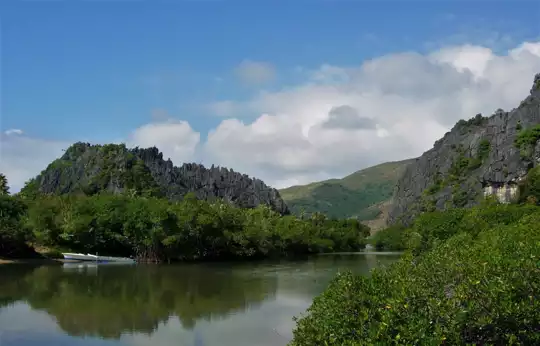
Sarraméa once saw mostly cattle trucks and the odd settler family heading up the valley. Today it sees hikers with muddy boots and a few campers who skipped the coast. It sits in the west of New Caledonia’s Grande Terre, in a green fold of hills inland from the Route Territoriale 1. Mornings smell of wet grass and woodsmoke, roosters carry across the pastures, and the light comes in low and gold over ridgelines of niaouli and tree ferns. The upside is trails, river pools and near silence. The downside is that services are thin: little shopping, few beds, and a rental car or a lift is practically a must. Evenings are quiet, with early nights and the loudest sound being frogs and the river. Meeting other travelers happens by chance on the trail rather than in a common room. Compared with nearby La Foa, which has the shops, restaurants and festival crowds, Sarraméa is smaller, cooler and far more rural.

Discover everything you want to know in the 📖 New Caledonia Travel Guide.


example page 0 from our offline Travel Guide for New Caledonia
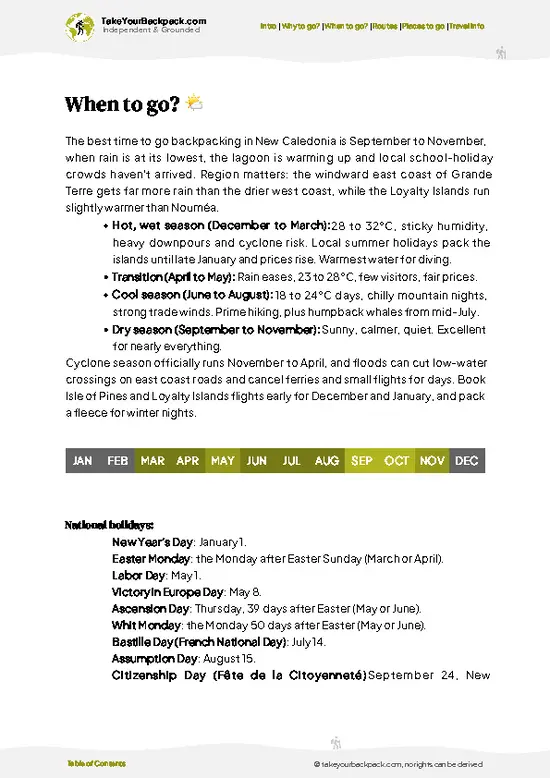
example page 1 from our offline Travel Guide for New Caledonia
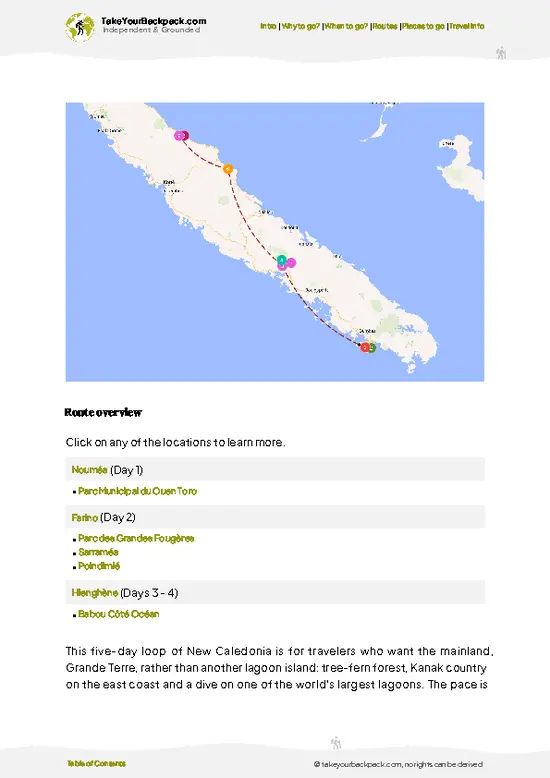
example page 2 from our offline Travel Guide for New Caledonia
example page 3 from our offline Travel Guide for New Caledonia
example page 4 from our offline Travel Guide for New Caledonia
example page 5 from our offline Travel Guide for New Caledonia
example page 6 from our offline Travel Guide for New Caledonia
example page 7 from our offline Travel Guide for New Caledonia
Loading the map 🌍
CLICK TO FILTER
cities
towns
villages
landmarks
national parks
hikes
beaches
attractions
festivals
regions
SHOW COUNTRY’S BESTSHOW ALL

✨ Why go?
Ranked #3 village in New Caledonia
What makes this village worth visiting

Sarraméa makes sense when you want a pause from the coast and the capital, and a base for the forested interior. The draw is the access to the Parc des Grandes Fougères area, where giant tree ferns and old-growth forest sit within reach of the village. The waterfalls and river walks nearby give you half-day outings without needing a guide. The road over the Col d’Amieu toward Canala also begins close by, and it is one of the more scenic mountain crossings on the island. Most people stay one or two nights, though slow travelers and hikers can easily stretch to three or four. It is not a social hub. Solo travelers who like calm, couples after a bit of green, and campers with their own transport will get the most from it. If you need nightlife, cafes or a lot of choice at dinner, treat it as a stop of a few hours and sleep elsewhere.

💡 HighlightsPlaces and moments you shouldn't skip

  1. The valley waterfall: The best-known walk in the village area, ending at a waterfall that drops into a cool, clear pool framed by dense forest. The trail runs through damp, fern-heavy bush and can be slippery after rain, so wear shoes with grip. Entry is free and the round trip takes about 1.5 to 2 hours. Go in the morning, when the air is cooler and the light filters nicely through the canopy. Swimming is possible but the water stays cold, even in summer.
  2. Sarraméa village and valley stroll: The center is small, and walking its lanes takes 45 minutes to an hour. You pass farm fences, grazing cattle, old settler-era houses and views up to the ridgelines that enclose the valley. It costs nothing. Early morning or late afternoon is best, when the light is soft, the heat is manageable and farm
… read more 👉
  1. The valley waterfall: The best-known walk in the village area, ending at a waterfall that drops into a cool, clear pool framed by dense forest. The trail runs through damp, fern-heavy bush and can be slippery after rain, so wear shoes with grip. Entry is free and the round trip takes about 1.5 to 2 hours. Go in the morning, when the air is cooler and the light filters nicely through the canopy. Swimming is possible but the water stays cold, even in summer.
  2. Sarraméa village and valley stroll: The center is small, and walking its lanes takes 45 minutes to an hour. You pass farm fences, grazing cattle, old settler-era houses and views up to the ridgelines that enclose the valley. It costs nothing. Early morning or late afternoon is best, when the light is soft, the heat is manageable and farm life is at its most active. Bring your own water and snacks, as there is little to buy along the way.
  3. Riverside pools along the Sarraméa valley: The streams running down from the interior form shaded swimming spots where locals cool off on warm afternoons. They are free to use and need an hour or two, including the walk in. Midday in the hot months is the best time for a dip. After heavy rain the water turns brown and rises quickly, so skip it then.
Outside the village, the Parc des Grandes Fougères, the Col d’Amieu road toward Canala and the town of La Foa with its coastal flats are all good day trips. If time is short, skip the village stroll and put your hours into the waterfall walk.
Spotted a mistake or missing something? Contact us.

Things to do near Sarraméa

Ratings based on Tripadvisor reviews. When you book through this link, you support our work at no extra cost to you.

🌤️ When to go?When to go for the best experience

Sarraméa is most comfortable from May to October, when daytime highs sit around 22 to 27°C (72 to 81°F) and the forest trails are firm underfoot.
  • Cool Season (June to August): Days reach 20 to 26°C (68 to 79°F), nights in the valley drop to roughly 12 to 16°C (54 to 61°F). Daylight lasts about 11 hours, so start hikes by 8 a.m. Bring a fleece.
  • Dry Months (September to November): Warming to 24 to 29°C (75 to 84°F), with little rain and about 12 to 13 hours of light. School holidays in September bring a few more local families to the rivers.
  • Hot Season (December to March): Highs of 28 to 33°C (82 to 91°F), heavy humidity, and about 13.5 hours of daylight. Cyclone risk peaks January to March, and downpours can flood river crossings and close forest tracks. Late December and January are pricier for
… read more 👉
Sarraméa is most comfortable from May to October, when daytime highs sit around 22 to 27°C (72 to 81°F) and the forest trails are firm underfoot.
  • Cool Season (June to August): Days reach 20 to 26°C (68 to 79°F), nights in the valley drop to roughly 12 to 16°C (54 to 61°F). Daylight lasts about 11 hours, so start hikes by 8 a.m. Bring a fleece.
  • Dry Months (September to November): Warming to 24 to 29°C (75 to 84°F), with little rain and about 12 to 13 hours of light. School holidays in September bring a few more local families to the rivers.
  • Hot Season (December to March): Highs of 28 to 33°C (82 to 91°F), heavy humidity, and about 13.5 hours of daylight. Cyclone risk peaks January to March, and downpours can flood river crossings and close forest tracks. Late December and January are pricier for beds and rental cars.
  • Late Hot Season (April): Rain tapers off, temperatures ease to 26 to 30°C (79 to 86°F), and rivers are still full.
Book a rental car early if you arrive during the July or December school holidays.


source: climatestotravel.comJANJanuary: fair for travelingFEBFebruary: fair for travelingMARMarch: fair for travelingAPRApril: fair for travelingMAYMay: highly recommended for travelingJUNJune: excellent for travelingJULJuly: excellent for travelingAUGAugust: excellent for travelingSEPSeptember: excellent for travelingOCTOctober: highly recommended for travelingNOVNovember: fair for travelingDECDecember: fair for traveling
when-to-go

✈️ The backpacker research shortcutNew Caledonia Travel Guide

An offline-friendly backpacking guide with optimized travel routes, ranked highlights, transport advice, and the best areas to stay.
example page 0 from our offline Travel Guide for New Caledonia
example page 1 from our offline Travel Guide for New Caledonia
example page 2 from our offline Travel Guide for New Caledonia
example page 3 from our offline Travel Guide for New Caledonia
example page 4 from our offline Travel Guide for New Caledonia
example page 5 from our offline Travel Guide for New Caledonia
example page 6 from our offline Travel Guide for New Caledonia
example page 7 from our offline Travel Guide for New Caledonia
The digital guide (158 pages) contains:
✅ 42 highlights, ranked by travel appeal
✅ Optimized 2, 3 & 5-day travel routes
✅ Cities, national parks, landmarks, beaches
✅ How to get around
✅ Offline-friendly for travel without Wi-Fi
👉 Click to see all 30+ guide features

📅 Plan smarter in minutes, not weeks
✅ Month by month travel advice
✅ Festivals & national holidays
✅ Budget expectations

🗺️ Go to the right places, skip the overrated ones
✅ Honest pros & cons of destinations
✅ Top hikes, parks & viewpoints
✅ Lesser-known places most travelers miss
✅ Clear “worth it vs skip it” guidance

🛏️ Travel smoothly without rookie mistakes
✅ Best areas to stay
✅ Transport systems explained simply
✅ Common scams & safety advice
✅ SIM cards, money & practical tips

🌍 Understand the country, not just visit it
✅ Culture & traditions
✅ 52 Essential phrases & customs
✅ Festivals worth planning around
✅ Traveler-friendly historical context
✅ Insights that make places more meaningful

📱 Built for real travel conditions
✅ Fully downloadable PDF
✅ Works completely offline
✅ Optimized for phone use
✅ Useful in remote areas & buses
✅ Everything in one place
Stop searching, start planning
Get instant access to your full guide. 30‑day money-back guarantee.
+ Add another guide for just

By proceeding you agree to our terms.
Sent to your inbox immediately after payment • 100% Secure Checkout
Best Backpacking Travel Advisor 2025 tourism awardBest Backpacking
Travel Advisor
2025
What others say about Take Your Backpack Guides:
⭐⭐⭐⭐⭐
Fantastic, amazing amount of information!
⭐⭐⭐⭐⭐
My goodness this is amazing, it's what I've been looking for hats off too you!
⭐⭐⭐⭐⭐
I think this is absolutely BRILLIANT
⭐⭐⭐⭐
Very complete and informative. It's still missing places, but I gotta to commend you
⭐⭐⭐⭐⭐
This is truly amazing, thank you, can't wait to explore it with my kids!
⭐⭐⭐⭐⭐
Awesome resource, thank you!
⭐⭐⭐⭐⭐
This is amazing! Can't wait to explore the ones I haven't seen
⭐⭐⭐⭐
I love this! Well done, great idea.
⭐⭐⭐⭐⭐
Thanks for taking the time to make this gem!
⭐⭐⭐⭐⭐
This might be the best website I've ever seen.
⭐⭐⭐⭐⭐
Congratulations, and thank you so much for your work; it's incredibly valuable.
⭐⭐⭐⭐
In all seriousness I think you did a great job pointing out the important spots
⭐⭐⭐⭐⭐
10/10 very good
⭐⭐⭐⭐⭐
As someone who's only just starting to visit regularly this is awesome, thank you.
⭐⭐⭐⭐
Thank you very much! I'm going to visit my dad, it's going to be very useful!
⭐⭐⭐⭐⭐
This is really cool! We'll be travelling for the first time and this definitely come in handy.
⭐⭐⭐⭐⭐
You are now our minister of culture, congratulations 👨‍💼
⭐⭐⭐⭐⭐
Just wanted to tell you that this is a pearl! Going to follow your recommendations.
⭐⭐⭐⭐⭐
This is so cool. I'll definitely be using the resource for my travels soon.
⭐⭐⭐⭐⭐
This is very impressive! Good work.
⭐⭐⭐⭐⭐
This is an amazing and informative site. Very well done!

🛏️ Where to stay?Choosing the right base

Sarraméa has only a handful of small guesthouses, so sleep in the village itself if you want quiet and a car-free evening, and use La Foa or Farino when those are full.
Gîtes and chambres d’hôtes are the backbone here. Expect US$55 to 95 (about 6,000 to 10,000 XPF) for a private room, often with a shared kitchen or a breakfast of baguette, jam and local coffee. Some hosts will cook dinner if you ask the day before, which matters because the village has almost no restaurants and shops close early.
Camping is the cheapest route, roughly 1,500 to 2,500 XPF (US$14 to 23) per tent at small family-run … read more 👉
Sarraméa has only a handful of small guesthouses, so sleep in the village itself if you want quiet and a car-free evening, and use La Foa or Farino when those are full.
Gîtes and chambres d’hôtes are the backbone here. Expect US$55 to 95 (about 6,000 to 10,000 XPF) for a private room, often with a shared kitchen or a breakfast of baguette, jam and local coffee. Some hosts will cook dinner if you ask the day before, which matters because the village has almost no restaurants and shops close early.
Camping is the cheapest route, roughly 1,500 to 2,500 XPF (US$14 to 23) per tent at small family-run sites and near the forest park. Nights between June and August are cool enough that a light sleeping bag earns its weight.
If you want more choice, La Foa, about 20 minutes down the valley, has more rooms, a supermarket, an ATM and cafés. Farino is smaller and even calmer. Stay in Sarraméa itself if you plan to walk in the Grandes Fougères at dawn, when the tree ferns hold mist and the birdsong is loudest.
Reserve ahead for July, September and the Christmas break, since there are so few beds.

🚌 Day tripsBest day trips from Sarraméa

Sarraméa works well as a base for day trips, but only if you have a car, because no regular public bus serves the village and hitchhiking is slow.
Parc des Grandes Fougères: Giant tree ferns, ancient forest and a real chance of seeing the cagou, the flightless national bird, make this the main reason to come. The park entrance is about 20 to 30 minutes by road, and the marked loops run from 1 to 4 hours. Go early on a dry morning between May and November. First-timers often wear sandals on muddy tracks and run out of water.
👉 Explore Parc des Grandes Fougères
La Foa: The nearest real town is about 20 minutes away and handles cash, groceries and the Sunday market atmosphere that the village lacks. It also has a historic railway station and the nearby Fort Teremba, a 19th-century military post. … read more 👉
Sarraméa works well as a base for day trips, but only if you have a car, because no regular public bus serves the village and hitchhiking is slow.
Parc des Grandes Fougères: Giant tree ferns, ancient forest and a real chance of seeing the cagou, the flightless national bird, make this the main reason to come. The park entrance is about 20 to 30 minutes by road, and the marked loops run from 1 to 4 hours. Go early on a dry morning between May and November. First-timers often wear sandals on muddy tracks and run out of water.
👉 Explore Parc des Grandes Fougères
La Foa: The nearest real town is about 20 minutes away and handles cash, groceries and the Sunday market atmosphere that the village lacks. It also has a historic railway station and the nearby Fort Teremba, a 19th-century military post. Budget 3,000 to 5,000 XPF (US$28 to 47) for fuel and lunch. Many people arrive after noon, when shops close for the midday break.

Canala via the Col d’Amieu: The mountain road crosses the central chain to the east coast in about an hour, with sharp bends and long views over forested ridges. You reach a different landscape, with Kanak villages and a quieter shoreline. Fuel and lunch come to roughly 4,000 to 6,000 XPF (US$37 to 56). Leave before 10 a.m. to be back in daylight, and avoid the road after heavy rain.

Bourail: Beaches, the Roche Percée rock arch and the Bonhomme headland sit about 1 hour 15 minutes away on the west coast. It is a long day, but an easy one on sealed roads. Plan on 5,000 to 8,000 XPF (US$47 to 75) including fuel. Go between April and October to avoid the worst heat.

FAQFrequently asked questions about Sarraméa

Most travelers drive from Nouméa, about 120 km northwest via the RT1 to La Foa, then inland on a paved provincial road, which takes roughly 1 hour 45 minutes. A rental car costs about 6,000 to 9,000 XPF (US$55 to 85) per day. Interurban buses reach La Foa from Nouméa, but nothing regular continues to Sarraméa, so you would need a taxi or a lift for the last 20 minutes.
Yes, if you want forest walking and a quiet base instead of beaches or nightlife. The Parc des Grandes Fougères is about 25 minutes away and holds tree-fern forest, waterfalls and cagou birds, while guesthouse rooms cost around 6,000 to 10,000 XPF (US$55 to 95). Skip it if you have no car, since the village has few shops and only a handful of beds.
Yes, from Nouméa it is feasible but tight, with about 3.5 hours of driving round trip and a rental car at 6,000 to 9,000 XPF (US$55 to 85). Leave by 7 a.m. to walk one or two trails in the Grandes Fougères and be back before dark. One night in the area gives you the early-morning light and a far more relaxed day.
⚠️ Things can change over time, so always validate details locally before you go.

Other New Caledonian villages near Sarraméa

Explore more nearby:

  • Farino—Tree-fern forest, kagu sightings, misty mornings| 8 km away
  • Thio—Nickel museum, red-earth workings, river mouth| 38 km away
  • Yaté—Drowned-forest lake, Yaté Dam, Madeleine cascades| 111 km away

💡 Not sure where to go next?
Create a personalized itinerary for New Caledonia including Sarraméa and the places that fit your trip.

Generate my itinerary

👉 Discover all villages

Or checkout all New Caledonia has to offer (think cities, towns, villages, national parks, hikes, beaches, festivals)
Country photo of New Caledonia

We 💚 feedbackFinal thoughts on visiting Sarraméa

Go early in the day and early in the dry months, when the valley is cool and misty and the forest trails hold their moisture without the mud. By late morning the heat builds and the best light is gone. Bring food from La Foa before you arrive, since shelves in the village run thin, and keep your fuel tank full.

✍️ Help improve this page!
The information on this page is based on in-depth research, insights shared by experienced travelers, and feedback from the local travel community in New Caledonia. While every effort is made to keep the information accurate and current, conditions can change — so if you spot anything incorrect or outdated, please get in touch.


🙋‍♂️ Give feedback

👋 Meet the founderWho’s Behind Take Your Backpack?

Johan, backpacker and founder of TakeYourBackpackHi, I’m Johan (Netherlands 🇳🇱), the creator of TakeYourBackpack. Over the past 3 decades, I’ve backpacked through 90+ countries across six continents, gaining extensive experience with independent travel, long-term trips, and overland routes.

This site is built on a combination of firsthand travel experience and carefully curated insights from other backpackers. Many guides are based on places I’ve personally visited, while others bring together tips, observations, and practical advice shared by trusted travelers I’ve met along the way.

The goal is to provide realistic, experience-driven guidance — not generic itineraries — so you can explore destinations with better context, clearer expectations, and more confidence.