
×

New Zealand🇳🇿 | townsNapierArt Deco facades, Norfolk pine seafront, Hawke’s Bay | things to do and best time to go

Explore QueenstownExplore Taupō

Backpacking in Napier
🏆 Top picktown ranked #4
By Johan Kruseman 🇳🇱 | Updated October 16, 2026

The real decision in Napier is whether to treat it as a one-night art deco stop or give it two or three days, and the wine country around it tips things toward staying. The city sits on the east coast of New Zealand’s North Island, on Hawke’s Bay. A local at a cellar door once told me to hire a bike rather than book a tour, because the vineyards sit on flat ground and the trails link them. That is the smarter move, since tours bundle stops you may not want. The city was rebuilt after the 1931 earthquake, so the center is compact and walkable, with a seafront and cafés rather than big sights. Hostels are small and sociable without being rowdy, so meeting people is easy over breakfast or on a ride. Evenings are quiet. A first day works well as a walk through the deco streets, a late lunch, and sunset on Marine Parade.

Discover everything you want to know in the 📖 New Zealand Travel Guide.


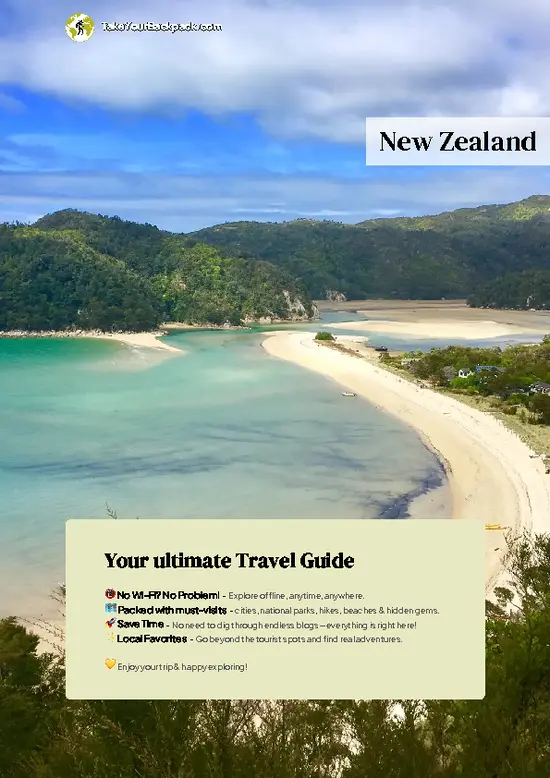
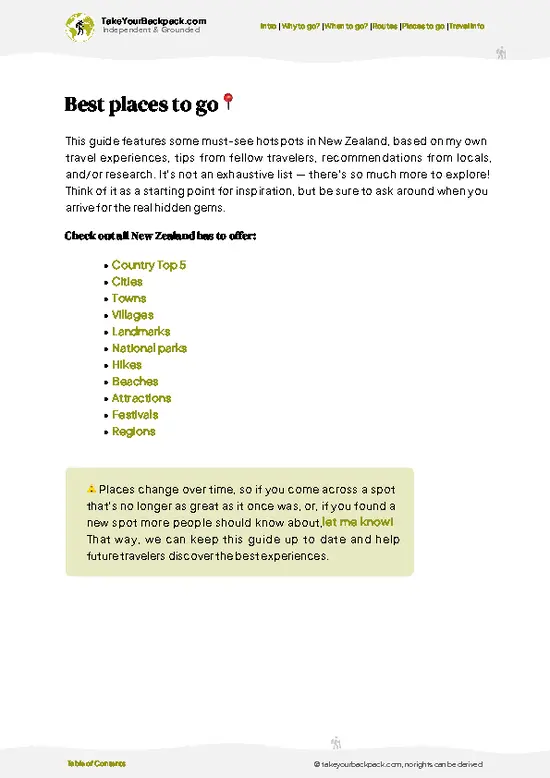
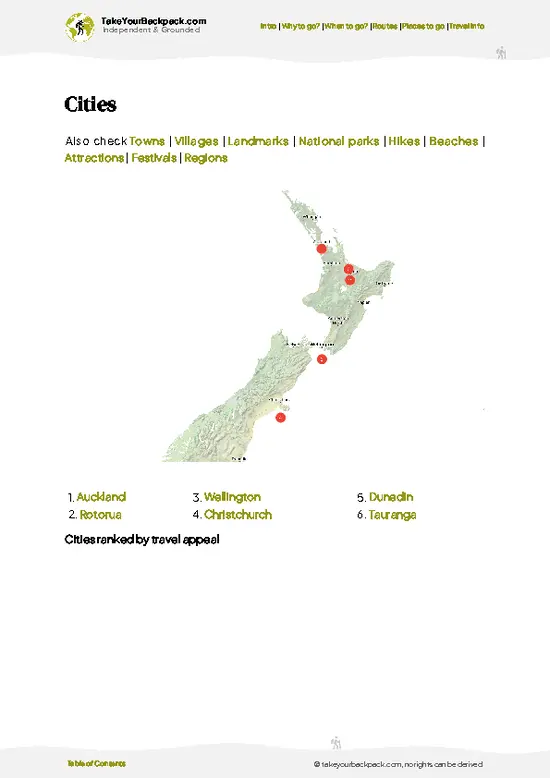
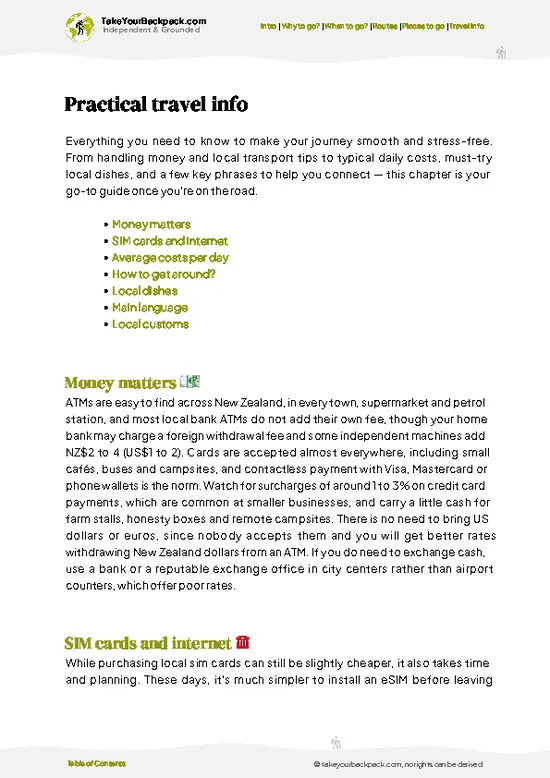
example page 0 from our offline Travel Guide for New Zealand
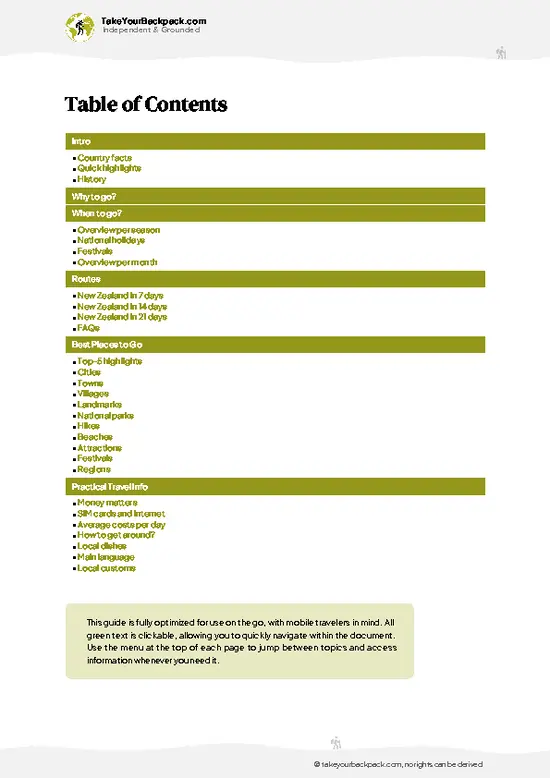
example page 1 from our offline Travel Guide for New Zealand
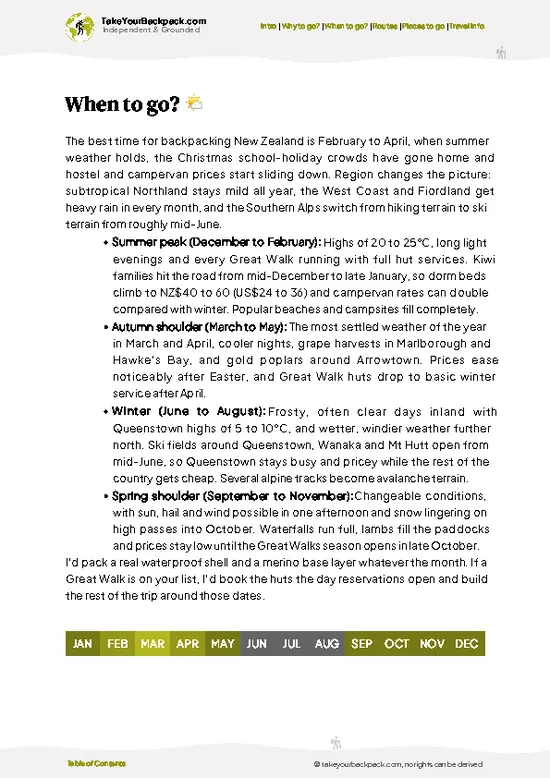
example page 2 from our offline Travel Guide for New Zealand
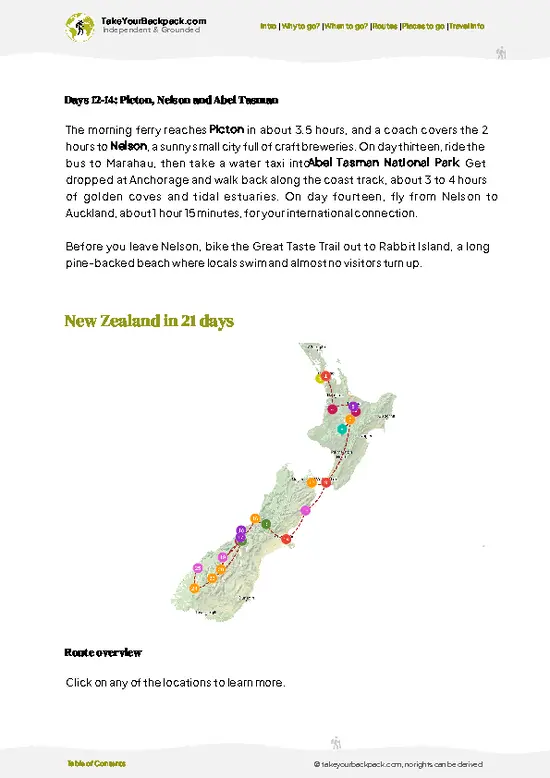
example page 3 from our offline Travel Guide for New Zealand
example page 4 from our offline Travel Guide for New Zealand
example page 5 from our offline Travel Guide for New Zealand
example page 6 from our offline Travel Guide for New Zealand
example page 7 from our offline Travel Guide for New Zealand
Loading the map 🌍
CLICK TO FILTER
cities
towns
villages
landmarks
national parks
hikes
beaches
attractions
festivals
regions
SHOW COUNTRY’S BESTSHOW ALL

✨ Why go?
Ranked #4 town in New Zealand
What makes it a must-see town

Napier earns its place on a North Island route because it packs 1930s art deco architecture into a few flat blocks you can cover on foot in an afternoon, then hands you a wine region at its edge. Most travelers stay two nights, and those who rent a bike for the Hawke’s Bay trails often add a third. The pace is slow. Hostels are small, kitchens are good for cooking with local produce from the weekend farmers’ market, and the social scene runs to shared dinners rather than clubs. That suits solo travelers, cyclists and slow travelers who want a rest between Taupō and Wellington. It is less suited to anyone chasing hiking or nightlife, since the best outdoor days are gentle cycling and coastal walks. If you want dramatic peaks, keep moving. If you want a calm base with good food and easy company, … read more 👉
Napier earns its place on a North Island route because it packs 1930s art deco architecture into a few flat blocks you can cover on foot in an afternoon, then hands you a wine region at its edge. Most travelers stay two nights, and those who rent a bike for the Hawke’s Bay trails often add a third. The pace is slow. Hostels are small, kitchens are good for cooking with local produce from the weekend farmers’ market, and the social scene runs to shared dinners rather than clubs. That suits solo travelers, cyclists and slow travelers who want a rest between Taupō and Wellington. It is less suited to anyone chasing hiking or nightlife, since the best outdoor days are gentle cycling and coastal walks. If you want dramatic peaks, keep moving. If you want a calm base with good food and easy company, this fits well. A stop here also breaks a long drive nicely, with the Marine Parade seafront as an easy evening stroll.

💡 HighlightsKey sights and experiences for travelers

  1. Art Deco Walk and Streets: The city rebuilt after the 1931 earthquake, and the central blocks around Emerson and Tennyson Streets hold the best facades. Start at the Art Deco Trust shop on Marine Parade for a guided walk (around NZ$25 to 30, 90 minutes) or pick up a self-guided map. Mornings are quieter and the light on the pastel stucco is best.
  2. Marine Parade: The long seafront promenade has Norfolk pines, gardens, the Soundshell and the Pania of the Reef statue. Free, 45 minutes to an hour, ideal at sunset.
  3. National Aquarium of New Zealand: A solid rainy-day stop with kiwi, tuatara, a shark tunnel and an oceanarium. Entry is roughly NZ$25 to 30 and it takes 1.5 to 2 hours. Go at opening to avoid school groups.
  4. Napier Prison: A former colonial prison on Bluff Hill, now a tour site, with cells
… read more 👉
  1. Art Deco Walk and Streets: The city rebuilt after the 1931 earthquake, and the central blocks around Emerson and Tennyson Streets hold the best facades. Start at the Art Deco Trust shop on Marine Parade for a guided walk (around NZ$25 to 30, 90 minutes) or pick up a self-guided map. Mornings are quieter and the light on the pastel stucco is best.
  2. Marine Parade: The long seafront promenade has Norfolk pines, gardens, the Soundshell and the Pania of the Reef statue. Free, 45 minutes to an hour, ideal at sunset.
  3. National Aquarium of New Zealand: A solid rainy-day stop with kiwi, tuatara, a shark tunnel and an oceanarium. Entry is roughly NZ$25 to 30 and it takes 1.5 to 2 hours. Go at opening to avoid school groups.
  4. Napier Prison: A former colonial prison on Bluff Hill, now a tour site, with cells and stories of the old inmates. Tours and entry run about NZ$25 to 30, 1 to 1.5 hours. Daytime visits are standard, and the evening torchlight tours are atmospheric.
  5. Bluff Hill Lookout: A short drive or steep walk up from the port brings views over the harbor, the log yards and the bay. Free, 30 to 45 minutes, best in late afternoon.
Together these fill a comfortable day and a half. Outside the city, day trips reach the Te Mata Peak lookout, the Cape Kidnappers gannet colony, and the wineries of the Gimblett Gravels and Havelock North.
Spotted a mistake or missing something? Contact us.

Things to do around Napier

Ratings based on Tripadvisor reviews. When you book through this link, you support our work at no extra cost to you.

🏘️ NeighborhoodsWhere things are and how it's laid out

Napier is compact, and its areas sit within a few kilometers of each other, so the smart move is to match each one to the time of day it works best.
  • Art Deco Central City: The 1931 earthquake flattened the center, which is why rebuilding happened all at once in a single Deco style. Walk Emerson, Tennyson and Hastings Streets in the morning, before shop awnings and tour groups crowd the facades. It takes about an hour on foot, and cafes and bakeries line the streets.
  • Marine Parade: The long seafront strip exists because the quake lifted the seabed and created new land. Walk it early or at sunset. It has the aquarium, the Pania of the Reef statue, Ocean Spa and a pebble beach where swimming can be rough, so locals swim at patrolled spots only.
  • Ahuriri (Westshore side): This old port area sits north
… read more 👉
Napier is compact, and its areas sit within a few kilometers of each other, so the smart move is to match each one to the time of day it works best.
  • Art Deco Central City: The 1931 earthquake flattened the center, which is why rebuilding happened all at once in a single Deco style. Walk Emerson, Tennyson and Hastings Streets in the morning, before shop awnings and tour groups crowd the facades. It takes about an hour on foot, and cafes and bakeries line the streets.
  • Marine Parade: The long seafront strip exists because the quake lifted the seabed and created new land. Walk it early or at sunset. It has the aquarium, the Pania of the Reef statue, Ocean Spa and a pebble beach where swimming can be rough, so locals swim at patrolled spots only.
  • Ahuriri (Westshore side): This old port area sits north of the center and is where locals go to eat and drink. Wine bars and seafood restaurants fill the waterfront. Walk or cycle there via the flat coastal path, which is quicker than waiting for a bus.
  • Bluff Hill: A steep headland above the port with lookouts over the Pacific and the container ships. It is a quiet residential area, so go by day, and take a car or bike if the climb looks daunting.

⌛️ 1 dayA smart one-day plan

Start at the Art Deco Trust shop on Marine Parade, because the maps and guided walks set up everything else, and the facades look best in the morning light.

9:00 AM, Art Deco Trust and city center: Join the guided walk or follow a self-guided map through Emerson and Tennyson Streets. Allow about 1.5 hours, then walk to the seafront.

11:00 AM, Marine Parade: Stroll south past the Pania of the Reef statue and the Soundshell. Pick a café on the way for a flat white.

12:30 PM, National Aquarium: Spend an hour or so with the kiwi and the shark tunnel, which are right on the promenade.

2:00 PM, Lunch in the center: Eat at one of the cafés near Emerson Street, then walk to the port side.

3:30 PM, Ahuriri and the Old Town: Less visited than the deco core, this former harbor area has waterfront … read more 👉
Start at the Art Deco Trust shop on Marine Parade, because the maps and guided walks set up everything else, and the facades look best in the morning light.

9:00 AM, Art Deco Trust and city center: Join the guided walk or follow a self-guided map through Emerson and Tennyson Streets. Allow about 1.5 hours, then walk to the seafront.

11:00 AM, Marine Parade: Stroll south past the Pania of the Reef statue and the Soundshell. Pick a café on the way for a flat white.

12:30 PM, National Aquarium: Spend an hour or so with the kiwi and the shark tunnel, which are right on the promenade.

2:00 PM, Lunch in the center: Eat at one of the cafés near Emerson Street, then walk to the port side.

3:30 PM, Ahuriri and the Old Town: Less visited than the deco core, this former harbor area has waterfront bars, a quiet estuary walk and old warehouses. Take the short ride or a flat 30 minute walk.

5:30 PM, Bluff Hill Lookout: Head up to see the harbor and the bay as the light turns gold, then come back down for dinner.

🌤️ When to go?When to go for the best experience

Napier is one of New Zealand’s sunniest towns, and December to February is the warmest and busiest stretch.
  • Summer (Dec to Feb): Highs of 24 to 27°C (75 to 81°F), with daylight past 9 pm. Beds fill, rates climb, and the Art Deco Festival in February books accommodation out well ahead.
  • Autumn (Mar to May): Highs of 17 to 23°C (63 to 73°F), dry spells and grape harvest in nearby vineyards. Crowds thin out.
  • Winter (Jun to Aug): Highs of 11 to 14°C (52 to 57°F), frosty mornings, and daylight from about 7:30 am to 5 pm. Bed prices drop, though some wineries trim their hours.
  • Spring (Sep to Nov): Highs of 15 to 20°C (59 to 68°F), with windy, changeable days. Lambs and blossom fill the countryside.
Book February and school holiday weeks at least a month ahead.

source: climatestotravel.comJANJanuary: highly recommended for travelingFEBFebruary: highly recommended for travelingMARMarch: excellent for travelingAPRApril: excellent for travelingMAYMay: good for travelingJUNJune: fair for travelingJULJuly: fair for travelingAUGAugust: fair for travelingSEPSeptember: good for travelingOCTOctober: highly recommended for travelingNOVNovember: highly recommended for travelingDECDecember: highly recommended for traveling
when-to-go

✈️ The backpacker research shortcutNew Zealand Travel Guide

An offline-friendly backpacking guide with optimized travel routes, ranked highlights, transport advice, and the best areas to stay.
example page 0 from our offline Travel Guide for New Zealand
example page 1 from our offline Travel Guide for New Zealand
example page 2 from our offline Travel Guide for New Zealand
example page 3 from our offline Travel Guide for New Zealand
example page 4 from our offline Travel Guide for New Zealand
example page 5 from our offline Travel Guide for New Zealand
example page 6 from our offline Travel Guide for New Zealand
example page 7 from our offline Travel Guide for New Zealand
The digital guide (327 pages) contains:
✅ 110 highlights, ranked by travel appeal
✅ Optimized 7, 14 & 21-day travel routes
✅ Cities, national parks, landmarks, beaches
✅ How to get around
✅ Offline-friendly for travel without Wi-Fi
👉 Click to see all 30+ guide features

📅 Plan smarter in minutes, not weeks
✅ Month by month travel advice
✅ Festivals & national holidays
✅ Budget expectations

🗺️ Go to the right places, skip the overrated ones
✅ Honest pros & cons of destinations
✅ Top hikes, parks & viewpoints
✅ Lesser-known places most travelers miss
✅ Clear “worth it vs skip it” guidance

🛏️ Travel smoothly without rookie mistakes
✅ Best areas to stay
✅ Transport systems explained simply
✅ Common scams & safety advice
✅ SIM cards, money & practical tips

🌍 Understand the country, not just visit it
✅ Culture & traditions
✅ Local customs
✅ Festivals worth planning around
✅ Traveler-friendly historical context
✅ Insights that make places more meaningful

📱 Built for real travel conditions
✅ Fully downloadable PDF
✅ Works completely offline
✅ Optimized for phone use
✅ Useful in remote areas & buses
✅ Everything in one place
Stop searching, start planning
Get instant access to your full guide. 30‑day money-back guarantee.
+ Add another guide for just

By proceeding you agree to our terms.
Sent to your inbox immediately after payment • 100% Secure Checkout
Best Backpacking Travel Advisor 2025 tourism awardBest Backpacking
Travel Advisor
2025
What others say about Take Your Backpack Guides:
⭐⭐⭐⭐⭐
Fantastic, amazing amount of information!
⭐⭐⭐⭐⭐
My goodness this is amazing, it's what I've been looking for hats off too you!
⭐⭐⭐⭐⭐
I think this is absolutely BRILLIANT
⭐⭐⭐⭐
Very complete and informative. It's still missing places, but I gotta to commend you
⭐⭐⭐⭐⭐
This is truly amazing, thank you, can't wait to explore it with my kids!
⭐⭐⭐⭐⭐
Awesome resource, thank you!
⭐⭐⭐⭐⭐
This is amazing! Can't wait to explore the ones I haven't seen
⭐⭐⭐⭐
I love this! Well done, great idea.
⭐⭐⭐⭐⭐
Thanks for taking the time to make this gem!
⭐⭐⭐⭐⭐
This might be the best website I've ever seen.
⭐⭐⭐⭐⭐
Congratulations, and thank you so much for your work; it's incredibly valuable.
⭐⭐⭐⭐
In all seriousness I think you did a great job pointing out the important spots
⭐⭐⭐⭐⭐
10/10 very good
⭐⭐⭐⭐⭐
As someone who's only just starting to visit regularly this is awesome, thank you.
⭐⭐⭐⭐
Thank you very much! I'm going to visit my dad, it's going to be very useful!
⭐⭐⭐⭐⭐
This is really cool! We'll be travelling for the first time and this definitely come in handy.
⭐⭐⭐⭐⭐
You are now our minister of culture, congratulations 👨‍💼
⭐⭐⭐⭐⭐
Just wanted to tell you that this is a pearl! Going to follow your recommendations.
⭐⭐⭐⭐⭐
This is so cool. I'll definitely be using the resource for my travels soon.
⭐⭐⭐⭐⭐
This is very impressive! Good work.
⭐⭐⭐⭐⭐
This is an amazing and informative site. Very well done!

🛏️ Where to stay?Choosing the right base

The central city and the Marine Parade strip are the best bases, since most budget beds in Napier sit within a ten-minute walk of each other.
The central city has the highest concentration of hostels and cheap backpacker beds, with the bus stops, supermarkets and cafes close by. Dorm beds usually cost NZ$30 to 45 (US$19 to 28) a night, and private rooms run higher. It is quiet after about 10 pm outside weekends, so late-night noise is rarely a problem, and the grid streets feel safe to walk home on.
Marine Parade is a good second choice. A few budget options and motels sit along the waterfront, … read more 👉
The central city and the Marine Parade strip are the best bases, since most budget beds in Napier sit within a ten-minute walk of each other.
The central city has the highest concentration of hostels and cheap backpacker beds, with the bus stops, supermarkets and cafes close by. Dorm beds usually cost NZ$30 to 45 (US$19 to 28) a night, and private rooms run higher. It is quiet after about 10 pm outside weekends, so late-night noise is rarely a problem, and the grid streets feel safe to walk home on.
Marine Parade is a good second choice. A few budget options and motels sit along the waterfront, and the sea breeze keeps summer nights comfortable. Rooms facing the road can pick up traffic noise, so ask for a back-facing room. It is a short walk to the center, and the buses from the parade run to Ahuriri and Hastings.
Ahuriri has few budget beds and suits a night out more than a stay. Book ahead for February, when beds across the center fill up quickly.

🚌 Getting aroundGetting around like a local

Booking a rental car for the whole stay is the mistake that costs the most, because the central city and seafront are flat and a car just adds parking hassle. Napier’s core is walkable in an afternoon, and Hastings and wine country are the only parts that truly need wheels or pedals.
  • Walking: Free, and the fastest way around the Deco center, Marine Parade and the inner harbor. Streets are on a tidy grid, which is a legacy of the post-earthquake rebuild.
  • Cycling: Rental bikes cost about NZ$40 to 70 a day (US$25 to 45), and e-bikes cost more. The Hawke’s Bay Trails are flat and signposted, and they link Napier to Ahuriri, Clive and Hastings. Start early, since afternoon winds can slow you down.
  • Local buses (Hawke’s Bay Regional Council, Gold Card and Bee Card): A single adult fare is about NZ$2
… read more 👉
Booking a rental car for the whole stay is the mistake that costs the most, because the central city and seafront are flat and a car just adds parking hassle. Napier’s core is walkable in an afternoon, and Hastings and wine country are the only parts that truly need wheels or pedals.
  • Walking: Free, and the fastest way around the Deco center, Marine Parade and the inner harbor. Streets are on a tidy grid, which is a legacy of the post-earthquake rebuild.
  • Cycling: Rental bikes cost about NZ$40 to 70 a day (US$25 to 45), and e-bikes cost more. The Hawke’s Bay Trails are flat and signposted, and they link Napier to Ahuriri, Clive and Hastings. Start early, since afternoon winds can slow you down.
  • Local buses (Hawke’s Bay Regional Council, Gold Card and Bee Card): A single adult fare is about NZ$2 to 3.50 (US$1.20 to 2.20) with a Bee Card, and more in cash. Routes run roughly 6 am to 7 pm on weekdays, with fewer services on weekends, so don’t count on late-night buses.
  • InterCity and long-distance coaches: They stop at the Napier i-SITE area and connect to Taupo, Wellington and Auckland. Fares start from about NZ$20 to 60 (US$12 to 38) when booked in advance, and are far cheaper than last-minute tickets.
  • Taxis and rideshare: A ride across town costs about NZ$15 to 30 (US$9 to 19). Rideshare options are limited late at night, so book a taxi before heading out to Ahuriri.

👛 Costs (as of 16 October 2026)How expensive it really is

Napier costs about US$85 a day for a backpacker who sleeps in a dorm, cooks some meals and keeps activities mostly free or cheap.
CategoryBudget RangeLocal Reality
Dorm accommodationUS$25 to 38 (high season)Dorms run about US$25 to 30 in winter and climb toward US$38 in the summer months, December to February, when the Art Deco weekend and school holidays fill beds. Book ahead then.
MealsUS$20 to 30A cafe breakfast is US$9 to 14 and a fish and chips lunch about US$8 to 12. Supermarket dinners at Countdown or New World keep the day near US$25.
Local transportUS$0 to 5The central strip along Marine Parade is flat and walkable. A local bus ride with a Bee Card is roughly US$1.50 to 2, handy for the Ahuriri waterfront or Hastings.
Basic activities/entry feesUS$0 to 15Walking the Art Deco streets, the
… read more 👉
Napier costs about US$85 a day for a backpacker who sleeps in a dorm, cooks some meals and keeps activities mostly free or cheap.
CategoryBudget RangeLocal Reality
Dorm accommodationUS$25 to 38 (high season)Dorms run about US$25 to 30 in winter and climb toward US$38 in the summer months, December to February, when the Art Deco weekend and school holidays fill beds. Book ahead then.
MealsUS$20 to 30A cafe breakfast is US$9 to 14 and a fish and chips lunch about US$8 to 12. Supermarket dinners at Countdown or New World keep the day near US$25.
Local transportUS$0 to 5The central strip along Marine Parade is flat and walkable. A local bus ride with a Bee Card is roughly US$1.50 to 2, handy for the Ahuriri waterfront or Hastings.
Basic activities/entry feesUS$0 to 15Walking the Art Deco streets, the Marine Parade foreshore and Bluff Hill lookout is free. The MTG Hawke’s Bay museum costs roughly US$10 to 15 for adults, and a self-guided Art Deco walk map is cheap.
Miscellaneous expensesUS$5 to 10Laundry is about US$6 to 8 a load, plus a coffee or a craft beer around US$4 to 7 in the evening.
Total Daily BudgetUS$85Based on a high-season dorm bed at US$35, meals US$25, transport US$3, activities US$12 and extras US$10. Prices are paid in New Zealand dollars.
Buy groceries and fill a reusable bottle, since tap water is safe. Cooking dinner in the hostel kitchen saves around US$10 to 15 per day compared with eating out, and that adds up fast in a pricey country.
⚠️ Prices can change and everyone travels differently, so take this as a rough guide. Hope it helps you plan your adventure!

🚌 Day tripsEasy escapes and nearby places

Napier works very well as a base, because Hawke’s Bay’s main sights sit 15 to 90 minutes away and most of them can be reached by bike, bus or a shared car.
Cape Kidnappers Gannet Colony:
The world’s most accessible mainland gannet colony is here, with thousands of birds nesting on the clifftop. Go between November and February, when chicks are visible. Tours by tractor from Clifton cost about NZ$60 to 100 (US$38 to 63), or you can walk the beach at low tide, a 4 to 5 hour round trip. Check tide times, since the beach route floods.

Hastings and Wine Country Cycling:
It is about 20 minutes by car, or a flat ride of 20 km each way along the trails. Bike hire plus cellar door tastings cost roughly NZ$80 to 130 (US$50 to 82). Common mistake: trying to visit more than three wineries, which turns … read more 👉
Napier works very well as a base, because Hawke’s Bay’s main sights sit 15 to 90 minutes away and most of them can be reached by bike, bus or a shared car.
Cape Kidnappers Gannet Colony:
The world’s most accessible mainland gannet colony is here, with thousands of birds nesting on the clifftop. Go between November and February, when chicks are visible. Tours by tractor from Clifton cost about NZ$60 to 100 (US$38 to 63), or you can walk the beach at low tide, a 4 to 5 hour round trip. Check tide times, since the beach route floods.

Hastings and Wine Country Cycling:
It is about 20 minutes by car, or a flat ride of 20 km each way along the trails. Bike hire plus cellar door tastings cost roughly NZ$80 to 130 (US$50 to 82). Common mistake: trying to visit more than three wineries, which turns the day into a blur.

Te Mata Peak:
A short drive of about 30 minutes from Napier leads to 399 m views over the plains and out to the coast. The summit is free, and the walks take 1 to 2 hours. Sunrise and late afternoon give the best light.

Havelock North:
This village has cafes, the Saturday market and the start of walking tracks. It takes about 25 minutes to reach by car, and buses run from Napier via Hastings for NZ$3 to 6 (US$2 to 4).

🛡️ SafetyStaying Safe: What Travelers Should Know

Napier is very safe for backpackers, and most problems are minor and preventable. Theft from parked cars is the most common issue, especially at trailheads such as Te Mata Peak and Cape Kidnappers, so take your valuables with you and leave nothing visible. Marine Parade is fine at night, but the pebble beach has strong currents and undertow, so swim only at patrolled spots and respect flag signs. Solo travelers, including women, generally walk the center and Ahuriri at night without trouble, though a few rowdy groups gather around the pubs late on weekends, and it is easy to simply move on. Sun is the real hazard in summer, with strong UV, so use sunscreen and carry water on bike rides. Tap water is safe to drink.

FAQFrequently asked questions about Napier

Napier is worth visiting for its own sake, with its rebuilt 1931 Art Deco center, Marine Parade and Ahuriri dining. Vineyards, Te Mata Peak and the Cape Kidnappers gannets give you a full itinerary that goes well beyond a stopover. Most backpackers heading between Taupo and Wellington find it hard to leave after one night.
Two to three days covers Napier well. Spend one day on the Art Deco walk, Marine Parade and Ahuriri, and one on a bike ride to Hastings wineries or a Cape Kidnappers trip. A third day adds Te Mata Peak and Havelock North, and during the February Art Deco Festival it makes sense to add a night.
Napier can be a day trip from Taupo or Hastings, though the drive from Taupo takes about 2 hours each way. From Hastings it is only 20 minutes by car or 30 to 40 minutes by bus, so you can easily do both in a day. From Wellington it is a 5 hour drive, which is too far for a single day.
⚠️ Things can change over time, so always validate details locally before you go.

Other New Zealander towns near Napier

Explore more nearby:

  • Taupō—Huka Falls, thermal stream, lake promenade| 116 km away
  • Ngongotahā—Lake Rotorua shore, trout springs, farm shows| 168 km away
  • Whanganui—Paddle steamer, hillside elevator, riverside art| 169 km away

💡 Not sure where to go next?
Create a personalized itinerary for New Zealand including Napier and the places that fit your trip.

Generate my itinerary

👉 Discover all towns

Or checkout all New Zealand has to offer (think cities, towns, villages, national parks, hikes, beaches, festivals)
Country photo of New Zealand

We 💚 feedbackKey takeaways before you go

Pair Napier with Taupō on the way in and Wellington on the way out, or with Gisborne if you head north. I would give it two nights and rent a bike for one of them. It is mellow rather than thrilling, so do not expect big adventure.

✈️ When did I visit New Zealand?
All the way back in high school I have been visiting the North Island of New Zealand (1993).

✍️ Help improve this page!
The information on this page is based on my own backpacking experience in New Zealand, supplemented with up-to-date research and feedback from other travelers. Travel details can change, so if you notice anything outdated or incomplete, feel free to let me know.


🙋‍♂️ Give feedback

👋 Meet the founderWho’s Behind Take Your Backpack?

Johan, backpacker and founder of TakeYourBackpackHi, I’m Johan (Netherlands 🇳🇱), the creator of TakeYourBackpack. Over the past 3 decades, I’ve backpacked through 90+ countries across six continents, gaining extensive experience with independent travel, long-term trips, and overland routes.

This site is built on a combination of firsthand travel experience and carefully curated insights from other backpackers. Many guides are based on places I’ve personally visited, while others bring together tips, observations, and practical advice shared by trusted travelers I’ve met along the way.

The goal is to provide realistic, experience-driven guidance — not generic itineraries — so you can explore destinations with better context, clearer expectations, and more confidence.