×

New Zealand🇳🇿 | townsNgongotahaRotorua outskirts, trout hatchery, mountain gondola, lakeside village | things to do and best time to go

Explore KaitaiaExplore Queenstown

Backpacking in Ngongotaha
👀 For curious travelerstown ranked #20
By Johan Kruseman 🇳🇱 | Updated September 4, 2026

Most people only realize after leaving that Ngongotaha is where you can actually breathe near Rotorua’s geothermal circus: cheaper beds, quieter nights, same lakes and forests. This small lakeside town sits just northwest of Rotorua on New Zealand’s North Island, under the shoulder of Mount Ngongotaha. It’s more launchpad than headline act, a relaxed base for lake walks, trout fishing, and forest trails, with buses or short drives into Rotorua for supermarkets and big-ticket activities. Streets are walkable but feel suburban; you’ll want a bike or car if you’re restless. Social life is mellow—think takeaway fish and chips by the lake, not bar crawls—so it’s easier to meet anglers and local families than a swarm of backpackers. Costs run lower than Rotorua’s tourist core, and it feels safe in that small-town, everyone-sees-you way. Compared with Rotorua, Ngongotaha is calmer, more residential, and better if you like early mornings on the water instead of late nights in town.

Discover everything you want to know in the 📖 New Zealand Travel Guide.
Loading the map 🌍
CLICK TO FILTER
cities
towns
villages
landmarks
national parks
hikes
beaches
attractions
festivals
regions
SHOW COUNTRY’S BESTSHOW ALL

✨ Why go?
Ranked #20 town in New Zealand
What makes it a must-see town

Ngongotaha serves as a convenient hub for backpackers exploring the Rotorua region. Its proximity to stunning hikes like the Redwoods and the serene shores of Lake Rotorua makes it a prime spot for outdoor enthusiasts. The small-scale hostels and guesthouses foster a friendly atmosphere, perfect for solo travelers or small groups looking to connect. You’ll find local food experiences that highlight Kiwi flavors, all within walkable streets that invite leisurely exploration. Most travelers stay a couple of days, soaking in the laid-back vibe before heading to their next adventure. It’s a place to recharge, not just a pit stop.
Want to include Ngongotaha in your New Zealand route?
Create a personalized New Zealand itinerary that includes Ngongotaha and the places that fit your trip — based on your travel style, budget, and available time. Get your route in seconds.

Generate my trip

💡 HighlightsKey sights and experiences for travelers

  • Mount Ngongotaha (Maunga Ngongotaha) summit & tracks — the real spine of the town: short but steep trails that reward you with sweeping views over Lake Rotorua and the surrounding basin. Hike it for sunrise or a quick lungs-out fix; the landscape and local stories about the maunga give real cultural and natural context to the area.
  • Skyline Rotorua (gondola, luge, café) — perched on the slopes of Mount Ngongotaha, the gondola and luge are a proper way to experience the height and views without committing to a full climb. It’s touristy but worth it for the panorama, biking trails, and an easy way to access higher walking routes.
  • Paradise Valley Springs Wildlife Park — a small park with native birds, deer, trout-fed springs and quirky NZ farm animals. It’s one of the few easily visitable
read more 👉
  • Mount Ngongotaha (Maunga Ngongotaha) summit & tracks — the real spine of the town: short but steep trails that reward you with sweeping views over Lake Rotorua and the surrounding basin. Hike it for sunrise or a quick lungs-out fix; the landscape and local stories about the maunga give real cultural and natural context to the area.
  • Skyline Rotorua (gondola, luge, café) — perched on the slopes of Mount Ngongotaha, the gondola and luge are a proper way to experience the height and views without committing to a full climb. It’s touristy but worth it for the panorama, biking trails, and an easy way to access higher walking routes.
  • Paradise Valley Springs Wildlife Park — a small park with native birds, deer, trout-fed springs and quirky NZ farm animals. It’s one of the few easily visitable wildlife spots right in Ngongotaha where you can see trout coming straight from the springheads and learn about local fauna up close.
  • Ngongotahā Village & lakefront reserve — the low-key heart of town: cafés, fisheries, a boat ramp and picnic spots along Lake Rotorua. It’s where locals hang out, grab kai, launch boats, and watch sunset light the lake—great for low-cost wandering and people-watching.
  • Ngongotahā Domain (playground & skate area) — a proper community green with picnic shelters, a playground and skatepark. Good for families, cheap downtime, and seeing daily life in a Rotorua suburb rather than a packaged tourist site.
  • Ngongotahā Marae — the local marae anchors the town’s Māori identity. Visits are very respectful and usually by arrangement, but attending an open community event or tika whakatau (welcome) when available gives genuine cultural perspective you can’t get from brochures.
  • Ngongotahā Stream & riverside spots — small stretches of stream and shore used by anglers and walkers. If you like easy angling, quiet birdlife and close-to-water walks, these spots are experiential—take basic gear, watch for private land signs, and chat with locals for the best access points.
  • Ngongotahā War Memorial & community hall — modest but meaningful: the memorial and adjoining hall tell local stories of service and community gatherings. It’s a slice of small-town history and often a venue for markets or events when you’re in town.
  • Ngongotahā Golf Club — a local 9/18-hole course (check which) with lake and hill views. Not just for golfers—the clubhouse and fairways give a relaxed view of local recreation and green space, and many backpackers find an afternoon here a peaceful change of pace.
  • Mount Ngongotahā roadside lookouts and short viewpoints — easy pull-offs and short walks along the road up the maunga offer quick, accessible lookout points if you don’t want the full summit hike. Perfect for sunset photos, quick picnics, or spotting the lake and skyline without a big effort.
Nearby day-trip options worth doing from Ngongotahā include Rotorua’s geothermal attractions (Te Puia/Whakarewarewa and Wai-O-Tapu), the Redwoods/Whakarewarewa forest trails, and river/rapids around Okere Falls and Hamurana Springs.
Spotted a mistake or missing something? Contact us.

Things to do around Ngongotaha

Ratings based on Tripadvisor reviews. When you book through this link, you support our work at no extra cost to you.

🏘️ NeighborhoodsKey areas and districts to know

Ngongotaha is a charming spot that offers a unique blend of nature and community, perfect for backpackers seeking both adventure and relaxation.

Ngongotaha Village: This is the heart of the area, where you’ll find local cafes and shops. The vibe is laid-back, making it ideal for short stays. Everything is walkable, and you can easily access transport to Rotorua.

Lakefront Area: Stunning views of Lake Rotorua await here. It’s quieter, perfect for those who want to unwind. Ideal for longer stays, you can enjoy lakeside walks and picnics.

Rotorua Road: A busier thoroughfare with more nightlife options. If you’re looking for a lively atmosphere, this is your spot. It’s less walkable, but transport links are solid, making it easy to explore further afield.

⌛️ 1 daySeeing the highlights in 24 hours

Ngongotaha, a quaint town near Rotorua, offers a unique blend of natural beauty and cultural richness. Start your morning with a stroll along the shores of Lake Rotorua, where the mist dances on the water’s surface and the air is filled with the earthy scent of geothermal activity. Grab a coffee at a local café, like the cozy Ngongotaha Village Café, where the baristas know their beans and the pastries are fresh.

In the afternoon, head to the nearby Skyline Rotorua for a thrilling gondola ride. The panoramic views of the surrounding hills and lakes are breathtaking. For something off the beaten path, visit the Ngongotaha Stream, a serene spot perfect for a quiet moment or a picnic. The gentle sound of water flowing over rocks creates a peaceful backdrop.

As evening falls, explore the local … read more 👉
Ngongotaha, a quaint town near Rotorua, offers a unique blend of natural beauty and cultural richness. Start your morning with a stroll along the shores of Lake Rotorua, where the mist dances on the water’s surface and the air is filled with the earthy scent of geothermal activity. Grab a coffee at a local café, like the cozy Ngongotaha Village Café, where the baristas know their beans and the pastries are fresh.

In the afternoon, head to the nearby Skyline Rotorua for a thrilling gondola ride. The panoramic views of the surrounding hills and lakes are breathtaking. For something off the beaten path, visit the Ngongotaha Stream, a serene spot perfect for a quiet moment or a picnic. The gentle sound of water flowing over rocks creates a peaceful backdrop.

As evening falls, explore the local dining scene at the Ngongotaha Tavern, where you can savor hearty Kiwi fare. The atmosphere is friendly, and the locals are eager to share stories. This day in Ngongotaha, filled with sensory delights and genuine connections, will leave you feeling enriched and inspired.
Turn your Ngongotaha visit into an New Zealand adventure
Build a complete New Zealand route with Ngongotaha, hidden gems, must-see destinations, and realistic travel times included.

Generate my trip

🌤️ When to go?When to go for the best experience


  • Weather: Ngongotaha’s best weather hits from November to March, with warm, dry days averaging 20-25°C (68-77°F). This is when the air smells fresh, and the trails are firm underfoot, not muddy or slippery.

  • Temperature: Winters (June to August) dip to 5-10°C (41-50°F), often damp and chilly, which can make outdoor activities less inviting and gear heavier to carry.

  • Daylight Hours: Summer days stretch to 14-15 hours, giving you more daylight to explore without rushing. Winter shrinks this to about 9 hours, squeezing your adventure time.

  • Crowds: Peak season (December to February) draws more tourists, especially around Rotorua’s geothermal spots nearby, so expect busier trails and higher prices.

  • Seasonal Activities: Summer offers lake swimming, hiking, and Maori cultural events, while
read more 👉

  • Weather: Ngongotaha’s best weather hits from November to March, with warm, dry days averaging 20-25°C (68-77°F). This is when the air smells fresh, and the trails are firm underfoot, not muddy or slippery.

  • Temperature: Winters (June to August) dip to 5-10°C (41-50°F), often damp and chilly, which can make outdoor activities less inviting and gear heavier to carry.

  • Daylight Hours: Summer days stretch to 14-15 hours, giving you more daylight to explore without rushing. Winter shrinks this to about 9 hours, squeezing your adventure time.

  • Crowds: Peak season (December to February) draws more tourists, especially around Rotorua’s geothermal spots nearby, so expect busier trails and higher prices.

  • Seasonal Activities: Summer offers lake swimming, hiking, and Maori cultural events, while winter brings quieter trails and the chance to enjoy steaming hot springs with fewer people.

  • Price Fluctuations: Accommodation and transport costs spike in summer; booking early can save you a chunk. Off-season offers better deals but fewer activity options.


Pro-tip: Aim for late spring or early autumn—mild weather, manageable crowds, and longer days combine for a backpacking experience that feels both lively and laid-back.


source: climatestotravel.comJANJanuary: highly recommended for travelingFEBFebruary: highly recommended for travelingMARMarch: excellent for travelingAPRApril: highly recommended for travelingMAYMay: good for travelingJUNJune: fair for travelingJULJuly: fair for travelingAUGAugust: fair for travelingSEPSeptember: good for travelingOCTOctober: highly recommended for travelingNOVNovember: excellent for travelingDECDecember: highly recommended for traveling
when-to-go

✈️ The backpacker research shortcutNew Zealand Travel Guide

An offline-friendly backpacking guide with optimized travel routes, ranked highlights, transport advice, and the best areas to stay.
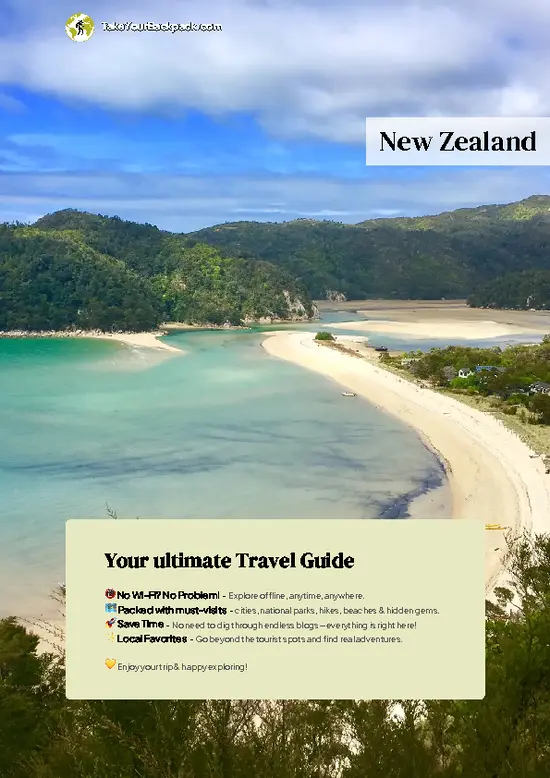
example page 0 from our offline Travel Guide for New Zealand
example page 1 from our offline Travel Guide for New Zealand
example page 2 from our offline Travel Guide for New Zealand
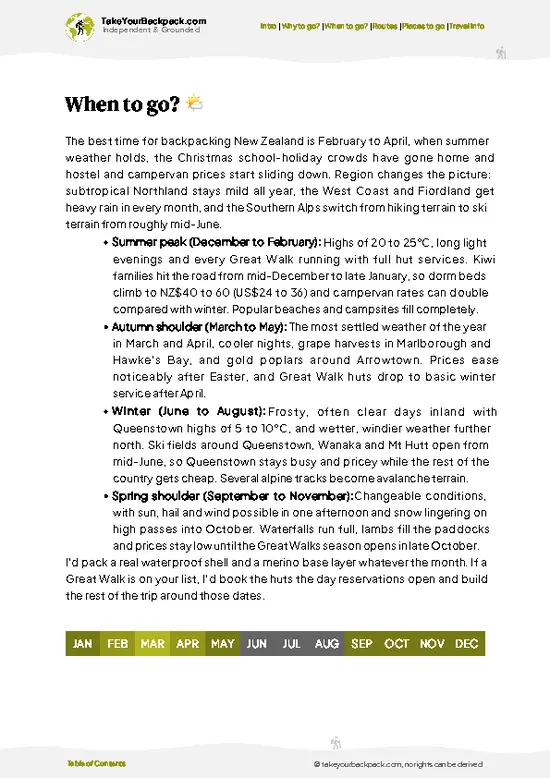
example page 3 from our offline Travel Guide for New Zealand
example page 4 from our offline Travel Guide for New Zealand
example page 5 from our offline Travel Guide for New Zealand
example page 6 from our offline Travel Guide for New Zealand
example page 7 from our offline Travel Guide for New Zealand
The digital guide (402 pages) contains:
112 highlights, ranked by travel appeal
Optimized 7, 14 & 21-day travel routes
Cities, national parks, landmarks, beaches
How to get around
Offline-friendly for travel without Wi-Fi
👉 Click to see all 30+ guide features

📅 Plan smarter in minutes, not weeks
Month by month travel advice
Festivals & national holidays
Budget expectations

🗺️ Go to the right places, skip the overrated ones
Honest pros & cons of destinations
Top hikes, parks & viewpoints
Lesser-known places most travelers miss
Clear “worth it vs skip it” guidance

🛏️ Travel smoothly without rookie mistakes
Best areas to stay
Transport systems explained simply
Common scams & safety advice
SIM cards, money & practical tips

🌍 Understand the country, not just visit it
Culture & traditions
Local customs
Festivals worth planning around
Traveler-friendly historical context
Insights that make places more meaningful

📱 Built for real travel conditions
Fully downloadable PDF
Works completely offline
Optimized for phone use
Useful in remote areas & buses
Everything in one place
Save weeks of stressful planning
Get instant access to your full guide. 30‑day money-back guarantee.
+ Add another guide for just US$7.80

By proceeding you agree to our terms.
Sent to your inbox immediately after payment • 100% Secure Checkout
Best Backpacking Travel Advisor 2025 tourism awardBest Backpacking
Travel Advisor
2025
What others say about Take Your Backpack Guides:
⭐⭐⭐⭐⭐
Fantastic, amazing amount of information!
⭐⭐⭐⭐⭐
My goodness this is amazing, it's what I've been looking for hats off too you!
⭐⭐⭐⭐⭐
I think this is absolutely BRILLIANT
⭐⭐⭐⭐
Very complete and informative. It's still missing places, but I gotta to commend you
⭐⭐⭐⭐⭐
This is truly amazing, thank you, can't wait to explore it with my kids!
⭐⭐⭐⭐⭐
Awesome resource, thank you!
⭐⭐⭐⭐⭐
This is amazing! Can't wait to explore the ones I haven't seen
⭐⭐⭐⭐
I love this! Well done, great idea.
⭐⭐⭐⭐⭐
Thanks for taking the time to make this gem!
⭐⭐⭐⭐⭐
This might be the best website I've ever seen.
⭐⭐⭐⭐⭐
Congratulations, and thank you so much for your work; it's incredibly valuable.
⭐⭐⭐⭐
In all seriousness I think you did a great job pointing out the important spots
⭐⭐⭐⭐⭐
10/10 very good
⭐⭐⭐⭐⭐
As someone who's only just starting to visit regularly this is awesome, thank you.
⭐⭐⭐⭐
Thank you very much! I'm going to visit my dad, it's going to be very useful!
⭐⭐⭐⭐⭐
This is really cool! We'll be travelling for the first time and this definitely come in handy.
⭐⭐⭐⭐⭐
You are now our minister of culture, congratulations 👨‍💼
⭐⭐⭐⭐⭐
Just wanted to tell you that this is a pearl! Going to follow your recommendations.
⭐⭐⭐⭐⭐
This is so cool. I'll definitely be using the resource for my travels soon.
⭐⭐⭐⭐⭐
This is very impressive! Good work.
⭐⭐⭐⭐⭐
This is an amazing and informative site. Very well done!

🛏️ Where to stay?Best areas and accommodation options

Ngongotaha’s heart for backpackers pulses strongest near the town center, where the streets hum with local life and easy access to transport links. This area balances safety with a laid-back vibe, perfect for solo travelers wanting to plug into the community without the tourist bubble. Hostels cluster here, offering a social scene that spills into nearby cafes and parks, where the scent of fresh pine mingles with the crisp lake breeze. Compared to quieter residential pockets, staying central means you’re steps from the pulse of Ngongotaha’s markets and trails, making it easier to dive into both … read more 👉
Ngongotaha’s heart for backpackers pulses strongest near the town center, where the streets hum with local life and easy access to transport links. This area balances safety with a laid-back vibe, perfect for solo travelers wanting to plug into the community without the tourist bubble. Hostels cluster here, offering a social scene that spills into nearby cafes and parks, where the scent of fresh pine mingles with the crisp lake breeze. Compared to quieter residential pockets, staying central means you’re steps from the pulse of Ngongotaha’s markets and trails, making it easier to dive into both culture and adventure without wasting time or energy.

🚌 Getting aroundTransportation options and practical tips

Ngongotaha moves at its own pace, a blend of laid-back local rhythms and bursts of tourist energy. The air carries the scent of pine and damp earth, especially near the lake, where mornings start cool and misty. This isn’t a place where you’ll find rigid timetables etched in stone; instead, it’s about reading the flow—catching a bus when it rolls in, or deciding to walk because the sun’s just right and the village feels close enough. The charm here is in the balance between predictability and spontaneity, so leaning into that vibe will save you stress and open doors to unexpected moments.


  • Walking: The heart of Ngongotaha is compact and walkable, with most attractions and eateries within 20 minutes on foot. Walking lets you soak in the fresh pine scent and spot local art and gardens tucked
read more 👉
Ngongotaha moves at its own pace, a blend of laid-back local rhythms and bursts of tourist energy. The air carries the scent of pine and damp earth, especially near the lake, where mornings start cool and misty. This isn’t a place where you’ll find rigid timetables etched in stone; instead, it’s about reading the flow—catching a bus when it rolls in, or deciding to walk because the sun’s just right and the village feels close enough. The charm here is in the balance between predictability and spontaneity, so leaning into that vibe will save you stress and open doors to unexpected moments.


  • Walking: The heart of Ngongotaha is compact and walkable, with most attractions and eateries within 20 minutes on foot. Walking lets you soak in the fresh pine scent and spot local art and gardens tucked between houses.

  • Local Bus: Runs roughly every 30-45 minutes from early morning (around 6:30 AM) until early evening (about 6 PM). It’s cheap—under NZD 5—and drops you at key spots like the lakefront and village center, though expect a casual pace and occasional waits.

  • Taxi Services: Available but pricier, around NZD 15-20 for short hops. Best for late nights or when you’re carrying gear, since they offer door-to-door comfort without the wait.

  • Bike Rentals: A solid middle ground if you want speed and flexibility. Rentals start at about NZD 20 per day, letting you cover more ground quickly while still feeling the breeze and spotting hidden trails.

👛 Costs (as of 4 September 2026)How expensive it really is

Backpacking in Ngongotaha, New Zealand, offers a laid-back vibe with access to geothermal wonders and lakeside calm, but knowing the daily costs helps you plan a trip that feels both rich and manageable.
  • Dorm Accommodation: Hostels and budget lodges here typically charge between $25 and $40 USD per night for a dorm bed. The options are limited but comfortable, often with shared kitchens and a chance to meet fellow travelers. Booking ahead in peak season is smart to lock in these rates.
  • Meals: Expect to spend around $10 to $15 USD for a casual meal at local cafés or takeaway spots. Grocery shopping for self-catering can drop your food costs to about $7 to $10 USD per day if you stick to basics like bread, cheese, fresh produce, and instant meals. Dining out at a mid-range restaurant will
read more 👉
Backpacking in Ngongotaha, New Zealand, offers a laid-back vibe with access to geothermal wonders and lakeside calm, but knowing the daily costs helps you plan a trip that feels both rich and manageable.
  • Dorm Accommodation: Hostels and budget lodges here typically charge between $25 and $40 USD per night for a dorm bed. The options are limited but comfortable, often with shared kitchens and a chance to meet fellow travelers. Booking ahead in peak season is smart to lock in these rates.
  • Meals: Expect to spend around $10 to $15 USD for a casual meal at local cafés or takeaway spots. Grocery shopping for self-catering can drop your food costs to about $7 to $10 USD per day if you stick to basics like bread, cheese, fresh produce, and instant meals. Dining out at a mid-range restaurant will push you closer to $20-$30 USD per meal.
  • Local Transport: Ngongotaha is small, so walking covers most spots. For longer trips, local buses run infrequently and cost about $3 to $5 USD per ride. Renting a bike is a popular, cost-effective way to explore nearby trails and costs roughly $15 to $25 USD per day.
  • Basic Activities/Entry Fees: Many natural attractions like the geothermal parks have entry fees around $10 to $15 USD. Kayaking or guided tours can range from $30 to $60 USD depending on duration and inclusions. Budget for at least one paid activity daily to get the full experience.
  • Miscellaneous Expenses: This includes essentials like bottled water, snacks, occasional laundry, or small souvenirs. Set aside about $5 to $10 USD daily to cover these little extras that add up but keep your trip smooth.

Ngongotaha’s daily budget for a backpacker realistically falls between $60 and $100 USD, balancing comfort and experience without overspending. The town’s relaxed pace means you won’t feel pressured to rush or splurge, letting you savor the geothermal steam in the air and the quiet lakeside evenings without breaking the bank.
⚠️ Prices can change and everyone travels differently, so take this as a rough guide. Hope it helps you plan your adventure!

🚌 Day tripsShort trips worth adding

Ngongotaha is a fantastic launchpad for unforgettable day trips that blend adventure with the stunning landscapes of New Zealand.

Redwoods Treewalk
Just a quick 15-minute drive from Ngongotaha, the Redwoods Treewalk offers an exhilarating stroll among towering trees. The canopy walk is a unique way to experience the ancient redwoods while soaking in the earthy scent of damp wood and moss. Aim for early morning to beat the crowds and catch the soft light filtering through the leaves. Budget around NZD 30 for entry, and don’t forget your camera; the views are worth every cent. A common mistake? Rushing through without pausing to appreciate the tranquility.


Lake Tarawera
About a 30-minute drive away, Lake Tarawera is a serene escape. The turquoise waters are perfect for a swim or a kayak, … read more 👉
Ngongotaha is a fantastic launchpad for unforgettable day trips that blend adventure with the stunning landscapes of New Zealand.

Redwoods Treewalk
Just a quick 15-minute drive from Ngongotaha, the Redwoods Treewalk offers an exhilarating stroll among towering trees. The canopy walk is a unique way to experience the ancient redwoods while soaking in the earthy scent of damp wood and moss. Aim for early morning to beat the crowds and catch the soft light filtering through the leaves. Budget around NZD 30 for entry, and don’t forget your camera; the views are worth every cent. A common mistake? Rushing through without pausing to appreciate the tranquility.


Lake Tarawera
About a 30-minute drive away, Lake Tarawera is a serene escape. The turquoise waters are perfect for a swim or a kayak, and the surrounding volcanic landscape is breathtaking. Pack a picnic and enjoy it by the shore, where the air is crisp and the sounds of nature surround you. Expect to spend around NZD 20 for kayak rentals. Late spring to early autumn is ideal for this trip. Many first-timers overlook the stunning sunset views; stay a bit longer to catch the sky ablaze.


Waimangu Volcanic Valley
Just 25 minutes from Ngongotaha, Waimangu is a geothermal wonderland. The vibrant colors of the hot springs and the sulfuric scent create a surreal atmosphere. The walking trails vary in length, so you can choose your adventure—most take about 2-3 hours. Entry is around NZD 40, and visiting in the cooler months means fewer crowds. A rookie mistake? Skipping the guided tour; the insights from the guides enhance the experience immensely.
Want to know what more New Zealand offers?
The New Zealand Travel Guide describes 112 highlights, from cities to national parks, from beaches to hikes

Get the Travel Guide -

🛡️ SafetyTraveler Safety Guide

Ngongotaha is generally safe, but a few tips can enhance your experience. Stay aware near the lakefront, especially at dusk; the light fades quickly, and it’s easy to lose your bearings. If you’re solo, stick to well-lit paths and don’t hesitate to chat with locals—they’re friendly and can offer insights.

Scams are rare, but watch for overly eager vendors at tourist spots. Keep your belongings close, especially in busy areas. A confident demeanor goes a long way; walk with purpose, and you’ll blend right in. Enjoy the stunning landscapes, but stay grounded in your surroundings.

FAQTraveler FAQ

Ngongotaha is worth visiting for its natural attractions and cultural experiences, not just a stopover. The town offers access to Mount Ngongotaha, geothermal parks, and Maori cultural sites, making it a worthwhile destination for outdoor and cultural enthusiasts.
You need 1 to 2 days in Ngongotaha to explore the main attractions comfortably. This allows time for hiking Mount Ngongotaha, visiting the geothermal reserves, and experiencing local Maori culture.
Yes, Ngongotaha can be visited as a day trip from Rotorua, which is about 10 kilometers away. The short drive makes it easy to explore the highlights of Ngongotaha within a day.
⚠️ Things can change over time, so always validate details locally before you go.

Other New Zealander towns near Ngongotaha

Explore more nearby:

  • Taupo—lakefront, geothermal parks, trout fishing, adventure sports| 68 km away
  • Whakatane—offshore island access, Māori heritage, river mouth, dolphin tours| 69 km away
  • Thames—Coromandel gateway, gold mining relics, Saturday market, bush walks| 120 km away

💡 Not sure where to go next?
Create a personalized itinerary for New Zealand including Ngongotaha and the places that fit your trip.

Generate my itinerary

👉 Discover all towns

Or checkout all New Zealand has to offer (think cities, towns, villages, national parks, hikes, beaches, festivals)
Country photo of New Zealand

We 💚 feedbackWhat to keep in mind

Ngongotaha’s geothermal wonders are a sensory feast—the earthy scent of sulfur mingles with the crisp air as steam rises from bubbling pools. But be ready for the weather; it can shift quickly, so pack layers. Embrace the unpredictability; it’s part of the adventure.

✈️ When did I visit New Zealand?
All the way back in high school I have been visiting the Northern Island of New Zealand (1993).

✍️ Help improve this page!
The information on this page is based on my own backpacking experience in New Zealand, supplemented with up-to-date research and feedback from other travelers. Travel details can change, so if you notice anything outdated or incomplete, feel free to let me know.


🙋‍♂️ Give feedback

👋 Meet the founderWho’s Behind Take Your Backpack?

Johan, backpacker and founder of TakeYourBackpackHi, I’m Johan (Netherlands 🇳🇱), the creator of TakeYourBackpack. Over the past decade, I’ve backpacked through 80+ countries across six continents, gaining extensive experience with independent travel, long-term trips, and overland routes.

This site is built on a combination of firsthand travel experience and carefully curated insights from other backpackers. Many guides are based on places I’ve personally visited, while others bring together tips, observations, and practical advice shared by trusted travelers I’ve met along the way.

The goal is to provide realistic, experience-driven guidance — not generic itineraries — so you can explore destinations with better context, clearer expectations, and more confidence.

Get full country guide •
Instant download • 112 highlights • Full Offline guide