×

Nicaragua🇳🇮 | regionsCorn IslandsCaribbean beaches, Creole villages, reef snorkeling | things to do and best time to go

Explore Selva NegraExplore Catarina

Backpacking in Corn Islands
🌟 Highlightregion ranked #2
By Johan Kruseman 🇳🇱 | Updated September 4, 2026

Forget the fantasy of deserted Caribbean paradise—Big and Little Corn Islands aren’t untouched secrets, but they’re not Cancun, either. You’ll find them floating off Nicaragua’s east coast, a 70-kilometer hop from Bluefields, and they’re the kind of place where shoes are optional and time gets slippery. For backpackers, the Corn Islands are a sunburned trade-off: you get turquoise water, palm trees, and lobster that’s actually affordable, but you’ll pay in patience—ferries and flights run on island time, and getting here from the mainland is a commitment. Big Corn has a lived-in, local vibe with reggae bars and baseball games, while Little Corn is the barefoot, no-cars, hammock-swinging fantasy, but with just enough hostels and beach shacks to keep things interesting. It’s not overrun, but don’t expect total solitude—especially during Semana Santa, when Nicas flood in for the party. Compared to San Juan del Sur’s surf-bro circus or Ometepe’s volcano treks, the Corns are slower, saltier, and more about lazy days than bucket-list ticking.

Discover everything you want to know in the 📖 Nicaragua Travel Guide.
Loading the map 🌍
CLICK TO FILTER
cities
towns
landmarks
national parks
hikes
beaches
attractions
festivals
regions
SHOW COUNTRY’S BESTSHOW ALL

✨ Why go?
Ranked #2 region in Nicaragua
Why visitors keep coming back

If you’re eyeing the Corn Islands in Nicaragua, here’s the insider scoop: backpackers stick around because this spot nails the sweet spot between time, money, and comfort without making you feel like you’re stuck in a tourist loop. First off, the islands offer a surprising variety of landscapes—from powdery white beaches to lush jungle pockets—so you’re not just staring at the same horizon day after day. That means you can savor multiple experiences without the hassle of constant relocation, which is a rare luxury when you’re on a tight schedule.

Transport here is refreshingly flexible. You’re not chained to expensive tours or rigid schedules. Local boats and minibuses connect you to different corners of the islands, letting you craft your own pace. This is where the magic of slow travelread more 👉
If you’re eyeing the Corn Islands in Nicaragua, here’s the insider scoop: backpackers stick around because this spot nails the sweet spot between time, money, and comfort without making you feel like you’re stuck in a tourist loop. First off, the islands offer a surprising variety of landscapes—from powdery white beaches to lush jungle pockets—so you’re not just staring at the same horizon day after day. That means you can savor multiple experiences without the hassle of constant relocation, which is a rare luxury when you’re on a tight schedule.

Transport here is refreshingly flexible. You’re not chained to expensive tours or rigid schedules. Local boats and minibuses connect you to different corners of the islands, letting you craft your own pace. This is where the magic of slow travel kicks in: you get to soak up the laid-back vibe, chat with locals, and dive into the culture without rushing. It’s a rare chance to blend nature and culture seamlessly—snorkeling vibrant reefs by morning, then sharing stories over fresh seafood at a beachside shack by night.

In short, the Corn Islands let you stretch your time and budget while dialing up comfort and authenticity. That’s why savvy backpackers keep coming back.
Want to include Corn Islands in your Nicaragua route?
Create a personalized Nicaragua itinerary that includes Corn Islands and the places that fit your trip — based on your travel style, budget, and available time. Get your route in seconds.

Generate my trip

💡 HighlightsThe experiences that define the visit

1. Little Corn Island’s North End Beaches
You want the kind of sand that squeaks underfoot and water so clear you’ll check your mask for glass? Head north. No roads, no cars, just a footpath through coconut palms and the occasional hammock strung up by someone who knows how to live. The further you walk, the fewer people you’ll see. Bring a snorkel—reef fish outnumber humans ten to one.

2. Casa Iguana’s Bluff Trail (Little Corn)
This isn’t a marked tourist trail; it’s a local favorite, a rough path that hugs the wind-battered bluffs on the east side. You’ll get spray in your face and a soundtrack of crashing waves. Sunrise here feels like you’ve landed on a deserted planet. If you’re lucky, you’ll spot a pelican dive-bombing for breakfast.

3. Yemaya Reef Snorkeling
Just offshore from the Yemaya … read more 👉
1. Little Corn Island’s North End Beaches
You want the kind of sand that squeaks underfoot and water so clear you’ll check your mask for glass? Head north. No roads, no cars, just a footpath through coconut palms and the occasional hammock strung up by someone who knows how to live. The further you walk, the fewer people you’ll see. Bring a snorkel—reef fish outnumber humans ten to one.

2. Casa Iguana’s Bluff Trail (Little Corn)
This isn’t a marked tourist trail; it’s a local favorite, a rough path that hugs the wind-battered bluffs on the east side. You’ll get spray in your face and a soundtrack of crashing waves. Sunrise here feels like you’ve landed on a deserted planet. If you’re lucky, you’ll spot a pelican dive-bombing for breakfast.

3. Yemaya Reef Snorkeling
Just offshore from the Yemaya area, you’ll find coral gardens that haven’t been trampled by crowds. Parrotfish, eagle rays, and—if you’re sharp-eyed—a nurse shark or two. The trick is to go early, before the day-trippers arrive. Bring your own gear if you can; rentals are hit-or-miss.

4. Big Corn Island’s Mount Pleasant Hill
The highest point on either island, and a rite of passage for anyone who wants the full 360-degree view. It’s a sweaty climb, but you’ll see both coasts, the patchwork of jungle and village, and—on a clear day—Little Corn floating on the horizon. Go at sunset for the gold-and-indigo light show.

5. Local Baseball Game (Big Corn)
This is the Corn Islands’ heartbeat. The stadium’s more dust than grass, but the energy is pure. Locals bet on every pitch, and the concession stand sells cold Toña and fried fish. If you want to feel like you belong, cheer for the home team and don’t ask too many questions about the rules.

6. The Fishermen’s Dock at Dawn (Big Corn)
Hidden gem alert. Show up before sunrise and watch the boats come in, loaded with lobster and snapper. The air smells like salt and diesel, and the deals are all done in rapid-fire Creole. If you’re friendly, someone might sell you the morning’s catch for pocket change.

7. Tranquilo Café Open Mic Night (Little Corn)
This is where the island’s expats, locals, and backpackers collide. Guitars, poetry, and the occasional stand-up set—plus the best coconut bread pudding you’ll ever eat. It’s not polished, but it’s real, and you’ll leave with at least one new friend.

8. Otto Beach (Little Corn)
A local secret, tucked away past a maze of jungle paths. The sand is powdery, the water is calm, and there’s usually a lone fisherman casting off the rocks. Bring snacks; there’s nothing for sale, and that’s the point.

9. The Old Lighthouse Ruins (Big Corn)
It’s half-collapsed, but the climb is worth it for the view and the breeze. Locals come here to watch storms roll in. If you’re into photography, this is your shot—rusted metal, wild vines, and the sea stretching forever.

10. Miss Bridget’s Kitchen (Big Corn)
My personal favorite. No sign, no menu—just ask for whatever’s fresh. Miss Bridget cooks with recipes older than the island’s airstrip. Her coconut curry fish is legendary, and if you’re lucky, she’ll let you in on the secret ingredient (it’s not what you think).

Spotted a mistake or missing something? Contact us.
⌛️ 5 days5-day itinerary for Corn Islands

Day 1: Big Corn Island


Start here because it’s your gateway and your base camp. Flights from Managua land on a tiny airstrip that feels like a secret handshake—small planes, no frills, but a quick jump into island life. The island’s size means you can explore by motorbike or golf cart, but don’t rush. The pace here is dictated by the laid-back vibe and the ferry schedules that connect you to Little Corn. Use this day to settle in, sample fresh lobster at a local shack, and get your bearings. The trade-off? You’re paying a bit more for convenience flying in, but you save time and energy for the days ahead.

Day 2: Big Corn Island Exploration


This is your comfort day. Rent a golf cart and circle the island’s beaches and hidden coves. The roads are rough, so comfort means a slow roll with … read more 👉

Day 1: Big Corn Island


Start here because it’s your gateway and your base camp. Flights from Managua land on a tiny airstrip that feels like a secret handshake—small planes, no frills, but a quick jump into island life. The island’s size means you can explore by motorbike or golf cart, but don’t rush. The pace here is dictated by the laid-back vibe and the ferry schedules that connect you to Little Corn. Use this day to settle in, sample fresh lobster at a local shack, and get your bearings. The trade-off? You’re paying a bit more for convenience flying in, but you save time and energy for the days ahead.

Day 2: Big Corn Island Exploration


This is your comfort day. Rent a golf cart and circle the island’s beaches and hidden coves. The roads are rough, so comfort means a slow roll with plenty of stops. The island’s wiring—its informal network of taxis and locals—means you can hitch a ride if you want to ditch the wheels. The trade-off here is time for comfort; you’re not rushing to cram in every beach but soaking in the island’s rhythm. Off-Path Reward: Head to the Blue Channel, a snorkeling spot less visited by tourists but teeming with coral and fish. It’s a short boat ride, but the payoff is a quiet underwater world.

Day 3: Transfer to Little Corn Island


This day is all about the spine—the ferry. The boat ride takes about 30 minutes but runs on a schedule that can feel like island time: flexible but not always predictable. You’re trading comfort for authenticity here; the ferry is basic, sometimes crowded, but it’s the only way to cross. Arrive on Little Corn and immediately feel the shift—no cars, no roads, just sandy paths and hammocks. This is where the trip’s character deepens.

Day 4: Little Corn Island Immersion


No motorized transport means you walk or bike. This forces a slower pace, which is the point. The wiring here is the community itself—friendly locals, fishermen, and artisans who make the island hum. Spend your day snorkeling, hiking to viewpoints, or just chilling in a hammock. The trade-off is comfort for experience; you’re embracing simplicity, which pays off in genuine connection.

Day 5: Little Corn to Big Corn and Departure


Return via ferry to Big Corn Island for your flight out. Timing is everything—miss the ferry, and you’re stuck overnight. This day is a logistical squeeze but necessary. Use any spare time on Big Corn to grab a last meal or souvenir. The must-do day? Day 4 on Little Corn. It’s the soul of the trip—the place where the trade-offs between time, money, and comfort dissolve into something richer: real island life. That day alone justifies the whole journey.
Turn your Corn Islands visit into an Nicaragua adventure
Build a complete Nicaragua route with Corn Islands, hidden gems, must-see destinations, and realistic travel times included.

Generate my trip

🌤️ When to go?Choosing the right time of year


  • Topic: Weather – The Corn Islands bask in tropical warmth year-round, but from June to November, brace for heavy rains and potential hurricanes. The dry season, December through May, offers clearer skies and calmer seas, perfect for beach days and snorkeling.

  • Topic: Temperature – Expect steady temps between 27°C and 31°C (80°F to 88°F). The hottest months are March to May, where humidity can spike, making early mornings and late afternoons your best adventure windows.

  • Topic: Daylight Hours – Roughly 11 to 12 hours of daylight year-round, with sunrise around 6 AM and sunset near 6 PM. This consistency means you can plan your days without worrying about early darkness cutting your explorations short.

  • Topic: Crowds – Peak season hits December to April when travelers escape colder northern
read more 👉

  • Topic: Weather – The Corn Islands bask in tropical warmth year-round, but from June to November, brace for heavy rains and potential hurricanes. The dry season, December through May, offers clearer skies and calmer seas, perfect for beach days and snorkeling.

  • Topic: Temperature – Expect steady temps between 27°C and 31°C (80°F to 88°F). The hottest months are March to May, where humidity can spike, making early mornings and late afternoons your best adventure windows.

  • Topic: Daylight Hours – Roughly 11 to 12 hours of daylight year-round, with sunrise around 6 AM and sunset near 6 PM. This consistency means you can plan your days without worrying about early darkness cutting your explorations short.

  • Topic: Crowds – Peak season hits December to April when travelers escape colder northern climates. The islands feel lively but not overrun. Off-season (June to November) sees fewer visitors, offering solitude but with the risk of wet weather.

  • Topic: Seasonal Activities – Dry months are prime for diving, fishing, and island hopping. The wet season limits water activities but brings lush greenery and quieter beaches, ideal if you want to dodge the tourist buzz.

  • Topic: Price Fluctuations – Expect higher prices and booked accommodations December through April. From May onward, rates drop noticeably, giving you leverage to negotiate better deals on lodging and tours.


Pro-tip: Aim for late April or early May—just before the rains start—to snag lower prices, fewer crowds, and still enjoy mostly dry weather. It’s the sweet spot most travelers overlook.


source: climatestotravel.comJANJanuary: excellent for travelingFEBFebruary: excellent for travelingMARMarch: highly recommended for travelingAPRApril: highly recommended for travelingMAYMay: highly recommended for travelingJUNJune: fair for travelingJULJuly: fair for travelingAUGAugust: fair for travelingSEPSeptember: below average for travelingOCTOctober: below average for travelingNOVNovember: fair for travelingDECDecember: excellent for traveling
when-to-go

✈️ The backpacker research shortcutNicaragua Travel Guide

An offline-friendly backpacking guide with optimized travel routes, ranked highlights, transport advice, and the best areas to stay.
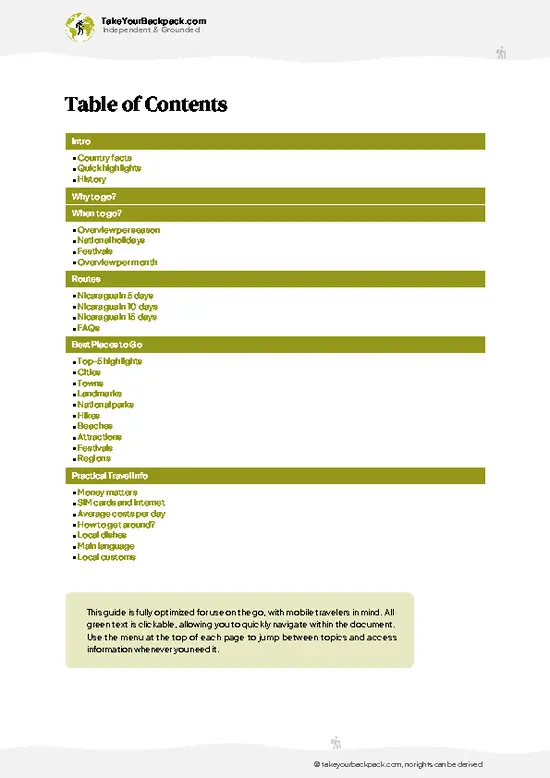
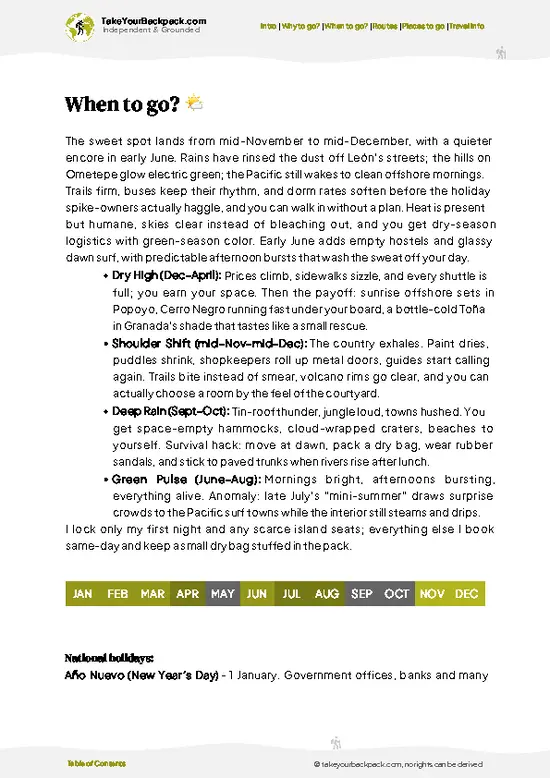
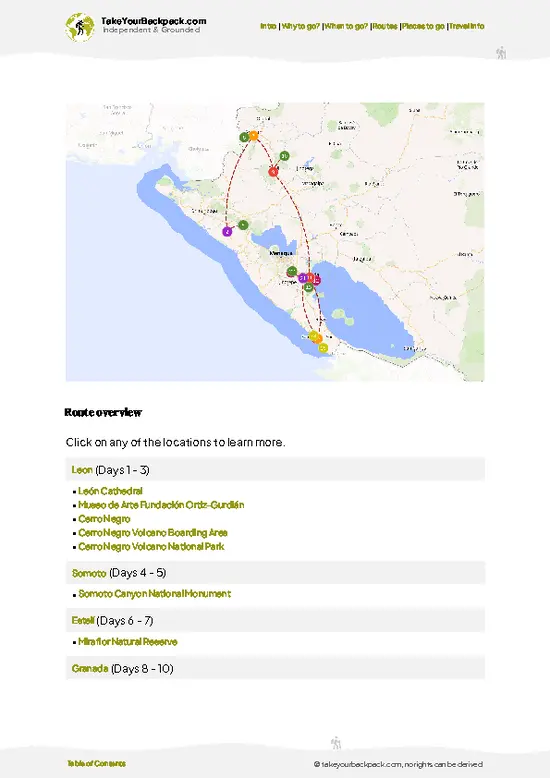
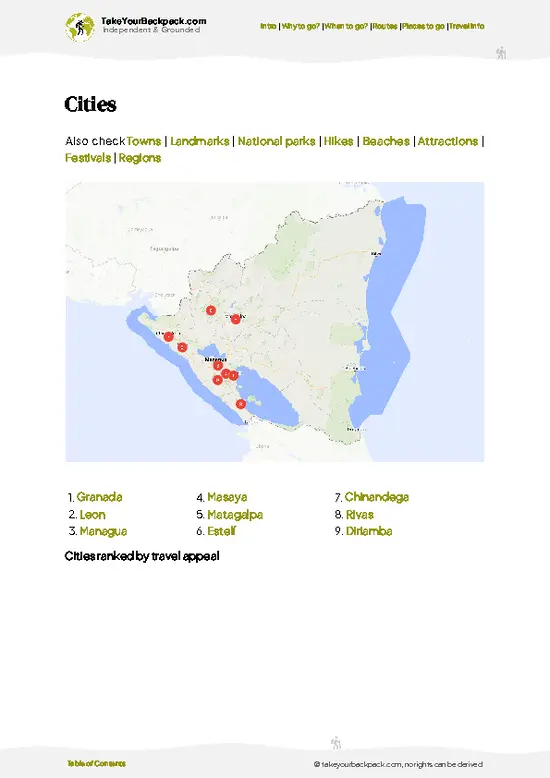
example page 0 from our offline Travel Guide for Nicaragua
example page 1 from our offline Travel Guide for Nicaragua
example page 2 from our offline Travel Guide for Nicaragua
example page 3 from our offline Travel Guide for Nicaragua
example page 4 from our offline Travel Guide for Nicaragua
example page 5 from our offline Travel Guide for Nicaragua
example page 6 from our offline Travel Guide for Nicaragua
example page 7 from our offline Travel Guide for Nicaragua
The digital guide (339 pages) contains:
86 highlights, ranked by travel appeal
Optimized 5, 10 & 15-day travel routes
Cities, national parks, landmarks, beaches
How to get around
Offline-friendly for travel without Wi-Fi
👉 Click to see all 30+ guide features

📅 Plan smarter in minutes, not weeks
Month by month travel advice
Festivals & national holidays
Budget expectations

🗺️ Go to the right places, skip the overrated ones
Honest pros & cons of destinations
Top hikes, parks & viewpoints
Lesser-known places most travelers miss
Clear “worth it vs skip it” guidance

🛏️ Travel smoothly without rookie mistakes
Best areas to stay
Transport systems explained simply
Common scams & safety advice
SIM cards, money & practical tips

🌍 Understand the country, not just visit it
Culture & traditions
52 Essential phrases & customs
Festivals worth planning around
Traveler-friendly historical context
Insights that make places more meaningful

📱 Built for real travel conditions
Fully downloadable PDF
Works completely offline
Optimized for phone use
Useful in remote areas & buses
Everything in one place
Save weeks of stressful planning
Get instant access to your full guide. 30‑day money-back guarantee.
+ Add another guide for just US$7.80

By proceeding you agree to our terms.
Sent to your inbox immediately after payment • 100% Secure Checkout
Best Backpacking Travel Advisor 2025 tourism awardBest Backpacking
Travel Advisor
2025
What others say about Take Your Backpack Guides:
⭐⭐⭐⭐⭐
Fantastic, amazing amount of information!
⭐⭐⭐⭐⭐
My goodness this is amazing, it's what I've been looking for hats off too you!
⭐⭐⭐⭐⭐
I think this is absolutely BRILLIANT
⭐⭐⭐⭐
Very complete and informative. It's still missing places, but I gotta to commend you
⭐⭐⭐⭐⭐
This is truly amazing, thank you, can't wait to explore it with my kids!
⭐⭐⭐⭐⭐
Awesome resource, thank you!
⭐⭐⭐⭐⭐
This is amazing! Can't wait to explore the ones I haven't seen
⭐⭐⭐⭐
I love this! Well done, great idea.
⭐⭐⭐⭐⭐
Thanks for taking the time to make this gem!
⭐⭐⭐⭐⭐
This might be the best website I've ever seen.
⭐⭐⭐⭐⭐
Congratulations, and thank you so much for your work; it's incredibly valuable.
⭐⭐⭐⭐
In all seriousness I think you did a great job pointing out the important spots
⭐⭐⭐⭐⭐
10/10 very good
⭐⭐⭐⭐⭐
As someone who's only just starting to visit regularly this is awesome, thank you.
⭐⭐⭐⭐
Thank you very much! I'm going to visit my dad, it's going to be very useful!
⭐⭐⭐⭐⭐
This is really cool! We'll be travelling for the first time and this definitely come in handy.
⭐⭐⭐⭐⭐
You are now our minister of culture, congratulations 👨‍💼
⭐⭐⭐⭐⭐
Just wanted to tell you that this is a pearl! Going to follow your recommendations.
⭐⭐⭐⭐⭐
This is so cool. I'll definitely be using the resource for my travels soon.
⭐⭐⭐⭐⭐
This is very impressive! Good work.
⭐⭐⭐⭐⭐
This is an amazing and informative site. Very well done!

🛏️ Where to stay?Choosing the right base

When you touch down in the Corn Islands, you’re really choosing between two vibes that shape your entire trip: Big Corn and Little Corn. Both have their perks, but knowing when and why to pick one over the other is your secret weapon.

Big Corn is your go-to if you want a bit more structure without losing that island charm. It’s where you’ll find the livelier social scene, local markets, and enough eateries to keep your taste buds guessing without breaking the bank. It’s also the safer bet for solo travelers who want to mix with other backpackers but still have access to basic comforts. The trade-off? … read more 👉
When you touch down in the Corn Islands, you’re really choosing between two vibes that shape your entire trip: Big Corn and Little Corn. Both have their perks, but knowing when and why to pick one over the other is your secret weapon.

Big Corn is your go-to if you want a bit more structure without losing that island charm. It’s where you’ll find the livelier social scene, local markets, and enough eateries to keep your taste buds guessing without breaking the bank. It’s also the safer bet for solo travelers who want to mix with other backpackers but still have access to basic comforts. The trade-off? It’s a bit more developed, so you’ll miss out on that untouched, barefoot island vibe. But hey, you’re gaining reliable transport options and a community that’s easy to plug into.

Little Corn, on the other hand, is where you surrender comfort for pure island magic. No cars, no paved roads, just hammocks, reggae beats, and a tight-knit backpacker crowd that’s all about slowing down. It’s quieter, more remote, and yes, a bit pricier because everything has to be brought in by boat. But if your goal is to disconnect and soak in raw Caribbean life, this is your spot. Just remember, the trade-off here is time and convenience—getting there and back takes planning, and you’ll be living with fewer amenities.

So, your insider move? Start on Big Corn to settle in, meet people, and stock up on essentials. Then slip over to Little Corn when you’re ready to unplug and dive deep into island life. Balancing these two spots is how you turn a simple trip into a story worth telling.

🚌 Getting aroundGetting around like a local

The Corn Islands don’t run on a Swiss watch. They move to the rhythm of the sea, the weather, and the whims of boat captains who know every wave like a secret handshake. Schedules? They exist, but they’re more like guidelines scribbled in sand, washed away and rewritten by tides and moods. You’ll find yourself negotiating time with a grin, learning that patience here isn’t just a virtue—it’s your best travel companion. The islands’ transport is a dance between budget, comfort, and the unpredictable pulse of island life. Here’s how you play it smart.


  • Water Taxis Between Big Corn and Little Corn: These are the lifeblood of island hopping, running roughly every hour from dawn till dusk. Expect to pay around $3-$5 for the 15-minute ride. They’re basic—no frills, just a small motorboat slicing
read more 👉
The Corn Islands don’t run on a Swiss watch. They move to the rhythm of the sea, the weather, and the whims of boat captains who know every wave like a secret handshake. Schedules? They exist, but they’re more like guidelines scribbled in sand, washed away and rewritten by tides and moods. You’ll find yourself negotiating time with a grin, learning that patience here isn’t just a virtue—it’s your best travel companion. The islands’ transport is a dance between budget, comfort, and the unpredictable pulse of island life. Here’s how you play it smart.


  • Water Taxis Between Big Corn and Little Corn: These are the lifeblood of island hopping, running roughly every hour from dawn till dusk. Expect to pay around $3-$5 for the 15-minute ride. They’re basic—no frills, just a small motorboat slicing through turquoise water. Comfort is minimal, but the views and fresh sea spray make up for it.

  • Local Buses on Big Corn Island: If you want to stretch your legs and your budget, local buses (or “camionetas”) are your go-to. They run sporadically, mostly during daylight hours, and cost under $1 for short hops. They’re slow, often packed, and a bit bumpy, but they’re the best way to soak in daily island life and chat with locals.

  • Motorbike Rentals: For about $15-$20 a day, renting a motorbike gives you freedom and speed. Roads are rough but manageable, and this option lets you explore hidden beaches and inland spots on your own schedule. It’s a comfort upgrade if you’re comfortable on two wheels and want to dodge the unpredictability of public transport.

  • Shared Taxis: Shared taxis run between the airport, main town, and some beaches. They’re faster than buses but pricier—expect $5-$10 depending on distance. They leave when full, so timing is flexible but uncertain. Comfort is decent, with air-conditioned options if you’re lucky.

  • Chartered Boats to Mainland Nicaragua: If you’re heading off the islands, chartered boats are your only option besides flights. They’re expensive ($50+), weather-dependent, and leave on demand rather than schedule. Not for the faint-hearted or tight budgets, but essential if you want to connect with the mainland without flying.


Pro Tip: The real insider move is to sync your water taxi rides with the early morning hours when the sea is calmest and captains are most reliable. Arrive at the dock 15 minutes before the first boat leaves, and you’ll snag a seat without the last-minute scramble. This timing also helps you avoid the afternoon winds that can turn a smooth ride into a bumpy ordeal. Master this, and you’ll glide through the Corn Islands like a local who knows the sea’s secret schedule.

🍲 FoodLocal Cuisine & Drinks

The Corn Islands serve up a culinary vibe that’s as laid-back and salty as the Caribbean breeze. Here, seafood isn’t just a menu option—it’s the heartbeat of every meal. Think freshly caught lobster grilled over open flames, or conch ceviche that hits your tongue with a bright, citrusy punch, flecked with fiery local peppers. Don’t miss the chance to try rundown, a rich coconut milk stew simmered with fish or crab, where the creamy sweetness balances the island’s natural heat.

For a true insider’s experience, skip the touristy joints and head straight to the street stalls and local markets where the air is thick with the scent of frying plantains and smoky jerk spices. These spots are where the island’s soul comes alive—grab a cold Flor de Caña rum or a fresh coconut water straight from the … read more 👉
The Corn Islands serve up a culinary vibe that’s as laid-back and salty as the Caribbean breeze. Here, seafood isn’t just a menu option—it’s the heartbeat of every meal. Think freshly caught lobster grilled over open flames, or conch ceviche that hits your tongue with a bright, citrusy punch, flecked with fiery local peppers. Don’t miss the chance to try rundown, a rich coconut milk stew simmered with fish or crab, where the creamy sweetness balances the island’s natural heat.

For a true insider’s experience, skip the touristy joints and head straight to the street stalls and local markets where the air is thick with the scent of frying plantains and smoky jerk spices. These spots are where the island’s soul comes alive—grab a cold Flor de Caña rum or a fresh coconut water straight from the shell to wash down your meal. The casual cafés here are more like community hubs, where locals swap stories over strong coffee brewed dark and sweet.

Dining on the Corn Islands is informal but respectful. Sharing plates is common, and meals often stretch into long, easy conversations under palm shadows. Don’t expect silverware or fuss—forks and fingers are your tools, and a smile goes a long way. The real trick? Eat when the locals eat, usually late afternoon or early evening, to catch the freshest catch and the best vibe.

FAQFrequently asked questions about Corn Islands

3 to 4 days are sufficient to explore Corn Islands thoroughly. This allows time to visit both Big Corn Island and Little Corn Island, enjoy beaches, snorkeling, and local culture. Most travelers find 3 days enough for key activities and relaxation.
You get around Corn Islands primarily by walking, biking, or using moto-taxis. The islands are small, with Big Corn Island about 10 km long, making walking feasible for many destinations. Moto-taxis cost around $1 to $3 for short trips and are the main local transport option.
Corn Islands are known for their pristine beaches, clear turquoise waters, and excellent snorkeling and diving spots. They are also famous for their laid-back Caribbean vibe and fresh seafood, especially lobster and conch. The islands attract travelers seeking a quiet, natural escape.
⚠️ Things can change over time, so always validate details locally before you go.

Other Nicaraguan regions near Corn Islands

Explore more nearby:

  • Las Corn Islands—coral reefs, Caribbean beaches, Creole villages| 71 km away
  • Ometepe Island—twin volcanoes, freshwater lake, rural farmland| 302 km away
  • Selva Negra—cloud forest, coffee estates, mountain trails| 326 km away

💡 Not sure where to go next?
Create a personalized itinerary for Nicaragua including Corn Islands and the places that fit your trip.

Generate my itinerary

👉 Discover all regions

Or checkout all Nicaragua has to offer (think cities, towns, villages, national parks, hikes, beaches, festivals)
Country photo of Nicaragua

We 💚 feedbackFinal thoughts on visiting Corn Islands

Here’s the deal with the Corn Islands: if you want a rare slice of Caribbean calm where the pace slows and the ocean’s colors mess with your head in the best way, this is your spot. But don’t expect luxury or endless amenities—power outages and limited Wi-Fi are part of the charm, not a glitch. Embrace the trade-off: you’re trading convenience for authenticity, and honestly, that’s what makes it stick in your memory.

✈️ When did I visit Nicaragua?
Nicaragua I visited during my half year trip through South and Central America back in 2003

✍️ Help improve this page!
The information on this page is based on my own backpacking experience in Nicaragua, supplemented with up-to-date research and feedback from other travelers. Travel details can change, so if you notice anything outdated or incomplete, feel free to let me know.


🙋‍♂️ Give feedback

👋 Meet the founderWho’s Behind Take Your Backpack?

Johan, backpacker and founder of TakeYourBackpackHi, I’m Johan (Netherlands 🇳🇱), the creator of TakeYourBackpack. Over the past decade, I’ve backpacked through 80+ countries across six continents, gaining extensive experience with independent travel, long-term trips, and overland routes.

This site is built on a combination of firsthand travel experience and carefully curated insights from other backpackers. Many guides are based on places I’ve personally visited, while others bring together tips, observations, and practical advice shared by trusted travelers I’ve met along the way.

The goal is to provide realistic, experience-driven guidance — not generic itineraries — so you can explore destinations with better context, clearer expectations, and more confidence.

Get full Nicaragua guide •
Instant download • 86 highlights • Full Offline guide