×

Niger🇳🇪 | attractionsMusée National Boubou Hamaethnographic displays, dinosaur fossils, open-air zoo | things to do and best time to go

Explore Grand Marché de NiameyExplore Centre Culturel Franco-Nigérien Jean Rouch

Backpacking in Musée National Boubou Hama
🏆 Top pickattraction ranked #4
By Johan Kruseman 🇳🇱 | Updated September 3, 2026

A child’s laughter ricochets off the cracked tiles as you duck into a low-slung hut, the air thick with the scent of sun-baked earth and old leather. Your fingertips graze a centuries-old saddle, its surface polished by generations of hands, while outside, the call to prayer threads through the midday heat. This is Musée National Boubou Hama, planted right in the heart of Niamey, Niger’s capital—a place that’s more living crossroads than sterile museum.

Let’s cut through the fantasy: you won’t find curated perfection or air-conditioned galleries here. The exhibits sprawl across open courtyards and mud-brick buildings, sometimes feeling more like a village than a museum. Yes, the displays can be haphazard, and the heat is relentless. But if you want to feel Niger’s pulse—its tribal histories, its crafts, its wild, kinetic energy—this is where you get it raw. Entry is cheap, crowds are mostly local families, and the vibe is refreshingly unpolished compared to the sanitized, tourist-ready sites elsewhere. It’s not Instagram bait; it’s the real deal.

Discover everything you want to know in the 📖 Niger Travel Guide.
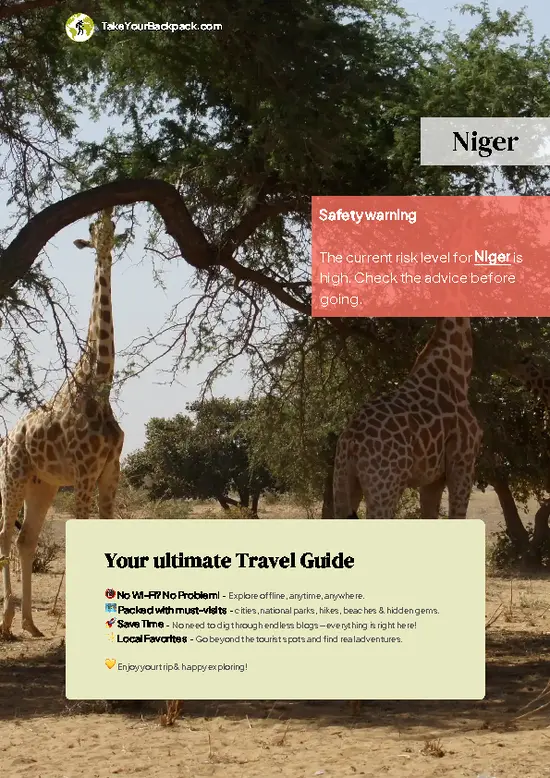
Safety warning

The current risk level for Niger is high. Check the advice before going.


Get your Niger guide
67 ranked highlights, routes & tips, works offline (284 pages)
Loading the map 🌍
CLICK TO FILTER
cities
towns
villages
landmarks
national parks
hikes
attractions
festivals
regions
SHOW COUNTRY’S BESTSHOW ALL

✨ Why go?
Ranked #4 attraction in Niger
What sets this place apart

The Musée National Boubou Hama in Niger isn’t your typical tourist checkbox. Sure, it draws crowds, especially during peak season, and the entry fee isn’t exactly pocket change for a backpacker. But here’s the real deal: this museum is a cornerstone of Nigerien identity, packed with layers of history and culture that no Instagram post can capture. It’s not just about artifacts behind glass; it’s about connecting with the pulse of Niger’s past and present. The exhibits dive deep into the country’s diverse ethnic groups, traditional crafts, and the complex interplay between ancient customs and modern life. For anyone trekking through Niger, this museum is a major milestone—offering context that transforms the landscape from mere scenery into a living story. The effort to get here pays off in … read more 👉
The Musée National Boubou Hama in Niger isn’t your typical tourist checkbox. Sure, it draws crowds, especially during peak season, and the entry fee isn’t exactly pocket change for a backpacker. But here’s the real deal: this museum is a cornerstone of Nigerien identity, packed with layers of history and culture that no Instagram post can capture. It’s not just about artifacts behind glass; it’s about connecting with the pulse of Niger’s past and present. The exhibits dive deep into the country’s diverse ethnic groups, traditional crafts, and the complex interplay between ancient customs and modern life. For anyone trekking through Niger, this museum is a major milestone—offering context that transforms the landscape from mere scenery into a living story. The effort to get here pays off in a way that’s more than visual—it’s intellectual and emotional. You’ll leave with a sharper understanding of Niger’s place in Africa and the world, which is priceless when you’re piecing together the bigger picture of your journey. If you want to skip the tourist gloss and get real, this is where you start.
Want to include Musée National Boubou Hama in your Niger route?
Create a personalized Niger itinerary that includes Musée National Boubou Hama and the places that fit your trip — based on your travel style, budget, and available time. Get your route in seconds.

Generate my trip

💡 HighlightsEssential experiences to have while visiting Musée National Boubou Hama

The Grand Sahelian Architecture
Forget the Instagram filters—this is the real deal. The Musée National Boubou Hama’s mud-brick pavilions are not some set piece for a travel influencer’s feed. They’re living, breathing examples of Sahelian architecture, with thick, sunbaked walls that keep the heat at bay and a design that’s more about function than flash. Walk the grounds and you’ll see how Niger’s builders have been outsmarting the desert for centuries. The buildings themselves are as much a part of the museum as the exhibits inside—no velvet ropes, no sterile glass cases, just honest-to-goodness craftsmanship that’s stood up to the Saharan sun.


The Ethnographic Collections
This isn’t your average “tribal mask behind glass” setup. The museum’s ethnographic halls are a crash course in Niger’s … read more 👉
The Grand Sahelian Architecture
Forget the Instagram filters—this is the real deal. The Musée National Boubou Hama’s mud-brick pavilions are not some set piece for a travel influencer’s feed. They’re living, breathing examples of Sahelian architecture, with thick, sunbaked walls that keep the heat at bay and a design that’s more about function than flash. Walk the grounds and you’ll see how Niger’s builders have been outsmarting the desert for centuries. The buildings themselves are as much a part of the museum as the exhibits inside—no velvet ropes, no sterile glass cases, just honest-to-goodness craftsmanship that’s stood up to the Saharan sun.


The Ethnographic Collections
This isn’t your average “tribal mask behind glass” setup. The museum’s ethnographic halls are a crash course in Niger’s cultural mashup—Tuareg, Hausa, Zarma, Fulani, and more. You’ll find Tuareg silver jewelry that’s heavy enough to double as a weapon, Fulani calabash carvings with patterns that tell stories, and leatherwork that smells like the market stalls of Agadez. The displays are old-school, sometimes even a little dusty, but that’s part of the charm. You’re not getting a sanitized, over-curated experience. You’re getting the real artifacts, sometimes with hand-written labels, and the sense that these objects have lived actual lives.


The Open-Air Village
Here’s where the museum stops pretending and just lets you walk into the story. The open-air village is a full-scale, walk-through recreation of traditional homes from across Niger’s many ethnic groups. Step inside a Tuareg tent and feel the difference in temperature. Duck into a Hausa mud-brick compound and notice the geometric patterns pressed into the walls. This isn’t a Disney-fied version of “Africa”—it’s a hands-on, feet-in-the-dust experience. You’ll leave with red sand on your shoes and a much clearer sense of how people actually live in this part of the world.


The Dinosaur Fossils
Yes, you read that right. Niger is a paleontological goldmine, and the museum has the bones to prove it. The centerpiece is the massive Sarcosuchus imperator—think crocodile, but the size of a bus. There’s something deeply satisfying about seeing these fossils in the country where they were dug up, not shipped off to Paris or New York. It’s a reminder that Niger’s story goes back millions of years, and it’s told right here, without any blockbuster hype.


The Marketplace Vibe
This isn’t a museum where you tiptoe around in silence. On weekends, the grounds fill up with local families, school groups, and the occasional goat. There are food stalls selling grilled brochettes and cold drinks, and sometimes you’ll catch a pop-up performance—drumming, dance, or even a wedding party passing through. It’s chaotic, it’s noisy, and it’s alive. If you want to see how Niamey unwinds, skip the hotel pool and come here instead. The museum is as much a social hub as it is a cultural institution, and that’s what makes it worth your time.
Spotted a mistake or missing something? Contact us.
🌤️ When to go?Choosing the right time of year


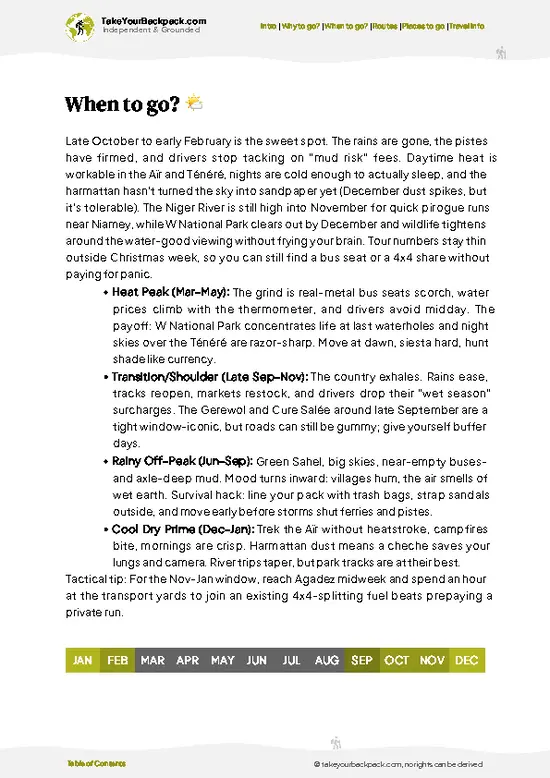
  • Weather: The best time to visit Musée National Boubou Hama is during the dry season, from November to February. This period avoids the heavy rains that hit from June to September, which can make travel difficult and the museum less accessible.

  • Temperature: Expect daytime highs around 28-32°C (82-90°F) in the dry months, which is manageable for walking around. The wet season can push temperatures higher and humidity makes it sticky and uncomfortable.

  • Daylight Hours: Daylight is fairly consistent year-round, roughly 11 to 12 hours daily. However, visiting in the dry season means clearer skies and better light for photography and exploring the outdoor exhibits.

  • Crowds: The museum is not a major tourist magnet, so crowds are generally light year-round. However, local school holidays in
read more 👉

  • Weather: The best time to visit Musée National Boubou Hama is during the dry season, from November to February. This period avoids the heavy rains that hit from June to September, which can make travel difficult and the museum less accessible.

  • Temperature: Expect daytime highs around 28-32°C (82-90°F) in the dry months, which is manageable for walking around. The wet season can push temperatures higher and humidity makes it sticky and uncomfortable.

  • Daylight Hours: Daylight is fairly consistent year-round, roughly 11 to 12 hours daily. However, visiting in the dry season means clearer skies and better light for photography and exploring the outdoor exhibits.

  • Crowds: The museum is not a major tourist magnet, so crowds are generally light year-round. However, local school holidays in December and January can bring more families, so expect a bit more bustle then.

  • Seasonal Activities: Visiting during the dry season aligns with local cultural festivals and markets, adding layers of authentic experience beyond the museum itself.

  • Price Fluctuations: Entry fees remain stable, but travel costs to Niamey can spike during peak dry season due to higher demand, so booking transport early is wise.


Pro-tip: Aim for late November or early February to dodge both the rain and the holiday crowds, catching the museum and its surroundings at their most accessible and vibrant.


source: climatestotravel.comJANJanuary: highly recommended for travelingFEBFebruary: excellent for travelingMARMarch: good for travelingAPRApril: fair for travelingMAYMay: fair for travelingJUNJune: below average for travelingJULJuly: below average for travelingAUGAugust: below average for travelingSEPSeptember: fair for travelingOCTOctober: good for travelingNOVNovember: excellent for travelingDECDecember: highly recommended for traveling
when-to-go

✈️ The backpacker research shortcutNiger Travel Guide

An offline-friendly backpacking guide with optimized travel routes, ranked highlights, transport advice, and the best areas to stay.
example page 0 from our offline Travel Guide for Niger
example page 1 from our offline Travel Guide for Niger
example page 2 from our offline Travel Guide for Niger
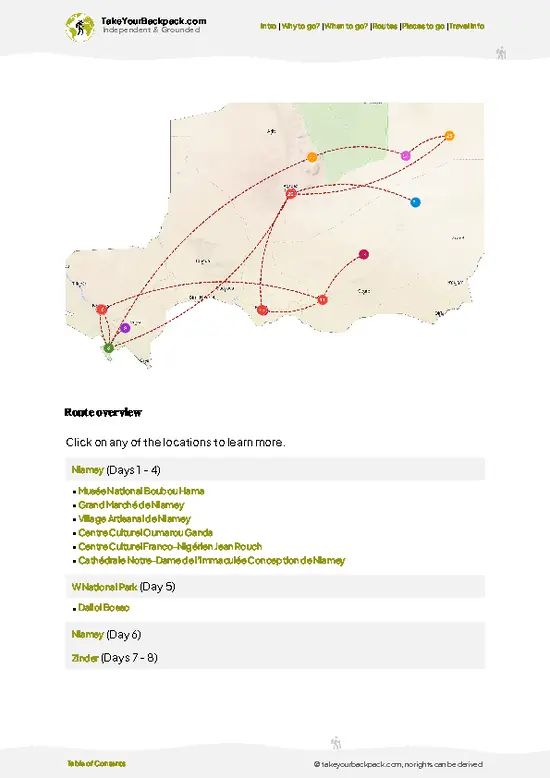
example page 3 from our offline Travel Guide for Niger
example page 4 from our offline Travel Guide for Niger
example page 5 from our offline Travel Guide for Niger
example page 6 from our offline Travel Guide for Niger
example page 7 from our offline Travel Guide for Niger
The digital guide (284 pages) contains:
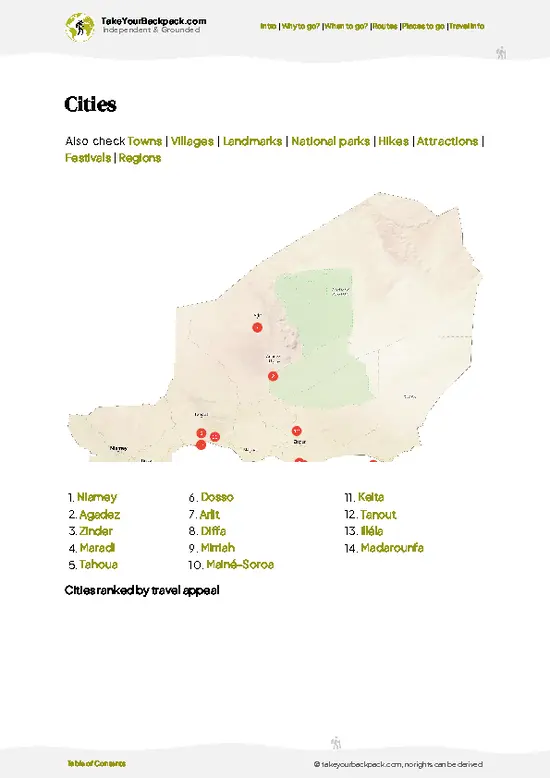
67 highlights, ranked by travel appeal
Optimized 5, 10 & 15-day travel routes
Cities, national parks, landmarks, beaches
How to get around
Offline-friendly for travel without Wi-Fi
👉 Click to see all 30+ guide features

📅 Plan smarter in minutes, not weeks
Month by month travel advice
Festivals & national holidays
Budget expectations

🗺️ Go to the right places, skip the overrated ones
Honest pros & cons of destinations
Top hikes, parks & viewpoints
Lesser-known places most travelers miss
Clear “worth it vs skip it” guidance

🛏️ Travel smoothly without rookie mistakes
Best areas to stay
Transport systems explained simply
Common scams & safety advice
SIM cards, money & practical tips

🌍 Understand the country, not just visit it
Culture & traditions
52 Essential phrases & customs
Festivals worth planning around
Traveler-friendly historical context
Insights that make places more meaningful

📱 Built for real travel conditions
Fully downloadable PDF
Works completely offline
Optimized for phone use
Useful in remote areas & buses
Everything in one place
Save weeks of stressful planning
Get instant access to your full guide. 30‑day money-back guarantee.
+ Add another guide for just €6.50

By proceeding you agree to our terms.
Sent to your inbox immediately after payment • 100% Secure Checkout
Best Backpacking Travel Advisor 2025 tourism awardBest Backpacking
Travel Advisor
2025
What others say about Take Your Backpack Guides:
⭐⭐⭐⭐⭐
Fantastic, amazing amount of information!
⭐⭐⭐⭐⭐
My goodness this is amazing, it's what I've been looking for hats off too you!
⭐⭐⭐⭐⭐
I think this is absolutely BRILLIANT
⭐⭐⭐⭐
Very complete and informative. It's still missing places, but I gotta to commend you
⭐⭐⭐⭐⭐
This is truly amazing, thank you, can't wait to explore it with my kids!
⭐⭐⭐⭐⭐
Awesome resource, thank you!
⭐⭐⭐⭐⭐
This is amazing! Can't wait to explore the ones I haven't seen
⭐⭐⭐⭐
I love this! Well done, great idea.
⭐⭐⭐⭐⭐
Thanks for taking the time to make this gem!
⭐⭐⭐⭐⭐
This might be the best website I've ever seen.
⭐⭐⭐⭐⭐
Congratulations, and thank you so much for your work; it's incredibly valuable.
⭐⭐⭐⭐
In all seriousness I think you did a great job pointing out the important spots
⭐⭐⭐⭐⭐
10/10 very good
⭐⭐⭐⭐⭐
As someone who's only just starting to visit regularly this is awesome, thank you.
⭐⭐⭐⭐
Thank you very much! I'm going to visit my dad, it's going to be very useful!
⭐⭐⭐⭐⭐
This is really cool! We'll be travelling for the first time and this definitely come in handy.
⭐⭐⭐⭐⭐
You are now our minister of culture, congratulations 👨‍💼
⭐⭐⭐⭐⭐
Just wanted to tell you that this is a pearl! Going to follow your recommendations.
⭐⭐⭐⭐⭐
This is so cool. I'll definitely be using the resource for my travels soon.
⭐⭐⭐⭐⭐
This is very impressive! Good work.
⭐⭐⭐⭐⭐
This is an amazing and informative site. Very well done!

🛏️ Where to stay?Best areas and accommodation options

If you’re heading to the Musée National Boubou Hama in Niamey, Niger, brace yourself for a reality check: this isn’t a backpacker’s party town, and the tourist infrastructure is lean. The museum itself draws a steady stream of locals and a smattering of curious travelers, but don’t expect throngs of Instagrammers or a buzzing nightlife scene right outside its doors. The crowds are manageable, but the real challenge is finding a spot that feels safe, social, and budget-friendly without wandering too far.

Your best bet is to stay in the neighborhoods just north and northeast of the museum, around … read more 👉
If you’re heading to the Musée National Boubou Hama in Niamey, Niger, brace yourself for a reality check: this isn’t a backpacker’s party town, and the tourist infrastructure is lean. The museum itself draws a steady stream of locals and a smattering of curious travelers, but don’t expect throngs of Instagrammers or a buzzing nightlife scene right outside its doors. The crowds are manageable, but the real challenge is finding a spot that feels safe, social, and budget-friendly without wandering too far.

Your best bet is to stay in the neighborhoods just north and northeast of the museum, around the Plateau district and the area near the Niger River. Plateau is the city’s administrative and cultural heart, offering a handful of guesthouses and small hotels that cater to budget travelers. It’s where you’ll find a mix of expats, NGO workers, and solo backpackers who appreciate a low-key vibe with enough local flavor to keep things interesting. The streets here are relatively safe during the day, and you can easily catch a taxi or moto to the museum.

The riverfront area is quieter but has a few social spots where travelers gather, especially in the early evening. It’s not a party zone, but it’s a place to meet locals and fellow travelers over a cold drink while watching the sunset. Both areas lack the polished backpacker hubs you might find elsewhere, but that’s part of the charm—this is Niger in its raw, unfiltered form. If you want to experience the museum and the city without getting stuck in tourist bubbles, these neighborhoods are your launchpad.

👛 Costs (as of 3 September 2026)Money, prices, and spending tips

As of the most recent estimates, the entry fee for the Musée National Boubou Hama in Niamey, Niger, is approximately 500 to 1,500 CFA francs (about €0.75 to €2.25). Additional costs may include photography permits and guided tours, which are typically available for an extra fee.

source: visit-niger.com
⚠️ Prices can change and everyone travels differently, so take this as a rough guide. Hope it helps you plan your adventure!

FAQTraveler FAQ

1 to 2 hours is sufficient to visit Musée National Boubou Hama. This allows time to explore the ethnographic exhibits and the zoo area. Plan accordingly if you want to take photos or join a guided tour.
Yes, Musée National Boubou Hama is worth the entrance fee, which is typically around 1000 CFA francs. The museum offers valuable insight into Nigerien culture and history, plus access to a small zoo. It provides a unique experience not found elsewhere in Niamey.
You can get to Musée National Boubou Hama by taxi or local bus from central Niamey. It is located near the Niger River, about 5 km from the city center. Taxis are the quickest option, usually taking 10-15 minutes depending on traffic.
⚠️ Things can change over time, so always validate details locally before you go.

Other Nigerien attractions near Musée National Boubou Hama

Explore more nearby:


💡 Not sure where to go next?
Create a personalized itinerary for Niger including Musée National Boubou Hama and the places that fit your trip.

Generate my itinerary

👉 Discover all attractions

Or checkout all Niger has to offer (think cities, towns, villages, national parks, hikes, beaches, festivals)
Country photo of Niger

We 💚 feedbackSumming up the experience

Musée National Boubou Hama isn’t your typical polished museum experience. Expect a bit of chaos—crowds, uneven signage, and a no-frills setup that might throw you off if you’re chasing Instagram-perfect shots. But here’s the kicker: the real magic is in the raw, unfiltered connection to Nigerien culture. The artifacts don’t just sit behind glass; they tell stories you won’t find in guidebooks. If you’re patient and curious, this place hits deep—more soul than spectacle. Just don’t rush it.

✍️ Help improve this page!
The information on this page is based on in-depth research, insights shared by experienced travelers, and feedback from the local travel community in Niger. While every effort is made to keep the information accurate and current, conditions can change — so if you spot anything incorrect or outdated, please get in touch.


🙋‍♂️ Give feedback

👋 Meet the founderWho’s Behind Take Your Backpack?

Johan, backpacker and founder of TakeYourBackpackHi, I’m Johan (Netherlands 🇳🇱), the creator of TakeYourBackpack. Over the past decade, I’ve backpacked through 80+ countries across six continents, gaining extensive experience with independent travel, long-term trips, and overland routes.

This site is built on a combination of firsthand travel experience and carefully curated insights from other backpackers. Many guides are based on places I’ve personally visited, while others bring together tips, observations, and practical advice shared by trusted travelers I’ve met along the way.

The goal is to provide realistic, experience-driven guidance — not generic itineraries — so you can explore destinations with better context, clearer expectations, and more confidence.

Get full Niger guide •
Instant download • 67 highlights • Full Offline guide