×

Niger🇳🇪 | attractionsPalais du Sultan de ZinderCarved Hausa facade, studded door, Birni lanes, two-story mud house | things to do and best time to go

Explore Marché de ZinderExplore Musée Régional de Zinder

Backpacking in Palais du Sultan de Zinder
🏆 Top pickattraction ranked #3
By Johan Kruseman 🇳🇱 | Updated October 22, 2026

The palace is a compact two-story mud-brick house, not a sprawling royal compound, and travelers who arrive expecting a fortress usually feel a flicker of letdown before they get close. Palais du Sultan de Zinder stands in the old Birni quarter of Zinder, in the south of Niger. Skip it if you want rooms of treasures. Go for the facade: Hausa builders packed it with relief patterns, arched openings and a studded door, and no photo flattens that detail. Crowds are close to zero, so you will likely have the street to yourself and a local guide close by. The entry cost is small, though you will pay a bit extra to photograph. Getting to Zinder takes effort, which keeps the place quiet. Compared with the Sultan’s Palace in Agadez, which sits beside a famous minaret and a Tuareg story, this one is a Hausa and Damagaram house of power, decorated outside rather than defined by a tower.

Discover everything you want to know in the 📖 Niger Travel Guide.
Safety warning

The current risk level for Niger is high. Check the advice before going.


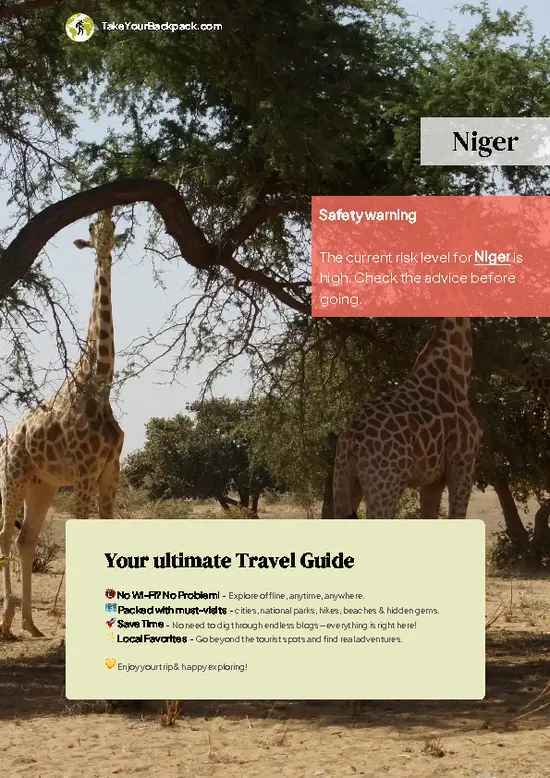
example page 0 from our offline Travel Guide for Niger
example page 1 from our offline Travel Guide for Niger
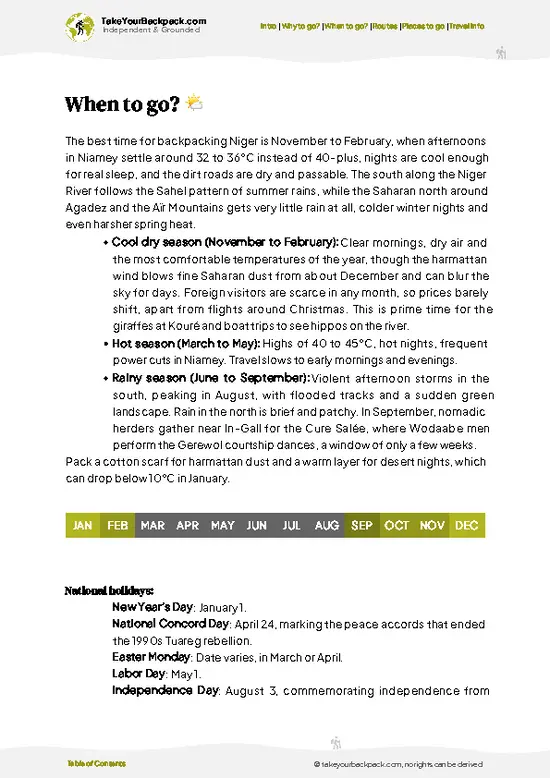
example page 2 from our offline Travel Guide for Niger
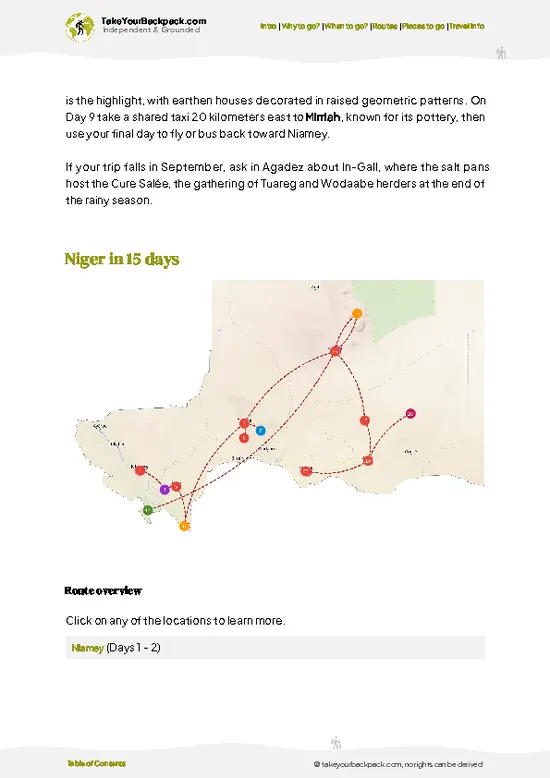
example page 3 from our offline Travel Guide for Niger
example page 4 from our offline Travel Guide for Niger
example page 5 from our offline Travel Guide for Niger
example page 6 from our offline Travel Guide for Niger
example page 7 from our offline Travel Guide for Niger
Loading the map 🌍
CLICK TO FILTER
cities
towns
villages
landmarks
national parks
hikes
attractions
festivals
regions
SHOW COUNTRY’S BESTSHOW ALL

✨ Why go?
Ranked #3 attraction in Niger
What makes it a must-see attraction

Palais du Sultan de Zinder is the best surviving example of Hausa palace building in Niger, and you can read the decoration like a page: raised geometric motifs, rounded buttresses and a heavy entrance that signaled a ruler’s rank. That alone justifies the long road east. The second reason is history you can stand inside. This was the seat of the Damagaram sultans, and the building still frames the events of the 1890s, when French officers came to Zinder and the sultanate’s independence ended. Third, it works as a milestone on the overland route toward the Nigerian border, because Zinder gives you a lived-in Hausa city instead of a museum town. Few places in the country let you pair a monument of this age with a working old quarter at walking distance. Come with curiosity and a local guide, … read more 👉
Palais du Sultan de Zinder is the best surviving example of Hausa palace building in Niger, and you can read the decoration like a page: raised geometric motifs, rounded buttresses and a heavy entrance that signaled a ruler’s rank. That alone justifies the long road east. The second reason is history you can stand inside. This was the seat of the Damagaram sultans, and the building still frames the events of the 1890s, when French officers came to Zinder and the sultanate’s independence ended. Third, it works as a milestone on the overland route toward the Nigerian border, because Zinder gives you a lived-in Hausa city instead of a museum town. Few places in the country let you pair a monument of this age with a working old quarter at walking distance. Come with curiosity and a local guide, and you leave with a sharper sense of how power was built in the Sahel.

💡 HighlightsPlaces and moments you shouldn't skip

  1. The carved mud-brick facade: The reason to come. Relief patterns, arches and a studded timber door show Hausa craft at its most ornate, and the earthen surface changes color through the day.
  2. The palace interior and upper rooms: Guides lead you through narrow passages and small rooms, explaining how the sultan received guests and where court business was done. The stairs are steep and the ceilings low, so watch your head.
  3. Birni quarter streets: The old walled district around the palace holds earthen houses and doors of similar design. Walking it with a guide shows you the neighborhood the sultans ruled from.
  4. The Grande Mosquée of Zinder: A short walk from the palace, it shows the religious side of the same dynasty. You can admire the exterior from the street, and enter only if invited.
  5. Grand Marché
… read more 👉
  1. The carved mud-brick facade: The reason to come. Relief patterns, arches and a studded timber door show Hausa craft at its most ornate, and the earthen surface changes color through the day.
  2. The palace interior and upper rooms: Guides lead you through narrow passages and small rooms, explaining how the sultan received guests and where court business was done. The stairs are steep and the ceilings low, so watch your head.
  3. Birni quarter streets: The old walled district around the palace holds earthen houses and doors of similar design. Walking it with a guide shows you the neighborhood the sultans ruled from.
  4. The Grande Mosquée of Zinder: A short walk from the palace, it shows the religious side of the same dynasty. You can admire the exterior from the street, and enter only if invited.
  5. Grand Marché of Zinder: One of the city’s busiest trading spots, with leather goods, fabric and everyday goods. It gives a contrast to the quiet palace lanes, and the pace is noisy and fast.
Palais du Sultan de Zinder and the Birni quarter streets combine well in a single morning, since the lanes start at the palace door.
Spotted a mistake or missing something? Contact us.

🌤️ When to go?When to go for the best experience

  • Cool Dry Season (November to February): Zinder is at its most comfortable, with daytime highs around 30 to 35°C (86 to 95°F) and nights that can drop to 14 to 18°C (57 to 64°F). Harmattan dust haze flattens photos, but walking the old Birni quarter around the palace is easy. Days run roughly 11 to 12 hours.
  • Hot Season (March to June): Highs of 38 to 43°C (100 to 109°F) make midday visits punishing. Plan around early mornings and the hour before dusk. Fewer travelers come, and guesthouse prices stay flat.
  • Rainy Season (July to September): Storms bring highs of 32 to 36°C (90 to 97°F), muddy lanes and some washed-out roads on the way in. Everything turns green and the heat eases a little.
  • Festival Periods: Islamic holidays such as Eid and the Cure Salée gatherings in the wider region bring ceremony
… read more 👉
  • Cool Dry Season (November to February): Zinder is at its most comfortable, with daytime highs around 30 to 35°C (86 to 95°F) and nights that can drop to 14 to 18°C (57 to 64°F). Harmattan dust haze flattens photos, but walking the old Birni quarter around the palace is easy. Days run roughly 11 to 12 hours.
  • Hot Season (March to June): Highs of 38 to 43°C (100 to 109°F) make midday visits punishing. Plan around early mornings and the hour before dusk. Fewer travelers come, and guesthouse prices stay flat.
  • Rainy Season (July to September): Storms bring highs of 32 to 36°C (90 to 97°F), muddy lanes and some washed-out roads on the way in. Everything turns green and the heat eases a little.
  • Festival Periods: Islamic holidays such as Eid and the Cure Salée gatherings in the wider region bring ceremony and busier transport, with fares rising a little.
Aim for December or January, and check with local guides the day before about opening, since visits depend on the palace caretakers.


source: climatestotravel.comJANJanuary: excellent for travelingFEBFebruary: excellent for travelingMARMarch: fair for travelingAPRApril: fair for travelingMAYMay: fair for travelingJUNJune: below average for travelingJULJuly: below average for travelingAUGAugust: below average for travelingSEPSeptember: below average for travelingOCTOctober: good for travelingNOVNovember: excellent for travelingDECDecember: excellent for traveling
when-to-go

✈️ The backpacker research shortcutNiger Travel Guide

An offline-friendly backpacking guide with optimized travel routes, ranked highlights, transport advice, and the best areas to stay.
example page 0 from our offline Travel Guide for Niger
example page 1 from our offline Travel Guide for Niger
example page 2 from our offline Travel Guide for Niger
example page 3 from our offline Travel Guide for Niger
example page 4 from our offline Travel Guide for Niger
example page 5 from our offline Travel Guide for Niger
example page 6 from our offline Travel Guide for Niger
example page 7 from our offline Travel Guide for Niger
The digital guide (254 pages) contains:
✅ 57 highlights, ranked by travel appeal
✅ Optimized 5, 10 & 15-day travel routes
✅ Cities, national parks, landmarks, beaches
✅ How to get around
✅ Offline-friendly for travel without Wi-Fi
👉 Click to see all 30+ guide features

📅 Plan smarter in minutes, not weeks
✅ Month by month travel advice
✅ Festivals & national holidays
✅ Budget expectations

🗺️ Go to the right places, skip the overrated ones
✅ Honest pros & cons of destinations
✅ Top hikes, parks & viewpoints
✅ Lesser-known places most travelers miss
✅ Clear “worth it vs skip it” guidance

🛏️ Travel smoothly without rookie mistakes
✅ Best areas to stay
✅ Transport systems explained simply
✅ Common scams & safety advice
✅ SIM cards, money & practical tips

🌍 Understand the country, not just visit it
✅ Culture & traditions
✅ 52 Essential phrases & customs
✅ Festivals worth planning around
✅ Traveler-friendly historical context
✅ Insights that make places more meaningful

📱 Built for real travel conditions
✅ Fully downloadable PDF
✅ Works completely offline
✅ Optimized for phone use
✅ Useful in remote areas & buses
✅ Everything in one place
Stop searching, start planning
Get instant access to your full guide. 30‑day money-back guarantee.
+ Add another guide for just

By proceeding you agree to our terms.
Sent to your inbox immediately after payment • 100% Secure Checkout
Best Backpacking Travel Advisor 2025 tourism awardBest Backpacking
Travel Advisor
2025
What others say about Take Your Backpack Guides:
⭐⭐⭐⭐⭐
Fantastic, amazing amount of information!
⭐⭐⭐⭐⭐
My goodness this is amazing, it's what I've been looking for hats off too you!
⭐⭐⭐⭐⭐
I think this is absolutely BRILLIANT
⭐⭐⭐⭐
Very complete and informative. It's still missing places, but I gotta to commend you
⭐⭐⭐⭐⭐
This is truly amazing, thank you, can't wait to explore it with my kids!
⭐⭐⭐⭐⭐
Awesome resource, thank you!
⭐⭐⭐⭐⭐
This is amazing! Can't wait to explore the ones I haven't seen
⭐⭐⭐⭐
I love this! Well done, great idea.
⭐⭐⭐⭐⭐
Thanks for taking the time to make this gem!
⭐⭐⭐⭐⭐
This might be the best website I've ever seen.
⭐⭐⭐⭐⭐
Congratulations, and thank you so much for your work; it's incredibly valuable.
⭐⭐⭐⭐
In all seriousness I think you did a great job pointing out the important spots
⭐⭐⭐⭐⭐
10/10 very good
⭐⭐⭐⭐⭐
As someone who's only just starting to visit regularly this is awesome, thank you.
⭐⭐⭐⭐
Thank you very much! I'm going to visit my dad, it's going to be very useful!
⭐⭐⭐⭐⭐
This is really cool! We'll be travelling for the first time and this definitely come in handy.
⭐⭐⭐⭐⭐
You are now our minister of culture, congratulations 👨‍💼
⭐⭐⭐⭐⭐
Just wanted to tell you that this is a pearl! Going to follow your recommendations.
⭐⭐⭐⭐⭐
This is so cool. I'll definitely be using the resource for my travels soon.
⭐⭐⭐⭐⭐
This is very impressive! Good work.
⭐⭐⭐⭐⭐
This is an amazing and informative site. Very well done!

🛏️ Where to stay?Best areas and accommodation options

The best base is central Zinder, in the Birni quarter and the streets around the Grand Marché, within a short walk or a cheap moto-taxi ride of the palace. The palace sits in the old Birni district, a maze of mud-brick Hausa houses, so staying here means you can visit at quiet hours and wander the lanes with a local guide without arranging transport.

The Grand Marché area is the most practical choice for solo travelers. Food stalls, phone credit sellers, money changers and transport offices are all close, and you will see plenty of foot traffic through the evening, which helps with safety. Expect … read more 👉
The best base is central Zinder, in the Birni quarter and the streets around the Grand Marché, within a short walk or a cheap moto-taxi ride of the palace. The palace sits in the old Birni district, a maze of mud-brick Hausa houses, so staying here means you can visit at quiet hours and wander the lanes with a local guide without arranging transport.

The Grand Marché area is the most practical choice for solo travelers. Food stalls, phone credit sellers, money changers and transport offices are all close, and you will see plenty of foot traffic through the evening, which helps with safety. Expect simple guesthouses and small hotels rather than a dedicated backpacker scene. Dorms are rare, so budget travelers usually take a basic private room with a fan or air conditioning.

The Zengou district, on the town’s other side, is quieter and a bit more residential, good if you want to sleep well, though it is farther from the palace and the market.

The Sabon Gari area sits near the main road toward Maradi and Kano, which suits an early bus departure. Wherever you stay, ask your host about the current security situation before moving around after dark, and arrange a guide through your accommodation.

👛 Costs (as of 22 October 2026)Travel costs and budget guide for Palais du Sultan de Zinder

Visiting Palais du Sultan de Zinder costs roughly €25 to 56 per day for a budget traveler, with the palace itself among the smallest expenses. The table below gives typical figures.
CategoryBudget RangeLocal Reality
Palace Entry€0.50 to 3A small fee or donation, usually paid to the caretaker, who may expect a tip on top.
Local Guide€5 to 12Useful for the Birni quarter and the palace history. Agree the price first.
Accommodation (High Season)€15 to 28Basic private rooms with fan or air conditioning. Dorms are rare. Prices dip slightly in the hot season.
Food€3 to 7Street grilled meat, rice and sauce, and bean cakes at market stalls. Restaurant meals cost more.
Local Transport€1 to 3Moto-taxis and shared taxis between the market, Birni and the palace.
Photo Permit€0 to 3Photography may require permission
… read more 👉
Visiting Palais du Sultan de Zinder costs roughly €25 to 56 per day for a budget traveler, with the palace itself among the smallest expenses. The table below gives typical figures.
CategoryBudget RangeLocal Reality
Palace Entry€0.50 to 3A small fee or donation, usually paid to the caretaker, who may expect a tip on top.
Local Guide€5 to 12Useful for the Birni quarter and the palace history. Agree the price first.
Accommodation (High Season)€15 to 28Basic private rooms with fan or air conditioning. Dorms are rare. Prices dip slightly in the hot season.
Food€3 to 7Street grilled meat, rice and sauce, and bean cakes at market stalls. Restaurant meals cost more.
Local Transport€1 to 3Moto-taxis and shared taxis between the market, Birni and the palace.
Photo Permit€0 to 3Photography may require permission or a small payment. Ask before shooting.
Total Daily Budget€25 to 56Cash only, paid in local currency. Bring small bills.
⚠️ Prices can change and everyone travels differently, so take this as a rough guide. Hope it helps you plan your adventure!

FAQFrequently asked questions about Palais du Sultan de Zinder

Half a day is enough for Palais du Sultan de Zinder, with about one to two hours inside and the rest spent in the surrounding Birni quarter. Add a market visit at the Grand Marché and a guided walk past the old mud-brick houses and you fill a full day. Staying one night in Zinder lets you see everything unhurried.
Palais du Sultan de Zinder is worth the small entry fee, usually between €0.50 and 3, because it is one of the best-preserved examples of Hausa mud-brick architecture in Niger. The building dates to the 19th century and sits in the old Birni quarter, so you also get the surrounding lanes. Pay a local guide €5 to 12 and you will learn the sultanate’s history, which makes the visit much richer.
Palais du Sultan de Zinder is in central Zinder, reached by road from Niamey in roughly 12 to 14 hours by long-distance bus (about €20 to 30), or from Maradi in about 4 to 5 hours. Buses arrive near the main road, and from there a moto-taxi to the old quarter costs around €1 to 2. Check current security conditions and travel advisories before setting out, and consider traveling in daylight.
⚠️ Things can change over time, so always validate details locally before you go.

Other Nigerien attractions near Palais du Sultan de Zinder

Explore more nearby:

  • Musée Régional de Zinder—Damagaram palace compound, regional costumes, sultanate weapons, local crafts| 1 km away
  • Marché de Zinder—Livestock trade, onion sacks, tanners’ quarter, herbal remedies| 1 km away
  • Marché de Maradi—Cross-border grain trade, Hausa leatherwork, livestock pens, pedal tailors| 206 km away

💡 Not sure where to go next?
Create a personalized itinerary for Niger including Palais du Sultan de Zinder and the places that fit your trip.

Generate my itinerary

👉 Discover all attractions

Or checkout all Niger has to offer (think cities, towns, villages, national parks, hikes, beaches, festivals)
Country photo of Niger

We 💚 feedbackWhat to keep in mind

Palais du Sultan de Zinder needs about an hour for the building itself, and two to three more for the Birni lanes, the mosque exterior and the market. I would stay one night in Zinder and spend a full morning here, bringing small bills for the entry fee and a guide’s tip. Rushing it as a quick photo stop wastes the effort of getting here.

✍️ Help improve this page!
The information on this page is based on in-depth research, insights shared by experienced travelers, and feedback from the local travel community in Niger. While every effort is made to keep the information accurate and current, conditions can change — so if you spot anything incorrect or outdated, please get in touch.


🙋‍♂️ Give feedback

👋 Meet the founderWho’s Behind Take Your Backpack?

Johan, backpacker and founder of TakeYourBackpackHi, I’m Johan (Netherlands 🇳🇱), the creator of TakeYourBackpack. Over the past 3 decades, I’ve backpacked through 90+ countries across six continents, gaining extensive experience with independent travel, long-term trips, and overland routes.

This site is built on a combination of firsthand travel experience and carefully curated insights from other backpackers. Many guides are based on places I’ve personally visited, while others bring together tips, observations, and practical advice shared by trusted travelers I’ve met along the way.

The goal is to provide realistic, experience-driven guidance — not generic itineraries — so you can explore destinations with better context, clearer expectations, and more confidence.