×

Nigeria🇳🇬 | citiesAbujacentral business district, Aso Rock, planned city layout | things to do and best time to go

Explore Tarkwa Bay BeachExplore Calabar

Backpacking in Abuja
🏆 Top pickcity ranked #2
By Johan Kruseman 🇳🇱 | Updated June 12, 2026

Most travelers only realize after arrival that Abuja’s traffic is a rare Nigerian luxury: it actually moves. This alone can save you hours compared to Lagos or Port Harcourt, and it’s the kind of practical advantage you only appreciate when you’re not stuck in gridlock, sweating through your shirt. Abuja sits almost dead-center in Nigeria, purpose-built as the capital, and it shows—wide roads, organized neighborhoods, and a sense of calm that feels almost surreal for West Africa. For backpackers, Abuja is a paradox: it’s safer and cleaner than most Nigerian cities, but less chaotic means fewer spontaneous street encounters and a thinner backpacker scene. The National Mosque and Aso Rock are worth a look, and Millennium Park is a green oasis, but nightlife is subdued and hostels are rare. Costs are moderate—cheaper than Lagos, pricier than Jos. Abuja’s vibe is orderly, official, and quietly ambitious; it’s not the place for wild stories, but it’s where you catch your breath and plan your next move.

Discover everything you want to know in the 📖 Nigeria Travel Guide.
Safety warning

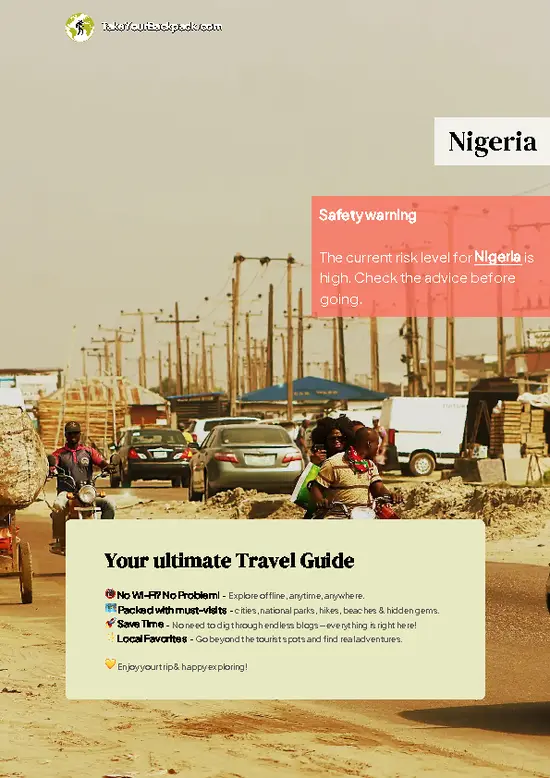
The current risk level for Nigeria is high. Check the advice before going.


Get your Nigeria guide
89 ranked highlights, routes & tips, works offline (332 pages)
Loading the map 🌍
CLICK TO FILTER
cities
towns
landmarks
national parks
hikes
beaches
attractions
festivals
regions
SHOW COUNTRY’S BESTSHOW ALL

✨ Why go?
Ranked #2 city in Nigeria
What makes this city worth visiting

Abuja is a strategic base for backpackers exploring Nigeria. It’s not just about the highlights; it’s about how the city fits into your journey. With a mix of affordable hostels and guesthouses, you can rest your head without breaking the bank. The food scene is diverse, offering everything from local delicacies to international fare, making it easy to refuel after a day of exploration.

The city’s walkability is a bonus. You can easily navigate neighborhoods, soaking in the local vibe without the hassle of complicated transport. When the sun sets, the nightlife comes alive, with bars and clubs that cater to various tastes, ensuring you can unwind after a day of adventure.

Abuja also serves as a gateway for day trips to stunning natural landscapes and cultural sites, making it a practical … read more 👉
Abuja is a strategic base for backpackers exploring Nigeria. It’s not just about the highlights; it’s about how the city fits into your journey. With a mix of affordable hostels and guesthouses, you can rest your head without breaking the bank. The food scene is diverse, offering everything from local delicacies to international fare, making it easy to refuel after a day of exploration.

The city’s walkability is a bonus. You can easily navigate neighborhoods, soaking in the local vibe without the hassle of complicated transport. When the sun sets, the nightlife comes alive, with bars and clubs that cater to various tastes, ensuring you can unwind after a day of adventure.

Abuja also serves as a gateway for day trips to stunning natural landscapes and cultural sites, making it a practical stop on your route. If you’re looking for a place that balances comfort and value, Abuja offers a solid mix. It’s not just a stopover; it’s a chance to experience the pulse of Nigeria while planning your next move.
Want to include Abuja in your Nigeria route?
Create a personalized Nigeria itinerary that includes Abuja and the places that fit your trip — based on your travel style, budget, and available time. Get your route in seconds.

Generate my trip

💡 HighlightsTop highlights of Abuja

  1. Aso Rock (viewpoints near the Central Area) — The huge granite monolith that dominates Abuja’s skyline; you can’t climb the presidential side, but the viewpoints around Aso Drive and the Three Arms Zone give excellent photos and a real sense of why the city was sited here.
  2. Millennium Park — Abuja’s largest public park with shaded lawns, sculptures and evening crowds of locals having picnics or jogging; it’s where families and street-food vendors come alive at sundown, so you see everyday city life, not just official Abuja.
  3. National Mosque (Abuja National Mosque) — A striking landmark of Islamic architecture open to non-Muslim visitors outside prayer times (observe the dress code); great for peaceful photography and to learn about Nigeria’s Muslim communities.
  4. National Christian Centre
read more 👉
  1. Aso Rock (viewpoints near the Central Area) — The huge granite monolith that dominates Abuja’s skyline; you can’t climb the presidential side, but the viewpoints around Aso Drive and the Three Arms Zone give excellent photos and a real sense of why the city was sited here.
  2. Millennium Park — Abuja’s largest public park with shaded lawns, sculptures and evening crowds of locals having picnics or jogging; it’s where families and street-food vendors come alive at sundown, so you see everyday city life, not just official Abuja.
  3. National Mosque (Abuja National Mosque) — A striking landmark of Islamic architecture open to non-Muslim visitors outside prayer times (observe the dress code); great for peaceful photography and to learn about Nigeria’s Muslim communities.
  4. National Christian Centre — Modern, cathedral-scale architecture and an active place of worship that complements the mosque across town; the interior light and stained glass are worth seeing and it speaks to Abuja’s religious diversity.
  5. Eagle Square — The city’s civic plaza where national ceremonies and major public events happen; visit for the open-air feel, big ceremonial stairs, and a clear view toward Aso Rock and the Three Arms Zone.
  6. Jabi Lake & Jabi Boat Club — A surprisingly pleasant lakeside hub for sunset walks, boat rides, and inexpensive eateries; it’s where the city relaxes and is perfect for a chilled evening with local snacks and skyline views.
  7. Wuse Market (Wuse Main Market) — Bustling, chaotic, and utterly real: fabrics, produce, phone shops, and street food all packed together. Great for bartering, tasting local dishes, and seeing how Abuja residents shop day-to-day.
  8. Arts and Crafts Village (Idu) — The best place in the city to find hand-made Nigerian crafts, woodwork, and textiles without the Lagos tourist markup; meet artisans, haggle a bit, and take away authentic souvenirs.
  9. National Children’s Park & Zoo — A small but pleasant green space with playgrounds and a modest collection of animals; useful for families or anyone wanting a low-key, local park experience away from busy downtown spots.
  10. Three Arms Zone / Aso Villa viewpoint — The trio of the Presidential Villa, National Assembly and Supreme Court (viewable from outside) plus nearby plazas — it’s civic Abuja in one place and helpful for photos and understanding the country’s federal layout.
A few great day trips just outside the city: Zuma Rock (Madalla) for that giant monolith close to Abuja, the photogenic Gurara Waterfalls, and nearby Suleja for traditional markets and local crafts.
Spotted a mistake or missing something? Contact us.

Things to do near Abuja

Ratings based on Tripadvisor reviews. When you book through this link, you support our work at no extra cost to you.

🏘️ NeighborhoodsUnderstanding the local layout

Abuja is a city of contrasts, where modernity meets tradition. Understanding its neighborhoods can help you maximize your experience while balancing time, money, and comfort.

Wuse II: This is the heart of Abuja’s nightlife. Expect a mix of bars, restaurants, and shops. It’s walkable, but be cautious at night. Prices can be higher here, so budget accordingly. Ideal for short stays if you want to dive into the local scene quickly.

Garki: A blend of business and leisure, Garki offers a more local vibe. It’s affordable, with markets and eateries that won’t break the bank. Walkability is decent, and you can easily access public transport. Great for longer stays if you want to immerse yourself in daily life.

Jabi: Known for its lake, Jabi is a peaceful escape from the city buzz. It’s quieter, … read more 👉
Abuja is a city of contrasts, where modernity meets tradition. Understanding its neighborhoods can help you maximize your experience while balancing time, money, and comfort.

Wuse II: This is the heart of Abuja’s nightlife. Expect a mix of bars, restaurants, and shops. It’s walkable, but be cautious at night. Prices can be higher here, so budget accordingly. Ideal for short stays if you want to dive into the local scene quickly.

Garki: A blend of business and leisure, Garki offers a more local vibe. It’s affordable, with markets and eateries that won’t break the bank. Walkability is decent, and you can easily access public transport. Great for longer stays if you want to immerse yourself in daily life.

Jabi: Known for its lake, Jabi is a peaceful escape from the city buzz. It’s quieter, with a few upscale options. While it’s less walkable, the scenery makes up for it. Perfect for those seeking relaxation or a longer retreat.

Maitama: This upscale neighborhood is where luxury meets comfort. Prices are on the higher side, but you’ll find some of the best accommodations. It’s not the most walkable, but taxis are readily available. Suitable for short stays if you want a taste of Abuja’s elite lifestyle.

Nyanya: A bustling area on the outskirts, Nyanya is budget-friendly and vibrant. It’s less touristy, giving you a genuine local experience. Walkability can be tricky, but public transport is accessible. Ideal for longer stays if you want to explore beyond the typical tourist path.

⌛️ 1 day1-day itinerary for Abuja

Abuja, Nigeria’s capital, is a city where modernity meets tradition, and the energy is palpable. It’s a melting pot of cultures, with a skyline that boasts striking architecture alongside vibrant street life. You can feel the pulse of the nation here, making it a fascinating spot for a day trip.

Start your morning in the bustling area of Wuse Market. The aroma of spices and fresh produce fills the air as you weave through stalls. Grab a local breakfast of akara (bean cakes) and pap (fermented corn pudding) from a street vendor. It’s a delicious way to fuel up while soaking in the lively atmosphere. After breakfast, head to the nearby Nigerian National Mosque. Its stunning architecture and serene grounds provide a peaceful contrast to the market’s chaos.

In the afternoon, make your way to … read more 👉
Abuja, Nigeria’s capital, is a city where modernity meets tradition, and the energy is palpable. It’s a melting pot of cultures, with a skyline that boasts striking architecture alongside vibrant street life. You can feel the pulse of the nation here, making it a fascinating spot for a day trip.

Start your morning in the bustling area of Wuse Market. The aroma of spices and fresh produce fills the air as you weave through stalls. Grab a local breakfast of akara (bean cakes) and pap (fermented corn pudding) from a street vendor. It’s a delicious way to fuel up while soaking in the lively atmosphere. After breakfast, head to the nearby Nigerian National Mosque. Its stunning architecture and serene grounds provide a peaceful contrast to the market’s chaos.

In the afternoon, make your way to the Arts and Crafts Village in the Central Business District. This spot is often overlooked by tourists but is a treasure trove of handmade goods. Spend some time browsing through colorful textiles, intricate wood carvings, and unique jewelry. Don’t hesitate to chat with the artisans; they often have fascinating stories to share. If you’re feeling adventurous, grab a quick lunch at a local eatery nearby, where you can try jollof rice or suya (spicy meat skewer).

As evening approaches, head to Jabi Lake. It’s a perfect spot to unwind. You can take a boat ride or simply stroll along the shore as the sun sets, painting the sky in hues of orange and pink. For dinner, find a local restaurant in the area serving traditional Nigerian dishes. The flavors will linger long after your trip.

In just one day, you’ve tasted the essence of Abuja, balancing time, money, and comfort while creating lasting memories.
Turn your Abuja visit into an Nigeria adventure
Build a complete Nigeria route with Abuja, hidden gems, must-see destinations, and realistic travel times included.

Generate my trip

🌤️ When to go?Seasonal considerations and timing


  • Topic: Weather – Abuja’s climate swings between a wet season (April to October) and a dry season (November to March). The dry season offers clear skies and less humidity, making it easier to hike and explore without the constant threat of rain soaking your gear.

  • Topic: Temperature – Expect daytime highs around 30–35°C (86–95°F) in the dry season, which is warm but manageable with shade and hydration. The wet season cools things down slightly but brings sticky humidity that can sap your energy.

  • Topic: Daylight Hours – Abuja enjoys roughly 12 hours of daylight year-round, so your trekking and sightseeing windows stay consistent. Early mornings and late afternoons are your best bets to avoid the midday heat.

  • Topic: Crowds – Tourist traffic peaks during the dry season, especially December
read more 👉

  • Topic: Weather – Abuja’s climate swings between a wet season (April to October) and a dry season (November to March). The dry season offers clear skies and less humidity, making it easier to hike and explore without the constant threat of rain soaking your gear.

  • Topic: Temperature – Expect daytime highs around 30–35°C (86–95°F) in the dry season, which is warm but manageable with shade and hydration. The wet season cools things down slightly but brings sticky humidity that can sap your energy.

  • Topic: Daylight Hours – Abuja enjoys roughly 12 hours of daylight year-round, so your trekking and sightseeing windows stay consistent. Early mornings and late afternoons are your best bets to avoid the midday heat.

  • Topic: Crowds – Tourist traffic peaks during the dry season, especially December and January, when locals and expats travel. If you want quieter trails and less competition for budget accommodations, aim for shoulder months like November or March.

  • Topic: Seasonal Activities – The dry season is prime for outdoor adventures like hiking Aso Rock or visiting Gurara Falls. The wet season’s lush greenery is tempting but often limits access to these spots due to slippery paths and flooding.

  • Topic: Price Fluctuations – Accommodation and transport costs spike during the dry season holidays. Booking in the shoulder months can save you a solid chunk of cash without sacrificing comfort or access.


Pro-tip: Target the transition months—November or March—for a sweet spot where weather, crowd size, and prices align in your favor, letting you stretch your budget and energy further.


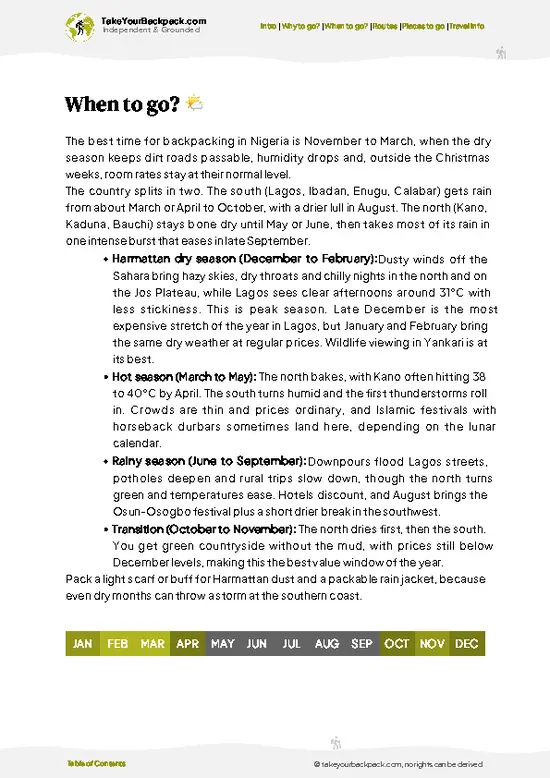
source: climatestotravel.comJANJanuary: highly recommended for travelingFEBFebruary: highly recommended for travelingMARMarch: excellent for travelingAPRApril: good for travelingMAYMay: fair for travelingJUNJune: fair for travelingJULJuly: fair for travelingAUGAugust: fair for travelingSEPSeptember: good for travelingOCTOctober: good for travelingNOVNovember: excellent for travelingDECDecember: highly recommended for traveling
when-to-go

✈️ The backpacker research shortcutNigeria Travel Guide

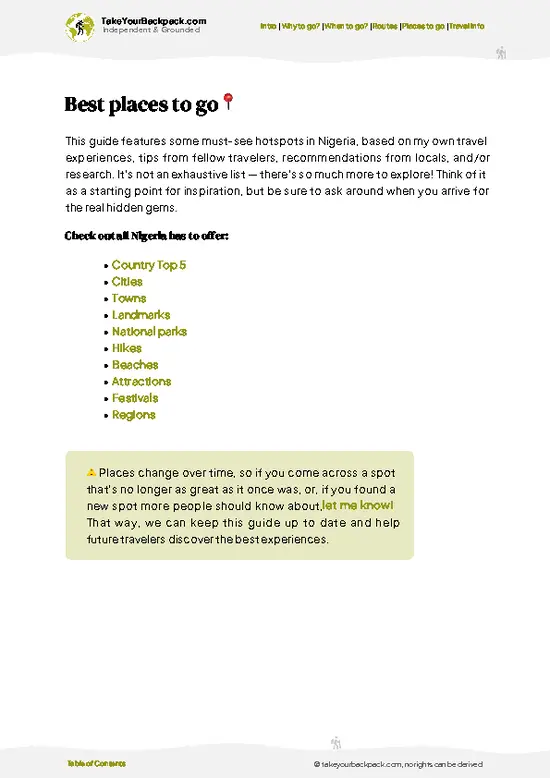
An offline-friendly backpacking guide with optimized travel routes, ranked highlights, transport advice, and the best areas to stay.
example page 0 from our offline Travel Guide for Nigeria
example page 1 from our offline Travel Guide for Nigeria
example page 2 from our offline Travel Guide for Nigeria
example page 3 from our offline Travel Guide for Nigeria
example page 4 from our offline Travel Guide for Nigeria
example page 5 from our offline Travel Guide for Nigeria
example page 6 from our offline Travel Guide for Nigeria
example page 7 from our offline Travel Guide for Nigeria
The digital guide (332 pages) contains:
89 highlights, ranked by travel appeal
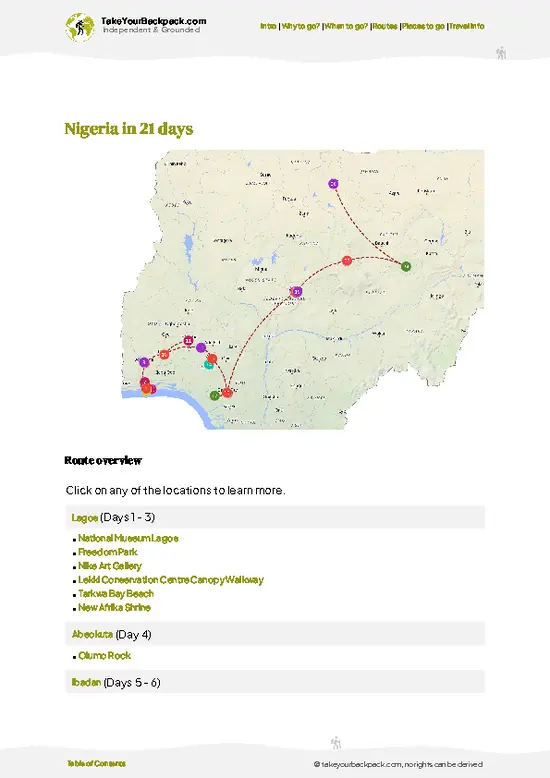
Optimized 7, 14 & 21-day travel routes
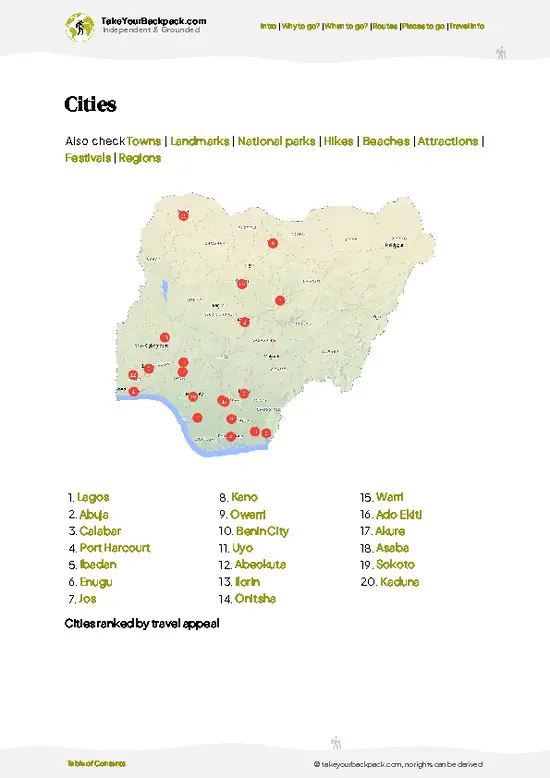
Cities, national parks, landmarks, beaches
How to get around
Offline-friendly for travel without Wi-Fi
👉 Click to see all 30+ guide features

📅 Plan smarter in minutes, not weeks
Month by month travel advice
Festivals & national holidays
Budget expectations

🗺️ Go to the right places, skip the overrated ones
Honest pros & cons of destinations
Top hikes, parks & viewpoints
Lesser-known places most travelers miss
Clear “worth it vs skip it” guidance

🛏️ Travel smoothly without rookie mistakes
Best areas to stay
Transport systems explained simply
Common scams & safety advice
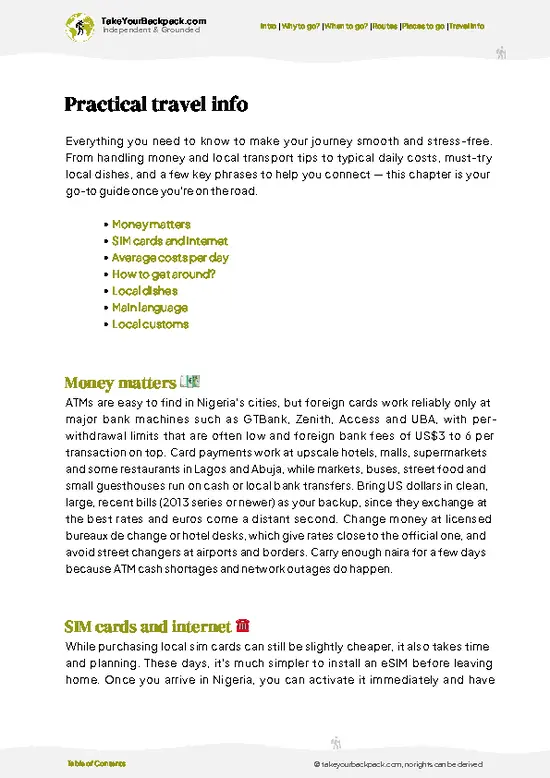
SIM cards, money & practical tips

🌍 Understand the country, not just visit it
Culture & traditions
52 Essential phrases & customs
Festivals worth planning around
Traveler-friendly historical context
Insights that make places more meaningful

📱 Built for real travel conditions
Fully downloadable PDF
Works completely offline
Optimized for phone use
Useful in remote areas & buses
Everything in one place
Save weeks of stressful planning
Get instant access to your full guide. 30‑day money-back guarantee.


By proceeding you agree to our terms.
Sent to your inbox immediately after payment • 100% Secure Checkout
Best Backpacking Travel Advisor 2025 tourism awardBest Backpacking
Travel Advisor
2025
What others say about Take Your Backpack Guides:
⭐⭐⭐⭐⭐
Fantastic, amazing amount of information!
⭐⭐⭐⭐⭐
My goodness this is amazing, it's what I've been looking for hats off too you!
⭐⭐⭐⭐⭐
I think this is absolutely BRILLIANT
⭐⭐⭐⭐
Very complete and informative. It's still missing places, but I gotta to commend you
⭐⭐⭐⭐⭐
This is truly amazing, thank you, can't wait to explore it with my kids!
⭐⭐⭐⭐⭐
Awesome resource, thank you!
⭐⭐⭐⭐⭐
This is amazing! Can't wait to explore the ones I haven't seen
⭐⭐⭐⭐
I love this! Well done, great idea.
⭐⭐⭐⭐⭐
Thanks for taking the time to make this gem!
⭐⭐⭐⭐⭐
This might be the best website I've ever seen.
⭐⭐⭐⭐⭐
Congratulations, and thank you so much for your work; it's incredibly valuable.
⭐⭐⭐⭐
In all seriousness I think you did a great job pointing out the important spots
⭐⭐⭐⭐⭐
10/10 very good
⭐⭐⭐⭐⭐
As someone who's only just starting to visit regularly this is awesome, thank you.
⭐⭐⭐⭐
Thank you very much! I'm going to visit my dad, it's going to be very useful!
⭐⭐⭐⭐⭐
This is really cool! We'll be travelling for the first time and this definitely come in handy.
⭐⭐⭐⭐⭐
You are now our minister of culture, congratulations 👨‍💼
⭐⭐⭐⭐⭐
Just wanted to tell you that this is a pearl! Going to follow your recommendations.
⭐⭐⭐⭐⭐
This is so cool. I'll definitely be using the resource for my travels soon.
⭐⭐⭐⭐⭐
This is very impressive! Good work.
⭐⭐⭐⭐⭐
This is an amazing and informative site. Very well done!

🛏️ Where to stay?Choosing the right base

Abuja’s backpacker scene is compact but distinct, and the choice of neighborhood shapes your entire experience. For a blend of safety, social buzz, and budget-friendly options, the Garki district is your best bet. It’s the city’s commercial heart, with a steady flow of locals and travelers alike. You’ll find a handful of hostels and guesthouses here, which means you’re not just paying less—you’re plugging into a community vibe that’s rare in a city known for its sprawling, planned layout. Garki’s streets hum with markets, street food stalls, and casual hangouts, making it easy to meet other solo … read more 👉
Abuja’s backpacker scene is compact but distinct, and the choice of neighborhood shapes your entire experience. For a blend of safety, social buzz, and budget-friendly options, the Garki district is your best bet. It’s the city’s commercial heart, with a steady flow of locals and travelers alike. You’ll find a handful of hostels and guesthouses here, which means you’re not just paying less—you’re plugging into a community vibe that’s rare in a city known for its sprawling, planned layout. Garki’s streets hum with markets, street food stalls, and casual hangouts, making it easy to meet other solo travelers or locals without the pressure of tourist traps.

Contrast this with Wuse, which leans more upscale and business-oriented. It’s safer but pricier, and the social scene is quieter, more corporate. For backpackers, that means fewer spontaneous connections and a higher price tag for basic lodging. Meanwhile, Maitama and Asokoro are Abuja’s high-end residential zones—beautiful and secure but not designed for budget travelers or social mingling. Hostels are scarce, and the atmosphere is more gated-community than backpacker-friendly.

So, if you want to maximize your time and money while staying comfortable enough to enjoy the city’s pulse, Garki nails the sweet spot. It’s where the backpacker’s map clicks into place: affordable, safe, and alive with energy.

🚌 Getting aroundHow to get from A to B

Abuja moves like a city caught between two beats: the steady pulse of government offices and embassies, and the unpredictable rhythm of daily hustle in markets and neighborhoods. It’s not a place where everything runs like clockwork, but it’s also not pure chaos. Instead, it’s a dance of planned appointments and spontaneous detours, where your choice of transport can either lock you into rigid schedules or let you flow with the city’s improvisational energy. Understanding this balance is your secret weapon to mastering Abuja’s transit game.


  • Walking: The ultimate budget move for short distances, especially around the Central Business District and Wuse Market. It costs nothing, gives you full control over your pace, and lets you soak in the city’s textures—just watch out for uneven sidewalks
read more 👉
Abuja moves like a city caught between two beats: the steady pulse of government offices and embassies, and the unpredictable rhythm of daily hustle in markets and neighborhoods. It’s not a place where everything runs like clockwork, but it’s also not pure chaos. Instead, it’s a dance of planned appointments and spontaneous detours, where your choice of transport can either lock you into rigid schedules or let you flow with the city’s improvisational energy. Understanding this balance is your secret weapon to mastering Abuja’s transit game.


  • Walking: The ultimate budget move for short distances, especially around the Central Business District and Wuse Market. It costs nothing, gives you full control over your pace, and lets you soak in the city’s textures—just watch out for uneven sidewalks and midday heat.


  • Danfo Buses: These yellow minibuses are the backbone of Abuja’s public transit. They run roughly from 6 AM to 9 PM, cost about 100-200 NGN per ride, and cover most major routes. They’re cheap and frequent but expect crowding and minimal comfort. Timing is flexible but unpredictable—perfect if you’re okay with a bit of chaos and want to save cash.


  • Motorcycle Taxis (Okadas): Fast and nimble, okadas can weave through traffic jams that would stall cars for ages. They operate 24/7, with fares starting around 200 NGN for short trips. Comfort is minimal, and safety varies, but if you’re in a hurry and can handle a bit of adrenaline, they’re unbeatable for speed.


  • Ride-Hailing Apps (Bolt, Uber): These bring a slice of predictability and comfort to Abuja’s transit scene. Prices start around 1,000 NGN for short trips, with availability peaking during rush hours. You get air conditioning, a set route, and digital payment—trading off some money for convenience and a stress-free ride.


  • Shared Taxis: Sitting between danfos and private cars, shared taxis run fixed routes and depart once full. They cost about 300-500 NGN and offer a bit more comfort than danfos, with faster travel times. You sacrifice some flexibility for a smoother ride and moderate price.


In Abuja, every transit choice is a trade-off between time, money, and comfort. Walk if you want to save money and absorb the city’s vibe but have time to spare. Danfos and shared taxis offer budget-friendly options with varying degrees of comfort and speed, but they demand patience and flexibility. Okadas are your go-to for beating traffic and saving time, if you’re willing to sacrifice comfort and safety. Ride-hailing apps flip the equation, letting you buy your way out of uncertainty and discomfort—but at a price. Mastering Abuja’s flow means knowing exactly what you’re giving up and what you’re gaining with each ride. That’s how you turn transit into a strategic win, not just a daily grind.

👛 Costs (as of 1 March 2026)Typical daily expenses

Backpacking in Abuja, Nigeria, involves a clear balancing act between cost, convenience, and comfort. Here’s how the daily expenses typically stack up for an independent traveler navigating this city.
  • Dorm Accommodation (High Season): Expect to pay around $15 to $25 per night. High season drives prices up due to demand from business travelers and tourists, so budget accordingly if you’re visiting during peak months.
  • Dorm Accommodation (Off-Season): Prices drop to about $10 to $18 per night. Off-season offers better deals but fewer options, so booking ahead can secure the best rates.
  • Meals: Street food and local eateries will cost you roughly $3 to $7 per meal. Nigerian staples like suya or jollof rice are filling and affordable, making it easy to eat well without overspending.
  • Local Transport:
read more 👉
Backpacking in Abuja, Nigeria, involves a clear balancing act between cost, convenience, and comfort. Here’s how the daily expenses typically stack up for an independent traveler navigating this city.
  • Dorm Accommodation (High Season): Expect to pay around $15 to $25 per night. High season drives prices up due to demand from business travelers and tourists, so budget accordingly if you’re visiting during peak months.
  • Dorm Accommodation (Off-Season): Prices drop to about $10 to $18 per night. Off-season offers better deals but fewer options, so booking ahead can secure the best rates.
  • Meals: Street food and local eateries will cost you roughly $3 to $7 per meal. Nigerian staples like suya or jollof rice are filling and affordable, making it easy to eat well without overspending.
  • Local Transport: Short rides on motorbike taxis (okadas) or shared minibuses typically run between $0.50 and $1.50. They’re quick but can be less comfortable and riskier, so weigh your comfort level here.
  • City Transport Pass: Abuja doesn’t have a unified city transport pass system. Most travelers rely on ad-hoc transport options, so factor in daily transport costs rather than a fixed pass.
  • Basic Activities/Entry Fees: Visiting museums, parks, or cultural sites usually costs between $2 and $5. These modest fees support local preservation efforts and offer a genuine glimpse into Nigerian culture.
  • Miscellaneous Expenses: Budget around $2 to $5 for essentials like bottled water, snacks, or occasional internet top-ups. These small costs add up but are manageable with a bit of planning.

Summing it up, a backpacker in Abuja can expect to spend roughly $20 to $40 per day. The lower end leans on off-season dorm stays and street food, while the higher end includes more comfort and flexibility. Knowing these trade-offs lets you tailor your trip to what matters most—whether that’s saving every dollar or splurging on ease and experience.
⚠️ Prices can change and everyone travels differently, so take this as a rough guide. Hope it helps you plan your adventure!

🚌 Day tripsEasy escapes and nearby places

Abuja serves as a fantastic launchpad for day trips that dive deep into Nigeria’s rich culture and stunning landscapes. Here are some trips that pack a punch without draining your wallet or time.

Aso Rock and the Nigerian National Mosque
Just a short 30-minute drive from central Abuja, Aso Rock is an iconic granite outcrop that looms over the city. The hike to the top is manageable, offering panoramic views that make the effort worthwhile. Afterward, swing by the Nigerian National Mosque, a stunning architectural feat that welcomes visitors. The total cost for transport and entry is around $10, making it a budget-friendly option. Aim for early morning to avoid the heat and crowds. A common mistake? Forgetting to bring water for the hike.
👉 Explore Aso Rock

Jabi Lake
About 20 minutes … read more 👉
Abuja serves as a fantastic launchpad for day trips that dive deep into Nigeria’s rich culture and stunning landscapes. Here are some trips that pack a punch without draining your wallet or time.

Aso Rock and the Nigerian National Mosque
Just a short 30-minute drive from central Abuja, Aso Rock is an iconic granite outcrop that looms over the city. The hike to the top is manageable, offering panoramic views that make the effort worthwhile. Afterward, swing by the Nigerian National Mosque, a stunning architectural feat that welcomes visitors. The total cost for transport and entry is around $10, making it a budget-friendly option. Aim for early morning to avoid the heat and crowds. A common mistake? Forgetting to bring water for the hike.
👉 Explore Aso Rock

Jabi Lake
About 20 minutes from the city center, Jabi Lake is a serene escape. You can rent a canoe or simply stroll along the shore, soaking in the tranquility. The vibrant local market nearby offers a taste of authentic Nigerian street food, so bring a few extra bucks for snacks. Expect to spend around $15 for a day of leisure and exploration. The best time to visit is during the dry season, when the weather is pleasant. Many first-timers overlook the market, missing out on local flavors.


Olumo Rock
A bit further afield, Olumo Rock is about a 2-hour drive from Abuja. This ancient rock formation is not just a geological wonder; it’s steeped in history. The climb is rewarding, with a small fee of around $5 for entry. The best time to go is early in the morning to catch the sunrise. Be aware that some paths can be slippery, so sturdy shoes are a must. Many backpackers underestimate the time needed for the climb, so plan accordingly.
👉 Explore Olumo Rock

Zuma Rock
Just 45 minutes from Abuja, Zuma Rock is a striking monolith that’s perfect for a quick getaway. You can hike around the base or simply enjoy the views from a nearby vantage point. The trip can be done for about $10, including transport. The dry season is ideal for this trip, as the landscape is lush and green. A common pitfall? Not checking local transport schedules, which can be inconsistent.


Kwali Pottery Village
Located about an hour from Abuja, Kwali Pottery Village offers a unique glimpse into traditional Nigerian craftsmanship. You can watch artisans at work and even try your hand at pottery. The experience costs around $15, including transport. Visit in the morning to catch the artisans at their best. First-timers often miss the chance to engage with the potters, so don’t be shy!
Want to know what more Nigeria offers?
The Nigeria Travel Guide describes 89 highlights, from cities to national parks, from beaches to hikes

Get the Travel Guide -

🍲 FoodEating & Drinking in Abuja

In Abuja, food is a vibrant tapestry of flavors that tells the story of its people. Dive into jollof rice, a spicy, tomato-infused dish that’s a staple at any gathering. Pair it with suya, skewered meat seasoned with a fiery spice blend, often sold by street vendors. The aroma wafts through the air, drawing you in like a moth to a flame.

For a true local experience, head to the markets. Here, you’ll find stalls brimming with fresh produce, spices, and the unmistakable scent of pepper soup simmering away. This dish, often made with fish or goat, is a must-try for its rich, warming flavors. Don’t shy away from puff-puff, those fluffy, sweet dough balls that are perfect for snacking while you explore.

When it comes to drinks, try zobo, a refreshing hibiscus tea that’s both sweet and tart, or … read more 👉
In Abuja, food is a vibrant tapestry of flavors that tells the story of its people. Dive into jollof rice, a spicy, tomato-infused dish that’s a staple at any gathering. Pair it with suya, skewered meat seasoned with a fiery spice blend, often sold by street vendors. The aroma wafts through the air, drawing you in like a moth to a flame.

For a true local experience, head to the markets. Here, you’ll find stalls brimming with fresh produce, spices, and the unmistakable scent of pepper soup simmering away. This dish, often made with fish or goat, is a must-try for its rich, warming flavors. Don’t shy away from puff-puff, those fluffy, sweet dough balls that are perfect for snacking while you explore.

When it comes to drinks, try zobo, a refreshing hibiscus tea that’s both sweet and tart, or kunu, a traditional fermented drink made from grains. The drinking culture here is communal; sharing a drink is a way to bond, so don’t be surprised if someone offers you a taste.

Etiquette is relaxed, but it’s polite to greet vendors and share a smile. Embrace the hustle and bustle, and let the flavors of Abuja guide your adventure.

🛡️ SafetySafety Tips and Common Scams in Abuja

Abuja is generally safe for travelers, but a few smart strategies can enhance your experience. Stay aware in crowded areas like markets or bus stations, where pickpockets might lurk. Keep your belongings close and avoid flashy displays of wealth.

If you’re solo, especially at night, stick to well-lit, populated areas. Ride-hailing apps are reliable for getting around after dark, so consider using them instead of walking.

Common scams include overly friendly locals offering unsolicited help, often leading to a request for money. Politely decline and keep moving. Also, be cautious with street vendors; while many are legitimate, some may try to inflate prices for tourists.

Trust your instincts. If something feels off, it probably is. Carry yourself confidently and engage with locals when … read more 👉
Abuja is generally safe for travelers, but a few smart strategies can enhance your experience. Stay aware in crowded areas like markets or bus stations, where pickpockets might lurk. Keep your belongings close and avoid flashy displays of wealth.

If you’re solo, especially at night, stick to well-lit, populated areas. Ride-hailing apps are reliable for getting around after dark, so consider using them instead of walking.

Common scams include overly friendly locals offering unsolicited help, often leading to a request for money. Politely decline and keep moving. Also, be cautious with street vendors; while many are legitimate, some may try to inflate prices for tourists.

Trust your instincts. If something feels off, it probably is. Carry yourself confidently and engage with locals when it feels right. This approach not only keeps you safe but also opens doors to genuine interactions.

Other Nigerian cities near Abuja

Explore more nearby:

  • Kafanchan—railway crossroads, plateau scenery, multi-ethnic communities| 99 km away
  • Minna—rail junction, Niger River views, colonial-era buildings| 121 km away
  • Lafia—taro farms, Nasarawa palace, rural surroundings| 127 km away

💡 Not sure where to go next?
Create a personalized itinerary for Nigeria including Abuja and the places that fit your trip.

Generate my itinerary

👉 Discover all cities

Or checkout all Nigeria has to offer (think cities, towns, villages, national parks, hikes, beaches, festivals)
Country photo of Nigeria

We 💚 feedbackFinal thoughts on visiting Abuja

Abuja has a pulse that’s uniquely its own. The blend of modernity and tradition creates an energy that’s hard to shake off. Don’t miss the local markets; they’re a sensory overload in the best way. You’ll find everything from vibrant fabrics to mouthwatering street food. Just a heads-up: traffic can be a beast, so plan your outings wisely. Embrace the chaos, and you’ll discover the city’s charm. It’s a place where every corner has a story waiting for you.

✍️ Help improve this page!
The information on this page is based on in-depth research, insights shared by experienced travelers, and feedback from the local travel community in Nigeria. While every effort is made to keep the information accurate and current, conditions can change — so if you spot anything incorrect or outdated, please get in touch.


🙋‍♂️ Give feedback

👋 Meet the founderWho’s Behind Take Your Backpack?

Johan, backpacker and founder of TakeYourBackpackHi, I’m Johan (Netherlands 🇳🇱), the creator of TakeYourBackpack. Over the past decade, I’ve backpacked through 80+ countries across six continents, gaining extensive experience with independent travel, long-term trips, and overland routes.

This site is built on a combination of firsthand travel experience and carefully curated insights from other backpackers. Many guides are based on places I’ve personally visited, while others bring together tips, observations, and practical advice shared by trusted travelers I’ve met along the way.

The goal is to provide realistic, experience-driven guidance — not generic itineraries — so you can explore destinations with better context, clearer expectations, and more confidence.

Get full Nigeria guide •
Instant download • 89 highlights • Full Offline guide