×

Nigeria🇳🇬 | citiesAsabaNiger River views, film industry, Delta traditions | things to do and best time to go

Explore DamaturuExplore Ogbomosho

Backpacking in Asaba
👍 Recommendedcity ranked #13
By Johan Kruseman 🇳🇱 | Updated June 9, 2026

Sweat beads on your brow as you dodge a boda-boda weaving through the midday traffic, the scent of grilled suya drifting from a roadside stall, laughter ricocheting from a cluster of students perched on the low wall outside the Delta State Library. Asaba sits on the west bank of the Niger River in southern Nigeria, a crossroads city with a pulse that’s more laid-back than Lagos but never sleepy. For backpackers, Asaba is a wildcard: affordable, with lively markets and a nightlife scene that hums on weekends, but light on classic sights—think the colonial-era Grand Hotel, the energetic Ogbeogonogo Market, and the riverfront parks. It’s easy to get around, but you’ll work for deeper connections—travelers are rare, and English is common but not universal. Safety is decent by Nigerian standards, though you’ll want your street smarts dialed up after dark. Compared to Onitsha across the river, Asaba is calmer, friendlier, and less overwhelming, but don’t expect a backpacker bubble or a polished tourist circuit. The vibe? Real, unhurried, and just unpredictable enough to keep you on your toes.

Discover everything you want to know in the 📖 Nigeria Travel Guide.
Safety warning

The current risk level for Nigeria is high. Check the advice before going.


Get your Nigeria guide
89 ranked highlights, routes & tips, works offline (332 pages)
Loading the map 🌍
CLICK TO FILTER
cities
towns
landmarks
national parks
hikes
beaches
attractions
festivals
regions
SHOW COUNTRY’S BESTSHOW ALL

✨ Why go?
Ranked #13 city in Nigeria
What makes this city worth visiting

Asaba is a strategic basecamp for backpackers navigating Nigeria. Its affordable hostels provide a cozy spot to recharge, while the walkable streets make exploring easy and enjoyable. You’ll find a mix of local food stalls and restaurants that won’t break the bank, offering a taste of authentic Nigerian cuisine. The nightlife is vibrant enough to keep you entertained without overwhelming your schedule. Plus, Asaba’s proximity to day trips allows you to maximize your time without sacrificing comfort. If you’re looking for a place to linger or just a quick stop, Asaba fits seamlessly into your travel route.
Want to include Asaba in your Nigeria route?
Create a personalized Nigeria itinerary that includes Asaba and the places that fit your trip — based on your travel style, budget, and available time. Get your route in seconds.

Generate my trip

💡 HighlightsTop highlights of Asaba

  • Niger Riverfront (Asaba Waterfront) — The single best place to feel the city: wide views of the Niger, riverside vendors, sunset boats and the informal life of fishermen and traders. Great for photos, cheap boat rides and to watch the river traffic between Asaba and Onitsha.
  • Stephen Keshi Stadium — Asaba’s main sports arena. Catch a local league match or a community event to see passionate crowds, hear Afrobeat blaring and feel the city’s sporting spirit. The stadium scene is a real slice of everyday culture.
  • Asaba Main Market (Ogbe/Asaba Market) — A maze of stalls selling food, fabrics, spices and everyday goods. It’s loud, colourful and essential for people-watching, sampling street food and bargaining for local textiles and crafts.
  • Obi of Asaba Palace — The traditional ruler’s palace
read more 👉
  • Niger Riverfront (Asaba Waterfront) — The single best place to feel the city: wide views of the Niger, riverside vendors, sunset boats and the informal life of fishermen and traders. Great for photos, cheap boat rides and to watch the river traffic between Asaba and Onitsha.
  • Stephen Keshi Stadium — Asaba’s main sports arena. Catch a local league match or a community event to see passionate crowds, hear Afrobeat blaring and feel the city’s sporting spirit. The stadium scene is a real slice of everyday culture.
  • Asaba Main Market (Ogbe/Asaba Market) — A maze of stalls selling food, fabrics, spices and everyday goods. It’s loud, colourful and essential for people-watching, sampling street food and bargaining for local textiles and crafts.
  • Obi of Asaba Palace — The traditional ruler’s palace and cultural heart for the Asaba people. The architecture, royal regalia (when on display) and any public ceremonies give insight into local customs and history—ask locally about visiting times.
  • Delta State Cultural Centre — A small but useful stop for rotating exhibitions, performances and craft displays that explain Delta State’s mix of ethnic traditions. Good place to time a cultural show and buy authentic crafts without trekking to a market.
  • Asaba Boat Terminal / Local Port — Where trade and travel meet: ferries and wooden boats leave for riverside towns, there’s fresh fish for sale, and the hustle around the jetty shows how the Niger still shapes daily life here.
  • St. Patrick’s Cathedral (Diocese of Asaba) — The Catholic cathedral is an active spiritual centre with impressive interiors and a calm contrast to market chaos. Sunday service is lively and a good chance to witness local religious life and gospel music.
  • Delta State Government House precinct & Gardens — The seat of state government in Asaba with well-kept lawns and colonial-era buildings visible from public areas. It’s a peaceful walk, useful for photos and understanding the city’s administrative role.
  • Asaba International Airport — Small but functional international airport. Beyond flights, it’s handy for quick trips in/out, and watching domestic arrivals gives a compact sense of Nigeria’s regional connectivity—useful if you’re passing through.
  • Local food streets and roadside eateries (Nnebisi Road area and beyond) — Not a single landmark but a loop of streets where you’ll find the best local breakfasts, pepper soups, suya and bean cakes. Eat where the locals eat for the truest taste of Asaba’s everyday life.
A few nice day trips nearby: Onitsha (massive market and Niger-bridge views), Abraka (river resort and canoeing), and the Ogbunike Caves east of Onitsha — all easily reached from Asaba in a day.
Spotted a mistake or missing something? Contact us.

🏘️ NeighborhoodsKey areas and districts to know

Asaba offers a mix of urban energy and local charm, perfect for backpackers seeking authentic experiences. Here’s a quick guide to its neighborhoods:

Okpanam: A lively area with a blend of local markets and eateries. It’s budget-friendly and walkable, making it ideal for short stays. The nightlife is low-key, perfect for unwinding after a day of exploration.

Asaba Town: The heart of the city, bustling with activity. Here, you’ll find more transport options, but it can get noisy. Great for longer stays if you enjoy being in the thick of things.

Illah: Quieter and more residential, this area offers a glimpse into local life. It’s less touristy, making it a unique spot for those wanting to immerse themselves. Walkability is decent, but transport options are limited.

⌛️ 1 day1-day itinerary for Asaba

Asaba, Nigeria, is a vibrant city where the Niger River flows gracefully, offering a blend of culture and community. Start your day in the bustling neighborhood of Okpanam. Grab a hearty breakfast at a local eatery—think spicy pepper soup and yam. The energy here is infectious, and you’ll feel the pulse of daily life.

In the afternoon, head to the Asaba Waterfront. Stroll along the riverbank, soaking in the views and the local vibe. This area is often overlooked by tourists, but it’s a perfect spot to relax and watch fishermen at work. If you’re up for it, visit the nearby Otuocha Market for an authentic taste of local commerce—colorful stalls and friendly vendors await.

As evening approaches, make your way to the city center. Enjoy dinner at a traditional restaurant, savoring jollof rice … read more 👉
Asaba, Nigeria, is a vibrant city where the Niger River flows gracefully, offering a blend of culture and community. Start your day in the bustling neighborhood of Okpanam. Grab a hearty breakfast at a local eatery—think spicy pepper soup and yam. The energy here is infectious, and you’ll feel the pulse of daily life.

In the afternoon, head to the Asaba Waterfront. Stroll along the riverbank, soaking in the views and the local vibe. This area is often overlooked by tourists, but it’s a perfect spot to relax and watch fishermen at work. If you’re up for it, visit the nearby Otuocha Market for an authentic taste of local commerce—colorful stalls and friendly vendors await.

As evening approaches, make your way to the city center. Enjoy dinner at a traditional restaurant, savoring jollof rice and grilled fish. Cap off your day with a visit to the Asaba Cultural Center, where you might catch a local performance. This blend of sights, sounds, and flavors makes for a day well spent.
Turn your Asaba visit into an Nigeria adventure
Build a complete Nigeria route with Asaba, hidden gems, must-see destinations, and realistic travel times included.

Generate my trip

🌤️ When to go?Weather, crowds, and seasonal trade-offs


  • Topic: Weather – Asaba’s tropical climate means heavy rains from April to October, making trails muddy and transport slower. The dry season, November to March, offers clearer skies and easier movement.

  • Topic: Temperature – Expect highs around 30-33°C (86-91°F) year-round, but the dry season feels hotter and less humid, while the wet season brings cooler, damp air.

  • Topic: Daylight Hours – Daylight stays steady near 12 hours year-round, so no need to juggle your schedule for light; focus on weather instead.

  • Topic: Crowds – Tourist traffic is low overall, but local festivals in December and January can spike crowds and prices, offering cultural richness if you plan ahead.

  • Topic: Seasonal Activities – Dry season is prime for river excursions and exploring markets without rain interruptions;
read more 👉

  • Topic: Weather – Asaba’s tropical climate means heavy rains from April to October, making trails muddy and transport slower. The dry season, November to March, offers clearer skies and easier movement.

  • Topic: Temperature – Expect highs around 30-33°C (86-91°F) year-round, but the dry season feels hotter and less humid, while the wet season brings cooler, damp air.

  • Topic: Daylight Hours – Daylight stays steady near 12 hours year-round, so no need to juggle your schedule for light; focus on weather instead.

  • Topic: Crowds – Tourist traffic is low overall, but local festivals in December and January can spike crowds and prices, offering cultural richness if you plan ahead.

  • Topic: Seasonal Activities – Dry season is prime for river excursions and exploring markets without rain interruptions; wet season limits outdoor options but enhances lush landscapes.

  • Topic: Price Fluctuations – Accommodation and transport costs dip during the rainy months due to fewer visitors, but expect a premium during festive periods and dry season peak travel.


Pro-tip: Target late November to early March for a balance of dry weather, manageable crowds, and vibrant local events—maximizing comfort without breaking the bank.


source: climatestotravel.comJANJanuary: excellent for travelingFEBFebruary: excellent for travelingMARMarch: excellent for travelingAPRApril: fair for travelingMAYMay: fair for travelingJUNJune: fair for travelingJULJuly: fair for travelingAUGAugust: fair for travelingSEPSeptember: fair for travelingOCTOctober: fair for travelingNOVNovember: highly recommended for travelingDECDecember: highly recommended for traveling
when-to-go

✈️ The backpacker research shortcutNigeria Travel Guide

An offline-friendly backpacking guide with optimized travel routes, ranked highlights, transport advice, and the best areas to stay.
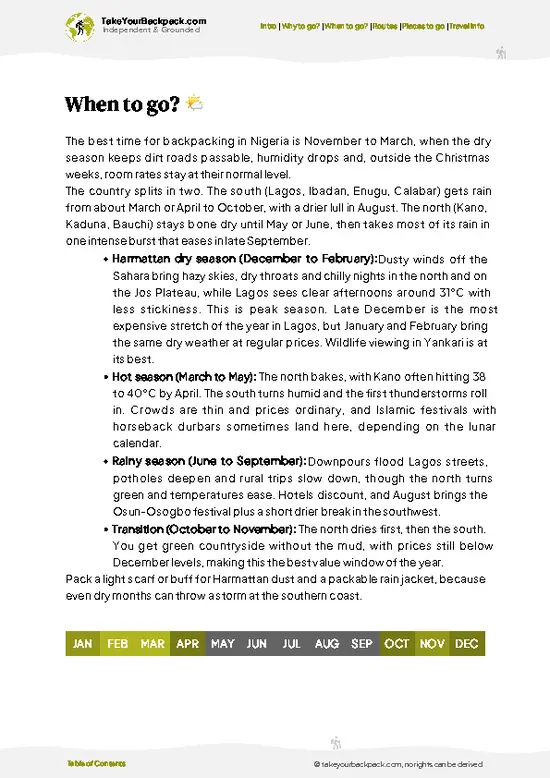
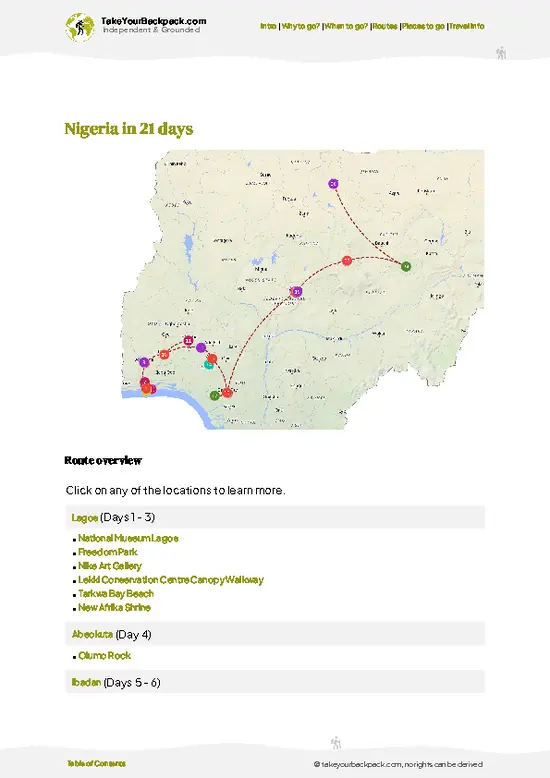
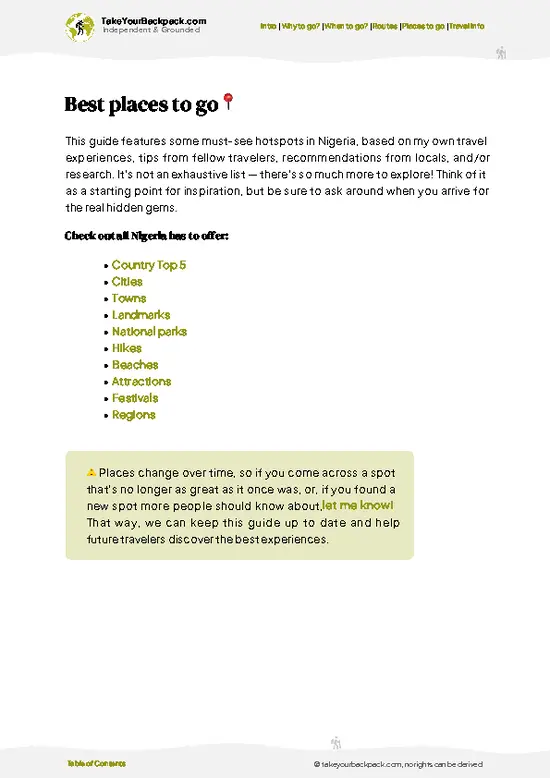
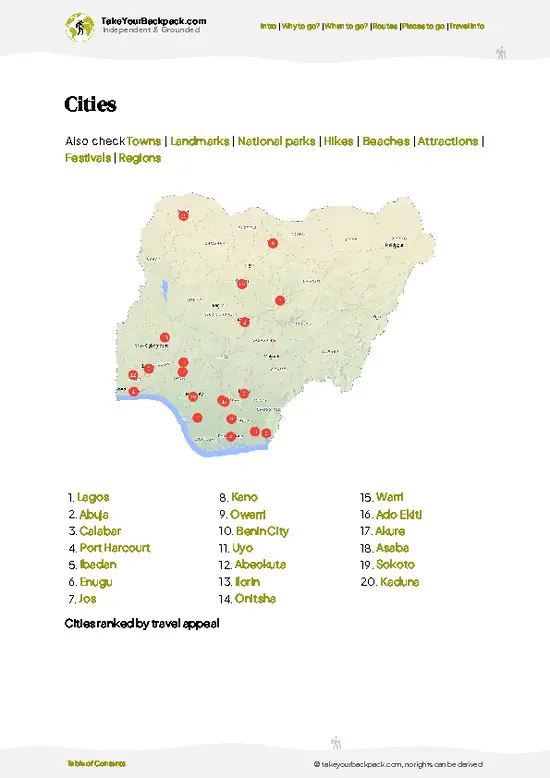
example page 0 from our offline Travel Guide for Nigeria
example page 1 from our offline Travel Guide for Nigeria
example page 2 from our offline Travel Guide for Nigeria
example page 3 from our offline Travel Guide for Nigeria
example page 4 from our offline Travel Guide for Nigeria
example page 5 from our offline Travel Guide for Nigeria
example page 6 from our offline Travel Guide for Nigeria
example page 7 from our offline Travel Guide for Nigeria
The digital guide (332 pages) contains:
89 highlights, ranked by travel appeal
Optimized 7, 14 & 21-day travel routes
Cities, national parks, landmarks, beaches
How to get around
Offline-friendly for travel without Wi-Fi
👉 Click to see all 30+ guide features

📅 Plan smarter in minutes, not weeks
Month by month travel advice
Festivals & national holidays
Budget expectations

🗺️ Go to the right places, skip the overrated ones
Honest pros & cons of destinations
Top hikes, parks & viewpoints
Lesser-known places most travelers miss
Clear “worth it vs skip it” guidance

🛏️ Travel smoothly without rookie mistakes
Best areas to stay
Transport systems explained simply
Common scams & safety advice
SIM cards, money & practical tips

🌍 Understand the country, not just visit it
Culture & traditions
52 Essential phrases & customs
Festivals worth planning around
Traveler-friendly historical context
Insights that make places more meaningful

📱 Built for real travel conditions
Fully downloadable PDF
Works completely offline
Optimized for phone use
Useful in remote areas & buses
Everything in one place
Save weeks of stressful planning
Get instant access to your full guide. 30‑day money-back guarantee.


By proceeding you agree to our terms.
Sent to your inbox immediately after payment • 100% Secure Checkout
Best Backpacking Travel Advisor 2025 tourism awardBest Backpacking
Travel Advisor
2025
What others say about Take Your Backpack Guides:
⭐⭐⭐⭐⭐
Fantastic, amazing amount of information!
⭐⭐⭐⭐⭐
My goodness this is amazing, it's what I've been looking for hats off too you!
⭐⭐⭐⭐⭐
I think this is absolutely BRILLIANT
⭐⭐⭐⭐
Very complete and informative. It's still missing places, but I gotta to commend you
⭐⭐⭐⭐⭐
This is truly amazing, thank you, can't wait to explore it with my kids!
⭐⭐⭐⭐⭐
Awesome resource, thank you!
⭐⭐⭐⭐⭐
This is amazing! Can't wait to explore the ones I haven't seen
⭐⭐⭐⭐
I love this! Well done, great idea.
⭐⭐⭐⭐⭐
Thanks for taking the time to make this gem!
⭐⭐⭐⭐⭐
This might be the best website I've ever seen.
⭐⭐⭐⭐⭐
Congratulations, and thank you so much for your work; it's incredibly valuable.
⭐⭐⭐⭐
In all seriousness I think you did a great job pointing out the important spots
⭐⭐⭐⭐⭐
10/10 very good
⭐⭐⭐⭐⭐
As someone who's only just starting to visit regularly this is awesome, thank you.
⭐⭐⭐⭐
Thank you very much! I'm going to visit my dad, it's going to be very useful!
⭐⭐⭐⭐⭐
This is really cool! We'll be travelling for the first time and this definitely come in handy.
⭐⭐⭐⭐⭐
You are now our minister of culture, congratulations 👨‍💼
⭐⭐⭐⭐⭐
Just wanted to tell you that this is a pearl! Going to follow your recommendations.
⭐⭐⭐⭐⭐
This is so cool. I'll definitely be using the resource for my travels soon.
⭐⭐⭐⭐⭐
This is very impressive! Good work.
⭐⭐⭐⭐⭐
This is an amazing and informative site. Very well done!

🛏️ Where to stay?How to pick the right area

In Asaba, the sweet spot for backpackers is the area around the city center and the nearby Government Residential Area. This zone strikes a balance between safety and social buzz, crucial for solo travelers who want to feel secure without sacrificing interaction. It’s where you’ll find a handful of budget-friendly hostels and guesthouses, offering basic but clean accommodations that keep your wallet intact. The vibe here is low-key but lively enough—local eateries, street vendors, and small markets pepper the streets, giving you a real taste of daily life without the tourist gloss. Compared to … read more 👉
In Asaba, the sweet spot for backpackers is the area around the city center and the nearby Government Residential Area. This zone strikes a balance between safety and social buzz, crucial for solo travelers who want to feel secure without sacrificing interaction. It’s where you’ll find a handful of budget-friendly hostels and guesthouses, offering basic but clean accommodations that keep your wallet intact. The vibe here is low-key but lively enough—local eateries, street vendors, and small markets pepper the streets, giving you a real taste of daily life without the tourist gloss. Compared to the more residential or industrial outskirts, this area is easier to navigate on foot or by short motorbike rides, cutting down on transport hassle and cost. You trade off some luxury and polish for authenticity and connection, which, in a city like Asaba, is the real currency of a memorable trip.

🚌 Getting aroundTransportation options and practical tips

Asaba moves with a pulse that’s part rhythm, part improvisation. It’s not a city where you’ll find neat timetables nailed to every corner. Instead, it’s a dance of informal stops, shared rides, and the occasional honk that signals a bus is ready to roll. The flow here rewards those who read the street’s subtle cues—when a minibus fills up, when a motorbike zips past, or when the sun’s angle suggests it’s time to head home. Time, money, and comfort don’t line up neatly; you pick your trade-offs and own them.


  • Walking: The ultimate budget option. Asaba’s central areas are compact enough to explore on foot, giving you full control over your schedule and zero cost. It’s slow but immersive—expect 15-30 minutes between major spots, depending on your pace and the heat.

  • Okada (Motorcycle Taxi):
read more 👉
Asaba moves with a pulse that’s part rhythm, part improvisation. It’s not a city where you’ll find neat timetables nailed to every corner. Instead, it’s a dance of informal stops, shared rides, and the occasional honk that signals a bus is ready to roll. The flow here rewards those who read the street’s subtle cues—when a minibus fills up, when a motorbike zips past, or when the sun’s angle suggests it’s time to head home. Time, money, and comfort don’t line up neatly; you pick your trade-offs and own them.


  • Walking: The ultimate budget option. Asaba’s central areas are compact enough to explore on foot, giving you full control over your schedule and zero cost. It’s slow but immersive—expect 15-30 minutes between major spots, depending on your pace and the heat.

  • Okada (Motorcycle Taxi): Fast and flexible, these dart through traffic like they own the road. Prices hover around 200-500 NGN per trip, but comfort is minimal and safety varies. They run all day, no official schedule, perfect for short hops when time is tight.

  • Danfo (Minibus): The backbone of local transit. Runs roughly from 6 AM to 9 PM, fares are dirt cheap (100-200 NGN), but expect crowding and frequent stops. Speed depends on traffic and how quickly the bus fills. It’s a classic trade-off: low cost, low comfort, moderate time.

  • Taxi (Private Car): More expensive, around 1500-3000 NGN per ride, but offers direct routes and air conditioning. Ideal if you’re carrying gear or want to skip the heat and crowds. Availability is flexible but negotiate fares upfront.


Mastering Asaba’s transit means balancing these options like a chess game. You’ll save money by walking or hopping on a danfo, but sacrifice comfort and sometimes time. Okadas slice through delays but demand a tolerance for risk. Taxis buy you comfort and speed but at a premium. Knowing these trade-offs lets you craft your own winning strategy—no surprises, just smart moves.

👛 Costs (as of 1 March 2026)Typical daily expenses

Backpacking in Asaba, Nigeria, presents a clear trade-off between cost and convenience, with prices reflecting the city’s developing infrastructure and local economy. Here’s a breakdown of what you can expect to spend daily as an independent traveler:
  • Dorm Accommodation (High Season): Expect to pay around $10 to $15 per night. Availability tightens during peak travel periods, pushing prices slightly higher due to demand.
  • Dorm Accommodation (Off-Season): Prices drop to about $6 to $10 per night. Fewer tourists mean better bargaining power and more options, but facilities remain basic.
  • Meals: Street food and local eateries dominate the scene, with typical meals costing between $2 and $5. Opting for more Western-style restaurants or imported goods can push this higher, but sticking local keeps costs
read more 👉
Backpacking in Asaba, Nigeria, presents a clear trade-off between cost and convenience, with prices reflecting the city’s developing infrastructure and local economy. Here’s a breakdown of what you can expect to spend daily as an independent traveler:
  • Dorm Accommodation (High Season): Expect to pay around $10 to $15 per night. Availability tightens during peak travel periods, pushing prices slightly higher due to demand.
  • Dorm Accommodation (Off-Season): Prices drop to about $6 to $10 per night. Fewer tourists mean better bargaining power and more options, but facilities remain basic.
  • Meals: Street food and local eateries dominate the scene, with typical meals costing between $2 and $5. Opting for more Western-style restaurants or imported goods can push this higher, but sticking local keeps costs low and authentic.
  • Local Transport: Minibuses and motorcycle taxis (okadas) are the norm. A typical short ride costs around $0.30 to $0.70. Be ready to negotiate and factor in safety considerations.
  • City Transport Pass: Asaba doesn’t have a formal city transport pass system. Budgeting around $2 to $3 daily for multiple rides is realistic if you plan to move around extensively.
  • Basic Activities/Entry Fees: Cultural sites and local attractions generally charge between $1 and $5. Many experiences are informal or free, so this category is flexible depending on your interests.
  • Miscellaneous Expenses: This covers essentials like bottled water, snacks, and occasional phone credit top-ups. Around $1 to $3 daily is a safe estimate.

In total, a daily budget for backpacking in Asaba ranges roughly from $15 on a shoestring to about $30 if you lean towards more comfort and convenience. The key trade-off is between spending more on accommodation and transport for ease versus embracing local options to keep costs down and gain a more immersive experience.
⚠️ Prices can change and everyone travels differently, so take this as a rough guide. Hope it helps you plan your adventure!

🚌 Day tripsEasy escapes and nearby places

Asaba, Nigeria, is a fantastic launchpad for day trips that blend adventure with cultural immersion. Here are some standout options.

Ogbunike Caves
Just about 30 minutes from Asaba, the Ogbunike Caves offer a unique blend of history and nature. These limestone caves are not just geological wonders; they’re steeped in local lore. A guided tour costs around 1,000 NGN, and you’ll want to bring sturdy shoes for the trek. The best time to visit is during the dry season, when the trails are less muddy. First-timers often underestimate the hike’s intensity, so prepare for a bit of a workout.
👉 Explore Ogbunike Caves

Onitsha Market
A mere 20-minute drive from Asaba, Onitsha Market is a sensory overload in the best way. This bustling marketplace is perfect for picking up local crafts and experiencing … read more 👉
Asaba, Nigeria, is a fantastic launchpad for day trips that blend adventure with cultural immersion. Here are some standout options.

Ogbunike Caves
Just about 30 minutes from Asaba, the Ogbunike Caves offer a unique blend of history and nature. These limestone caves are not just geological wonders; they’re steeped in local lore. A guided tour costs around 1,000 NGN, and you’ll want to bring sturdy shoes for the trek. The best time to visit is during the dry season, when the trails are less muddy. First-timers often underestimate the hike’s intensity, so prepare for a bit of a workout.
👉 Explore Ogbunike Caves

Onitsha Market
A mere 20-minute drive from Asaba, Onitsha Market is a sensory overload in the best way. This bustling marketplace is perfect for picking up local crafts and experiencing the vibrant trade culture. Expect to spend around 2,000 NGN on snacks and small purchases. Weekdays are less chaotic, making it easier to navigate. Many newcomers miss the chance to haggle; don’t shy away from negotiating prices!


Awhum Waterfall
About an hour’s journey, Awhum Waterfall is a serene escape. The cascading water and lush surroundings create a perfect backdrop for relaxation. Entry is typically around 500 NGN, and the best time to go is early morning to avoid crowds. A common mistake is not bringing enough water; the hike can be more demanding than it appears.
👉 Explore Awhum Waterfall

Asaba Riverfront
Right in Asaba, the Riverfront is a chill spot for a leisurely day. You can stroll along the banks or grab a local meal at nearby eateries. Costs are minimal, usually under 1,500 NGN for food and drinks. Late afternoons are ideal for catching the sunset. First-timers often overlook this local favorite, but it’s a great way to unwind after a day of exploration.
Want to know what more Nigeria offers?
The Nigeria Travel Guide describes 89 highlights, from cities to national parks, from beaches to hikes

Get the Travel Guide -

🍲 FoodLocal Flavors for Backpackers

In Asaba, local cuisine is a vibrant tapestry of flavors. Dive into jollof rice, a spicy, tomato-rich dish that’s a staple at gatherings. Pair it with suya, skewered meat seasoned with a fiery spice blend, often sold at bustling street stalls.

The drinking culture thrives in casual bars and roadside spots where palm wine flows freely. It’s a communal experience, often enjoyed with friends, so don’t hesitate to join in.

Etiquette is relaxed; sharing food and drinks is common. Just remember to greet vendors and fellow diners—it’s all part of the social fabric that makes eating in Asaba a delightful adventure.

🛡️ SafetyScams, Hazards, and Annoyances

Asaba is generally safe, but like any city, it has its quirks. Stay alert in crowded markets, where pickpockets might lurk. If you’re solo, avoid wandering too far after dark; stick to well-lit areas and main roads.

Common scams include overly friendly locals offering unsolicited help, which can lead to unexpected fees. Keep your wits about you and trust your instincts. Carry your belongings close and maintain a confident demeanor. This approach will help you navigate the city smoothly, turning potential annoyances into mere footnotes in your adventure.

Other Nigerian cities near Asaba

Explore more nearby:

  • Onitsha—massive market, Niger Bridge, commercial hub| 12 km away
  • Owerri—nightlife districts, Imo River, local cuisine| 86 km away
  • Enugu—coal mining legacy, rolling hills, Igbo culture| 94 km away

💡 Not sure where to go next?
Create a personalized itinerary for Nigeria including Asaba and the places that fit your trip.

Generate my itinerary

👉 Discover all cities

Or checkout all Nigeria has to offer (think cities, towns, villages, national parks, hikes, beaches, festivals)
Country photo of Nigeria

We 💚 feedbackWhat to keep in mind

Asaba has a laid-back vibe that feels like a warm hug. Don’t miss the local jollof rice; it’s a flavor explosion. Just be ready for the humidity—it can be intense. Embrace it; it’s part of the experience. You’ll leave with stories.

✍️ Help improve this page!
The information on this page is based on in-depth research, insights shared by experienced travelers, and feedback from the local travel community in Nigeria. While every effort is made to keep the information accurate and current, conditions can change — so if you spot anything incorrect or outdated, please get in touch.


🙋‍♂️ Give feedback

👋 Meet the founderWho’s Behind Take Your Backpack?

Johan, backpacker and founder of TakeYourBackpackHi, I’m Johan (Netherlands 🇳🇱), the creator of TakeYourBackpack. Over the past decade, I’ve backpacked through 80+ countries across six continents, gaining extensive experience with independent travel, long-term trips, and overland routes.

This site is built on a combination of firsthand travel experience and carefully curated insights from other backpackers. Many guides are based on places I’ve personally visited, while others bring together tips, observations, and practical advice shared by trusted travelers I’ve met along the way.

The goal is to provide realistic, experience-driven guidance — not generic itineraries — so you can explore destinations with better context, clearer expectations, and more confidence.

Get full Nigeria guide •
Instant download • 89 highlights • Full Offline guide