×

Nigeria🇳🇬 | citiesBirnin KebbiArgungu festival, riverbank settlements, Hausa architecture | things to do and best time to go

Explore DutseExplore Gusau

Backpacking in Birnin Kebbi
🏆 Top pickcity ranked #5
By Johan Kruseman 🇳🇱 | Updated June 4, 2026

The first real choice you’ll face in Birnin Kebbi: do you treat it as a destination or a detour? That matters, because Birnin Kebbi is not the kind of place that hands you its charms on a platter. Tucked in northwestern Nigeria, close to the Niger border, it’s a sun-bleached, slow-breathing town where the air smells of dust and roasted maize, and the rhythm is dictated by the call to prayer and the chatter of market stalls. For backpackers, Birnin Kebbi is less a highlight reel and more a strategic pause—useful as a base for exploring the Argungu fishing festival (if your timing’s right) or as a practical stopover between Sokoto’s history and the riverine wilds of Yauri. The town itself is compact but sprawls just enough to make local transport handy; don’t expect hostels or a buzzing café scene, but you’ll find simple guesthouses and the kind of slow evenings where locals might invite you for tea. Costs are low, safety is generally solid with basic street smarts, and compared to busier hubs like Sokoto, Birnin Kebbi feels more relaxed, less polished, and refreshingly unhurried—if you’re willing to trade nightlife for authenticity.

Discover everything you want to know in the 📖 Nigeria Travel Guide.
Safety warning

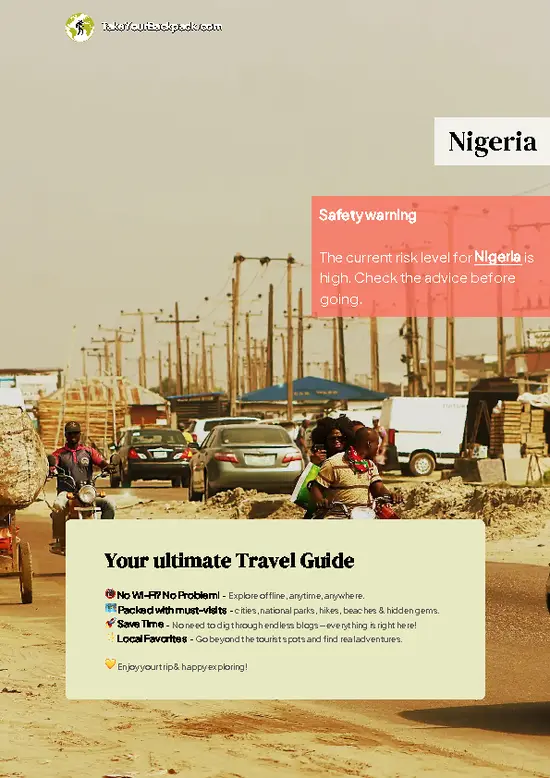
The current risk level for Nigeria is high. Check the advice before going.


Get your Nigeria guide
89 ranked highlights, routes & tips, works offline (332 pages)
Loading the map 🌍
CLICK TO FILTER
cities
towns
landmarks
national parks
hikes
beaches
attractions
festivals
regions
SHOW COUNTRY’S BESTSHOW ALL

✨ Why go?
Ranked #5 city in Nigeria
Reasons people choose to visit here

Birnin Kebbi serves as a gateway for backpackers exploring Nigeria’s rich landscapes and culture. Its walkable streets make it easy to navigate, while small-scale hostels and guesthouses offer a cozy, affordable stay. The town’s local food scene is a treat; savor spicy jollof rice or fresh suya from street vendors. Many travelers linger a few days, soaking in the friendly atmosphere and connecting with fellow adventurers. It’s ideal for slow travelers and solo explorers seeking a blend of culture and nature, with nearby hikes and cultural sites just a short ride away.
Want to include Birnin Kebbi in your Nigeria route?
Create a personalized Nigeria itinerary that includes Birnin Kebbi and the places that fit your trip — based on your travel style, budget, and available time. Get your route in seconds.

Generate my trip

💡 HighlightsPlaces and moments you shouldn't skip

  1. Emir’s Palace (Gidan Sarkin Kebbi) — The working seat of the Emir is the best place to feel the city’s traditional authority: impressive Hausa-Sahelian architecture, regular ceremonial activity (especially around Eid), and a good spot to observe local dress and chieftaincy culture. Respectful photography and asking permission go a long way.
  2. Birnin Kebbi Central Market — A chaotic, colorful hub where you can buy fresh produce, grains, spices, and northern textiles. It’s the best place for people-watching, bargaining practice, and seeing how the local food economy moves every morning.
  3. Rima Riverfront — The riverside where town life meets water: small boat traffic, fishermen, riverside markets and calm sunset views. Walking the riverbank gives a sense of local rhythms that you won’t get in
read more 👉
  1. Emir’s Palace (Gidan Sarkin Kebbi) — The working seat of the Emir is the best place to feel the city’s traditional authority: impressive Hausa-Sahelian architecture, regular ceremonial activity (especially around Eid), and a good spot to observe local dress and chieftaincy culture. Respectful photography and asking permission go a long way.
  2. Birnin Kebbi Central Market — A chaotic, colorful hub where you can buy fresh produce, grains, spices, and northern textiles. It’s the best place for people-watching, bargaining practice, and seeing how the local food economy moves every morning.
  3. Rima Riverfront — The riverside where town life meets water: small boat traffic, fishermen, riverside markets and calm sunset views. Walking the riverbank gives a sense of local rhythms that you won’t get in an office district.
  4. Federal University Birnin Kebbi (FUBK) campus — A tidy, green campus with student-led events, small galleries and cafés; good for a relaxed stroll, striking everyday architecture, and catching young-city energy away from markets and government buildings.
  5. Birnin Kebbi Sports Stadium — Local football matches and state events happen here. If you can time a match or community event, you’ll see authentic local fandom and social life—loud, friendly, and very local.
  6. Main Mosque (Central/Juma’a Mosque) — The mosque is both spiritual heart and social meeting place; attending Friday prayer (with appropriate dress and respect) or observing courtyard life offers insight into local religious practice and community networks.
  7. Livestock Market — A cornerstone of northern commerce: lively cattle and small-stock trading, bargaining rituals, and transport logistics. It’s raw, authentic trading culture—best seen early in the day when business is busiest.
  8. Traditional Craft Workshops — Small leatherworkers, weavers and tailors operate in clusters around town. Visiting a workshop (with permission) lets you watch techniques passed down generations and pick up durable, locally made souvenirs.
  9. Kebbi State Secretariat / Civic Quarter — The administrative heart with a mix of modern and colonial-era buildings. Walking the civic quarter reveals layers of recent history and offers a look at where local politics and public life happen.
  10. Old Residential Quarters (traditional neighborhoods) — Narrow lanes, courtyard homes, and everyday life—these neighborhoods are where you’ll see household crafts, traditional architecture, and real neighborhood rhythms that guide daily Birnin Kebbi life.
A few excellent day trips outside the city: Argungu (famous for the fishing festival and the Kanta Museum), nearby Gwandu with its historic emirate quarter, and surrounding rural markets—each reachable from Birnin Kebbi and worth a day’s exploration.
Spotted a mistake or missing something? Contact us.

🏘️ NeighborhoodsWhere things are and how it's laid out

Birnin Kebbi offers a unique blend of culture and community, perfect for backpackers seeking authentic experiences.

Gwandu: This bustling area is the heart of Birnin Kebbi. Expect vibrant markets and local eateries. It’s affordable and walkable, making it ideal for short stays. The nightlife is low-key, with a few bars where you can mingle with locals.

Kalgo: A quieter neighborhood, Kalgo is perfect for those looking to recharge. It’s less touristy, offering a more laid-back vibe. Transport options are limited, but the peace is worth it for longer stays.

Birnin Kebbi Town Center: The commercial hub, filled with shops and cafes. It’s lively and accessible, great for short visits. The energy here is palpable, especially during market days, but it can get noisy.

Each area has its own charm, … read more 👉
Birnin Kebbi offers a unique blend of culture and community, perfect for backpackers seeking authentic experiences.

Gwandu: This bustling area is the heart of Birnin Kebbi. Expect vibrant markets and local eateries. It’s affordable and walkable, making it ideal for short stays. The nightlife is low-key, with a few bars where you can mingle with locals.

Kalgo: A quieter neighborhood, Kalgo is perfect for those looking to recharge. It’s less touristy, offering a more laid-back vibe. Transport options are limited, but the peace is worth it for longer stays.

Birnin Kebbi Town Center: The commercial hub, filled with shops and cafes. It’s lively and accessible, great for short visits. The energy here is palpable, especially during market days, but it can get noisy.

Each area has its own charm, so choose based on your mood and travel style.

⌛️ 1 dayWhat you can realistically do in a day

Birnin Kebbi, the capital of Kebbi State, pulses with a rich cultural tapestry and a sense of community that feels both welcoming and vibrant. Start your day at the bustling Central Market, where the air is thick with the scent of spices and fresh produce. Engage with local vendors; their stories add depth to the colorful stalls.

After soaking in the market’s energy, head to the nearby Argungu Fishing Festival site. Even if it’s not festival time, the serene riverbanks offer a peaceful spot for reflection. Grab a local snack—perhaps some suya—and enjoy the view.

In the afternoon, explore the historic Kanta Museum, where artifacts tell tales of the region’s past. The museum’s quiet atmosphere contrasts beautifully with the lively streets outside.

As evening approaches, wander through the … read more 👉
Birnin Kebbi, the capital of Kebbi State, pulses with a rich cultural tapestry and a sense of community that feels both welcoming and vibrant. Start your day at the bustling Central Market, where the air is thick with the scent of spices and fresh produce. Engage with local vendors; their stories add depth to the colorful stalls.

After soaking in the market’s energy, head to the nearby Argungu Fishing Festival site. Even if it’s not festival time, the serene riverbanks offer a peaceful spot for reflection. Grab a local snack—perhaps some suya—and enjoy the view.

In the afternoon, explore the historic Kanta Museum, where artifacts tell tales of the region’s past. The museum’s quiet atmosphere contrasts beautifully with the lively streets outside.

As evening approaches, wander through the neighborhoods of Gesse and Kangiwa. The sunset casts a warm glow, perfect for capturing the essence of daily life. End your day at a local eatery, savoring traditional dishes while listening to the laughter and chatter around you. This day in Birnin Kebbi isn’t just about sights; it’s about connecting with the heart of Nigeria.
Turn your Birnin Kebbi visit into an Nigeria adventure
Build a complete Nigeria route with Birnin Kebbi, hidden gems, must-see destinations, and realistic travel times included.

Generate my trip

🌤️ When to go?When to go for the best experience


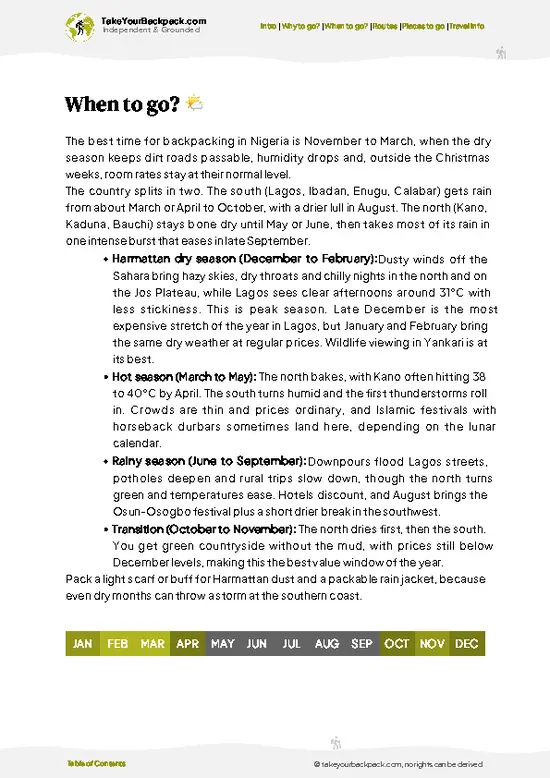
  • Weather: Birnin Kebbi’s climate swings between a scorching dry season and a brief, intense rainy season. The dry months from November to February offer clear skies and minimal humidity, making trekking and exploring more comfortable. Avoid the rainy season (June to September) when heavy downpours turn roads to mud and outdoor plans soggy.

  • Temperature: Daytime highs in the dry season hover around 30-35°C (86-95°F), cooling off to a pleasant 15-20°C (59-68°F) at night. The rainy season spikes humidity and daytime temps can feel hotter, even if the thermometer dips slightly.

  • Daylight Hours: Near the equator, daylight stays steady year-round, roughly 12 hours a day. This consistency means you can plan hikes or market visits without worrying about early nightfall cutting your day short.

read more 👉

  • Weather: Birnin Kebbi’s climate swings between a scorching dry season and a brief, intense rainy season. The dry months from November to February offer clear skies and minimal humidity, making trekking and exploring more comfortable. Avoid the rainy season (June to September) when heavy downpours turn roads to mud and outdoor plans soggy.

  • Temperature: Daytime highs in the dry season hover around 30-35°C (86-95°F), cooling off to a pleasant 15-20°C (59-68°F) at night. The rainy season spikes humidity and daytime temps can feel hotter, even if the thermometer dips slightly.

  • Daylight Hours: Near the equator, daylight stays steady year-round, roughly 12 hours a day. This consistency means you can plan hikes or market visits without worrying about early nightfall cutting your day short.

  • Crowds: Tourist traffic is low year-round, but the dry season sees a slight uptick as Nigerian and regional visitors escape the rains. You’ll find more lively markets and local festivals during this time, adding cultural texture without overwhelming crowds.

  • Seasonal Activities: The dry season aligns with key local events like the Argungu Fishing Festival, a spectacle of skill and tradition that’s worth timing your visit for. It’s a sensory overload of dust, sweat, and celebration that brings the town alive.

  • Price Fluctuations: Accommodation and transport costs rise modestly during the dry season and festival periods due to increased demand. Booking ahead can lock in better rates and secure spots in the limited guesthouses.


Pro-tip: Aim for late January to early February—after the dust settles from the festival but before the heat peaks—when Birnin Kebbi feels most accessible, vibrant, and manageable for a backpacker’s rhythm.


source: climatestotravel.comJANJanuary: excellent for travelingFEBFebruary: excellent for travelingMARMarch: highly recommended for travelingAPRApril: good for travelingMAYMay: fair for travelingJUNJune: below average for travelingJULJuly: below average for travelingAUGAugust: below average for travelingSEPSeptember: fair for travelingOCTOctober: good for travelingNOVNovember: highly recommended for travelingDECDecember: highly recommended for traveling
when-to-go

✈️ The backpacker research shortcutNigeria Travel Guide

An offline-friendly backpacking guide with optimized travel routes, ranked highlights, transport advice, and the best areas to stay.
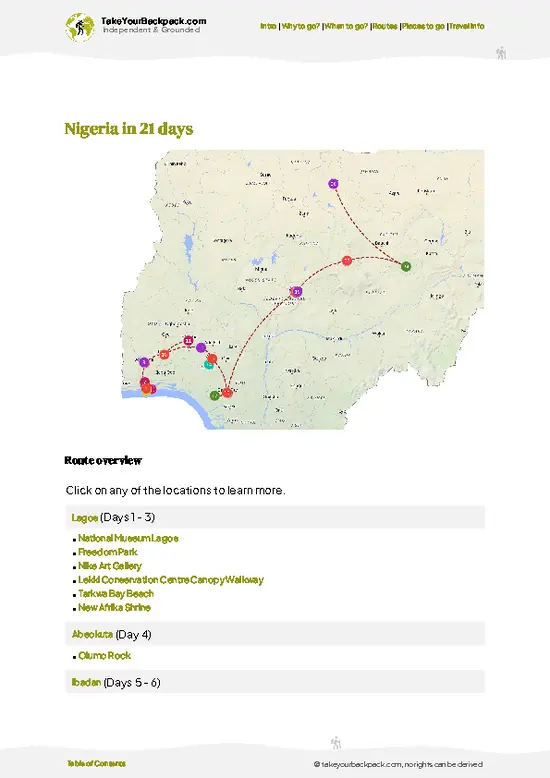
example page 0 from our offline Travel Guide for Nigeria
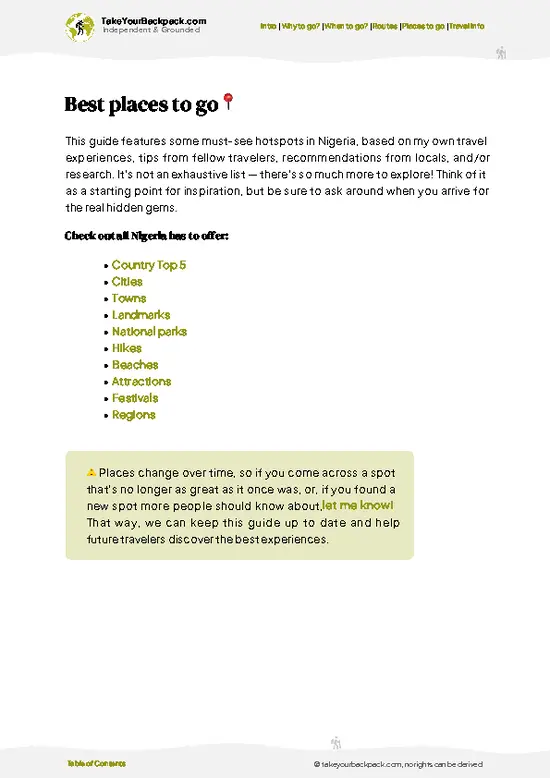
example page 1 from our offline Travel Guide for Nigeria
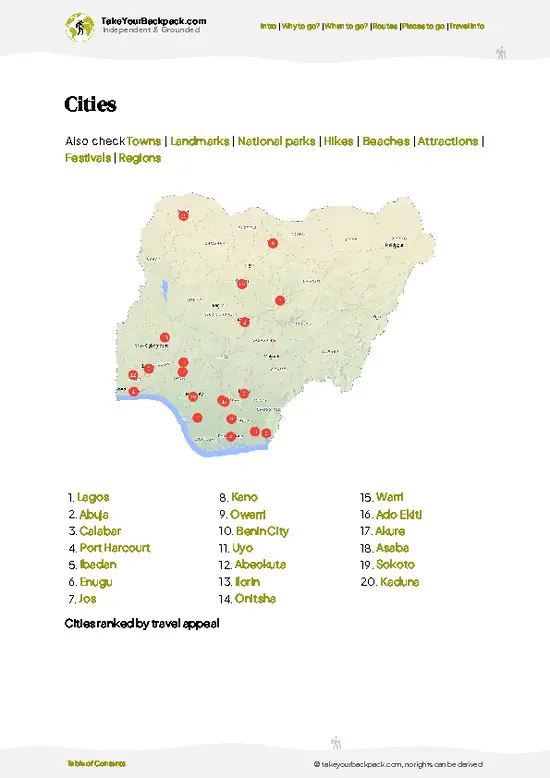
example page 2 from our offline Travel Guide for Nigeria
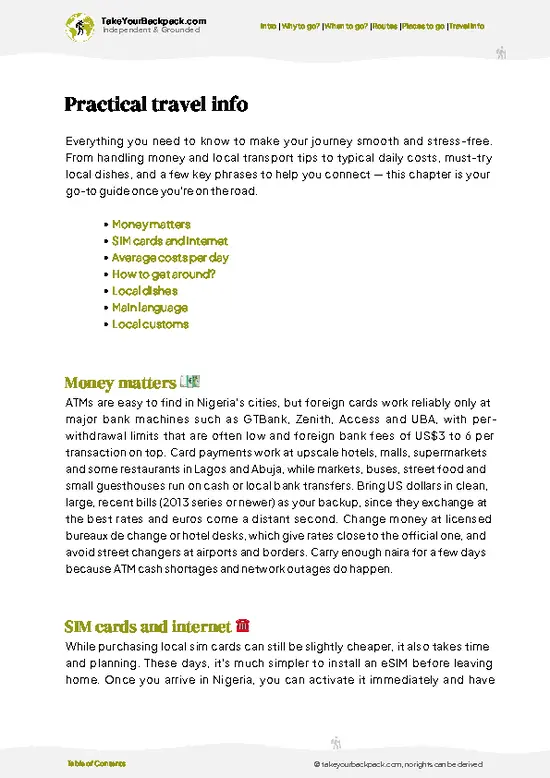
example page 3 from our offline Travel Guide for Nigeria
example page 4 from our offline Travel Guide for Nigeria
example page 5 from our offline Travel Guide for Nigeria
example page 6 from our offline Travel Guide for Nigeria
example page 7 from our offline Travel Guide for Nigeria
The digital guide (332 pages) contains:
89 highlights, ranked by travel appeal
Optimized 7, 14 & 21-day travel routes
Cities, national parks, landmarks, beaches
How to get around
Offline-friendly for travel without Wi-Fi
👉 Click to see all 30+ guide features

📅 Plan smarter in minutes, not weeks
Month by month travel advice
Festivals & national holidays
Budget expectations

🗺️ Go to the right places, skip the overrated ones
Honest pros & cons of destinations
Top hikes, parks & viewpoints
Lesser-known places most travelers miss
Clear “worth it vs skip it” guidance

🛏️ Travel smoothly without rookie mistakes
Best areas to stay
Transport systems explained simply
Common scams & safety advice
SIM cards, money & practical tips

🌍 Understand the country, not just visit it
Culture & traditions
52 Essential phrases & customs
Festivals worth planning around
Traveler-friendly historical context
Insights that make places more meaningful

📱 Built for real travel conditions
Fully downloadable PDF
Works completely offline
Optimized for phone use
Useful in remote areas & buses
Everything in one place
Save weeks of stressful planning
Get instant access to your full guide. 30‑day money-back guarantee.


By proceeding you agree to our terms.
Sent to your inbox immediately after payment • 100% Secure Checkout
Best Backpacking Travel Advisor 2025 tourism awardBest Backpacking
Travel Advisor
2025
What others say about Take Your Backpack Guides:
⭐⭐⭐⭐⭐
Fantastic, amazing amount of information!
⭐⭐⭐⭐⭐
My goodness this is amazing, it's what I've been looking for hats off too you!
⭐⭐⭐⭐⭐
I think this is absolutely BRILLIANT
⭐⭐⭐⭐
Very complete and informative. It's still missing places, but I gotta to commend you
⭐⭐⭐⭐⭐
This is truly amazing, thank you, can't wait to explore it with my kids!
⭐⭐⭐⭐⭐
Awesome resource, thank you!
⭐⭐⭐⭐⭐
This is amazing! Can't wait to explore the ones I haven't seen
⭐⭐⭐⭐
I love this! Well done, great idea.
⭐⭐⭐⭐⭐
Thanks for taking the time to make this gem!
⭐⭐⭐⭐⭐
This might be the best website I've ever seen.
⭐⭐⭐⭐⭐
Congratulations, and thank you so much for your work; it's incredibly valuable.
⭐⭐⭐⭐
In all seriousness I think you did a great job pointing out the important spots
⭐⭐⭐⭐⭐
10/10 very good
⭐⭐⭐⭐⭐
As someone who's only just starting to visit regularly this is awesome, thank you.
⭐⭐⭐⭐
Thank you very much! I'm going to visit my dad, it's going to be very useful!
⭐⭐⭐⭐⭐
This is really cool! We'll be travelling for the first time and this definitely come in handy.
⭐⭐⭐⭐⭐
You are now our minister of culture, congratulations 👨‍💼
⭐⭐⭐⭐⭐
Just wanted to tell you that this is a pearl! Going to follow your recommendations.
⭐⭐⭐⭐⭐
This is so cool. I'll definitely be using the resource for my travels soon.
⭐⭐⭐⭐⭐
This is very impressive! Good work.
⭐⭐⭐⭐⭐
This is an amazing and informative site. Very well done!

🛏️ Where to stay?Best areas and accommodation options

In Birnin Kebbi, the best spot for backpackers is the area around the central market and the nearby neighborhoods stretching toward the riverfront. This zone pulses with local life—early mornings bring the scent of fresh spices and grilled meat from street vendors, while the late afternoon light softens the dusty streets into a warm amber glow. Staying here means you’re steps away from the heart of the city’s rhythm, where you can easily mingle with locals and fellow travelers alike.

Why this area? It’s the safest stretch for visitors, with a steady police presence and well-trodden paths that … read more 👉
In Birnin Kebbi, the best spot for backpackers is the area around the central market and the nearby neighborhoods stretching toward the riverfront. This zone pulses with local life—early mornings bring the scent of fresh spices and grilled meat from street vendors, while the late afternoon light softens the dusty streets into a warm amber glow. Staying here means you’re steps away from the heart of the city’s rhythm, where you can easily mingle with locals and fellow travelers alike.

Why this area? It’s the safest stretch for visitors, with a steady police presence and well-trodden paths that keep the vibe relaxed but lively. You’ll find modest guesthouses and a handful of budget hostels that cater to solo travelers, offering simple but clean accommodations. The social scene here isn’t about nightlife—think more along the lines of shared meals, market banter, and impromptu street performances. Compared to the quieter, more residential districts, this area keeps you plugged into the city’s pulse without the hassle of long commutes or feeling isolated. It’s where the real Birnin Kebbi experience unfolds, grounded in everyday life rather than tourist façades.

🚌 Getting aroundTransportation options and practical tips

Birnin Kebbi moves at its own rhythm—neither frantic nor sluggish, but a steady pulse shaped by market hours, mosque calls, and the slow churn of daily life along the Sokoto River. The sun casts long shadows by mid-afternoon, and the air thickens with the scent of grilled fish and spices. Here, time is measured less by strict schedules and more by the ebb and flow of people weaving through dusty streets and riverbanks. It’s a place where intuition guides you more than timetables, but knowing the local transit options can turn wandering into a smooth, purposeful journey.


  • Walking: The heart of Birnin Kebbi is compact enough to explore on foot. Streets are uneven and dust-laden, so sturdy shoes are a must. Walking lets you soak in the textures—the chatter of traders, the clatter of motorbikes,
read more 👉
Birnin Kebbi moves at its own rhythm—neither frantic nor sluggish, but a steady pulse shaped by market hours, mosque calls, and the slow churn of daily life along the Sokoto River. The sun casts long shadows by mid-afternoon, and the air thickens with the scent of grilled fish and spices. Here, time is measured less by strict schedules and more by the ebb and flow of people weaving through dusty streets and riverbanks. It’s a place where intuition guides you more than timetables, but knowing the local transit options can turn wandering into a smooth, purposeful journey.


  • Walking: The heart of Birnin Kebbi is compact enough to explore on foot. Streets are uneven and dust-laden, so sturdy shoes are a must. Walking lets you soak in the textures—the chatter of traders, the clatter of motorbikes, and the occasional waft of smoke from roadside grills. It’s free, flexible, and the best way to catch the town’s authentic pulse.


  • Motorcycle Taxis (Okada): These are the quickest way to dart through traffic and reach destinations beyond walking distance. Expect to negotiate fares upfront; rides typically cost between 100 to 300 NGN depending on distance. They operate from dawn until dusk, but avoid night rides unless you’re confident in local conditions. The wind in your face and the jostle of the bike make every trip an adventure, but hold tight—roads can be rough.


  • Shared Minibuses (Keke NAPEP): These three-wheeled vehicles run fixed routes connecting main neighborhoods and markets. Fares hover around 50 NGN, making them a budget-friendly choice. They start early, around 6 AM, and run until early evening. Expect a bumpy ride packed with locals, but it’s an immersive way to travel like a resident and catch the town’s rhythm.


  • Local Buses: For longer trips within Kebbi State or to neighboring towns, local buses depart from the main station near the market. They leave when full rather than on a strict schedule, so patience is key. Tickets cost roughly 500 to 1000 NGN depending on distance. The buses are basic but reliable, offering a window into regional life beyond the town’s core.


  • Boat Transport: Along the Sokoto River, small boats ferry passengers and goods between riverside communities. This option is less about speed and more about experience—expect slow, scenic rides with the smell of river water and wood smoke. Prices vary, but a short trip typically costs under 200 NGN. Boats run mostly during daylight hours, weather permitting.

👛 Costs (as of 22 February 2026)How expensive it really is

Backpacking in Birnin Kebbi, Nigeria, offers a raw, authentic experience where costs stay modest but the environment demands practical budgeting to keep things smooth.
  • Dorm Accommodation: Options are limited and basic, often guesthouses rather than formal hostels. Expect to pay around $5 to $10 per night. Rooms might lack modern amenities, so bring your patience and a good mosquito net.
  • Meals: Street food and local eateries dominate. A filling meal of local staples like tuwo and miyan kuka will run you about $1 to $3. Western-style meals or imported items are rare and pricier, so stick to local flavors for both authenticity and savings.
  • Local Transport: Motorbike taxis (okadas) and shared minibuses are the norm. Short rides cost roughly $0.50 to $1.50. Be ready for a bumpy, lively ride
read more 👉
Backpacking in Birnin Kebbi, Nigeria, offers a raw, authentic experience where costs stay modest but the environment demands practical budgeting to keep things smooth.
  • Dorm Accommodation: Options are limited and basic, often guesthouses rather than formal hostels. Expect to pay around $5 to $10 per night. Rooms might lack modern amenities, so bring your patience and a good mosquito net.
  • Meals: Street food and local eateries dominate. A filling meal of local staples like tuwo and miyan kuka will run you about $1 to $3. Western-style meals or imported items are rare and pricier, so stick to local flavors for both authenticity and savings.
  • Local Transport: Motorbike taxis (okadas) and shared minibuses are the norm. Short rides cost roughly $0.50 to $1.50. Be ready for a bumpy, lively ride through dusty streets with the scent of spices and exhaust in the air.
  • Basic Activities/Entry Fees: Cultural sites and markets generally have no or minimal entry fees, often under $1. Guided tours are rare and usually arranged informally, so budget a bit extra if you want a local to show you around.
  • Miscellaneous Expenses: Bottled water, snacks, and occasional phone credit top this list. Plan on spending about $1 to $3 daily. Keep cash handy, as card payments are almost nonexistent.

Birnin Kebbi’s daily budget for a backpacker comfortably ranges from $8 to $18. This keeps you covered for basic lodging, hearty local meals, transport, and a few small extras without surprises. The town’s simplicity means you pay for authenticity and adaptability rather than polished tourist infrastructure.


source: nigerianembassyusa.org
⚠️ Prices can change and everyone travels differently, so take this as a rough guide. Hope it helps you plan your adventure!

🚌 Day tripsShort trips worth adding

Birnin Kebbi is a fantastic launchpad for exploring the rich tapestry of Nigeria’s landscapes and cultures. Here are some day trips that will elevate your experience.

Argungu Festival
If you’re in town during the Argungu Festival, don’t miss it. This vibrant celebration of fishing and culture is a sensory overload. Picture the air thick with the smell of grilled fish, the sound of drums echoing, and the sight of thousands of fishermen racing to catch the biggest fish. It’s a spectacle that lasts a few days, typically in March. Just a 90-minute drive from Birnin Kebbi, you’ll want to budget around 1,500 Naira for transport. First-timers often overlook the festival’s timing, so check the dates to avoid missing out.


Kebbi River
A day spent along the Kebbi River is pure bliss. Rent a … read more 👉
Birnin Kebbi is a fantastic launchpad for exploring the rich tapestry of Nigeria’s landscapes and cultures. Here are some day trips that will elevate your experience.

Argungu Festival
If you’re in town during the Argungu Festival, don’t miss it. This vibrant celebration of fishing and culture is a sensory overload. Picture the air thick with the smell of grilled fish, the sound of drums echoing, and the sight of thousands of fishermen racing to catch the biggest fish. It’s a spectacle that lasts a few days, typically in March. Just a 90-minute drive from Birnin Kebbi, you’ll want to budget around 1,500 Naira for transport. First-timers often overlook the festival’s timing, so check the dates to avoid missing out.


Kebbi River
A day spent along the Kebbi River is pure bliss. Rent a canoe and glide through the calm waters, surrounded by lush greenery and the occasional splash of fish. The river is about 30 minutes from Birnin Kebbi, making it an easy escape. Expect to spend around 2,000 Naira for canoe rental and snacks. The best time to visit is during the dry season, when the water is clear and the wildlife is active. Many backpackers forget to bring sunscreen, so don’t make that mistake!


Kanta Museum
Dive into the local history at the Kanta Museum, just a short 15-minute ride from the center. The museum houses artifacts that tell the story of Kebbi’s rich past, from ancient times to the present. Entry is usually around 500 Naira. The museum is best visited in the morning when it’s less crowded, allowing you to soak in the details without distraction. First-timers often rush through; take your time to appreciate the exhibits.
Want to know what more Nigeria offers?
The Nigeria Travel Guide describes 89 highlights, from cities to national parks, from beaches to hikes

Get the Travel Guide -

🍲 FoodWhat to Eat & Drink

In Birnin Kebbi, food is a lively negotiation between bold flavors and simple, hearty ingredients. The city’s signature dishes revolve around tuwo shinkafa, a soft rice pudding that acts as the perfect vehicle for rich, spicy stews like miyan kuka—a thick, tangy soup made from baobab leaves and powdered millet. These dishes aren’t just meals; they’re a taste of the region’s history and climate, earthy and warming.

Backpackers will find themselves drawn to the bustling local markets and street corners where vendors serve up freshly grilled meats, spicy suya skewers, and steaming bowls of fura da nono—a refreshing millet and fermented milk drink that cools the palate after a fiery bite. Casual eateries here don’t fuss with menus; it’s all about what’s fresh and popular that day, served with … read more 👉
In Birnin Kebbi, food is a lively negotiation between bold flavors and simple, hearty ingredients. The city’s signature dishes revolve around tuwo shinkafa, a soft rice pudding that acts as the perfect vehicle for rich, spicy stews like miyan kuka—a thick, tangy soup made from baobab leaves and powdered millet. These dishes aren’t just meals; they’re a taste of the region’s history and climate, earthy and warming.

Backpackers will find themselves drawn to the bustling local markets and street corners where vendors serve up freshly grilled meats, spicy suya skewers, and steaming bowls of fura da nono—a refreshing millet and fermented milk drink that cools the palate after a fiery bite. Casual eateries here don’t fuss with menus; it’s all about what’s fresh and popular that day, served with a side of lively chatter and the occasional bargaining.

Drinking culture is straightforward but social. Sharing a calabash of zobo (hibiscus tea) or a cold malt drink is common, signaling friendship and hospitality. Expect to eat with your right hand, scooping up food with tuwo, and don’t be surprised if strangers invite you to join their meal—here, food is a communal experience, not just fuel.

🛡️ SafetyScams, Hazards, and Annoyances

Birnin Kebbi is generally safe, but awareness is key. Stick to well-lit areas after dark, especially if you’re solo. The market can be bustling, so keep your belongings close; pickpockets are rare but can happen. Be cautious of overly friendly locals offering unsolicited help—sometimes, it leads to unexpected fees. When haggling, keep a light-hearted tone; it’s part of the culture. Embrace the atmosphere, but trust your instincts. A confident demeanor goes a long way in navigating this vibrant town.

Other Nigerian cities near Birnin Kebbi

Explore more nearby:

  • Sokoto—Sultan’s palace, arid landscapes, Islamic learning centers| 131 km away
  • Kontagora—Emirate seat, river valleys, agricultural trade| 265 km away
  • Gusau—grain markets, Hausa architecture, dry season festivals| 271 km away

💡 Not sure where to go next?
Create a personalized itinerary for Nigeria including Birnin Kebbi and the places that fit your trip.

Generate my itinerary

👉 Discover all cities

Or checkout all Nigeria has to offer (think cities, towns, villages, national parks, hikes, beaches, festivals)
Country photo of Nigeria

We 💚 feedbackFinal thoughts on visiting Birnin Kebbi

Birnin Kebbi has a pulse that’s hard to ignore. The air hums with the scent of spices and the laughter of locals. Don’t miss the vibrant market; it’s a sensory overload in the best way. Just be ready for the heat—it’s relentless but rewarding.

✍️ Help improve this page!
The information on this page is based on in-depth research, insights shared by experienced travelers, and feedback from the local travel community in Nigeria. While every effort is made to keep the information accurate and current, conditions can change — so if you spot anything incorrect or outdated, please get in touch.


🙋‍♂️ Give feedback

👋 Meet the founderWho’s Behind Take Your Backpack?

Johan, backpacker and founder of TakeYourBackpackHi, I’m Johan (Netherlands 🇳🇱), the creator of TakeYourBackpack. Over the past decade, I’ve backpacked through 80+ countries across six continents, gaining extensive experience with independent travel, long-term trips, and overland routes.

This site is built on a combination of firsthand travel experience and carefully curated insights from other backpackers. Many guides are based on places I’ve personally visited, while others bring together tips, observations, and practical advice shared by trusted travelers I’ve met along the way.

The goal is to provide realistic, experience-driven guidance — not generic itineraries — so you can explore destinations with better context, clearer expectations, and more confidence.

Get full Nigeria guide •
Instant download • 89 highlights • Full Offline guide