×

Nigeria🇳🇬 | citiesSokotoSultan’s palace, arid landscapes, Islamic learning centers | things to do and best time to go

Explore MinnaExplore Bauchi

Backpacking in Sokoto
👌 Worth visitingcity ranked #21
By Johan Kruseman 🇳🇱 | Updated June 10, 2026

A call to prayer ripples through the haze as you dodge motorbikes and the scent of grilled suya clings to your shirt. Sokoto sits in Nigeria’s far northwest, where the Sahel brushes up against city life. For backpackers, Sokoto is raw and real—less polished than Abuja, less frenetic than Kano. The Sultan’s Palace and the National Museum anchor its history, but the city’s rhythm is slow, social, and deeply local. Costs are low, English is spoken, but you’ll stand out. Safety is reasonable with street smarts, but nightlife is minimal and solo travelers may feel isolated. Sokoto rewards curiosity, not comfort.

Discover everything you want to know in the 📖 Nigeria Travel Guide.
Safety warning

The current risk level for Nigeria is high. Check the advice before going.


Get your Nigeria guide
89 ranked highlights, routes & tips, works offline (332 pages)
Loading the map 🌍
CLICK TO FILTER
cities
towns
landmarks
national parks
hikes
beaches
attractions
festivals
regions
SHOW COUNTRY’S BESTSHOW ALL

✨ Why go?
Ranked #21 city in Nigeria
What sets this place apart

Sokoto is a strategic stop for backpackers weaving through Nigeria. It offers a unique blend of affordability and authenticity. The hostels here are budget-friendly and often buzzing with fellow travelers, making it easy to swap stories and tips. The walkability of the city means you can explore local markets and street food without breaking a sweat. Plus, the nightlife is vibrant enough to keep you entertained without draining your wallet. As a basecamp, Sokoto opens doors to day trips that showcase the region’s rich culture and landscapes. It’s not just a stop; it’s a gateway to deeper experiences.
Want to include Sokoto in your Nigeria route?
Create a personalized Nigeria itinerary that includes Sokoto and the places that fit your trip — based on your travel style, budget, and available time. Get your route in seconds.

Generate my trip

💡 HighlightsEssential experiences to have while visiting Sokoto

  1. Tomb of Shehu Usmanu Dan Fodio — The spiritual heart of Sokoto. Pilgrims and history lovers visit this simple, respected mausoleum to connect with the founder of the Sokoto Caliphate and to feel the city’s deep Islamic and scholarly heritage.
  2. Sultan’s Palace (Gidan Sultan) — The living seat of the Sokoto Sultanate. You can walk the perimeter, see the government and ceremonial quarters from outside (and sometimes get a guided look at palace life), which gives a real sense of the caliphate’s continuing role in local identity.
  3. Sultan Bello Mosque (Sokoto Central/Friday Mosque) — One of the city’s most beautiful active mosques. Come during prayer times to watch the rhythms of communal worship, or admire the architecture and courtyard atmosphere when it’s quieter.
  4. Usmanu Danfodiyo University
read more 👉
  1. Tomb of Shehu Usmanu Dan Fodio — The spiritual heart of Sokoto. Pilgrims and history lovers visit this simple, respected mausoleum to connect with the founder of the Sokoto Caliphate and to feel the city’s deep Islamic and scholarly heritage.
  2. Sultan’s Palace (Gidan Sultan) — The living seat of the Sokoto Sultanate. You can walk the perimeter, see the government and ceremonial quarters from outside (and sometimes get a guided look at palace life), which gives a real sense of the caliphate’s continuing role in local identity.
  3. Sultan Bello Mosque (Sokoto Central/Friday Mosque) — One of the city’s most beautiful active mosques. Come during prayer times to watch the rhythms of communal worship, or admire the architecture and courtyard atmosphere when it’s quieter.
  4. Usmanu Danfodiyo University (UDUS) campus — A green, intellectual campus with libraries, lecture halls and informal cafés. Walk the grounds, visit the botanical spots and chat with students — it’s a window into modern Sokoto life and scholarship.
  5. Sokoto Central Market — Where the city trades. The market smells, sounds and pulses with life: leather goods, local fabrics, spices and everyday foodstuffs. Great for bargain hunting, photography and seeing tradespeople at work (just be courteous when shooting).
  6. Traditional leather tanneries and craft quarters — Sokoto has working craft neighborhoods where hides are processed and craftsmen make leatherware, mats and simple dyes. Visiting these workshops offers tactile, real-world insight into local trades (go with a local guide for introductions).
  7. Old Town / Hausa Quarter — Narrow alleys, traditional compounds and courtyard houses: this is where you’ll see everyday urban history alive. Walk slowly, observe household crafts, and you’ll better understand how community and architecture shaped Sokoto life.
  8. Sokoto Riverfront and Rima river areas — The river shapes the city’s ecology and livelihoods. Stroll the banks, watch fishermen, or take a short boat trip where available — the light at sunrise/sunset is excellent for photos and atmosphere.
  9. Sokoto State Museum (local history displays) — A modest museum that collects regional artifacts, manuscripts and objects linked to the caliphate and local culture. It’s not huge, but the curated pieces give useful context to sites you’ll see around town.
  10. Religious schools and small madrasah courtyards — Visiting (with permission) offers a close-up of Sokoto’s role as a center of Islamic learning. The madrasa courtyards, calligraphy, and manuscript culture are quiet, vivid reminders of the city’s scholarly traditions.
If you have time for day trips, nearby visitable highlights include Goronyo Dam (for riverscape views and fishing communities) and over in Kebbi State the towns of Birnin Kebbi and Argungu (famous for their market life and the Argungu fishing festival when it runs).
Spotted a mistake or missing something? Contact us.

🏘️ NeighborhoodsWhere things are and how it's laid out

Sokoto offers a blend of cultural richness and practical logistics for backpackers. Here’s how the neighborhoods stack up:

Gidan Kwaya: This area buzzes with local life. Affordable accommodations are plentiful, and you can easily walk to markets and eateries. It’s lively but not overwhelming, making it suitable for both short and longer stays.

Sabon Gari: Known for its vibrant atmosphere, this neighborhood is a hotspot for nightlife. Expect budget-friendly options and a mix of local and international cuisine. While it’s a bit busier, the transport links are solid, perfect for those wanting to explore further afield.

Gawon Nama: A quieter option, ideal for those seeking a more relaxed vibe. Accommodations here are slightly pricier but offer comfort. It’s walkable, with easy access to parks … read more 👉
Sokoto offers a blend of cultural richness and practical logistics for backpackers. Here’s how the neighborhoods stack up:

Gidan Kwaya: This area buzzes with local life. Affordable accommodations are plentiful, and you can easily walk to markets and eateries. It’s lively but not overwhelming, making it suitable for both short and longer stays.

Sabon Gari: Known for its vibrant atmosphere, this neighborhood is a hotspot for nightlife. Expect budget-friendly options and a mix of local and international cuisine. While it’s a bit busier, the transport links are solid, perfect for those wanting to explore further afield.

Gawon Nama: A quieter option, ideal for those seeking a more relaxed vibe. Accommodations here are slightly pricier but offer comfort. It’s walkable, with easy access to parks and cultural sites, making it great for longer stays.

Choose wisely based on your priorities, and enjoy the unique flavor of Sokoto!

⌛️ 1 dayWhat you can realistically do in a day

Sokoto, Nigeria, is a city steeped in history and culture, known for its vibrant Islamic heritage and the iconic Sultan’s Palace. Start your day in the bustling Sokoto Central Market, where the air is rich with the scent of spices and the sounds of lively bargaining. Grab a local breakfast of *fura* and *nono* to fuel your adventures.

In the afternoon, head to the historic Shehu Shagari National Museum. This often-overlooked gem offers a deep dive into the region’s past, showcasing artifacts that tell the story of Sokoto’s significance in the Sokoto Caliphate. Spend some time wandering the serene grounds, absorbing the atmosphere.

As the sun sets, make your way to the picturesque River Sokoto. The riverside is a local favorite for evening strolls, where you can watch fishermen at work and … read more 👉
Sokoto, Nigeria, is a city steeped in history and culture, known for its vibrant Islamic heritage and the iconic Sultan’s Palace. Start your day in the bustling Sokoto Central Market, where the air is rich with the scent of spices and the sounds of lively bargaining. Grab a local breakfast of *fura* and *nono* to fuel your adventures.

In the afternoon, head to the historic Shehu Shagari National Museum. This often-overlooked gem offers a deep dive into the region’s past, showcasing artifacts that tell the story of Sokoto’s significance in the Sokoto Caliphate. Spend some time wandering the serene grounds, absorbing the atmosphere.

As the sun sets, make your way to the picturesque River Sokoto. The riverside is a local favorite for evening strolls, where you can watch fishermen at work and enjoy the cool breeze. For dinner, seek out a local eatery in the Gidan Kaka neighborhood, where you can savor traditional dishes like *suya* and *jollof rice*. This blend of experiences will leave you with a rich tapestry of memories from your day in Sokoto.
Turn your Sokoto visit into an Nigeria adventure
Build a complete Nigeria route with Sokoto, hidden gems, must-see destinations, and realistic travel times included.

Generate my trip

🌤️ When to go?Choosing the right time of year


  • Topic: Weather – Sokoto’s climate is hot and dry most of the year. The best window is during the cooler dry season from November to February, when temperatures dip to a more bearable 25-30°C (77-86°F).

  • Topic: Temperature – Avoid the scorching months of March to May, where highs can soar above 40°C (104°F), making daytime trekking exhausting and risky.

  • Topic: Daylight Hours – Daylight stays steady year-round, roughly 11-12 hours, so timing won’t affect how much you can explore daily.

  • Topic: Crowds – Sokoto isn’t a tourist hotspot, so crowds are minimal year-round, but local festivals in December can draw lively, authentic gatherings.

  • Topic: Seasonal Activities – The dry season aligns with cultural events and easier access to rural areas, enhancing your experience beyond just the
read more 👉

  • Topic: Weather – Sokoto’s climate is hot and dry most of the year. The best window is during the cooler dry season from November to February, when temperatures dip to a more bearable 25-30°C (77-86°F).

  • Topic: Temperature – Avoid the scorching months of March to May, where highs can soar above 40°C (104°F), making daytime trekking exhausting and risky.

  • Topic: Daylight Hours – Daylight stays steady year-round, roughly 11-12 hours, so timing won’t affect how much you can explore daily.

  • Topic: Crowds – Sokoto isn’t a tourist hotspot, so crowds are minimal year-round, but local festivals in December can draw lively, authentic gatherings.

  • Topic: Seasonal Activities – The dry season aligns with cultural events and easier access to rural areas, enhancing your experience beyond just the city.

  • Topic: Price Fluctuations – Prices for accommodation and transport stay relatively stable, but expect slight increases during festival periods due to local demand.


Pro-tip: Aim for the cool dry season to balance comfort and cultural immersion without paying a premium or battling heat exhaustion.


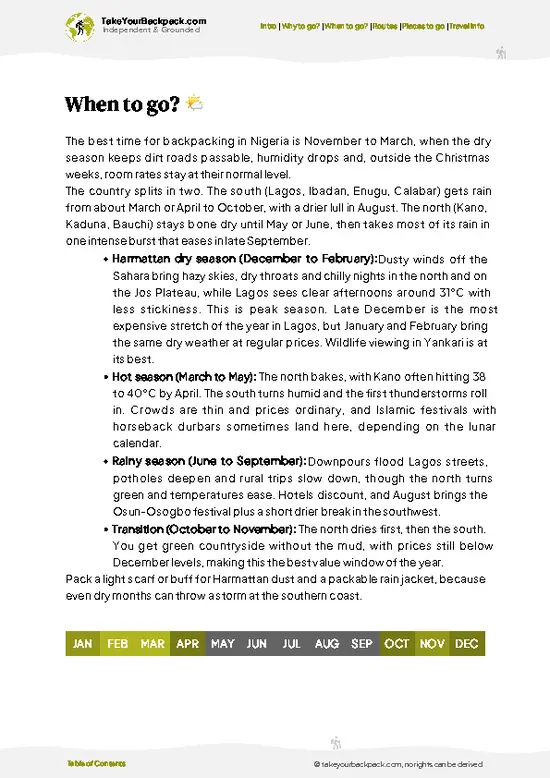
source: climatestotravel.comJANJanuary: excellent for travelingFEBFebruary: excellent for travelingMARMarch: fair for travelingAPRApril: below average for travelingMAYMay: below average for travelingJUNJune: good for travelingJULJuly: good for travelingAUGAugust: good for travelingSEPSeptember: good for travelingOCTOctober: highly recommended for travelingNOVNovember: excellent for travelingDECDecember: excellent for traveling
when-to-go

✈️ The backpacker research shortcutNigeria Travel Guide

An offline-friendly backpacking guide with optimized travel routes, ranked highlights, transport advice, and the best areas to stay.
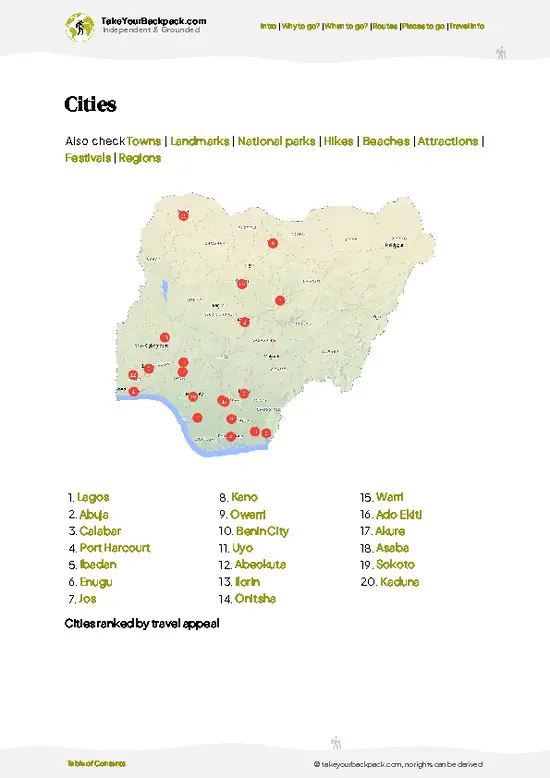
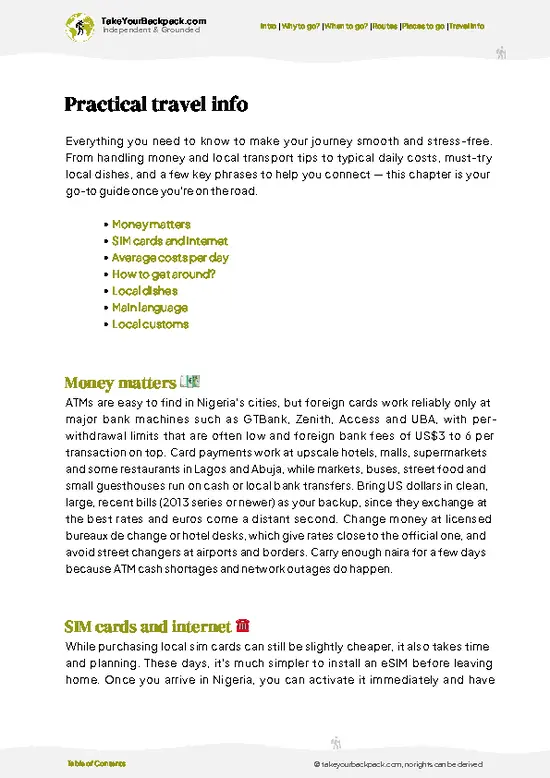
example page 0 from our offline Travel Guide for Nigeria
example page 1 from our offline Travel Guide for Nigeria
example page 2 from our offline Travel Guide for Nigeria
example page 3 from our offline Travel Guide for Nigeria
example page 4 from our offline Travel Guide for Nigeria
example page 5 from our offline Travel Guide for Nigeria
example page 6 from our offline Travel Guide for Nigeria
example page 7 from our offline Travel Guide for Nigeria
The digital guide (332 pages) contains:
89 highlights, ranked by travel appeal
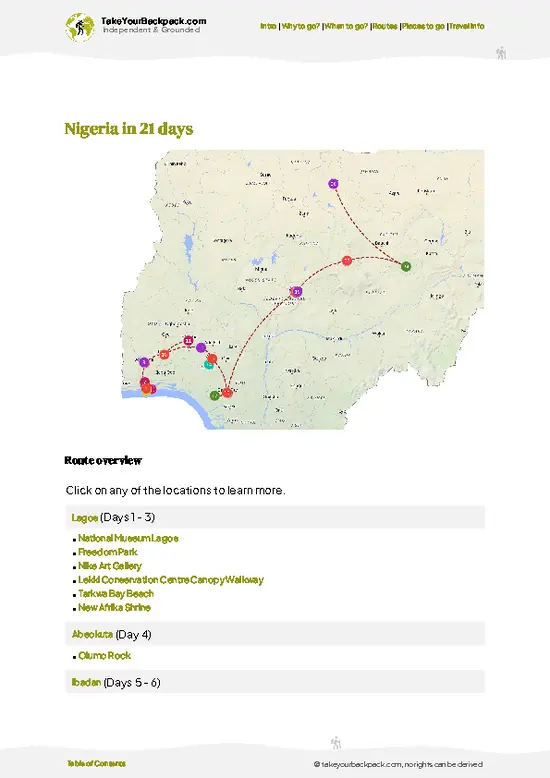
Optimized 7, 14 & 21-day travel routes
Cities, national parks, landmarks, beaches
How to get around
Offline-friendly for travel without Wi-Fi
👉 Click to see all 30+ guide features

📅 Plan smarter in minutes, not weeks
Month by month travel advice
Festivals & national holidays
Budget expectations

🗺️ Go to the right places, skip the overrated ones
Honest pros & cons of destinations
Top hikes, parks & viewpoints
Lesser-known places most travelers miss
Clear “worth it vs skip it” guidance

🛏️ Travel smoothly without rookie mistakes
Best areas to stay
Transport systems explained simply
Common scams & safety advice
SIM cards, money & practical tips

🌍 Understand the country, not just visit it
Culture & traditions
52 Essential phrases & customs
Festivals worth planning around
Traveler-friendly historical context
Insights that make places more meaningful

📱 Built for real travel conditions
Fully downloadable PDF
Works completely offline
Optimized for phone use
Useful in remote areas & buses
Everything in one place
Save weeks of stressful planning
Get instant access to your full guide. 30‑day money-back guarantee.


By proceeding you agree to our terms.
Sent to your inbox immediately after payment • 100% Secure Checkout
Best Backpacking Travel Advisor 2025 tourism awardBest Backpacking
Travel Advisor
2025
What others say about Take Your Backpack Guides:
⭐⭐⭐⭐⭐
Fantastic, amazing amount of information!
⭐⭐⭐⭐⭐
My goodness this is amazing, it's what I've been looking for hats off too you!
⭐⭐⭐⭐⭐
I think this is absolutely BRILLIANT
⭐⭐⭐⭐
Very complete and informative. It's still missing places, but I gotta to commend you
⭐⭐⭐⭐⭐
This is truly amazing, thank you, can't wait to explore it with my kids!
⭐⭐⭐⭐⭐
Awesome resource, thank you!
⭐⭐⭐⭐⭐
This is amazing! Can't wait to explore the ones I haven't seen
⭐⭐⭐⭐
I love this! Well done, great idea.
⭐⭐⭐⭐⭐
Thanks for taking the time to make this gem!
⭐⭐⭐⭐⭐
This might be the best website I've ever seen.
⭐⭐⭐⭐⭐
Congratulations, and thank you so much for your work; it's incredibly valuable.
⭐⭐⭐⭐
In all seriousness I think you did a great job pointing out the important spots
⭐⭐⭐⭐⭐
10/10 very good
⭐⭐⭐⭐⭐
As someone who's only just starting to visit regularly this is awesome, thank you.
⭐⭐⭐⭐
Thank you very much! I'm going to visit my dad, it's going to be very useful!
⭐⭐⭐⭐⭐
This is really cool! We'll be travelling for the first time and this definitely come in handy.
⭐⭐⭐⭐⭐
You are now our minister of culture, congratulations 👨‍💼
⭐⭐⭐⭐⭐
Just wanted to tell you that this is a pearl! Going to follow your recommendations.
⭐⭐⭐⭐⭐
This is so cool. I'll definitely be using the resource for my travels soon.
⭐⭐⭐⭐⭐
This is very impressive! Good work.
⭐⭐⭐⭐⭐
This is an amazing and informative site. Very well done!

🛏️ Where to stay?Best areas and accommodation options

In Sokoto, the best base for backpackers is the Sabon Birni area. It strikes a rare balance: safe enough to walk around without constant worry, yet lively enough to meet fellow travelers and locals. This neighborhood hosts the few budget accommodations available, mostly simple guesthouses and hostels that cater to solo adventurers and tight budgets. Compared to the quieter, more residential parts of the city, Sabon Birni offers a social pulse—street vendors, local eateries, and a chance to soak in daily life without the touristy gloss. Other districts tend to be either too isolated or less secure, … read more 👉
In Sokoto, the best base for backpackers is the Sabon Birni area. It strikes a rare balance: safe enough to walk around without constant worry, yet lively enough to meet fellow travelers and locals. This neighborhood hosts the few budget accommodations available, mostly simple guesthouses and hostels that cater to solo adventurers and tight budgets. Compared to the quieter, more residential parts of the city, Sabon Birni offers a social pulse—street vendors, local eateries, and a chance to soak in daily life without the touristy gloss. Other districts tend to be either too isolated or less secure, making Sabon Birni the smart choice for those who want connection without compromise.

🚌 Getting aroundMoving around without the hassle

Sokoto moves at its own rhythm—less a clockwork precision and more a pulse you learn to read. The city’s flow isn’t about strict timetables but about catching the right moment, the right ride, the right mood. It’s a dance between patience and hustle, where knowing when to wait and when to jump in can save you time and money. Comfort here is a relative term; you trade smooth rides for authentic experiences, and speed often bows to the reality of road conditions and local customs. Understanding this trade-off map means you’re not just getting from A to B—you’re mastering the city’s tempo.


  • Walking: The ultimate budget option. Sokoto’s compact center makes walking practical and immersive. Free, flexible, and perfect for short hops, but the midday heat can be brutal, so plan accordingly.

read more 👉
Sokoto moves at its own rhythm—less a clockwork precision and more a pulse you learn to read. The city’s flow isn’t about strict timetables but about catching the right moment, the right ride, the right mood. It’s a dance between patience and hustle, where knowing when to wait and when to jump in can save you time and money. Comfort here is a relative term; you trade smooth rides for authentic experiences, and speed often bows to the reality of road conditions and local customs. Understanding this trade-off map means you’re not just getting from A to B—you’re mastering the city’s tempo.


  • Walking: The ultimate budget option. Sokoto’s compact center makes walking practical and immersive. Free, flexible, and perfect for short hops, but the midday heat can be brutal, so plan accordingly.

  • Motorcycle Taxis (Okada): Fast and nimble through traffic, costing around 100-200 NGN per trip. They run from dawn until late evening but can be bumpy and less safe—comfort is minimal, but speed is a major plus.

  • Shared Minibuses: The backbone of local transit, fares hover around 150-300 NGN. They follow loose routes with no fixed schedule, so expect waits and crowding. It’s cheap and authentic but slow and unpredictable.

  • Private Taxis: More expensive, roughly 1,000 NGN for short trips, but offer door-to-door comfort and flexibility. Best for late-night travel or when you’re carrying heavy gear.

👛 Costs (as of 28 February 2026)What things cost and how to budget

Backpacking in Sokoto, Nigeria, offers a clear-cut trade-off between cost and comfort, with prices reflecting the city’s modest living standards and limited tourist infrastructure. Here’s how your daily expenses typically break down:
  • Dorm Accommodation (High Season): Expect to pay around $8 to $12 per night. High season sees a slight bump due to demand, but options remain basic, often with shared facilities and minimal amenities.
  • Dorm Accommodation (Off-Season): Prices drop to about $5 to $8. Off-season travelers can find quieter, cheaper stays, though the quality and availability might vary more.
  • Meals: Local street food and small eateries dominate, costing roughly $2 to $5 per meal. You’ll get filling, traditional dishes, but don’t expect gourmet or international cuisine at this price
read more 👉
Backpacking in Sokoto, Nigeria, offers a clear-cut trade-off between cost and comfort, with prices reflecting the city’s modest living standards and limited tourist infrastructure. Here’s how your daily expenses typically break down:
  • Dorm Accommodation (High Season): Expect to pay around $8 to $12 per night. High season sees a slight bump due to demand, but options remain basic, often with shared facilities and minimal amenities.
  • Dorm Accommodation (Off-Season): Prices drop to about $5 to $8. Off-season travelers can find quieter, cheaper stays, though the quality and availability might vary more.
  • Meals: Local street food and small eateries dominate, costing roughly $2 to $5 per meal. You’ll get filling, traditional dishes, but don’t expect gourmet or international cuisine at this price point.
  • Local Transport: Short rides on motorbike taxis or shared minibuses typically run $0.30 to $1.00. It’s cheap but can be unpredictable and less comfortable, so factor in some patience.
  • City Transport Pass: There’s no formal city transport pass system in Sokoto. Budget around $3 to $5 daily if you rely heavily on motorbike taxis or private hires for convenience.
  • Basic Activities/Entry Fees: Cultural sites and local museums charge nominal fees, usually between $1 and $3. Most experiences here are low-cost but offer genuine insight into the region’s heritage.
  • Miscellaneous Expenses: This covers bottled water, snacks, occasional tips, or small purchases, averaging $1 to $3 daily. It’s a buffer for the unexpected without breaking the bank.

In sum, a backpacker in Sokoto can expect to spend roughly $15 to $30 per day, depending on season and personal comfort choices. This range reflects a balance between scrimping and splurging, where every dollar saved on accommodation or transport can be reinvested in local experiences or better meals. Understanding these trade-offs lets you tailor your trip to what matters most—whether that’s stretching your budget or upgrading your comfort.
⚠️ Prices can change and everyone travels differently, so take this as a rough guide. Hope it helps you plan your adventure!

🚌 Day tripsWhere to go beyond the main area

Sokoto, Nigeria, serves as an excellent launchpad for day trips that blend culture, nature, and adventure. Here are some standout options.

Argungu Festival
If you’re in Sokoto during the last weekend of March, don’t miss the Argungu Festival. It’s a vibrant celebration of fishing, culture, and community. You’ll witness fishermen competing with massive nets, traditional music, and local cuisine. The festival is about a 2-hour drive from Sokoto, costing around 1,500 Naira for transport. Just remember, accommodations fill up fast, so plan ahead if you want to stay close.


Katsina
A 3-hour drive will take you to Katsina, where you can explore the ancient Katsina Emirate and its rich history. The Emir’s Palace and the local market are must-sees. Expect to spend about 2,000 Naira on transport … read more 👉
Sokoto, Nigeria, serves as an excellent launchpad for day trips that blend culture, nature, and adventure. Here are some standout options.

Argungu Festival
If you’re in Sokoto during the last weekend of March, don’t miss the Argungu Festival. It’s a vibrant celebration of fishing, culture, and community. You’ll witness fishermen competing with massive nets, traditional music, and local cuisine. The festival is about a 2-hour drive from Sokoto, costing around 1,500 Naira for transport. Just remember, accommodations fill up fast, so plan ahead if you want to stay close.


Katsina
A 3-hour drive will take you to Katsina, where you can explore the ancient Katsina Emirate and its rich history. The Emir’s Palace and the local market are must-sees. Expect to spend about 2,000 Naira on transport and food. First-timers often underestimate the heat, so pack plenty of water and a hat.


Sokoto River
For a more laid-back day, head to the Sokoto River. It’s just a 30-minute drive, and you can enjoy a picnic by the water or take a boat ride. Costs are minimal—around 1,000 Naira for transport and snacks. The best time to visit is during the dry season when the river is calm. Many overlook the beauty of this spot, so take your time to soak it in.


Shagari
A visit to Shagari, about an hour from Sokoto, offers a glimpse into rural life. You can engage with local farmers and learn about traditional agriculture. The trip will set you back around 1,500 Naira. The rainy season can make roads tricky, so aim for the dry months.


Gidan Jaja
Finally, Gidan Jaja is a historical site just 45 minutes away. This former slave market turned museum provides a sobering yet essential perspective on Nigeria’s past. Expect to pay around 1,000 Naira for transport. Many skip this site, but it’s a powerful experience that adds depth to your travels.
Want to know what more Nigeria offers?
The Nigeria Travel Guide describes 89 highlights, from cities to national parks, from beaches to hikes

Get the Travel Guide -

🍲 FoodLocal Cuisine & Drinks

In Sokoto, local cuisine is a vibrant tapestry of flavors. Don’t miss out on tuwo shinkafa, a rice dish that’s soft and comforting, often paired with a spicy miyan kuka (baobab leaf soup). Street vendors serve up suya, skewered and grilled meat, bursting with spices that dance on your palate.

Markets are the heartbeat of the city, where you can grab a quick bite and soak in the lively atmosphere. Cafés offer a laid-back vibe for sipping zobo, a refreshing hibiscus drink, perfect for cooling off.

When dining, sharing is common; it’s a way to bond. Embrace the communal spirit, and don’t hesitate to dig in with your hands—it’s part of the experience!

🛡️ SafetyTraveler Safety Guide

Sokoto is generally safe, but awareness is key. Stick to well-trodden paths, especially around the central market. Solo travelers should avoid wandering alone after dark; the streets can feel empty, and it’s better to be cautious.

Common scams include overly friendly locals who might offer unsolicited guidance, expecting payment. Politely decline and keep your plans close. Everyday annoyances can arise from persistent vendors, but a friendly smile and firm “no” usually do the trick. Carry yourself confidently, and you’ll navigate the city like a pro.

Other Nigerian cities near Sokoto

Explore more nearby:

  • Birnin Kebbi—Argungu festival, riverbank settlements, Hausa architecture| 131 km away
  • Gusau—grain markets, Hausa architecture, dry season festivals| 181 km away
  • Funtua—cotton processing, railway stop, Hausa culture| 279 km away

💡 Not sure where to go next?
Create a personalized itinerary for Nigeria including Sokoto and the places that fit your trip.

Generate my itinerary

👉 Discover all cities

Or checkout all Nigeria has to offer (think cities, towns, villages, national parks, hikes, beaches, festivals)
Country photo of Nigeria

We 💚 feedbackIs it worth it?

Sokoto has a rhythm all its own. The bustling markets pulse with life, and the warmth of the people is genuine. Don’t miss the ancient Sokoto Caliphate Mosque; it’s a breathtaking surprise. Just be mindful of the heat—stay hydrated and pace yourself. You’ll want to soak it all in.

✍️ Help improve this page!
The information on this page is based on in-depth research, insights shared by experienced travelers, and feedback from the local travel community in Nigeria. While every effort is made to keep the information accurate and current, conditions can change — so if you spot anything incorrect or outdated, please get in touch.


🙋‍♂️ Give feedback

👋 Meet the founderWho’s Behind Take Your Backpack?

Johan, backpacker and founder of TakeYourBackpackHi, I’m Johan (Netherlands 🇳🇱), the creator of TakeYourBackpack. Over the past decade, I’ve backpacked through 80+ countries across six continents, gaining extensive experience with independent travel, long-term trips, and overland routes.

This site is built on a combination of firsthand travel experience and carefully curated insights from other backpackers. Many guides are based on places I’ve personally visited, while others bring together tips, observations, and practical advice shared by trusted travelers I’ve met along the way.

The goal is to provide realistic, experience-driven guidance — not generic itineraries — so you can explore destinations with better context, clearer expectations, and more confidence.

Get full Nigeria guide •
Instant download • 89 highlights • Full Offline guide