×

Nigeria🇳🇬 | townsJebbaNiger River crossing, colonial-era bridge, sugar factory | things to do and best time to go

Explore Sukur Cultural LandscapeExplore Aso Rock

Backpacking in Jebba
🏆 Top picktown ranked #1
By Johan Kruseman 🇳🇱 | Updated September 3, 2026

Jebba’s secret isn’t just the river—it’s the way the town hums with quiet, lived-in energy, not the sleepy backwater you’ll find in most guides. Smack in north-central Nigeria, Jebba sits on the Niger’s edge, where the water’s haze softens the sun and the air smells faintly of woodsmoke and fermenting grain. For backpackers, Jebba is less a destination than a hinge: a practical stopover between Ilorin and Minna, or a launchpad for river walks and the old colonial rail bridge. The town is compact, easy to cross on foot, but you’ll need a moto for anything beyond the market or riverside. Don’t expect hostels or a backpacker scene—nights are slow, with locals gathering at roadside suya stalls, and you’ll stand out as a traveler. Costs are low, safety is typical for rural Nigeria (watch your valuables, but tension is rare), and compared to busier Ilorin, Jebba feels stripped-down and real, more about the river’s rhythm than any checklist of sights.

Discover everything you want to know in the 📖 Nigeria Travel Guide.
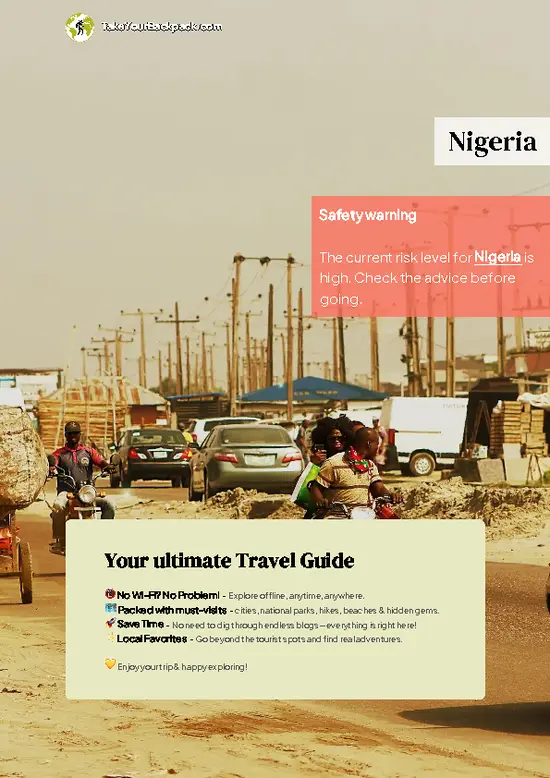
Safety warning

The current risk level for Nigeria is high. Check the advice before going.


Get your Nigeria guide
87 ranked highlights, routes & tips, works offline (322 pages)
Loading the map 🌍
CLICK TO FILTER
cities
towns
landmarks
national parks
hikes
beaches
attractions
festivals
regions
SHOW COUNTRY’S BESTSHOW ALL

✨ Why go?
Ranked #1 town in Nigeria
What makes this town worth visiting

Backpackers flock to Jebba for its strategic location along routes to nearby hikes and cultural sites. The walkable streets invite exploration, with small-scale hostels and guesthouses offering a cozy base. You can savor local food that bursts with flavor, enhancing the experience. Travelers often linger a few days, soaking in the friendly social atmosphere that encourages connections among solo travelers and small groups. It’s not a party town, but the vibrant community makes it easy to share stories and tips. Jebba is perfect for those who appreciate a blend of adventure and authenticity.
Want to include Jebba in your Nigeria route?
Create a personalized Nigeria itinerary that includes Jebba and the places that fit your trip — based on your travel style, budget, and available time. Get your route in seconds.

Generate my trip

💡 HighlightsWhat this place is best known for

  1. Jebba Bridge — The town’s defining landmark: a long road-and-rail span over the Niger that gives one of the best river views in the area and a real sense of Jebba’s role as a transit point. Walk the approaches, watch the ferries and freight, and catch a sunset over the Niger.
  2. Jebba Hydroelectric Power Station (Jebba Power Station) — A major piece of Nigeria’s energy infrastructure you can view from the riverbank. Even if you can’t go inside the plant, the dam, spillways and associated works are impressive and tell a lot about modern development along the Niger.
  3. Niger Riverfront and Landing Sites — Life here happens on the water: fishermen, canoes, small commercial ferries and riverside dressings. It’s the best place for photography, informal boat trips, meeting local fishers and observing
read more 👉
  1. Jebba Bridge — The town’s defining landmark: a long road-and-rail span over the Niger that gives one of the best river views in the area and a real sense of Jebba’s role as a transit point. Walk the approaches, watch the ferries and freight, and catch a sunset over the Niger.
  2. Jebba Hydroelectric Power Station (Jebba Power Station) — A major piece of Nigeria’s energy infrastructure you can view from the riverbank. Even if you can’t go inside the plant, the dam, spillways and associated works are impressive and tell a lot about modern development along the Niger.
  3. Niger Riverfront and Landing Sites — Life here happens on the water: fishermen, canoes, small commercial ferries and riverside dressings. It’s the best place for photography, informal boat trips, meeting local fishers and observing riverside trade.
  4. Jebba Central Market — Busy, colourful and very local. You’ll find smoked fish, groundnuts, grains, fabrics and the kind of bargaining culture that gives a fast, genuine look at everyday life in the town.
  5. Old Town / Riverside Trading Quarter — Narrow lanes and older buildings near the river where traders and families have worked for generations. Walk here to feel the pre-modern trade legacy of Jebba and to find small food stalls and traditional shops.
  6. Jebba Railway Station and Yards — Remnants of the old rail link sit beside the bridge; railcars, sidings and station buildings show the town’s link to Nigeria’s rail history. Trainspotters and history-minded visitors will get a kick out of the industrial character.
  7. Boatbuilding and Canoe Workshops — Small riverside yards where local craftsmen build and repair wooden canoes and fishing boats. Watching the work (and often chatting with the builders) gives real insight into river livelihoods and makes for authentic souvenir conversation.
  8. Jebba Central Mosque (Friday Mosque) — The social and spiritual hub for much of the town. Besides the architecture, visiting around prayer times or market breaks shows the mosque’s central role in daily rhythms and community life—observe respectfully.
  9. Riverside Food Stalls and Smoked-Fish Row — For a food-focused visit: riverside grills, jollof and plates of smoked catfish are where locals eat. It’s less polished than tourist spots elsewhere, but much more honest—and often the best-tasting.
  10. Local Tailors, Textile and Leather Stalls — Small workshops and stalls in and around the market where tailors, dyers and leatherworkers make and repair things by hand. Great for getting a custom piece, watching skills in action, or buying practical souvenirs.
A few worthwhile day trips outside Jebba include Kainji Lake and the Borgu area for lakeside scenery and wildlife, the regional city of Ilorin with its emir’s palace and markets, and the broader Kainji/Jebba dam stretch along the Niger for more river scenery and fishing communities.
Spotted a mistake or missing something? Contact us.
🏘️ NeighborhoodsUnderstanding the local layout

Jebba offers a unique blend of culture and community, perfect for backpackers seeking authentic experiences.

Jebba Town Center: This is the heartbeat of the town. Bustling markets fill the air with the scent of spices and street food. It’s walkable, with affordable accommodations. Nightlife is low-key, making it ideal for short stays.

Kwara State University Area: A youthful vibe permeates this neighborhood, thanks to the student population. Cafés buzz with energy, and you’ll find budget-friendly eateries. It’s a bit quieter at night, perfect for longer stays if you want to soak in local life.

Riverbank District: This area offers stunning views of the Niger River. It’s less crowded, providing a peaceful atmosphere. While transport options are limited, the tranquility makes it worth it for those seeking a serene retreat.

⌛️ 1 day1-day itinerary for Jebba

Jebba, Nigeria, is a vibrant town where the Niger River flows like a lifeline, connecting cultures and stories. The air is rich with the scent of local spices, and the sounds of bustling markets fill the streets. Start your day early at the Jebba Market, where you can savor fresh fruits and local dishes. The colors and chatter create an electric atmosphere, perfect for immersing yourself in daily life.

In the afternoon, head to the Jebba Dam. It’s not just a sight; it’s a testament to the town’s engineering prowess. Walk along the riverbank, feel the breeze, and take in the views. If you’re up for a little adventure, explore the nearby hills for a panoramic perspective of the landscape.

As evening falls, make your way to the waterfront. Grab a meal at a local eatery, where the grilled fish … read more 👉
Jebba, Nigeria, is a vibrant town where the Niger River flows like a lifeline, connecting cultures and stories. The air is rich with the scent of local spices, and the sounds of bustling markets fill the streets. Start your day early at the Jebba Market, where you can savor fresh fruits and local dishes. The colors and chatter create an electric atmosphere, perfect for immersing yourself in daily life.

In the afternoon, head to the Jebba Dam. It’s not just a sight; it’s a testament to the town’s engineering prowess. Walk along the riverbank, feel the breeze, and take in the views. If you’re up for a little adventure, explore the nearby hills for a panoramic perspective of the landscape.

As evening falls, make your way to the waterfront. Grab a meal at a local eatery, where the grilled fish is a must-try. The sun setting over the river casts a golden hue, wrapping up your day in Jebba with a sense of connection to this unique place.
Turn your Jebba visit into an Nigeria adventure
Build a complete Nigeria route with Jebba, hidden gems, must-see destinations, and realistic travel times included.

Generate my trip

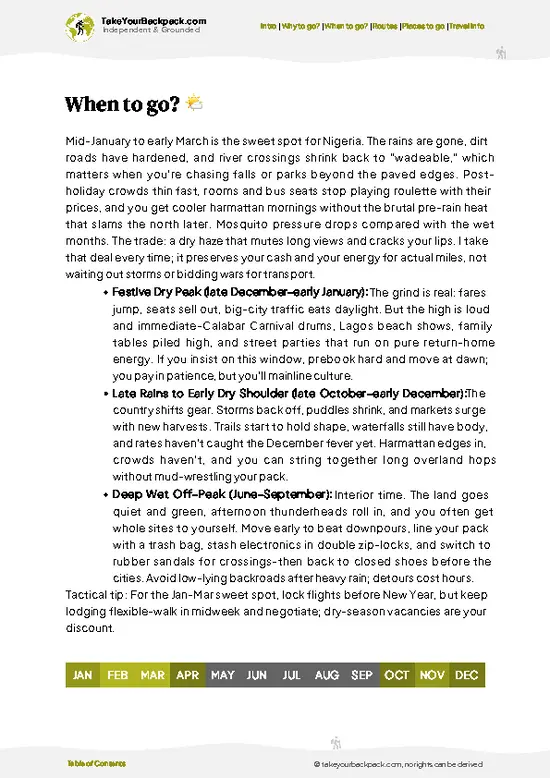
🌤️ When to go?Choosing the right time of year


  • Weather: Jebba’s climate swings between a hot, dry season and a wet, humid one. The dry season from November to March offers clearer skies and less mud, making trekking and exploring easier. Expect highs around 32°C (90°F) and lows near 20°C (68°F).

  • Temperature: During the rainy months (April to October), temperatures hover between 25°C to 30°C (77°F to 86°F), but humidity spikes, turning the air thick and sticky—less comfortable for long hikes or outdoor lounging.

  • Daylight Hours: Daylight is fairly consistent year-round, roughly 12 hours daily, but the dry season’s clearer skies mean more reliable sunlight for early starts and late afternoons without sudden downpours.

  • Crowds: Jebba isn’t a tourist hotspot, so crowds are minimal year-round. However, local festivals in the dry season
read more 👉

  • Weather: Jebba’s climate swings between a hot, dry season and a wet, humid one. The dry season from November to March offers clearer skies and less mud, making trekking and exploring easier. Expect highs around 32°C (90°F) and lows near 20°C (68°F).

  • Temperature: During the rainy months (April to October), temperatures hover between 25°C to 30°C (77°F to 86°F), but humidity spikes, turning the air thick and sticky—less comfortable for long hikes or outdoor lounging.

  • Daylight Hours: Daylight is fairly consistent year-round, roughly 12 hours daily, but the dry season’s clearer skies mean more reliable sunlight for early starts and late afternoons without sudden downpours.

  • Crowds: Jebba isn’t a tourist hotspot, so crowds are minimal year-round. However, local festivals in the dry season can bring a lively buzz, offering a chance to experience authentic cultural events without overwhelming tourist traffic.

  • Seasonal Activities: The dry season is prime for river activities on the Niger, fishing, and village visits. The wet season swells the river, making some paths muddy or impassable but enriching the landscape’s lushness for photographers and nature lovers.

  • Price Fluctuations: Accommodation and transport costs dip slightly during the rainy season due to fewer visitors, but the trade-off is dealing with unpredictable weather and travel delays.


Pro-tip: Aim for late November to early March—when the air is crisp, the river calm, and the town’s rhythms invite you to explore without the hassle of mud or humidity.


source: climatestotravel.comJANJanuary: excellent for travelingFEBFebruary: excellent for travelingMARMarch: excellent for travelingAPRApril: fair for travelingMAYMay: fair for travelingJUNJune: fair for travelingJULJuly: fair for travelingAUGAugust: fair for travelingSEPSeptember: good for travelingOCTOctober: good for travelingNOVNovember: highly recommended for travelingDECDecember: excellent for traveling
when-to-go

✈️ The backpacker research shortcutNigeria Travel Guide

An offline-friendly backpacking guide with optimized travel routes, ranked highlights, transport advice, and the best areas to stay.
example page 0 from our offline Travel Guide for Nigeria
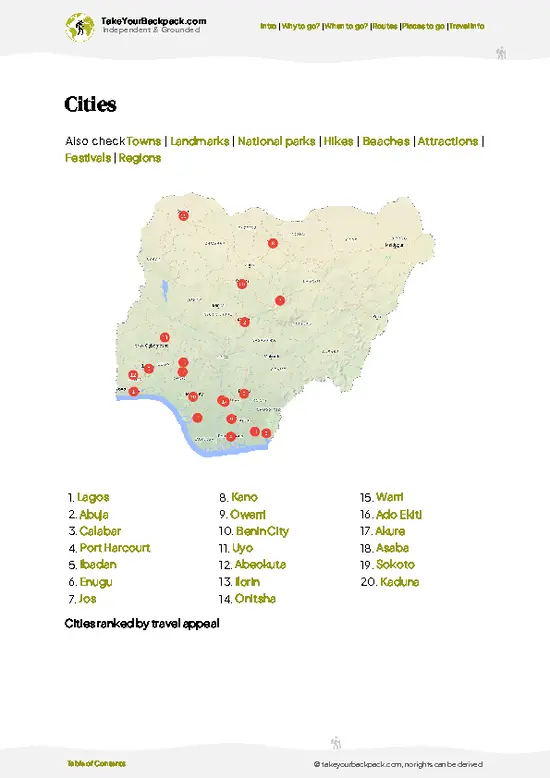
example page 1 from our offline Travel Guide for Nigeria
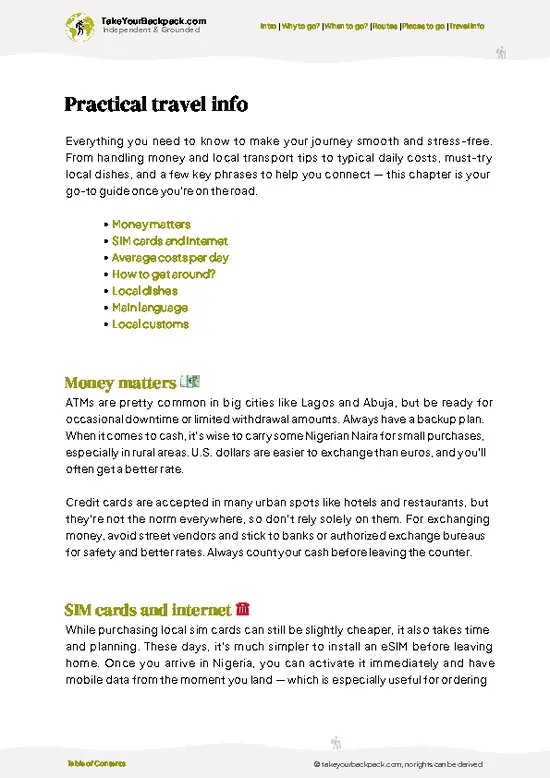
example page 2 from our offline Travel Guide for Nigeria
example page 3 from our offline Travel Guide for Nigeria
example page 4 from our offline Travel Guide for Nigeria
example page 5 from our offline Travel Guide for Nigeria
example page 6 from our offline Travel Guide for Nigeria
example page 7 from our offline Travel Guide for Nigeria
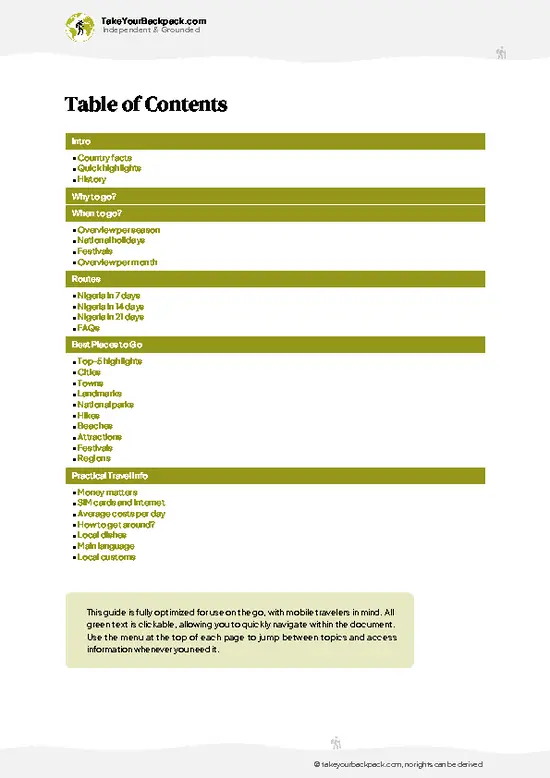
The digital guide (322 pages) contains:
87 highlights, ranked by travel appeal
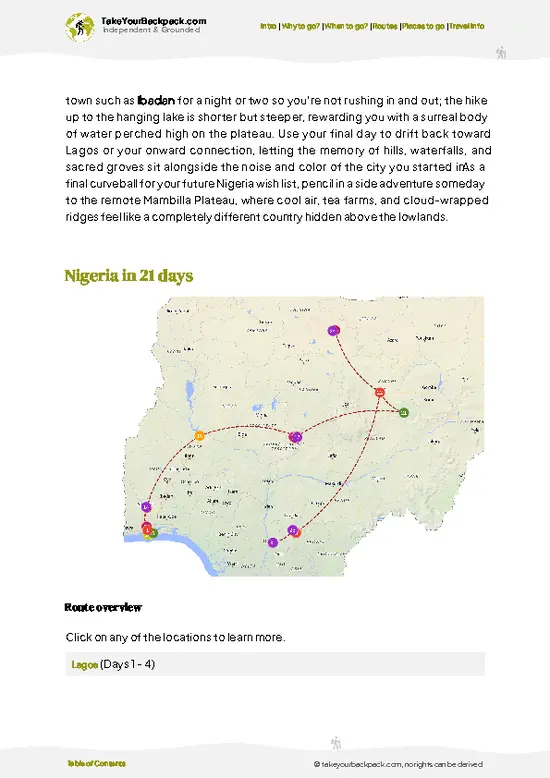
Optimized 7, 14 & 21-day travel routes
Cities, national parks, landmarks, beaches
How to get around
Offline-friendly for travel without Wi-Fi
👉 Click to see all 30+ guide features

📅 Plan smarter in minutes, not weeks
Month by month travel advice
Festivals & national holidays
Budget expectations

🗺️ Go to the right places, skip the overrated ones
Honest pros & cons of destinations
Top hikes, parks & viewpoints
Lesser-known places most travelers miss
Clear “worth it vs skip it” guidance

🛏️ Travel smoothly without rookie mistakes
Best areas to stay
Transport systems explained simply
Common scams & safety advice
SIM cards, money & practical tips

🌍 Understand the country, not just visit it
Culture & traditions
52 Essential phrases & customs
Festivals worth planning around
Traveler-friendly historical context
Insights that make places more meaningful

📱 Built for real travel conditions
Fully downloadable PDF
Works completely offline
Optimized for phone use
Useful in remote areas & buses
Everything in one place
Save weeks of stressful planning
Get instant access to your full guide. 30‑day money-back guarantee.
+ Add another guide for just US$7.80

By proceeding you agree to our terms.
Sent to your inbox immediately after payment • 100% Secure Checkout
Best Backpacking Travel Advisor 2025 tourism awardBest Backpacking
Travel Advisor
2025
What others say about Take Your Backpack Guides:
⭐⭐⭐⭐⭐
Fantastic, amazing amount of information!
⭐⭐⭐⭐⭐
My goodness this is amazing, it's what I've been looking for hats off too you!
⭐⭐⭐⭐⭐
I think this is absolutely BRILLIANT
⭐⭐⭐⭐
Very complete and informative. It's still missing places, but I gotta to commend you
⭐⭐⭐⭐⭐
This is truly amazing, thank you, can't wait to explore it with my kids!
⭐⭐⭐⭐⭐
Awesome resource, thank you!
⭐⭐⭐⭐⭐
This is amazing! Can't wait to explore the ones I haven't seen
⭐⭐⭐⭐
I love this! Well done, great idea.
⭐⭐⭐⭐⭐
Thanks for taking the time to make this gem!
⭐⭐⭐⭐⭐
This might be the best website I've ever seen.
⭐⭐⭐⭐⭐
Congratulations, and thank you so much for your work; it's incredibly valuable.
⭐⭐⭐⭐
In all seriousness I think you did a great job pointing out the important spots
⭐⭐⭐⭐⭐
10/10 very good
⭐⭐⭐⭐⭐
As someone who's only just starting to visit regularly this is awesome, thank you.
⭐⭐⭐⭐
Thank you very much! I'm going to visit my dad, it's going to be very useful!
⭐⭐⭐⭐⭐
This is really cool! We'll be travelling for the first time and this definitely come in handy.
⭐⭐⭐⭐⭐
You are now our minister of culture, congratulations 👨‍💼
⭐⭐⭐⭐⭐
Just wanted to tell you that this is a pearl! Going to follow your recommendations.
⭐⭐⭐⭐⭐
This is so cool. I'll definitely be using the resource for my travels soon.
⭐⭐⭐⭐⭐
This is very impressive! Good work.
⭐⭐⭐⭐⭐
This is an amazing and informative site. Very well done!

🛏️ Where to stay?Choosing the right base

In Jebba, the best spot for backpackers is the area around the town center, especially near the main market and riverfront. This neighborhood hums with local life—vendors calling out, the scent of grilled fish mingling with fresh river air. It’s where you’ll find a handful of budget guesthouses and informal hostels, often run by locals who double as guides or storytellers. Staying here means you’re plugged into the pulse of Jebba, with easy access to food stalls and transport options without the hassle of long commutes.

Compared to quieter residential zones, this area feels safer for solo travelers … read more 👉
In Jebba, the best spot for backpackers is the area around the town center, especially near the main market and riverfront. This neighborhood hums with local life—vendors calling out, the scent of grilled fish mingling with fresh river air. It’s where you’ll find a handful of budget guesthouses and informal hostels, often run by locals who double as guides or storytellers. Staying here means you’re plugged into the pulse of Jebba, with easy access to food stalls and transport options without the hassle of long commutes.

Compared to quieter residential zones, this area feels safer for solo travelers because of the steady foot traffic and community presence after dark. It’s social without being overwhelming—perfect for striking up conversations with traders or fellow travelers. Other parts of town can feel isolated or lack affordable lodging, so anchoring yourself here is a practical move that unlocks both convenience and authentic interaction.

🚌 Getting aroundHow to get around Jebba

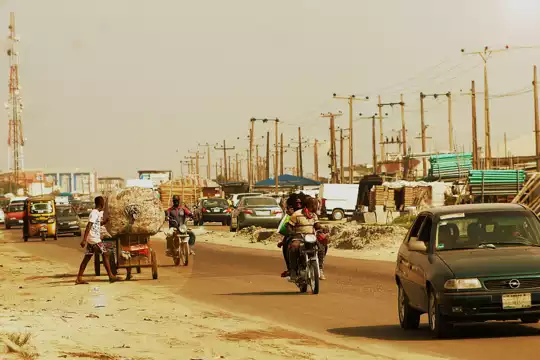
Jebba moves at its own rhythm—less a clockwork town and more a place where the sun dictates the pace. The light here shifts from a sharp, almost harsh brightness at midday to a softer, golden haze by late afternoon, casting long shadows over the Niger River’s calm surface. The town’s pulse is neither frantic nor lazy; it’s a steady hum of market chatter, motorbikes zipping through narrow streets, and the occasional boat horn echoing from the river. You won’t find rigid schedules here. Instead, transit flows with a mix of local intuition and necessity—people know when to move, when to wait, and how to squeeze the most out of every trip. Understanding this flow means you don’t just get from A to B—you become part of the town’s living rhythm.


  • Walking: The heart of Jebba is compact enough
read more 👉
Jebba moves at its own rhythm—less a clockwork town and more a place where the sun dictates the pace. The light here shifts from a sharp, almost harsh brightness at midday to a softer, golden haze by late afternoon, casting long shadows over the Niger River’s calm surface. The town’s pulse is neither frantic nor lazy; it’s a steady hum of market chatter, motorbikes zipping through narrow streets, and the occasional boat horn echoing from the river. You won’t find rigid schedules here. Instead, transit flows with a mix of local intuition and necessity—people know when to move, when to wait, and how to squeeze the most out of every trip. Understanding this flow means you don’t just get from A to B—you become part of the town’s living rhythm.


  • Walking: The heart of Jebba is compact enough to explore on foot, especially the market and riverfront areas. Walking lets you soak in the scents of grilled fish and fresh spices, and it’s free—perfect for budget travelers who want to feel the town’s texture up close.

  • Okada (Motorcycle Taxi): These are the fastest way to dart through Jebba’s narrow streets, especially when the sun is high and the heat presses down. Expect to pay around 100–200 NGN per ride. They run all day but slow down after sunset when safety becomes a concern.

  • Shared Minibuses (Danfo): The backbone of local transit, these minibuses follow semi-fixed routes connecting Jebba’s outskirts to the center. Fares hover around 150 NGN. They’re not the most comfortable, but they’re reliable and run from early morning until early evening.

  • Boat Ferries: Crossing the Niger River by boat is a must for reaching nearby villages and experiencing the water’s cool breeze. Boats leave when full, so timing is flexible but unpredictable. Fares are cheap, usually under 200 NGN, and the ride offers a refreshing break from the dusty streets.

👛 Costs (as of 3 September 2026)How expensive it really is

Backpacking in Jebba, Nigeria, offers a raw, unfiltered experience where the costs stay modest but the environment demands a bit of savvy budgeting to keep things smooth.
  • Dorm Accommodation: Jebba is not a major tourist hub, so formal hostels with dorms are rare. Budget travelers usually find basic guesthouses or local inns charging around $5 to $10 per night. These places often have simple rooms with shared bathrooms, sometimes lacking hot water, but they’re clean enough and offer a chance to connect with locals.
  • Meals: Street food and small local eateries dominate the scene. Expect to spend about $2 to $5 per meal. Staples like pounded yam with egusi soup or grilled fish come fresh and filling. The aroma of spices and smoke from open grills fills the air, making every meal a sensory experience.
read more 👉
Backpacking in Jebba, Nigeria, offers a raw, unfiltered experience where the costs stay modest but the environment demands a bit of savvy budgeting to keep things smooth.
  • Dorm Accommodation: Jebba is not a major tourist hub, so formal hostels with dorms are rare. Budget travelers usually find basic guesthouses or local inns charging around $5 to $10 per night. These places often have simple rooms with shared bathrooms, sometimes lacking hot water, but they’re clean enough and offer a chance to connect with locals.
  • Meals: Street food and small local eateries dominate the scene. Expect to spend about $2 to $5 per meal. Staples like pounded yam with egusi soup or grilled fish come fresh and filling. The aroma of spices and smoke from open grills fills the air, making every meal a sensory experience. Avoid imported or western-style food, as it’s pricier and less common.
  • Local Transport: Getting around Jebba means relying on motorbike taxis (okadas) or shared minibuses. A typical short ride costs between $0.50 and $1.50. The roads can be dusty and bumpy, so hold on tight and enjoy the rush of wind and the scent of earth after rain. Walking is also a good option for short distances, especially to soak in the town’s atmosphere.
  • Basic Activities/Entry Fees: Jebba’s main draw is its natural setting along the Niger River and the historic Jebba Bridge. Entry fees to local sites are minimal or non-existent, usually under $1. Guided tours are rare, so exploring independently is the norm. The quiet riverbanks and the sound of water flowing beneath the bridge offer a peaceful backdrop without extra cost.
  • Miscellaneous Expenses: Budget around $1 to $3 daily for essentials like bottled water, snacks, or small tips. Internet access can be patchy; buying a local SIM card with data costs about $5 to $10, which lasts several days. Keep some cash handy, as card payments are almost non-existent.

All told, you’re looking at roughly $10 to $20 a day to cover the basics in Jebba. It’s a place where simplicity rules, and the modest budget reflects the straightforward, grounded pace of life here. The payoff is in the unvarnished connection to a part of Nigeria that’s off the beaten path, where every naira spent feels like a direct investment in authentic local rhythms.
⚠️ Prices can change and everyone travels differently, so take this as a rough guide. Hope it helps you plan your adventure!

🚌 Day tripsShort trips worth adding

Jebba, Nigeria, is a fantastic launchpad for day trips that reveal the region’s rich culture and stunning landscapes. Here are some must-do excursions.

Kainji National Park
Just a 45-minute drive from Jebba, Kainji National Park offers a chance to see wildlife in their natural habitat. The park is home to elephants, baboons, and various bird species. Bring your binoculars and a packed lunch; the park’s serene atmosphere is perfect for a midday break. Aim for the dry season, from November to March, when wildlife is more active. A round trip will cost around 2,000 Naira for transport. Many first-timers underestimate the park’s size, so plan to spend a good chunk of your day exploring.


Ogbomoso
About an hour’s drive from Jebba, Ogbomoso is a vibrant town steeped in history. Visit the … read more 👉
Jebba, Nigeria, is a fantastic launchpad for day trips that reveal the region’s rich culture and stunning landscapes. Here are some must-do excursions.

Kainji National Park
Just a 45-minute drive from Jebba, Kainji National Park offers a chance to see wildlife in their natural habitat. The park is home to elephants, baboons, and various bird species. Bring your binoculars and a packed lunch; the park’s serene atmosphere is perfect for a midday break. Aim for the dry season, from November to March, when wildlife is more active. A round trip will cost around 2,000 Naira for transport. Many first-timers underestimate the park’s size, so plan to spend a good chunk of your day exploring.


Ogbomoso
About an hour’s drive from Jebba, Ogbomoso is a vibrant town steeped in history. Visit the ancient Ogbomoso Palace and the bustling local market, where the scent of spices fills the air. The best time to visit is early morning, when the market is alive with energy. Expect to spend around 1,500 Naira on transport and snacks. A common mistake is rushing through; take your time to chat with locals and soak in the atmosphere.


Jebba Dam
Just a short trip from the town center, Jebba Dam is a stunning spot for a picnic or a quick swim. The dam’s vast expanse glistens under the sun, and the gentle breeze makes it a refreshing escape. Spend a few hours here, especially in the late afternoon when the light softens. The cost is minimal—around 500 Naira for transport. Many overlook this local treasure, but it’s a perfect way to unwind after a day of exploration.
Want to know what more Nigeria offers?
The Nigeria Travel Guide describes 87 highlights, from cities to national parks, from beaches to hikes

Get the Travel Guide -

🛡️ SafetySafety Tips and Common Scams in Jebba

Jebba is generally safe, but awareness is key. Stick to well-lit areas at night; the atmosphere shifts after dark, and it’s best to avoid wandering alone. Keep your belongings close, especially in crowded markets where distractions can lead to petty theft.

Watch for common scams, like inflated taxi fares or overly friendly locals who might expect a tip for unsolicited help. Carry yourself confidently, engage with locals, and trust your instincts. A smile goes a long way, but stay alert to maintain that smooth, enjoyable experience.

FAQCommon questions from travelers

Jebba is primarily a stopover rather than a major tourist destination. It is known for the Jebba Hydroelectric Power Station and the scenic Niger River, but attractions are limited. Most travelers pass through on their way to other parts of Nigeria.
One day is sufficient to explore Jebba if you plan to see the river and local markets. There are few tourist facilities, so extended stays are uncommon. Overnight stays are usually for rest during longer journeys.
Yes, Jebba can be visited as a day trip from Ilorin, which is about 120 kilometers away. The drive takes around 2 to 3 hours each way, making it feasible for a day visit. However, public transport options may be limited, so private transport is recommended.
⚠️ Things can change over time, so always validate details locally before you go.

Ideas for continuing your journey

Jebba isn’t the only highlight in Nigeria. Explore all what Nigeria has to offer.
Country photo of Nigeria

We 💚 feedbackKey takeaways before you go

Jebba hums with a raw energy that’s hard to shake off. The river’s rhythm pulls you in, but watch for the heat—it’s relentless. The best surprise? The locals’ warmth and stories that linger long after you leave. Embrace the chaos; it’s part of the charm.

✍️ Help improve this page!
The information on this page is based on in-depth research, insights shared by experienced travelers, and feedback from the local travel community in Nigeria. While every effort is made to keep the information accurate and current, conditions can change — so if you spot anything incorrect or outdated, please get in touch.


🙋‍♂️ Give feedback

👋 Meet the founderWho’s Behind Take Your Backpack?

Johan, backpacker and founder of TakeYourBackpackHi, I’m Johan (Netherlands 🇳🇱), the creator of TakeYourBackpack. Over the past decade, I’ve backpacked through 80+ countries across six continents, gaining extensive experience with independent travel, long-term trips, and overland routes.

This site is built on a combination of firsthand travel experience and carefully curated insights from other backpackers. Many guides are based on places I’ve personally visited, while others bring together tips, observations, and practical advice shared by trusted travelers I’ve met along the way.

The goal is to provide realistic, experience-driven guidance — not generic itineraries — so you can explore destinations with better context, clearer expectations, and more confidence.

Get full Nigeria guide •
Instant download • 87 highlights • Full Offline guide