×

Nigeria🇳🇬 | best townsWhere to Find the Best towns in Nigeria

In Nigeria, the best towns offer a rich tapestry of culture, history, and local charm that can shape your entire travel experience. Each region presents distinct characteristics that cater to different backpacking styles and budgets. For instance, the bustling streets of Lagos pulse with energy, while the serene landscapes of Calabar invite a slower pace.

Understanding the seasonal nuances is crucial; the dry season can make travel smoother, while the rainy season may affect accessibility. Choosing the right town impacts not just your vibe but also your safety and ease of travel. Some towns are more walkable, allowing for deeper cultural immersion, while others may require more logistical planning.

By selecting a town that aligns with your interests—be it vibrant markets, historical sites, or natural beauty—you set the stage for a more enriching journey through Nigeria.

By Johan Kruseman 🇳🇱 | Updated June 12, 2026
Explore the best villages in Nigeria

Why go?Why These town Stand Out

Nigeria’s towns are a tapestry of local charm and cultural richness that set them apart from other countries. Each town pulses with its own rhythm, shaped by unique historical and geographic contexts. The pace of life varies dramatically; some towns offer a bustling market scene, while others provide a serene escape into traditional lifestyles. This diversity is what makes Nigeria a compelling destination for those seeking authentic experiences.

Travelers should consider the regional differences when planning their itineraries. Clustering towns can save time but may limit the depth of exploration. For instance, a quick visit to multiple towns might mean missing out on the intricate culinary traditions or local festivals that define each community. Balancing travel time with the desire for … read more 👉
Nigeria’s towns are a tapestry of local charm and cultural richness that set them apart from other countries. Each town pulses with its own rhythm, shaped by unique historical and geographic contexts. The pace of life varies dramatically; some towns offer a bustling market scene, while others provide a serene escape into traditional lifestyles. This diversity is what makes Nigeria a compelling destination for those seeking authentic experiences.

Travelers should consider the regional differences when planning their itineraries. Clustering towns can save time but may limit the depth of exploration. For instance, a quick visit to multiple towns might mean missing out on the intricate culinary traditions or local festivals that define each community. Balancing travel time with the desire for immersive experiences is crucial. The more you rush, the less you absorb the essence of each place.

Nigeria’s climatic conditions also play a role. The dry season offers easier access to many towns, while the rainy season can hinder travel plans. Infrastructure varies widely; some towns are well-connected, while others may require patience and flexibility. Understanding these constraints is essential for a smooth journey.

Moreover, Nigeria’s cultural landscape is rich with diversity, from the languages spoken to the festivals celebrated. This variety can be both a blessing and a challenge. Travelers should be prepared for a range of experiences, some of which may be less polished than those found in more developed countries. Embracing this unpredictability is part of the adventure, but it requires a mindset open to both the challenges and the beauties of local life.

In summary, Nigeria’s towns offer a unique blend of experiences that demand thoughtful planning. The trade-offs between accessibility and depth of exploration are key to unlocking the true essence of this vibrant country.
Our Approach to Ranking
The list of best towns in Nigeria is created based on charm, local culture, atmosphere, hidden gems, and visitor appeal. If you feel a town is missing in this list, please let us know.

When to go?Timing Your Visit for the Best Experience

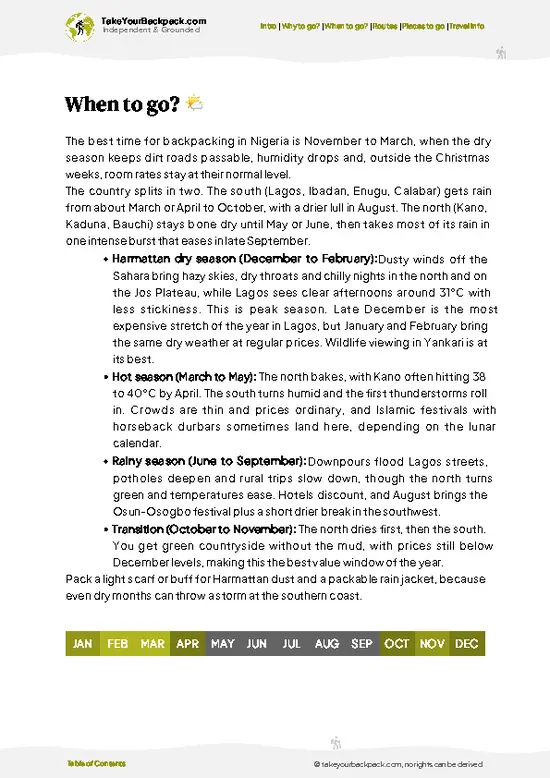
Seasonality plays a crucial role in the experience of small towns across Nigeria. The country has a tropical climate, characterized by distinct wet and dry seasons. The dry season typically runs from November to March, offering warm, sunny days and cooler nights. This is when towns come alive with local festivals and cultural events, making it the prime time for visitors. Expect vibrant markets and bustling streets filled with energy.

Weather Conditions during the wet season, from April to October, can be intense. Rainfall varies by region, but it often leads to muddy roads and occasional flooding. While this season brings lush landscapes and fewer tourists, it can also limit accessibility and dampen outdoor activities. Travelers should be prepared for sudden downpours and humidity that can … read more 👉
Seasonality plays a crucial role in the experience of small towns across Nigeria. The country has a tropical climate, characterized by distinct wet and dry seasons. The dry season typically runs from November to March, offering warm, sunny days and cooler nights. This is when towns come alive with local festivals and cultural events, making it the prime time for visitors. Expect vibrant markets and bustling streets filled with energy.

Weather Conditions during the wet season, from April to October, can be intense. Rainfall varies by region, but it often leads to muddy roads and occasional flooding. While this season brings lush landscapes and fewer tourists, it can also limit accessibility and dampen outdoor activities. Travelers should be prepared for sudden downpours and humidity that can sap energy.

Optimal Months for visiting are generally between December and February. This period offers the best combination of pleasant weather and lively local culture. However, the shoulder months—October and March—can also be appealing. These months see fewer crowds and lower accommodation costs, but travelers should weigh the risk of rain and fluctuating temperatures.

Peak Periods coincide with major festivals and holidays, which can lead to crowded towns and inflated prices. If experiencing local culture is a priority, timing visits around these events can be rewarding, but it’s essential to book accommodations well in advance.

Trade-offs are a constant in travel planning. The dry season may be bustling, but it also means higher prices and more tourists. The wet season offers a quieter experience, but with potential travel disruptions. Understanding these dynamics is key to preserving energy and budget for the moments that truly matter.

town hoppingTips for Visiting Multiple Destinations

Routing Logic
To make the most of Nigeria’s diverse towns, start by clustering regions. The North offers a rich tapestry of history and culture, while the South is vibrant with coastal charm and bustling markets. Begin in the North, perhaps in Kano, then head south to Abuja, and continue to Lagos. This route minimizes backtracking and maximizes exposure to different cultures.

Time Management
Allocate at least two days for major towns. This allows for exploration without feeling rushed. In smaller towns, a day might suffice, but don’t underestimate the allure of local interactions. Each stop should feel rewarding, not just a checkbox on a list.

Common Mistakes
Travelers often underestimate travel times. Roads can be unpredictable, and traffic in cities like Lagos can be a nightmare. Plan … read more 👉
Routing Logic
To make the most of Nigeria’s diverse towns, start by clustering regions. The North offers a rich tapestry of history and culture, while the South is vibrant with coastal charm and bustling markets. Begin in the North, perhaps in Kano, then head south to Abuja, and continue to Lagos. This route minimizes backtracking and maximizes exposure to different cultures.

Time Management
Allocate at least two days for major towns. This allows for exploration without feeling rushed. In smaller towns, a day might suffice, but don’t underestimate the allure of local interactions. Each stop should feel rewarding, not just a checkbox on a list.

Common Mistakes
Travelers often underestimate travel times. Roads can be unpredictable, and traffic in cities like Lagos can be a nightmare. Plan for delays and allow extra time for spontaneous detours. Avoid cramming too many towns into a short period; it leads to fatigue and missed experiences.

Trade-offs and Constraints
Speed versus depth is a constant balancing act. Rushing through towns sacrifices the chance to connect with locals and soak in the atmosphere. Budget constraints can also dictate comfort levels; consider local guesthouses for an authentic experience without breaking the bank.

Flexibility is Key
Stay open to changing plans. If a town captivates you, extend your stay. The beauty of travel lies in unexpected moments. Prioritize what resonates with you, whether it’s a bustling market or a quiet village. This approach ensures that each stop enriches your journey, rather than feeling like a chore.

The ListThe Best towns of Nigeria

1 Jebba

Niger River crossing, colonial-era bridge, sugar factory

Cross the wide river, explore industrial relics, and see how transport and industry have shaped this strategic riverside town.

Loading the map 🌍

Expert viewInsights from Locals and Experts

Expert Commentary


Nigeria is a vast tapestry of cultures, landscapes, and experiences. When planning your journey, aim to explore around five to seven towns. This range allows you to dive deep into local life without feeling rushed. Too many stops can dilute the experience, leaving you exhausted and missing the essence of each place.

Start with the north. The region is rich in history and tradition, but it comes with its own set of challenges. Infrastructure can be hit or miss, so expect longer travel times between towns. Roads may be less developed, and public transport options can be limited. If you’re not comfortable with potential delays, consider focusing on fewer towns here. The cultural richness is worth the effort, but be prepared for a slower pace.

Moving south, you’ll find a different … read more 👉

Expert Commentary


Nigeria is a vast tapestry of cultures, landscapes, and experiences. When planning your journey, aim to explore around five to seven towns. This range allows you to dive deep into local life without feeling rushed. Too many stops can dilute the experience, leaving you exhausted and missing the essence of each place.

Start with the north. The region is rich in history and tradition, but it comes with its own set of challenges. Infrastructure can be hit or miss, so expect longer travel times between towns. Roads may be less developed, and public transport options can be limited. If you’re not comfortable with potential delays, consider focusing on fewer towns here. The cultural richness is worth the effort, but be prepared for a slower pace.

Moving south, you’ll find a different vibe. The towns here often have better infrastructure, making travel smoother. However, don’t let that fool you into thinking it’s all easy. Each town has its own unique charm and quirks. You might find vibrant markets, but also experience the hustle and bustle that can be overwhelming. Prioritize your visits based on what you want to experience—be it art, music, or food.

Budget is another critical factor. Expect to spend more in urban areas, especially if you’re drawn to local cuisine or artisan crafts. Street food can be a fantastic way to save money while indulging in authentic flavors, but always choose busy stalls with a high turnover. This ensures freshness and minimizes health risks. In contrast, rural towns may offer cheaper accommodations and food, but the trade-off could be limited amenities.

Safety is paramount. While many towns are welcoming, some areas may have security concerns. Always stay updated on local conditions and heed travel advisories. Engaging with locals can provide invaluable insights into which areas to avoid. Trust your instincts; if something feels off, it probably is.

Cultural considerations are equally important. Nigeria is a mosaic of ethnic groups, each with its own customs. Respect local traditions, especially in more conservative areas. Dress modestly and be mindful of local practices. This not only shows respect but can also enrich your experience. You’ll find that locals are often eager to share their stories and traditions if you approach with an open mind.

When planning your itinerary, think about the rhythm of travel. Allow for downtime to soak in the atmosphere. You might stumble upon a local festival or an impromptu music session that could become the highlight of your trip. Flexibility is key. If you’re too rigid with your schedule, you might miss out on these spontaneous moments that truly define travel.

Consider the time of year as well. The dry season typically offers the best travel conditions, but it can also mean more tourists. If you’re looking for a quieter experience, the rainy season might be worth considering, though be prepared for some travel disruptions.

In terms of logistics, always have a backup plan. Whether it’s a change in transportation or an unexpected closure, being adaptable will save you stress. Carry a portable charger; power outages can be common, and you’ll want to keep your devices charged for navigation and communication.

Lastly, don’t underestimate the power of local guides. They can provide insights that you won’t find in guidebooks. A good guide can help you navigate cultural nuances and ensure you’re visiting the right places at the right times. Just be sure to choose someone reputable; word of mouth from fellow travelers can be your best resource.

In summary, Nigeria is a land of contrasts and surprises. By focusing on a handful of towns, being mindful of safety and cultural practices, and allowing for flexibility in your plans, you’ll preserve your energy and budget for the moments that truly matter. Embrace the journey, and let the local charm guide your experience.

✈️ The backpacker research shortcutNigeria Travel Guide

An offline-friendly backpacking guide with optimized travel routes, ranked highlights, transport advice, and the best areas to stay.
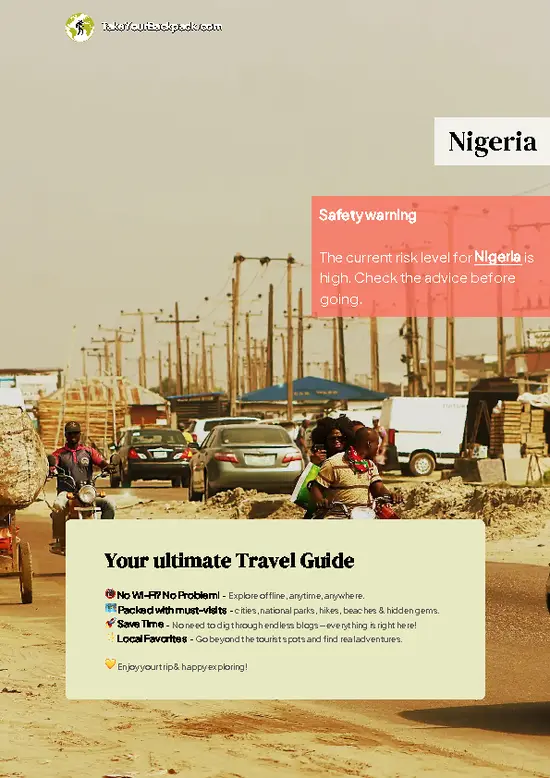
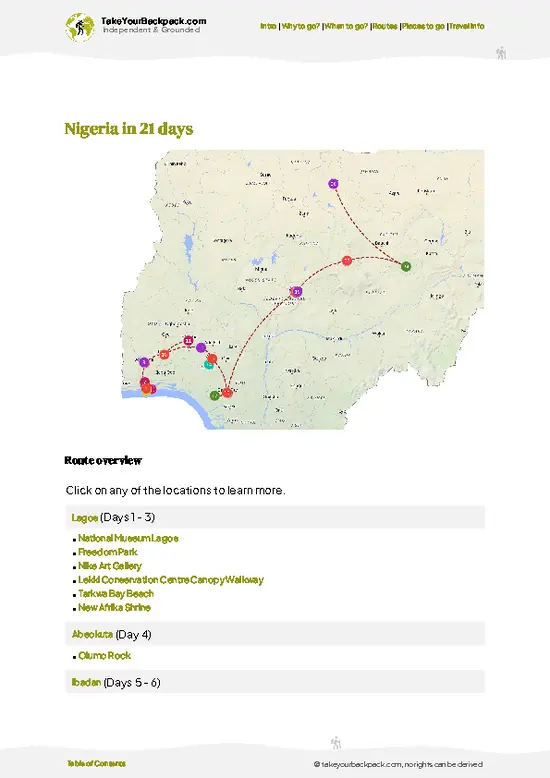
example page 0 from our offline Travel Guide for Nigeria
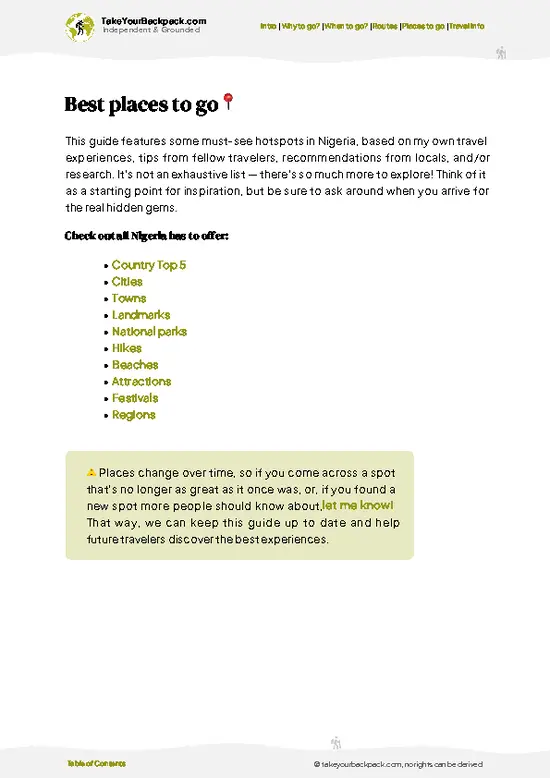
example page 1 from our offline Travel Guide for Nigeria
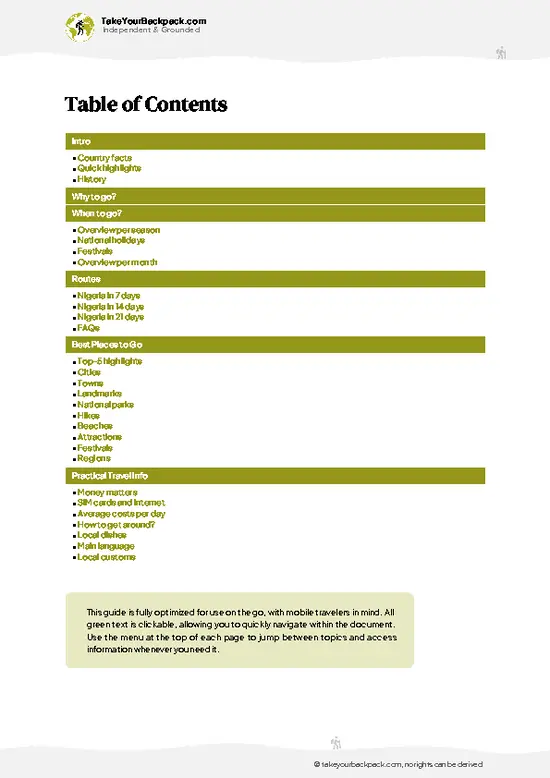
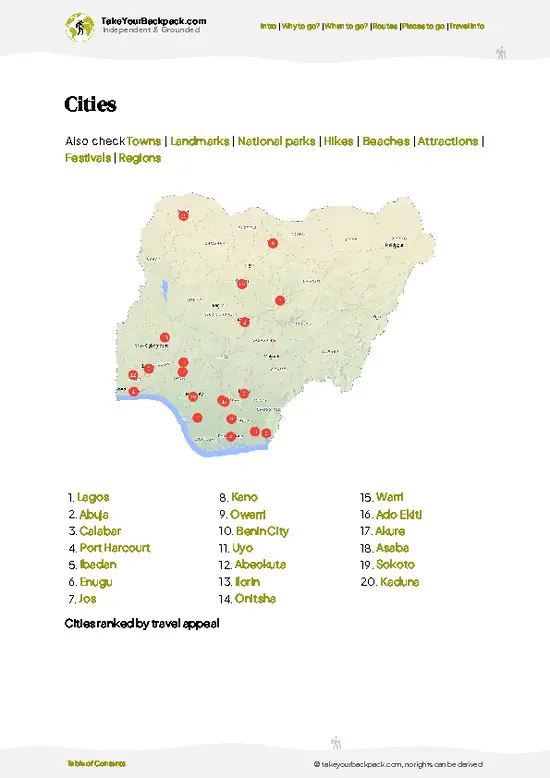
example page 2 from our offline Travel Guide for Nigeria
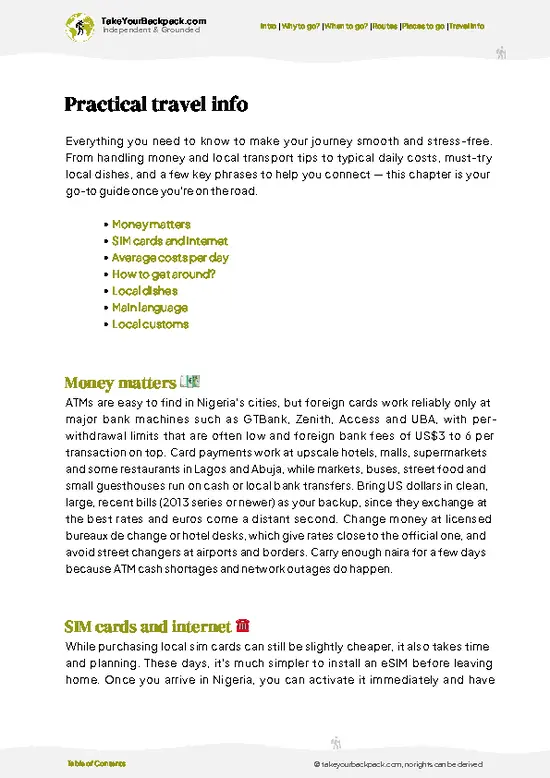
example page 3 from our offline Travel Guide for Nigeria
example page 4 from our offline Travel Guide for Nigeria
example page 5 from our offline Travel Guide for Nigeria
example page 6 from our offline Travel Guide for Nigeria
example page 7 from our offline Travel Guide for Nigeria
The digital guide (332 pages) contains:
89 highlights, ranked by travel appeal
Optimized 7, 14 & 21-day travel routes
Cities, national parks, landmarks, beaches
How to get around
Offline-friendly for travel without Wi-Fi
👉 Click to see all 30+ guide features

📅 Plan smarter in minutes, not weeks
Month by month travel advice
Festivals & national holidays
Budget expectations

🗺️ Go to the right places, skip the overrated ones
Honest pros & cons of destinations
Top hikes, parks & viewpoints
Lesser-known places most travelers miss
Clear “worth it vs skip it” guidance

🛏️ Travel smoothly without rookie mistakes
Best areas to stay
Transport systems explained simply
Common scams & safety advice
SIM cards, money & practical tips

🌍 Understand the country, not just visit it
Culture & traditions
52 Essential phrases & customs
Festivals worth planning around
Traveler-friendly historical context
Insights that make places more meaningful

📱 Built for real travel conditions
Fully downloadable PDF
Works completely offline
Optimized for phone use
Useful in remote areas & buses
Everything in one place
Save weeks of stressful planning
Get instant access to your full guide. 30‑day money-back guarantee.


By proceeding you agree to our terms.
Sent to your inbox immediately after payment • 100% Secure Checkout
Best Backpacking Travel Advisor 2025 tourism awardBest Backpacking
Travel Advisor
2025
What others say about Take Your Backpack Guides:
⭐⭐⭐⭐⭐
Fantastic, amazing amount of information!
⭐⭐⭐⭐⭐
My goodness this is amazing, it's what I've been looking for hats off too you!
⭐⭐⭐⭐⭐
I think this is absolutely BRILLIANT
⭐⭐⭐⭐
Very complete and informative. It's still missing places, but I gotta to commend you
⭐⭐⭐⭐⭐
This is truly amazing, thank you, can't wait to explore it with my kids!
⭐⭐⭐⭐⭐
Awesome resource, thank you!
⭐⭐⭐⭐⭐
This is amazing! Can't wait to explore the ones I haven't seen
⭐⭐⭐⭐
I love this! Well done, great idea.
⭐⭐⭐⭐⭐
Thanks for taking the time to make this gem!
⭐⭐⭐⭐⭐
This might be the best website I've ever seen.
⭐⭐⭐⭐⭐
Congratulations, and thank you so much for your work; it's incredibly valuable.
⭐⭐⭐⭐
In all seriousness I think you did a great job pointing out the important spots
⭐⭐⭐⭐⭐
10/10 very good
⭐⭐⭐⭐⭐
As someone who's only just starting to visit regularly this is awesome, thank you.
⭐⭐⭐⭐
Thank you very much! I'm going to visit my dad, it's going to be very useful!
⭐⭐⭐⭐⭐
This is really cool! We'll be travelling for the first time and this definitely come in handy.
⭐⭐⭐⭐⭐
You are now our minister of culture, congratulations 👨‍💼
⭐⭐⭐⭐⭐
Just wanted to tell you that this is a pearl! Going to follow your recommendations.
⭐⭐⭐⭐⭐
This is so cool. I'll definitely be using the resource for my travels soon.
⭐⭐⭐⭐⭐
This is very impressive! Good work.
⭐⭐⭐⭐⭐
This is an amazing and informative site. Very well done!

🛏️ Where to stay?Best Places to Stay in Nigeria

Yes — hostels and budget accommodation are available in Nigeria, concentrated in major cities like Lagos (Victoria Island, Lekki, Yaba, Ikeja), Abuja (Wuse, Garki) and Port Harcourt (GRA/Diobu).
Victoria Island and Lekki put you close to nightlife, beaches and business hubs but are pricier and suffer heavy traffic; Ikeja and Yaba offer cheaper stays with better transit links yet feel busier and less polished.
Wuse and Garki in Abuja are central, relatively secure and convenient for markets and government sites but quiet after dark, while Port Harcourt’s GRA is calmer and safer than industrial areas though budget options are scarcer and expect security checkpoints and fewer late‑night services. … read more 👉
Yes — hostels and budget accommodation are available in Nigeria, concentrated in major cities like Lagos (Victoria Island, Lekki, Yaba, Ikeja), Abuja (Wuse, Garki) and Port Harcourt (GRA/Diobu).
Victoria Island and Lekki put you close to nightlife, beaches and business hubs but are pricier and suffer heavy traffic; Ikeja and Yaba offer cheaper stays with better transit links yet feel busier and less polished.
Wuse and Garki in Abuja are central, relatively secure and convenient for markets and government sites but quiet after dark, while Port Harcourt’s GRA is calmer and safer than industrial areas though budget options are scarcer and expect security checkpoints and fewer late‑night services.

If you enjoy meeting fellow travelers, consider choosing hostels with high ratings for atmosphere. On the other hand, if you prefer having your own space, a hotel might be a better option.

NigeriaExplore Nigeria

👋 Meet the founderWho’s Behind Take Your Backpack?

Johan, backpacker and founder of TakeYourBackpackHi, I’m Johan (Netherlands 🇳🇱), the creator of TakeYourBackpack. Over the past decade, I’ve backpacked through 80+ countries across six continents, gaining extensive experience with independent travel, long-term trips, and overland routes.

This site is built on a combination of firsthand travel experience and carefully curated insights from other backpackers. Many guides are based on places I’ve personally visited, while others bring together tips, observations, and practical advice shared by trusted travelers I’ve met along the way.

The goal is to provide realistic, experience-driven guidance — not generic itineraries — so you can explore destinations with better context, clearer expectations, and more confidence.

Get full Nigeria guide •
Instant download • 89 highlights • Full Offline guide