×

Nigeria🇳🇬 | attractionsNational Mosquegolden dome, minarets, prayer hall | things to do and best time to go

Explore Thought Pyramid Art CentreExplore National Christian Centre

Backpacking in National Mosque
👀 For curious travelersattraction ranked #19
By Johan Kruseman 🇳🇱 | Updated June 2, 2026

Everyone’s seen the gold dome of the National Mosque splashed across travel feeds, usually with a caption about “architectural splendor” or “spiritual serenity.” Here’s the truth: if you’re coming just for the Instagram shot, you’ll be done in five minutes and left wondering what the fuss was about. The real magic isn’t in the dome—it’s in the pulse of Abuja itself, and the way the mosque anchors the city’s rhythm. Smack in the heart of Nigeria’s capital, the National Mosque is less a tourist circus and more a living, breathing hub for the faithful and the curious. For backpackers, it’s not the adrenaline rush of Yankari’s wildlife or the sensory overload of Lagos, but there’s a quiet gravity here. Entry is free, but non-Muslims can’t access the main prayer hall, so don’t expect a full-access pass. The crowds ebb and flow with prayer times, and the vibe is respectful, not rowdy. It’s a place for travelers who want to feel the city’s heartbeat, not just tick boxes.

Discover everything you want to know in the 📖 Nigeria Travel Guide.
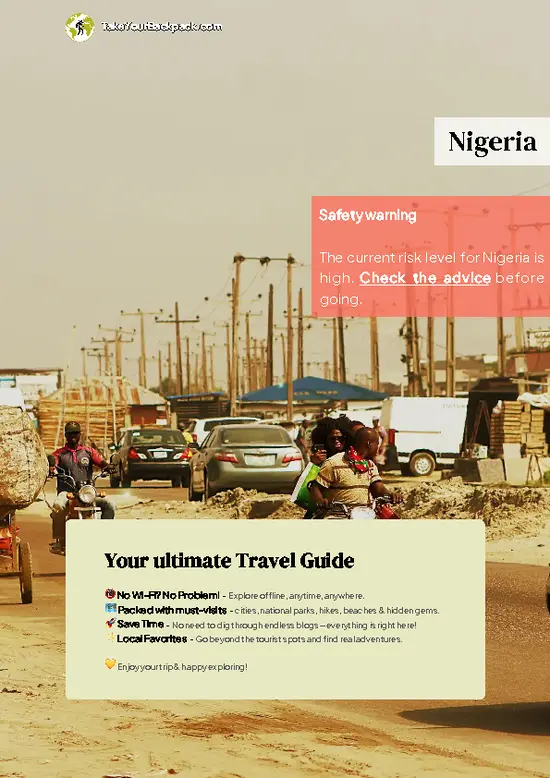
Safety warning

The current risk level for Nigeria is high. Check the advice before going.


Get your Nigeria guide
89 ranked highlights, routes & tips, works offline (332 pages)
Loading the map 🌍
CLICK TO FILTER
cities
towns
landmarks
national parks
hikes
beaches
attractions
festivals
regions
SHOW COUNTRY’S BESTSHOW ALL

✨ Why go?
Ranked #19 attraction in Nigeria
Why National Mosque should be on your travel list

The National Mosque in Abuja is not some quiet, off-the-beaten-path sanctuary. It’s a magnet for crowds, especially on Fridays and during religious festivals. Expect a steady stream of visitors, both locals and tourists, snapping photos and soaking in the atmosphere. The entrance fee isn’t sky-high, but it’s enough to remind you this isn’t a free-for-all tourist trap. Now, here’s where the real magic kicks in: this mosque is Nigeria’s spiritual heartbeat, a symbol of unity in a country often defined by its diversity and complexity. Its soaring minarets and expansive prayer halls aren’t just architectural feats—they’re a testament to Nigeria’s rich Islamic heritage and the role faith plays in everyday life here. For backpackers, it’s a milestone on the route through Nigeria, a place where you … read more 👉
The National Mosque in Abuja is not some quiet, off-the-beaten-path sanctuary. It’s a magnet for crowds, especially on Fridays and during religious festivals. Expect a steady stream of visitors, both locals and tourists, snapping photos and soaking in the atmosphere. The entrance fee isn’t sky-high, but it’s enough to remind you this isn’t a free-for-all tourist trap. Now, here’s where the real magic kicks in: this mosque is Nigeria’s spiritual heartbeat, a symbol of unity in a country often defined by its diversity and complexity. Its soaring minarets and expansive prayer halls aren’t just architectural feats—they’re a testament to Nigeria’s rich Islamic heritage and the role faith plays in everyday life here. For backpackers, it’s a milestone on the route through Nigeria, a place where you can pause and feel the pulse of the nation beyond the usual markets and street food chaos. The effort to navigate Abuja’s traffic and the crowds pays off with a deep cultural immersion that no Instagram shot can capture. This isn’t just a photo op; it’s a moment to connect with a living tradition that shapes millions of lives. That’s why you make time for the National Mosque.
Want to include National Mosque in your Nigeria route?
Create a personalized Nigeria itinerary that includes National Mosque and the places that fit your trip — based on your travel style, budget, and available time. Get your route in seconds.

Generate my trip

💡 HighlightsPlaces and moments you shouldn't skip

The Golden Dome and Skyline Views
Let’s get real: you’ve seen the dome on a thousand Instagram feeds, but the camera never captures the scale. This isn’t just a shiny cap on Abuja’s skyline—it’s a gold-plated exclamation mark, visible for miles. Up close, the dome is massive, almost audacious, and the way it catches the late afternoon sun is pure theater. The surrounding minarets aren’t just decorative; they’re architectural power moves, dwarfing most buildings in the city. If you want a sense of Abuja’s ambition, stand at the base and look up. It’s a reminder that Nigeria doesn’t do things halfway.


The Main Prayer Hall
Forget the sterile, echoing halls you might expect. The main prayer hall is a living, breathing space—especially on Fridays, when the crowd swells and the energy is electric. … read more 👉
The Golden Dome and Skyline Views
Let’s get real: you’ve seen the dome on a thousand Instagram feeds, but the camera never captures the scale. This isn’t just a shiny cap on Abuja’s skyline—it’s a gold-plated exclamation mark, visible for miles. Up close, the dome is massive, almost audacious, and the way it catches the late afternoon sun is pure theater. The surrounding minarets aren’t just decorative; they’re architectural power moves, dwarfing most buildings in the city. If you want a sense of Abuja’s ambition, stand at the base and look up. It’s a reminder that Nigeria doesn’t do things halfway.


The Main Prayer Hall
Forget the sterile, echoing halls you might expect. The main prayer hall is a living, breathing space—especially on Fridays, when the crowd swells and the energy is electric. The carpets are plush, the chandeliers are unapologetically grand, and the acoustics make even a whisper feel significant. Non-Muslims can’t enter during prayers, but outside those times, you can step inside (dressed respectfully) and feel the pulse of a place that isn’t just about faith, but about community. It’s not a museum; it’s a crossroads of daily life.


The Courtyard and Fountains
Here’s the surprise: the real magic isn’t inside, it’s in the open-air courtyards. The fountains aren’t just for show—they’re a cooling, calming counterpoint to Abuja’s heat and bustle. You’ll see families picnicking, kids darting between columns, and elders deep in conversation. It’s a slice of local life that never makes the travel brochures. If you want to feel the city’s heartbeat, skip the posed photos and just sit here for a while.


The Call to Prayer Experience
This is the moment that Instagram can’t fake. When the muezzin’s call echoes from the minarets, the city seems to pause. The sound is rich, layered, and—if you’re standing in the right spot—utterly immersive. It’s not just an audio cue; it’s a sensory reset. Whether you’re religious or not, the call to prayer here is a reminder that you’re somewhere with its own rhythm and rules. It’s grounding, and it’s unforgettable for all the right reasons.


The Nighttime Illumination
Abuja after dark is a different beast, and the National Mosque is its crown. The dome and minarets light up in gold and white, turning the complex into a beacon. It’s not subtle, but it’s not supposed to be. The nighttime glow draws locals and travelers alike, and the atmosphere is relaxed but charged with possibility. If you’re looking for a moment that feels cinematic, this is it—no filter required.


Proximity to the National Christian Centre
This isn’t technically part of the mosque, but it’s a detail that matters. The National Mosque and the National Christian Centre stand almost side by side, a deliberate, defiant statement about coexistence in a country that’s often misunderstood. Walk between the two, and you’ll see worshippers of both faiths crossing paths, sharing street food, and trading jokes. It’s not a tourist gimmick—it’s real, everyday Abuja, and it’s more powerful than any guided tour.
Spotted a mistake or missing something? Contact us.

Things to do near National Mosque

Ratings based on Tripadvisor reviews. When you book through this link, you support our work at no extra cost to you.

🌤️ When to go?Choosing the right time of year


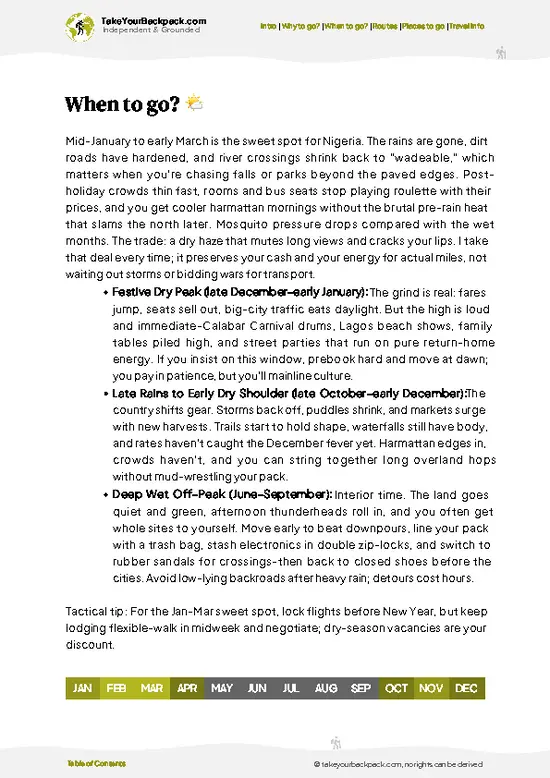
  • Weather: Nigeria’s climate swings between wet and dry seasons. The best window to visit the National Mosque is during the dry season, from November to March, when rain is scarce and the skies are clearer. Avoid April to October, when heavy rains can turn the city streets into mud traps and dampen your plans.

  • Temperature: Expect daytime highs around 30-33°C (86-91°F) during the dry months, which can feel intense but manageable with shade and hydration. Nights cool down to about 20-23°C (68-73°F), offering some relief. The wet season is hotter and more humid, pushing temps above 35°C (95°F), which can sap your energy fast.

  • Daylight Hours: Daylight is fairly consistent year-round, roughly 11 to 12 hours daily. Sunrise hovers around 6:30 AM, and sunset near 6:30 PM, giving you plenty of
read more 👉

  • Weather: Nigeria’s climate swings between wet and dry seasons. The best window to visit the National Mosque is during the dry season, from November to March, when rain is scarce and the skies are clearer. Avoid April to October, when heavy rains can turn the city streets into mud traps and dampen your plans.

  • Temperature: Expect daytime highs around 30-33°C (86-91°F) during the dry months, which can feel intense but manageable with shade and hydration. Nights cool down to about 20-23°C (68-73°F), offering some relief. The wet season is hotter and more humid, pushing temps above 35°C (95°F), which can sap your energy fast.

  • Daylight Hours: Daylight is fairly consistent year-round, roughly 11 to 12 hours daily. Sunrise hovers around 6:30 AM, and sunset near 6:30 PM, giving you plenty of time to explore without rushing.

  • Crowds: The National Mosque draws more visitors during religious holidays like Eid, which shift yearly but often fall in the dry season. Outside these peak times, the crowds thin out, letting you soak in the architecture and atmosphere without elbowing through selfie sticks.

  • Seasonal Activities: The dry season also hosts cultural festivals and markets that add layers to your visit. These events offer a chance to witness local life beyond the mosque’s walls, making the timing doubly rewarding.

  • Price Fluctuations: Accommodation and transport costs spike during peak religious festivals and the dry season’s holiday months (December and January). Booking ahead can save you from last-minute price gouging.


Pro-tip: Aim for late November or February—dry, cooler, and less crowded—so you get the mosque’s grandeur without the hassle or heat.


source: climatestotravel.comJANJanuary: highly recommended for travelingFEBFebruary: excellent for travelingMARMarch: highly recommended for travelingAPRApril: fair for travelingMAYMay: below average for travelingJUNJune: below average for travelingJULJuly: below average for travelingAUGAugust: below average for travelingSEPSeptember: fair for travelingOCTOctober: fair for travelingNOVNovember: excellent for travelingDECDecember: highly recommended for traveling
when-to-go

✈️ The backpacker research shortcutNigeria Travel Guide

An offline-friendly backpacking guide with optimized travel routes, ranked highlights, transport advice, and the best areas to stay.
example page 0 from our offline Travel Guide for Nigeria
example page 1 from our offline Travel Guide for Nigeria
example page 2 from our offline Travel Guide for Nigeria
example page 3 from our offline Travel Guide for Nigeria
example page 4 from our offline Travel Guide for Nigeria
example page 5 from our offline Travel Guide for Nigeria
example page 6 from our offline Travel Guide for Nigeria
example page 7 from our offline Travel Guide for Nigeria
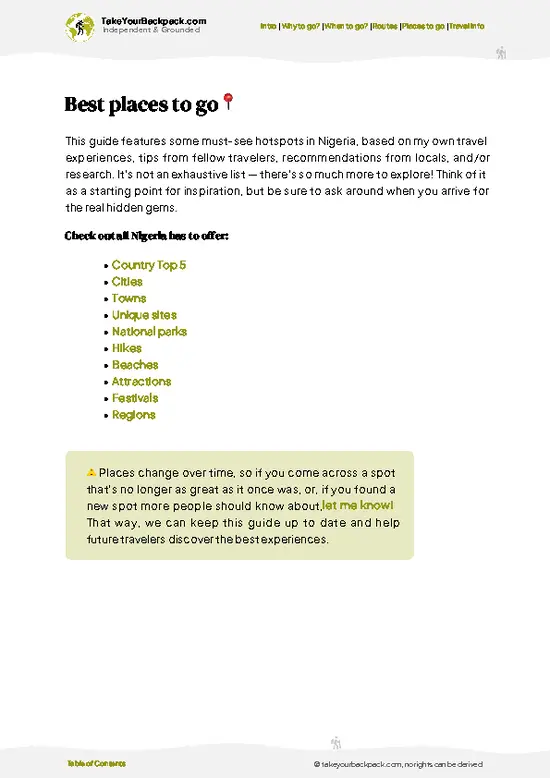
The digital guide (332 pages) contains:
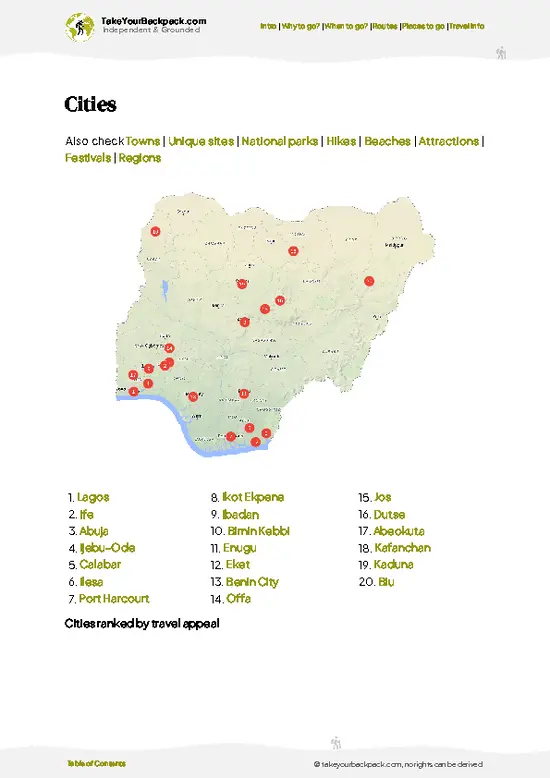
89 highlights, ranked by travel appeal
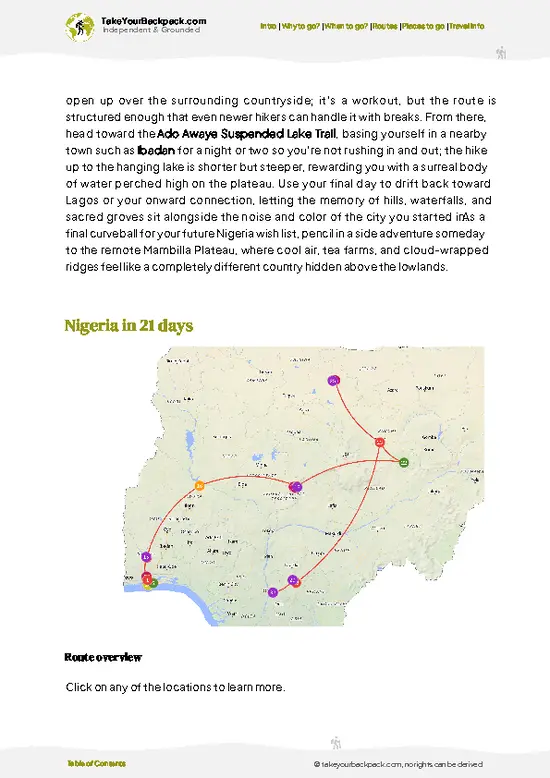
Optimized 7, 14 & 21-day travel routes
Cities, national parks, landmarks, beaches
How to get around
Offline-friendly for travel without Wi-Fi
👉 Click to see all 30+ guide features

📅 Plan smarter in minutes, not weeks
Month by month travel advice
Festivals & national holidays
Budget expectations

🗺️ Go to the right places, skip the overrated ones
Honest pros & cons of destinations
Top hikes, parks & viewpoints
Lesser-known places most travelers miss
Clear “worth it vs skip it” guidance

🛏️ Travel smoothly without rookie mistakes
Best areas to stay
Transport systems explained simply
Common scams & safety advice
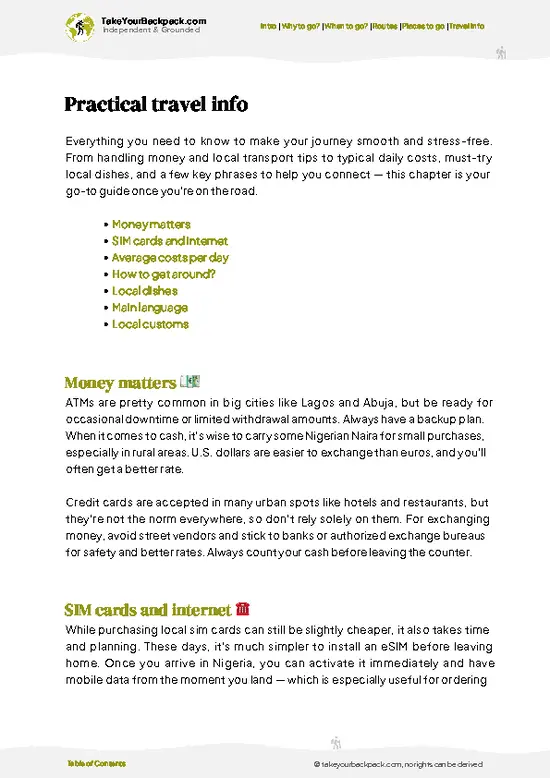
SIM cards, money & practical tips

🌍 Understand the country, not just visit it
Culture & traditions
52 Essential phrases & customs
Festivals worth planning around
Traveler-friendly historical context
Insights that make places more meaningful

📱 Built for real travel conditions
Fully downloadable PDF
Works completely offline
Optimized for phone use
Useful in remote areas & buses
Everything in one place
Save weeks of stressful planning
Get instant access to your full guide. 30‑day money-back guarantee.


By proceeding you agree to our terms.
Sent to your inbox immediately after payment • 100% Secure Checkout
Best Backpacking Travel Advisor 2025 tourism awardBest Backpacking
Travel Advisor
2025
What others say about Take Your Backpack Guides:
⭐⭐⭐⭐⭐
Fantastic, amazing amount of information!
⭐⭐⭐⭐⭐
My goodness this is amazing, it's what I've been looking for hats off too you!
⭐⭐⭐⭐⭐
I think this is absolutely BRILLIANT
⭐⭐⭐⭐
Very complete and informative. It's still missing places, but I gotta to commend you
⭐⭐⭐⭐⭐
This is truly amazing, thank you, can't wait to explore it with my kids!
⭐⭐⭐⭐⭐
Awesome resource, thank you!
⭐⭐⭐⭐⭐
This is amazing! Can't wait to explore the ones I haven't seen
⭐⭐⭐⭐
I love this! Well done, great idea.
⭐⭐⭐⭐⭐
Thanks for taking the time to make this gem!
⭐⭐⭐⭐⭐
This might be the best website I've ever seen.
⭐⭐⭐⭐⭐
Congratulations, and thank you so much for your work; it's incredibly valuable.
⭐⭐⭐⭐
In all seriousness I think you did a great job pointing out the important spots
⭐⭐⭐⭐⭐
10/10 very good
⭐⭐⭐⭐⭐
As someone who's only just starting to visit regularly this is awesome, thank you.
⭐⭐⭐⭐
Thank you very much! I'm going to visit my dad, it's going to be very useful!
⭐⭐⭐⭐⭐
This is really cool! We'll be travelling for the first time and this definitely come in handy.
⭐⭐⭐⭐⭐
You are now our minister of culture, congratulations 👨‍💼
⭐⭐⭐⭐⭐
Just wanted to tell you that this is a pearl! Going to follow your recommendations.
⭐⭐⭐⭐⭐
This is so cool. I'll definitely be using the resource for my travels soon.
⭐⭐⭐⭐⭐
This is very impressive! Good work.
⭐⭐⭐⭐⭐
This is an amazing and informative site. Very well done!

🛏️ Where to stay?Best areas and accommodation options

The National Mosque in Abuja is a landmark that draws plenty of visitors, but let’s cut through the Instagram gloss: the area around it is not a backpacker’s playground. It’s a government and diplomatic zone, which means security is tight, and the vibe leans more official than chill. Crowds aren’t your typical tourist throngs but a mix of worshippers and locals, so it’s not exactly buzzing with backpacker energy.

If you want to be close to the mosque, the best move is to settle in neighborhoods like Wuse or Garki. These areas are the real deal for budget travelers and solo adventurers. They’re … read more 👉
The National Mosque in Abuja is a landmark that draws plenty of visitors, but let’s cut through the Instagram gloss: the area around it is not a backpacker’s playground. It’s a government and diplomatic zone, which means security is tight, and the vibe leans more official than chill. Crowds aren’t your typical tourist throngs but a mix of worshippers and locals, so it’s not exactly buzzing with backpacker energy.

If you want to be close to the mosque, the best move is to settle in neighborhoods like Wuse or Garki. These areas are the real deal for budget travelers and solo adventurers. They’re safe enough, with a decent police presence, and offer a more authentic slice of Abuja life. You’ll find guesthouses, affordable eateries, and local markets where you can rub elbows with Nigerians rather than just other tourists. The social scene is low-key but genuine—think street food stalls and small bars where you can strike up conversations without the touristy pretense.

Staying in Wuse or Garki means you’re a short taxi ride from the mosque, but you’re also plugged into the city’s pulse. It’s not about luxury or Instagram-perfect views; it’s about being where the city breathes, where you can soak in the everyday rhythms that make Abuja more than just a photo op. That’s the real magic.

👛 Costs (as of 19 February 2026)Typical daily expenses

Visiting the Abuja National Mosque is free of charge. While there is no entrance fee, guided tours may be available through local tour operators or by contacting the mosque administration directly. ([wakaabuja.com](https://wakaabuja.com/abuja-national-mosque/?utm_source=openai))

source: wakaabuja.com
⚠️ Prices can change and everyone travels differently, so take this as a rough guide. Hope it helps you plan your adventure!

Other Nigerian attractions near National Mosque

Explore more nearby:


💡 Not sure where to go next?
Create a personalized itinerary for Nigeria including National Mosque and the places that fit your trip.

Generate my itinerary

👉 Discover all attractions

Or checkout all Nigeria has to offer (think cities, towns, villages, national parks, hikes, beaches, festivals)
Country photo of Nigeria

We 💚 feedbackIs it worth it?

The National Mosque in Abuja isn’t your typical tourist stop—expect crowds, especially on Fridays and during prayer times. It’s not flashy, and you won’t find Instagram-perfect angles around every corner. But here’s the kicker: step inside during a quiet moment, and the calm, soaring arches and intricate calligraphy hit differently. It’s a place that demands respect and reflection, not selfies. If you want a glimpse of Nigeria’s spiritual heartbeat beyond the noise, this is where it’s at. Just dress right and leave your camera ego at the door.

✍️ Help improve this page!
The information on this page is based on in-depth research, insights shared by experienced travelers, and feedback from the local travel community in Nigeria. While every effort is made to keep the information accurate and current, conditions can change — so if you spot anything incorrect or outdated, please get in touch.


🙋‍♂️ Give feedback

👋 Meet the founderWho’s Behind Take Your Backpack?

Johan, backpacker and founder of TakeYourBackpackHi, I’m Johan (Netherlands 🇳🇱), the creator of TakeYourBackpack. Over the past decade, I’ve backpacked through 80+ countries across six continents, gaining extensive experience with independent travel, long-term trips, and overland routes.

This site is built on a combination of firsthand travel experience and carefully curated insights from other backpackers. Many guides are based on places I’ve personally visited, while others bring together tips, observations, and practical advice shared by trusted travelers I’ve met along the way.

The goal is to provide realistic, experience-driven guidance — not generic itineraries — so you can explore destinations with better context, clearer expectations, and more confidence.

Get full Nigeria guide •
Instant download • 89 highlights • Full Offline guide