×

Nigeria🇳🇬 | citiesNguruSahel edge, seasonal wetlands, trans-Saharan trade routes | things to do and best time to go

Explore PotiskumExplore Mubi

Backpacking in Nguru
👍 Recommendedcity ranked #16
By Johan Kruseman 🇳🇱 | Updated June 10, 2026

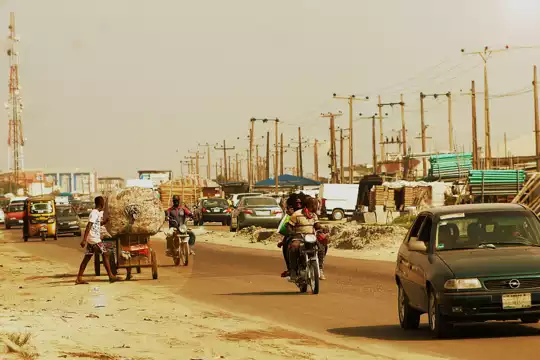
Nguru isn’t for travelers craving nightlife, polished comforts, or a parade of bucket-list monuments. But if you’re the kind who finds beauty in the slow swirl of dust at sunrise, the earthy scent of market spices, and the honest rhythm of a northern Nigerian crossroads, Nguru rewards your curiosity. Tucked in Yobe State, close to the Sahel’s edge, the town feels more like a practical junction than a destination—useful for overland routes toward Niger or Lake Chad, or as a base to watch the pulse of rural Hausa life. Expect basic guesthouses, a lively central market, and streets best explored on foot or by motorbike taxi. Don’t count on meeting many fellow backpackers; this is a place for self-reliant travelers, not hostel hoppers. Compared to busier Damaturu or Maiduguri, Nguru is quieter, less tense, and more affordable, but you’ll need patience and street smarts—especially after dark. The reward? A rare, unfiltered window into Nigeria’s north, where the journey itself is the highlight.

Discover everything you want to know in the 📖 Nigeria Travel Guide.
Safety warning

The current risk level for Nigeria is high. Check the advice before going.


Get your Nigeria guide
89 ranked highlights, routes & tips, works offline (332 pages)
Loading the map 🌍
CLICK TO FILTER
cities
towns
landmarks
national parks
hikes
beaches
attractions
festivals
regions
SHOW COUNTRY’S BESTSHOW ALL

✨ Why go?
Ranked #16 city in Nigeria
Why visitors keep coming back

Nguru serves as a gateway for backpackers seeking authentic experiences in Nigeria. Its walkable streets make it easy to explore local markets and savor street food that bursts with flavor. The town is a convenient base for nearby hikes and cultural sites, drawing in hikers and slow travelers who appreciate the blend of nature and community. Accommodations range from small-scale hostels to cozy guesthouses, fostering a friendly atmosphere where solo travelers and small groups can connect. Most visitors linger a few days, soaking in the local vibe before heading to the next adventure, making Nguru a worthwhile stop on your journey.
Want to include Nguru in your Nigeria route?
Create a personalized Nigeria itinerary that includes Nguru and the places that fit your trip — based on your travel style, budget, and available time. Get your route in seconds.

Generate my trip

💡 HighlightsThe experiences that define the visit

  • Hadejia-Nguru Wetlands access (Nguru riverfront): The seasonal floodplain right at Nguru’s edge is the town’s heartbeat—boat rides with local fishermen, big flocks of waterbirds in the dry season, and lively riverside settlements that show traditional floodplain fishing and rice farming up close.
  • Nguru Main Market: A bustling, colorful market where you’ll find lake fish, dry-season vegetables, Hausa and Kanuri textiles, donkeys and small livestock trading, and authentic street food; great for people-watching and picking up locally made goods.
  • Nguru Emir’s Palace (Gidan Sarkin Nguru): The traditional seat of local authority and a living piece of regional history—visit to see Hausa-style architecture, court ceremonies when they happen, and meet craftsmen connected to the palace’s household.
read more 👉
  • Hadejia-Nguru Wetlands access (Nguru riverfront): The seasonal floodplain right at Nguru’s edge is the town’s heartbeat—boat rides with local fishermen, big flocks of waterbirds in the dry season, and lively riverside settlements that show traditional floodplain fishing and rice farming up close.
  • Nguru Main Market: A bustling, colorful market where you’ll find lake fish, dry-season vegetables, Hausa and Kanuri textiles, donkeys and small livestock trading, and authentic street food; great for people-watching and picking up locally made goods.
  • Nguru Emir’s Palace (Gidan Sarkin Nguru): The traditional seat of local authority and a living piece of regional history—visit to see Hausa-style architecture, court ceremonies when they happen, and meet craftsmen connected to the palace’s household.
  • Komadugu Gana river landing and boat community: Small landing points and canoe neighborhoods along the Komadugu provide hands-on access to river life—simple boat trips, birding from the water, and watching the seasonal ebb and flow that drives local livelihoods.
A few real places worth day-tripping to from Nguru are the larger Hadejia town (historic market and town life), nearby Gashua (regional trading center), and broader sections of the Hadejia-Nguru wetlands for more extensive birding and wetland landscapes.
Spotted a mistake or missing something? Contact us.

🏘️ NeighborhoodsKey areas and districts to know

Nguru offers a unique blend of culture and practicality for backpackers. Each neighborhood has its own character, making it essential to choose wisely.

Central Nguru: This is the heartbeat of the town. Bustling markets and local eateries fill the streets. It’s walkable, with affordable accommodations. The nightlife is low-key, perfect for unwinding after a day of exploration. Ideal for short stays.

Gashua Road Area: A quieter vibe here, with spacious parks and fewer crowds. Great for longer stays if you want to soak in the local life. Transport options are decent, but you might need to rely on taxis for late-night returns.

Nguru East: A lively area with vibrant street food stalls. It’s a bit more chaotic, but the energy is infectious. Good for those who thrive on action and want to experience … read more 👉
Nguru offers a unique blend of culture and practicality for backpackers. Each neighborhood has its own character, making it essential to choose wisely.

Central Nguru: This is the heartbeat of the town. Bustling markets and local eateries fill the streets. It’s walkable, with affordable accommodations. The nightlife is low-key, perfect for unwinding after a day of exploration. Ideal for short stays.

Gashua Road Area: A quieter vibe here, with spacious parks and fewer crowds. Great for longer stays if you want to soak in the local life. Transport options are decent, but you might need to rely on taxis for late-night returns.

Nguru East: A lively area with vibrant street food stalls. It’s a bit more chaotic, but the energy is infectious. Good for those who thrive on action and want to experience local nightlife. Budget-friendly, but be prepared for some noise.

⌛️ 1 dayWhat you can realistically do in a day

Nguru, Nigeria, is a vibrant tapestry of culture and community, where the air is rich with the scent of spices and the sounds of lively conversations. Start your day at the bustling Nguru Market. Here, the colors of fresh produce and handmade crafts create a sensory feast. Engage with local vendors; their stories add depth to your experience.

After soaking in the market’s energy, head to the nearby Gashua River. The tranquil waters offer a perfect spot for reflection. Bring a small picnic; the gentle rustle of leaves and the occasional splash of fish create a serene backdrop.

In the afternoon, explore the historic architecture of the old town. The mud-brick buildings tell tales of resilience and tradition. Don’t miss the lesser-known Kafanchan neighborhood, where you can find local artisans … read more 👉
Nguru, Nigeria, is a vibrant tapestry of culture and community, where the air is rich with the scent of spices and the sounds of lively conversations. Start your day at the bustling Nguru Market. Here, the colors of fresh produce and handmade crafts create a sensory feast. Engage with local vendors; their stories add depth to your experience.

After soaking in the market’s energy, head to the nearby Gashua River. The tranquil waters offer a perfect spot for reflection. Bring a small picnic; the gentle rustle of leaves and the occasional splash of fish create a serene backdrop.

In the afternoon, explore the historic architecture of the old town. The mud-brick buildings tell tales of resilience and tradition. Don’t miss the lesser-known Kafanchan neighborhood, where you can find local artisans crafting beautiful textiles.

As evening falls, savor a meal at a local eatery. The aroma of jollof rice and grilled fish fills the air, inviting you to indulge. Share a laugh with locals; their warmth makes you feel at home. This day in Nguru isn’t just about sights; it’s about connection, culture, and the joy of discovery.
Turn your Nguru visit into an Nigeria adventure
Build a complete Nigeria route with Nguru, hidden gems, must-see destinations, and realistic travel times included.

Generate my trip

🌤️ When to go?Weather, crowds, and seasonal trade-offs


  • Topic: Weather – Nguru’s dry season from November to March offers clear skies and minimal rain, making dusty trails easier to navigate. The wet season (June to September) brings heavy rains that can turn paths into mud traps and swell rivers, complicating travel.

  • Topic: Temperature – Expect highs around 35°C (95°F) in the dry season, with cooler mornings near 20°C (68°F). The wet season cools things slightly but adds humidity, making the heat feel heavier.

  • Topic: Daylight Hours – Daylight stays steady year-round, roughly 12 hours, so you can plan long treks without worrying about early nightfall.

  • Topic: Crowds – Nguru isn’t a tourist hotspot, but local festivals in the dry season draw regional visitors, adding lively energy without overwhelming the town.

  • Topic: Seasonal Activities
read more 👉

  • Topic: Weather – Nguru’s dry season from November to March offers clear skies and minimal rain, making dusty trails easier to navigate. The wet season (June to September) brings heavy rains that can turn paths into mud traps and swell rivers, complicating travel.

  • Topic: Temperature – Expect highs around 35°C (95°F) in the dry season, with cooler mornings near 20°C (68°F). The wet season cools things slightly but adds humidity, making the heat feel heavier.

  • Topic: Daylight Hours – Daylight stays steady year-round, roughly 12 hours, so you can plan long treks without worrying about early nightfall.

  • Topic: Crowds – Nguru isn’t a tourist hotspot, but local festivals in the dry season draw regional visitors, adding lively energy without overwhelming the town.

  • Topic: Seasonal Activities – The dry season is prime for exploring markets and cultural events, while the wet season invites lush landscapes but limits outdoor excursions.

  • Topic: Price Fluctuations – Accommodation and transport costs dip during the wet season due to fewer visitors, but the trade-off is tougher travel conditions.


Pro-tip: Aim for late dry season visits—dusty but manageable trails, vibrant local life, and cooler mornings make for a backpacker’s sweet spot in Nguru.


source: climatestotravel.comJANJanuary: excellent for travelingFEBFebruary: excellent for travelingMARMarch: highly recommended for travelingAPRApril: good for travelingMAYMay: fair for travelingJUNJune: fair for travelingJULJuly: below average for travelingAUGAugust: below average for travelingSEPSeptember: fair for travelingOCTOctober: good for travelingNOVNovember: highly recommended for travelingDECDecember: excellent for traveling
when-to-go

✈️ The backpacker research shortcutNigeria Travel Guide

An offline-friendly backpacking guide with optimized travel routes, ranked highlights, transport advice, and the best areas to stay.
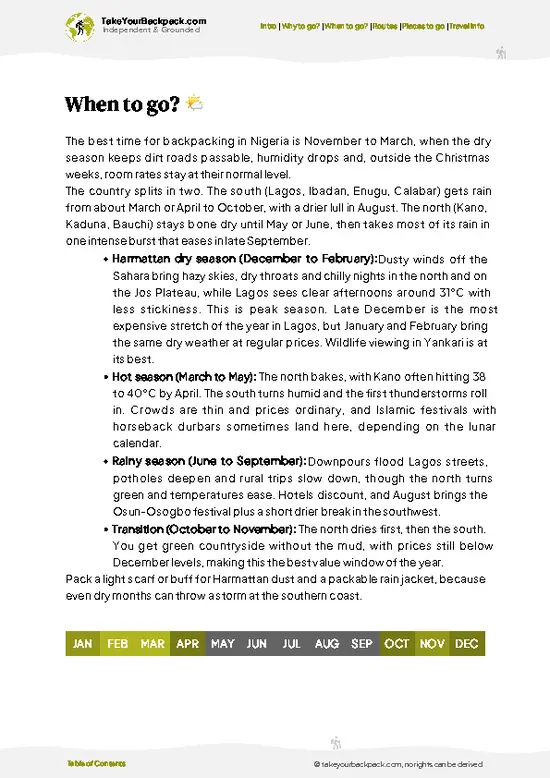
example page 0 from our offline Travel Guide for Nigeria
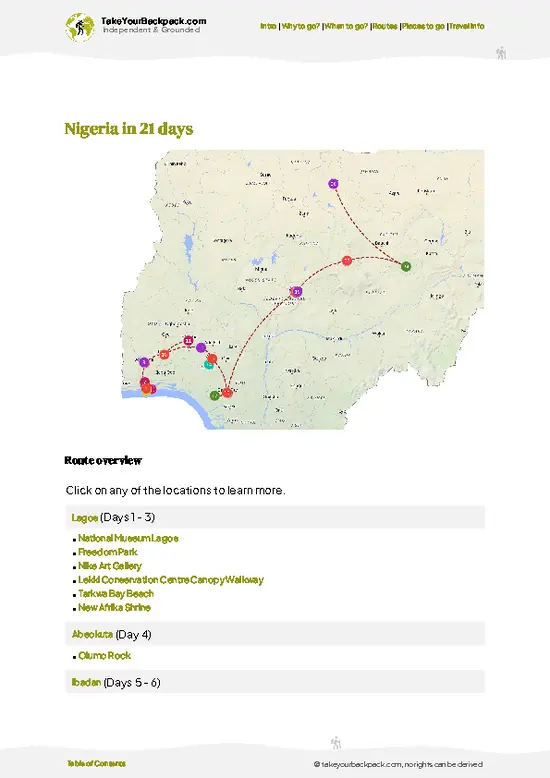
example page 1 from our offline Travel Guide for Nigeria
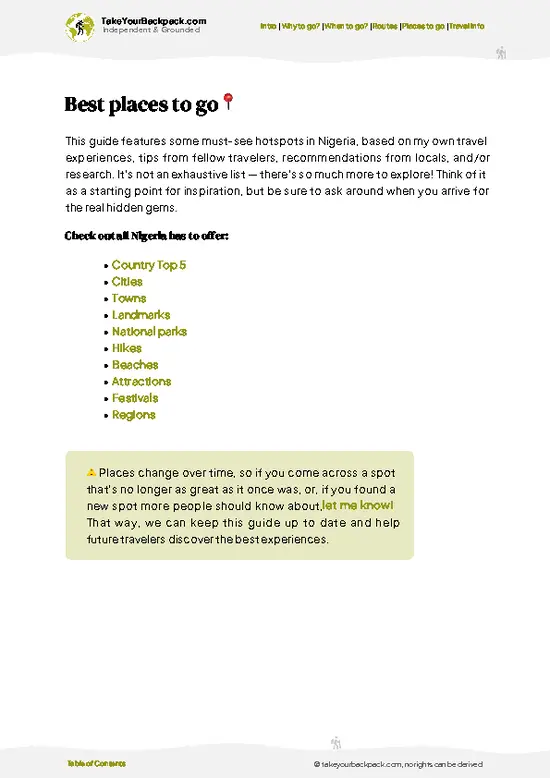
example page 2 from our offline Travel Guide for Nigeria
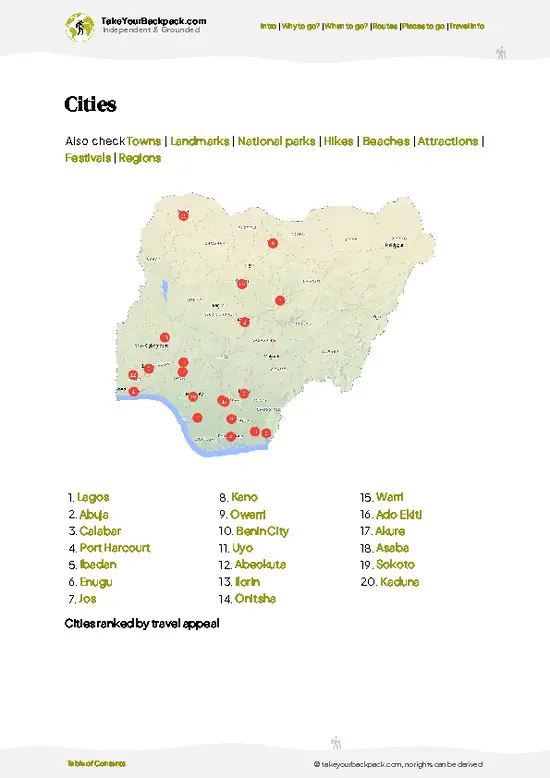
example page 3 from our offline Travel Guide for Nigeria
example page 4 from our offline Travel Guide for Nigeria
example page 5 from our offline Travel Guide for Nigeria
example page 6 from our offline Travel Guide for Nigeria
example page 7 from our offline Travel Guide for Nigeria
The digital guide (332 pages) contains:
89 highlights, ranked by travel appeal
Optimized 7, 14 & 21-day travel routes
Cities, national parks, landmarks, beaches
How to get around
Offline-friendly for travel without Wi-Fi
👉 Click to see all 30+ guide features

📅 Plan smarter in minutes, not weeks
Month by month travel advice
Festivals & national holidays
Budget expectations

🗺️ Go to the right places, skip the overrated ones
Honest pros & cons of destinations
Top hikes, parks & viewpoints
Lesser-known places most travelers miss
Clear “worth it vs skip it” guidance

🛏️ Travel smoothly without rookie mistakes
Best areas to stay
Transport systems explained simply
Common scams & safety advice
SIM cards, money & practical tips

🌍 Understand the country, not just visit it
Culture & traditions
52 Essential phrases & customs
Festivals worth planning around
Traveler-friendly historical context
Insights that make places more meaningful

📱 Built for real travel conditions
Fully downloadable PDF
Works completely offline
Optimized for phone use
Useful in remote areas & buses
Everything in one place
Save weeks of stressful planning
Get instant access to your full guide. 30‑day money-back guarantee.


By proceeding you agree to our terms.
Sent to your inbox immediately after payment • 100% Secure Checkout
Best Backpacking Travel Advisor 2025 tourism awardBest Backpacking
Travel Advisor
2025
What others say about Take Your Backpack Guides:
⭐⭐⭐⭐⭐
Fantastic, amazing amount of information!
⭐⭐⭐⭐⭐
My goodness this is amazing, it's what I've been looking for hats off too you!
⭐⭐⭐⭐⭐
I think this is absolutely BRILLIANT
⭐⭐⭐⭐
Very complete and informative. It's still missing places, but I gotta to commend you
⭐⭐⭐⭐⭐
This is truly amazing, thank you, can't wait to explore it with my kids!
⭐⭐⭐⭐⭐
Awesome resource, thank you!
⭐⭐⭐⭐⭐
This is amazing! Can't wait to explore the ones I haven't seen
⭐⭐⭐⭐
I love this! Well done, great idea.
⭐⭐⭐⭐⭐
Thanks for taking the time to make this gem!
⭐⭐⭐⭐⭐
This might be the best website I've ever seen.
⭐⭐⭐⭐⭐
Congratulations, and thank you so much for your work; it's incredibly valuable.
⭐⭐⭐⭐
In all seriousness I think you did a great job pointing out the important spots
⭐⭐⭐⭐⭐
10/10 very good
⭐⭐⭐⭐⭐
As someone who's only just starting to visit regularly this is awesome, thank you.
⭐⭐⭐⭐
Thank you very much! I'm going to visit my dad, it's going to be very useful!
⭐⭐⭐⭐⭐
This is really cool! We'll be travelling for the first time and this definitely come in handy.
⭐⭐⭐⭐⭐
You are now our minister of culture, congratulations 👨‍💼
⭐⭐⭐⭐⭐
Just wanted to tell you that this is a pearl! Going to follow your recommendations.
⭐⭐⭐⭐⭐
This is so cool. I'll definitely be using the resource for my travels soon.
⭐⭐⭐⭐⭐
This is very impressive! Good work.
⭐⭐⭐⭐⭐
This is an amazing and informative site. Very well done!

🛏️ Where to stay?Best areas and accommodation options

Nguru’s heart for backpackers beats strongest around the central market district. This area hums with life from dawn, the scent of fresh spices and grilled meat weaving through the warm air. It’s where you’ll find the most budget-friendly guesthouses and a handful of hostels that cater to solo travelers craving connection without the tourist gloss. The streets here are busy but familiar, with locals who nod in greeting and vendors who know your name by the third day. Compared to the quieter, more residential outskirts, this neighborhood offers a safer, more social vibe—daylight spills into open … read more 👉
Nguru’s heart for backpackers beats strongest around the central market district. This area hums with life from dawn, the scent of fresh spices and grilled meat weaving through the warm air. It’s where you’ll find the most budget-friendly guesthouses and a handful of hostels that cater to solo travelers craving connection without the tourist gloss. The streets here are busy but familiar, with locals who nod in greeting and vendors who know your name by the third day. Compared to the quieter, more residential outskirts, this neighborhood offers a safer, more social vibe—daylight spills into open courtyards where travelers swap stories over steaming mugs of tea. Staying here means you’re plugged into Nguru’s pulse, not just passing through it.

🚌 Getting aroundHow to get around Nguru

Nguru moves at its own rhythm—less a clock-driven city and more a place where intuition and local cues dictate your pace. The sun’s heat thickens the air by mid-morning, nudging you toward shade or a slow sip of tea at a roadside stall. Streets hum with the shuffle of feet and the occasional honk, but there’s no rush here, just a steady pulse that rewards patience and a keen eye. Understanding this flow means you don’t just get from A to B—you absorb the town’s character, turning transit into a part of the experience rather than a chore.


  • Walking: The most reliable and immersive way to navigate Nguru’s compact center. Streets are uneven but manageable, and walking lets you catch the scent of spices from market stalls and the chatter of vendors. No cost, and you control the pace—ideal for
read more 👉
Nguru moves at its own rhythm—less a clock-driven city and more a place where intuition and local cues dictate your pace. The sun’s heat thickens the air by mid-morning, nudging you toward shade or a slow sip of tea at a roadside stall. Streets hum with the shuffle of feet and the occasional honk, but there’s no rush here, just a steady pulse that rewards patience and a keen eye. Understanding this flow means you don’t just get from A to B—you absorb the town’s character, turning transit into a part of the experience rather than a chore.


  • Walking: The most reliable and immersive way to navigate Nguru’s compact center. Streets are uneven but manageable, and walking lets you catch the scent of spices from market stalls and the chatter of vendors. No cost, and you control the pace—ideal for budget travelers who want to soak in the atmosphere.


  • Shared Minibuses (Danfo): These are the backbone of local transit, running roughly from 6:30 AM to 7 PM. Fares hover around a few hundred naira, making them wallet-friendly. They’re cramped and noisy but fast enough to cover longer distances within town, especially during off-peak hours when traffic thins out.


  • Motorcycle Taxis (Okada): Perfect for quick hops or reaching spots minibuses don’t serve well. Prices are negotiable but generally low; expect to pay more after dark. The wind and dust are part of the ride’s raw appeal, but helmets aren’t always standard—ride smart and hold tight.


  • Auto Rickshaws (Keke Napep): A step up in comfort from motorcycles, these three-wheelers offer shade and some protection from dust. They run from dawn until about 9 PM, with fares slightly higher than minibuses but still budget-friendly. Ideal for short to medium distances when you want a break from walking.

👛 Costs (as of 1 March 2026)Money, prices, and spending tips

Backpacking through Nguru, Nigeria, means navigating a town where costs stay modest but the experience feels raw and authentic. Here’s what you’re looking at day-to-day.
  • Dorm Accommodation: Nguru doesn’t have a sprawling hostel scene, so dorm-style stays are limited and basic. Expect to pay around $5 to $10 per night for a simple guesthouse bed, often with shared facilities and minimal frills. The rooms are functional, sometimes with a fan but rarely air conditioning, so prepare for warm nights.
  • Meals: Street food and local eateries dominate. You can grab a filling plate of tuwo shinkafa (rice meal) or suya (grilled meat skewers) for about $1 to $3. A typical day’s worth of meals will run you $3 to $6 if you stick to local flavors and avoid imported or Western-style options.
  • Local Transport:
read more 👉
Backpacking through Nguru, Nigeria, means navigating a town where costs stay modest but the experience feels raw and authentic. Here’s what you’re looking at day-to-day.
  • Dorm Accommodation: Nguru doesn’t have a sprawling hostel scene, so dorm-style stays are limited and basic. Expect to pay around $5 to $10 per night for a simple guesthouse bed, often with shared facilities and minimal frills. The rooms are functional, sometimes with a fan but rarely air conditioning, so prepare for warm nights.
  • Meals: Street food and local eateries dominate. You can grab a filling plate of tuwo shinkafa (rice meal) or suya (grilled meat skewers) for about $1 to $3. A typical day’s worth of meals will run you $3 to $6 if you stick to local flavors and avoid imported or Western-style options.
  • Local Transport: Getting around is mostly by shared motorcycle taxis (okadas) or minibuses. Short rides cost between $0.30 and $1. For longer trips within or just outside town, budget around $1 to $3. Walking is often the best way to soak in the atmosphere, but when the sun blazes, these options keep you moving without breaking the bank.
  • Basic Activities/Entry Fees: Nguru is more about absorbing local life than paying for tourist attractions. Entry fees are rare, but if you visit local markets or cultural spots, expect to spend $1 to $3 for any guided experiences or small fees. The real cost here is time and attention, not money.
  • Miscellaneous Expenses: Bottled water, snacks, phone credit, and occasional tips add up. Plan for about $1 to $2 daily. Water is essential in the heat, and phone credit keeps you connected in a place where Wi-Fi is scarce.

Nguru’s daily budget for an independent backpacker typically falls between $11 and $24. It’s a place where simplicity rules, and every dollar stretches further if you embrace the local pace and flavors. The modest costs reflect the town’s straightforward lifestyle, making it a practical stop for travelers who value authenticity over luxury.
⚠️ Prices can change and everyone travels differently, so take this as a rough guide. Hope it helps you plan your adventure!

🚌 Day tripsShort trips worth adding

Nguru, Nigeria, is a backpacker’s dream base for exploring the rich tapestry of the region. With its vibrant markets and friendly locals, it’s the perfect launchpad for unforgettable day trips.

Lake Chad Adventure
Just a couple of hours from Nguru, Lake Chad offers a unique glimpse into the life of local fishermen. The air is thick with the scent of fresh fish and the sound of laughter as families gather by the water. You can rent a canoe for a few hundred naira, making it an affordable way to experience this vital ecosystem. The best time to visit is during the dry season, when the water recedes, revealing fascinating landscapes. Many first-timers miss the chance to chat with local fishermen, who can share stories that enrich your visit.


Yobe National Park
A short drive from Nguru, … read more 👉
Nguru, Nigeria, is a backpacker’s dream base for exploring the rich tapestry of the region. With its vibrant markets and friendly locals, it’s the perfect launchpad for unforgettable day trips.

Lake Chad Adventure
Just a couple of hours from Nguru, Lake Chad offers a unique glimpse into the life of local fishermen. The air is thick with the scent of fresh fish and the sound of laughter as families gather by the water. You can rent a canoe for a few hundred naira, making it an affordable way to experience this vital ecosystem. The best time to visit is during the dry season, when the water recedes, revealing fascinating landscapes. Many first-timers miss the chance to chat with local fishermen, who can share stories that enrich your visit.


Yobe National Park
A short drive from Nguru, Yobe National Park is a haven for wildlife enthusiasts. The park is home to diverse species, including antelopes and various bird species. Plan for a full day; the entrance fee is minimal, and you can easily pack a lunch to enjoy in the wild. The dry season is ideal for spotting animals, as they gather around water sources. A common mistake is underestimating the park’s size—bring plenty of water and wear sturdy shoes for the trails.


Nguru Market Experience
Staying local can be just as rewarding. The bustling Nguru Market is a sensory overload, with vibrant colors and the aroma of spices wafting through the air. Spend a few hours wandering through stalls, sampling street food, and chatting with vendors. It’s free to enter, and you’ll leave with a deeper understanding of local culture. Early mornings are best to avoid the crowds. Many backpackers overlook this gem, thinking they need to venture far for adventure.


Gashua Town
A quick trip to Gashua, about an hour away, reveals stunning landscapes and a glimpse into traditional life. The town is known for its ancient architecture and friendly locals. You can explore on foot, and the cost is minimal—just a bus fare. The best time to visit is during the cooler months, making your strolls more enjoyable. Many first-timers rush through, but taking time to engage with locals will enrich your experience.
Want to know what more Nigeria offers?
The Nigeria Travel Guide describes 89 highlights, from cities to national parks, from beaches to hikes

Get the Travel Guide -

🍲 FoodLocal Flavors for Backpackers

Nguru’s food scene is a playground of bold, earthy flavors that demand your attention. The star here is definitely tuwo shinkafa, a sticky rice pudding paired with rich, spicy soups like miyan kuka—a tangy baobab leaf broth that hits your palate with a smoky punch. Backpackers dive into this at bustling local markets, where the air is thick with the scent of grilled meats and fresh spices, and the chatter is as vibrant as the colors on your plate.

Drinking is straightforward but social—expect to sip on zobo, a hibiscus flower drink, tart and refreshing, or grab a cold local beer to cool down after a hot day. Eating here is communal; sharing bowls and eating with your right hand is the norm, so dive in with both hands and an open mind. The rhythm of Nguru’s food culture is unpretentious but … read more 👉
Nguru’s food scene is a playground of bold, earthy flavors that demand your attention. The star here is definitely tuwo shinkafa, a sticky rice pudding paired with rich, spicy soups like miyan kuka—a tangy baobab leaf broth that hits your palate with a smoky punch. Backpackers dive into this at bustling local markets, where the air is thick with the scent of grilled meats and fresh spices, and the chatter is as vibrant as the colors on your plate.

Drinking is straightforward but social—expect to sip on zobo, a hibiscus flower drink, tart and refreshing, or grab a cold local beer to cool down after a hot day. Eating here is communal; sharing bowls and eating with your right hand is the norm, so dive in with both hands and an open mind. The rhythm of Nguru’s food culture is unpretentious but deeply rooted in tradition—perfect for travelers who want to taste the city’s soul, not just its menu.

🛡️ SafetyStaying Safe: What Travelers Should Know

Nguru, Nigeria, is generally safe, but staying aware enhances your experience. Stick to well-lit areas at night and travel in groups if possible. Solo travelers should be mindful of their surroundings, especially near markets where distractions can lead to petty theft.

Common scams include overly friendly locals offering unsolicited help, often with a hidden agenda. Politely decline and trust your instincts. Carry yourself confidently, and engage with locals on your terms; this builds rapport and keeps you grounded. Enjoy the vibrant atmosphere, but stay alert to truly savor your adventure.

Other Nigerian cities near Nguru

Explore more nearby:

  • Azare—savanna landscape, cattle markets, Hausa-Fulani culture| 137 km away
  • Potiskum—livestock markets, Sahel trade routes, Hausa settlements| 148 km away
  • Dutse—rocky hills, Friday market, Emir’s palace| 176 km away

💡 Not sure where to go next?
Create a personalized itinerary for Nigeria including Nguru and the places that fit your trip.

Generate my itinerary

👉 Discover all cities

Or checkout all Nigeria has to offer (think cities, towns, villages, national parks, hikes, beaches, festivals)
Country photo of Nigeria

We 💚 feedbackWhat to keep in mind

Nguru has a pulse that’s both vibrant and raw. The scent of spices wafts through the market, mingling with laughter. Don’t miss the local street food; it’s a revelation. Just be prepared for the heat—stay hydrated, and embrace the sweat. It’s part of the adventure.

✍️ Help improve this page!
The information on this page is based on in-depth research, insights shared by experienced travelers, and feedback from the local travel community in Nigeria. While every effort is made to keep the information accurate and current, conditions can change — so if you spot anything incorrect or outdated, please get in touch.


🙋‍♂️ Give feedback

👋 Meet the founderWho’s Behind Take Your Backpack?

Johan, backpacker and founder of TakeYourBackpackHi, I’m Johan (Netherlands 🇳🇱), the creator of TakeYourBackpack. Over the past decade, I’ve backpacked through 80+ countries across six continents, gaining extensive experience with independent travel, long-term trips, and overland routes.

This site is built on a combination of firsthand travel experience and carefully curated insights from other backpackers. Many guides are based on places I’ve personally visited, while others bring together tips, observations, and practical advice shared by trusted travelers I’ve met along the way.

The goal is to provide realistic, experience-driven guidance — not generic itineraries — so you can explore destinations with better context, clearer expectations, and more confidence.

Get full Nigeria guide •
Instant download • 89 highlights • Full Offline guide