×

Nigeria🇳🇬 | citiesZariaancient city walls, Emir’s palace, university town | things to do and best time to go

Explore AbeokutaExplore Kaduna

Backpacking in Zaria
👍 Recommendedcity ranked #15
By Johan Kruseman 🇳🇱 | Updated June 10, 2026

Is the Emir’s Palace really why you’d cross continents to reach Zaria? That’s the postcard answer, but the real trade-off here is between chasing legend and living the city’s daily rhythm. Zaria sits in northern Nigeria, a few hours north of Kaduna, and it’s a crossroads of Hausa tradition and university-town energy. The old city walls and the palace are impressive, but the real draw is the street life—markets humming, students debating, suya grilling on corners. It’s affordable, rough around the edges, and less polished than Jos or Kano, but that’s the point: Zaria rewards curiosity, not comfort. Safety is manageable with street smarts, but don’t expect a backpacker scene—here, you’re the story.

Discover everything you want to know in the 📖 Nigeria Travel Guide.
Safety warning

The current risk level for Nigeria is high. Check the advice before going.


Get your Nigeria guide
89 ranked highlights, routes & tips, works offline (332 pages)
Loading the map 🌍
CLICK TO FILTER
cities
towns
landmarks
national parks
hikes
beaches
attractions
festivals
regions
SHOW COUNTRY’S BESTSHOW ALL

✨ Why go?
Ranked #15 city in Nigeria
What makes this city worth visiting

Zaria is a strategic stop for backpackers weaving through Nigeria. It offers a solid mix of affordable hostels and local eateries, making it easy on the wallet while still delivering flavor. The city’s walkability allows you to explore its vibrant streets without the hassle of transport. Plus, it serves as a basecamp for day trips to nearby attractions, maximizing your time without sacrificing comfort. The nightlife here is low-key but engaging, perfect for unwinding after a day of exploration. If you’re looking for a place that balances value and experience, Zaria fits the bill, whether for a quick stop or a deeper dive.
Want to include Zaria in your Nigeria route?
Create a personalized Nigeria itinerary that includes Zaria and the places that fit your trip — based on your travel style, budget, and available time. Get your route in seconds.

Generate my trip

💡 HighlightsWhat this place is best known for

  1. Ahmadu Bello University (Main Campus) — One of West Africa’s largest campuses: roomy lawns, colonial-era and modern architecture, student life, and several small departmental collections. Strolling the campus gives a feel for Zaria’s intellectual and cultural heartbeat.
  2. ABU Zoological Garden (Zaria Zoo) — A compact, well-kept zoo on the university grounds where you can see local and regional species; good for photography, a relaxed walk, and a break from the city bustle.
  3. Emir of Zazzau’s Palace (Gidan Sarki) — The historic palace of the Emir is the ceremonial core of Zaria’s traditional authority. The compound’s architecture and occasional public events offer real insight into Hausa rulership and pageantry (ask locally about visiting times).
  4. Ancient City Walls and Gates (Kofar) — Remnants
read more 👉
  1. Ahmadu Bello University (Main Campus) — One of West Africa’s largest campuses: roomy lawns, colonial-era and modern architecture, student life, and several small departmental collections. Strolling the campus gives a feel for Zaria’s intellectual and cultural heartbeat.
  2. ABU Zoological Garden (Zaria Zoo) — A compact, well-kept zoo on the university grounds where you can see local and regional species; good for photography, a relaxed walk, and a break from the city bustle.
  3. Emir of Zazzau’s Palace (Gidan Sarki) — The historic palace of the Emir is the ceremonial core of Zaria’s traditional authority. The compound’s architecture and occasional public events offer real insight into Hausa rulership and pageantry (ask locally about visiting times).
  4. Ancient City Walls and Gates (Kofar) — Remnants of the old defensive walls and the original gates that once defined Zazzau are tangible links to the city’s pre-colonial history; great for wandering, photos, and imagining the old city layout.
  5. Zaria Central Market — A lively, colorful market where you’ll find fabrics, leather goods, spices, and local street food; an essential spot to see daily commerce, barter culture, and pick up authentic souvenirs if you haggle politely.
  6. Traditional Tanneries and Leather Workshops — Around the old quarters you’ll find craftsmen turning hides into belts, sandals and bags the Hausa way. Watching the hands-on process and buying direct from makers is both cultural and practical.
  7. Old Zaria (Hausa quarters and alleys) — Narrow lanes, traditional mud-brick houses, small neighborhood mosques and local workshops: these quarters show everyday life and traditional architecture better than any textbook.
  8. Ahmadu Bello University Museums & Collections — Small ethnographic and archaeological displays kept by university departments—modest but rewarding for anyone interested in regional history, material culture, and research collections you won’t see elsewhere.
  9. Zaria Railway Station (colonial-era station) — The old station and surrounding railway architecture speak to the colonial transport era and make for an atmospheric visit; a good spot for photos and local rail history context.
  10. ABU Theatre & Cultural Spaces / Local Arts Corners — Catch a student play, a music rehearsal, or browse small stalls selling Hausa embroidery, hand-woven textiles and prints. It’s where contemporary student culture and traditional crafts meet.
A few real, visitable highlights just outside Zaria worth day-tripping to: Kaduna city (about an hour — museums and city markets), Kano’s old city and Kurmi Market (a couple of hours away for a deeper Hausa urban experience), and Kajuru Castle (a scenic private castle/guest spot in Kaduna State).
Spotted a mistake or missing something? Contact us.

🏘️ NeighborhoodsWhere things are and how it's laid out

Zaria offers a unique blend of history and culture, making it a fascinating stop for backpackers. Here’s how the neighborhoods stack up:

Kano Road: This bustling area is your go-to for street food and local markets. It’s affordable and walkable, perfect for short stays. The nightlife is lively, with bars and music venues, but it quiets down by midnight.

Sabon Gari: Known for its diverse community, this neighborhood is a melting pot of cultures. It’s budget-friendly and has a relaxed vibe. While not as vibrant at night, it’s safe for evening strolls. Great for longer stays with access to transport.

GRA (Government Reserved Area): A more upscale option, GRA offers a quieter atmosphere with parks and cafes. Prices are higher, but it’s well-connected. Ideal for those seeking comfort and a longer retreat from the hustle.

⌛️ 1 day1-day itinerary for Zaria

Zaria, Nigeria, is a vibrant tapestry of history and culture, known for its ancient architecture and lively markets. Start your day in the historic district of Zazzau, where the ancient walls whisper tales of the past. Visit the Emir’s Palace, a stunning example of traditional Hausa architecture.

In the morning, grab a local breakfast of akara (bean cakes) and pap at a nearby street vendor. The energy of the bustling streets will fuel your exploration. Afterward, stroll through the nearby market, where you can find colorful fabrics and handcrafted goods.

As the afternoon rolls in, head to the Ahmadu Bello University campus. The serene environment is perfect for a leisurely walk, and you might catch a glimpse of students engaging in lively discussions.

For dinner, venture to the Sabon … read more 👉
Zaria, Nigeria, is a vibrant tapestry of history and culture, known for its ancient architecture and lively markets. Start your day in the historic district of Zazzau, where the ancient walls whisper tales of the past. Visit the Emir’s Palace, a stunning example of traditional Hausa architecture.

In the morning, grab a local breakfast of akara (bean cakes) and pap at a nearby street vendor. The energy of the bustling streets will fuel your exploration. Afterward, stroll through the nearby market, where you can find colorful fabrics and handcrafted goods.

As the afternoon rolls in, head to the Ahmadu Bello University campus. The serene environment is perfect for a leisurely walk, and you might catch a glimpse of students engaging in lively discussions.

For dinner, venture to the Sabon Gari neighborhood. Here, you’ll find a mix of local and international cuisine. Try the jollof rice at a local eatery, where the flavors burst with every bite.

End your day at the Kofar Doka, a lesser-known spot, where you can enjoy the sunset and reflect on your day in this captivating city.
Turn your Zaria visit into an Nigeria adventure
Build a complete Nigeria route with Zaria, hidden gems, must-see destinations, and realistic travel times included.

Generate my trip

🌤️ When to go?When to go for the best experience


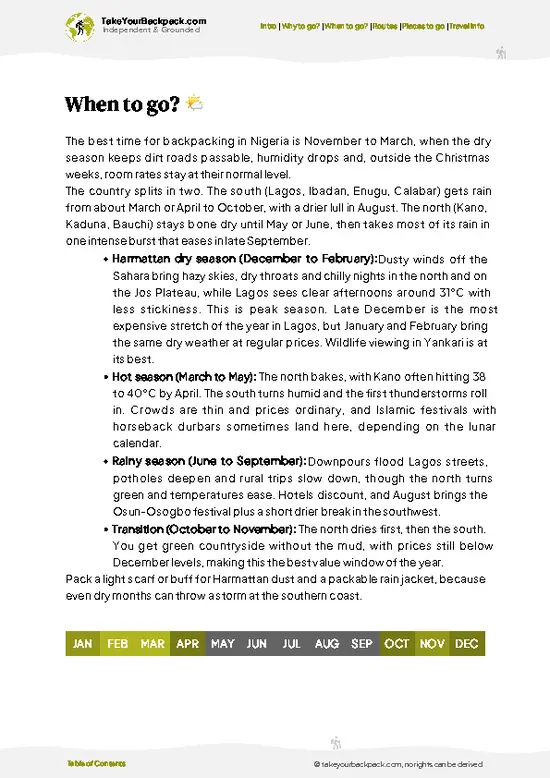
  • Topic: Weather – Zaria’s climate swings between a hot dry season and a wet rainy season. The dry season from November to March offers clear skies and minimal rain, ideal for trekking and city exploration without soggy boots.

  • Topic: Temperature – Expect highs around 33-38°C (91-100°F) during the dry months, cooling slightly at night. The rainy season cools things down to 25-30°C (77-86°F) but brings humidity that can sap your energy.

  • Topic: Daylight Hours – Daylight is fairly consistent year-round, roughly 12 hours daily, giving you a reliable window to plan hikes or market visits without racing the sunset.

  • Topic: Crowds – Tourist traffic peaks during the dry season, especially December and January, when festivals and holidays draw locals and visitors alike. Off-peak months offer quieter streets
read more 👉

  • Topic: Weather – Zaria’s climate swings between a hot dry season and a wet rainy season. The dry season from November to March offers clear skies and minimal rain, ideal for trekking and city exploration without soggy boots.

  • Topic: Temperature – Expect highs around 33-38°C (91-100°F) during the dry months, cooling slightly at night. The rainy season cools things down to 25-30°C (77-86°F) but brings humidity that can sap your energy.

  • Topic: Daylight Hours – Daylight is fairly consistent year-round, roughly 12 hours daily, giving you a reliable window to plan hikes or market visits without racing the sunset.

  • Topic: Crowds – Tourist traffic peaks during the dry season, especially December and January, when festivals and holidays draw locals and visitors alike. Off-peak months offer quieter streets and more authentic interactions.

  • Topic: Seasonal Activities – The dry season hosts cultural festivals and open-air markets, perfect for immersive experiences. The rainy season limits outdoor events but brings lush landscapes for photography enthusiasts.

  • Topic: Price Fluctuations – Accommodation and transport costs rise during peak dry months due to demand. Traveling just before or after this period can save money without sacrificing comfort.


Pro-tip: Aim for late November or early March to balance pleasant weather, manageable crowds, and better prices—maximizing your backpacking bang for your buck in Zaria.


source: climatestotravel.comJANJanuary: highly recommended for travelingFEBFebruary: highly recommended for travelingMARMarch: highly recommended for travelingAPRApril: fair for travelingMAYMay: fair for travelingJUNJune: fair for travelingJULJuly: fair for travelingAUGAugust: fair for travelingSEPSeptember: good for travelingOCTOctober: good for travelingNOVNovember: highly recommended for travelingDECDecember: excellent for traveling
when-to-go

✈️ The backpacker research shortcutNigeria Travel Guide

An offline-friendly backpacking guide with optimized travel routes, ranked highlights, transport advice, and the best areas to stay.
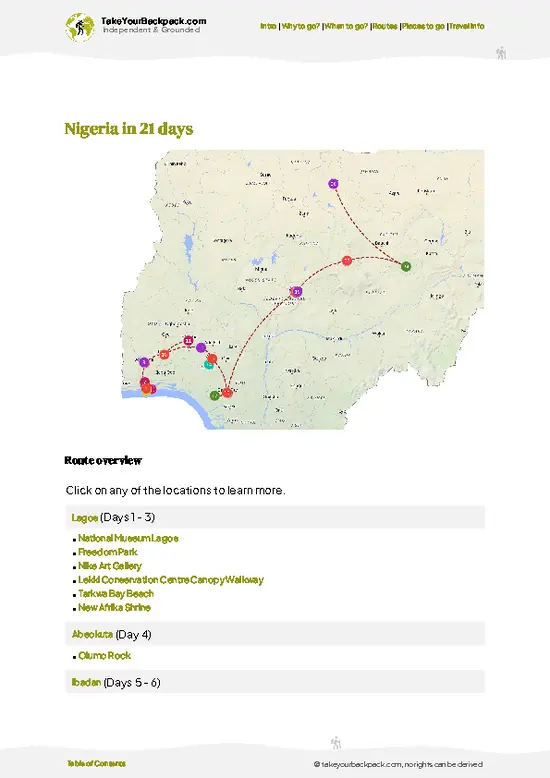
example page 0 from our offline Travel Guide for Nigeria
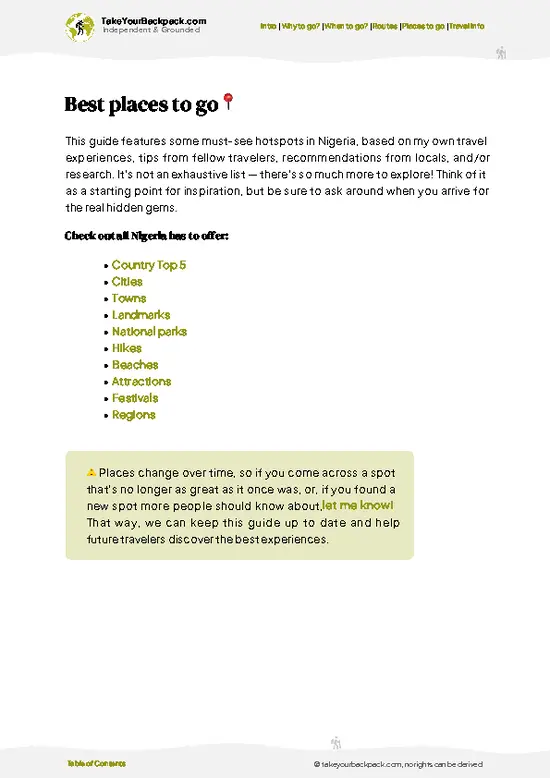
example page 1 from our offline Travel Guide for Nigeria
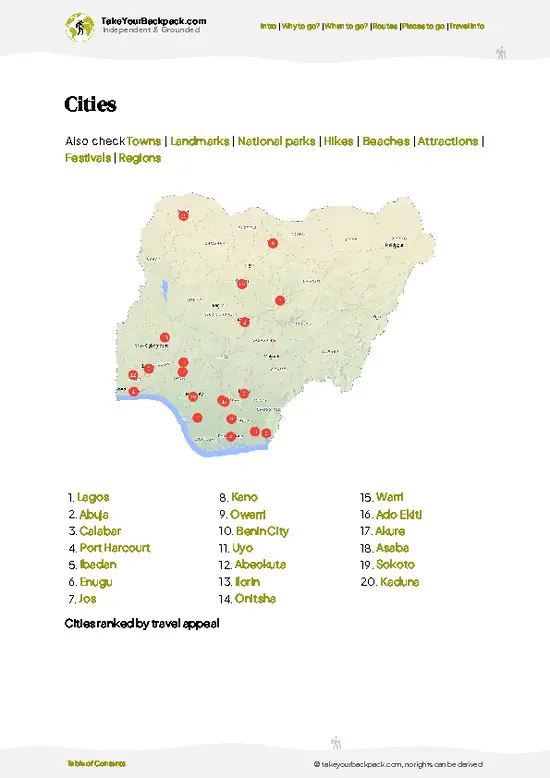
example page 2 from our offline Travel Guide for Nigeria
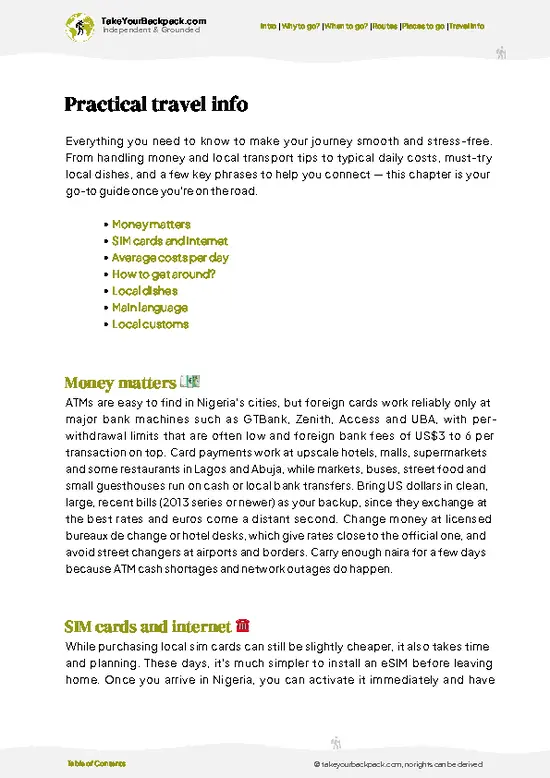
example page 3 from our offline Travel Guide for Nigeria
example page 4 from our offline Travel Guide for Nigeria
example page 5 from our offline Travel Guide for Nigeria
example page 6 from our offline Travel Guide for Nigeria
example page 7 from our offline Travel Guide for Nigeria
The digital guide (332 pages) contains:
89 highlights, ranked by travel appeal
Optimized 7, 14 & 21-day travel routes
Cities, national parks, landmarks, beaches
How to get around
Offline-friendly for travel without Wi-Fi
👉 Click to see all 30+ guide features

📅 Plan smarter in minutes, not weeks
Month by month travel advice
Festivals & national holidays
Budget expectations

🗺️ Go to the right places, skip the overrated ones
Honest pros & cons of destinations
Top hikes, parks & viewpoints
Lesser-known places most travelers miss
Clear “worth it vs skip it” guidance

🛏️ Travel smoothly without rookie mistakes
Best areas to stay
Transport systems explained simply
Common scams & safety advice
SIM cards, money & practical tips

🌍 Understand the country, not just visit it
Culture & traditions
52 Essential phrases & customs
Festivals worth planning around
Traveler-friendly historical context
Insights that make places more meaningful

📱 Built for real travel conditions
Fully downloadable PDF
Works completely offline
Optimized for phone use
Useful in remote areas & buses
Everything in one place
Save weeks of stressful planning
Get instant access to your full guide. 30‑day money-back guarantee.


By proceeding you agree to our terms.
Sent to your inbox immediately after payment • 100% Secure Checkout
Best Backpacking Travel Advisor 2025 tourism awardBest Backpacking
Travel Advisor
2025
What others say about Take Your Backpack Guides:
⭐⭐⭐⭐⭐
Fantastic, amazing amount of information!
⭐⭐⭐⭐⭐
My goodness this is amazing, it's what I've been looking for hats off too you!
⭐⭐⭐⭐⭐
I think this is absolutely BRILLIANT
⭐⭐⭐⭐
Very complete and informative. It's still missing places, but I gotta to commend you
⭐⭐⭐⭐⭐
This is truly amazing, thank you, can't wait to explore it with my kids!
⭐⭐⭐⭐⭐
Awesome resource, thank you!
⭐⭐⭐⭐⭐
This is amazing! Can't wait to explore the ones I haven't seen
⭐⭐⭐⭐
I love this! Well done, great idea.
⭐⭐⭐⭐⭐
Thanks for taking the time to make this gem!
⭐⭐⭐⭐⭐
This might be the best website I've ever seen.
⭐⭐⭐⭐⭐
Congratulations, and thank you so much for your work; it's incredibly valuable.
⭐⭐⭐⭐
In all seriousness I think you did a great job pointing out the important spots
⭐⭐⭐⭐⭐
10/10 very good
⭐⭐⭐⭐⭐
As someone who's only just starting to visit regularly this is awesome, thank you.
⭐⭐⭐⭐
Thank you very much! I'm going to visit my dad, it's going to be very useful!
⭐⭐⭐⭐⭐
This is really cool! We'll be travelling for the first time and this definitely come in handy.
⭐⭐⭐⭐⭐
You are now our minister of culture, congratulations 👨‍💼
⭐⭐⭐⭐⭐
Just wanted to tell you that this is a pearl! Going to follow your recommendations.
⭐⭐⭐⭐⭐
This is so cool. I'll definitely be using the resource for my travels soon.
⭐⭐⭐⭐⭐
This is very impressive! Good work.
⭐⭐⭐⭐⭐
This is an amazing and informative site. Very well done!

🛏️ Where to stay?Where staying makes the most sense

In Zaria, the sweet spot for backpackers is the Sabon Gari district. It’s a lively, diverse neighborhood where safety feels more tangible than in the sprawling outskirts. Sabon Gari pulses with student energy thanks to its proximity to Ahmadu Bello University, making it a magnet for solo travelers craving social vibes without the touristy gloss. Hostels and budget guesthouses cluster here, offering basic comfort without bleeding your wallet. Compared to the quieter, more residential areas, Sabon Gari delivers a practical balance: you’re close to markets, eateries, and transport hubs, which means … read more 👉
In Zaria, the sweet spot for backpackers is the Sabon Gari district. It’s a lively, diverse neighborhood where safety feels more tangible than in the sprawling outskirts. Sabon Gari pulses with student energy thanks to its proximity to Ahmadu Bello University, making it a magnet for solo travelers craving social vibes without the touristy gloss. Hostels and budget guesthouses cluster here, offering basic comfort without bleeding your wallet. Compared to the quieter, more residential areas, Sabon Gari delivers a practical balance: you’re close to markets, eateries, and transport hubs, which means less time and money wasted on taxis. The trade-off? It’s busier and noisier, but that’s part of the charm—this is where you plug into local rhythms and meet fellow travelers who are also navigating Nigeria’s northern heartland.

🚌 Getting aroundGetting around like a local

Zaria moves at its own pace—neither a frantic rush nor a laid-back drift. It’s a city where schedules exist but bend to the rhythm of daily life, a blend of predictable market hours and the improvisational dance of shared transport. You’ll find that time here is flexible, but money and comfort are the real currencies to negotiate. Knowing how to play this game means you control your experience, choosing when to save cash, when to save time, and when to invest in a bit of ease.


  • Walking: The ultimate budget option. Zaria’s central areas are compact enough to explore on foot, giving you zero cost and full control over your pace. It’s slow but immersive—perfect for soaking in street life and local markets without spending a dime.


  • Motorcycle Taxis (Okada): Fast and flexible, these dart
read more 👉
Zaria moves at its own pace—neither a frantic rush nor a laid-back drift. It’s a city where schedules exist but bend to the rhythm of daily life, a blend of predictable market hours and the improvisational dance of shared transport. You’ll find that time here is flexible, but money and comfort are the real currencies to negotiate. Knowing how to play this game means you control your experience, choosing when to save cash, when to save time, and when to invest in a bit of ease.


  • Walking: The ultimate budget option. Zaria’s central areas are compact enough to explore on foot, giving you zero cost and full control over your pace. It’s slow but immersive—perfect for soaking in street life and local markets without spending a dime.


  • Motorcycle Taxis (Okada): Fast and flexible, these dart through traffic and cut travel time drastically. Expect to pay around 100-200 NGN per short trip. Comfort is minimal—helmet optional, wind guaranteed—but if you’re in a hurry and traveling light, this is your go-to.


  • Shared Minibuses: The backbone of Zaria’s public transit. Runs roughly from 6 AM to 8 PM, fares hover around 150-300 NGN depending on distance. They’re slow and often crowded, but cheap and reliable if you can handle the hustle and occasional wait times.


  • Private Taxis: More expensive, typically 1000 NGN and up per ride, but you get door-to-door service and a bit more comfort. Best for late-night trips or when you’re carrying heavy gear. Negotiation skills come into play here—always agree on a price before hopping in.


Mastering Zaria’s transit means balancing your priorities. Walk when you want to absorb the city’s pulse, jump on an okada to slice through time, or settle into a minibus for budget-friendly, if crowded, travel. Each choice is a trade-off—know what you’re giving up, and you’ll travel smarter.

👛 Costs (as of 1 March 2026)Typical daily expenses

Backpacking in Zaria, Nigeria, offers a clear trade-off between cost and comfort, with prices reflecting the local economy and travel infrastructure. Here’s a breakdown of what you can expect to spend daily, giving you the power to choose your own balance of time, money, and comfort.
  • Dorm Accommodation (High Season): Around $8 to $12 per night. During peak travel times, prices rise slightly due to demand, but options remain basic—expect simple rooms with shared facilities.
  • Dorm Accommodation (Off-Season): Drops to about $5 to $8 per night. Less crowded, so you might negotiate better deals or find quieter spots, though amenities stay modest.
  • Meals: $3 to $7 per day. Street food and local eateries dominate here. You’ll get filling, authentic meals for a few dollars, but opting for more Western-style
read more 👉
Backpacking in Zaria, Nigeria, offers a clear trade-off between cost and comfort, with prices reflecting the local economy and travel infrastructure. Here’s a breakdown of what you can expect to spend daily, giving you the power to choose your own balance of time, money, and comfort.
  • Dorm Accommodation (High Season): Around $8 to $12 per night. During peak travel times, prices rise slightly due to demand, but options remain basic—expect simple rooms with shared facilities.
  • Dorm Accommodation (Off-Season): Drops to about $5 to $8 per night. Less crowded, so you might negotiate better deals or find quieter spots, though amenities stay modest.
  • Meals: $3 to $7 per day. Street food and local eateries dominate here. You’ll get filling, authentic meals for a few dollars, but opting for more Western-style or restaurant dining pushes costs higher.
  • Local Transport: $0.20 to $0.50 per trip. Shared minibuses and motorcycle taxis (okadas) are the norm. They’re cheap but can be unpredictable in timing and comfort.
  • City Transport Pass: Not commonly available. Most travelers rely on pay-per-ride options, so budgeting for multiple short trips is essential.
  • Basic Activities/Entry Fees: $1 to $3. Museums, cultural sites, and local markets usually have minimal or no entry fees, making exploration affordable.
  • Miscellaneous Expenses: $1 to $3. This covers bottled water, snacks, occasional phone credit top-ups, or small tips. It’s a buffer for those little extras that add up.

In total, expect to spend roughly $15 to $25 per day backpacking in Zaria. This range lets you decide if you want to stretch your budget by roughing it or spend a bit more for added comfort and convenience. Understanding these trade-offs means you’re not just spending money—you’re investing in the kind of experience you want to have.
⚠️ Prices can change and everyone travels differently, so take this as a rough guide. Hope it helps you plan your adventure!

🚌 Day tripsBest day trips from Zaria

Zaria, Nigeria, is a fantastic launchpad for day trips that blend culture, nature, and adventure. Here’s how to make the most of your time.

Kano City
Just a 90-minute drive from Zaria, Kano offers a vibrant market scene and rich history. Explore the ancient city walls and the bustling Kurmi Market, where you can haggle for textiles and spices. The total cost for a budget traveler is around $10 for transport and snacks. Avoid visiting during the hottest part of the day; early morning is best for both comfort and fewer crowds.


Kafanchan
About two hours south of Zaria, Kafanchan is a serene escape into nature. Known for its lush landscapes and the beautiful Kagoro Hills, it’s perfect for hiking and photography. Expect to spend around $15 on transport and a meal. The rainy season can … read more 👉
Zaria, Nigeria, is a fantastic launchpad for day trips that blend culture, nature, and adventure. Here’s how to make the most of your time.

Kano City
Just a 90-minute drive from Zaria, Kano offers a vibrant market scene and rich history. Explore the ancient city walls and the bustling Kurmi Market, where you can haggle for textiles and spices. The total cost for a budget traveler is around $10 for transport and snacks. Avoid visiting during the hottest part of the day; early morning is best for both comfort and fewer crowds.


Kafanchan
About two hours south of Zaria, Kafanchan is a serene escape into nature. Known for its lush landscapes and the beautiful Kagoro Hills, it’s perfect for hiking and photography. Expect to spend around $15 on transport and a meal. The rainy season can muddy trails, so plan your trip between November and March for the best experience.
👉 Explore Kafanchan

Zazzau Emirate
A short 30-minute trip takes you to the heart of Zazzau, where you can immerse yourself in local culture. Visit the Emir’s palace and learn about the region’s history. Costs are minimal, around $5 for transport and entry fees. A common mistake is underestimating the time needed to explore; give yourself a few hours to soak it all in.


Jaji
Just over an hour from Zaria, Jaji is known for its stunning landscapes and the Jaji Military Cemetery. This site offers a unique perspective on Nigeria’s history. Budget about $10 for transport and snacks. The best time to visit is during the dry season, when the scenery is at its best.
Want to know what more Nigeria offers?
The Nigeria Travel Guide describes 89 highlights, from cities to national parks, from beaches to hikes

Get the Travel Guide -

🍲 FoodWhat to Eat & Drink

In Zaria, local cuisine is a vibrant tapestry of flavors. Dive into jollof rice, a spicy, tomato-based dish that’s a staple at gatherings. Pair it with suya, skewered meat seasoned with a fiery spice mix, often sold by street vendors. The aroma wafts through the air, drawing you in.

For drinks, try zobo, a refreshing hibiscus tea, or kunu, a sweet, fermented drink made from grains. Both are often found at bustling markets or casual cafés where locals gather.

Eating here is communal; sharing food is a sign of friendship. Embrace the lively atmosphere, and don’t hesitate to join in conversations—it’s part of the experience!

🛡️ SafetyScams, Hazards, and Annoyances

Zaria is generally safe for backpackers, but staying aware is key. Stick to well-lit areas at night, especially around the market and bus stations, where crowds can become overwhelming. Solo travelers should blend in; avoid flashy attire and keep valuables discreet.

Scams are rare, but be cautious of overly friendly strangers offering unsolicited help. Politely decline and trust your instincts. Everyday annoyances might include persistent vendors; a firm but friendly “no, thank you” usually does the trick. Stay confident, and you’ll navigate Zaria like a pro.

Other Nigerian cities near Zaria

Explore more nearby:

  • Funtua—cotton processing, railway stop, Hausa culture| 61 km away
  • Kaduna—textile industry, railway heritage, riverfront parks| 76 km away
  • Gusau—grain markets, Hausa architecture, dry season festivals| 160 km away

💡 Not sure where to go next?
Create a personalized itinerary for Nigeria including Zaria and the places that fit your trip.

Generate my itinerary

👉 Discover all cities

Or checkout all Nigeria has to offer (think cities, towns, villages, national parks, hikes, beaches, festivals)
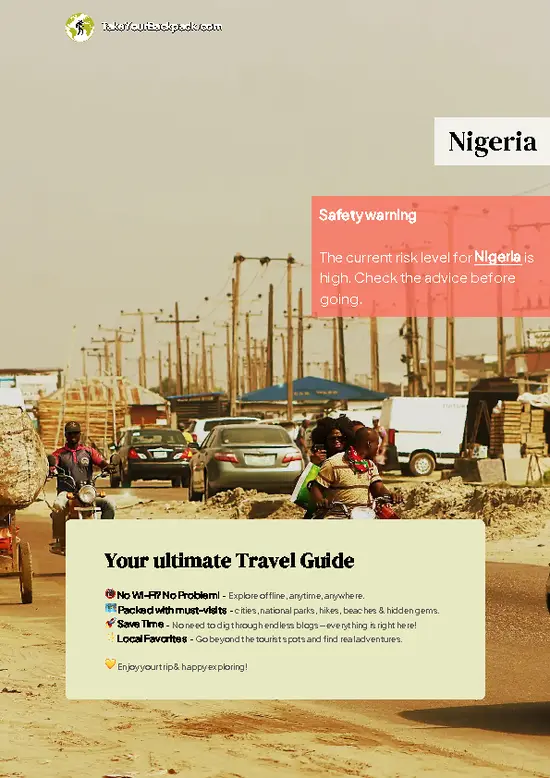
Country photo of Nigeria

We 💚 feedbackKey takeaways before you go

Zaria pulses with history and culture. The best surprise? The warmth of the locals—everyone’s eager to share a story or a smile. Just a heads-up: the heat can be relentless, so stay hydrated and pace yourself. Embrace the rhythm, and you’ll find magic in the details.

✍️ Help improve this page!
The information on this page is based on in-depth research, insights shared by experienced travelers, and feedback from the local travel community in Nigeria. While every effort is made to keep the information accurate and current, conditions can change — so if you spot anything incorrect or outdated, please get in touch.


🙋‍♂️ Give feedback

👋 Meet the founderWho’s Behind Take Your Backpack?

Johan, backpacker and founder of TakeYourBackpackHi, I’m Johan (Netherlands 🇳🇱), the creator of TakeYourBackpack. Over the past decade, I’ve backpacked through 80+ countries across six continents, gaining extensive experience with independent travel, long-term trips, and overland routes.

This site is built on a combination of firsthand travel experience and carefully curated insights from other backpackers. Many guides are based on places I’ve personally visited, while others bring together tips, observations, and practical advice shared by trusted travelers I’ve met along the way.

The goal is to provide realistic, experience-driven guidance — not generic itineraries — so you can explore destinations with better context, clearer expectations, and more confidence.

Get full Nigeria guide •
Instant download • 89 highlights • Full Offline guide