×

Nigeria🇳🇬 | citiesFuntuacotton processing, railway stop, Hausa culture | things to do and best time to go

Explore MubiExplore Argungu Fishing

Backpacking in Funtua
👀 For curious travelerscity ranked #39
By Johan Kruseman 🇳🇱 | Updated June 9, 2026

Most travelers only realize after arrival that Funtua’s real gift is how little you’ll spend on transport—everything you want is walkable, and motorcycle taxis fill the gaps for pocket change. Tucked in Katsina State, northern Nigeria, Funtua isn’t flashy, but its central market pulses with local life and the old railway station hints at colonial history. You won’t find backpacker crowds or nightlife, but you will find genuine hospitality, low prices, and a slower, safer pace than busier northern cities like Kano.

Discover everything you want to know in the 📖 Nigeria Travel Guide.
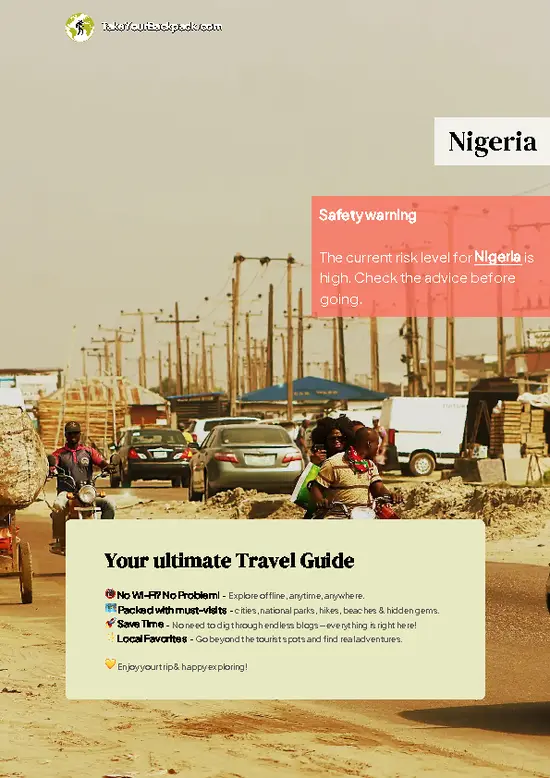
Safety warning

The current risk level for Nigeria is high. Check the advice before going.


Get your Nigeria guide
89 ranked highlights, routes & tips, works offline (332 pages)
Loading the map 🌍
CLICK TO FILTER
cities
towns
landmarks
national parks
hikes
beaches
attractions
festivals
regions
SHOW COUNTRY’S BESTSHOW ALL

✨ Why go?
Ranked #39 city in Nigeria
Why visitors keep coming back

Funtua is a strategic stop for backpackers navigating Nigeria. It offers a blend of affordable hostels and local eateries, making it easy on the wallet. The city’s walkability allows you to soak in the local vibe without the hassle of transport. While it may not be a nightlife hotspot, the evening markets provide a lively atmosphere. Funtua serves as a solid basecamp for day trips to nearby attractions, maximizing your experience without draining your time or budget. If you’re seeking a quick, enriching pause in your journey, Funtua fits the bill perfectly.
Want to include Funtua in your Nigeria route?
Create a personalized Nigeria itinerary that includes Funtua and the places that fit your trip — based on your travel style, budget, and available time. Get your route in seconds.

Generate my trip

💡 HighlightsMust-see experiences and standout moments

  • Funtua Central Market — The heartbeat of the town, a bustling open-air market where you’ll see fresh produce, kola nut trade, local textiles and everyday Hausa commercial life up close; great for people-watching, street food, and bargain hunting for fabrics and simple leather goods.
  • Funtua Emir’s Palace (Gidan Sarki) — The traditional seat of local authority and a living example of northern Nigerian palace culture; visiting the compound gives a sense of local governance, architecture and ceremonial life tied to the emirate system.
  • Funtua Railway Station — A working piece of Nigeria’s rail history and a practical transport hub; the station and adjacent yards offer a tangible sense of the town’s role as a regional transit and trade link, and you can watch freight and passenger movements
read more 👉
  • Funtua Central Market — The heartbeat of the town, a bustling open-air market where you’ll see fresh produce, kola nut trade, local textiles and everyday Hausa commercial life up close; great for people-watching, street food, and bargain hunting for fabrics and simple leather goods.
  • Funtua Emir’s Palace (Gidan Sarki) — The traditional seat of local authority and a living example of northern Nigerian palace culture; visiting the compound gives a sense of local governance, architecture and ceremonial life tied to the emirate system.
  • Funtua Railway Station — A working piece of Nigeria’s rail history and a practical transport hub; the station and adjacent yards offer a tangible sense of the town’s role as a regional transit and trade link, and you can watch freight and passenger movements that keep the local economy moving.
A few real, visitable highlights outside the city that make easy day trips: Katsina city (Emir’s Palace and Gobarau historic mosque/minaret), Zaria (historic old city and university area), and Kano (Kurmi Market and Gidan Makama Museum).
Spotted a mistake or missing something? Contact us.

🏘️ NeighborhoodsHow different areas shape the experience

Funtua offers a unique blend of culture and convenience for backpackers. Here’s how the neighborhoods stack up:

Central Funtua: The heart of the city, this area buzzes with local markets and street food. It’s affordable and walkable, perfect for short stays. Nightlife is low-key, with a few bars to unwind after a day of exploration.

Gidan Gwari: A quieter residential area, ideal for longer stays. It’s less touristy, giving you a genuine feel of local life. Transport options are decent, but you might need to rely on taxis for late-night outings.

Sabon Gari: Known for its vibrant atmosphere, this neighborhood is great for socializing. It’s more expensive but offers a lively nightlife scene. Walkability is good, making it easy to hop between eateries and shops.

⌛️ 1 dayHow to make the most of one day

Funtua, Nigeria, is a vibrant hub where tradition meets the pulse of modern life. Start your day at the bustling Funtua Market. The aroma of spices fills the air as you weave through stalls brimming with colorful textiles and fresh produce. Grab a local breakfast of puff-puff and tea from a street vendor to fuel your adventure.

In the afternoon, head to the serene Gidan Dabino, a cultural center that showcases the rich heritage of the area. Engage with artisans and perhaps even try your hand at traditional crafts. This spot is often overlooked by tourists, making it a genuine experience.

As evening approaches, stroll through the lively streets of the Sabon Gari neighborhood. Here, you can savor a delicious dinner at a local eatery, where the flavors of jollof rice and grilled chicken will … read more 👉
Funtua, Nigeria, is a vibrant hub where tradition meets the pulse of modern life. Start your day at the bustling Funtua Market. The aroma of spices fills the air as you weave through stalls brimming with colorful textiles and fresh produce. Grab a local breakfast of puff-puff and tea from a street vendor to fuel your adventure.

In the afternoon, head to the serene Gidan Dabino, a cultural center that showcases the rich heritage of the area. Engage with artisans and perhaps even try your hand at traditional crafts. This spot is often overlooked by tourists, making it a genuine experience.

As evening approaches, stroll through the lively streets of the Sabon Gari neighborhood. Here, you can savor a delicious dinner at a local eatery, where the flavors of jollof rice and grilled chicken will leave you wanting more. Wrap up your day by soaking in the local atmosphere, chatting with friendly residents, and reflecting on the unique blend of culture and community that defines Funtua.
Turn your Funtua visit into an Nigeria adventure
Build a complete Nigeria route with Funtua, hidden gems, must-see destinations, and realistic travel times included.

Generate my trip

🌤️ When to go?When to go for the best experience


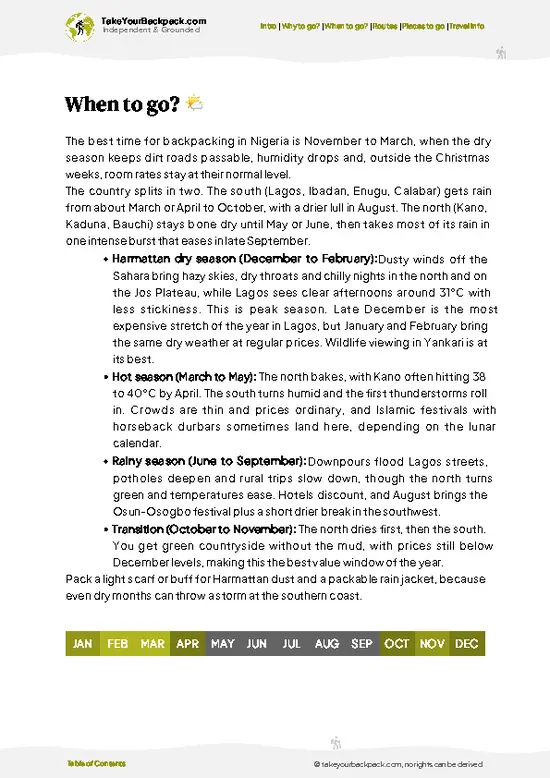
  • Topic: Weather – Funtua’s dry season from November to March offers clear skies and minimal rain, ideal for trekking and exploring without soggy gear slowing you down.

  • Topic: Temperature – Expect highs around 32°C (90°F) in the dry season, dropping to a cooler 20°C (68°F) at night, making early mornings and evenings perfect for activity.

  • Topic: Daylight Hours – Roughly 12 hours year-round, so plan your hikes and city strolls knowing you have a solid daylight window without drastic shifts.

  • Topic: Crowds – Tourist numbers dip during the rainy season (April to October), but that means fewer services and muddy trails; dry season sees more visitors but better conditions.

  • Topic: Seasonal Activities – The dry season hosts local markets and festivals, offering authentic cultural encounters
read more 👉

  • Topic: Weather – Funtua’s dry season from November to March offers clear skies and minimal rain, ideal for trekking and exploring without soggy gear slowing you down.

  • Topic: Temperature – Expect highs around 32°C (90°F) in the dry season, dropping to a cooler 20°C (68°F) at night, making early mornings and evenings perfect for activity.

  • Topic: Daylight Hours – Roughly 12 hours year-round, so plan your hikes and city strolls knowing you have a solid daylight window without drastic shifts.

  • Topic: Crowds – Tourist numbers dip during the rainy season (April to October), but that means fewer services and muddy trails; dry season sees more visitors but better conditions.

  • Topic: Seasonal Activities – The dry season hosts local markets and festivals, offering authentic cultural encounters that vanish in the wet months.

  • Topic: Price Fluctuations – Accommodation and transport costs rise slightly in the dry season due to demand; the rainy season offers bargains but at the cost of comfort and accessibility.


Pro-tip: Aim for the shoulder months of November and March to balance good weather, manageable crowds, and better prices—a sweet spot for savvy backpackers.


source: climatestotravel.comJANJanuary: excellent for travelingFEBFebruary: excellent for travelingMARMarch: highly recommended for travelingAPRApril: fair for travelingMAYMay: fair for travelingJUNJune: fair for travelingJULJuly: fair for travelingAUGAugust: fair for travelingSEPSeptember: fair for travelingOCTOctober: fair for travelingNOVNovember: highly recommended for travelingDECDecember: excellent for traveling
when-to-go

✈️ The backpacker research shortcutNigeria Travel Guide

An offline-friendly backpacking guide with optimized travel routes, ranked highlights, transport advice, and the best areas to stay.
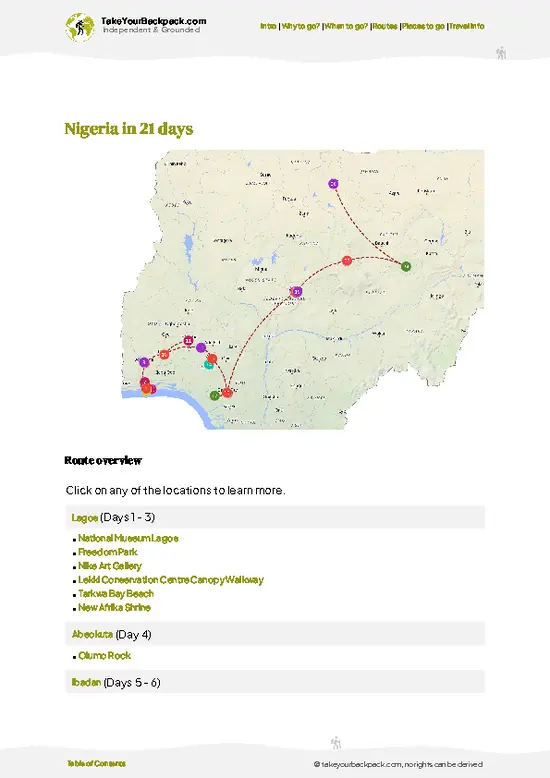
example page 0 from our offline Travel Guide for Nigeria
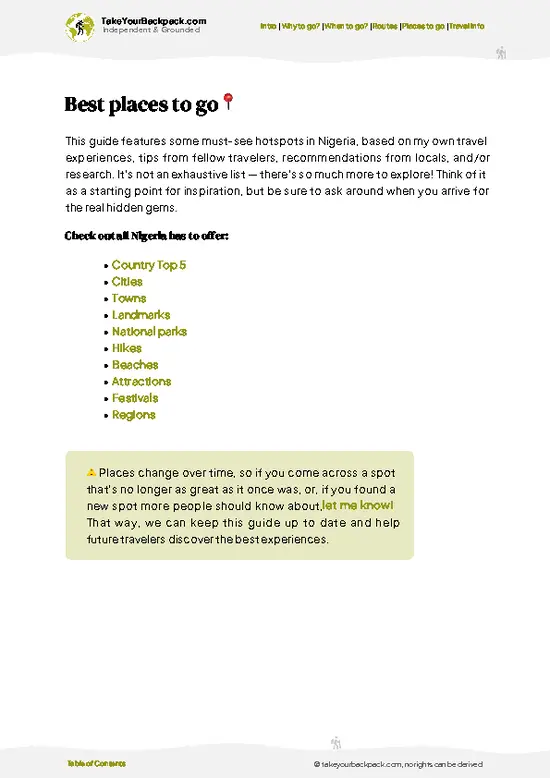
example page 1 from our offline Travel Guide for Nigeria
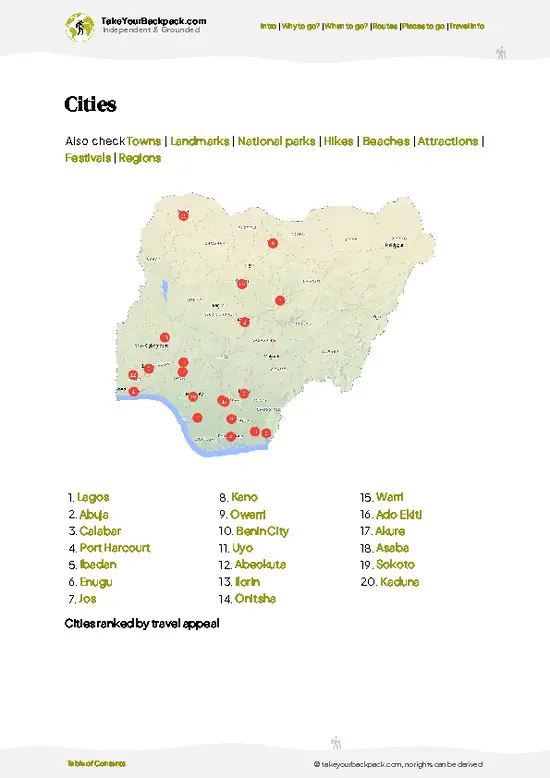
example page 2 from our offline Travel Guide for Nigeria
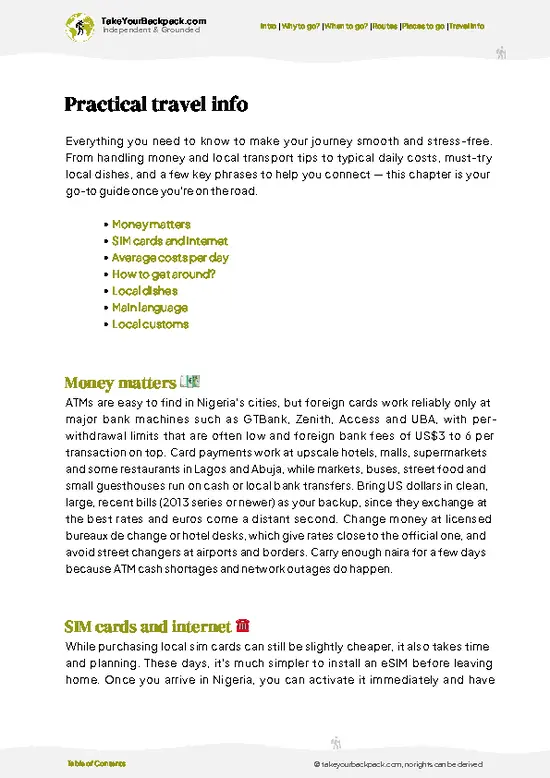
example page 3 from our offline Travel Guide for Nigeria
example page 4 from our offline Travel Guide for Nigeria
example page 5 from our offline Travel Guide for Nigeria
example page 6 from our offline Travel Guide for Nigeria
example page 7 from our offline Travel Guide for Nigeria
The digital guide (332 pages) contains:
89 highlights, ranked by travel appeal
Optimized 7, 14 & 21-day travel routes
Cities, national parks, landmarks, beaches
How to get around
Offline-friendly for travel without Wi-Fi
👉 Click to see all 30+ guide features

📅 Plan smarter in minutes, not weeks
Month by month travel advice
Festivals & national holidays
Budget expectations

🗺️ Go to the right places, skip the overrated ones
Honest pros & cons of destinations
Top hikes, parks & viewpoints
Lesser-known places most travelers miss
Clear “worth it vs skip it” guidance

🛏️ Travel smoothly without rookie mistakes
Best areas to stay
Transport systems explained simply
Common scams & safety advice
SIM cards, money & practical tips

🌍 Understand the country, not just visit it
Culture & traditions
52 Essential phrases & customs
Festivals worth planning around
Traveler-friendly historical context
Insights that make places more meaningful

📱 Built for real travel conditions
Fully downloadable PDF
Works completely offline
Optimized for phone use
Useful in remote areas & buses
Everything in one place
Save weeks of stressful planning
Get instant access to your full guide. 30‑day money-back guarantee.


By proceeding you agree to our terms.
Sent to your inbox immediately after payment • 100% Secure Checkout
Best Backpacking Travel Advisor 2025 tourism awardBest Backpacking
Travel Advisor
2025
What others say about Take Your Backpack Guides:
⭐⭐⭐⭐⭐
Fantastic, amazing amount of information!
⭐⭐⭐⭐⭐
My goodness this is amazing, it's what I've been looking for hats off too you!
⭐⭐⭐⭐⭐
I think this is absolutely BRILLIANT
⭐⭐⭐⭐
Very complete and informative. It's still missing places, but I gotta to commend you
⭐⭐⭐⭐⭐
This is truly amazing, thank you, can't wait to explore it with my kids!
⭐⭐⭐⭐⭐
Awesome resource, thank you!
⭐⭐⭐⭐⭐
This is amazing! Can't wait to explore the ones I haven't seen
⭐⭐⭐⭐
I love this! Well done, great idea.
⭐⭐⭐⭐⭐
Thanks for taking the time to make this gem!
⭐⭐⭐⭐⭐
This might be the best website I've ever seen.
⭐⭐⭐⭐⭐
Congratulations, and thank you so much for your work; it's incredibly valuable.
⭐⭐⭐⭐
In all seriousness I think you did a great job pointing out the important spots
⭐⭐⭐⭐⭐
10/10 very good
⭐⭐⭐⭐⭐
As someone who's only just starting to visit regularly this is awesome, thank you.
⭐⭐⭐⭐
Thank you very much! I'm going to visit my dad, it's going to be very useful!
⭐⭐⭐⭐⭐
This is really cool! We'll be travelling for the first time and this definitely come in handy.
⭐⭐⭐⭐⭐
You are now our minister of culture, congratulations 👨‍💼
⭐⭐⭐⭐⭐
Just wanted to tell you that this is a pearl! Going to follow your recommendations.
⭐⭐⭐⭐⭐
This is so cool. I'll definitely be using the resource for my travels soon.
⭐⭐⭐⭐⭐
This is very impressive! Good work.
⭐⭐⭐⭐⭐
This is an amazing and informative site. Very well done!

🛏️ Where to stay?Choosing the right base

In Funtua, the sweet spot for backpackers is the city center and the nearby Sabon Gari district. These areas strike a solid balance between safety and social buzz, making them the go-to for solo travelers and budget explorers. The city center hums with local markets and street food stalls, offering a lively backdrop without tipping into chaos. Sabon Gari, historically a melting pot, adds a layer of cultural texture and tends to have more affordable lodging options, including hostels or guesthouses geared toward budget stays. Compared to the quieter, more residential outskirts, these neighborhoods … read more 👉
In Funtua, the sweet spot for backpackers is the city center and the nearby Sabon Gari district. These areas strike a solid balance between safety and social buzz, making them the go-to for solo travelers and budget explorers. The city center hums with local markets and street food stalls, offering a lively backdrop without tipping into chaos. Sabon Gari, historically a melting pot, adds a layer of cultural texture and tends to have more affordable lodging options, including hostels or guesthouses geared toward budget stays. Compared to the quieter, more residential outskirts, these neighborhoods keep you plugged into the city’s pulse without sacrificing comfort or your wallet.

🚌 Getting aroundMoving around without the hassle

Funtua moves at its own rhythm—neither a frantic rush nor a laid-back drift. It’s a city where time bends around local needs, not the other way around. You’ll find schedules that exist more as guidelines than gospel, and a pulse that’s part hustle, part hangout. Understanding this flow is your first win: it’s about balancing patience with smart choices, knowing when to push for speed and when to savor the slower pace.


  • Walking: The ultimate budget option. Funtua’s compact center means many key spots are within a 20-30 minute stroll. Free, flexible, and perfect for soaking in street life, but not ideal if you’re hauling gear or racing the clock.

  • Local Keke Napep (Tricycle): Runs from dawn until around 10 PM. Costs about 100-150 NGN per short trip. Faster than walking and weaves through
read more 👉
Funtua moves at its own rhythm—neither a frantic rush nor a laid-back drift. It’s a city where time bends around local needs, not the other way around. You’ll find schedules that exist more as guidelines than gospel, and a pulse that’s part hustle, part hangout. Understanding this flow is your first win: it’s about balancing patience with smart choices, knowing when to push for speed and when to savor the slower pace.


  • Walking: The ultimate budget option. Funtua’s compact center means many key spots are within a 20-30 minute stroll. Free, flexible, and perfect for soaking in street life, but not ideal if you’re hauling gear or racing the clock.

  • Local Keke Napep (Tricycle): Runs from dawn until around 10 PM. Costs about 100-150 NGN per short trip. Faster than walking and weaves through narrow streets, but expect a bumpy ride and occasional crowding during peak hours.

  • Shared Minibuses: Operate roughly 6 AM to 8 PM. Fares hover around 200-300 NGN depending on distance. They’re cheap and relatively quick on main roads but can get cramped and unpredictable with stops.

  • Motorcycle Taxis (Okada): Available 24/7, fares start at 150 NGN. The fastest way through traffic jams but less comfortable and riskier, especially at night or in bad weather.


Mastering these options means you’re not just moving through Funtua—you’re playing the city’s game on your terms, choosing when to save time, money, or comfort.

👛 Costs (as of 28 February 2026)What things cost and how to budget

Backpacking in Funtua, Nigeria, offers a clear-cut trade-off between cost and convenience, with prices reflecting the city’s modest tourist infrastructure and local economy. Here’s the breakdown:
  • Dorm Accommodation (High Season): Expect to pay around $8 to $12 per night. Options are limited but functional, often basic guesthouses or hostels with shared facilities. High season sees a slight bump due to demand from local events or holidays.
  • Dorm Accommodation (Off-Season): Prices drop to about $5 to $8 per night. Fewer travelers mean better bargaining power, but amenities remain simple and sometimes inconsistent.
  • Meals: Street food and local eateries dominate, with meals costing between $1.50 and $3.50. You’ll find hearty, filling dishes like suya or local stews that keep your energy up without
read more 👉
Backpacking in Funtua, Nigeria, offers a clear-cut trade-off between cost and convenience, with prices reflecting the city’s modest tourist infrastructure and local economy. Here’s the breakdown:
  • Dorm Accommodation (High Season): Expect to pay around $8 to $12 per night. Options are limited but functional, often basic guesthouses or hostels with shared facilities. High season sees a slight bump due to demand from local events or holidays.
  • Dorm Accommodation (Off-Season): Prices drop to about $5 to $8 per night. Fewer travelers mean better bargaining power, but amenities remain simple and sometimes inconsistent.
  • Meals: Street food and local eateries dominate, with meals costing between $1.50 and $3.50. You’ll find hearty, filling dishes like suya or local stews that keep your energy up without draining your wallet.
  • Local Transport: Short rides on motorbike taxis (okadas) or shared minibuses typically cost $0.20 to $0.50. These are the quickest way to navigate the city but come with a trade-off in comfort and safety.
  • City Transport Pass: There’s no formal city transport pass system in Funtua. Regular use of local transport means budgeting daily for individual rides rather than a flat pass.
  • Basic Activities/Entry Fees: Tourist attractions are sparse and often free or very low cost, with entry fees rarely exceeding $1 to $2. Cultural sites or local markets offer immersive experiences without a heavy price tag.
  • Miscellaneous Expenses: Budget around $1 to $3 for essentials like bottled water, snacks, or minor personal items. Internet cafes or SIM cards for mobile data are affordable but vary in quality.

In total, a backpacker in Funtua can expect to spend roughly $10 to $20 per day, depending on season and personal choices. This budget leans heavily on simplicity and local living, trading off some comfort for a genuine, grounded experience.
⚠️ Prices can change and everyone travels differently, so take this as a rough guide. Hope it helps you plan your adventure!

🚌 Day tripsShort trips worth adding

Funtua, Nigeria, is a strategic launchpad for day trips that blend adventure with cultural immersion. Here are some standout options.

Katsina City
Just about an hour from Funtua, Katsina City offers a rich tapestry of history and culture. Explore the ancient Katsina Wall and the intriguing Emir’s Palace. The vibrant local markets are a feast for the senses, where you can snag handmade crafts and sample local dishes. Budget around 1,500 NGN for transport and a few hundred more for snacks. The best time to visit is during the cooler months from November to February. First-timers often underestimate the time needed to wander the markets, so plan for a leisurely pace.


Zazzau (Zaria)
A 90-minute ride will take you to Zaria, home to the historic Zazzau Emirate. The ancient city walls and … read more 👉
Funtua, Nigeria, is a strategic launchpad for day trips that blend adventure with cultural immersion. Here are some standout options.

Katsina City
Just about an hour from Funtua, Katsina City offers a rich tapestry of history and culture. Explore the ancient Katsina Wall and the intriguing Emir’s Palace. The vibrant local markets are a feast for the senses, where you can snag handmade crafts and sample local dishes. Budget around 1,500 NGN for transport and a few hundred more for snacks. The best time to visit is during the cooler months from November to February. First-timers often underestimate the time needed to wander the markets, so plan for a leisurely pace.


Zazzau (Zaria)
A 90-minute ride will take you to Zaria, home to the historic Zazzau Emirate. The ancient city walls and the impressive Ahmadu Bello University campus are must-sees. You can also visit the local artisans who create stunning textiles. Expect to spend around 2,000 NGN on transport and a bit more if you indulge in local cuisine. The dry season is ideal for this trip, as the weather is more pleasant. Many overlook the chance to engage with local artisans, which adds depth to the experience.


Kano
Kano is about two hours away and is a bustling hub of trade and culture. The famous Kurmi Market is a sensory overload, perfect for picking up unique souvenirs. Don’t miss the Gidan Makama Museum for a glimpse into the region’s history. Budget around 3,000 NGN for transport and a little extra for snacks. The best time to visit is during the cooler months. A common mistake is rushing through the market; take your time to soak it all in.
Want to know what more Nigeria offers?
The Nigeria Travel Guide describes 89 highlights, from cities to national parks, from beaches to hikes

Get the Travel Guide -

🍲 FoodLocal Flavors for Backpackers

In Funtua, local cuisine bursts with flavor. Dive into jollof rice, a spicy, tomato-based dish that’s a staple at gatherings. Pair it with suya, skewered meat seasoned with a fiery spice mix, often sold by street vendors. The aroma wafts through the air, drawing you in.

Markets are the heartbeat of dining here. You’ll find street food stalls buzzing with locals, where you can grab a quick bite and soak in the lively atmosphere. Drinking culture leans towards palm wine, a sweet, fermented delight best enjoyed in good company.

Etiquette is simple: share your food and drinks, and don’t shy away from lively conversation. Embrace the communal spirit; it’s all part of the experience.

🛡️ SafetyTraveler Safety Guide

Funtua is generally safe, but awareness is key. Stick to well-lit areas at night, especially if you’re solo. The market can be bustling, so keep your belongings close; petty theft can happen in crowded spots. Watch for common scams, like inflated prices for tourists—always negotiate. Locals are friendly, but be cautious with overly eager guides offering unsolicited help. Carry yourself confidently, and engage with the community; it’s often the best way to navigate any annoyances.

Other Nigerian cities near Funtua

Explore more nearby:

  • Zaria—ancient city walls, Emir’s palace, university town| 61 km away
  • Gusau—grain markets, Hausa architecture, dry season festivals| 100 km away
  • Kaduna—textile industry, railway heritage, riverfront parks| 114 km away

💡 Not sure where to go next?
Create a personalized itinerary for Nigeria including Funtua and the places that fit your trip.

Generate my itinerary

👉 Discover all cities

Or checkout all Nigeria has to offer (think cities, towns, villages, national parks, hikes, beaches, festivals)
Country photo of Nigeria

We 💚 feedbackFinal thoughts on visiting Funtua

Funtua has a laid-back vibe that feels like a warm hug. The best surprise? The local markets bursting with life and flavors. Just a heads-up: the heat can be intense, so stay hydrated and embrace the slower pace. It’s all part of the charm.

✍️ Help improve this page!
The information on this page is based on in-depth research, insights shared by experienced travelers, and feedback from the local travel community in Nigeria. While every effort is made to keep the information accurate and current, conditions can change — so if you spot anything incorrect or outdated, please get in touch.


🙋‍♂️ Give feedback

👋 Meet the founderWho’s Behind Take Your Backpack?

Johan, backpacker and founder of TakeYourBackpackHi, I’m Johan (Netherlands 🇳🇱), the creator of TakeYourBackpack. Over the past decade, I’ve backpacked through 80+ countries across six continents, gaining extensive experience with independent travel, long-term trips, and overland routes.

This site is built on a combination of firsthand travel experience and carefully curated insights from other backpackers. Many guides are based on places I’ve personally visited, while others bring together tips, observations, and practical advice shared by trusted travelers I’ve met along the way.

The goal is to provide realistic, experience-driven guidance — not generic itineraries — so you can explore destinations with better context, clearer expectations, and more confidence.

Get full Nigeria guide •
Instant download • 89 highlights • Full Offline guide