×

North Korea🇰🇵 | attractionsPyongyang Circusacrobatic acts, animal performances, circular arena | things to do and best time to go

Explore Moranbong TheatreExplore Kaeson Youth Park

Backpacking in Pyongyang Circus
👌 Worth visitingattraction ranked #12
By Johan Kruseman 🇳🇱 | Updated September 30, 2026

Most travelers realize too late that Pyongyang Circus is one of the rare spots in North Korea where you can actually mingle with locals—yes, real North Korean families, not just your tour group. Tucked in the heart of Pyongyang, this Soviet-era circus is a fever dream of acrobatics, animal acts, and propaganda-laced spectacle. The wow-factor is real: the performers are world-class, and the energy in the arena is electric, but the ticket price is steep by local standards and you’re always chaperoned. It’s less crowded than the Mansudae Grand Monument, but don’t expect anonymity. For raw, surreal adrenaline and a glimpse behind the curtain, it beats the sanitized museum circuit.

Discover everything you want to know in the 📖 North Korea Travel Guide.
Safety warning

The current risk level for North Korea is high. Check the advice before going.


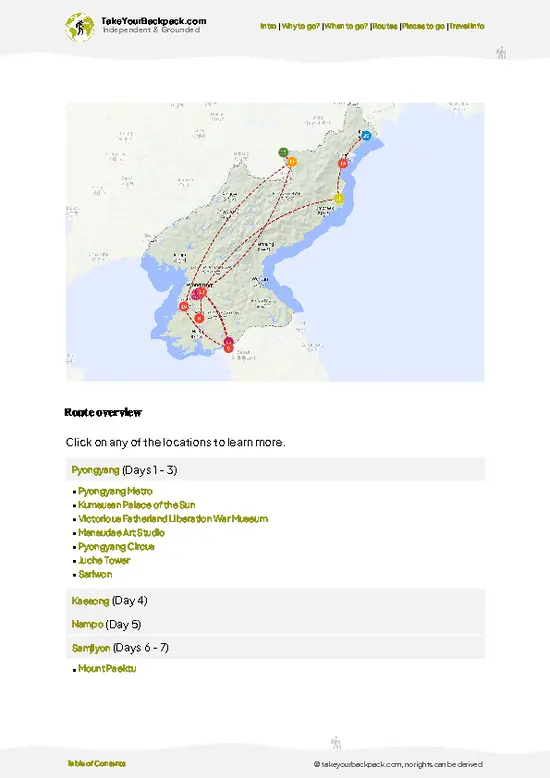
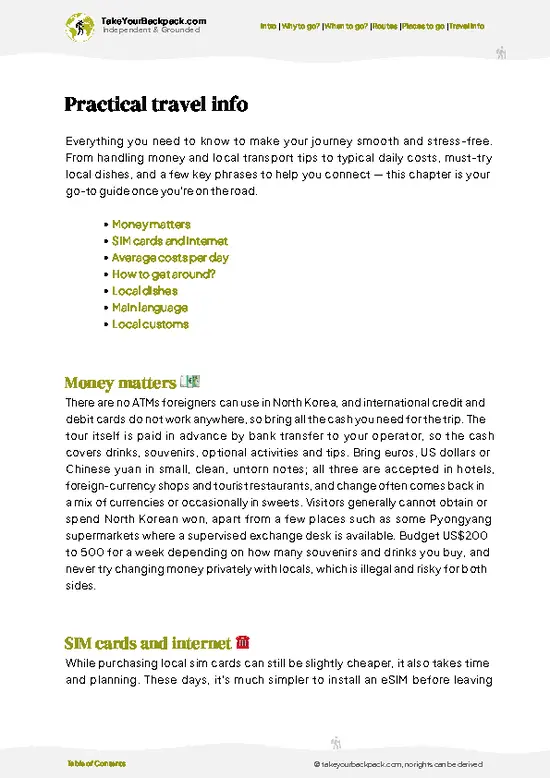
example page 0 from our offline Travel Guide for North Korea
example page 1 from our offline Travel Guide for North Korea
example page 2 from our offline Travel Guide for North Korea
example page 3 from our offline Travel Guide for North Korea
example page 4 from our offline Travel Guide for North Korea
example page 5 from our offline Travel Guide for North Korea
example page 6 from our offline Travel Guide for North Korea
example page 7 from our offline Travel Guide for North Korea
Loading the map 🌍
CLICK TO FILTER
cities
towns
landmarks
national parks
hikes
beaches
attractions
festivals
regions
SHOW COUNTRY’S BESTSHOW ALL

✨ Why go?
Ranked #12 attraction in North Korea
What makes this attraction worth visiting

The Pyongyang Circus is not your typical tourist stop, and that’s exactly why it demands your time. Yes, it’s crowded, and yes, the ticket prices can feel steep compared to other local experiences. But this isn’t about a flashy show for Instagram likes—it’s a raw dive into North Korea’s cultural heartbeat. The performances blend acrobatic precision with propaganda storytelling, offering a window into how art and ideology intertwine here. For backpackers, it’s a milestone on the route through the country, a moment where history, politics, and sheer human skill collide. The adrenaline comes from witnessing something so tightly controlled yet undeniably impressive. Skip it, and you miss a layer of North Korea that no guidebook fully captures.

💡 HighlightsDon't-miss highlights and experiences

1. The Flying Trapeze Acts
Forget the sanitized, over-produced circus routines you’ve seen elsewhere. Pyongyang’s aerialists are the real deal—no safety nets, no digital distractions, just raw, nerve-jangling athleticism. The tension in the air is as thick as the applause. You’ll see triple somersaults and mid-air catches that would make even a seasoned Cirque du Soleil performer sweat. This is the showstopper, and it’s my personal favorite—because you can feel the risk, the pride, and the absolute focus of every performer.


2. Acrobatic Human Pyramids
This isn’t just about balance; it’s about trust and collective discipline. Teams of acrobats stack themselves into impossible shapes, sometimes five or six people high, moving with a precision that’s almost military. The choreography is tight, … read more 👉
1. The Flying Trapeze Acts
Forget the sanitized, over-produced circus routines you’ve seen elsewhere. Pyongyang’s aerialists are the real deal—no safety nets, no digital distractions, just raw, nerve-jangling athleticism. The tension in the air is as thick as the applause. You’ll see triple somersaults and mid-air catches that would make even a seasoned Cirque du Soleil performer sweat. This is the showstopper, and it’s my personal favorite—because you can feel the risk, the pride, and the absolute focus of every performer.


2. Acrobatic Human Pyramids
This isn’t just about balance; it’s about trust and collective discipline. Teams of acrobats stack themselves into impossible shapes, sometimes five or six people high, moving with a precision that’s almost military. The choreography is tight, the stakes are high, and the crowd’s energy is contagious. There’s no room for error, and you sense that everyone in the room knows it.


3. Animal Acts (Dogs, Goats, and Monkeys)
You’ll see trained animals performing synchronized routines—dogs leaping through hoops, goats balancing on precarious platforms, monkeys riding bicycles. It’s old-school, unapologetic circus entertainment, and it’s delivered with a kind of earnest showmanship that feels like a time capsule from another era. If you’re expecting Western-style animal rights standards, recalibrate now—this is a different cultural context.


4. Juggling and Object Manipulation
Juggling here isn’t just a warm-up act. Performers toss clubs, rings, and even flaming torches with a speed and complexity that borders on the hypnotic. The skill level is off the charts, and the crowd responds with genuine awe, not polite applause.


5. Clown Comedy—North Korean Style
Don’t expect slapstick or satire. The humor is broad, physical, and family-friendly, with a distinctly local flavor. The clowns are masters of timing and facial expression, and the laughter in the arena is real—no canned soundtracks, just pure, communal amusement.
Spotted a mistake or missing something? Contact us.

🌤️ When to go?Choosing the right time of year

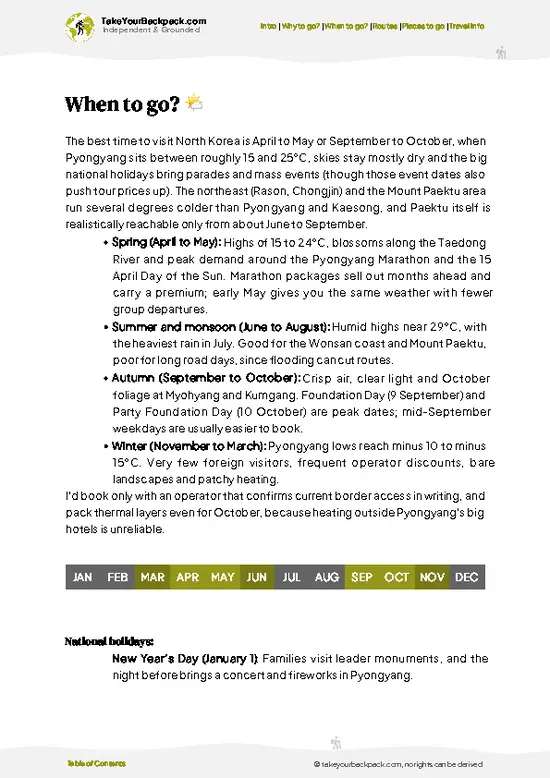
  • Topic: Weather and Temperature - The best window is late spring (May to June) or early autumn (September to October). Temperatures hover between 15-25°C (59-77°F), avoiding the biting cold of winter and the stifling summer heat that can hit 30°C (86°F) or more.
  • Topic: Daylight Hours - Around these months, daylight stretches comfortably from 6 AM to 7 PM, giving you ample time to soak in the performances without rushing.
  • Topic: Crowds - Expect fewer tourists in shoulder seasons. Summer months, especially July and August, bring more visitors, which can dilute the experience and bump up prices.
  • Topic: Seasonal Activities - The circus often aligns shows with national holidays and festivals, notably in April and October, but these times also mean packed venues and inflated costs.
  • Topic: Price
… read more 👉
  • Topic: Weather and Temperature - The best window is late spring (May to June) or early autumn (September to October). Temperatures hover between 15-25°C (59-77°F), avoiding the biting cold of winter and the stifling summer heat that can hit 30°C (86°F) or more.
  • Topic: Daylight Hours - Around these months, daylight stretches comfortably from 6 AM to 7 PM, giving you ample time to soak in the performances without rushing.
  • Topic: Crowds - Expect fewer tourists in shoulder seasons. Summer months, especially July and August, bring more visitors, which can dilute the experience and bump up prices.
  • Topic: Seasonal Activities - The circus often aligns shows with national holidays and festivals, notably in April and October, but these times also mean packed venues and inflated costs.
  • Topic: Price Fluctuations - Peak tourist seasons (summer and major holidays) push prices higher. Visiting in May, June, or September can save you money without sacrificing the quality of the show.
Pro-tip: Aim for early autumn—cool air, manageable crowds, and a circus that feels like it’s performing just for you, not the tourist masses.


source: climatestotravel.comJANJanuary: below average for travelingFEBFebruary: below average for travelingMARMarch: fair for travelingAPRApril: good for travelingMAYMay: excellent for travelingJUNJune: excellent for travelingJULJuly: fair for travelingAUGAugust: fair for travelingSEPSeptember: excellent for travelingOCTOctober: highly recommended for travelingNOVNovember: fair for travelingDECDecember: below average for traveling
when-to-go

✈️ The backpacker research shortcutNorth Korea Travel Guide

An offline-friendly backpacking guide with optimized travel routes, ranked highlights, transport advice, and the best areas to stay.
example page 0 from our offline Travel Guide for North Korea
example page 1 from our offline Travel Guide for North Korea
example page 2 from our offline Travel Guide for North Korea
example page 3 from our offline Travel Guide for North Korea
example page 4 from our offline Travel Guide for North Korea
example page 5 from our offline Travel Guide for North Korea
example page 6 from our offline Travel Guide for North Korea
example page 7 from our offline Travel Guide for North Korea
The digital guide (203 pages) contains:
✅ 49 highlights, ranked by travel appeal
✅ Optimized 5, 10 & 15-day travel routes
✅ Cities, national parks, landmarks, beaches
✅ How to get around
✅ Offline-friendly for travel without Wi-Fi
👉 Click to see all 30+ guide features

📅 Plan smarter in minutes, not weeks
✅ Month by month travel advice
✅ Festivals & national holidays
✅ Budget expectations

🗺️ Go to the right places, skip the overrated ones
✅ Honest pros & cons of destinations
✅ Top hikes, parks & viewpoints
✅ Lesser-known places most travelers miss
✅ Clear “worth it vs skip it” guidance

🛏️ Travel smoothly without rookie mistakes
✅ Best areas to stay
✅ Transport systems explained simply
✅ Common scams & safety advice
✅ SIM cards, money & practical tips

🌍 Understand the country, not just visit it
✅ Culture & traditions
✅ 52 Essential phrases & customs
✅ Festivals worth planning around
✅ Traveler-friendly historical context
✅ Insights that make places more meaningful

📱 Built for real travel conditions
✅ Fully downloadable PDF
✅ Works completely offline
✅ Optimized for phone use
✅ Useful in remote areas & buses
✅ Everything in one place
Stop searching, start planning
Get instant access to your full guide. 30‑day money-back guarantee.
+ Add another guide for just

By proceeding you agree to our terms.
Sent to your inbox immediately after payment • 100% Secure Checkout
Best Backpacking Travel Advisor 2025 tourism awardBest Backpacking
Travel Advisor
2025
What others say about Take Your Backpack Guides:
⭐⭐⭐⭐⭐
Fantastic, amazing amount of information!
⭐⭐⭐⭐⭐
My goodness this is amazing, it's what I've been looking for hats off too you!
⭐⭐⭐⭐⭐
I think this is absolutely BRILLIANT
⭐⭐⭐⭐
Very complete and informative. It's still missing places, but I gotta to commend you
⭐⭐⭐⭐⭐
This is truly amazing, thank you, can't wait to explore it with my kids!
⭐⭐⭐⭐⭐
Awesome resource, thank you!
⭐⭐⭐⭐⭐
This is amazing! Can't wait to explore the ones I haven't seen
⭐⭐⭐⭐
I love this! Well done, great idea.
⭐⭐⭐⭐⭐
Thanks for taking the time to make this gem!
⭐⭐⭐⭐⭐
This might be the best website I've ever seen.
⭐⭐⭐⭐⭐
Congratulations, and thank you so much for your work; it's incredibly valuable.
⭐⭐⭐⭐
In all seriousness I think you did a great job pointing out the important spots
⭐⭐⭐⭐⭐
10/10 very good
⭐⭐⭐⭐⭐
As someone who's only just starting to visit regularly this is awesome, thank you.
⭐⭐⭐⭐
Thank you very much! I'm going to visit my dad, it's going to be very useful!
⭐⭐⭐⭐⭐
This is really cool! We'll be travelling for the first time and this definitely come in handy.
⭐⭐⭐⭐⭐
You are now our minister of culture, congratulations 👨‍💼
⭐⭐⭐⭐⭐
Just wanted to tell you that this is a pearl! Going to follow your recommendations.
⭐⭐⭐⭐⭐
This is so cool. I'll definitely be using the resource for my travels soon.
⭐⭐⭐⭐⭐
This is very impressive! Good work.
⭐⭐⭐⭐⭐
This is an amazing and informative site. Very well done!

🛏️ Where to stay?Choosing the right base

Pyongyang isn’t your typical backpacker playground, and the circus is no exception. Forget the Instagram-perfect, crowd-free fantasy—this place is tightly controlled, with tourism funneled through official channels. That means no spontaneous street-side guesthouses or bohemian hangouts near the Pyongyang Circus. Instead, your best bet is to stay in central districts close to the circus, like the Moranbong or Taedonggang areas. These neighborhoods offer the safest, most accessible bases for foreign visitors, with a handful of government-approved accommodations that foster a surprisingly social … read more 👉
Pyongyang isn’t your typical backpacker playground, and the circus is no exception. Forget the Instagram-perfect, crowd-free fantasy—this place is tightly controlled, with tourism funneled through official channels. That means no spontaneous street-side guesthouses or bohemian hangouts near the Pyongyang Circus. Instead, your best bet is to stay in central districts close to the circus, like the Moranbong or Taedonggang areas. These neighborhoods offer the safest, most accessible bases for foreign visitors, with a handful of government-approved accommodations that foster a surprisingly social atmosphere among travelers who are all in the same boat—curious, cautious, and ready to absorb something truly different.

The real magic here isn’t in flashy nightlife or budget backpacker bars; it’s in the rare chance to witness a spectacle that blends state artistry with cultural storytelling, all while navigating a city that feels frozen in time. Staying near the circus means you’re close to the pulse of Pyongyang’s carefully curated public life, which is an experience you won’t find anywhere else.

👛 Costs (as of 30 September 2026)How expensive it really is

As of the most recent estimates, attending the Pyongyang Circus in North Korea costs approximately €20 per person. This fee covers the performance, which typically lasts about an hour and features acrobatics, clowns, gymnastics, synchronized swimming, ice skating, feats of strength, and sometimes animals. Tickets are usually purchased through your local tour guides, who will organize the tickets for you. It's advisable to arrive early to secure the best seats, as the theater is often packed with locals who are deeply engaged in the performance. Please note that photography is only allowed before and after the performance; taking photos during the show is prohibited to avoid distracting the performers.

source: koryogroup.com
⚠️ Prices can change and everyone travels differently, so take this as a rough guide. Hope it helps you plan your adventure!

FAQCommon questions from travelers

1.5 to 2 hours is sufficient to visit Pyongyang Circus. The performances typically last around 90 minutes, allowing time to enter and exit the venue comfortably. Arrive early to secure good seating and avoid last-minute rushes.
Yes, Pyongyang Circus is generally considered worth the entrance fee, which is about 5 to 10 USD depending on the seating. The show features impressive acrobatics, juggling, and traditional performances unique to North Korean culture, offering a rare cultural experience. It provides good value for travelers interested in local entertainment.
You get to Pyongyang Circus by taxi or arranged transport through your tour operator, as independent travel is restricted. The circus is located near the Taedong River in central Pyongyang, about 3 kilometers from Kim Il-sung Square. Walking is possible if staying nearby, but taxis are the most practical option for most visitors.
⚠️ Things can change over time, so always validate details locally before you go.

Other North Korean attractions near Pyongyang Circus

Explore more nearby:


💡 Not sure where to go next?
Create a personalized itinerary for North Korea including Pyongyang Circus and the places that fit your trip.

Generate my itinerary

👉 Discover all attractions

Or checkout all North Korea has to offer (think cities, towns, villages, national parks, hikes, beaches, festivals)
Country photo of North Korea

We 💚 feedbackSumming up the experience

The Pyongyang Circus isn’t your typical tourist spectacle—it’s a carefully choreographed show blending acrobatics with state-crafted storytelling, offering a rare glimpse into North Korea’s cultural narrative. But don’t expect a casual, spontaneous vibe; the performances are tightly controlled, and the atmosphere can feel more like a political exhibit than pure entertainment. Still, it’s a unique experience you won’t find anywhere else.

✈️ When did I visit North Korea?
As part of my 1.5 year travel around the world trip, I visited North Korea in August 2015. I had never expected I was able to get in.

✍️ Help improve this page!
The information on this page is based on my own backpacking experience in North Korea, supplemented with up-to-date research and feedback from other travelers. Travel details can change, so if you notice anything outdated or incomplete, feel free to let me know.


🙋‍♂️ Give feedback

👋 Meet the founderWho’s Behind Take Your Backpack?

Johan, backpacker and founder of TakeYourBackpackHi, I’m Johan (Netherlands 🇳🇱), the creator of TakeYourBackpack. Over the past 3 decades, I’ve backpacked through 90+ countries across six continents, gaining extensive experience with independent travel, long-term trips, and overland routes.

This site is built on a combination of firsthand travel experience and carefully curated insights from other backpackers. Many guides are based on places I’ve personally visited, while others bring together tips, observations, and practical advice shared by trusted travelers I’ve met along the way.

The goal is to provide realistic, experience-driven guidance — not generic itineraries — so you can explore destinations with better context, clearer expectations, and more confidence.