×

North Korea🇰🇵 | best attractionsYour Guide to the 10 Best attractions in North Korea

North Korea’s best attractions are defined by a unique blend of state-curated monuments, natural landscapes, and tightly controlled urban experiences that vary sharply by region and season. For the backpacker or independent traveler, understanding these distinctions is crucial: Pyongyang offers monumental architecture and regimented tours, while the mountainous north and coastal areas provide more natural settings but come with logistical challenges and stricter access. Choosing the right site affects everything—from the vibe and degree of cultural immersion to budget and ease of travel, especially given the country’s rigid travel regulations and seasonal weather extremes. Navigating these factors ensures a safer, more authentic experience tailored to your travel style.

By Johan Kruseman 🇳🇱 | Updated June 11, 2026
Explore the best festivals in North Korea

Why go?Why These attraction Stand Out

North Korea’s attractions stand apart due to the country’s tightly controlled access and the deliberate presentation of its cultural and historical narrative. Unlike typical tourist destinations where exploration is often self-directed, visiting here means engaging with sites that are carefully curated to reflect the state’s ideology and history. This creates a unique tension: travelers gain insight into a society largely closed off to the outside world, but at the cost of limited spontaneity and a narrow interpretive lens.

Geographically, North Korea offers a mix of rugged mountains, coastal plains, and urban centers, but infrastructure remains underdeveloped compared to neighboring countries. This affects travel logistics significantly—expect slower transit times and fewer amenities, which … read more 👉
North Korea’s attractions stand apart due to the country’s tightly controlled access and the deliberate presentation of its cultural and historical narrative. Unlike typical tourist destinations where exploration is often self-directed, visiting here means engaging with sites that are carefully curated to reflect the state’s ideology and history. This creates a unique tension: travelers gain insight into a society largely closed off to the outside world, but at the cost of limited spontaneity and a narrow interpretive lens.

Geographically, North Korea offers a mix of rugged mountains, coastal plains, and urban centers, but infrastructure remains underdeveloped compared to neighboring countries. This affects travel logistics significantly—expect slower transit times and fewer amenities, which can restrict the depth of exploration within a tight schedule. The climate, with cold winters and humid summers, also influences when and how comfortably one can visit.

Culturally and historically, the country’s attractions are inseparable from its political context. Visitors must navigate the reality that photography, movement, and interaction are often restricted, which can feel constraining for those used to independent travel. However, this controlled environment also means that every visit is a rare glimpse into a society that few outsiders experience firsthand.

In sum, North Korea’s attractions offer a singular type of travel: one that prioritizes controlled access and ideological framing over open-ended discovery. Understanding these trade-offs is essential for setting realistic expectations and appreciating the country’s distinct place on the global travel map.
Why These Made the Cut
The list of best attractions in North Korea is created based on cultural significance or entertainment value. If you feel a attraction is missing in this list, please let us know.

When to go?When to Plan Your Trip

Seasonal Patterns and Travel Timing

North Korea experiences a sharply continental climate, with cold, dry winters and hot, humid summers. Winter months bring temperatures well below freezing, often accompanied by snow and icy conditions that limit outdoor activities and can disrupt travel logistics. Summer, while warmer, tends to be muggy and rainy, which can affect visibility and comfort when visiting outdoor attractions.

Spring and autumn stand out as the most practical windows for travel. Spring offers moderate temperatures and the gradual bloom of vegetation, though early spring can still be chilly and occasionally wet. Autumn delivers crisp air and clear skies, with foliage adding visual interest without the extremes of summer heat or winter cold. These shoulder seasons also tend to … read more 👉

Seasonal Patterns and Travel Timing

North Korea experiences a sharply continental climate, with cold, dry winters and hot, humid summers. Winter months bring temperatures well below freezing, often accompanied by snow and icy conditions that limit outdoor activities and can disrupt travel logistics. Summer, while warmer, tends to be muggy and rainy, which can affect visibility and comfort when visiting outdoor attractions.

Spring and autumn stand out as the most practical windows for travel. Spring offers moderate temperatures and the gradual bloom of vegetation, though early spring can still be chilly and occasionally wet. Autumn delivers crisp air and clear skies, with foliage adding visual interest without the extremes of summer heat or winter cold. These shoulder seasons also tend to have fewer tourists compared to peak summer months, which can translate into a more manageable pace and potentially lower costs.

Summer is the peak travel period, driven by school holidays and more predictable access to outdoor sites. However, this comes with the trade-off of higher humidity, occasional heavy rains, and larger tour groups. Winter travel is possible but requires preparation for harsh weather and limited daylight, which can restrict the range of accessible attractions.

Planning around these seasonal rhythms is essential. Visitors should weigh the comfort of mild weather and lighter crowds in spring and autumn against the convenience and fuller access of summer, while recognizing that winter travel demands resilience and flexibility.

attraction hoppingSuggested Travel Strategies

Efficiently navigating North Korea’s attractions demands a clear grasp of regional clusters and travel flow. The country’s layout naturally divides into three main zones: the capital and its surroundings, the western coastal areas, and the mountainous northeast. Starting in Pyongyang is standard, as it serves as the gateway and offers the densest concentration of historical and political sites. From there, moving outward to coastal or northern regions follows a logical progression that minimizes backtracking.


Expect to allocate at least half a day to a full day at major sites, especially those with layered historical or ideological significance. Museums and monuments require time to absorb context, while natural sites may demand additional effort for hiking or exploration. Rushing through

read more 👉

Efficiently navigating North Korea’s attractions demands a clear grasp of regional clusters and travel flow. The country’s layout naturally divides into three main zones: the capital and its surroundings, the western coastal areas, and the mountainous northeast. Starting in Pyongyang is standard, as it serves as the gateway and offers the densest concentration of historical and political sites. From there, moving outward to coastal or northern regions follows a logical progression that minimizes backtracking.


Expect to allocate at least half a day to a full day at major sites, especially those with layered historical or ideological significance. Museums and monuments require time to absorb context, while natural sites may demand additional effort for hiking or exploration. Rushing through multiple stops in a single day often leads to superficial visits, undermining the value of the experience.


Common pitfalls include overloading the itinerary with too many stops, underestimating travel times on limited infrastructure, and neglecting the need for rest periods. The country’s controlled environment means flexibility is limited, so realistic pacing is crucial. Prioritize depth over quantity to avoid fatigue and logistical complications.


Trade-offs are unavoidable. Faster travel sacrifices immersion, while slower pacing demands more days and budget. Comfort levels vary widely depending on accommodations and transport choices, so align these with personal thresholds. Effort invested in planning pays off by balancing cultural insight with manageable physical demands, ensuring the trip remains rewarding rather than exhausting.

The ListMust-Visit attractions in North Korea

1 Kumsusan Palace of the Sun

mausoleum, marble corridors, preserved leaders

Walk through solemn halls where visitors pay respects to the embalmed leaders in a setting of strict ceremony and reverence.

2 Victorious Fatherland Liberation War Museum

military hardware, diorama exhibits, war panoramas

Tour extensive halls filled with tanks, aircraft, and immersive displays recounting the Korean War from a North Korean perspective.

3 Juche Tower

ideological monument, observation deck, flame sculpture

Ascend a riverside tower for panoramic city views and insight into the guiding philosophy that shapes North Korean society.

4 Pyongyang Metro

deep stations, mosaic murals, Soviet-era trains

Ride underground through elaborately decorated stations, observing daily commutes and the city’s distinctive transport design.

5 Mansudae Grand Monument

bronze statues, ceremonial plaza, commemorative wreaths

Join organized groups as they approach immense statues for formal tributes, set against a backdrop of city hills.

6 Arch of Triumph

granite monument, national symbolism, city gateway

Stand beneath a towering arch that frames Pyongyang’s skyline and marks a pivotal moment in the country’s twentieth-century narrative.

7 Rungrado 1st of May Stadium

mass games venue, vast seating, sports events

Enter one of the world’s largest stadiums, used for synchronized displays and major athletic competitions on a grand scale.

8 Mangyongdae Native House of Kim Il Sung

thatched cottage, birthplace site, rural setting

Visit a modest home surrounded by countryside, presented as the origin of North Korea’s founding figure and national mythos.

9 Korean Central History Museum

archaeological relics, dynastic artifacts, chronological displays

Trace the peninsula’s story through ancient tools, royal treasures, and detailed dioramas spanning centuries of Korean civilization.

10 Three Revolutions Exhibition House

science displays, industrial models, educational halls

Explore themed galleries showcasing technological achievements and the state’s emphasis on progress in industry, agriculture, and thought.

11 Party Founding Museum

revolutionary relics, founding documents, preserved rooms

Step into rooms where early party meetings took place, surrounded by original furnishings and artifacts from the movement’s origins.

12 Mansudae Art Studio

state artists, monumental sculpture, creative workshops

Observe artists at work in vast studios producing statues, mosaics, and paintings for public spaces across the country.

13 Pyongyang Circus

acrobatic acts, animal performances, circular arena

Watch choreographed routines and stunts in a purpose-built venue that draws local audiences for scheduled entertainment.

14 Pyongyang Grand Theatre

opera productions, marble foyer, large auditorium

Attend a formal performance in a grand setting, where music and drama reflect official narratives and artistic priorities.

15 Kaeson Youth Park

amusement rides, local recreation, neon-lit evenings

Experience a rare glimpse of leisure in Pyongyang as families gather for rides and games in a lively urban park.

16 Moranbong Theatre

stage performances, orchestral music, cultural events

Attend a scheduled show in an auditorium known for state-approved plays, concerts, and large-scale artistic productions.

Think you know North Korea?

Prove you’re a true local — uncover 6 lesser-known attractions in North Korea that locals tend to keep to themselves.
Loading the map 🌍

Expert viewPro Tips for Exploring the Best

Expert Commentary


Navigating the landscape of North Korea’s attractions requires a clear-eyed approach. The country’s tightly controlled access and limited infrastructure mean that the number of sites you can realistically visit is small. Expect to focus on a handful—typically no more than three to five major points of interest during a standard trip. Trying to cram in more risks superficial experiences and logistical headaches.

Time is your most precious resource here. Travel between sites is often slow, with roads that range from paved highways to rough, unmarked tracks. Distances that look short on a map can take hours. Factor in mandatory guided tours and checkpoints, which add layers of delay. A trip that seems like it could be done in a few days will stretch longer once you account … read more 👉

Expert Commentary


Navigating the landscape of North Korea’s attractions requires a clear-eyed approach. The country’s tightly controlled access and limited infrastructure mean that the number of sites you can realistically visit is small. Expect to focus on a handful—typically no more than three to five major points of interest during a standard trip. Trying to cram in more risks superficial experiences and logistical headaches.

Time is your most precious resource here. Travel between sites is often slow, with roads that range from paved highways to rough, unmarked tracks. Distances that look short on a map can take hours. Factor in mandatory guided tours and checkpoints, which add layers of delay. A trip that seems like it could be done in a few days will stretch longer once you account for these realities. Budget-wise, the cost per day is high compared to neighboring countries, largely due to the required guides, permits, and limited accommodation options. This isn’t a place for spontaneous detours or last-minute changes—everything moves on a strict schedule.

Prioritizing attractions means balancing cultural insight with practical constraints. Many sites are heavily curated, designed to project specific narratives rather than offer open-ended exploration. This means your experience will be shaped by the official framing, which can feel restrictive but also offers a unique window into the country’s identity and history. Choose sites that provide a mix of historical, cultural, and natural elements to avoid a monotonous itinerary. Keep in mind that some attractions are more accessible than others, and some require more physical effort or tolerance for crowds and strict supervision.

Regional variation is significant. Infrastructure quality and the intensity of supervision can differ widely depending on where you are. Urban centers tend to have better roads and facilities but also tighter controls and more tourists. Rural or border areas might offer more raw landscapes and fewer visitors but come with increased travel difficulty and fewer amenities. This trade-off between comfort and authenticity is a constant theme. Prepare for basic accommodations and limited dining options outside major hubs.

Safety is less about crime and more about compliance. The country’s rules are strict, and the consequences for missteps can be severe. Respect for local customs, dress codes, and behavior is non-negotiable. Photography restrictions are pervasive and vary by location—knowing when and what you can shoot is crucial to avoid conflict. Guides are not just escorts but gatekeepers; their role is to keep you within approved boundaries. This means your freedom to wander or deviate from the plan is minimal. Accepting this upfront will save frustration.

Cultural sensitivity goes beyond rules. The atmosphere is charged with political symbolism, and interactions with locals are limited and carefully managed. Genuine cultural exchange is rare, but observing the daily rhythms and state rituals offers insight into a society unlike any other. Approach these moments with respect and curiosity, not judgment. Anecdotally, travelers often find that the most memorable experiences come from small, quiet observations rather than grand sightseeing moments.

In sum, the best approach is to view North Korea’s attractions as a tightly choreographed experience rather than a typical tourist adventure. Plan for a slow pace, limited choices, and a high level of supervision. Focus on quality over quantity, and prepare mentally for a journey that challenges conventional travel expectations. This mindset will help you extract value from a destination that demands patience, respect, and a willingness to engage on its own terms.

✈️ The backpacker research shortcutNorth Korea Travel Guide

An offline-friendly backpacking guide with optimized travel routes, ranked highlights, transport advice, and the best areas to stay.
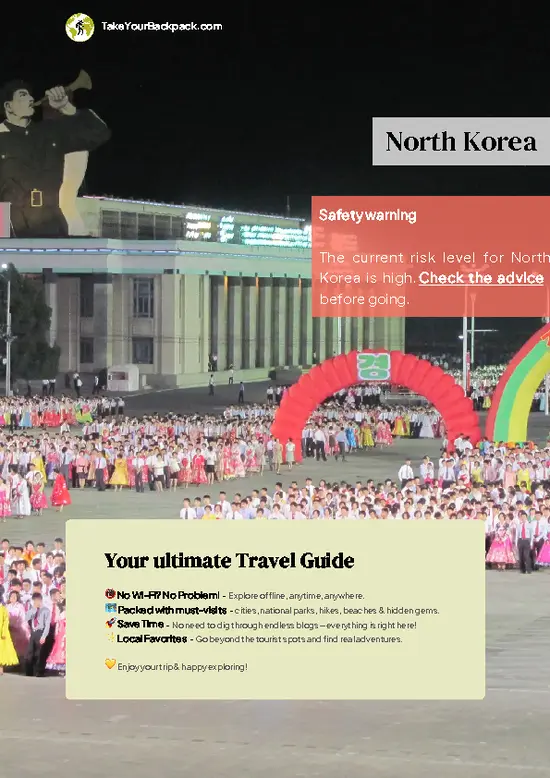
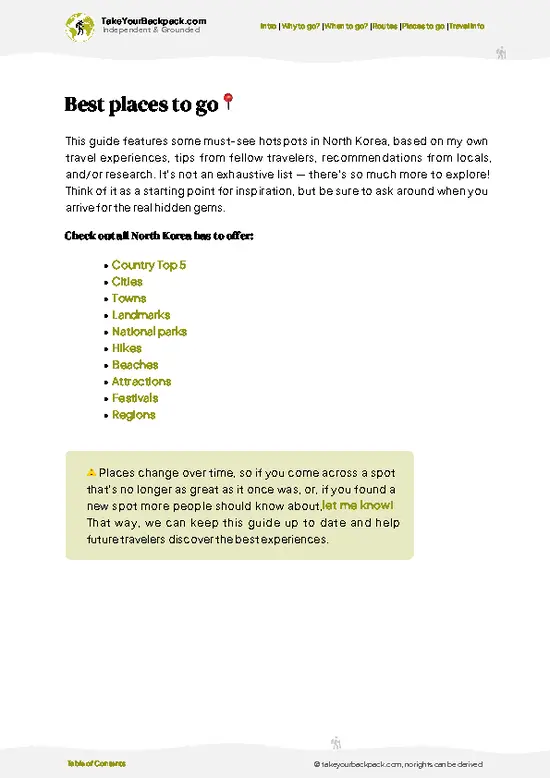
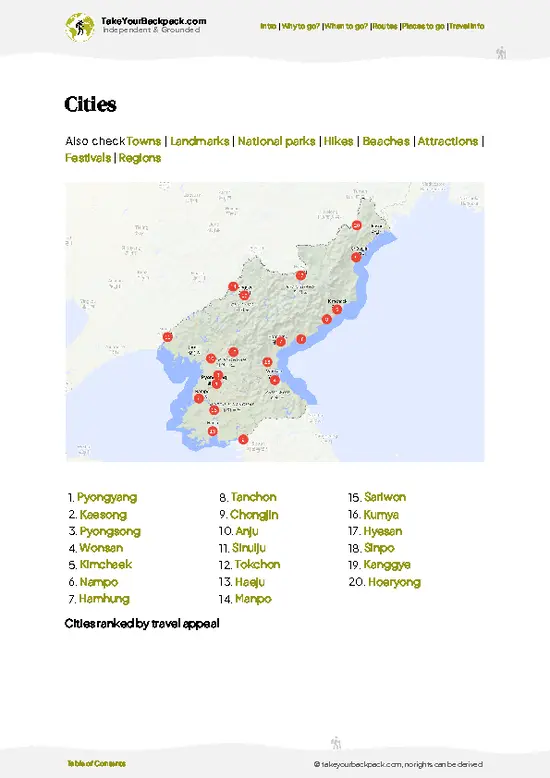
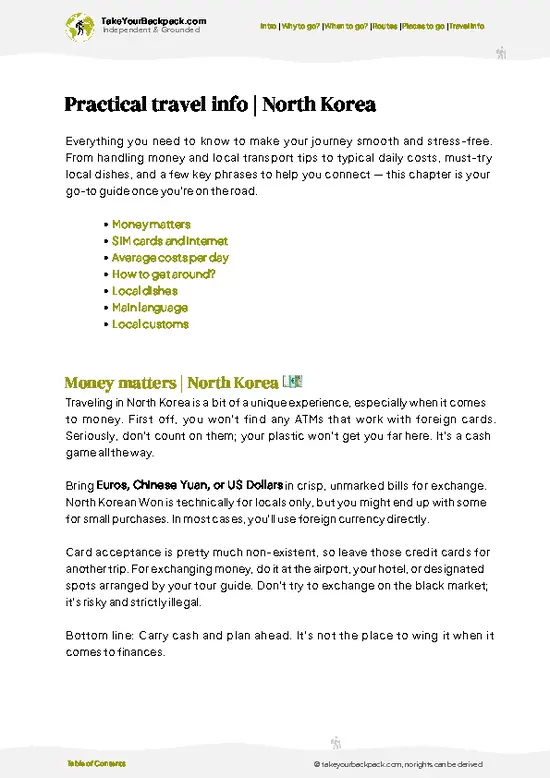
example page 0 from our offline Travel Guide for North Korea
example page 1 from our offline Travel Guide for North Korea
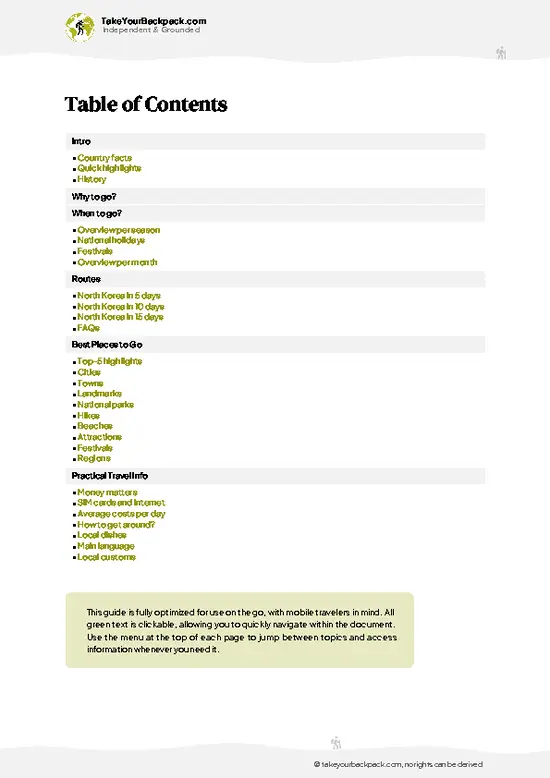
example page 2 from our offline Travel Guide for North Korea
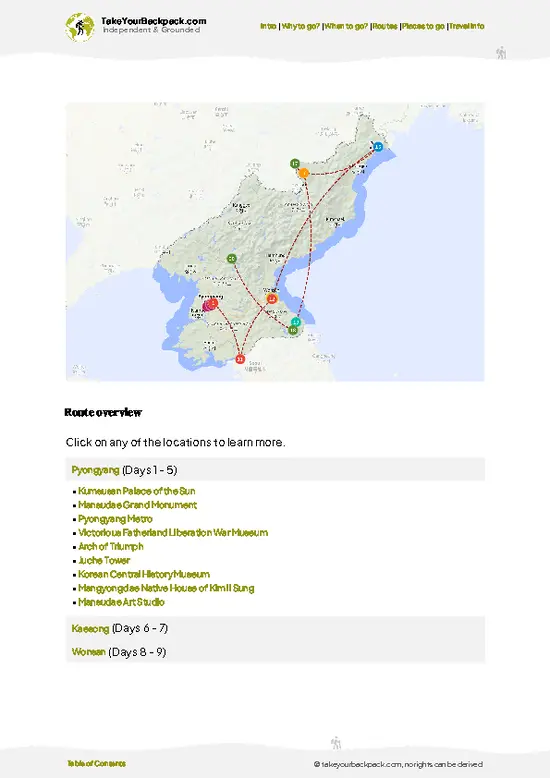
example page 3 from our offline Travel Guide for North Korea
example page 4 from our offline Travel Guide for North Korea
example page 5 from our offline Travel Guide for North Korea
example page 6 from our offline Travel Guide for North Korea
example page 7 from our offline Travel Guide for North Korea
The digital guide (296 pages) contains:
74 highlights, ranked by travel appeal
Optimized 5, 10 & 15-day travel routes
Cities, national parks, landmarks, beaches
How to get around
Offline-friendly for travel without Wi-Fi
👉 Click to see all 30+ guide features

📅 Plan smarter in minutes, not weeks
Month by month travel advice
Festivals & national holidays
Budget expectations

🗺️ Go to the right places, skip the overrated ones
Honest pros & cons of destinations
Top hikes, parks & viewpoints
Lesser-known places most travelers miss
Clear “worth it vs skip it” guidance

🛏️ Travel smoothly without rookie mistakes
Best areas to stay
Transport systems explained simply
Common scams & safety advice
SIM cards, money & practical tips

🌍 Understand the country, not just visit it
Culture & traditions
52 Essential phrases & customs
Festivals worth planning around
Traveler-friendly historical context
Insights that make places more meaningful

📱 Built for real travel conditions
Fully downloadable PDF
Works completely offline
Optimized for phone use
Useful in remote areas & buses
Everything in one place
Save weeks of stressful planning
Get instant access to your full guide. 30‑day money-back guarantee.


By proceeding you agree to our terms.
Sent to your inbox immediately after payment • 100% Secure Checkout
Best Backpacking Travel Advisor 2025 tourism awardBest Backpacking
Travel Advisor
2025
What others say about Take Your Backpack Guides:
⭐⭐⭐⭐⭐
Fantastic, amazing amount of information!
⭐⭐⭐⭐⭐
My goodness this is amazing, it's what I've been looking for hats off too you!
⭐⭐⭐⭐⭐
I think this is absolutely BRILLIANT
⭐⭐⭐⭐
Very complete and informative. It's still missing places, but I gotta to commend you
⭐⭐⭐⭐⭐
This is truly amazing, thank you, can't wait to explore it with my kids!
⭐⭐⭐⭐⭐
Awesome resource, thank you!
⭐⭐⭐⭐⭐
This is amazing! Can't wait to explore the ones I haven't seen
⭐⭐⭐⭐
I love this! Well done, great idea.
⭐⭐⭐⭐⭐
Thanks for taking the time to make this gem!
⭐⭐⭐⭐⭐
This might be the best website I've ever seen.
⭐⭐⭐⭐⭐
Congratulations, and thank you so much for your work; it's incredibly valuable.
⭐⭐⭐⭐
In all seriousness I think you did a great job pointing out the important spots
⭐⭐⭐⭐⭐
10/10 very good
⭐⭐⭐⭐⭐
As someone who's only just starting to visit regularly this is awesome, thank you.
⭐⭐⭐⭐
Thank you very much! I'm going to visit my dad, it's going to be very useful!
⭐⭐⭐⭐⭐
This is really cool! We'll be travelling for the first time and this definitely come in handy.
⭐⭐⭐⭐⭐
You are now our minister of culture, congratulations 👨‍💼
⭐⭐⭐⭐⭐
Just wanted to tell you that this is a pearl! Going to follow your recommendations.
⭐⭐⭐⭐⭐
This is so cool. I'll definitely be using the resource for my travels soon.
⭐⭐⭐⭐⭐
This is very impressive! Good work.
⭐⭐⭐⭐⭐
This is an amazing and informative site. Very well done!

🛏️ Where to stay?Where to Stay: North Korea Edition

No independent hostels or backpacker-style budget accommodation exist openly in North Korea; lodging for foreign visitors is limited to state-run hotels and guesthouses usually arranged through organized tours, so you cannot count on walk-in dorms or independent low-cost stays.

Most options cluster in central Pyongyang (Kim Il Sung Square, Moranbong, Mansudae) — closest to the main sights and the few permitted evening activities but tightly controlled and lacking real nightlife; provincial hubs like Kaesong, Wonsan and Mount Kumgang offer quieter, often cheaper official guesthouses with sparse amenities and restricted access.

Crime risk for tourists is low, but movement, independent bookings … read more 👉
No independent hostels or backpacker-style budget accommodation exist openly in North Korea; lodging for foreign visitors is limited to state-run hotels and guesthouses usually arranged through organized tours, so you cannot count on walk-in dorms or independent low-cost stays.

Most options cluster in central Pyongyang (Kim Il Sung Square, Moranbong, Mansudae) — closest to the main sights and the few permitted evening activities but tightly controlled and lacking real nightlife; provincial hubs like Kaesong, Wonsan and Mount Kumgang offer quieter, often cheaper official guesthouses with sparse amenities and restricted access.

Crime risk for tourists is low, but movement, independent bookings and services are strictly limited; book through authorized channels and expect fixed itineraries, limited food choices and minimal budget flexibility to avoid being turned away.

If you enjoy meeting fellow travelers, consider choosing hostels with high ratings for atmosphere. On the other hand, if you prefer having your own space, a hotel might be a better option.

North KoreaExplore Beyond This Category

👋 Meet the founderWho’s Behind Take Your Backpack?

Johan, backpacker and founder of TakeYourBackpackHi, I’m Johan (Netherlands 🇳🇱), the creator of TakeYourBackpack. Over the past decade, I’ve backpacked through 80+ countries across six continents, gaining extensive experience with independent travel, long-term trips, and overland routes.

This site is built on a combination of firsthand travel experience and carefully curated insights from other backpackers. Many guides are based on places I’ve personally visited, while others bring together tips, observations, and practical advice shared by trusted travelers I’ve met along the way.

The goal is to provide realistic, experience-driven guidance — not generic itineraries — so you can explore destinations with better context, clearer expectations, and more confidence.

Get full country guide •
Instant download • 74 highlights • Full Offline guide