v2.webp)


1. Monumental Socialist Realism on Stage
Forget Broadway razzle-dazzle—this is theater as a national mission. The Pyongyang Grand Theatre hosts epic-scale performances that are less about individual stardom and more about collective spectacle. You’ll see hundreds of performers moving in perfect synchronicity, with choreography so precise it feels almost militaristic. The sheer scale is jaw-dropping, and the themes—revolution, unity, national pride—are delivered with a sincerity that’s both fascinating and, at times, surreal.
2. The Architecture: Brutalist Grandeur
This isn’t your average concert hall. The building itself is a slab of 1960s socialist ambition, all sharp lines and imposing columns. Step inside and you’re hit with marble, chandeliers, and a sense of space designed to humble the … read more 👉
Forget Broadway razzle-dazzle—this is theater as a national mission. The Pyongyang Grand Theatre hosts epic-scale performances that are less about individual stardom and more about collective spectacle. You’ll see hundreds of performers moving in perfect synchronicity, with choreography so precise it feels almost militaristic. The sheer scale is jaw-dropping, and the themes—revolution, unity, national pride—are delivered with a sincerity that’s both fascinating and, at times, surreal.
2. The Architecture: Brutalist Grandeur
This isn’t your average concert hall. The building itself is a slab of 1960s socialist ambition, all sharp lines and imposing columns. Step inside and you’re hit with marble, chandeliers, and a sense of space designed to humble the … read more 👉
1. Monumental Socialist Realism on Stage
Forget Broadway razzle-dazzle—this is theater as a national mission. The Pyongyang Grand Theatre hosts epic-scale performances that are less about individual stardom and more about collective spectacle. You’ll see hundreds of performers moving in perfect synchronicity, with choreography so precise it feels almost militaristic. The sheer scale is jaw-dropping, and the themes—revolution, unity, national pride—are delivered with a sincerity that’s both fascinating and, at times, surreal.
2. The Architecture: Brutalist Grandeur
This isn’t your average concert hall. The building itself is a slab of 1960s socialist ambition, all sharp lines and imposing columns. Step inside and you’re hit with marble, chandeliers, and a sense of space designed to humble the individual. It’s a living relic of Cold War aesthetics, and walking its halls is a trip back to a time when theater was a tool of statecraft.
3. Revolutionary Operas
If you’re lucky enough to catch a revolutionary opera, you’re in for a cultural deep-dive. These productions are unique to North Korea—think massive casts, live orchestras, and storylines that blend folklore with propaganda. The music is bombastic, the costumes are lavish, and the emotional pitch is cranked to eleven. It’s not subtle, but it’s absolutely unforgettable.
4. The Audience Dynamic
My personal favorite. Watching the crowd is half the show. Locals attend in their best attire, and the atmosphere is a mix of reverence and collective pride. There’s a palpable sense that this isn’t just entertainment—it’s a civic event. The energy is contagious, and you’ll never look at a theater audience the same way again.
5. State-Orchestrated Curtain Calls
The curtain calls here are a performance in themselves. Expect thunderous, orchestrated applause, sometimes led by officials in the front rows. It’s a ritualized display of unity and gratitude, and it’s unlike anything you’ll see in the West.
Forget Broadway razzle-dazzle—this is theater as a national mission. The Pyongyang Grand Theatre hosts epic-scale performances that are less about individual stardom and more about collective spectacle. You’ll see hundreds of performers moving in perfect synchronicity, with choreography so precise it feels almost militaristic. The sheer scale is jaw-dropping, and the themes—revolution, unity, national pride—are delivered with a sincerity that’s both fascinating and, at times, surreal.
2. The Architecture: Brutalist Grandeur
This isn’t your average concert hall. The building itself is a slab of 1960s socialist ambition, all sharp lines and imposing columns. Step inside and you’re hit with marble, chandeliers, and a sense of space designed to humble the individual. It’s a living relic of Cold War aesthetics, and walking its halls is a trip back to a time when theater was a tool of statecraft.
3. Revolutionary Operas
If you’re lucky enough to catch a revolutionary opera, you’re in for a cultural deep-dive. These productions are unique to North Korea—think massive casts, live orchestras, and storylines that blend folklore with propaganda. The music is bombastic, the costumes are lavish, and the emotional pitch is cranked to eleven. It’s not subtle, but it’s absolutely unforgettable.
4. The Audience Dynamic
My personal favorite. Watching the crowd is half the show. Locals attend in their best attire, and the atmosphere is a mix of reverence and collective pride. There’s a palpable sense that this isn’t just entertainment—it’s a civic event. The energy is contagious, and you’ll never look at a theater audience the same way again.
5. State-Orchestrated Curtain Calls
The curtain calls here are a performance in themselves. Expect thunderous, orchestrated applause, sometimes led by officials in the front rows. It’s a ritualized display of unity and gratitude, and it’s unlike anything you’ll see in the West.
Spotted a mistake or missing something? Contact us.

 Best Backpacking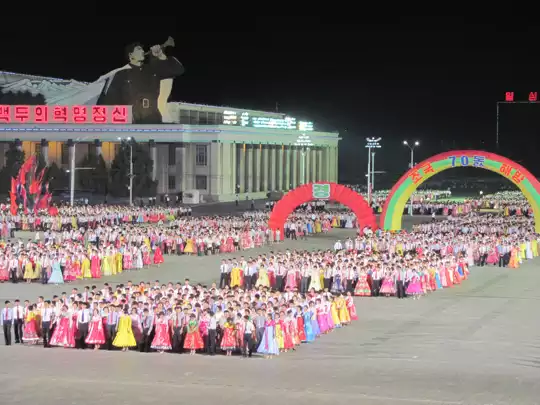
.jpg) Hi, I’m Johan (Netherlands 🇳🇱), the creator of TakeYourBackpack. Over the past 3 decades, I’ve backpacked through 90+ countries across six continents, gaining extensive experience with independent travel, long-term trips, and overland routes.
Hi, I’m Johan (Netherlands 🇳🇱), the creator of TakeYourBackpack. Over the past 3 decades, I’ve backpacked through 90+ countries across six continents, gaining extensive experience with independent travel, long-term trips, and overland routes.