×

North Korea🇰🇵 | attractionsPyongyang Metrodeep stations, mosaic murals, Soviet-era trains | things to do and best time to go

Explore Party Founding MuseumExplore Rungrado 1st of May Stadium

Backpacking in Pyongyang Metro
🏆 Top pickattraction ranked #4
By Johan Kruseman 🇳🇱 | Updated June 3, 2026

Forget the myth: the Pyongyang Metro isn’t just a Potemkin showpiece for foreign eyes. Yes, you’ll ride with real commuters—though your route is tightly curated, and you’ll never get lost in the tunnels. The Metro snakes beneath the heart of Pyongyang, North Korea’s capital, its stations deeper than most Cold War bunkers and decorated with a level of socialist grandeur that feels almost surreal. For backpackers, the Metro is a rare, pulse-quickening glimpse into daily North Korean life—if you can call anything here “daily.” The pros? It’s visually wild: chandeliers, mosaics, and trains that look like they time-traveled from 1970s East Berlin. The cons? You’re chaperoned, the crowds are real but not overwhelming, and spontaneity is non-existent. It’s cheap, but you’ll pay for the privilege with paperwork and patience. Compared to the staged monuments above ground, the Metro’s authenticity—however filtered—hits harder than you’d expect.

Discover everything you want to know in the 📖 North Korea Travel Guide.
Safety warning

The current risk level for North Korea is high. Check the advice before going.


Get your North Korea guide
74 ranked highlights, routes & tips, works offline (296 pages)
Loading the map 🌍
CLICK TO FILTER
cities
towns
landmarks
national parks
hikes
beaches
attractions
festivals
regions
SHOW COUNTRY’S BESTSHOW ALL

✨ Why go?
Ranked #4 attraction in North Korea
What sets this place apart

The Pyongyang Metro isn’t just another subway ride—it’s a full-on cultural deep dive wrapped in a surreal, Cold War-era time capsule. Sure, it’s crowded with tourists on tightly controlled tours, and yes, the cost isn’t exactly pocket change given the limited access and mandatory guides. But here’s the kicker: this isn’t about convenience or comfort. It’s about stepping into a space where every tile, every mural, every chandelier screams a story of North Korea’s identity and propaganda machine. The stations are more than transit points—they’re underground palaces, showcasing Soviet-style grandeur fused with Korean motifs, a visual manifesto of a nation’s pride and isolation. For backpackers threading through the country’s strict itinerary, the Metro is a milestone, a rare glimpse behind the … read more 👉
The Pyongyang Metro isn’t just another subway ride—it’s a full-on cultural deep dive wrapped in a surreal, Cold War-era time capsule. Sure, it’s crowded with tourists on tightly controlled tours, and yes, the cost isn’t exactly pocket change given the limited access and mandatory guides. But here’s the kicker: this isn’t about convenience or comfort. It’s about stepping into a space where every tile, every mural, every chandelier screams a story of North Korea’s identity and propaganda machine. The stations are more than transit points—they’re underground palaces, showcasing Soviet-style grandeur fused with Korean motifs, a visual manifesto of a nation’s pride and isolation. For backpackers threading through the country’s strict itinerary, the Metro is a milestone, a rare glimpse behind the iron curtain that few get to see. The adrenaline comes from knowing you’re in one of the world’s most secretive places, riding a system built not just to move people but to move minds. It’s a heavy, humbling experience that’s worth every second of the effort.
Want to include Pyongyang Metro in your North Korea route?
Create a personalized North Korea itinerary that includes Pyongyang Metro and the places that fit your trip — based on your travel style, budget, and available time. Get your route in seconds.

Generate my trip

💡 HighlightsEssential experiences to have while visiting Pyongyang Metro

1. Puhung and Yonggwang Stations: The Marble-and-Mosaic Showstoppers
Let’s get real: most metro stations worldwide are utilitarian at best, but Pyongyang’s flagship stops are a fever dream of socialist grandeur. Puhung and Yonggwang are the ones you’ll see in every glossy photo, and for once, the hype is justified. Chandeliers that look like they belong in a Cold War opera house, marble pillars, and murals so massive they feel like propaganda you can walk into. Yes, you’ll be herded here with other foreigners, but the spectacle is so over-the-top it’s almost surreal. If you’re going to see just two stations, make it these. They’re the Sistine Chapels of subway stops—minus the crowds of Rome.


2. The Deepest Metro Ride You’ll Ever Take
This isn’t just a subway; it’s a Cold War bunker disguised … read more 👉
1. Puhung and Yonggwang Stations: The Marble-and-Mosaic Showstoppers
Let’s get real: most metro stations worldwide are utilitarian at best, but Pyongyang’s flagship stops are a fever dream of socialist grandeur. Puhung and Yonggwang are the ones you’ll see in every glossy photo, and for once, the hype is justified. Chandeliers that look like they belong in a Cold War opera house, marble pillars, and murals so massive they feel like propaganda you can walk into. Yes, you’ll be herded here with other foreigners, but the spectacle is so over-the-top it’s almost surreal. If you’re going to see just two stations, make it these. They’re the Sistine Chapels of subway stops—minus the crowds of Rome.


2. The Deepest Metro Ride You’ll Ever Take
This isn’t just a subway; it’s a Cold War bunker disguised as public transport. The escalators descend so far underground you’ll have time to question your life choices—and then some. At over 100 meters deep, it’s one of the world’s deepest metros, built to double as a bomb shelter. The ride down is a slow-motion plunge into the heart of North Korean paranoia and engineering. It’s not just a commute; it’s a descent into a different reality.


3. The Vintage Soviet-Era Trains
Forget sleek, modern carriages. Here, you’ll ride in hand-me-down East German rolling stock, complete with wood paneling and faded upholstery. The trains rattle and groan with every stop, and the air smells faintly of machine oil and nostalgia. It’s a time capsule on rails, and you’ll never confuse it with the Tokyo Metro. This is public transport with character—and a soundtrack of clattering wheels.


4. The Propaganda Murals and Mosaics
Every station is a gallery of socialist realism. You’ll see mosaics of workers, farmers, and soldiers, all rendered with the kind of optimism only possible in a one-party state. The art isn’t subtle, but it’s fascinating—equal parts beautiful and bizarre. If you want to understand the North Korean psyche, study these walls. They’re more honest than any official tour guide.


5. The Local Riders (Personal Favorite)
Here’s where the Instagram version falls flat: most tours only let you ride for a couple of stops, and you’ll be surrounded by other foreigners. But if you get lucky and ride with locals, even briefly, you’ll catch a rare, unscripted glimpse of daily life. Schoolkids in uniforms, workers lost in thought, old men reading the Rodong Sinmun. It’s the human moments—fleeting, unfiltered—that make the Pyongyang Metro more than a propaganda sideshow. This is the real magic, and it’s why I’d ride the Metro over any monument in the city.
Spotted a mistake or missing something? Contact us.

🌤️ When to go?When to go for the best experience


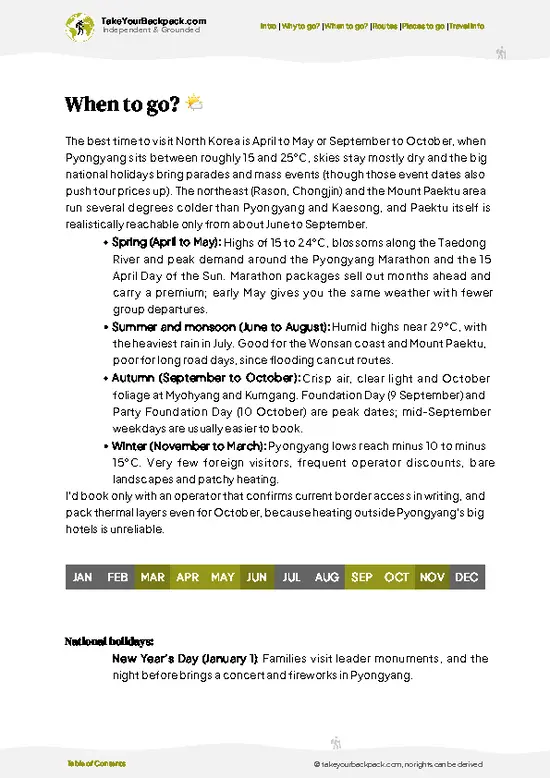
  • Weather: Pyongyang experiences cold winters and hot, humid summers. The best weather hits between April and June or September to October, when temperatures hover around 15-22°C (59-72°F), making your underground metro visits more comfortable without the sweat or frostbite.

  • Temperature: Winter months (December to February) plunge below freezing, often dipping to -5°C (23°F) or colder, which can make waiting outside for tours a test of patience. Summer (July and August) can spike above 30°C (86°F), but the metro itself stays cool underground.

  • Daylight Hours: Longer daylight from May to August means more time for surface exploration before or after metro rides. Short winter days limit sightseeing to tight windows, which can feel rushed.

  • Crowds: The metro is a popular stop on official
read more 👉

  • Weather: Pyongyang experiences cold winters and hot, humid summers. The best weather hits between April and June or September to October, when temperatures hover around 15-22°C (59-72°F), making your underground metro visits more comfortable without the sweat or frostbite.

  • Temperature: Winter months (December to February) plunge below freezing, often dipping to -5°C (23°F) or colder, which can make waiting outside for tours a test of patience. Summer (July and August) can spike above 30°C (86°F), but the metro itself stays cool underground.

  • Daylight Hours: Longer daylight from May to August means more time for surface exploration before or after metro rides. Short winter days limit sightseeing to tight windows, which can feel rushed.

  • Crowds: The metro is a popular stop on official tours year-round, but spring and autumn see fewer tourists compared to summer holidays or national celebrations, offering a slightly less staged experience.

  • Seasonal Activities: National holidays like the Day of the Sun (April 15) bring parades and heightened security, which can disrupt access. Visiting outside these dates avoids the orchestrated spectacle and lets you focus on the metro’s artistry.

  • Price Fluctuations: Tour costs remain fairly stable year-round due to strict government controls, but shoulder seasons (spring and fall) sometimes offer better availability and slightly smoother logistics, indirectly saving time and hassle.


Pro-tip: Aim for late April or early October—cool, manageable crowds, and you’ll dodge the extremes while soaking in the metro’s unique atmosphere without the forced fanfare.


source: climatestotravel.comJANJanuary: fair for travelingFEBFebruary: fair for travelingMARMarch: good for travelingAPRApril: highly recommended for travelingMAYMay: excellent for travelingJUNJune: excellent for travelingJULJuly: good for travelingAUGAugust: good for travelingSEPSeptember: highly recommended for travelingOCTOctober: excellent for travelingNOVNovember: good for travelingDECDecember: fair for traveling
when-to-go

✈️ The backpacker research shortcutNorth Korea Travel Guide

An offline-friendly backpacking guide with optimized travel routes, ranked highlights, transport advice, and the best areas to stay.
example page 0 from our offline Travel Guide for North Korea
example page 1 from our offline Travel Guide for North Korea
example page 2 from our offline Travel Guide for North Korea
example page 3 from our offline Travel Guide for North Korea
example page 4 from our offline Travel Guide for North Korea
example page 5 from our offline Travel Guide for North Korea
example page 6 from our offline Travel Guide for North Korea
example page 7 from our offline Travel Guide for North Korea
The digital guide (296 pages) contains:
74 highlights, ranked by travel appeal
Optimized 5, 10 & 15-day travel routes
Cities, national parks, landmarks, beaches
How to get around
Offline-friendly for travel without Wi-Fi
👉 Click to see all 30+ guide features

📅 Plan smarter in minutes, not weeks
Month by month travel advice
Festivals & national holidays
Budget expectations

🗺️ Go to the right places, skip the overrated ones
Honest pros & cons of destinations
Top hikes, parks & viewpoints
Lesser-known places most travelers miss
Clear “worth it vs skip it” guidance

🛏️ Travel smoothly without rookie mistakes
Best areas to stay
Transport systems explained simply
Common scams & safety advice
SIM cards, money & practical tips

🌍 Understand the country, not just visit it
Culture & traditions
52 Essential phrases & customs
Festivals worth planning around
Traveler-friendly historical context
Insights that make places more meaningful

📱 Built for real travel conditions
Fully downloadable PDF
Works completely offline
Optimized for phone use
Useful in remote areas & buses
Everything in one place
Save weeks of stressful planning
Get instant access to your full guide. 30‑day money-back guarantee.


By proceeding you agree to our terms.
Sent to your inbox immediately after payment • 100% Secure Checkout
Best Backpacking Travel Advisor 2025 tourism awardBest Backpacking
Travel Advisor
2025
What others say about Take Your Backpack Guides:
⭐⭐⭐⭐⭐
Fantastic, amazing amount of information!
⭐⭐⭐⭐⭐
My goodness this is amazing, it's what I've been looking for hats off too you!
⭐⭐⭐⭐⭐
I think this is absolutely BRILLIANT
⭐⭐⭐⭐
Very complete and informative. It's still missing places, but I gotta to commend you
⭐⭐⭐⭐⭐
This is truly amazing, thank you, can't wait to explore it with my kids!
⭐⭐⭐⭐⭐
Awesome resource, thank you!
⭐⭐⭐⭐⭐
This is amazing! Can't wait to explore the ones I haven't seen
⭐⭐⭐⭐
I love this! Well done, great idea.
⭐⭐⭐⭐⭐
Thanks for taking the time to make this gem!
⭐⭐⭐⭐⭐
This might be the best website I've ever seen.
⭐⭐⭐⭐⭐
Congratulations, and thank you so much for your work; it's incredibly valuable.
⭐⭐⭐⭐
In all seriousness I think you did a great job pointing out the important spots
⭐⭐⭐⭐⭐
10/10 very good
⭐⭐⭐⭐⭐
As someone who's only just starting to visit regularly this is awesome, thank you.
⭐⭐⭐⭐
Thank you very much! I'm going to visit my dad, it's going to be very useful!
⭐⭐⭐⭐⭐
This is really cool! We'll be travelling for the first time and this definitely come in handy.
⭐⭐⭐⭐⭐
You are now our minister of culture, congratulations 👨‍💼
⭐⭐⭐⭐⭐
Just wanted to tell you that this is a pearl! Going to follow your recommendations.
⭐⭐⭐⭐⭐
This is so cool. I'll definitely be using the resource for my travels soon.
⭐⭐⭐⭐⭐
This is very impressive! Good work.
⭐⭐⭐⭐⭐
This is an amazing and informative site. Very well done!

🛏️ Where to stay?Choosing the right base

If you’re aiming to experience the Pyongyang Metro, brace yourself: this isn’t your typical backpacker playground. North Korea’s capital is tightly controlled, and the idea of wandering solo or hopping between budget hostels like you might in Southeast Asia is basically a no-go. The reality? You’ll be part of an organized tour, and your accommodation options are limited to government-approved hotels clustered in central Pyongyang.

That said, the best areas to stay are those near the city center, close enough to the metro stations and major landmarks to minimize travel time under supervision. … read more 👉
If you’re aiming to experience the Pyongyang Metro, brace yourself: this isn’t your typical backpacker playground. North Korea’s capital is tightly controlled, and the idea of wandering solo or hopping between budget hostels like you might in Southeast Asia is basically a no-go. The reality? You’ll be part of an organized tour, and your accommodation options are limited to government-approved hotels clustered in central Pyongyang.

That said, the best areas to stay are those near the city center, close enough to the metro stations and major landmarks to minimize travel time under supervision. These neighborhoods offer a rare chance to soak in the city’s eerie, monumental vibe without the usual tourist crush—because there isn’t one. Forget social hostels or backpacker bars; the social scene is strictly regulated, but you’ll find a strange camaraderie among fellow travelers on the same tour, often in the hotel lobbies or common areas.

The magic here isn’t in budget thrills or spontaneous street encounters. It’s in the surreal experience of riding one of the world’s deepest, most ornate metro systems, surrounded by propaganda art and a silence that feels like stepping into another era. If you want raw authenticity, this is it—but pack patience and a thick skin for the controlled environment.

👛 Costs (as of 2 April 2026)How expensive it really is

A single ride on the Pyongyang Metro costs 5 North Korean won, approximately €0.03. ([en.wikipedia.org](https://en.wikipedia.org/wiki/Pyongyang_Metro?utm_source=openai)) Tickets are purchased at station booths and are typically paper tickets with the Korean character 지 printed on them. ([metroeasy.com](https://metroeasy.com/north-korea/pyongyang-metro/?utm_source=openai)) There are no additional fees or charges for using the metro.

source: en.wikipedia.org
⚠️ Prices can change and everyone travels differently, so take this as a rough guide. Hope it helps you plan your adventure!

Other North Korean attractions near Pyongyang Metro

Explore more nearby:


💡 Not sure where to go next?
Create a personalized itinerary for North Korea including Pyongyang Metro and the places that fit your trip.

Generate my itinerary

👉 Discover all attractions

Or checkout all North Korea has to offer (think cities, towns, villages, national parks, hikes, beaches, festivals)
Country photo of North Korea

We 💚 feedbackParting advice and final tips

The Pyongyang Metro isn’t your typical subway ride—it’s a surreal dive into Cold War-era propaganda and grandiose architecture that feels like stepping into a living museum. But don’t expect a bustling, chaotic transit system; it’s quiet, controlled, and heavily monitored, which can feel more like a performance than a commute. If you’re after raw, unfiltered urban life, this isn’t it—but for a glimpse into North Korea’s curated identity, it’s a rare, eye-opening stop.

✈️ When did I visit North Korea?
As part of my 1.5 year travel around the world trip, I visited North Korea in August 2015. I had never expected I was able to get in.

✍️ Help improve this page!
The information on this page is based on my own backpacking experience in North Korea, supplemented with up-to-date research and feedback from other travelers. Travel details can change, so if you notice anything outdated or incomplete, feel free to let me know.


🙋‍♂️ Give feedback

👋 Meet the founderWho’s Behind Take Your Backpack?

Johan, backpacker and founder of TakeYourBackpackHi, I’m Johan (Netherlands 🇳🇱), the creator of TakeYourBackpack. Over the past decade, I’ve backpacked through 80+ countries across six continents, gaining extensive experience with independent travel, long-term trips, and overland routes.

This site is built on a combination of firsthand travel experience and carefully curated insights from other backpackers. Many guides are based on places I’ve personally visited, while others bring together tips, observations, and practical advice shared by trusted travelers I’ve met along the way.

The goal is to provide realistic, experience-driven guidance — not generic itineraries — so you can explore destinations with better context, clearer expectations, and more confidence.

Get full country guide •
Instant download • 74 highlights • Full Offline guide