×

North Korea🇰🇵 | regionsRasonspecial economic zone, Russian border, seafood markets, trade hub | things to do and best time to go

Explore ChonmasanExplore Myeonghak-dong

Backpacking in Rason
🏆 Top pickregion ranked #1
By Johan Kruseman 🇳🇱 | Updated June 16, 2026

Your chopsticks hover over a plate of still-warm squid while a Chinese pop ballad leaks from a tinny speaker and, outside the fogged window, a line of trucks idles toward the border gate. Diesel, sea salt, and cheap soju all in the same breath. That’s Rason. Up in the far northeast corner of North Korea, wedged against Russia and China, and feeling more like a frontier trading post than the rest of the country.

For backpackers, it’s the closest thing North Korea has to a “soft edge.” You get markets where locals actually bargain, a scruffy port, hills that drop into cold, empty beaches, and a weirdly cosmopolitan mix of Korean, Russian, and Chinese influences. It’s cheaper and looser than Pyongyang, but still tightly controlled, with movement funneled through guides and permits, and transport between zones slow and opaque. Don’t come for nightlife or comfort; come if you’re willing to trade both for raw, slightly awkward authenticity and the surreal feeling of standing at a three-country crossroads.

Discover everything you want to know in the 📖 North Korea Travel Guide.
Safety warning

The current risk level for North Korea is high. Check the advice before going.


Get your North Korea guide
74 ranked highlights, routes & tips, works offline (296 pages)
Loading the map 🌍
CLICK TO FILTER
cities
towns
landmarks
national parks
hikes
beaches
attractions
festivals
regions
SHOW COUNTRY’S BESTSHOW ALL

✨ Why go?
Ranked #1 region in North Korea
The unique appeal for travelers

Rason, North Korea, is a backpacker’s playground, offering a unique blend of experiences that make it worth your time. First off, the variety of landscapes is stunning. You’ve got mountains, beaches, and even a bit of urban life, all within a short distance. This means you can soak in diverse scenery without the hassle of constant relocation.

Transport here is surprisingly flexible. You can hop on a local bus or rent a bike to explore at your own pace. This freedom lets you dive deeper into the culture, rather than just skimming the surface. Imagine cycling along the coast, stopping at a local market, and chatting with vendors. That’s the kind of slow travel that builds memories.

Plus, Rason is a rare chance to mix nature and culture seamlessly. You can hike in the morning, then spend your … read more 👉
Rason, North Korea, is a backpacker’s playground, offering a unique blend of experiences that make it worth your time. First off, the variety of landscapes is stunning. You’ve got mountains, beaches, and even a bit of urban life, all within a short distance. This means you can soak in diverse scenery without the hassle of constant relocation.

Transport here is surprisingly flexible. You can hop on a local bus or rent a bike to explore at your own pace. This freedom lets you dive deeper into the culture, rather than just skimming the surface. Imagine cycling along the coast, stopping at a local market, and chatting with vendors. That’s the kind of slow travel that builds memories.

Plus, Rason is a rare chance to mix nature and culture seamlessly. You can hike in the morning, then spend your afternoon exploring local traditions. This balance keeps your trip dynamic and engaging.

So, if you’re looking for a spot that offers high-value experiences without the tourist traps, Rason is your ticket. Embrace the adventure, and you’ll leave with stories that last a lifetime.
Want to include Rason in your North Korea route?
Create a personalized North Korea itinerary that includes Rason and the places that fit your trip — based on your travel style, budget, and available time. Get your route in seconds.

Generate my trip

💡 HighlightsEssential experiences to have while visiting Rason

  1. Rajin Port waterfront and working harbor — An honest, gritty slice of coastal life: cranes, freighters, fishing boats and salt-sprayed concrete quays. Great for watching the working rhythms of a port that serves as Rason’s economic lifeline and for spotting foreign (mostly Chinese/Russian) ships calling in.
  2. Rajin Fish Market (early-morning auction) — Lively, informal and very local: vendors, the day’s catch laid out on ice, and cheap seafood you won’t find in guidebooks. The best time is just before sunrise when the auctions happen and the stalls come alive.
  3. Tumen River estuary and birdwatching flats — Where DPRK, China and Russia meet the sea. Mudflats and sandbars draw migratory birds; the odd vantage point gives you a rare borderland landscape that feels different from inland Korea.
read more 👉
  1. Rajin Port waterfront and working harbor — An honest, gritty slice of coastal life: cranes, freighters, fishing boats and salt-sprayed concrete quays. Great for watching the working rhythms of a port that serves as Rason’s economic lifeline and for spotting foreign (mostly Chinese/Russian) ships calling in.
  2. Rajin Fish Market (early-morning auction) — Lively, informal and very local: vendors, the day’s catch laid out on ice, and cheap seafood you won’t find in guidebooks. The best time is just before sunrise when the auctions happen and the stalls come alive.
  3. Tumen River estuary and birdwatching flats — Where DPRK, China and Russia meet the sea. Mudflats and sandbars draw migratory birds; the odd vantage point gives you a rare borderland landscape that feels different from inland Korea.
  4. Sonbong Bay and the coastal drive — A low-key scenic stretch of fishing villages, rocky coves and small harbors. Slow drives or short hikes along the coast let you see local fishing techniques, seaside life, and little islets just offshore that frame the bay.
  5. Soviet-era architecture in Rajin town center — Walkable blocks of older, Soviet-influenced buildings and municipal structures that speak to Rason’s 20th-century international ties. Not flashy, but visually distinct from the rest of North Korea and interesting for photography and urban wandering.
  6. Small coastal beaches and hidden coves around Sonbong — Sandy pockets and pebble coves used by locals in summer. Swimming isn’t the point so much as the quiet seaside atmosphere, shell-hunting and simple picnics away from any bigger crowds.
  7. Back-alley seafood stalls and rooftop diners (hidden gem) — Skip the glossy restaurants and hunt down tiny, family-run stalls and rooftop tables where locals eat. Portions are honest, prices are low, and you’ll taste preparations and side dishes not offered to visiting groups.
  8. Tumen estuary mudflat walks and shellfish picking with locals (hidden gem) — If you get the chance, join locals at low tide to pick cockles and crabs. It’s hands-on, cheap, and a proper local experience — bring gloves and be ready to get muddy.
  9. Small-boat trips to nearby islets and fishing reefs — Short local boat rides that take you out to rocky islets for birdlife, sea views and simple fishing stops. These micro-excursions are a good way to experience the sea around Rason without anything commercialized.
  10. Sunset headland above Rajin (personal favorite, hidden gem) — A short walk up from the town pier leads to a low headland with sweeping views of the harbor and the open sea. Few visitors bother to stay for dusk; the light on the ships and islands is quietly addictive. Bring a thermos and some snacks.
Spotted a mistake or missing something? Contact us.

⌛️ 5 daysSeeing the highlights in 5 days

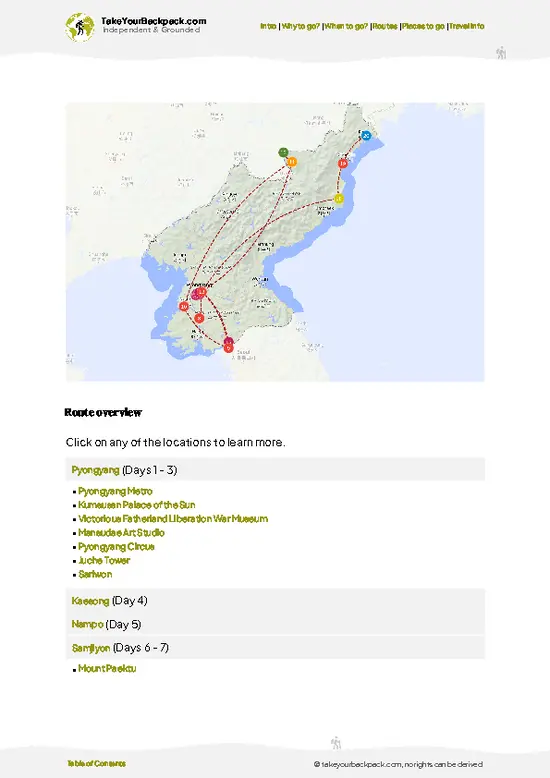
Day 1: Rason

Start your journey in Rason, where the transport system is your lifeline. The city is a hub for trains and buses, making it easy to navigate. Spend your first day acclimating to the local vibe. Explore the bustling markets and sample street food. The flavors here are a revelation, especially the fresh seafood. This sets the tone for your trip—immersing yourself in the local culture right off the bat.

Day 2: Mount Kumgang

On day two, take a bus to Mount Kumgang. This isn’t just a scenic spot; it’s a cultural touchstone. The ride is about two hours, but the views are worth every minute. You’ll see the rugged terrain that defines North Korea. Hike the trails and soak in the stunning landscapes. This is where you feel the pulse of the country. The transport is reliable, so you … read more 👉
Day 1: Rason

Start your journey in Rason, where the transport system is your lifeline. The city is a hub for trains and buses, making it easy to navigate. Spend your first day acclimating to the local vibe. Explore the bustling markets and sample street food. The flavors here are a revelation, especially the fresh seafood. This sets the tone for your trip—immersing yourself in the local culture right off the bat.

Day 2: Mount Kumgang

On day two, take a bus to Mount Kumgang. This isn’t just a scenic spot; it’s a cultural touchstone. The ride is about two hours, but the views are worth every minute. You’ll see the rugged terrain that defines North Korea. Hike the trails and soak in the stunning landscapes. This is where you feel the pulse of the country. The transport is reliable, so you won’t waste time waiting around.

Day 3: Rason to Chongjin

Head back to Rason and then take a train to Chongjin. This leg of the journey is crucial; it connects you to the heart of the region. The train ride gives you a glimpse into everyday life. Once in Chongjin, visit the local museums and the port area. The contrast between the industrial and the natural beauty is striking. You’ll appreciate the complexity of North Korean life here.

Day 4: Off-Path Reward - Hwanggumpyong Island

Take a detour to Hwanggumpyong Island. This is a rare chance to see a less-traveled area. The island is a mix of natural beauty and local history. Spend the day exploring, and you’ll find a quieter side of North Korea that most tourists miss. It’s a refreshing break from the more commercial spots.

Day 5: Return to Rason

Wrap up your trip by returning to Rason. Spend your last day revisiting your favorite spots or discovering new ones. Reflect on your experiences and soak in the atmosphere one last time. This day is about savoring the journey you’ve taken.

The must-do day? Day 2 at Mount Kumgang. It encapsulates the essence of North Korea—raw beauty and cultural depth. You’ll leave with a sense of connection that makes the entire trip worthwhile.
Turn your Rason visit into an North Korea adventure
Build a complete North Korea route with Rason, hidden gems, must-see destinations, and realistic travel times included.

Generate my trip

🌤️ When to go?Seasonal considerations and timing


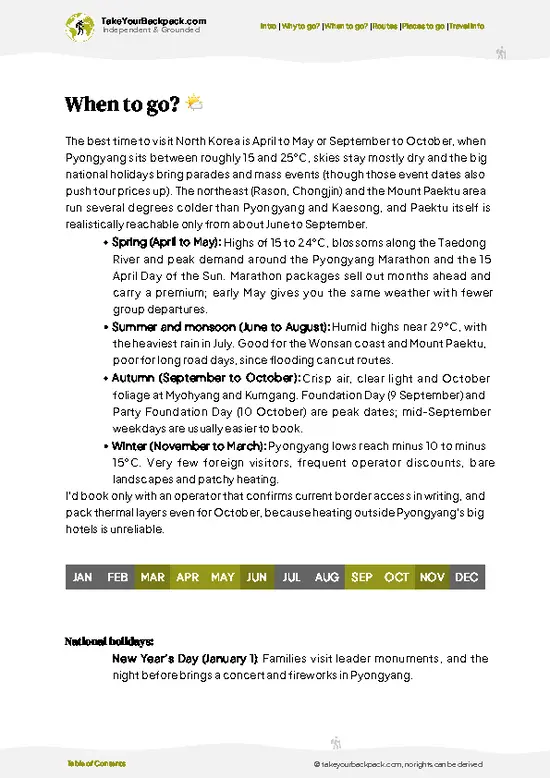
  • Topic: Weather and Temperature – Spring (April to June) and autumn (September to October) are your sweet spots. Expect mild temps around 15-22°C (59-72°F), perfect for hiking without sweating buckets or freezing your toes off. Summers can scorch past 30°C (86°F), and winters dive below freezing, which isn’t ideal for wandering.

  • Topic: Daylight Hours – Longer days in spring and autumn give you 12 to 14 hours of daylight, enough to squeeze in early starts and late finishes. Winter’s short days (around 9 hours) limit your exploration time, while summer’s long days can be a double-edged sword with heat and humidity.

  • Topic: Crowds – Rason isn’t exactly overrun, but local holidays and peak summer can bring more domestic tourists. Spring and autumn keep things quieter, letting you soak in
read more 👉

  • Topic: Weather and Temperature – Spring (April to June) and autumn (September to October) are your sweet spots. Expect mild temps around 15-22°C (59-72°F), perfect for hiking without sweating buckets or freezing your toes off. Summers can scorch past 30°C (86°F), and winters dive below freezing, which isn’t ideal for wandering.

  • Topic: Daylight Hours – Longer days in spring and autumn give you 12 to 14 hours of daylight, enough to squeeze in early starts and late finishes. Winter’s short days (around 9 hours) limit your exploration time, while summer’s long days can be a double-edged sword with heat and humidity.

  • Topic: Crowds – Rason isn’t exactly overrun, but local holidays and peak summer can bring more domestic tourists. Spring and autumn keep things quieter, letting you soak in the vibe without bumping elbows.

  • Topic: Seasonal Activities – Autumn is prime for catching the harvest festivals and crisp mountain views. Spring offers blooming flowers and fresh greenery, ideal for nature walks and photography. Winter’s harshness limits outdoor fun, and summer’s heat can sap your energy.

  • Topic: Price Fluctuations – Prices tend to spike during peak summer and major holidays. Shoulder seasons (spring and autumn) often bring better deals on accommodation and tours, so you get more bang for your buck without sacrificing experience quality.


Pro-tip: Aim for late September—cool temps, fewer crowds, and a front-row seat to autumn’s color show. It’s the insider’s window for Rason’s best backpacking moments.


source: climatestotravel.comJANJanuary: below average for travelingFEBFebruary: below average for travelingMARMarch: good for travelingAPRApril: excellent for travelingMAYMay: excellent for travelingJUNJune: highly recommended for travelingJULJuly: fair for travelingAUGAugust: fair for travelingSEPSeptember: excellent for travelingOCTOctober: excellent for travelingNOVNovember: good for travelingDECDecember: below average for traveling
when-to-go

✈️ The backpacker research shortcutNorth Korea Travel Guide

An offline-friendly backpacking guide with optimized travel routes, ranked highlights, transport advice, and the best areas to stay.
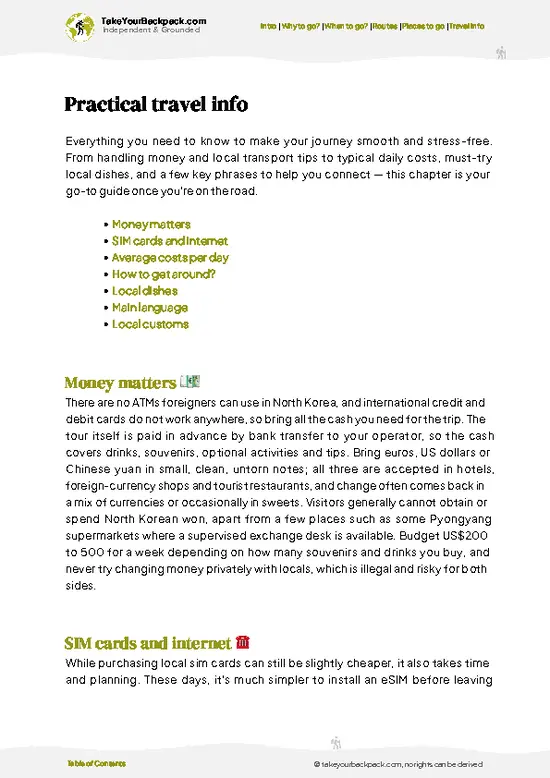
example page 0 from our offline Travel Guide for North Korea
example page 1 from our offline Travel Guide for North Korea
example page 2 from our offline Travel Guide for North Korea
example page 3 from our offline Travel Guide for North Korea
example page 4 from our offline Travel Guide for North Korea
example page 5 from our offline Travel Guide for North Korea
example page 6 from our offline Travel Guide for North Korea
example page 7 from our offline Travel Guide for North Korea
The digital guide (296 pages) contains:
74 highlights, ranked by travel appeal
Optimized 5, 10 & 15-day travel routes
Cities, national parks, landmarks, beaches
How to get around
Offline-friendly for travel without Wi-Fi
👉 Click to see all 30+ guide features

📅 Plan smarter in minutes, not weeks
Month by month travel advice
Festivals & national holidays
Budget expectations

🗺️ Go to the right places, skip the overrated ones
Honest pros & cons of destinations
Top hikes, parks & viewpoints
Lesser-known places most travelers miss
Clear “worth it vs skip it” guidance

🛏️ Travel smoothly without rookie mistakes
Best areas to stay
Transport systems explained simply
Common scams & safety advice
SIM cards, money & practical tips

🌍 Understand the country, not just visit it
Culture & traditions
52 Essential phrases & customs
Festivals worth planning around
Traveler-friendly historical context
Insights that make places more meaningful

📱 Built for real travel conditions
Fully downloadable PDF
Works completely offline
Optimized for phone use
Useful in remote areas & buses
Everything in one place
Save weeks of stressful planning
Get instant access to your full guide. 30‑day money-back guarantee.


By proceeding you agree to our terms.
Sent to your inbox immediately after payment • 100% Secure Checkout
Best Backpacking Travel Advisor 2025 tourism awardBest Backpacking
Travel Advisor
2025
What others say about Take Your Backpack Guides:
⭐⭐⭐⭐⭐
Fantastic, amazing amount of information!
⭐⭐⭐⭐⭐
My goodness this is amazing, it's what I've been looking for hats off too you!
⭐⭐⭐⭐⭐
I think this is absolutely BRILLIANT
⭐⭐⭐⭐
Very complete and informative. It's still missing places, but I gotta to commend you
⭐⭐⭐⭐⭐
This is truly amazing, thank you, can't wait to explore it with my kids!
⭐⭐⭐⭐⭐
Awesome resource, thank you!
⭐⭐⭐⭐⭐
This is amazing! Can't wait to explore the ones I haven't seen
⭐⭐⭐⭐
I love this! Well done, great idea.
⭐⭐⭐⭐⭐
Thanks for taking the time to make this gem!
⭐⭐⭐⭐⭐
This might be the best website I've ever seen.
⭐⭐⭐⭐⭐
Congratulations, and thank you so much for your work; it's incredibly valuable.
⭐⭐⭐⭐
In all seriousness I think you did a great job pointing out the important spots
⭐⭐⭐⭐⭐
10/10 very good
⭐⭐⭐⭐⭐
As someone who's only just starting to visit regularly this is awesome, thank you.
⭐⭐⭐⭐
Thank you very much! I'm going to visit my dad, it's going to be very useful!
⭐⭐⭐⭐⭐
This is really cool! We'll be travelling for the first time and this definitely come in handy.
⭐⭐⭐⭐⭐
You are now our minister of culture, congratulations 👨‍💼
⭐⭐⭐⭐⭐
Just wanted to tell you that this is a pearl! Going to follow your recommendations.
⭐⭐⭐⭐⭐
This is so cool. I'll definitely be using the resource for my travels soon.
⭐⭐⭐⭐⭐
This is very impressive! Good work.
⭐⭐⭐⭐⭐
This is an amazing and informative site. Very well done!

🛏️ Where to stay?Where staying makes the most sense

Rason, North Korea, is a unique spot for backpackers looking for an off-the-beaten-path experience. The city itself is your best bet. It’s relatively safe and offers a glimpse into the local life without the overwhelming tourist crowds.

Stay near the waterfront. This area buzzes with activity, especially in the evenings. You’ll find locals enjoying the sea breeze, and it’s a prime spot for people-watching. Plus, the proximity to markets means you can snag some local snacks without breaking the bank.

If you’re feeling adventurous, consider the outskirts. Villages like Haeju offer a more authentic … read more 👉
Rason, North Korea, is a unique spot for backpackers looking for an off-the-beaten-path experience. The city itself is your best bet. It’s relatively safe and offers a glimpse into the local life without the overwhelming tourist crowds.

Stay near the waterfront. This area buzzes with activity, especially in the evenings. You’ll find locals enjoying the sea breeze, and it’s a prime spot for people-watching. Plus, the proximity to markets means you can snag some local snacks without breaking the bank.

If you’re feeling adventurous, consider the outskirts. Villages like Haeju offer a more authentic experience. Here, you can connect with locals and see daily life unfold. Just be mindful of the cultural nuances; a smile goes a long way.

Timing is key. Visit during the summer months when the weather is mild, and locals are more likely to be out and about. This is when you’ll find the best social opportunities.

Remember, the trade-off here is comfort for authenticity. You might sacrifice some amenities, but the stories and connections you’ll make are worth it. Embrace the simplicity, and you’ll leave with memories that linger long after you’ve returned home.

🚌 Getting aroundMoving around without the hassle

Rason is a curious blend of order and spontaneity, where the rhythm of life feels both choreographed and free-flowing. Picture this: a bustling market where vendors shout prices, and locals dart between stalls, all while the occasional military vehicle rolls by, reminding you of the region’s unique political backdrop. Schedules exist, but they often bend to the whims of the day. You’ll find that navigating Rason is less about strict timetables and more about seizing the moment. Embrace the chaos, and you’ll discover the true pulse of this intriguing corner of North Korea.


  • Shared Taxis: These are your best bet for quick hops around Rason. They run frequently throughout the day, usually from dawn until dusk. Expect to pay around 1,000 KPW for a ride, and while they can be cramped, they’re
read more 👉
Rason is a curious blend of order and spontaneity, where the rhythm of life feels both choreographed and free-flowing. Picture this: a bustling market where vendors shout prices, and locals dart between stalls, all while the occasional military vehicle rolls by, reminding you of the region’s unique political backdrop. Schedules exist, but they often bend to the whims of the day. You’ll find that navigating Rason is less about strict timetables and more about seizing the moment. Embrace the chaos, and you’ll discover the true pulse of this intriguing corner of North Korea.


  • Shared Taxis: These are your best bet for quick hops around Rason. They run frequently throughout the day, usually from dawn until dusk. Expect to pay around 1,000 KPW for a ride, and while they can be cramped, they’re fast and get you where you need to go without much fuss.


  • City Buses: The buses are a bit of a wild card. They operate on a loose schedule, typically from 6 AM to 8 PM. A ticket costs about 500 KPW, making it a budget-friendly option. Just be prepared for a bumpy ride and a chance to mingle with locals, which can be a highlight in itself.


  • Trains to Chongjin: If you’re looking to venture beyond Rason, the train to Chongjin is a solid choice. Departures are limited, usually around 7 AM and 3 PM, and tickets are about 3,000 KPW. The journey takes around two hours, offering a glimpse into the countryside, but comfort levels vary widely, so brace yourself for a rustic experience.


  • Bicycles for Rent: For the adventurous spirit, renting a bike can be a game-changer. Prices hover around 2,000 KPW for a day. You’ll have the freedom to explore at your own pace, but keep in mind that the roads can be rough, and traffic is unpredictable.


  • Walking: Don’t underestimate the power of your own two feet. Many attractions are within walking distance, and it’s the best way to soak in the local atmosphere. Just be mindful of your surroundings and the occasional curious gaze from locals.


For a smooth experience, always check the local vibe before heading out. If you can, ask locals about bus schedules or taxi availability; they often have the inside scoop on when things are running smoothly or when to avoid the rush. This little hack can save you time and keep you in the flow of Rason’s unique energy.

🍲 FoodEating & Drinking in Rason

In Rason, food is a vibrant tapestry of flavors that tells the story of its culture. **Kimchi** is a staple, but here, it’s often made with local vegetables, giving it a unique crunch and tang. Don’t miss the **cold noodles**—they’re served chilled, with a spicy sauce that dances on your tongue. Pair that with **grilled fish** from the nearby waters; the smoky aroma wafts through the air, drawing you in.

For a true local experience, head to the bustling **markets**. Stalls overflow with fresh produce and street vendors serving up **rice cakes** and **dumplings**. The atmosphere buzzes with chatter and laughter, a perfect backdrop for sampling local snacks. Cafés are cozy spots to sip on **barley tea**, a common drink that’s both refreshing and comforting.

Dining customs here are straightforward … read more 👉
In Rason, food is a vibrant tapestry of flavors that tells the story of its culture. **Kimchi** is a staple, but here, it’s often made with local vegetables, giving it a unique crunch and tang. Don’t miss the **cold noodles**—they’re served chilled, with a spicy sauce that dances on your tongue. Pair that with **grilled fish** from the nearby waters; the smoky aroma wafts through the air, drawing you in.

For a true local experience, head to the bustling **markets**. Stalls overflow with fresh produce and street vendors serving up **rice cakes** and **dumplings**. The atmosphere buzzes with chatter and laughter, a perfect backdrop for sampling local snacks. Cafés are cozy spots to sip on **barley tea**, a common drink that’s both refreshing and comforting.

Dining customs here are straightforward but important. Always accept food with both hands; it shows respect. If you’re invited to share a meal, it’s customary to wait for the host to start eating first. This isn’t just about food; it’s about connection. Embrace the quirks—like the occasional karaoke session that might break out in a casual eatery. It’s all part of the experience, making every bite a memory.

Other destinations worth considering

Rason isn’t the only highlight in North Korea. Explore all what North Korea has to offer.
Country photo of North Korea

We 💚 feedbackFinal thoughts on visiting Rason

Rason is a wild card in North Korea, offering a rare glimpse into a different side of the country. The coastal views and local markets are a breath of fresh air, making it feel less scripted than other spots. But here’s the catch: navigating the restrictions can be a hassle. You’ll need to stick to your guide, which can feel limiting. Still, if you’re after authenticity, it’s worth the effort. Just go in with open eyes.

✈️ When did I visit North Korea?
As part of my 1.5 year travel around the world trip, I visited North Korea in August 2015. I had never expected I was able to get in.

✍️ Help improve this page!
The information on this page is based on my own backpacking experience in North Korea, supplemented with up-to-date research and feedback from other travelers. Travel details can change, so if you notice anything outdated or incomplete, feel free to let me know.


🙋‍♂️ Give feedback

👋 Meet the founderWho’s Behind Take Your Backpack?

Johan, backpacker and founder of TakeYourBackpackHi, I’m Johan (Netherlands 🇳🇱), the creator of TakeYourBackpack. Over the past decade, I’ve backpacked through 80+ countries across six continents, gaining extensive experience with independent travel, long-term trips, and overland routes.

This site is built on a combination of firsthand travel experience and carefully curated insights from other backpackers. Many guides are based on places I’ve personally visited, while others bring together tips, observations, and practical advice shared by trusted travelers I’ve met along the way.

The goal is to provide realistic, experience-driven guidance — not generic itineraries — so you can explore destinations with better context, clearer expectations, and more confidence.

Get full country guide •
Instant download • 74 highlights • Full Offline guide