
×

North Korea🇰🇵 | townsPujonmountain valleys, terraced farms, remote settlements | things to do and best time to go

Explore Myeonghak-dongExplore Samjiyon

Backpacking in Pujon
👍 Recommendedtown ranked #9
By Johan Kruseman 🇳🇱 | Updated June 14, 2026

Most online blurbs paint Pujon as a single waterfall stop, but the surprise is how wide and open it feels: a highland basin of fields and low hills where the air is cool and dry compared with the coast. Pujon sits in South Hamgyong Province, inland and south of Hamhung, on the road that climbs toward the interior plateau. As a backpacker destination, it’s not a “town to hang out in” so much as a staging point for countryside drives, short walks to viewpoints, and the famous Pujon Highlands and waterfall area. The town itself is small, functional, and quiet after dark, with basic accommodation and almost no independent nightlife or café culture. Compared with Hamhung or Wonsan it feels more rural and scenic but less social, more about early mornings, mist over paddies, and long, controlled day excursions than spontaneous wandering. Transport is usually via pre-arranged vehicle rather than public buses, so you move on when your itinerary does, not when you feel like it.

Discover everything you want to know in the 📖 North Korea Travel Guide.
Safety warning

The current risk level for North Korea is high. Check the advice before going.


Get your North Korea guide
74 ranked highlights, routes & tips, works offline (296 pages)
Loading the map 🌍
CLICK TO FILTER
cities
towns
landmarks
national parks
hikes
beaches
attractions
festivals
regions
SHOW COUNTRY’S BESTSHOW ALL

✨ Why go?
Ranked #9 town in North Korea
Reasons people choose to visit here

Backpackers flock to Pujon for its strategic position as a gateway to North Korea’s rugged beauty. This town is a launchpad for nearby hikes, where trails weave through dense forests and lead to breathtaking vistas. The air is crisp, filled with the scent of pine and earth, inviting you to explore.

Accommodations here are cozy, with small-scale hostels and guesthouses that foster a sense of community. You’ll find friendly locals eager to share stories over a bowl of kimchi stew or a plate of freshly caught fish. The streets are walkable, lined with simple eateries and shops, making it easy to immerse yourself in the local culture.

Most travelers stay briefly, often just a night or two, but those who linger can soak in the slower pace and connect with fellow adventurers. It’s a haven for … read more 👉
Backpackers flock to Pujon for its strategic position as a gateway to North Korea’s rugged beauty. This town is a launchpad for nearby hikes, where trails weave through dense forests and lead to breathtaking vistas. The air is crisp, filled with the scent of pine and earth, inviting you to explore.

Accommodations here are cozy, with small-scale hostels and guesthouses that foster a sense of community. You’ll find friendly locals eager to share stories over a bowl of kimchi stew or a plate of freshly caught fish. The streets are walkable, lined with simple eateries and shops, making it easy to immerse yourself in the local culture.

Most travelers stay briefly, often just a night or two, but those who linger can soak in the slower pace and connect with fellow adventurers. It’s a haven for solo travelers and small groups looking for a genuine experience rather than a party scene. If you’re a hiker or a slow traveler, Pujon offers a perfect blend of convenience and charm, making it a worthwhile stop on your North Korean journey.
Want to include Pujon in your North Korea route?
Create a personalized North Korea itinerary that includes Pujon and the places that fit your trip — based on your travel style, budget, and available time. Get your route in seconds.

Generate my trip

💡 HighlightsMust-see experiences and standout moments

  • Pujon Revolutionary Battle Site: A small museum and set of memorial markers celebrating local anti-Japanese guerrilla actions; the plaques, murals, and preserved terrain give a direct sense of how the state frames the area’s role in the revolutionary narrative.
  • Pujon County Central Square and Monument: The town’s main square with a prominent statue and surrounding civic buildings—useful for people-watching, photo opportunities, and seeing everyday public life in a county town.
  • Pujon Cooperative Farm Complex: A working collective farm open for guided visits that showcases rural agriculture, cooperative housing blocks, and agricultural displays illustrating the local economy and seasonal rhythms.
  • Pujon Reservoir and Riversides: Scenic local waterside spots used by residents for fishing
read more 👉
  • Pujon Revolutionary Battle Site: A small museum and set of memorial markers celebrating local anti-Japanese guerrilla actions; the plaques, murals, and preserved terrain give a direct sense of how the state frames the area’s role in the revolutionary narrative.
  • Pujon County Central Square and Monument: The town’s main square with a prominent statue and surrounding civic buildings—useful for people-watching, photo opportunities, and seeing everyday public life in a county town.
  • Pujon Cooperative Farm Complex: A working collective farm open for guided visits that showcases rural agriculture, cooperative housing blocks, and agricultural displays illustrating the local economy and seasonal rhythms.
  • Pujon Reservoir and Riversides: Scenic local waterside spots used by residents for fishing and walks; the reservoir offers quiet views and a chance to observe rural infrastructure and countryside life up close.
A few real visitable highlights just outside Pujon worth day-tripping to are Hamhung city, the coastal sights along the East Sea, and the nearby Mount Chilbo area — Mount Chilbo is my personal favorite.
Spotted a mistake or missing something? Contact us.

🏘️ NeighborhoodsUnderstanding the local layout

Pujon is a unique blend of North Korean culture and stunning landscapes, perfect for those seeking an authentic experience. Here’s how to navigate its neighborhoods like a pro.

Central Pujon: This is the heartbeat of the town. The vibe is bustling yet manageable, with local markets and small eateries where you can taste homemade kimchi. Walkability is high; everything is within a short stroll. It’s ideal for short stays, allowing you to soak in the local life without feeling rushed. Nightlife is minimal, but you can enjoy quiet evenings at local tea houses.

Rural Outskirts: If you’re craving tranquility, head to the outskirts. Here, the air is fresher, and the views are breathtaking. This area is less walkable, so consider renting a bike to explore. It’s perfect for longer stays where you … read more 👉
Pujon is a unique blend of North Korean culture and stunning landscapes, perfect for those seeking an authentic experience. Here’s how to navigate its neighborhoods like a pro.

Central Pujon: This is the heartbeat of the town. The vibe is bustling yet manageable, with local markets and small eateries where you can taste homemade kimchi. Walkability is high; everything is within a short stroll. It’s ideal for short stays, allowing you to soak in the local life without feeling rushed. Nightlife is minimal, but you can enjoy quiet evenings at local tea houses.

Rural Outskirts: If you’re craving tranquility, head to the outskirts. Here, the air is fresher, and the views are breathtaking. This area is less walkable, so consider renting a bike to explore. It’s perfect for longer stays where you can immerse yourself in nature. The atmosphere is serene, making it a great spot for reflection or photography.

Market District: This area is a sensory overload, filled with the scents of street food and the sounds of haggling. It’s lively and vibrant, ideal for those who thrive on energy. While it can be crowded, it’s a short walk from Central Pujon. Perfect for short visits, you’ll want to grab snacks and souvenirs here.

Residential Quarters: Experience local life in this quieter neighborhood. The pace slows down, and you’ll find friendly faces. It’s walkable and offers a glimpse into daily routines. Suitable for longer stays, you can connect with locals and perhaps even join in on community activities.

Navigating Pujon is about balancing the vibrant with the serene, ensuring you get the most out of your experience.

⌛️ 1 day1-day itinerary for Pujon

Pujon, North Korea, is a town that feels like a time capsule, where the rhythm of life unfolds at a pace that invites you to breathe deeply and observe. Nestled in the lush countryside, it’s a place where the air is crisp, and the scent of pine mingles with the earthy aroma of the surrounding fields. This is a town that rewards those willing to wander beyond the usual paths.

Start your morning at the local market, where the vibrant chatter of vendors fills the air. The stalls overflow with fresh produce, handmade goods, and the occasional burst of laughter. Grab a traditional breakfast of rice and kimchi from a small eatery nearby. The tangy kick of the kimchi paired with warm rice will fuel your day and give you a taste of local life.

After breakfast, head to the Pujon Revolutionary Museum. … read more 👉
Pujon, North Korea, is a town that feels like a time capsule, where the rhythm of life unfolds at a pace that invites you to breathe deeply and observe. Nestled in the lush countryside, it’s a place where the air is crisp, and the scent of pine mingles with the earthy aroma of the surrounding fields. This is a town that rewards those willing to wander beyond the usual paths.

Start your morning at the local market, where the vibrant chatter of vendors fills the air. The stalls overflow with fresh produce, handmade goods, and the occasional burst of laughter. Grab a traditional breakfast of rice and kimchi from a small eatery nearby. The tangy kick of the kimchi paired with warm rice will fuel your day and give you a taste of local life.

After breakfast, head to the Pujon Revolutionary Museum. While it’s not on every tourist’s radar, this museum offers a raw glimpse into the town’s history and the resilience of its people. The exhibits are simple but poignant, and the quiet atmosphere allows for reflection. Take your time here; it’s a chance to connect with the spirit of the place.

In the afternoon, stroll through the nearby countryside. The rolling hills are dotted with wildflowers, and the sound of a distant stream adds to the serene backdrop. If you’re feeling adventurous, seek out the small village of Pujon-dong, where you can interact with locals and perhaps even join in on a traditional farming activity. This experience is a beautiful reminder of the simplicity and hard work that defines rural life here.

As evening approaches, return to the town center. Find a spot to watch the sunset over the hills, painting the sky in hues of orange and pink. The day winds down with a simple dinner at a local restaurant, where you can savor a hearty bowl of naengmyeon, cold noodles that are perfect after a day of exploration.

Pujon may not be a bustling metropolis, but its charm lies in the details—the laughter of children playing, the warmth of a shared meal, and the stories whispered by the wind. Embrace the slower pace, and you’ll find that every moment here is a treasure waiting to be discovered.
Turn your Pujon visit into an North Korea adventure
Build a complete North Korea route with Pujon, hidden gems, must-see destinations, and realistic travel times included.

Generate my trip

🌤️ When to go?When to go for the best experience


  • Weather: Spring (April to June) offers mild, crisp air with temperatures hovering between 10°C and 20°C (50°F to 68°F), perfect for hiking without sweating buckets. Autumn (September to October) brings cool, dry days and clear skies, ideal for soaking in the mountain views.

  • Temperature: Winters plunge below freezing, often hitting -10°C (14°F) or colder, making trekking tough and gear-heavy. Summers can spike to 25°C (77°F) but come with sticky humidity and occasional rain, which can muddy trails.

  • Daylight Hours: Late spring and early autumn provide a sweet spot of 12 to 14 hours of daylight, giving you ample time to explore without rushing or losing light early.

  • Crowds: Pujon is rarely crowded, but local festivals in autumn can draw small groups. Visiting just before or after these
read more 👉

  • Weather: Spring (April to June) offers mild, crisp air with temperatures hovering between 10°C and 20°C (50°F to 68°F), perfect for hiking without sweating buckets. Autumn (September to October) brings cool, dry days and clear skies, ideal for soaking in the mountain views.

  • Temperature: Winters plunge below freezing, often hitting -10°C (14°F) or colder, making trekking tough and gear-heavy. Summers can spike to 25°C (77°F) but come with sticky humidity and occasional rain, which can muddy trails.

  • Daylight Hours: Late spring and early autumn provide a sweet spot of 12 to 14 hours of daylight, giving you ample time to explore without rushing or losing light early.

  • Crowds: Pujon is rarely crowded, but local festivals in autumn can draw small groups. Visiting just before or after these events means quieter trails and more authentic encounters.

  • Seasonal Activities: Autumn harvest season offers a peek into rural life with vibrant fields and local markets. Spring’s bloom brings fresh greenery and a chance to catch migratory birds.

  • Price Fluctuations: Costs remain relatively stable year-round due to limited tourism infrastructure, but off-peak seasons (winter) might offer slightly lower prices on guides and accommodations.


Pro-tip: Aim for late spring or early autumn to catch Pujon at its most comfortable—cool air, long days, and a landscape that feels alive without the hassle of crowds or extreme weather.


source: climatestotravel.comJANJanuary: below average for travelingFEBFebruary: below average for travelingMARMarch: fair for travelingAPRApril: excellent for travelingMAYMay: excellent for travelingJUNJune: highly recommended for travelingJULJuly: fair for travelingAUGAugust: fair for travelingSEPSeptember: excellent for travelingOCTOctober: excellent for travelingNOVNovember: good for travelingDECDecember: below average for traveling
when-to-go

✈️ The backpacker research shortcutNorth Korea Travel Guide

An offline-friendly backpacking guide with optimized travel routes, ranked highlights, transport advice, and the best areas to stay.
example page 0 from our offline Travel Guide for North Korea
example page 1 from our offline Travel Guide for North Korea
example page 2 from our offline Travel Guide for North Korea
example page 3 from our offline Travel Guide for North Korea
example page 4 from our offline Travel Guide for North Korea
example page 5 from our offline Travel Guide for North Korea
example page 6 from our offline Travel Guide for North Korea
example page 7 from our offline Travel Guide for North Korea
The digital guide (296 pages) contains:
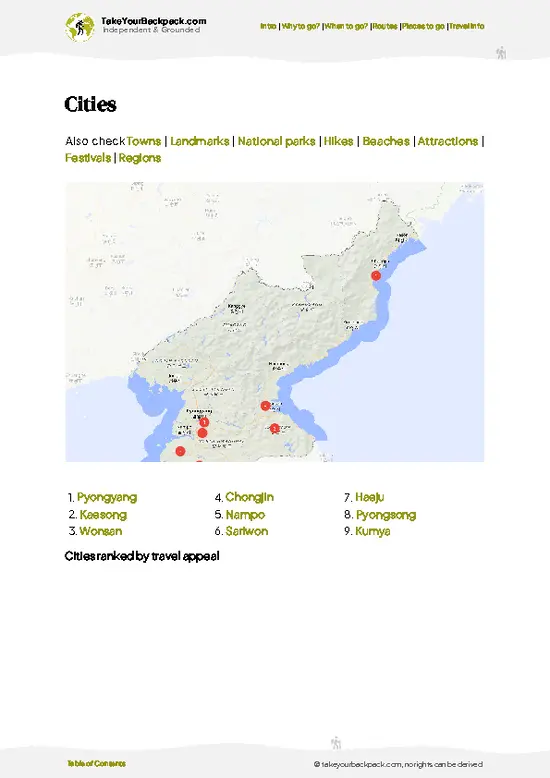
74 highlights, ranked by travel appeal
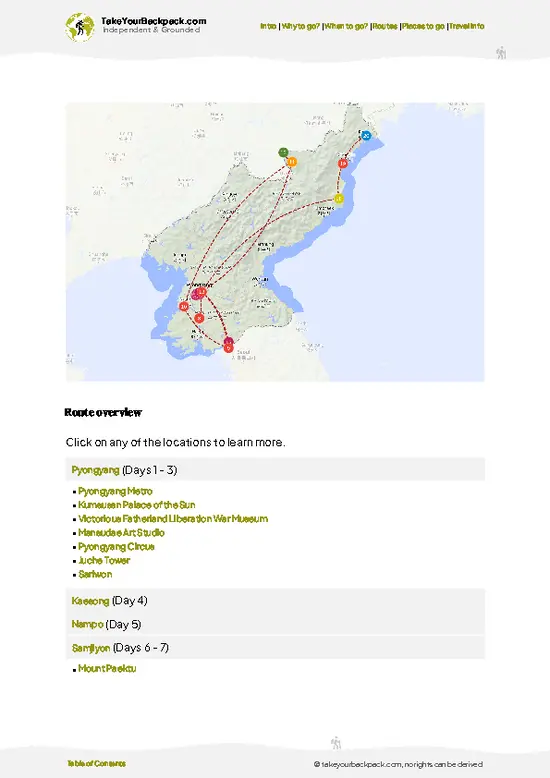
Optimized 5, 10 & 15-day travel routes
Cities, national parks, landmarks, beaches
How to get around
Offline-friendly for travel without Wi-Fi
👉 Click to see all 30+ guide features

📅 Plan smarter in minutes, not weeks
Month by month travel advice
Festivals & national holidays
Budget expectations

🗺️ Go to the right places, skip the overrated ones
Honest pros & cons of destinations
Top hikes, parks & viewpoints
Lesser-known places most travelers miss
Clear “worth it vs skip it” guidance

🛏️ Travel smoothly without rookie mistakes
Best areas to stay
Transport systems explained simply
Common scams & safety advice
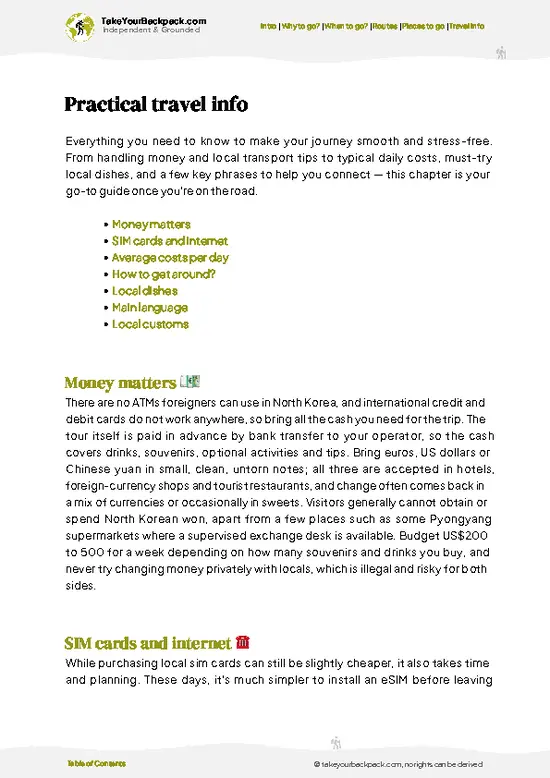
SIM cards, money & practical tips

🌍 Understand the country, not just visit it
Culture & traditions
52 Essential phrases & customs
Festivals worth planning around
Traveler-friendly historical context
Insights that make places more meaningful

📱 Built for real travel conditions
Fully downloadable PDF
Works completely offline
Optimized for phone use
Useful in remote areas & buses
Everything in one place
Save weeks of stressful planning
Get instant access to your full guide. 30‑day money-back guarantee.


By proceeding you agree to our terms.
Sent to your inbox immediately after payment • 100% Secure Checkout
Best Backpacking Travel Advisor 2025 tourism awardBest Backpacking
Travel Advisor
2025
What others say about Take Your Backpack Guides:
⭐⭐⭐⭐⭐
Fantastic, amazing amount of information!
⭐⭐⭐⭐⭐
My goodness this is amazing, it's what I've been looking for hats off too you!
⭐⭐⭐⭐⭐
I think this is absolutely BRILLIANT
⭐⭐⭐⭐
Very complete and informative. It's still missing places, but I gotta to commend you
⭐⭐⭐⭐⭐
This is truly amazing, thank you, can't wait to explore it with my kids!
⭐⭐⭐⭐⭐
Awesome resource, thank you!
⭐⭐⭐⭐⭐
This is amazing! Can't wait to explore the ones I haven't seen
⭐⭐⭐⭐
I love this! Well done, great idea.
⭐⭐⭐⭐⭐
Thanks for taking the time to make this gem!
⭐⭐⭐⭐⭐
This might be the best website I've ever seen.
⭐⭐⭐⭐⭐
Congratulations, and thank you so much for your work; it's incredibly valuable.
⭐⭐⭐⭐
In all seriousness I think you did a great job pointing out the important spots
⭐⭐⭐⭐⭐
10/10 very good
⭐⭐⭐⭐⭐
As someone who's only just starting to visit regularly this is awesome, thank you.
⭐⭐⭐⭐
Thank you very much! I'm going to visit my dad, it's going to be very useful!
⭐⭐⭐⭐⭐
This is really cool! We'll be travelling for the first time and this definitely come in handy.
⭐⭐⭐⭐⭐
You are now our minister of culture, congratulations 👨‍💼
⭐⭐⭐⭐⭐
Just wanted to tell you that this is a pearl! Going to follow your recommendations.
⭐⭐⭐⭐⭐
This is so cool. I'll definitely be using the resource for my travels soon.
⭐⭐⭐⭐⭐
This is very impressive! Good work.
⭐⭐⭐⭐⭐
This is an amazing and informative site. Very well done!

🛏️ Where to stay?Where staying makes the most sense

In Pujon, the best spot for backpackers is the town center, where the pulse of daily life hums steadily. This area is compact, making it easy to navigate on foot, which is crucial given the limited transport options. Staying here means you’re close to local markets and communal spaces where you can soak in the scent of fresh pine from nearby forests mingling with the earthy aroma of traditional cooking fires. It’s safe, with a watchful community vibe that feels more like a shared neighborhood than a tourist zone.

Hostel options are sparse but tend to cluster near the main square, creating a natural … read more 👉
In Pujon, the best spot for backpackers is the town center, where the pulse of daily life hums steadily. This area is compact, making it easy to navigate on foot, which is crucial given the limited transport options. Staying here means you’re close to local markets and communal spaces where you can soak in the scent of fresh pine from nearby forests mingling with the earthy aroma of traditional cooking fires. It’s safe, with a watchful community vibe that feels more like a shared neighborhood than a tourist zone.

Hostel options are sparse but tend to cluster near the main square, creating a natural social hub. This proximity encourages spontaneous conversations with fellow travelers and locals alike, turning simple evenings into memorable exchanges. Compared to the quieter outskirts, where isolation can feel heavy and logistics tougher, the town center offers a smoother rhythm—easy access to essentials, a chance to blend in, and the kind of atmosphere that makes the hard parts of travel feel like steps toward something genuinely rewarding.

🚌 Getting aroundHow to get from A to B

Pujon moves at its own pace—think less clockwork, more the rhythm of the earth and the people who work it. The air carries the scent of damp soil and wood smoke, and the streets hum with a casual, unhurried energy. Here, schedules bend to the day’s light and the mood of the market, not the other way around. You’ll find that the best way to get around isn’t by chasing timetables but by syncing with the town’s natural flow, where every step and ride feels like part of the story, not just a means to an end.


  • Walking: The heart of Pujon is best explored on foot. Streets are narrow and uneven, so sturdy shoes are a must. Walking lets you catch the scent of fresh spices from street vendors and the chatter of locals without missing a beat. It’s free, flexible, and the most immersive way to navigate
read more 👉
Pujon moves at its own pace—think less clockwork, more the rhythm of the earth and the people who work it. The air carries the scent of damp soil and wood smoke, and the streets hum with a casual, unhurried energy. Here, schedules bend to the day’s light and the mood of the market, not the other way around. You’ll find that the best way to get around isn’t by chasing timetables but by syncing with the town’s natural flow, where every step and ride feels like part of the story, not just a means to an end.


  • Walking: The heart of Pujon is best explored on foot. Streets are narrow and uneven, so sturdy shoes are a must. Walking lets you catch the scent of fresh spices from street vendors and the chatter of locals without missing a beat. It’s free, flexible, and the most immersive way to navigate the town’s winding alleys.


  • Local Minibuses: These are the budget traveler’s lifeline for longer hops around Pujon and nearby villages. They run roughly from 6:30 AM to 6 PM, with fares around 1,000 to 2,000 IDR. Expect a lively, sometimes cramped ride where the driver’s skill keeps you glued to the road. It’s slow but authentic, and you’ll get a front-row seat to daily life.


  • Motorbike Taxis (Ojek): For quick, flexible trips, motorbike taxis are unbeatable. They’re everywhere, and you can negotiate fares directly—usually between 10,000 and 20,000 IDR for short rides. Helmets aren’t always standard, so brace for the wind and the raw feel of the road. Perfect for squeezing through traffic or reaching spots minibuses don’t touch.


  • Bicycle Rentals: If you want to cover more ground without losing the intimacy of the landscape, renting a bicycle is a smart move. Rentals cost about 30,000 to 50,000 IDR per day. The terrain can be hilly, so be ready to pedal hard, but the reward is a quiet, personal pace that lets you stop whenever a view or a scent pulls you in.

👛 Costs (as of 12 April 2026)How expensive it really is

Backpacking in Pujon, North Korea, is a rare and tightly controlled experience, and the costs reflect that unique reality. Here’s a practical breakdown of what you can expect to spend daily as an independent traveler navigating this remote town.
  • Dorm Accommodation: Options are extremely limited and usually tied to state-run guesthouses or arranged through official tours. Prices hover around $30 to $50 USD per night, often including basic amenities but little in the way of comfort or privacy. Expect Spartan rooms with minimal heating, so pack accordingly.
  • Meals: Food is simple and local, with meals typically costing between $5 and $10 USD. You’ll find staple dishes like cold noodles or kimchi-based soups, often served with rice. Dining options are scarce, so meals are usually eaten where
read more 👉
Backpacking in Pujon, North Korea, is a rare and tightly controlled experience, and the costs reflect that unique reality. Here’s a practical breakdown of what you can expect to spend daily as an independent traveler navigating this remote town.
  • Dorm Accommodation: Options are extremely limited and usually tied to state-run guesthouses or arranged through official tours. Prices hover around $30 to $50 USD per night, often including basic amenities but little in the way of comfort or privacy. Expect Spartan rooms with minimal heating, so pack accordingly.
  • Meals: Food is simple and local, with meals typically costing between $5 and $10 USD. You’ll find staple dishes like cold noodles or kimchi-based soups, often served with rice. Dining options are scarce, so meals are usually eaten where you stay or at government-approved eateries, which limits variety but ensures authenticity.
  • Local Transport: Public transport is minimal and not designed for tourists. Most travelers rely on arranged transport through guides, which can cost around $10 to $20 USD per day. Walking is common, but distances between points of interest can be long and the terrain rugged, so plan accordingly.
  • Basic Activities/Entry Fees: Independent exploration is heavily restricted, and entry fees are often bundled into tour packages. If you manage to visit local museums or cultural sites, expect to pay around $5 to $15 USD. These fees support the upkeep of sites but don’t expect much in the way of English signage or interpretive materials.
  • Miscellaneous Expenses: This includes bottled water, snacks, and any small souvenirs. Budget around $3 to $7 USD daily. Keep in mind that credit cards and ATMs are nonexistent for foreigners, so carry enough cash in USD or euros before arrival.

All told, a realistic daily budget for backpacking in Pujon ranges from about $53 to $102 USD. This isn’t a place for spontaneous detours or last-minute plans—everything moves at a deliberate pace, and the costs reflect the controlled, low-volume tourism environment. The payoff is a glimpse into a world few outsiders see, but it comes with a price tag that’s more about access than luxury.


source: korea-dpr.com
⚠️ Prices can change and everyone travels differently, so take this as a rough guide. Hope it helps you plan your adventure!

🚌 Day tripsWhere to go beyond the main area

Pujon, North Korea, is a unique base for day trips that blend adventure with cultural immersion. The town itself offers a glimpse into daily life, but the surrounding landscapes and historical sites are where the real magic happens.

Trip to Mount Kumgang
This trip is a must for nature lovers. The jagged peaks and lush valleys create a stunning backdrop. It’s about a two-hour drive from Pujon, and the journey winds through scenic countryside. Expect to pay around $30 for transportation and entrance fees. The best time to visit is during spring or autumn when the colors are vibrant. A common mistake is underestimating the weather; pack layers, as it can change quickly. The hike offers both challenge and reward, with breathtaking views at the summit.
👉 Explore Mount Kumgang

Trip to the read more 👉
Pujon, North Korea, is a unique base for day trips that blend adventure with cultural immersion. The town itself offers a glimpse into daily life, but the surrounding landscapes and historical sites are where the real magic happens.

Trip to Mount Kumgang
This trip is a must for nature lovers. The jagged peaks and lush valleys create a stunning backdrop. It’s about a two-hour drive from Pujon, and the journey winds through scenic countryside. Expect to pay around $30 for transportation and entrance fees. The best time to visit is during spring or autumn when the colors are vibrant. A common mistake is underestimating the weather; pack layers, as it can change quickly. The hike offers both challenge and reward, with breathtaking views at the summit.
👉 Explore Mount Kumgang

Trip to the Pujon Revolutionary Museum
Just a short walk from the town center, this museum is a deep dive into North Korean history. It takes about an hour to explore, and the entrance fee is minimal—around $5. The best time to visit is early morning to avoid crowds. Many first-timers overlook the guided tours, which provide context that enriches the experience. The museum’s exhibits are detailed, showcasing the local resistance during the Korean War. The atmosphere is heavy with history, making it a reflective stop.


Trip to the Pujon Potato Farm
This unique agricultural site is about a 30-minute drive from town. The farm is known for its innovative techniques and is a great way to understand local food production. Costs are low, around $10 for transport and a small fee for a guided tour. Late summer is ideal, as you can see the harvest in action. A common mistake is not engaging with the farmers; they have fascinating stories that add depth to your visit. The earthy scent of fresh produce and the vibrant fields make this trip a sensory delight.


Trip to the Taedong River
A scenic escape, the Taedong River is about an hour away. You can rent a small boat for around $15, making it an affordable adventure. The best time is early morning when the mist rises off the water, creating a serene atmosphere. Many backpackers miss the chance to bring a picnic; the riverside spots are perfect for a break. The gentle flow of the river and the surrounding hills provide a peaceful contrast to the bustling town.
Want to know what more North Korea offers?
The North Korea Travel Guide describes 74 highlights, from cities to national parks, from beaches to hikes

Get the Travel Guide -

🛡️ SafetyScams, Hazards, and Annoyances

In Pujon, North Korea, safety is generally solid, but a few nuances can enhance your experience. The streets are quiet, and the locals are accustomed to tourists, yet maintaining a low profile is wise. Stick to well-trodden paths and avoid wandering into less populated areas, especially after dark.

Solo travelers should be particularly mindful of their surroundings. While the atmosphere is calm, nighttime can feel different. If you’re out late, keep your group close and stay in well-lit areas.

Scams are rare, but be cautious of overly friendly locals who may want to engage in conversation. They might ask for a photo or a chat, which can lead to unexpected requests for money. Just smile and politely decline if it feels off.

Everyday annoyances? Expect some language barriers and limited … read more 👉
In Pujon, North Korea, safety is generally solid, but a few nuances can enhance your experience. The streets are quiet, and the locals are accustomed to tourists, yet maintaining a low profile is wise. Stick to well-trodden paths and avoid wandering into less populated areas, especially after dark.

Solo travelers should be particularly mindful of their surroundings. While the atmosphere is calm, nighttime can feel different. If you’re out late, keep your group close and stay in well-lit areas.

Scams are rare, but be cautious of overly friendly locals who may want to engage in conversation. They might ask for a photo or a chat, which can lead to unexpected requests for money. Just smile and politely decline if it feels off.

Everyday annoyances? Expect some language barriers and limited access to amenities. Carry a translation app or phrasebook to ease communication. This preparation can turn potential frustrations into opportunities for connection.

Other North Korean towns near Pujon

Explore more nearby:

  • Kilju—rail junction, military presence, rural outskirts| 152 km away
  • Samjiyon—plateau town, Mount Paektu access, alpine scenery| 157 km away
  • Yongbyon—nuclear facility, restricted access, river bend| 173 km away

💡 Not sure where to go next?
Create a personalized itinerary for North Korea including Pujon and the places that fit your trip.

Generate my itinerary

👉 Discover all towns

Or checkout all North Korea has to offer (think cities, towns, villages, national parks, hikes, beaches, festivals)
Country photo of North Korea

We 💚 feedbackKey takeaways before you go

Pujon offers a rare glimpse into North Korean rural life, where the air is thick with the scent of fresh produce and the laughter of locals fills the fields. You’ll feel the pulse of a community that’s often overlooked. But be prepared: the rigid regulations can feel stifling. Freedom to roam is limited, and that can be frustrating. Embrace the structure, and you’ll find beauty in the details.

✈️ When did I visit North Korea?
As part of my 1.5 year travel around the world trip, I visited North Korea in August 2015. I had never expected I was able to get in.

✍️ Help improve this page!
The information on this page is based on my own backpacking experience in North Korea, supplemented with up-to-date research and feedback from other travelers. Travel details can change, so if you notice anything outdated or incomplete, feel free to let me know.


🙋‍♂️ Give feedback

👋 Meet the founderWho’s Behind Take Your Backpack?

Johan, backpacker and founder of TakeYourBackpackHi, I’m Johan (Netherlands 🇳🇱), the creator of TakeYourBackpack. Over the past decade, I’ve backpacked through 80+ countries across six continents, gaining extensive experience with independent travel, long-term trips, and overland routes.

This site is built on a combination of firsthand travel experience and carefully curated insights from other backpackers. Many guides are based on places I’ve personally visited, while others bring together tips, observations, and practical advice shared by trusted travelers I’ve met along the way.

The goal is to provide realistic, experience-driven guidance — not generic itineraries — so you can explore destinations with better context, clearer expectations, and more confidence.

Get full country guide •
Instant download • 74 highlights • Full Offline guide