v2.webp)
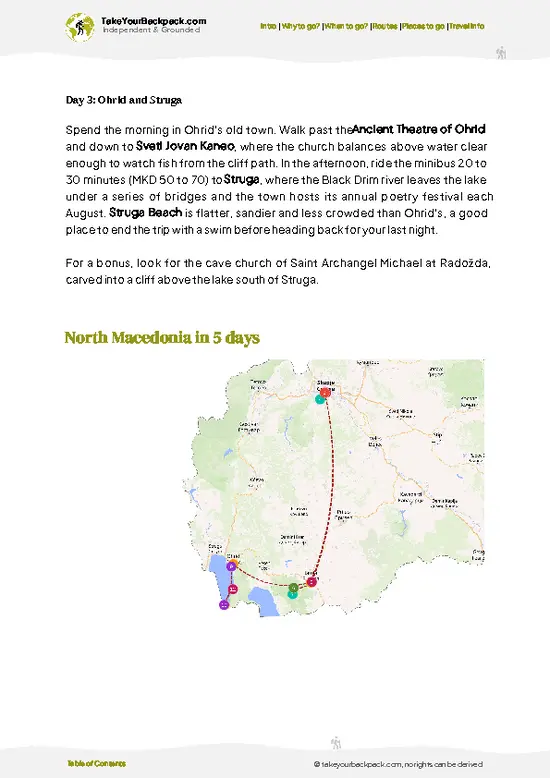

- Sahat Kula (Clock Tower) — The town’s vertical landmark; climb or stand beside it for a compact lesson in Kratovo’s Ottoman-era townscape and one of the best close-up views over the layered, crater-like valley.
- The Stone Towers of Kratovo — A cluster of medieval stone towers that once marked wealthy mining families and guilds. Even viewed from the street they tell the town’s story of defense, status and stone craftsmanship.
- Old Stone Bridges — Small, elegant stone bridges that hop across the deep gullies between terraces. They’re photogenic, often centuries old, and show how the town negotiated its dramatic topography.
- Historic Market Street / Old Bazaar — Narrow cobbled lanes lined with old shopfronts, tiny workshops and cafés. This is where Kratovo’s everyday life and local flavors
- Sahat Kula (Clock Tower) — The town’s vertical landmark; climb or stand beside it for a compact lesson in Kratovo’s Ottoman-era townscape and one of the best close-up views over the layered, crater-like valley.
- The Stone Towers of Kratovo — A cluster of medieval stone towers that once marked wealthy mining families and guilds. Even viewed from the street they tell the town’s story of defense, status and stone craftsmanship.
- Old Stone Bridges — Small, elegant stone bridges that hop across the deep gullies between terraces. They’re photogenic, often centuries old, and show how the town negotiated its dramatic topography.
- Historic Market Street / Old Bazaar — Narrow cobbled lanes lined with old shopfronts, tiny workshops and cafés. This is where Kratovo’s everyday life and local flavors still happen; great for people-watching and small purchases.
- Kratovo Regional / Ethnographic Museum — A compact local museum with mining tools, household objects and regional costumes. It’s the clearest way to connect the town’s material culture to its mining past and daily life.
- Mining heritage sites and visible mine portals — You can see old mine entrances, spoil heaps and furnace remains scattered around the town — tangible evidence of Kratovo’s centuries-long ore trade. Walking these spots gives a real sense of place.
- Small historic churches — A handful of intimate, often frescoed churches tucked into alleys and terraces. Their interiors and settings reveal local devotional traditions and layers of history you won’t get from a postcard.
- Traditional Ottoman houses and konaks — Well-preserved domestic buildings with wooden details and internal courtyards. Many are still lived in or partly turned into exhibits; they’re perfect for soaking up the town’s atmosphere.
- Crater-rim viewpoints and alleyway panoramas — More than one lookout gives dramatic, compact views into the volcanic depression the town sits in. Short, steep walks between alleys reward you with surprising vistas.
- Local workshops, bakeries and kafanas — The experiential heart of Kratovo: brass-smiths, small bakeries, and family-run cafés where you can eat, chat and watch traditional crafts still being practiced.
Spotted a mistake or missing something? Contact us.

A Day from Skopje to Pristina and Prizren, Kosovo, opt. Kukes Alb

Skopje Wine Tasting Experience – Wines by Zaharchev Winery

Six course dinner & Macedonian wine pairing at Dropstop Gastrobar

Skopje Street Food with Burek, Ajvar & Kebapi, The Local Way

Private Full-Day Best of Ohrid Tour from Skopje

Skopje Airport Private Transfer for up to 3 Passengers

Full day tour of Ohrid with St Naum from Skopje

Skopje city tour - the best of Skopje

Unique Smidgin explore and tasting tour


 Best Backpacking
.jpg) Hi, I’m Johan (Netherlands 🇳🇱), the creator of TakeYourBackpack. Over the past 3 decades, I’ve backpacked through 90+ countries across six continents, gaining extensive experience with independent travel, long-term trips, and overland routes.
Hi, I’m Johan (Netherlands 🇳🇱), the creator of TakeYourBackpack. Over the past 3 decades, I’ve backpacked through 90+ countries across six continents, gaining extensive experience with independent travel, long-term trips, and overland routes.