v2.webp)
The Brutalist Building Itself
Forget the art for a second—the Museum of Contemporary Art in Skopje is a concrete beast with a backstory. Donated by Poland after the 1963 earthquake, this angular, unapologetic slab of Brutalism is a survivor’s monument. It’s not pretty in the Instagram sense. It’s raw, honest, and perched on a hill with a panoramic view of Skopje that’s better than any rooftop bar in town. You’ll feel the wind, see the scars, and understand why architecture nerds make pilgrimages here.
The International Collection: Picasso to Calder
This isn’t some provincial afterthought. The permanent collection punches way above its weight, with originals by Picasso, Calder, Vasarely, and Miró. These weren’t bought at auction—they were donated in a global act of solidarity after the earthquake. … read more 👉
Forget the art for a second—the Museum of Contemporary Art in Skopje is a concrete beast with a backstory. Donated by Poland after the 1963 earthquake, this angular, unapologetic slab of Brutalism is a survivor’s monument. It’s not pretty in the Instagram sense. It’s raw, honest, and perched on a hill with a panoramic view of Skopje that’s better than any rooftop bar in town. You’ll feel the wind, see the scars, and understand why architecture nerds make pilgrimages here.
The International Collection: Picasso to Calder
This isn’t some provincial afterthought. The permanent collection punches way above its weight, with originals by Picasso, Calder, Vasarely, and Miró. These weren’t bought at auction—they were donated in a global act of solidarity after the earthquake. … read more 👉
The Brutalist Building Itself
Forget the art for a second—the Museum of Contemporary Art in Skopje is a concrete beast with a backstory. Donated by Poland after the 1963 earthquake, this angular, unapologetic slab of Brutalism is a survivor’s monument. It’s not pretty in the Instagram sense. It’s raw, honest, and perched on a hill with a panoramic view of Skopje that’s better than any rooftop bar in town. You’ll feel the wind, see the scars, and understand why architecture nerds make pilgrimages here.
The International Collection: Picasso to Calder
This isn’t some provincial afterthought. The permanent collection punches way above its weight, with originals by Picasso, Calder, Vasarely, and Miró. These weren’t bought at auction—they were donated in a global act of solidarity after the earthquake. The result? A time capsule of mid-century modernism, with a side of world history. You’re not just looking at art; you’re witnessing a global community’s response to disaster, all in one room.
Yugoslav and Macedonian Avant-Garde
Here’s where the museum drops the mask. The Yugoslav and Macedonian works aren’t just local color—they’re a crash course in the region’s creative rebellion. Expect bold, sometimes bizarre experiments in painting, sculpture, and mixed media. These pieces don’t care about Western art market trends. They’re raw, political, and sometimes weird in the best way. If you want to understand the Balkans beyond the tourist gloss, this is your shortcut.
Temporary Exhibitions: Wildcards and Provocations
The museum’s rotating exhibitions are where things get unpredictable. Sometimes you’ll walk into a room full of neon-lit installations or video art that makes you question your sanity. Other times, it’s a deep dive into forgotten local legends or outsider artists. The curation is hit-or-miss, but when it hits, it’s electric—think more underground Berlin than sleepy Balkan capital.
The Terrace: Skopje’s Secret Sunset Spot
Here’s the move: time your visit for late afternoon, grab a seat on the terrace, and watch the city glow under the shadow of Mount Vodno. No crowds, no overpriced cocktails, just you, the skyline, and the occasional stray cat. It’s the kind of moment you won’t find in any influencer’s highlight reel, but it’s the one you’ll remember when you think of Skopje.
The Earthquake Story: Art as Survival
Most museums give you a sanitized version of history. Not here. The entire existence of this place is rooted in tragedy and resilience. The earthquake narrative isn’t just a footnote—it’s woven into the art, the building, and the city’s psyche. If you want to see how creativity can be an act of survival, this is your masterclass.
Forget the art for a second—the Museum of Contemporary Art in Skopje is a concrete beast with a backstory. Donated by Poland after the 1963 earthquake, this angular, unapologetic slab of Brutalism is a survivor’s monument. It’s not pretty in the Instagram sense. It’s raw, honest, and perched on a hill with a panoramic view of Skopje that’s better than any rooftop bar in town. You’ll feel the wind, see the scars, and understand why architecture nerds make pilgrimages here.
The International Collection: Picasso to Calder
This isn’t some provincial afterthought. The permanent collection punches way above its weight, with originals by Picasso, Calder, Vasarely, and Miró. These weren’t bought at auction—they were donated in a global act of solidarity after the earthquake. The result? A time capsule of mid-century modernism, with a side of world history. You’re not just looking at art; you’re witnessing a global community’s response to disaster, all in one room.
Yugoslav and Macedonian Avant-Garde
Here’s where the museum drops the mask. The Yugoslav and Macedonian works aren’t just local color—they’re a crash course in the region’s creative rebellion. Expect bold, sometimes bizarre experiments in painting, sculpture, and mixed media. These pieces don’t care about Western art market trends. They’re raw, political, and sometimes weird in the best way. If you want to understand the Balkans beyond the tourist gloss, this is your shortcut.
Temporary Exhibitions: Wildcards and Provocations
The museum’s rotating exhibitions are where things get unpredictable. Sometimes you’ll walk into a room full of neon-lit installations or video art that makes you question your sanity. Other times, it’s a deep dive into forgotten local legends or outsider artists. The curation is hit-or-miss, but when it hits, it’s electric—think more underground Berlin than sleepy Balkan capital.
The Terrace: Skopje’s Secret Sunset Spot
Here’s the move: time your visit for late afternoon, grab a seat on the terrace, and watch the city glow under the shadow of Mount Vodno. No crowds, no overpriced cocktails, just you, the skyline, and the occasional stray cat. It’s the kind of moment you won’t find in any influencer’s highlight reel, but it’s the one you’ll remember when you think of Skopje.
The Earthquake Story: Art as Survival
Most museums give you a sanitized version of history. Not here. The entire existence of this place is rooted in tragedy and resilience. The earthquake narrative isn’t just a footnote—it’s woven into the art, the building, and the city’s psyche. If you want to see how creativity can be an act of survival, this is your masterclass.
Spotted a mistake or missing something? Contact us.

Day Tour from Skopje to Pristina and Prizren, Kosovo & Kukes Alb
✓ Free cancellation

Six course dinner & Macedonian wine pairing at Dropstop Gastrobar
✓ Free cancellation

Skopje Wine Tasting Experience – Wines by Zaharchev Winery
✓ Free cancellation

Skopje Street Food and Drinks, The Local Way
✓ Free cancellation

Private Full-Day Best of Ohrid Tour from Skopje
✓ Free cancellation

Skopje Airport Private Transfer for up to 3 Passengers
✓ Free cancellation

Full day tour of Ohrid with St Naum from Skopje
✓ Free cancellation

Skopje city tour - the best of Skopje
✓ Free cancellation

Unique Smidgin explore and tasting tour
✓ Free cancellation



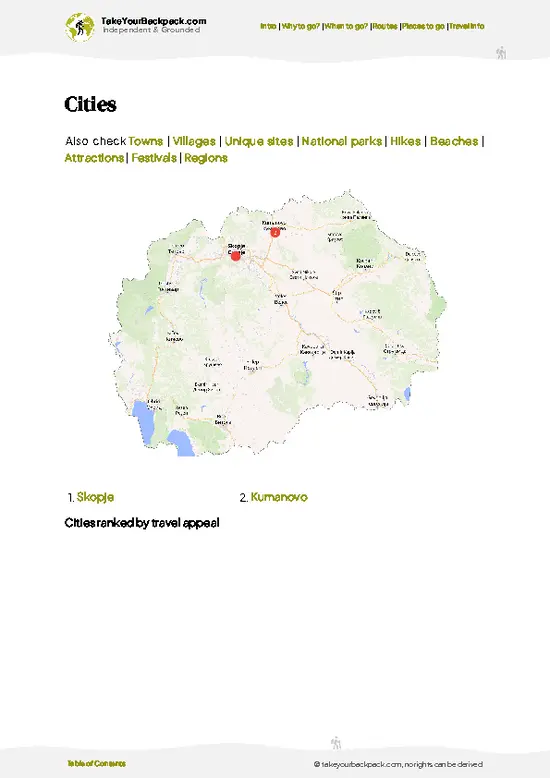

 Best Backpacking
.jpg) Hi, I’m Johan (Netherlands 🇳🇱), the creator of TakeYourBackpack. Over the past decade, I’ve backpacked through 80+ countries across six continents, gaining extensive experience with independent travel, long-term trips, and overland routes.
Hi, I’m Johan (Netherlands 🇳🇱), the creator of TakeYourBackpack. Over the past decade, I’ve backpacked through 80+ countries across six continents, gaining extensive experience with independent travel, long-term trips, and overland routes.